AI integration for SAP Digital Manufacturing Cloud connects to three primary extensibility surfaces: the Manufacturing Data Warehouse (MDW) for historical analysis, OData APIs for real-time event ingestion and action triggering, and Fiori launchpad apps for user-facing copilots. The MDW, built on SAP HANA Cloud, serves as the central repository for production orders, material consumption, equipment events, and quality results—providing the structured, time-series data essential for training and running predictive models. OData services for objects like ProductionOrder, Equipment, and QualityInspectionResult enable event-driven architectures, where shop floor transactions can trigger AI inference for real-time guidance or exception handling.

Integration
AI Integration for SAP Digital Manufacturing Cloud
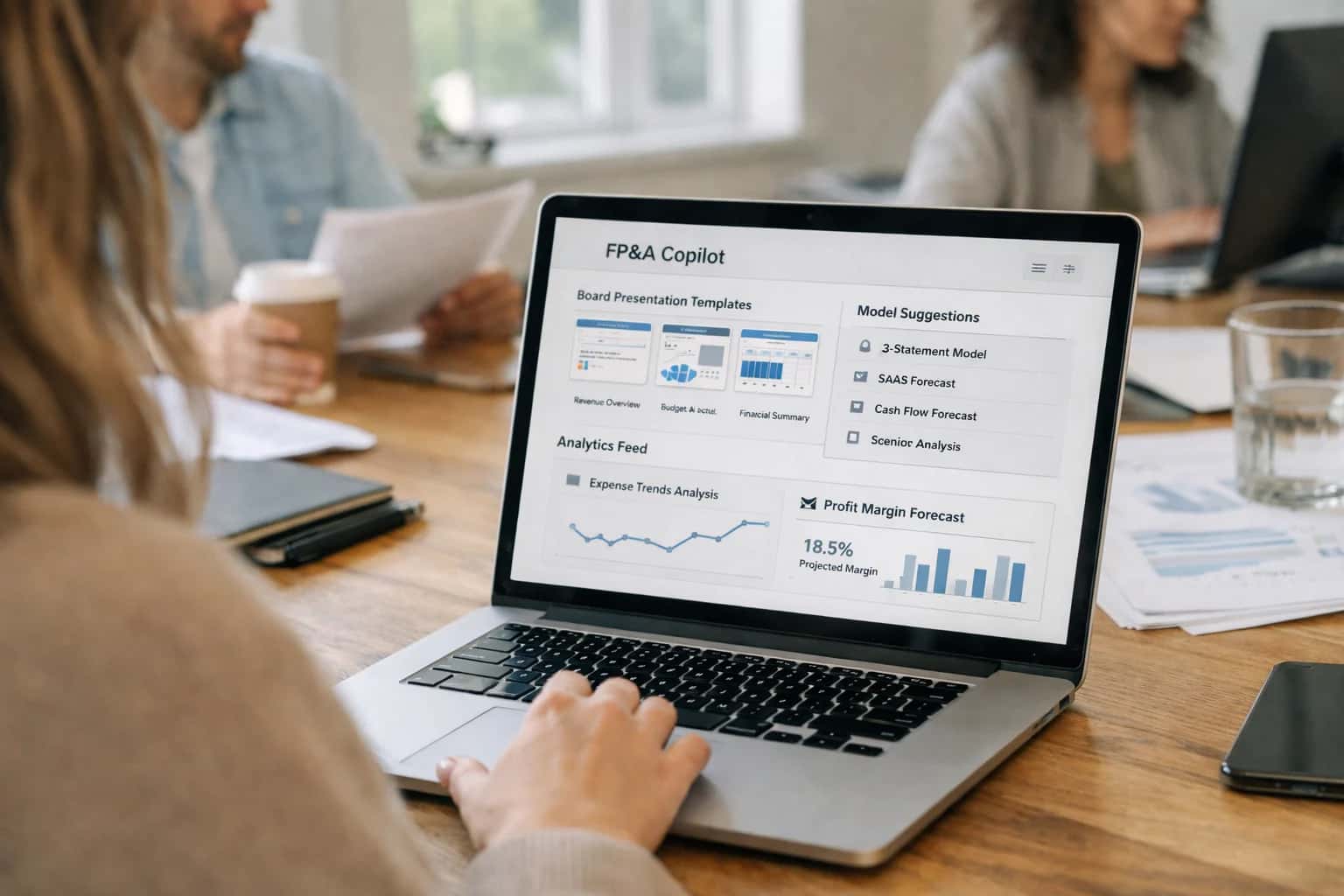
Where AI Fits in SAP Digital Manufacturing Cloud
A practical blueprint for embedding AI agents and analytics into SAP's cloud-native MES without disrupting core operations.
Implementation typically follows a sidecar pattern, where AI services run in a separate, cloud-native stack (e.g., Azure, AWS) and communicate bidirectionally with SAP DM Cloud via secure APIs and webhooks. High-value workflows include: using the MDW to feed AI models for predictive equipment downtime, triggering real-time anomaly detection on sensor data streamed via OData, and embedding conversational copilots in Fiori apps to help operators with troubleshooting or work instructions. For example, an AI agent can listen for ProductionOrder.StatusChange events, analyze real-time OEE data, and automatically post adaptive scheduling suggestions back to the order as a comment or trigger a re-sequencing workflow via the API.
Governance and rollout require careful planning around data residency, model retraining cycles synced with MDW updates, and RBAC integration to ensure AI suggestions respect existing plant roles and approvals. A phased approach starts with read-only analytics and alerting, progresses to assisted recommendations within existing workflows (e.g., quality defect classification support), and only then advances to closed-loop actions for non-critical processes. This minimizes risk while demonstrating value through specific operational improvements, such as reducing manual SPC chart review or accelerating nonconformance root cause analysis from hours to minutes.
Key Integration Surfaces in SAP DM Cloud
The Core Execution Layer
This surface covers the ProductionOrder, ProductionOrderOperation, and ProductionOrderComponent OData entities. AI integrates here to inject intelligence into the flow of work.
Key AI Use Cases:
- Dynamic Sequencing: Adjust operation start times and sequences in real-time based on machine availability, material delays, or quality alerts from upstream stations.
- Material Consumption Forecasting: Predict component usage variances for a given order based on historical scrap rates and operator performance, triggering proactive replenishment signals to the warehouse.
- Automated Confirmation: Use computer vision or sensor data ingested via SAP DM's event framework to auto-confirm operation quantities and scrap, reducing manual shop floor data entry.
Integration Pattern: AI agents subscribe to order status change events via SAP's event mesh or poll the OData API. Decisions are written back as order updates or create follow-on actions (e.g., a maintenance notification).
High-Value AI Use Cases for SAP DM
SAP Digital Manufacturing Cloud's extensible architecture and rich OData APIs create a powerful foundation for AI. These cards detail practical integration points where AI agents and models can augment core manufacturing workflows, delivering operational intelligence directly within Fiori apps and shop floor interfaces.
Adaptive Production Scheduling
Integrate AI with SAP DM's scheduling APIs to create dynamic, constraint-aware schedules. Models analyze real-time machine availability, operator skill matrices, material readiness, and quality alerts to recommend optimal job sequences and automatically reschedule when exceptions occur, reducing changeover time and improving line utilization.
Intelligent Digital Work Instructions
Embed AI copilots into SAP DM's digital work instruction delivery. Use the Operator Cockpit Fiori app as a surface to provide contextual, step-by-step guidance. AI analyzes the work order, operator certification level, and historical defect data for that station to personalize instructions, suggest troubleshooting steps, and validate completions via image or sensor data.
Automated Nonconformance Triage
Connect AI to the Nonconformance Management module via OData services. When a defect is logged, AI automatically classifies it using historical data and image analysis, suggests the most probable root cause from past CAPAs, and drafts the initial containment and corrective action plan. This accelerates the NCR-to-CAPA workflow and improves first-time fix rates.
Predictive Maintenance Trigger
Use SAP DM's Manufacturing Data Warehouse as a feature store for equipment time-series data. Deploy AI models that predict asset failures based on vibration, temperature, and cycle counts. When a threshold is breached, the integration automatically creates a maintenance notification in SAP S/4HANA Plant Maintenance and suggests required spare parts, shifting from calendar-based to condition-based maintenance.
Real-Time OEE Intelligence
Augment SAP DM's built-in OEE calculations with AI-driven root cause attribution. Models analyze downtime events, production counts, and quality data from the Production Performance module to automatically categorize losses (e.g., setup, breakdown, minor stops). Insights are surfaced as narrative summaries in dashboards, enabling supervisors to target the largest improvement opportunities.
Automated Genealogy & Traceability Reporting
Leverage AI to automate complex traceability queries and report generation. Given a component serial number, an AI agent navigates SAP DM's genealogy APIs to build the full "as-built" bill of material, identifies all affected upstream/downstream products, and generates a compliance report for regulators or customers. This turns a multi-hour manual investigation into a self-service query.
Example AI-Augmented Workflows
These workflows illustrate how to embed AI agents and models into SAP Digital Manufacturing Cloud's extensible architecture, using its OData APIs, event-driven services, and Fiori app framework to deliver intelligence directly into shop floor operations.
Trigger: A new production order is released from SAP S/4HANA to SAP DM Cloud, or a machine downtime event is registered.
Context/Data Pulled: The AI agent queries the SAP DM Cloud OData API for:
- Real-time machine status and availability from the
Equipmententity. - Current operator certifications and location from the
WorkCenterandPersonnelentities. - Material availability from the
MaterialandMaterialStockentities. - Pending order queue and priorities.
Model or Agent Action: A constraint optimization model evaluates multiple sequencing scenarios, balancing due dates, changeover times, and resource constraints. It recommends the optimal next job for each work center.
System Update or Next Step: The recommended sequence is pushed back to SAP DM Cloud via the ProductionOrder API, updating the dispatch list. A notification is sent to the shift supervisor's Fiori inbox for approval or override.
Human Review Point: The supervisor can accept, modify, or reject the AI-proposed sequence in the Fiori app. All overrides are logged for model retraining.
Implementation Architecture & Data Flow
A production-ready AI integration for SAP Digital Manufacturing Cloud leverages its event-driven architecture and extensibility services to inject intelligence without disrupting core operations.
The integration connects at three primary layers: the Manufacturing Data Warehouse (MDW) for historical analysis, the OData APIs for real-time transactional data, and the Event Notification Service for workflow triggers. AI models typically run in a dedicated inference service (Azure, AWS, GCP) that polls the MDW for training data and listens for events—such as a production order release, a quality data collection event, or an equipment state change—to trigger real-time inferences. Results are written back via the OData API to custom Fiori app extensions, digital work instructions, or directly into the Manufacturing Process Management (MPM) layer to influence scheduling or routing.
For a shop floor copilot, the flow is event-driven: an operator scans a work order barcode, triggering an API call to the inference service with the order context. The service retrieves relevant work instructions, recent quality data for similar orders, and machine performance history from the MDW, then uses an LLM to generate a concise, contextual guidance note. This is pushed to the operator's Fiori app or Andon board. For predictive quality, sensor data from connected equipment is streamed via SAP Edge Services or a third-party IIoT platform into the inference service, which scores each unit in near-real-time and posts a risk flag to the production order's quality info record, potentially halting the order if a threshold is breached.
Rollout follows a phased approach: start with read-only analytics (e.g., AI-powered OEE root cause reports) using the MDW, then progress to closed-loop recommendations (e.g., dynamic scheduling suggestions) requiring approval workflows in Fiori, and finally implement autonomous actions (e.g., automated quality holds) for high-confidence, low-risk use cases. Governance is managed through SAP's standard Identity and Access Management (IAM) for data access and a custom audit log in the inference service that traces each model decision back to the triggering event, user, and data snapshot, ensuring compliance with manufacturing traceability requirements. This architecture ensures AI augments, rather than replaces, SAP DM's core execution logic, maintaining system integrity and audit trails.
Code & API Payload Examples
Ingesting Production Context for AI
SAP Digital Manufacturing Cloud exposes manufacturing data via OData v4 APIs. A common pattern is to retrieve active production orders and their associated master data to provide context for an AI copilot. This payload shows a typical GET request to fetch orders with status details, which can be used to generate real-time operator guidance or predict completion times.
httpGET /api/v1/ProductionOrder?$expand=Operations,Material&$filter=OrderStatus eq 'Released'&$top=50 Authorization: Bearer {access_token} Accept: application/json
A successful response includes order number, material, quantity, start/end dates, and a list of operations with work centers. This structured data is ideal for grounding an LLM in the current shop floor state, enabling use cases like dynamic work instruction assembly or bottleneck analysis.
Realistic Operational Impact & Time Savings
How AI integration transforms key workflows by augmenting SAP DM's data warehouse, Fiori apps, and extensibility layer.
| Workflow / Metric | Before AI | After AI | Implementation Notes |
|---|---|---|---|
Production Order Exception Triage | Manual review of OData alerts; 30-60 min per shift | AI-prioritized alert list with root cause suggestions; 5-10 min review | AI scans SAP DM events, machine data, and quality logs to rank and explain exceptions. |
Digital Work Instruction Personalization | Static instructions in Fiori; no operator context | Dynamic instructions based on operator certification & machine state | AI uses SAP DM operator data model and real-time equipment tags to adapt SOPs. |
Nonconformance Report (NCR) Initial Draft | Supervisor manually logs defect, searches for similar past issues | AI auto-populates NCR from sensor/image data, suggests defect codes & linked batches | Integrates with SAP DM's quality module; human approval required before finalizing. |
Shift Handover Report Generation | Supervisor compiles notes from multiple screens; 20-30 min | AI auto-generates narrative summary of OEE, top alerts, and pending actions | Pulls from SAP DM's manufacturing data warehouse; summary delivered via Fiori inbox. |
Predictive Maintenance Work Order Trigger | Time-based or reactive maintenance; unplanned downtime events | AI predicts failures 1-3 days out, creates draft notification in SAP PM | Models use SAP DM equipment history and IIoT streams; planner reviews and releases. |
Material Consumption Variance Analysis | End-of-shift reconciliation; discrepancies found next day | Real-time AI flagging of consumption vs. BOM deviations during production | Compares SAP DM material confirmations to planned usage; alerts supervisor immediately. |
S&OP Feedback Loop (Production Feasibility) | Monthly meetings with historical data only | AI simulates capacity & constraint impact for proposed demand plans | Uses SAP DM's scheduling data and real-time line rates to model scenarios. |
Governance, Security, and Phased Rollout
Integrating AI into SAP Digital Manufacturing Cloud requires a deliberate approach to security, compliance, and organizational change.
Production AI integrations must respect the existing security model of SAP Digital Manufacturing Cloud. This means implementing AI agents and workflows that operate within the defined Fiori roles and authorizations, ensuring data access is scoped to the user's permissions. Inference is typically performed on a secure middleware layer, where prompts are enriched with only the permitted context from the Manufacturing Data Warehouse and relevant Digital Work Instructions. All AI-generated actions—such as updating a production order status or creating a quality notification—should be logged in the standard SAP audit trail for full traceability.
A phased rollout is critical for adoption and risk management. Start with a read-only copilot for shop floor supervisors, providing AI-powered summaries of shift performance and bottleneck analysis without modifying core data. The next phase introduces assistive agents into specific workflows, like suggesting root causes for non-conformances or drafting maintenance notifications, where a human operator reviews and approves each action. The final phase enables closed-loop automation for low-risk, high-frequency tasks, such as adaptive scheduling adjustments based on real-time machine availability, with clear governance rules and fallback procedures.
Governance extends to the AI models themselves. Establish a review board with representatives from manufacturing operations, IT, and quality assurance to evaluate new use cases against criteria for data quality, process criticality, and regulatory impact (e.g., FDA 21 CFR Part 11, GMP). Implement a model registry and monitoring to track performance drift on key metrics like prediction accuracy for quality alerts. This structured approach ensures AI augments SAP Digital Manufacturing Cloud's robust operations without introducing unmanaged risk, aligning with enterprise standards for controlled innovation.
Enabling Efficiency, Speed & Accuracy
Intelligent Analysis, Decision & Execution
We build AI systems for teams that need search across company data, workflow automation across tools, or AI features inside products and internal software.
Talk to Us
Search across company data
Give teams answers from docs, tickets, runbooks, and product data with sources and permissions.
Useful when people spend too long searching or get different answers from different systems.

Automate internal workflows
Use AI to route work, draft outputs, trigger actions, and keep approvals and logs in place.
Useful when repetitive work moves across multiple tools and teams.

Add AI to products and internal tools
Build assistants, guided actions, or decision support into the software your team or customers already use.
Useful when AI needs to be part of the product, not a separate tool.
Frequently Asked Questions
Common technical and operational questions about embedding AI agents, copilots, and analytics into SAP Digital Manufacturing Cloud's extensible architecture.
Secure integration is achieved via SAP DM Cloud's OData APIs and event-driven architecture, using a middleware layer for governance.
Typical Architecture:
- Authentication: Use SAP Cloud Identity or a dedicated technical user with scoped roles (e.g.,
ManufacturingExecutionUser,QualityManagementUser) to obtain OAuth 2.0 tokens. - Data Access: AI services call OData v4 endpoints (e.g.,
/sap/opu/odata4/sap/api_dmc/srvd_a2x/sap/dmc/0001/) to read production orders, material consumption, SPC data, and digital work instructions. - Event Ingestion: Subscribe to SAP DM Cloud's Event Mesh for real-time triggers (e.g.,
ProductionOrder.Released,Nonconformance.Created). - Write-Back: Use the same OData services or invoke Business Logic Services (BLS) to update records, like adding AI-generated insights to a production order or triggering a maintenance notification.
- Governance Layer: All calls route through a secure API gateway that handles token refresh, rate limiting, audit logging, and masks sensitive fields before data reaches the AI model.
This pattern keeps credentials out of AI prompts and maintains a clear audit trail of all data accesses.

About the author
Prasad Kumkar
CEO & MD, Inference Systems
Prasad Kumkar is the CEO & MD of Inference Systems and writes about AI systems architecture, LLM infrastructure, model serving, evaluation, and production deployment. Over 5+ years, he has worked across computer vision models, L5 autonomous vehicle systems, and LLM research, with a focus on taking complex AI ideas into real-world engineering systems.
His work and writing cover AI systems, large language models, AI agents, multimodal systems, autonomous systems, inference optimization, RAG, evaluation, and production AI engineering.
Partnered with leading AI, data, and software stack.





How We Work
Custom AI workflows for your Business
One-fit-all AI don't work for modern businesses. At Inferensys, we aim to understand your business & custom requirements; which we use to define most efficient agentic workflows, the data, and the tools for your business.
01
Review the use case
We understand the task, the users, and where AI can actually help.
Read more02
Pick the right approach
We define what needs search, automation, or product integration.
Read more03
Build the first useful version
We implement the part that proves the value first.
Read more04
Improve from there
We add the checks and visibility needed to keep it useful.
Read moreThe first call is a practical review of your use case and the right next step.
Talk to Us