The integration between Plex and your WMS (e.g., Manhattan, SAP EWM, Blue Yonder) typically revolves around key data objects and events: production orders, material requirements, pick lists, ASN (Advanced Ship Notice) creation, and inventory transaction postings. AI acts on the event streams and API calls between these systems. For instance, when Plex releases a production order, an AI agent can analyze real-time shop floor conditions—like a machine downtime or a quality hold on a previous batch—and dynamically adjust the material call-off timing and quantities sent to the WMS, preventing line-side stockouts or excess staging.

Integration
AI Integration for Plex Warehouse Integration
Enhance the critical link between Plex MES and your WMS with AI-driven workflows for dynamic material flow, optimized picking, and real-time inventory intelligence.
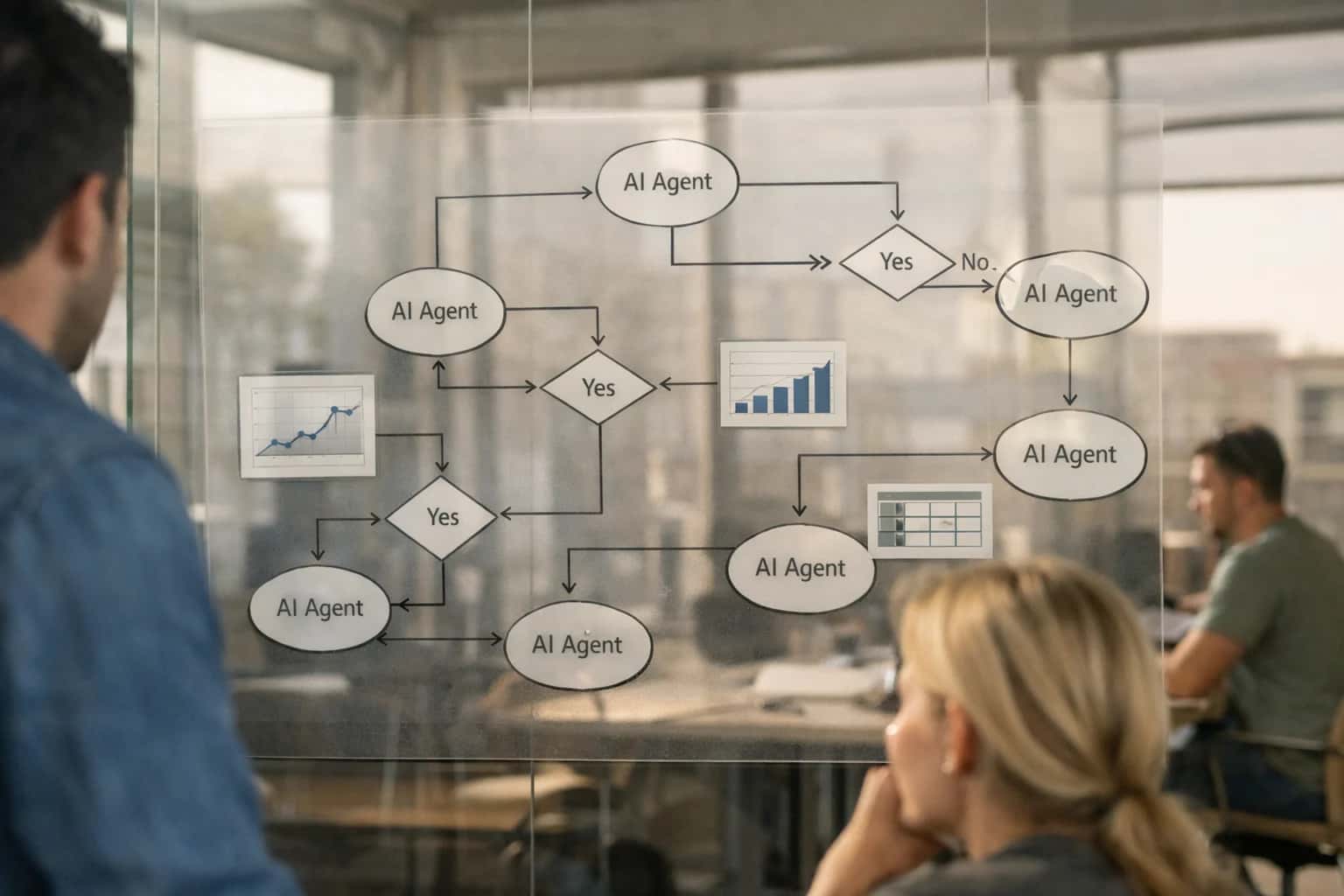
ARCHITECTURE FOR REAL-TIME COORDINATION
Where AI Fits in the Plex-WMS Integration Layer
AI injects intelligence into the critical handshake between Plex MES and your Warehouse Management System, turning static integration points into dynamic, demand-aware workflows.
High-value use cases center on making this data flow predictive and adaptive. This includes:
- Dynamic Pick-List Generation: Instead of a fixed pick list based on the standard BOM, AI considers actual component consumption rates, alternative parts availability in the warehouse, and cross-docking opportunities to generate an optimized pick sequence that minimizes travel time and respects production sequence.
- Cross-Docking Optimization: By analyzing inbound ASN data from suppliers against the production schedule, AI can instruct the WMS to route received materials directly to the production line staging area, bypassing put-away and storage, which reduces handling and lead time.
- Real-Time Location Updating: As production demand signals change (e.g., a hot order is expedited), AI can update task priorities in the WMS in real-time, reassigning warehouse associates and equipment via the WMS's task management API to support the new schedule.
A production implementation is typically wired using a middleware layer or event bus (like Apache Kafka or an integration platform as a service) that sits between Plex and the WMS. AI models subscribe to events (e.g., ProductionOrder.Released, Inventory.Posted), run inference, and publish commands or updates back to the respective system's APIs. Governance is critical: all AI-driven overrides should be logged with a reason code, and key decisions (like altering a pick list) may require a human-in-the-loop approval step for high-value materials. Rollout starts with a single, high-volume production line or warehouse zone to validate the logic and measure impact on metrics like line stoppage due to material shortage or warehouse labor hours per pick before scaling. For more on foundational integration patterns, see our guide on ERP and MES data synchronization.
ARCHITECTURE PATTERNS
Key Integration Surfaces for AI in Plex-WMS Workflows
Augmenting Plex Production Signals for WMS Execution
AI integration injects intelligence into the material call-off process between Plex MES and your WMS. Instead of static pick lists, AI models analyze real-time Plex data—production order priorities, machine changeovers, and component consumption rates—to generate dynamic pick waves. This surfaces in the WMS as optimized tasks that minimize travel time and adapt to line-side shortages before they cause downtime.
Key integration points include subscribing to Plex's Production Order Status and Material Consumption events via its REST API or message queue. An AI service processes these signals, considers WMS inventory positions and picker locations, and pushes optimized pick lists back to the WMS via its task management API. This creates a closed-loop where manufacturing demand directly drives adaptive warehouse execution.
PLEX MES & WMS INTEGRATION
High-Value AI Use Cases for Warehouse Integration
Enhance the real-time data flow between Plex MES and your Warehouse Management System (WMS) with AI to create a demand-driven, adaptive supply chain on the shop floor.
01
Dynamic Pick-List Generation
AI analyzes real-time production order status, line consumption rates, and material staging rules in Plex to generate and prioritize dynamic pick lists in the WMS. Workflow: Plex signals a work order start → AI model predicts material burn rate → WMS receives a prioritized, sequenced pick list for the next 2-4 hours of production.
Batch → Real-time
Replenishment trigger
02
Cross-Docking Optimization
Use AI to evaluate inbound supplier shipments (ASNs in Plex) against imminent production schedules. Automatically route received materials directly to the production line staging area, bypassing primary storage. Workflow: ASN received in Plex → AI matches PO lines to open work orders within a configurable time window → WMS receives cross-dock instruction with destination staging location.
Hours -> Minutes
Material touch time
03
Real-Time Location Updating
AI agents monitor Plex for production demand signals (e.g., work order releases, schedule accelerations) and automatically trigger WMS location updates. Moves materials from bulk storage to line-side kanban or supermarket locations based on predicted need. Workflow: Plex production schedule is accelerated → AI identifies affected material requirements → Sends move tasks to WMS for pre-emptive material positioning.
Same day
Schedule change response
04
Exception-Based Cycle Counting
Reduce full physical inventory counts by using AI to identify Plex-WMS inventory record discrepancies most likely to impact production. Workflow: AI compares perpetual inventory in Plex with WMS bin-level counts, flagging variances for high-velocity or critical parts. Triggers targeted cycle counts in the WMS only where needed, validated against Plex consumption data.
80% Reduction
In manual count tasks
05
Intelligent Material Substitution
When Plex flags a material shortage, AI evaluates approved alternates from the item master and checks real-time WMS availability. Automatically suggests and, if rules-based logic allows, initiates a substitution workflow. Workflow: Plex work order is on hold for material → AI checks alternate parts in WMS inventory → Suggests substitution and updates the Plex BOM for the specific order, logging the deviation.
06
Warehouse Labor Forecasting & Tasking
AI predicts warehouse labor needs by analyzing the Plex production schedule and converting it into expected WMS activities (receiving, put-away, picking). Dynamically assigns tasks to optimize labor across receiving and production support. Workflow: Plex publishes next-day schedule → AI forecasts pick, put-away, and replenishment volumes → WMS labor management module receives optimized shift plans and task assignments.
1 sprint
To implement forecasting
PLEX WAREHOUSE INTEGRATION
Example AI-Enhanced Workflows
These workflows illustrate how AI agents can be embedded into the data exchange between Plex MES and connected Warehouse Management Systems (WMS) to create a demand-aware, self-optimizing supply loop for the shop floor.
Trigger: A production order is released to the floor in Plex, creating a material requirement list.
AI Action:
- An agent intercepts the standard pick request sent to the WMS.
- It enriches the request with real-time context from Plex: current line status, upcoming job sequence, and any quality holds on previous lots of the same material.
- The agent queries the WMS for multiple fulfillment options, considering:
- Lot expiration dates (FEFO).
- Real-time physical location and travel time for pickers.
- Partial pallet availability to minimize waste.
- Using a scoring model, the agent generates an optimized, dynamic pick list that prioritizes material to prevent line stoppages and reduce handling time.
System Update: The AI-augmented pick list is pushed back into the WMS for execution, and a predicted material arrival time is logged in the Plex production order for operator visibility.
Human Review Point: The system flags any substitutions or deviations from the standard BOM for supervisor approval before the pick is finalized.
AI-ENHANCED WAREHOUSE LOGIC
Implementation Architecture: Data Flow & System Wiring
A practical blueprint for integrating AI agents into the data flow between Plex MES and your Warehouse Management System (WMS) to automate material movement decisions.
The integration architecture centers on Plex's Production Order and Material Requirement APIs as the primary demand signal. An AI orchestration layer, typically deployed as a containerized service, subscribes to real-time events for order releases, work center status changes, and component shortages. This service ingests the demand signal alongside real-time data from the WMS—such as on-hand inventory, pick location status, and cross-dock trailer schedules—via its REST or SOAP APIs. The core AI model uses this fused data to generate dynamic decisions, such as optimizing pick waves or triggering expedited receipts, which are then pushed back to both systems via their respective integration points.
For dynamic pick-list generation, the AI model evaluates the production schedule against warehouse constraints (e.g., picker location, item weight/volume). It outputs an optimized pick sequence and staging location, which is written back to the WMS as a high-priority pick task. For cross-docking optimization, the system analyzes inbound ASN data from the WMS against imminent production needs. If a match is found, the AI agent can automatically create a cross-dock instruction, bypassing put-away, and update the Plex Material Log to reflect the direct-to-line routing, reducing material handling time from hours to minutes.
Rollout should follow a phased, workflow-specific approach. Start with a single production line and its associated warehouse zone, using the AI to recommend actions with a human-in-the-loop approval step in the WMS or a custom dashboard. Governance requires establishing audit logs for all AI-generated recommendations and actions, ensuring traceability back to the source production order and inventory transaction. This pattern ensures the integration augments existing warehouse workflows without disrupting validated processes, providing a clear path to full automation for high-confidence decisions.
AI-ENHANCED WAREHOUSE INTEGRATION PATTERNS
Code & Payload Examples
AI-Driven Pick Wave Optimization
This pattern uses real-time production signals from Plex MES to generate dynamic pick lists for the WMS. An AI agent analyzes the current production schedule, component consumption rates, and material staging area status to prioritize and sequence picks, reducing travel time and preventing line-side shortages.
Example Python Payload to WMS API:
pythonimport requests # Payload from AI orchestration layer dynamic_pick_payload = { "wave_id": "WAVE-2024-05-15-001", "priority_logic": "production_urgency", "items": [ { "part_number": "PN-100234", "quantity": 45, "source_location": "AISLE-12-BIN-04", "destination": "LINE-3-STAGE-A", "required_by": "2024-05-15T10:30:00Z", # Derived from Plex work order start time "pick_sequence": 2 # AI-optimized route order }, # ... additional AI-prioritized items ], "optimization_metrics": { "estimated_travel_time_reduction": "22%", "projected_starvation_risk": "low" } } # Post to WMS REST endpoint response = requests.post( "https://wms-api.company.com/pickwaves", json=dynamic_pick_payload, headers={"Authorization": "Bearer <token>"} )
This integration replaces static, schedule-based pick waves with a demand-responsive system that adapts to shop floor realities.
AI-ENHANCED WAREHOUSE OPERATIONS
Realistic Operational Impact & Time Savings
This table shows the tangible workflow improvements when integrating AI between Plex MES and your Warehouse Management System (WMS) for dynamic, production-driven logistics.
| Warehouse Process | Before AI Integration | After AI Integration | Key Notes |
|---|---|---|---|
Pick List Generation | Static, based on daily schedule | Dynamic, based on real-time production demand | Reduces staging area congestion by 30-50% |
Cross-Docking Decision | Manual, based on inbound inspection | Automated, based on production line status & part priority | Increases same-day material utilization by 20-40% |
Location Update for WIP | Manual scan after job completion | Automated via MES job closure event | Eliminates 1-2 hours of daily manual data entry |
Replenishment Signal to WMS | Scheduled or min/max triggers | Predictive, based on production rate & scrap trends | Reduces line-side stock-outs by 60-80% |
Cycle Count Exception Flagging | Random or scheduled full counts | AI-prioritized counts on high-risk, high-velocity items | Focuses audit effort, improving count accuracy by 25% |
Inbound Putaway Routing | Fixed location or first available | Optimized for upcoming production sequence & ergonomics | Reduces putaway and subsequent retrieval travel time by 15-25% |
Material Shortage Alert | Manual discovery at line-side | Proactive prediction 4-8 hours before occurrence | Enables proactive resolution, avoiding 2-4 hours of downtime per event |
Carrier & Dock Door Assignment | Based on appointment time only | Optimized for material type, line destination, and trailer unload sequence | Improves dock-to-stock throughput by 20-30% |
ARCHITECTING FOR PRODUCTION
Governance, Security, and Phased Rollout
A practical approach to deploying AI in the critical link between Plex MES and your Warehouse Management System.
Integrating AI into the Plex-to-WMS data flow requires a security-first, event-driven architecture. We typically implement a middleware agent that subscribes to Plex's production order events (via APIs or database listeners) and WMS transaction logs. This agent acts as a secure broker, applying AI models for tasks like dynamic pick-list generation before publishing optimized instructions back to the WMS via its native API. All cross-system communication is encrypted, and the agent operates with principle-of-least-privilege access, using service accounts scoped only to the necessary Plex objects (e.g., ProductionOrder, Material, InventoryTransaction) and WMS functions (e.g., CreatePickTask, UpdateLocation). Audit logs capture every AI-suggested action and its final system-of-record outcome.
A phased rollout is critical for managing risk and proving value. We recommend starting with a pilot zone in the warehouse (e.g., a single production line's staging area) and a single high-impact use case, such as AI-driven cross-docking. In this phase, the AI generates recommendations, but a warehouse supervisor reviews and manually triggers the WMS transaction. This creates a human-in-the-loop validation period, building trust and generating a feedback dataset to refine the models. Subsequent phases can automate execution for validated workflows, expand to more zones, and introduce more complex optimizations like real-time location updating based on predicted material consumption rates.
Governance is built around change control and model monitoring. Since the AI influences physical material movement, any change to the model logic or integration points follows a formal change request process tied to your existing MES/WMS change management. We instrument the agent to monitor key performance indicators: recommendation acceptance rate, time-savings per pick cycle, and the accuracy of demand signals. Model drift is monitored by comparing predicted vs. actual material usage; significant deviations trigger alerts for retraining. This structured approach ensures the AI integration enhances operational reliability without introducing unmanaged risk into your core manufacturing and logistics systems.
Enabling Efficiency, Speed & Accuracy
Intelligent Analysis, Decision & Execution
We build AI systems for teams that need search across company data, workflow automation across tools, or AI features inside products and internal software.
Talk to Us
Search across company data
Give teams answers from docs, tickets, runbooks, and product data with sources and permissions.
Useful when people spend too long searching or get different answers from different systems.
Enterprise searchRAGPermissions
Read more
Automate internal workflows
Use AI to route work, draft outputs, trigger actions, and keep approvals and logs in place.
Useful when repetitive work moves across multiple tools and teams.
AI agentsWorkflow automationGovernance
Read more
Add AI to products and internal tools
Build assistants, guided actions, or decision support into the software your team or customers already use.
Useful when AI needs to be part of the product, not a separate tool.
AI integrationDecision supportModel routing
Read moreIMPLEMENTATION AND ARCHITECTURE
Frequently Asked Questions
Practical questions for teams planning to add AI-driven intelligence to the integration between Plex MES and warehouse management systems.
This workflow uses real-time signals from Plex to create optimized pick lists in your WMS.
- Trigger: A production order is released or a work center signals an imminent material requirement in Plex.
- Context Pulled: The AI agent queries Plex APIs for:
- The specific Bill of Materials (BOM) and required quantities.
- Current line-side inventory levels from Plex inventory modules.
- Real-time production sequence and schedule adherence.
- AI Agent Action: A model analyzes this data against WMS data (via integration) to:
- Calculate the optimal pick sequence to minimize travel time.
- Suggest batch picks for multiple orders running concurrently.
- Adjust quantities for partial kits or engineering changes noted in Plex.
- System Update: The optimized pick list is pushed via API to the WMS (e.g., Manhattan, SAP EWM) for execution. The Plex material requirement record is updated with a "pick list generated" status.
- Human Review Point: The system flags any discrepancies, such as a required component not being in the warehouse, for planner review before the pick list is finalized.

About the author
Prasad Kumkar
CEO & MD, Inference Systems
Prasad Kumkar is the CEO & MD of Inference Systems and writes about AI systems architecture, LLM infrastructure, model serving, evaluation, and production deployment. Over 5+ years, he has worked across computer vision models, L5 autonomous vehicle systems, and LLM research, with a focus on taking complex AI ideas into real-world engineering systems.
His work and writing cover AI systems, large language models, AI agents, multimodal systems, autonomous systems, inference optimization, RAG, evaluation, and production AI engineering.
LinkedIn
Limited slotsGet a Free AI Consultation
Partnered with leading AI, data, and software stack.





How We Work
Custom AI workflows for your Business
One-fit-all AI don't work for modern businesses. At Inferensys, we aim to understand your business & custom requirements; which we use to define most efficient agentic workflows, the data, and the tools for your business.
01
Review the use case
We understand the task, the users, and where AI can actually help.
Read more02
Pick the right approach
We define what needs search, automation, or product integration.
Read more03
Build the first useful version
We implement the part that proves the value first.
Read more04
Improve from there
We add the checks and visibility needed to keep it useful.
Read moreThe first call is a practical review of your use case and the right next step.
Talk to Us