AI integration connects directly to SampleManager's core compliance objects via its REST API and business rule engine. The primary surfaces are the Deviation and CAPA modules, where AI agents act as a pre-review layer. For example, when a new deviation is logged—whether from an out-of-specification (OOS) result, an audit finding, or a customer complaint—an AI workflow is triggered via webhook. The agent immediately analyzes the attached data (instrument IDs, batch numbers, free-text descriptions) to auto-categorize the event's severity (Minor, Major, Critical), suggest potential root cause codes from a historical knowledge base, and draft an initial investigation summary. This pre-populated record is then routed within SampleManager's existing electronic signature workflow for a QA investigator's review and approval, saving 1-2 hours of manual triage per event.

Integration
AI Integration with SampleManager Compliance Operations
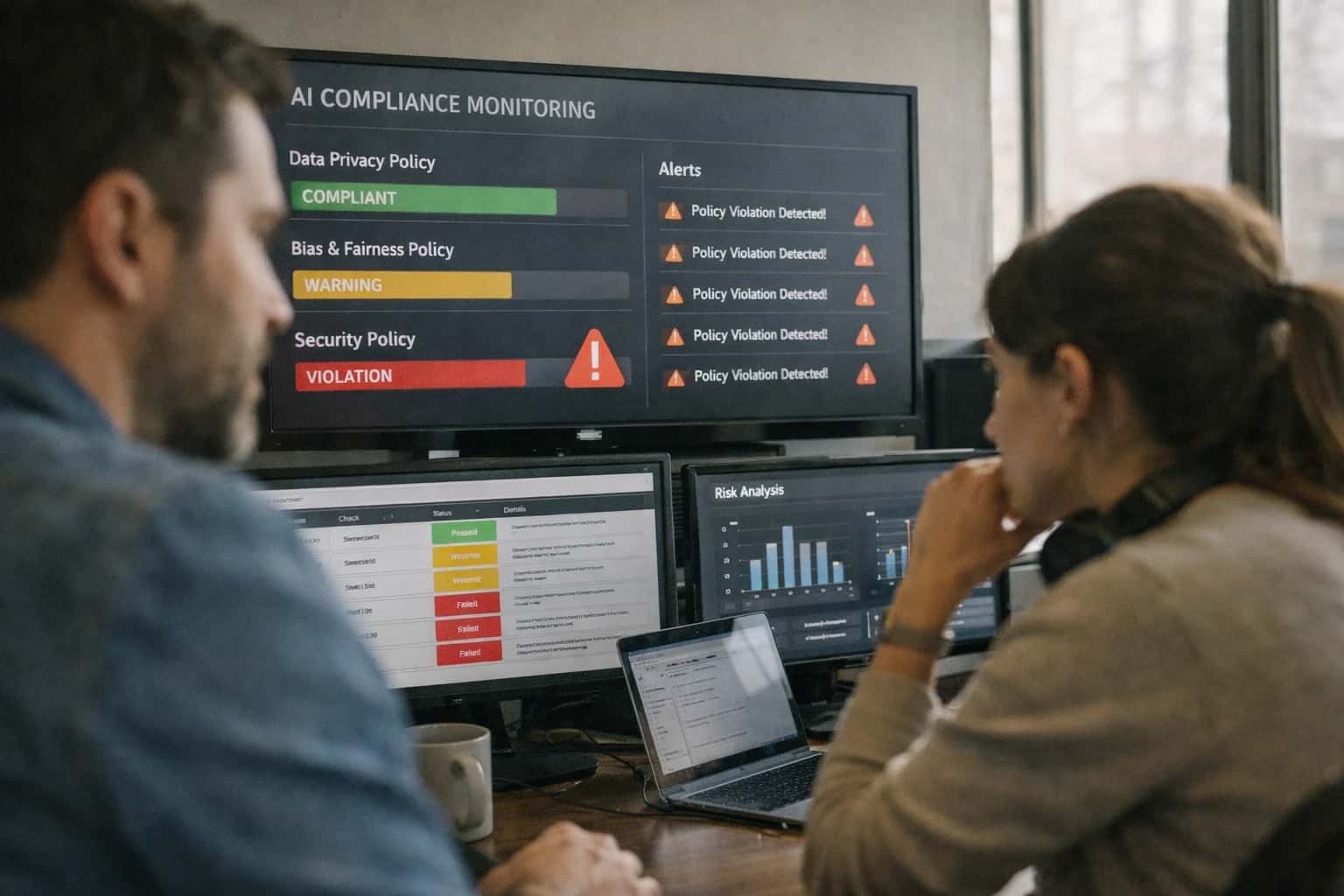
Where AI Fits into SampleManager's Compliance Workflow
A practical blueprint for integrating AI agents into Thermo Fisher SampleManager's change control, deviation, and CAPA modules to accelerate quality operations.
The implementation detail lies in grounding the AI in SampleManager's specific data model and GxP controls. Agents are configured to call tools via secured API endpoints that query related records: past deviations for similar Material or Test codes, linked Corrective Actions, and even external documents like SOPs from a connected Document Control system. A key workflow is the CAPA suggestion engine. After a root cause is assigned, the AI analyzes the deviation's attributes and retrieves the most effective past CAPAs from closed records, proposing specific actions (e.g., 'Revise SOP LAB-101', 'Retrain Analyst on HPLC method XYZ') directly into the CAPA form. This maintains the investigator's ultimate authority while providing data-driven suggestions, reducing the time from deviation closure to CAPA initiation from days to hours.
Rollout and governance are critical in regulated environments. A phased implementation typically starts with a read-only pilot on historical deviation data to tune categorization accuracy, followed by a draft-assist mode in a validation environment. All AI interactions are logged in a separate audit trail that links back to the SampleManager record's audit history, ensuring full traceability for 21 CFR Part 11 compliance. The AI system itself is deployed as a containerized service outside the LIMS, communicating via authenticated APIs, which allows for updates without impacting the validated state of SampleManager. This architecture lets compliance officers and QA managers control the AI's influence—configuring which deviation types trigger AI assistance and maintaining human-in-the-loop approval for all critical steps—balancing automation speed with regulatory rigor.
Key Integration Points in SampleManager
Automating Issue Intake and Categorization
Integrate AI at the initial logging stage of a Deviation or Change Control record. Use NLP to parse free-text descriptions from lab technicians or automated monitoring alerts to auto-populate critical fields:
- Category & Severity: Classify the issue (e.g., 'Equipment Failure', 'Procedure Deviation', 'Data Integrity') and assign a preliminary risk level based on historical similar events.
- Affected Items: Link the record to relevant Samples, Batches, Materials, or Instruments within SampleManager's object model.
- Regulatory References: Suggest applicable SOPs, CFR parts, or internal policies that may have been impacted.
This reduces manual data entry by up to 70% for QA staff and ensures consistent, rule-based triage from the moment an issue is recorded.
High-Value AI Use Cases for Compliance Teams
Integrate AI directly into SampleManager's compliance modules to automate routine review, accelerate investigations, and maintain audit readiness. These use cases target the manual, time-intensive workflows of QA managers, investigators, and regulatory affairs specialists.
Automated Deviation Categorization & Triage
AI analyzes free-text deviation descriptions in SampleManager to auto-assign severity levels (Minor/Major/Critical), investigation types, and due dates based on historical patterns and SOP rules. This reduces manual classification time and ensures consistent, risk-based prioritization for QA investigators.
Similar Investigation & CAPA Retrieval
When a new deviation is logged, an AI agent searches across past SampleManager records to surface related deviations, investigations, and CAPAs. It provides a summary of past root causes and effective actions, giving investigators a head start and helping prevent repeat issues.
Draft Regulatory Response & Audit Summary
AI compiles data from across SampleManager's change control, deviation, and CAPA modules to draft structured responses for regulatory inquiries or audit requests. It generates summaries of open actions, trend analyses, and compliance evidence packets, saving regulatory affairs teams days of manual assembly.
Proactive Risk Detection in Quality Metrics
AI models continuously monitor SampleManager's quality metrics—like OOS rates, deviation backlog, and CAPA cycle times—to detect emerging negative trends. It alerts compliance officers to potential systemic issues before they trigger a major audit finding, enabling proactive remediation.
Electronic Signature Workflow Support
Integrates AI review checkpoints within SampleManager's 21 CFR Part 11 electronic signature workflows. Before an approver signs, AI provides a concise summary of the record, highlights any anomalies or missing data, and confirms alignment with SOPs, adding a layer of AI-assisted verification for QA and management sign-offs.
Automated CAPA Effectiveness Checking
Post-CAPA implementation, AI agents monitor related SampleManager data streams (e.g., subsequent test results, deviation logs) to assess the effectiveness of the corrective action. It flags potential failures or new related issues, automating a key but often manual step in the closed-loop quality system for QA managers.
Example AI-Augmented Compliance Workflows
These workflows illustrate how AI agents can be embedded into SampleManager's core compliance operations to automate routine tasks, accelerate investigations, and maintain a defensible audit trail for QA and regulatory teams.
Trigger: A user creates a new Deviation record in SampleManager, entering a free-text description.
AI Agent Action:
- The agent is triggered via a SampleManager webhook or API call on record creation.
- It analyzes the description text using an LLM, cross-referencing against a knowledge base of SOPs and past deviations.
- The agent classifies the deviation type (e.g., 'Laboratory Error', 'Instrument Malfunction', 'Out-of-Specification'), suggests a preliminary severity level (Minor/Major/Critical), and proposes relevant investigation areas.
System Update:
- The agent writes its classification, severity suggestion, and rationale to predefined fields in the Deviation record.
- It can also auto-assign the record to a QA group or investigator based on the classification.
Human Review Point: The assigned QA investigator reviews the AI's suggestions, accepts or modifies them, and proceeds with the investigation plan. All AI actions are logged in the audit trail.
Implementation Architecture: Data Flow & Guardrails
A secure, auditable architecture for embedding AI into SampleManager's change control, deviation, and CAPA workflows.
The integration is built on a secure middleware layer that sits between SampleManager's APIs and the AI models. This layer handles authentication, data transformation, and audit logging. For example, when a new deviation is created in SampleManager's Q_DEVIATION table, a webhook triggers the middleware to extract the relevant record fields (description, product, batch) and related documents (SOPs, past CAPAs). This payload is then enriched and sent to the AI service for analysis, ensuring no raw PHI or sensitive IP leaves the controlled environment without first being de-identified and logged.
AI actions are executed as tool-calling agents with strict functional boundaries. One agent may be tasked with categorizing the deviation's severity and suggesting related past investigations from the knowledge base. Another may draft a preliminary investigation plan or a regulatory response snippet. Each agent call is a discrete transaction logged with a correlation ID, linking the AI's output back to the original SampleManager record. Results are returned to the middleware, where a human-in-the-loop approval step is injected before any data is written back to SampleManager. A compliance officer reviews the AI's suggestions—such as a proposed CAPA action in the Q_CAPA module—within a dedicated UI, approves or edits them, and then triggers the final update to SampleManager, which records a standard electronic signature.
Rollout follows a phased, change-controlled process. Phase one is a read-only pilot where AI generates summaries and suggestions in a sidecar dashboard without writing to production. After validation, phase two enables controlled writes to specific non-critical fields, like auto-populating a Category or Related_Investigation field. Governance is maintained through integrated audit trails; every AI interaction is logged in a separate AI_AUDIT_LOG table, capturing the input, model used, output, user who approved it, and the resulting SampleManager transaction ID. This ensures full traceability for internal audits and regulatory inspections, aligning with 21 CFR Part 11 and GxP data integrity principles.
Code & Payload Examples
Ingest & Classify New Deviation Records
When a new deviation is logged in SampleManager via its API or UI event, an AI agent can be triggered to read the description and categorize it, suggest severity, and link related records. This payload example shows the webhook data sent to the AI service and the structured response posted back to SampleManager's Deviation object.
json// Webhook payload from SampleManager to AI service { "event_type": "deviation.created", "record_id": "DEV-2024-00123", "module": "QMS_Deviations", "fields": { "title": "Out of Specification result for Assay XYZ", "description": "HPLC analysis of batch A123 showed potency at 85%, below spec limit of 90%. Analyst: Jane Doe. Instrument: HPLC-07.", "detected_by": "jdoe", "detection_date": "2024-10-26" }, "system": "SampleManager", "environment": "Production" } // AI service response posted back to SampleManager { "deviation_id": "DEV-2024-00123", "suggested_category": "Analytical - OOS", "suggested_severity": "Major", "confidence_score": 0.92, "related_investigation_ids": ["INV-2023-0456", "CAPA-2024-0033"], "key_entities": ["HPLC-07", "batch A123", "Assay XYZ", "potency"] }
The AI uses the description to classify the deviation against a trained model of GxP categories (Analytical OOS, Documentation Error, Equipment Failure, etc.). The related_investigation_ids are retrieved via semantic search across past closed records in SampleManager.
Realistic Time Savings & Operational Impact
How AI integration accelerates SampleManager's change control, deviation, and CAPA workflows while maintaining compliance rigor.
| Compliance Workflow | Before AI | After AI | Implementation Notes |
|---|---|---|---|
Deviation Intake & Categorization | Manual review of incident reports | Auto-categorization with severity scoring | AI suggests category/severity; human QA officer confirms |
Initial Investigation Drafting | 2-4 hours per deviation | 20-30 minute review of AI-generated draft | AI pulls similar past deviations and relevant SOPs into draft |
CAPA Plan Suggestions | Manual root cause analysis and brainstorming | AI proposes relevant CAPAs from knowledge base | Plans are linked to past effectiveness data for review |
Regulatory Response Drafting | Days to compile data and draft | Hours to review and finalize AI-assisted draft | AI structures data from linked records (deviations, tests, batches) |
Change Control Impact Assessment | Manual cross-reference of affected documents | AI maps proposed change to SOPs, specs, and training records | Highlights potential conflicts for the Change Control Board |
Audit Trail Summarization for QA Review | Manual sampling and spot-checking | AI-generated summaries of key events and signatures | Provides narrative overview for pre-audit preparation |
Periodic Review Report Generation | Week-long manual data aggregation | Same-day draft from AI-consolidated system data | Automates data pull from SampleManager modules into report templates |
Governance, Security & Phased Rollout
A controlled, audit-ready approach to integrating AI into SampleManager's compliance workflows.
Integrating AI into a regulated system like Thermo Fisher SampleManager requires a governance-first architecture. We design integrations to operate as a secure middleware layer, where AI models act as assistants that never directly write to the LIMS database. All AI-generated content—such as deviation categorizations, CAPA suggestions, or draft regulatory responses—is routed through SampleManager's existing change control workflows and electronic signature (21 CFR Part 11) approval steps. This ensures human-in-the-loop oversight and maintains a complete, immutable audit trail linking the AI's input to the final approved record.
Security is enforced at multiple levels: AI API calls use service accounts with role-based access control (RBAC) scoped to specific SampleManager modules (e.g., Q_Deviation, Q_CAPA). Sensitive data sent for processing is pseudonymized, and all prompts, completions, and grounding documents are logged to a secure, indexed store for traceability. The integration is deployed within your existing IT infrastructure, often as containerized services that connect to SampleManager via its SOAP or REST APIs, ensuring no external data egress and compliance with internal data governance policies.
We recommend a phased rollout to de-risk implementation and demonstrate value. Phase 1 typically automates the triage and initial categorization of new deviations, reducing manual sorting time for QA officers. Phase 2 extends to retrieving similar past investigations from the SampleManager knowledge base to aid root cause analysis. Phase 3 introduces drafting assistance for CAPA plans and regulatory inquiry responses. Each phase includes a parallel validation period where AI suggestions are compared against human decisions, with results fed back to fine-tune the models and build organizational confidence in the system's reliability.
Enabling Efficiency, Speed & Accuracy
Intelligent Analysis, Decision & Execution
We build AI systems for teams that need search across company data, workflow automation across tools, or AI features inside products and internal software.
Talk to Us
Search across company data
Give teams answers from docs, tickets, runbooks, and product data with sources and permissions.
Useful when people spend too long searching or get different answers from different systems.

Automate internal workflows
Use AI to route work, draft outputs, trigger actions, and keep approvals and logs in place.
Useful when repetitive work moves across multiple tools and teams.

Add AI to products and internal tools
Build assistants, guided actions, or decision support into the software your team or customers already use.
Useful when AI needs to be part of the product, not a separate tool.
Frequently Asked Questions
Practical questions for compliance officers, QA managers, and IT architects planning AI integration into SampleManager's regulated workflows.
AI integration is architected with a zero-trust, API-first approach to maintain data integrity and compliance.
- Secure API Gateway: AI agents interact exclusively through SampleManager's secured REST APIs, never via direct database access. All calls require service account authentication with scoped permissions (e.g., read-only for deviation records, write for draft CAPA fields).
- Contextual Data Fetching: For a deviation, the agent fetches only the necessary context via API: the deviation record, linked sample/test data, and relevant SOP sections from the document control module. No bulk data exports occur.
- In-Transit and At-Rest Security: Data payloads are encrypted in transit (TLS 1.3). For processing, sensitive data can be masked or pseudonymized before being sent to the AI model (e.g., via a secure proxy), and is never retained by the model post-response.
- Audit Trail Integrity: Every AI-initiated action (e.g., "draft CAPA suggested") is logged in SampleManager's native audit trail with the service account as the actor, maintaining a clear chain of custody.
This pattern ensures the integration aligns with 21 CFR Part 11 and internal IT security policies.

About the author
Prasad Kumkar
CEO & MD, Inference Systems
Prasad Kumkar is the CEO & MD of Inference Systems and writes about AI systems architecture, LLM infrastructure, model serving, evaluation, and production deployment. Over 5+ years, he has worked across computer vision models, L5 autonomous vehicle systems, and LLM research, with a focus on taking complex AI ideas into real-world engineering systems.
His work and writing cover AI systems, large language models, AI agents, multimodal systems, autonomous systems, inference optimization, RAG, evaluation, and production AI engineering.
Partnered with leading AI, data, and software stack.





How We Work
Custom AI workflows for your Business
One-fit-all AI don't work for modern businesses. At Inferensys, we aim to understand your business & custom requirements; which we use to define most efficient agentic workflows, the data, and the tools for your business.
01
Review the use case
We understand the task, the users, and where AI can actually help.
Read more02
Pick the right approach
We define what needs search, automation, or product integration.
Read more03
Build the first useful version
We implement the part that proves the value first.
Read more04
Improve from there
We add the checks and visibility needed to keep it useful.
Read moreThe first call is a practical review of your use case and the right next step.
Talk to Us