AI integrates into an environmental LIMS (LabWare, LabVantage, SampleManager) at three primary surfaces: sample data ingestion, analytical review workflows, and reporting/regulatory operations. For ingestion, AI agents parse incoming chain-of-custody forms, field notes, and PDF reports via the LIMS API or webhook, extracting parameters like sampling location, requested tests (e.g., heavy metals, PFAS), and regulatory limits into the correct sample and test records. This replaces manual data entry for lab technicians. Within the review workflow, AI models act as a pre-validation layer, scanning result tables against configured regulatory thresholds (EPA, state-specific) to auto-flag exceedances, statistically improbable values, or missing quality control samples before a human reviewer sees them. These flags are written back to the LIMS as annotations or linked to a deviation record.

Integration
AI Integration for LIMS in Environmental Testing
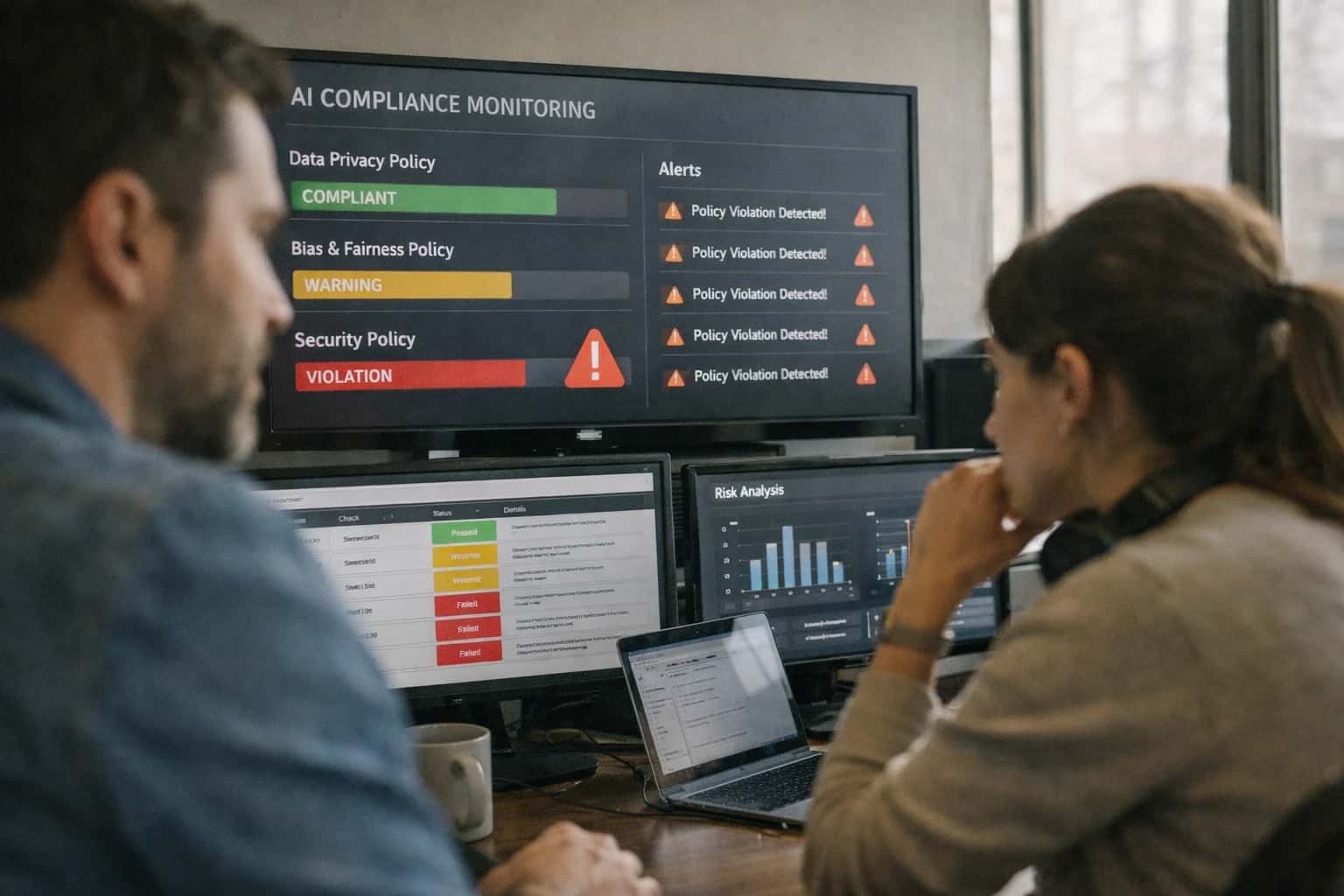
Where AI Fits into Environmental LIMS Workflows
A practical blueprint for integrating AI into environmental LIMS to automate compliance, accelerate reporting, and enhance data intelligence.
The high-impact use case is automated compliance reporting. An AI agent, triggered upon batch approval in the LIMS, can correlate exceedances across multiple sampling sites and dates, draft the narrative section of a regulatory report (e.g., for NPDES discharge monitoring), and populate summary tables. This shifts report drafting from days to hours for environmental scientists. Implementation typically involves a secure middleware layer that hosts the AI models, handles authentication with the LIMS REST or SOAP APIs, and maintains an audit trail of all AI-generated actions, comments, and data modifications to satisfy QA/QC requirements in accredited labs.
Rollout should be phased, starting with a single, high-volume test type (e.g., nutrient analysis for wastewater) to validate the AI's accuracy and integration stability. Governance is critical: all AI suggestions must be reviewed and approved by a qualified scientist within the LIMS electronic signature workflow before finalizing data or reports. The AI system should be trained on the lab's historical data and regulatory frameworks to ensure contextual accuracy. This approach allows labs to gain operational efficiency without compromising the defensibility of their data, which is paramount in environmental compliance. For related architectural patterns, see our guide on AI Integration for LIMS in Regulated Industries (GxP).
Key LIMS Modules and Surfaces for AI Integration
Core Sample Lifecycle Automation
This module manages the entire sample journey—from login to disposal—and is the primary surface for AI-driven workflow automation in environmental labs.
Key AI Integration Points:
- Sample Login: AI agents parse incoming chain-of-custody (COC) forms, emails, or PDF requests to auto-populate fields like sample ID, matrix (water, soil, air), requested analyses (e.g., metals, VOCs, pathogens), client, and site location.
- Test Scheduling & Routing: Based on sample matrix, priority, and regulatory method (e.g., EPA, ISO), AI can dynamically assign tests to appropriate instruments and technicians, optimizing lab throughput.
- Disposition Logic: Post-analysis, AI can recommend final dispositions (Accept, Reject, Re-test) by comparing results against project-specific action limits or regulatory thresholds, flagging samples that require manual review.
Integrating here reduces manual data entry for lab technicians and accelerates sample turnaround.
High-Value AI Use Cases for Environmental Labs
Integrating AI with your LIMS transforms manual, reactive data workflows into proactive, automated intelligence. These patterns connect AI directly to LabWare, LabVantage, or SampleManager to accelerate compliance, improve data quality, and free up scientists for higher-value analysis.
Automated Exceedance Flagging & Alerting
AI agents monitor incoming test results in real-time against regulatory limits (EPA, state) stored in the LIMS. The system auto-flags exceedances, categorizes severity, and triggers alerts via email or dashboard—before manual review. This reduces the risk of missed compliance events and accelerates initial response.
Multi-Site Data Correlation & Trend Analysis
AI analyzes historical and current sample data across different locations, matrices (water, soil, air), and parameters. It identifies hidden correlations, spatial trends, and seasonal patterns, surfacing insights in the LIMS reporting module. This helps environmental scientists move from isolated data points to ecosystem-level understanding.
Compliance Report Drafting & Data Assembly
An AI copilot accesses finalized sample data, QA/QC flags, and instrument metadata from the LIMS to auto-draft sections of compliance reports (e.g., discharge monitoring reports). It assembles required data tables and narrative summaries, providing a first draft for the scientist or project manager to review and finalize.
Intelligent Sample Login & Request Processing
Uses NLP and document parsing to extract client, sample, and test requirement details from emailed chain-of-custody forms or PDFs. The AI populates the LIMS sample login screen, suggests correct test codes, and flags incomplete information—dramatically reducing manual data entry for lab accessioning staff.
Corrective Action (CAPA) Support & Knowledge Retrieval
When a deviation or OOS result is logged in the LIMS, an AI agent retrieves similar past incidents, relevant SOPs, and corrective actions. It suggests potential root causes and drafts an initial investigation plan for the QA investigator, creating a closed-loop learning system for continuous improvement.
Supplier & Source Risk Scoring
AI correlates incoming sample test results with supplier/vendor data in the LIMS. It generates risk scores based on historical exceedance rates, turnaround time, and data quality, providing lab managers and procurement with actionable intelligence for supplier qualification and audit scheduling.
Example AI-Augmented Workflows
These concrete workflows illustrate how AI agents can integrate with your LIMS to automate compliance monitoring, data correlation, and reporting tasks, directly addressing the operational needs of environmental scientists and lab managers.
Trigger: A new analytical result is validated and posted to a sample record in the LIMS (e.g., LabWare, SampleManager).
Context Pulled: The AI agent receives the sample ID, test parameter (e.g., Arsenic), numerical result, units, and the associated regulatory limit profile (e.g., EPA Method 200.8, State Groundwater Standard).
Agent Action: The model compares the result against the configured regulatory limit. If an exceedance is detected, it:
- Calculates the percentage over the limit.
- Checks for associated data quality flags (e.g., holding time, duplicate RPD).
- Retrieves the sample's location metadata (site ID, well name, collection date).
System Update: The agent automatically:
- Creates a preliminary deviation/OOS record in the LIMS QA module, pre-populated with the exceedance details.
- Flags the original sample/test record with a visual alert.
- Sends a real-time notification via email or Teams to the assigned project scientist and QA officer.
Human Review Point: The scientist reviews the AI-generated flag and deviation draft, adds contextual notes (e.g., known site history, potential sampling error), and initiates the formal investigation workflow.
Implementation Architecture: Data Flow & Guardrails
A production-ready architecture for integrating AI into environmental LIMS workflows, designed for data integrity and auditability.
A secure integration connects your LIMS (LabWare, LabVantage, SampleManager) to AI models via a dedicated middleware layer. This layer handles authentication, request/response queuing, and payload transformation. Core data flows include:
- Sample & Result Ingestion: Real-time webhooks or scheduled batch jobs push sample metadata, test results, and associated regulatory limits from the LIMS
TestandSpecificationobjects to the AI service. - AI Processing: Models analyze the data stream to flag exceedances, correlate anomalies across
SamplingSiteandAnalytedimensions, and draft narrative findings. - Return-to-LIMS Workflow: Processed outputs—structured flags, correlation insights, and report snippets—are posted back to the LIMS as
Comments, linked toDeviationrecords, or attached toReporttemplates, all with full audit trail provenance.
Critical guardrails are embedded at each stage to maintain GxP compliance and scientific validity:
- Pre-Processing Validation: All data is checked for completeness (e.g., units, detection limits) and matched against approved test methods before AI evaluation.
- Human-in-the-Loop (HITL) Gates: AI-generated exceedance flags and draft report sections are routed to a Review Queue within the LIMS or a connected dashboard. A qualified environmental scientist or QA officer must review and approve/amend each finding before it becomes an official record. All changes are tracked.
- Model Hallucination Controls: Responses are grounded by retrieving and citing the exact source data (sample ID, result value, limit) from the LIMS. Unsupported speculative statements are filtered out.
- Change Control Integration: Any updates to the AI models, prompts, or integration logic follow the LIMS's existing electronic change control workflow, requiring justification and approval.
Rollout follows a phased, risk-based approach. Phase 1 typically automates exceedance flagging for high-volume routine tests (e.g., heavy metals in water), providing immediate time savings for scientists reviewing data tables. After validating accuracy and user trust, Phase 2 expands to cross-site correlation analysis and automated draft reporting for common compliance documents. The architecture is designed to scale from a single lab to a multi-site organization, with centralized governance over the AI logic while execution occurs at the edge, close to each LIMS instance.
Code & Payload Examples
Automating Sample Registration
Environmental labs receive sample submission forms via email or portal. An AI agent can parse these documents to auto-populate the LIMS sample record, extracting key fields like sample ID, location coordinates, requested tests, and regulatory limits.
Typical Workflow:
- Webhook triggers on new document upload.
- AI service (e.g., Azure Document Intelligence, AWS Textract) extracts structured data.
- A payload is constructed for the LIMS REST API to create the sample.
Example Payload to LIMS API:
json{ "sample": { "id": "ENV-2024-5678", "type": "GROUNDWATER", "receivedDate": "2024-05-15", "client": "ACME Environmental", "projectCode": "WQ-789", "location": { "siteId": "MW-12B", "latitude": 34.0522, "longitude": -118.2437 }, "tests": [ { "code": "EPA 200.8", "analyte": "Arsenic", "limit": 0.010 }, { "code": "SM 4500-P", "analyte": "Phosphorus", "limit": 0.05 } ], "priority": "ROUTINE" } }
This reduces manual data entry from 10-15 minutes per sample to seconds, allowing accessioning staff to focus on exceptions.
Realistic Time Savings & Operational Impact
How AI integration with your LIMS transforms manual, time-consuming compliance workflows into proactive, data-driven operations.
| Workflow / Task | Before AI Integration | After AI Integration | Operational Impact & Notes |
|---|---|---|---|
Regulatory Limit Exceedance Review | Manual review of all results against limits in spreadsheets or static reports. | Automated flagging of exceedances with contextual alerts in the LIMS dashboard. | Shifts analyst focus from detection to investigation. Reduces oversight risk for high-volume sample days. |
Multi-Site Data Correlation | Manual export and pivot table analysis across projects to identify spatial or temporal trends. | AI-driven correlation engine identifies patterns (e.g., contaminant plumes) and surfaces insights. | Transforms a multi-day, ad-hoc analysis into a routine, same-day monitoring activity for environmental scientists. |
Compliance Report Drafting | Manual compilation of data, copy-pasting into template documents, and peer review cycles. | AI agent assembles data, drafts narrative sections (e.g., executive summary, findings), and highlights anomalies. | Reduces report generation from 1-2 days to a few hours. Human review focuses on interpretation, not formatting. |
Sample Data Entry & Login | Manual transcription from paper chain-of-custody forms or emailed PDF requests. | Intelligent document processing (IDP) parses request forms and emails to pre-populate LIMS sample records. | Cuts sample login time by 60-80%. Technicians verify AI-extracted data instead of typing. |
Corrective Action (CAPA) Initiation | Manual incident logging after exceedance is confirmed, requiring form filling and cross-referencing past actions. | AI suggests related past deviations and auto-generates a preliminary investigation record upon exceedance flag. | Accelerates CAPA kickoff from 'next business day' to 'within the hour,' improving response time to environmental incidents. |
Audit Trail Review for Compliance Audits | Manual sampling and review of electronic records to demonstrate data integrity for auditors. | AI summarizes key audit trails, flags potential data integrity gaps, and generates pre-audit readiness packs. | Reduces pre-audit preparation from weeks to days, providing confidence and structured evidence for QA managers. |
Client Data Package Assembly | Manual gathering of results, COAs, and supporting documentation from multiple LIMS modules per client project. | AI agent queries LIMS APIs to compile project-specific data packages, including trend charts and summary statistics. | Turns a half-day, error-prone task into a 30-minute automated workflow, improving client turnaround and satisfaction. |
Governance, Compliance & Phased Rollout
A structured approach to deploying AI in regulated environmental LIMS, balancing automation with auditability.
In environmental testing, AI integrations must be architected to preserve the chain of custody and data integrity mandated by regulations like NPDES, RCRA, and state-level environmental codes. This means every AI-generated flag, correlation, or draft report must be traceable back to the source sample data in the LIMS (e.g., LabWare, SampleManager). We implement this by creating immutable audit logs for all AI actions, storing the exact input payload (sample IDs, test results, regulatory limits), the model version used, and the output rationale. AI agents are configured as a non-editing layer—they can propose actions like flagging an exceedance or drafting a report, but the final posting to the official sample record requires a credentialed human review and electronic signature within the LIMS's 21 CFR Part 11-compliant workflow.
A phased rollout is critical for user adoption and risk management. A typical implementation follows this path:
- Phase 1: Assisted Review. Deploy AI to run in parallel with existing workflows. For example, an agent scans incoming results against configured regulatory limits (e.g., EPA Method limits for metals in wastewater) and creates a "Review Queue" in a separate dashboard. Lab scientists and QA reviewers use this as a prioritization tool, verifying each flag before any official action is taken in the LIMS. This builds trust and generates performance data on the AI's precision and recall.
- Phase 2: Integrated Drafting. Once validated, enable AI to draft structured compliance report sections (e.g., Executive Summary of Exceedances for a discharge monitoring report) within a controlled workspace. The drafts are saved as attachments linked to the sample or project in the LIMS, requiring a scientist's review, edit, and approval before final submission.
- Phase 3: Conditional Automation. For high-confidence, repetitive tasks—like auto-flagging a routine parameter that is consistently within control limits—implement rules-based automation with AI oversight. The system can automatically log a "Pass" comment, but any anomaly triggers an immediate hold and routes to the Phase 1 review queue.
Governance is maintained through a cross-functional AI Steering Committee involving the Lab Director, QA Manager, IT, and Compliance Officer. This group approves use cases, reviews performance metrics (e.g., false positive rates in exceedance detection), and manages the model retraining cycle based on new regulatory limits or testing methods. All AI models and prompts are version-controlled in a system like Weights & Biases or Arize AI, with clear lineage back to the training data—often historical, de-identified LIMS data. Access to the AI tooling is gated by the same role-based permissions (RBAC) as the LIMS itself, ensuring only authorized personnel can configure rules or view sensitive correlations across sampling sites. This layered approach ensures the lab gains operational efficiency without compromising its regulatory standing or data integrity.
Enabling Efficiency, Speed & Accuracy
Intelligent Analysis, Decision & Execution
We build AI systems for teams that need search across company data, workflow automation across tools, or AI features inside products and internal software.
Talk to Us
Search across company data
Give teams answers from docs, tickets, runbooks, and product data with sources and permissions.
Useful when people spend too long searching or get different answers from different systems.

Automate internal workflows
Use AI to route work, draft outputs, trigger actions, and keep approvals and logs in place.
Useful when repetitive work moves across multiple tools and teams.

Add AI to products and internal tools
Build assistants, guided actions, or decision support into the software your team or customers already use.
Useful when AI needs to be part of the product, not a separate tool.
Frequently Asked Questions
Common questions about integrating AI agents and generative models with LIMS platforms like LabWare and LabVantage to automate compliance workflows, data correlation, and reporting for environmental testing.
This workflow uses an AI agent triggered by new test results posted to the LIMS.
- Trigger: A new analytical result is validated and saved in the LIMS (e.g.,
Sample.Test_Resulttable). - Context Pulled: The agent retrieves the sample's metadata (matrix type, location, collection date) and the applicable regulatory limits from a linked compliance database or master data table within the LIMS.
- Agent Action: The AI model compares the numeric result against the limit. It doesn't just check for a simple exceedance; it can:
- Flag results trending toward a limit over multiple sampling events.
- Identify results that are statistically anomalous for that site/matrix.
- Check for required detection limits (e.g., must be below 5 ppb).
- System Update: The agent creates a new
InvestigationorDeviationrecord in the LIMS, pre-populating fields with the exceedance details, linked sample ID, and a preliminary severity assessment (e.g., 'Critical' for drinking water, 'Monitor' for baseline soil). - Human Review: The flagged record is routed via the LIMS workflow to the appropriate environmental scientist or QA reviewer for confirmation and next steps.

About the author
Prasad Kumkar
CEO & MD, Inference Systems
Prasad Kumkar is the CEO & MD of Inference Systems and writes about AI systems architecture, LLM infrastructure, model serving, evaluation, and production deployment. Over 5+ years, he has worked across computer vision models, L5 autonomous vehicle systems, and LLM research, with a focus on taking complex AI ideas into real-world engineering systems.
His work and writing cover AI systems, large language models, AI agents, multimodal systems, autonomous systems, inference optimization, RAG, evaluation, and production AI engineering.
Partnered with leading AI, data, and software stack.





How We Work
Custom AI workflows for your Business
One-fit-all AI don't work for modern businesses. At Inferensys, we aim to understand your business & custom requirements; which we use to define most efficient agentic workflows, the data, and the tools for your business.
01
Review the use case
We understand the task, the users, and where AI can actually help.
Read more02
Pick the right approach
We define what needs search, automation, or product integration.
Read more03
Build the first useful version
We implement the part that proves the value first.
Read more04
Improve from there
We add the checks and visibility needed to keep it useful.
Read moreThe first call is a practical review of your use case and the right next step.
Talk to Us