AI integration targets the functional surfaces within Spectro Cloud where compliance data is generated and acted upon: the CIS Benchmark scanner outputs, cluster configuration drift logs, resource quota and namespace audit trails, and the policy engine (OPA/Gatekeeper) violation events. Instead of manual review, an AI agent can be configured to consume these structured data streams via Spectro Cloud's APIs or webhooks, correlating findings across clusters and over time to identify systemic risks.

Integration
AI Integration for Spectro Cloud Compliance
Automate CIS benchmark analysis, policy drift detection, and audit evidence generation within Spectro Cloud's governance modules using AI agents. Reduce manual compliance workloads from days to hours for security and platform teams.
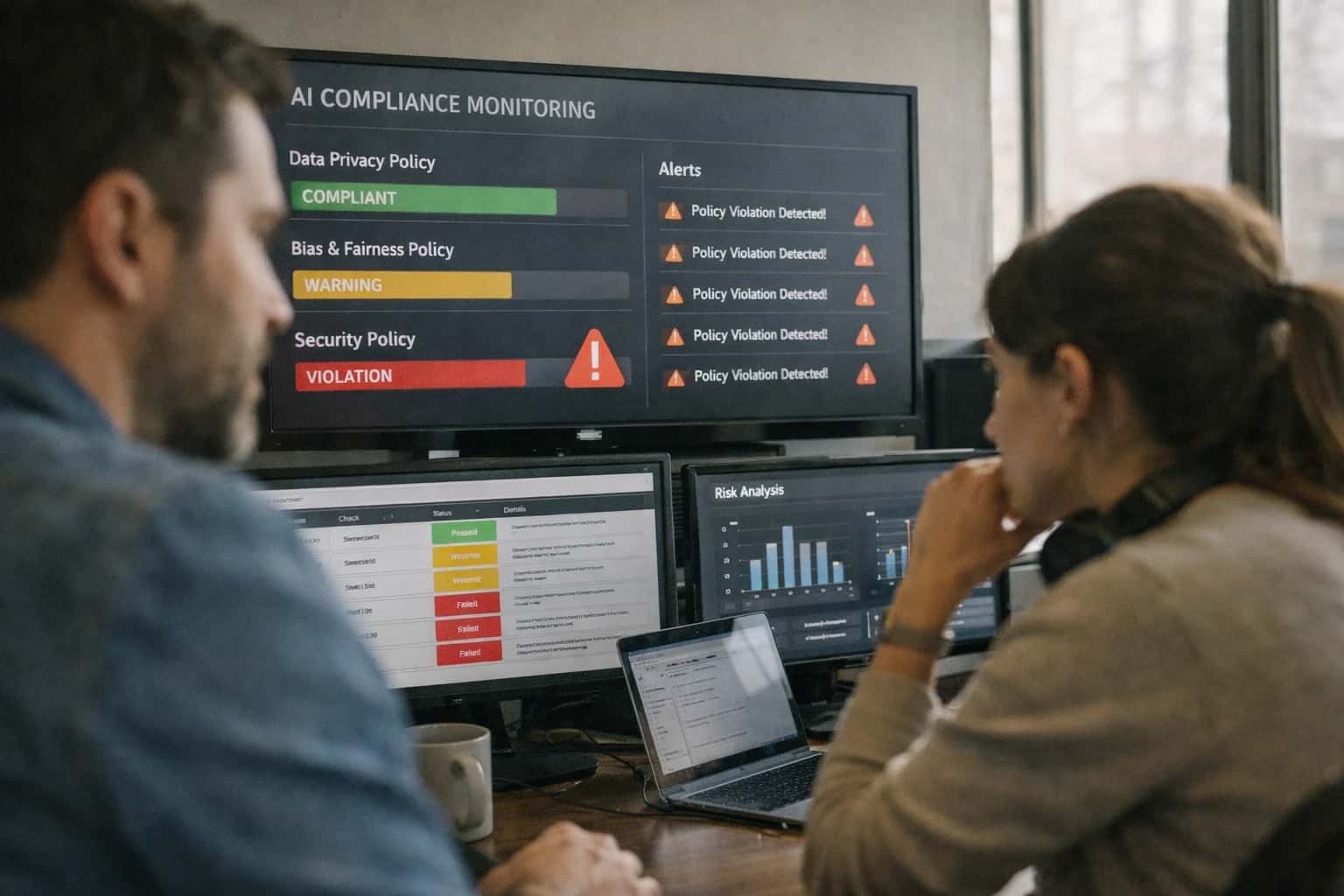
ARCHITECTURE FOR SECURITY AND COMPLIANCE OFFICERS
Where AI Fits into Spectro Cloud Compliance Workflows
Integrating AI agents directly into Spectro Cloud Palette's governance modules to automate policy enforcement, audit evidence collection, and risk prioritization.
The implementation typically involves a lightweight service that subscribes to Spectro Cloud's event bus, enriched with context from external systems like a ticketing platform (ServiceNow, Jira) or a GRC tool. For example, when a CIS scan detects a high severity finding like etcd encryption not enabled, the AI can:
- Retrieve the specific cluster's business context (e.g.,
production,PCI scope). - Cross-reference with existing exemption tickets or risk acceptances.
- Draft a remediation playbook with exact
kubectlor Palette API commands. - Route the enriched alert to the correct platform engineering team via Slack or MS Teams, bypassing manual triage. This turns a raw finding into an actionable, contextualized work item in minutes, not days.
Rollout requires careful governance. Start with a read-only AI agent analyzing historical scan data to establish a baseline and identify the 20% of controls causing 80% of violations. Phase two introduces automated, human-in-the-loop ticket creation for pre-approved low-risk remediations (e.g., correcting pod security labels). The AI's actions should be fully logged back to Spectro Cloud as audit events, and all automated changes should be gated by the same GitOps promotion workflows your team already uses. This ensures AI augments—not bypasses—your existing compliance gates and change advisory boards.
COMPLIANCE AND GOVERNANCE MODULES
Key Integration Surfaces in Spectro Cloud Palette
Automating CIS Benchmark Analysis
Integrate AI directly with Spectro Cloud's native or integrated CIS scanning tools (like kube-bench or commercial scanners) to transform raw scan results into actionable remediation plans. An AI agent can ingest JSON or YAML scan reports, prioritize findings based on cluster role (control plane vs. worker), environment risk (prod vs. dev), and known exploitability.
Key AI Workflows:
- Prioritized Remediation: AI cross-references findings with your cluster's specific configuration (e.g.,
kube-apiserverflags, network plugin) to filter out false positives and rank fixes by impact and effort. - Script Generation: For high-priority, repetitive fixes, the AI can generate Ansible playbooks, shell scripts, or Kubernetes
kubectl patchcommands tailored to your cluster's version and distribution. - Evidence Compilation: Automatically generate auditor-ready reports that map each CIS control to the scan result, remediation action taken, and timestamp, pulling data from Palette's audit logs.
SPECTRO CLOUD PALETTE
High-Value AI Compliance Use Cases
Integrate AI agents with Spectro Cloud Palette's governance and compliance modules to automate security scanning, policy enforcement, and audit evidence generation for regulated Kubernetes environments.
01
Automated CIS Benchmark Analysis & Remediation
AI agents analyze Spectro Cloud's CIS benchmark scan results, prioritize findings based on cluster context (e.g., production vs. dev), and generate specific remediation scripts or GitOps pull requests to fix misconfigurations. This moves compliance from a periodic manual review to a continuous, automated workflow.
Weeks -> Days
Remediation cycle
02
Policy Drift Detection & Enforcement
Monitor Spectro Cloud's cluster profiles and layer configurations for unauthorized changes. AI compares live state against declared policy (e.g., in Git), identifies the root cause of drift, and triggers automated rollbacks or generates Jira tickets for security team review with full context.
Real-time
Detection
03
Intelligent Audit Report Generation
For SOC 2, ISO 27001, or internal audits, AI agents query Spectro Cloud's APIs and logs to compile evidence packs. They generate narrative summaries of security controls, map cluster configurations to compliance frameworks, and produce auditor-ready reports, eliminating manual evidence collection.
Hours -> Minutes
Report assembly
04
Vulnerability Prioritization for Cluster Images
Integrate AI with Spectro Cloud's image management to analyze vulnerability scan results from container registries. AI contextualizes CVEs based on runtime exposure (e.g., is the vulnerable package loaded?), cluster role, and exploitability, providing a risk-ranked patch schedule for platform teams.
90% less noise
Alert reduction
05
Compliance-as-Code Policy Authoring
Assist security engineers in writing and validating OPA/Rego policies or Kyverno rules for Spectro Cloud's admission controllers. AI suggests policies based on common compliance requirements (e.g., 'no hostPath mounts'), tests them against sample workloads, and generates documentation.
1 sprint
Policy development
06
Multi-Tenant Access Review & Cleanup
Automate periodic reviews of RBAC and namespace access within Spectro Cloud's projects. AI analyzes user activity logs and resource permissions to identify stale service accounts, excessive privileges, or orphaned resources, generating cleanup tickets or executing safe, automated removals.
Same day
Review cycle
FOR SPECTRO CLOUD GOVERNANCE MODULES
Example AI-Powered Compliance Workflows
These workflows demonstrate how AI agents can automate key compliance tasks within Spectro Cloud Palette, from continuous scanning to audit-ready reporting. Each flow connects to specific Palette APIs and governance surfaces.
Trigger: Scheduled scan (e.g., daily) or event-driven trigger from Spectro Cloud Palette's cluster health webhook.
Context Pulled:
- Latest CIS benchmark scan results via Palette's
ComplianceScanAPI. - Cluster profile and layer configurations to understand intended state.
- Historical scan data to identify recurring failures.
AI Agent Action:
- Analyze Drift: Compare current scan results against the last compliant baseline. The LLM categorizes findings:
Critical(e.g.,--anonymous-auth=true)Warning(e.g., non-default--audit-log-path)Informational(e.g., missing pod security labels)
- Prioritize & Explain: For each finding, the agent retrieves the specific CIS control description and explains the risk in operational terms (e.g., "This setting allows unauthenticated API requests, exposing the cluster to reconnaissance.").
- Generate Remediation Script: Creates a Kubernetes
Jobmanifest or Ansible snippet tailored to the cluster's OS (e.g., Ubuntu, RHEL) and Spectro Cloud layer structure to fix the setting.
System Update:
- The agent posts a summary and the remediation script to a designated Slack channel or ServiceNow ticket, tagged with the cluster ID.
- Optionally, for pre-approved low-risk changes, the agent can create a Git commit in the cluster's GitOps repository (e.g., updating a
KubeadmConfigin a Palette layer) to trigger an automated rollout via Palette's Fleet engine.
Human Review Point: All Critical findings require manual approval before any automated Git commit is made. The ticket includes a one-click "Approve for GitOps" button that triggers the merge.
AUTOMATED COMPLIANCE WORKFLOWS
Implementation Architecture: Data Flow & Guardrails
A production-ready architecture for embedding AI into Spectro Cloud's compliance modules, automating CIS benchmark analysis and policy drift detection.
The integration connects to Spectro Cloud Palette's Governance APIs and Compliance Scanner to pull raw CIS benchmark results, cluster configuration snapshots, and historical policy states. An AI agent, triggered by scheduled scans or real-time webhooks, processes this data to identify drift patterns, prioritize findings based on severity and cluster context (e.g., production vs. development), and generate human-readable remediation steps. The system writes enriched findings and suggested actions back to Spectro Cloud as annotated compliance reports and can optionally create Jira tickets or ServiceNow incidents via webhook for tracked remediation.
Key guardrails are implemented at multiple layers: a pre-processing filter redacts sensitive data (like keys or tokens) from configuration snapshots before sending to the LLM. A post-processing validator checks all AI-generated recommendations against a library of approved Spectro Cloud and Kubernetes security baselines to prevent suggesting insecure configurations. All AI interactions are logged with full audit trails, linking the original scan ID, the AI's analysis, and the final user action for compliance evidence. The system operates in a read-first, suggest-second mode, ensuring no automated changes are made to live clusters without explicit approval in the Spectro Cloud UI or a separate orchestration workflow.
Rollout follows a phased approach: start with a single, non-production cluster to tune the AI's analysis prompts and validation rules. Then, expand to development environments to build confidence in the prioritization logic. Finally, enable for production clusters, initially in an advisor-only mode where findings are visible but require manual review. This staged deployment allows security teams to calibrate the system's sensitivity and integrate the AI's output into existing change control and exception management processes within Spectro Cloud's project and team structure.
AUTOMATING COMPLIANCE WORKFLOWS
Code & Payload Examples
Automated Scan Prioritization
An AI agent can process raw CIS benchmark scan results from Spectro Cloud's compliance modules, prioritize findings based on cluster context, and generate remediation tickets. This workflow typically involves:
- Ingesting JSON scan results from the Spectro Cloud API or a configured webhook.
- Enriching findings with cluster metadata (environment, workload sensitivity).
- Applying a risk-scoring model to prioritize fixes (e.g., critical for production clusters with PII).
- Generating actionable Jira or ServiceNow tickets with suggested commands or IaC patches.
python# Example: Processing a scan result and creating a high-priority ticket scan_result = get_spectro_cloud_cis_scan(cluster_id="cls-123") for finding in scan_result["failures"]: risk_score = calculate_risk_score( finding["id"], cluster_env=scan_result["metadata"]["environment"], workload_tier=scan_result["metadata"]["tier"] ) if risk_score > 75: # High priority create_compliance_ticket( title=f"CIS {finding['id']}: {finding['description']}", cluster=scan_result["clusterName"], remediation=finding["remediation"], priority="High" )
AI-ASSISTED COMPLIANCE OPERATIONS
Realistic Time Savings & Operational Impact
This table illustrates the operational impact of integrating AI agents with Spectro Cloud's governance modules to automate CIS benchmark scanning, policy drift detection, and audit reporting workflows.
| Compliance Workflow | Manual Process | AI-Assisted Process | Key Notes |
|---|---|---|---|
CIS Benchmark Scan Review | 4-8 hours per cluster per quarter | 30-60 minutes for prioritized findings | AI triages 80% of low-risk passes, surfaces critical deviations for human review |
Policy Drift Detection | Weekly manual dashboard checks | Real-time alerts with root cause analysis | AI correlates cluster changes with policy violations, suggests remediation steps |
Audit Evidence Compilation | 2-3 days per audit cycle | Same-day report generation | AI aggregates scan history, generates auditor-ready narratives and evidence packets |
Remediation Ticket Creation | Manual Jira/ServiceNow ticket drafting | Automated ticket generation with context | AI populates tickets with affected resources, severity, and suggested fixes |
Compliance Dashboard Updates | Manual data entry after scans | Automated real-time dashboard sync | AI pushes normalized findings to Spectro Cloud Palette and external BI tools |
Exception Request Review | Manual form review and approval routing | Assisted review with risk scoring | AI analyzes request against historical data and cluster context, flags high-risk exceptions |
Cluster Hardening Guidance | Research CIS controls and apply manually | Context-aware hardening playbooks | AI generates cluster-specific kubectl commands and Ansible snippets based on workload profile |
ARCHITECTING FOR AUDITABLE, CONTROLLED DEPLOYMENT
Governance, Security & Phased Rollout
Integrating AI into Spectro Cloud's compliance workflows requires a security-first architecture and a controlled rollout plan to maintain trust and operational stability.
Production AI agents must operate within a zero-trust security model, interacting with Spectro Cloud's APIs via dedicated service accounts scoped to specific projects and clusters. All AI-generated actions—such as creating a remediation Jira ticket from a CIS benchmark finding or adjusting a ClusterProfile—should be logged as immutable audit events within Spectro Cloud's activity logs and your SIEM. Sensitive data, like raw security scan results, should be processed in-memory or within a secure enclave; prompts and AI tool calls should never expose credentials, private keys, or unredacted audit details.
A phased rollout is critical. Start with a read-only analysis phase, where AI agents analyze ClusterGroup compliance reports and Palette audit logs to generate summaries and prioritization recommendations for security teams, with no write-back. Next, move to assisted remediation, where the agent suggests specific SpectroCluster patch versions or MachinePool adjustments, requiring manual approval in the Palette UI or via a PR to your GitOps repository. The final phase is conditional automation for low-risk, high-volume tasks, such as auto-applying approved CIS Benchmark configurations to net-new development clusters, governed by explicit policy rules defined in Spectro Cloud's ClusterProfile templates.
Governance is enforced through the integration points themselves. Use Spectro Cloud's project and role-based access control (RBAC) to limit the AI agent's scope. Implement a human-in-the-loop checkpoint for any action that changes a cluster's state or security posture. All AI-suggested changes should be attributable, generating a compliance artifact that links the AI's reasoning (e.g., "CIS control 5.2.1 failed on cluster X") to the resulting action (e.g., "PodSecurityPolicy Y was applied") for auditor review. This ensures the integration enhances compliance velocity without compromising the evidence trail that Spectro Cloud is designed to provide.
Enabling Efficiency, Speed & Accuracy
Intelligent Analysis, Decision & Execution
We build AI systems for teams that need search across company data, workflow automation across tools, or AI features inside products and internal software.
Talk to Us
Search across company data
Give teams answers from docs, tickets, runbooks, and product data with sources and permissions.
Useful when people spend too long searching or get different answers from different systems.
Enterprise searchRAGPermissions
Read more
Automate internal workflows
Use AI to route work, draft outputs, trigger actions, and keep approvals and logs in place.
Useful when repetitive work moves across multiple tools and teams.
AI agentsWorkflow automationGovernance
Read more
Add AI to products and internal tools
Build assistants, guided actions, or decision support into the software your team or customers already use.
Useful when AI needs to be part of the product, not a separate tool.
AI integrationDecision supportModel routing
Read moreAI INTEGRATION FOR SPECTRO CLOUD COMPLIANCE
Frequently Asked Questions
Practical answers for security and platform teams automating CIS benchmarks, policy drift detection, and audit reporting with AI.
An AI agent integrates with Spectro Cloud's governance APIs to orchestrate and analyze CIS scans.
- Trigger: Scheduled scan (e.g., nightly) or triggered by a cluster lifecycle event (new cluster provisioned).
- Context Pulled: The agent fetches the latest CIS scan results from the Spectro Cloud Palette API for target clusters.
- AI Action: An LLM analyzes the raw findings, prioritizing them based on:
- Severity Context: Correlates findings with the cluster's workload type (e.g., internet-facing vs. internal).
- Remediation Complexity: Estimates effort by analyzing the cluster's current configuration and available automation scripts.
- Drift History: Flags controls that have repeatedly failed after previous fixes.
- System Update: The agent creates prioritized Jira tickets or ServiceNow incidents with specific remediation commands, or, for low-risk items, automatically applies approved fixes via Spectro Cloud's cluster profile update API.
- Human Review Point: High-severity findings or automated remediation attempts are routed to a security engineer's dashboard for approval before execution.

About the author
Prasad Kumkar
CEO & MD, Inference Systems
Prasad Kumkar is the CEO & MD of Inference Systems and writes about AI systems architecture, LLM infrastructure, model serving, evaluation, and production deployment. Over 5+ years, he has worked across computer vision models, L5 autonomous vehicle systems, and LLM research, with a focus on taking complex AI ideas into real-world engineering systems.
His work and writing cover AI systems, large language models, AI agents, multimodal systems, autonomous systems, inference optimization, RAG, evaluation, and production AI engineering.
LinkedIn
Limited slotsGet a Free AI Consultation
Partnered with leading AI, data, and software stack.





How We Work
Custom AI workflows for your Business
One-fit-all AI don't work for modern businesses. At Inferensys, we aim to understand your business & custom requirements; which we use to define most efficient agentic workflows, the data, and the tools for your business.
01
Review the use case
We understand the task, the users, and where AI can actually help.
Read more02
Pick the right approach
We define what needs search, automation, or product integration.
Read more03
Build the first useful version
We implement the part that proves the value first.
Read more04
Improve from there
We add the checks and visibility needed to keep it useful.
Read moreThe first call is a practical review of your use case and the right next step.
Talk to Us