AI integration connects to three primary surfaces within Spectro Cloud Palette: the Cluster Profile and Cluster lifecycle APIs for provisioning, the Cloud Account and Machine Pool definitions for GPU and infrastructure management, and the integrated Cost Management and Observability data streams. This allows AI agents to act as an orchestration layer, interpreting high-level intent—like 'provision a GPU cluster for model training with a $5k monthly budget'—into precise API calls that configure machine pools, attach storage classes, and set up monitoring.

Integration
AI Integration for Spectro Cloud
Embed AI agents into Spectro Cloud Palette to automate cluster lifecycle decisions, optimize GPU provisioning, forecast capacity, and generate compliance reports—reducing manual operations for platform and AI engineering teams.
ARCHITECTURE AND ROLLOUT
Where AI Fits into Spectro Cloud Operations
Integrating AI into Spectro Cloud Palette automates cluster lifecycle, GPU provisioning, and cost management for AI/ML infrastructure teams.
Implementation typically involves deploying an AI orchestration service that listens for natural language requests via chat, CLI, or a custom UI. This service uses Spectro Cloud's comprehensive REST API and webhooks to execute workflows such as:
- Intelligent Workload Placement: Analyzing cluster metrics and cost data to recommend or automatically deploy workloads to the optimal cloud region and instance type.
- GPU Capacity Forecasting: Predicting needed GPU resources (e.g., A100, H100) based on pipeline schedules and historical usage, triggering cluster scale-up via Machine Pool updates.
- Compliance Guardrails: Automatically applying and validating Cluster Profiles against CIS benchmarks or internal policies during provisioning, generating audit-ready reports.
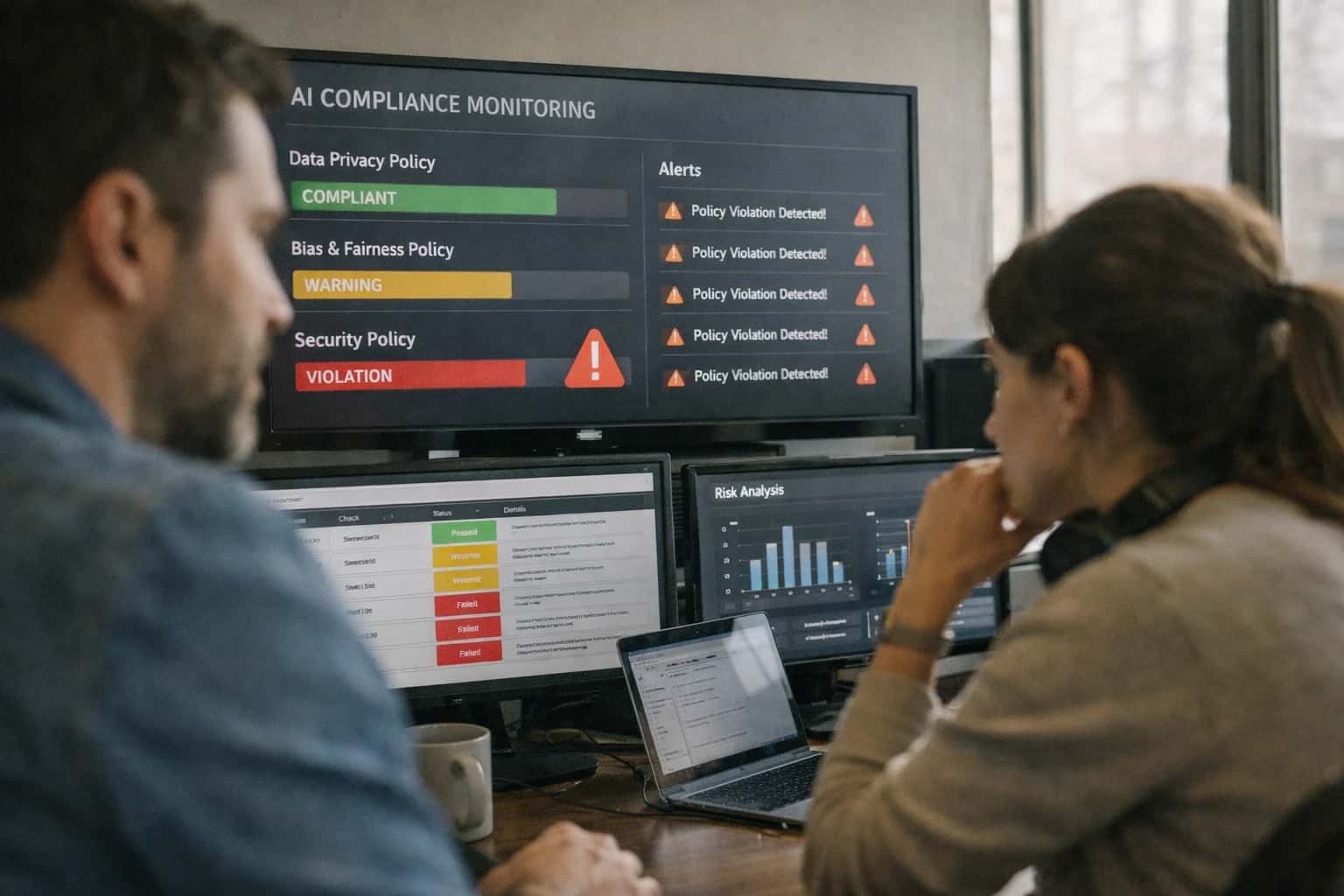
Rollout should be phased, starting with read-only analysis and recommendation generation before progressing to automated, approval-gated actions. Governance is critical; all AI-driven changes should be logged as Audit Events within Palette and trigger notifications. A common pattern is to use AI to generate the deployment manifests and change plans, which are then submitted for human approval via Spectro Cloud's GitOps workflow or a separate ticketing system before execution, ensuring control and traceability.
AI WORKLOAD AUTOMATION
Key Integration Surfaces in Spectro Cloud Palette
Automating AI Infrastructure Provisioning
Integrate AI agents with Palette's Cluster Profiles and Cloud Accounts APIs to automate the provisioning of GPU-enabled Kubernetes clusters for ML workloads. Agents can analyze workload requirements (e.g., NVIDIA A100 vs. L4s, vRAM needs) and dynamically select the optimal machine type and cloud region from your defined Packs.
Key automation targets:
- Cluster Create/Scale APIs: Trigger cluster deployments based on pipeline events or queue depth.
- GPU Driver & Operator Packs: Ensure required NVIDIA drivers, MIG profiles, and Kubernetes device plugins are included in the cluster profile.
- Node Pools: Manage spot vs. on-demand GPU instance pools for cost-performance optimization.
Example workflow: An AI agent monitors a model training queue, uses the Palette API to provision a cluster with the specified GPU quota, and tears it down upon job completion, updating cost tracking systems.
PALETTE AUTOMATION
High-Value AI Use Cases for Spectro Cloud
Integrate AI agents with Spectro Cloud Palette's APIs to automate cluster lifecycle, GPU provisioning, and cost management for AI/ML infrastructure teams. These use cases target platform engineers, SREs, and FinOps practitioners managing Kubernetes at scale.
01
Intelligent GPU Cluster Provisioning
AI agents analyze ML workload requirements (framework, dataset size, parallelism) and automatically generate optimized Palette cluster profiles with the right GPU instance type, driver version, and node scaling policies. This reduces manual configuration errors and ensures cost-performance alignment for training jobs.
Hours -> Minutes
Provisioning time
02
Predictive Cluster Cost & Rightsizing
Connect AI to Palette's cost allocation APIs and cloud billing feeds. Agents forecast spend trends, detect idle resources, and generate rightsizing recommendations for cluster definitions (machine types, min/max nodes). This provides actionable FinOps insights directly within the platform workflow.
Batch -> Real-time
Cost visibility
03
Automated Compliance & CIS Benchmarking
AI orchestrates Palette's governance modules to run scheduled CIS scans, prioritize findings based on cluster context, and generate remediation scripts. Agents track drift over time and produce audit-ready reports, shifting compliance from a periodic checklist to a continuous workflow.
1 sprint
Audit prep cycle
04
AI-Optimized Workload Placement
For multi-cloud/region deployments, AI analyzes Palette cluster metrics, GPU availability, data locality, and cost zones to recommend or automatically execute optimal workload placement. This ensures ML pipelines and inference services run on the most suitable infrastructure.
Same day
Migration planning
05
ML Pipeline Orchestration & MLOps Integration
Embed AI agents within Palette to orchestrate end-to-end ML pipelines integrating with Kubeflow, MLflow, and experiment tracking tools. Agents monitor pipeline health, suggest resource adjustments, and trigger retries or notifications based on real-time logs and metrics.
Batch -> Real-time
Pipeline monitoring
06
Proactive Cluster Health & Incident Triage
AI agents consume Palette's integrated observability data (metrics, logs) to establish baselines, detect anomalies, and generate preliminary incident summaries. They can auto-create tickets in ITSM tools like ServiceNow and suggest runbooks based on historical resolutions, accelerating SRE response.
Hours -> Minutes
MTTR reduction
PRODUCTION AUTOMATION PATTERNS
Example AI Agent Workflows for Spectro Cloud
These workflows demonstrate how AI agents can be integrated with Spectro Cloud Palette's APIs to automate cluster lifecycle, cost governance, and GPU operations for AI/ML infrastructure teams. Each pattern connects to specific Palette modules and data models.
Trigger: A data scientist submits a JupyterHub spawner request specifying a GPU requirement (e.g., gpu-type: a100, gpu-count: 4).
Context/Data Pulled:
- The agent queries Palette's Cluster Profiles and Cloud Accounts to identify available GPU-enabled machine pools (AWS p4d, Azure NDv4, GCP a2) across regions.
- It cross-references real-time cloud pricing APIs and internal quota limits from Palette's Tenant Management module.
Model/Agent Action:
- The LLM evaluates the request against cost, performance, and availability constraints.
- It generates an optimized Cluster Profile manifest, selecting the appropriate instance family, Kubernetes version with NVIDIA device plugins, and necessary storage classes for large datasets.
- The agent submits the profile to Palette's Cluster Create API, initiating provisioning.
System Update/Next Step:
- The agent monitors the cluster creation via Palette's Cluster Status API.
- Upon successful provisioning, it updates the team's internal resource catalog and posts a notification to Slack/MS Teams with connection details and estimated hourly cost.
Human Review Point: The agent flags requests that would exceed monthly budget thresholds or require net-new cloud account permissions, routing them for manager approval via a webhook to an ITSM tool like Jira.
AUTOMATED INFRASTRUCTURE ORCHESTRATION
Implementation Architecture: Connecting AI to Palette
Integrating AI with Spectro Cloud Palette requires a system that connects to its cluster lifecycle, GPU provisioning, and cost management APIs to automate infrastructure decisions.
The integration architecture connects AI agents to Palette's REST API and webhook system, focusing on three key surfaces: the Cluster Profile engine for defining machine specs and add-ons, the Cloud Account layer for provisioning across AWS, Azure, and GCP, and the Project and Tenant APIs for multi-team governance. Agents are triggered by events like cluster creation requests, scaling alerts, or scheduled cost reports. They analyze the request context—such as workload type (e.g., training vs. inference), requested GPU types, or budget constraints—and call Palette's APIs to execute actions like adjusting node pool sizes, applying specific cluster profiles, or enforcing tag policies.
A practical workflow for GPU workload placement might involve an AI agent monitoring a queue of provisioning requests. For each request, the agent queries Palette for available capacity across cloud accounts, analyzes real-time spot instance pricing and quota limits via cloud provider APIs, and then calls POST /api/v1/spectroclusters with an optimized cluster manifest. The agent can also attach cost allocation labels and set up Palette's integrated observability stack to feed metrics back for continuous optimization. For day-2 operations, agents subscribe to Palette's webhooks for cluster health events to automatically remediate issues, like rescheduling a pending pod when a GPU node fails.
Rollout and governance are critical. Initial deployments should scope AI actions to a sandbox Project with tight RBAC, using Palette's audit logs to trace every AI-initiated API call. Implement a human-in-the-loop approval step for production cluster modifications, managed through Palette's native integration with tools like ServiceNow or Jira. For FinOps, AI agents should generate recommendations (e.g., rightsizing a cluster profile) that require a platform engineer's approval before execution via Palette's API. This controlled approach ensures AI augments the platform team's decision-making without bypassing compliance checks, aligning with enterprise requirements for change management and cost accountability. For related architectural patterns, see our guides on AI Integration for Spectro Cloud GPU Management and AI Integration for Spectro Cloud Cost Management.
INTEGRATION PATTERNS
Code and Payload Examples
Automating Cluster Provisioning and Updates
Integrate AI with Spectro Cloud's ClusterProfile and Cluster APIs to automate the creation, scaling, and patching of Kubernetes clusters. An AI agent can analyze workload requirements, cost constraints, and compliance policies to generate optimal cluster definitions and trigger lifecycle operations.
Example Use Case: An AI agent monitors a backlog of Jira tickets requesting development environments. It parses the ticket description, determines the required Kubernetes version, node type (e.g., GPU-enabled), and add-ons (like Istio), then calls the Spectro Cloud API to provision a cluster with a specific ClusterProfile. The agent then updates the ticket with the cluster's kubeconfig and endpoint.
python# Pseudo-code for AI-driven cluster provisioning import openai from spectrocloud_client import SpectroCloudClient # AI analyzes natural language request user_request = "Need a GPU cluster for model training with Kubeflow, 3 nodes, in us-east-1." response = openai.chat.completions.create( model="gpt-4", messages=[ {"role": "system", "content": "Extract cluster specs: cloud, region, node type, node count, addons."}, {"role": "user", "content": user_request} ] ) specs = parse_ai_response(response.choices[0].message.content) # Map specs to Spectro Cloud API payload cluster_payload = { "metadata": {"name": f"gpu-training-{generate_id()}"}, "spec": { "cloudType": "aws", "cloudConfig": { "region": specs['region'], "sshKeyName": "platform-key" }, "machinePools": [{ "name": "worker-pool", "size": specs['node_count'], "instanceType": specs['node_type'] # e.g., 'g4dn.xlarge' }], "clusterProfileTemplate": { "uid": "<CLUSTER_PROFILE_WITH_KUBEFLOW_UID>" } } } # Execute provisioning client = SpectroCloudClient(api_key=os.environ['SPECTRO_API_KEY']) client.clusters.create(cluster_payload)
AI-ASSISTED KUBERNETES OPERATIONS
Realistic Time Savings and Operational Impact
This table illustrates the operational impact of integrating AI agents with Spectro Cloud Palette to automate cluster lifecycle, GPU provisioning, and cost management workflows for AI/ML infrastructure teams.
| Metric | Before AI | After AI | Notes |
|---|---|---|---|
Cluster Provisioning for AI Workloads | Manual template selection and parameter tuning | AI-suggested cluster profiles based on workload type | Reduces misconfiguration and accelerates time-to-resource |
GPU Capacity Forecasting | Manual analysis of historical usage and ticket backlog | AI-driven prediction of GPU demand spikes and idle periods | Improves utilization and defers capital expenditure |
Cost Anomaly Investigation | Hours spent correlating cloud bills with cluster metrics | Automated alerting with root-cause analysis (e.g., misconfigured Spot instances) | Shifts focus from detection to remediation |
CIS Compliance Reporting | Manual execution of scans and report consolidation | Automated scan scheduling, drift detection, and evidence generation | Ensures continuous compliance for audit readiness |
Workload Placement Optimization | Static node affinity/taints based on rough guidelines | Dynamic, AI-recommended placement balancing cost, performance, and GPU type | Optimizes for total cost of inference and training |
Day-2 Operations Triage | Manual log diving across Prometheus, Grafana, and cloud consoles | AI-correlated alerts with suggested runbooks and impacted services | Reduces MTTR for cluster health incidents |
Cluster Upgrade Planning | Manual review of release notes and compatibility matrices | AI-generated upgrade path analysis with risk assessment for custom add-ons | Minimizes downtime and upgrade rollbacks |
ARCHITECTING CONTROLLED AI OPERATIONS
Governance, Security, and Phased Rollout
Integrating AI with Spectro Cloud Palette requires a deliberate approach to security, cost governance, and operational control.
AI governance in Spectro Cloud starts with role-based access control (RBAC) and audit trails. AI agents should operate with service accounts scoped to specific Palette Projects or Cluster Profiles, never with broad administrative rights. All AI-initiated actions—like scaling a node pool, updating a GPU driver, or applying a CIS benchmark—must be logged to Palette's activity stream and optionally forwarded to your SIEM. This creates an immutable record for compliance and rollback.
A phased rollout is critical. Start with read-only analysis in a single development or sandbox environment. Use AI to generate cluster cost forecasts, analyze ClusterGroup health, or suggest GPU quota optimizations without making changes. Next, implement a human-in-the-loop approval phase for non-critical actions, where AI-generated recommendations (e.g., a new machine pool definition) are submitted as a pull request to your infrastructure Git repository or create a ticket in your ITSM tool. Finally, enable automated execution for low-risk, repetitive tasks like cleaning up failed provisioning runs or adjusting node autoscaler thresholds, but only within pre-defined guardrails and during maintenance windows.
Security extends to the AI workload itself. The agents and models powering your integration should be deployed as managed workloads within a dedicated, isolated Spectro Cloud cluster, not as an external black box. This allows you to apply Palette's native network policies, pod security standards, and vulnerability scanning to the AI infrastructure. Data passed to LLMs (like cluster metrics or cost reports) should be scrubbed of sensitive strings, and all tool-calling to the Palette API should use short-lived, scoped tokens rotated frequently.
For long-term success, establish a cross-functional AI platform team with members from infrastructure, security, FinOps, and application development. This team owns the integration's governance model, defines the phased rollout stages, and continuously reviews the AI's impact on operational stability and cloud spend. This controlled, iterative approach ensures AI augments your team's expertise without introducing unmanaged risk into your critical Kubernetes foundation.
Enabling Efficiency, Speed & Accuracy
Intelligent Analysis, Decision & Execution
We build AI systems for teams that need search across company data, workflow automation across tools, or AI features inside products and internal software.
Talk to Us
Search across company data
Give teams answers from docs, tickets, runbooks, and product data with sources and permissions.
Useful when people spend too long searching or get different answers from different systems.
Enterprise searchRAGPermissions
Read more
Automate internal workflows
Use AI to route work, draft outputs, trigger actions, and keep approvals and logs in place.
Useful when repetitive work moves across multiple tools and teams.
AI agentsWorkflow automationGovernance
Read more
Add AI to products and internal tools
Build assistants, guided actions, or decision support into the software your team or customers already use.
Useful when AI needs to be part of the product, not a separate tool.
AI integrationDecision supportModel routing
Read moreAI INTEGRATION FOR SPECTRO CLOUD
Frequently Asked Questions (FAQ)
Common technical and operational questions about embedding AI agents and copilots into Spectro Cloud Palette's lifecycle management, GPU provisioning, and cost APIs to automate infrastructure for AI/ML teams.
AI agents interact primarily with Spectro Cloud's REST API and webhooks. The integration is typically architected as a sidecar service or external orchestrator that:
- Authenticates using API keys or OAuth 2.0 service accounts with scoped RBAC permissions.
- Polls or receives events via webhooks for triggers like cluster state changes, provisioning failures, or cost threshold breaches.
- Executes actions by calling Palette's cluster lifecycle, pack, and cloud account APIs to create, update, or delete resources.
- Retrieves context by querying cluster metrics, pack manifests, and cloud integration details to inform decisions.
Example API call to list clusters for analysis:
bashcurl -X GET \ 'https://api.spectrocloud.com/v1/clusters' \ -H 'Authorization: Bearer $API_KEY'
Agents use this data to automate responses, such as scaling node pools or applying governance packs.

About the author
Prasad Kumkar
CEO & MD, Inference Systems
Prasad Kumkar is the CEO & MD of Inference Systems and writes about AI systems architecture, LLM infrastructure, model serving, evaluation, and production deployment. Over 5+ years, he has worked across computer vision models, L5 autonomous vehicle systems, and LLM research, with a focus on taking complex AI ideas into real-world engineering systems.
His work and writing cover AI systems, large language models, AI agents, multimodal systems, autonomous systems, inference optimization, RAG, evaluation, and production AI engineering.
LinkedIn
Limited slotsGet a Free AI Consultation
Partnered with leading AI, data, and software stack.





How We Work
Custom AI workflows for your Business
One-fit-all AI don't work for modern businesses. At Inferensys, we aim to understand your business & custom requirements; which we use to define most efficient agentic workflows, the data, and the tools for your business.
01
Review the use case
We understand the task, the users, and where AI can actually help.
Read more02
Pick the right approach
We define what needs search, automation, or product integration.
Read more03
Build the first useful version
We implement the part that proves the value first.
Read more04
Improve from there
We add the checks and visibility needed to keep it useful.
Read moreThe first call is a practical review of your use case and the right next step.
Talk to Us