AI integration for Rancher Helm targets three primary surfaces: the Helm Chart Repository, the Rancher Catalog or Project App Catalog, and the Application Deployment lifecycle. An AI agent can be configured to monitor chart repositories (e.g., Bitnami, custom repos) for new versions, analyze Chart.yaml dependencies, and cross-reference values.yaml defaults against your cluster's existing configurations. This preemptively flags potential conflicts in resource names, port assignments, or storage class requirements before a deployment is even attempted.

Integration
AI Integration for Rancher Helm Charts
Embed AI agents into your Rancher Helm workflow to analyze chart repositories, suggest version upgrades, detect configuration conflicts, and generate custom values.yaml files—reducing manual review and accelerating deployments.
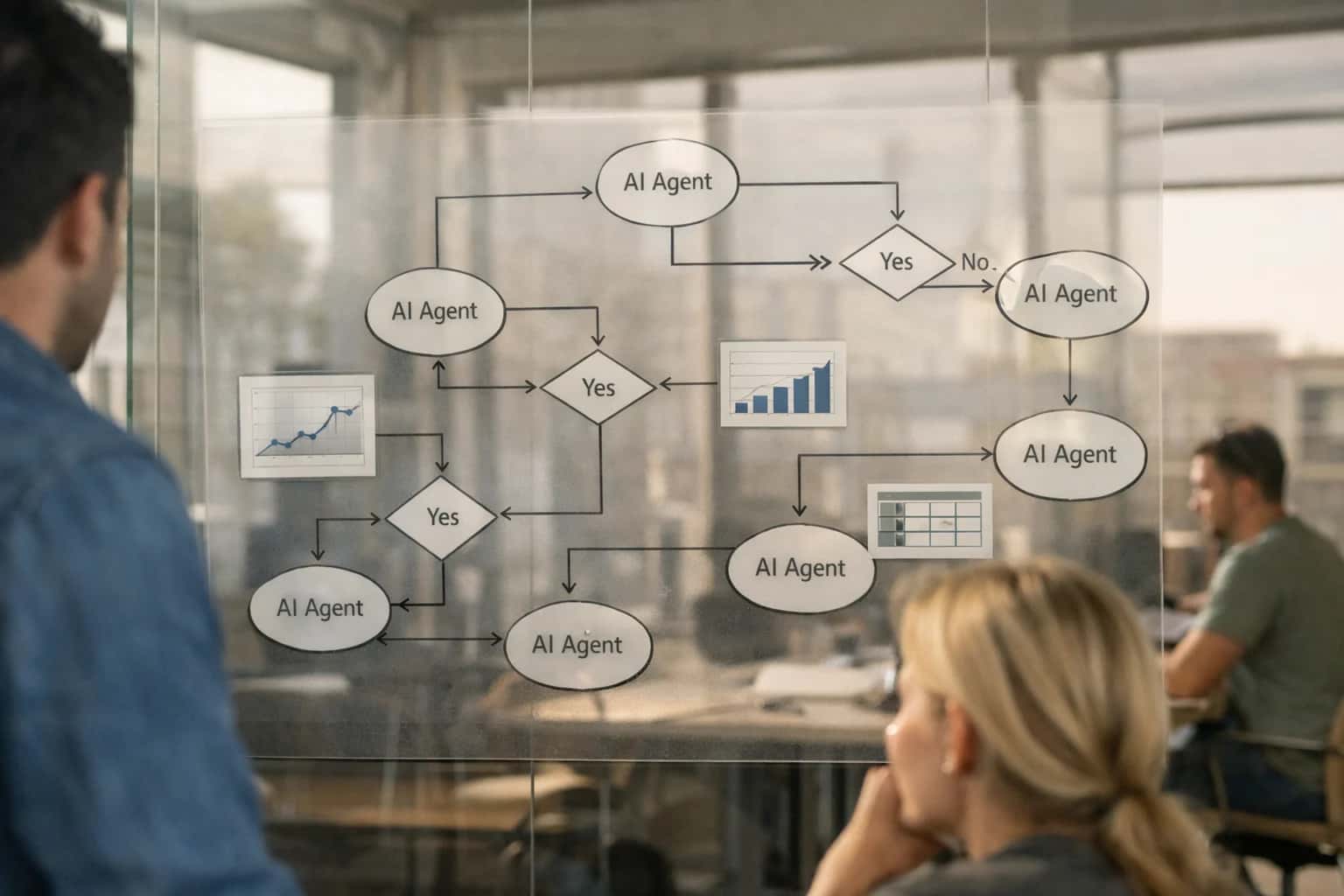
AUTOMATING CHART MANAGEMENT AND DEPLOYMENT
Where AI Fits into the Rancher Helm Workflow
Integrating AI into the Rancher Helm workflow automates chart analysis, conflict detection, and custom values generation to accelerate and de-risk application deployments.
For implementation, the AI system typically operates as a background service with read access to your GitOps repos (e.g., Fleet-managed Git repositories) and the Rancher API. It processes chart metadata and cluster state to generate actionable outputs:
- Version Upgrade Suggestions: Prioritized lists of safe upgrades based on semantic versioning and analyzed breaking changes in
README.mdorUPGRADE.mdnotes. - Custom
values.yamlGeneration: Produces environment-specific values files from a natural-language prompt (e.g., "deploy WordPress with 3 replicas, 4GB memory, and afaststorage class"), reducing manual copy-paste errors. - Configuration Conflict Reports: Detects clashes with existing Ingress hostnames, PersistentVolumeClaim names, or Network Policies within the target Rancher Project or namespace.
Rollout is best managed through a GitOps gate. The AI agent's suggestions—whether a new chart version or a generated values file—are committed as a Pull Request to the Fleet Git repository. This triggers the standard Rancher CI/CD and approval workflow, allowing platform teams to review and merge changes. Governance is maintained through the agent's configurable policies, which can enforce rules like "only suggest upgrades for charts with a security patch" or "require manual review for any major version change." This keeps the platform team in control while automating the tedious research and initial configuration drafting, turning what was a manual, hours-long investigation into a reviewed proposal available in minutes.
HELM CHART LIFECYCLE AUTOMATION
Key Integration Surfaces in Rancher for Helm AI
Automating Helm Chart Discovery and Vetting
AI agents can integrate with Rancher's catalog system and external Helm repositories (Artifact Hub, Bitnami, custom) to analyze chart metadata, dependencies, and security advisories. This surface enables automated chart vetting before they are added to a Rancher project catalog. An AI workflow can:
- Scan for CVEs in container images defined in
values.yamldefaults. - Detect deprecated APIs by parsing rendered Kubernetes manifests for compatibility with your cluster versions.
- Suggest alternative charts based on community adoption, maintenance status, and organizational policies.
Integration typically involves querying repository indexes, fetching chart tarballs, and using Rancher's Catalog CRD or API to propose curated entries. This reduces manual security review and ensures only approved, compatible charts are available for deployment.
RANCHER HELM CHARTS
High-Value Use Cases for Helm AI
Integrating AI with Rancher's Helm chart management automates the analysis, validation, and deployment of complex application packages, reducing manual review and configuration errors for platform teams.
01
Automated Chart Version Upgrades
AI agents analyze your Helm chart repositories and upstream sources to suggest version upgrades, flag breaking changes, and generate a curated changelog. This moves dependency management from a manual, reactive task to a proactive, audited workflow.
Hours -> Minutes
Upgrade analysis
02
Intelligent Values.yaml Generation
Generate custom values.yaml files from natural language descriptions or existing deployment manifests. The AI analyzes your cluster context (available resources, storage classes, node labels) to suggest optimal configurations, reducing trial-and-error deployments.
1 sprint
Accelerated onboarding
03
Configuration Conflict Detection
Before deploying a Helm release, AI scans the proposed chart values against existing cluster policies, resource quotas, and network policies. It flags potential conflicts (e.g., port clashes, missing PersistentVolumeClaims) and suggests resolutions.
Batch -> Real-time
Pre-flight validation
04
Chart Repository Curation & Hygiene
AI assists platform admins in curating internal chart repositories. It analyzes usage patterns to deprecate unused charts, identifies and flags charts with known CVEs, and suggests organization-specific best practices for template structure.
Same day
Compliance audit
05
GitOps Drift Analysis & Remediation
For teams using Rancher Fleet or Argo CD with Helm, AI continuously compares the live cluster state with the Git source of truth. It summarizes drift, suggests the root cause (e.g., manual hotfix), and can generate the PR to re-sync configurations.
06
Multi-Cluster Deployment Planning
When rolling out a Helm chart across development, staging, and production clusters, AI analyzes environment-specific differences (node sizes, ingress controllers). It generates a staged rollout plan with tailored values files and validates promotion gates.
Hours -> Minutes
Rollout planning
FOR RANCHER PLATFORM TEAMS
Example AI-Powered Helm Workflows
These workflows demonstrate how AI agents can be integrated with Rancher's Helm chart management to automate repetitive tasks, reduce configuration errors, and accelerate application deployments across your fleet.
Trigger: A scheduled job runs daily, or a webhook fires when a new chart version is pushed to a configured repository (e.g., Artifact Hub, a private Harbor instance).
Context/Data Pulled: The agent queries Rancher's Project/Cluster APIs to inventory all deployed Helm releases. For each release, it fetches the current chart version and repository metadata.
Model/Agent Action: An LLM compares the current version against the latest stable version in the repository. It analyzes the changelog, focusing on:
- Major/Minor/Patch classification.
- Breaking changes or deprecated values.
- Security fixes (CVE references). The agent generates a prioritized upgrade report, grouping releases by Project/Cluster and flagging high-priority security updates.
System Update/Next Step: The report is posted as a comment in a linked GitOps repository (e.g., Fleet's Git repo) or creates a ticket in Jira Service Management. For low-risk patch updates, the agent can automatically create a Pull Request with the updated Chart.yaml in the Fleet bundle.
Human Review Point: All Major version upgrades and any release flagged with potential breaking changes require manual approval via the PR review or ticket workflow before the Fleet sync applies the change.
PRODUCTION-READY HELM CHART AUTOMATION
Implementation Architecture: Data Flow and Guardrails
A secure, auditable pipeline for AI-assisted Helm chart analysis and generation within Rancher-managed clusters.
The integration connects to your existing Rancher-managed Helm chart repositories (e.g., a private Harbor or Artifactory instance) and the Rancher API. An AI agent, triggered by a Git commit, webhook, or scheduled scan, analyzes the target repository's Chart.yaml files and dependency trees. It uses a vector database (like Pinecone or Weaviate) to index historical chart versions, known issues from security advisories, and internal best practices. For each chart, the agent generates a diff report highlighting available upgrades, potential configuration conflicts (e.g., values.yaml schema changes between major versions), and security CVEs mapped to specific container images in the chart.
For custom chart generation, the agent acts as a copilot within the Rancher UI or a CI/CD pipeline. A developer provides a natural language description (e.g., "Deploy a Redis cluster with sentinel mode, 3 replicas, and persistent storage on a fast storage class"). The agent queries its knowledge base of Helm best practices and organizational policies, then generates a draft Chart.yaml, values.yaml, and template files. This draft is presented as a Pull Request in your GitOps repository (e.g., linked to Rancher Fleet). The workflow includes mandatory human review gates and automated linting (helm lint, ct lint) before the PR can be merged, ensuring all generated code meets security and operational standards.
All AI-generated suggestions and code are logged with a full audit trail in the Rancher audit log or a dedicated SIEM. Each action is tagged with the initiating user, the source chart/version, the AI model version used, and a confidence score. A governance layer enforces policy-as-code rules—for instance, blocking the suggestion of alpha chart versions, enforcing a maximum allowed CVE score, or requiring specific labels for cost allocation. Rollout is typically phased, starting with read-only analysis and reporting for platform teams, then progressing to assisted generation for trusted developer groups, with all changes flowing through the established GitOps promotion pipelines managed by Rancher Fleet.
AI-ENHANCED HELM OPERATIONS
Code and Payload Examples
Analyzing Helm Chart Repositories with AI
AI agents can be integrated with Rancher's catalog system to continuously analyze Helm chart repositories. This involves fetching chart metadata, reading Chart.yaml files, and evaluating dependencies to identify security advisories, version conflicts, or deprecated APIs.
A typical workflow uses a scheduled job that queries repository indexes, passes the structured data to an LLM for analysis, and posts findings back to Rancher as project annotations or creates alerts in the monitoring stack. This helps platform teams maintain a curated, secure internal catalog.
Example Python pseudocode for repository scanning:
python# Pseudocode for AI-powered chart analysis import yaml import requests from inference_llm_client import analyze_charts # Fetch repository index from Rancher's catalog repo_url = "https://charts.example.com/index.yaml" index = yaml.safe_load(requests.get(repo_url).text) # Prepare chart data for AI analysis charts_data = [] for chart_name, versions in index['entries'].items(): for version_info in versions: charts_data.append({ "name": chart_name, "version": version_info['version'], "appVersion": version_info.get('appVersion'), "dependencies": version_info.get('dependencies', []) }) # Send to AI service for conflict and upgrade analysis analysis = analyze_charts( system_prompt="Identify version conflicts and suggest upgrades.", charts=charts_data ) # Post results to Rancher Project as annotations for finding in analysis['findings']: create_project_annotation( project_id="platform-team", key=f"helm-review/{finding['chart']}", value=finding['recommendation'] )
AI-ASSISTED HELM CHART MANAGEMENT
Realistic Time Savings and Operational Impact
This table shows the operational impact of integrating AI agents into the Rancher Helm chart lifecycle, from repository analysis to deployment validation. Metrics are based on typical platform engineering workflows for managing 50-200 charts across multiple clusters.
| Workflow | Before AI | After AI | Notes |
|---|---|---|---|
Chart version upgrade analysis | Manual review of changelogs across repos | Automated diff and risk summary per chart | Focuses review on breaking changes and security fixes |
Values.yaml generation for new env | Copy-paste and manual adjustment | AI suggests base config from similar charts | Human validation required for production |
Configuration conflict detection | Post-deployment runtime errors | Pre-flight validation against cluster constraints | Catches resource limit mismatches and API deprecations |
Repository curation & hygiene | Quarterly manual audit | Continuous drift and deprecation alerts | Flags unmaintained charts and suggests alternatives |
Deployment rollback planning | Manual log analysis and version mapping | AI suggests safest rollback target with context | Considers data persistence and service dependencies |
Team self-service support | Platform team tickets for config help | AI copilot suggests parameters and examples | Reduces repetitive questions, maintains guardrails |
Security policy compliance check | Manual review of values against policy docs | Automated scan for non-compliant settings | Integrates with Rancher OPA Gatekeeper for enforcement |
CONTROLLED AUTOMATION FOR PRODUCTION HELM
Governance, Security, and Phased Rollout
Integrating AI with Rancher Helm Charts requires a controlled approach to maintain security, ensure compliance, and build trust in automated recommendations.
AI agents interact with Helm's core surfaces: the Chart repository, the values.yaml configuration layer, and Rancher's App & Marketplace APIs. Governance starts by defining clear boundaries: AI can analyze public repos like bitnami for version updates and CVE data, but modifying internal, proprietary charts requires explicit approval workflows. Implement role-based access control (RBAC) within Rancher to ensure AI-driven suggestions or automated helm upgrade commands only execute in designated Projects or Namespaces, preventing unintended changes to production financial or compliance workloads. All AI-generated recommendations—such as a suggested values.yaml override to increase resource limits—should be logged with a full audit trail linking the prompt, the source chart version, and the user or service account that approved the change.
A phased rollout is critical for adoption. Start with a read-only analysis phase, where AI scans your Rancher-managed Helm releases and repositories to generate reports on version drift, deprecated APIs, and configuration conflicts—surfacing insights without making changes. Next, move to a guided recommendation phase, embedding an AI assistant within the Rancher UI or CI/CD pipeline to suggest specific helm upgrade commands or values adjustments, requiring manual review and approval. Finally, enable controlled automation for non-critical workloads, allowing pre-approved AI agents to execute Helm operations for development or staging environments based on policies (e.g., auto-approve patch version updates within a defined window). This gradual approach lets platform teams validate AI accuracy and build the necessary monitoring, such as integrating with Rancher's Prometheus alerts to detect any performance regression post-upgrade.
Security hinges on grounding the AI in trusted data sources and isolating its tool-calling capabilities. Use a retrieval-augmented generation (RAG) system built on a vector store of your internal chart documentation, security policies, and past incident reports to ensure recommendations are context-aware. The AI should never have direct cluster kubectl access; instead, it should call well-defined Rancher APIs or GitOps automation (like Rancher Fleet) through a secure middleware layer that enforces policy checks, scans for secrets in proposed values, and validates changes against admission controllers. This architecture ensures AI enhances the Helm operator's workflow—reducing manual research from hours to minutes—while keeping the platform team firmly in control of the deployment pipeline.
Enabling Efficiency, Speed & Accuracy
Intelligent Analysis, Decision & Execution
We build AI systems for teams that need search across company data, workflow automation across tools, or AI features inside products and internal software.
Talk to Us
Search across company data
Give teams answers from docs, tickets, runbooks, and product data with sources and permissions.
Useful when people spend too long searching or get different answers from different systems.
Enterprise searchRAGPermissions
Read more
Automate internal workflows
Use AI to route work, draft outputs, trigger actions, and keep approvals and logs in place.
Useful when repetitive work moves across multiple tools and teams.
AI agentsWorkflow automationGovernance
Read more
Add AI to products and internal tools
Build assistants, guided actions, or decision support into the software your team or customers already use.
Useful when AI needs to be part of the product, not a separate tool.
AI integrationDecision supportModel routing
Read moreAI INTEGRATION FOR RANCHER HELM CHARTS
Frequently Asked Questions
Practical questions for platform engineers and DevOps teams evaluating AI to automate Helm chart management, reduce configuration drift, and accelerate application deployments in Rancher.
An AI agent integrates with your Git repositories (e.g., GitHub, GitLab) or Helm chart repositories (e.g., Artifactory, Harbor) to perform continuous analysis.
Typical workflow:
- Trigger: Scheduled scan or webhook on a new commit to a
Chart.yamlfile. - Context Pulled: The agent fetches the target
Chart.yaml, itsvalues.yaml, and the metadata from the upstream chart repository (e.g., Artifact Hub). - AI Action: A language model analyzes the version constraints, release notes, and common breaking changes for the new version. It cross-references your custom
values.yamlto flag potential conflicts—like deprecated APIs, changed value paths, or resource requirement shifts. - System Update: The agent generates a Pull Request with:
- Updated
Chart.yamlversion. - A detailed summary of changes and required manual checks.
- Suggested modifications to
values.yaml(clearly marked as comments).
- Updated
- Human Review: The PR requires manual approval before merge, ensuring control over production dependencies.

About the author
Prasad Kumkar
CEO & MD, Inference Systems
Prasad Kumkar is the CEO & MD of Inference Systems and writes about AI systems architecture, LLM infrastructure, model serving, evaluation, and production deployment. Over 5+ years, he has worked across computer vision models, L5 autonomous vehicle systems, and LLM research, with a focus on taking complex AI ideas into real-world engineering systems.
His work and writing cover AI systems, large language models, AI agents, multimodal systems, autonomous systems, inference optimization, RAG, evaluation, and production AI engineering.
LinkedIn
Limited slotsGet a Free AI Consultation
Partnered with leading AI, data, and software stack.





How We Work
Custom AI workflows for your Business
One-fit-all AI don't work for modern businesses. At Inferensys, we aim to understand your business & custom requirements; which we use to define most efficient agentic workflows, the data, and the tools for your business.
01
Review the use case
We understand the task, the users, and where AI can actually help.
Read more02
Pick the right approach
We define what needs search, automation, or product integration.
Read more03
Build the first useful version
We implement the part that proves the value first.
Read more04
Improve from there
We add the checks and visibility needed to keep it useful.
Read moreThe first call is a practical review of your use case and the right next step.
Talk to Us