AI integration targets Portainer's Registry and Images management surfaces, where administrators configure connections to Docker Hub, private registries (Artifactory, Harbor, ECR), and manage the local image cache on Swarm nodes. The primary data objects are registry endpoint configurations, image manifests, pull logs, and layer hashes. AI agents can be triggered via Portainer webhooks on events like IMAGE_PULL, IMAGE_PUSH, or scheduled cron jobs to analyze patterns and execute governance workflows.

Integration
AI Integration for Portainer Docker Swarm Registries
Embed AI agents into Portainer's Docker Swarm registry management to automate image lifecycle, optimize pull performance, enforce security policies, and reduce manual oversight for IT operations teams.
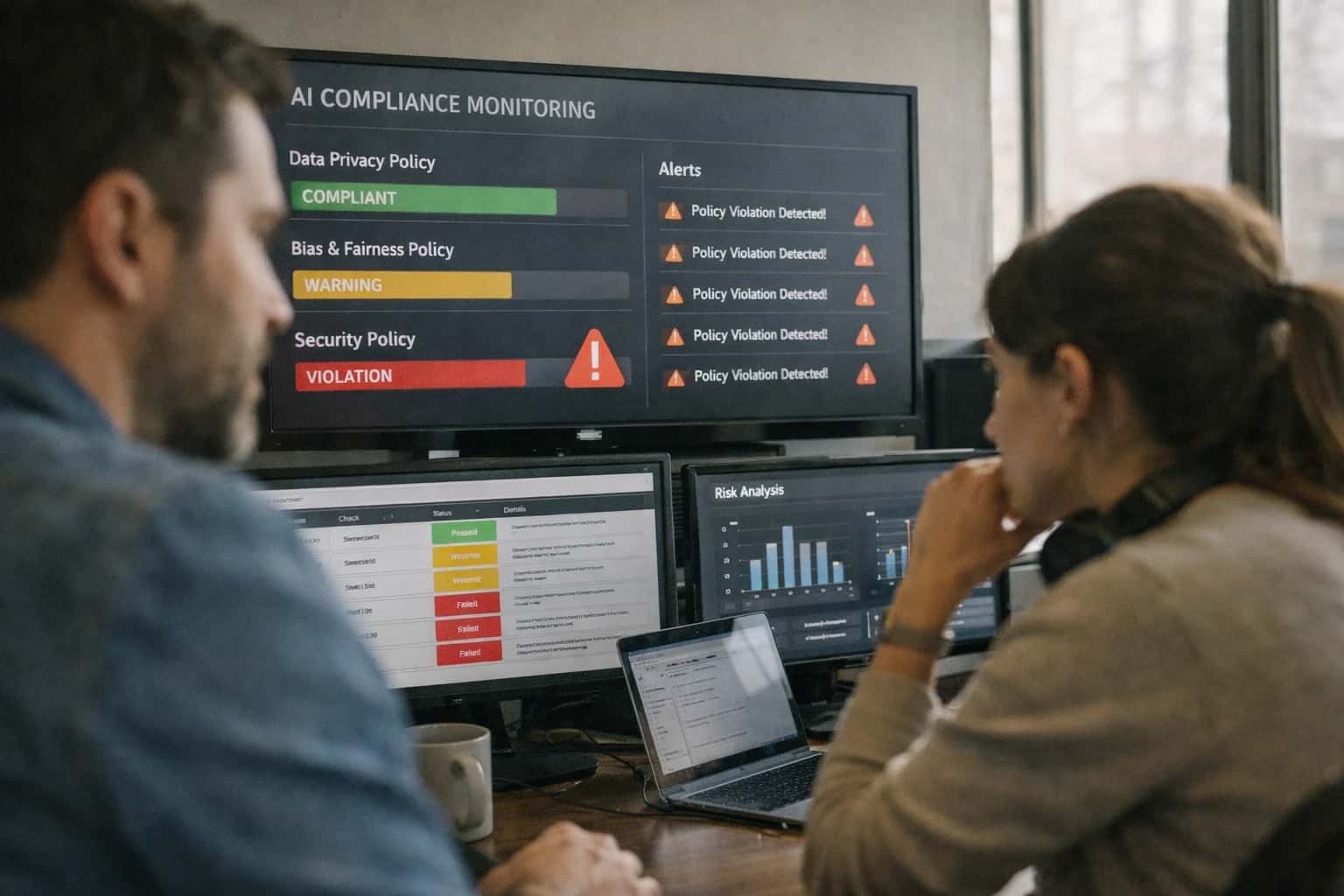
INTELLIGENT IMAGE LIFECYCLE AUTOMATION
Where AI Fits into Portainer Docker Swarm Registry Management
Integrate AI agents with Portainer's registry management layer to automate image hygiene, security scanning, and cache optimization for Docker Swarm clusters.
High-value use cases focus on operational efficiency and security posture: Predictive Cache Management analyzes historical pull rates and service deployment schedules to pre-warm node caches, reducing deployment latency. Vulnerability Triage integrates with scanning tools (Trivy, Grype) via Portainer's API to prioritize CVEs based on the actual runtime context of Swarm services, suppressing noise for isolated containers. Registry Cost Control identifies unused or outdated image tags across private registries, suggesting cleanup policies and generating automated cleanup jobs through Portainer stacks to reduce storage spend.
A production implementation wires an AI agent as a sidecar service or external microservice that subscribes to Portainer webhooks and queries the Portainer REST API (/api/registries, /api/endpoints/{id}/docker/images/json). The agent maintains a vector store of image metadata and pull histories to power its recommendations. Governance is managed through a human-in-the-loop approval step for actions like mass image deletion, with all recommendations and actions logged back to Portainer as audit annotations. Rollout starts with a non-production Swarm environment, focusing on a single registry endpoint to validate cache hit-rate improvements and security alert reduction before scaling to the entire fleet.
For teams managing legacy Swarm estates, this integration provides a path to better hygiene and security without a full platform migration. It turns Portainer from a passive management console into an active, intelligence-driven orchestrator for your container image supply chain. Explore our related guide on AI Integration for Portainer Docker Swarm for broader cluster automation patterns.
AI-POWERED REGISTRY MANAGEMENT
Key Integration Surfaces in Portainer for Swarm Registries
AI-Driven Registry Health and Security
AI agents can continuously audit Portainer's registry configurations for Docker Swarm. This involves analyzing connection strings, authentication methods, and TLS settings across all defined registries to detect misconfigurations or drift from security baselines.
Key integration points include:
- Registry API Endpoints: Programmatically retrieve and validate registry definitions (
/api/registries). - Connection Testing: Automate test pulls to verify authentication and network reachability.
- Security Posture: Scan for use of insecure HTTP registries, weak credentials, or missing certificate validation.
An AI workflow can flag registries with failed authentication, suggest moving to private networks, or enforce TLS-only policies, reducing the risk of image pull failures and supply chain attacks in production Swarms.
PORTRAINER DOCKER SWARM
High-Value AI Use Cases for Swarm Registry Management
Integrate AI agents with Portainer's registry management APIs to automate security, optimize performance, and enforce governance for Docker image registries across Swarm clusters.
01
Automated Registry Health & Vulnerability Scanning
AI agents periodically query Portainer's registry endpoints to analyze image pull success rates, latency, and error logs. They cross-reference image tags with vulnerability databases (e.g., Trivy, Grype) and automatically flag high-risk images in the Portainer UI, suggesting updates or generating pull requests for base image changes.
Batch -> Real-time
Security posture
02
Intelligent Pull-Through Cache Optimization
Analyze Swarm service deployment patterns and image pull logs from Portainer to predict which images will be needed across nodes. An AI agent dynamically configures and tunes pull-through caches in registries, reducing external pulls, cutting bandwidth costs, and speeding up service scaling events.
Hours -> Minutes
Cache tuning
03
Credential Rotation & Access Review Workflows
Use AI to audit Portainer's stored registry credentials against usage logs and corporate directory changes. Automatically trigger credential rotation workflows via Portainer's API when stale credentials are detected or when a user's role changes, reducing the risk of unauthorized access.
Same day
Compliance review
04
Image Lifecycle & Garbage Collection Policies
AI analyzes image tag usage across all Swarm stacks managed by Portainer. It identifies unused or outdated images and suggests automated garbage collection policies tailored to each registry. This prevents registry bloat, reduces storage costs, and maintains a clean artifact inventory.
30% reduction
Storage waste
05
Registry Failover & Disaster Recovery Testing
Simulate registry outages and monitor Swarm cluster behavior through Portainer's event streams. AI agents analyze the impact on deployments and auto-generate runbooks for failover to secondary registries. They can also trigger periodic DR tests by temporarily blocking primary registry access.
1 sprint
DR plan validation
06
Developer Self-Service for Registry Configuration
Embed an AI assistant in Portainer's self-service portal. Developers describe their Swarm service's image needs in natural language, and the agent configures the appropriate registry endpoints, sets up image pull secrets, and applies organizational tagging policies—all through Portainer's API.
Hours -> Minutes
Onboarding time
FOR PORTAINER DOCKER SWARM
Example AI-Powered Registry Workflows
Integrating AI with Portainer's Docker Swarm registry management automates image lifecycle, security, and performance analysis. These workflows target common operational pain points for teams managing Swarm-based container platforms.
Trigger: A new image tag is pushed to a registry endpoint configured in Portainer.
Context/Data Pulled:
- The agent pulls the image digest, tag, and metadata from the registry via Portainer's API.
- It cross-references the image against the Portainer environment's running services to see if the image is in active use.
- It queries an integrated vulnerability scanner (e.g., Trivy, Grype) or a security API for a CVE report.
Model or Agent Action: An AI agent analyzes the CVE report, image age, and usage context. It classifies the risk:
- Critical/High CVEs in active services: Flags for immediate review.
- Old, unused images with low CVEs: Recommends cleanup.
- New base images (e.g.,
node:20-alpine): Suggests updating other services using older versions of the same base.
System Update or Next Step: The agent creates a task in Portainer's activity log or posts to a designated Slack/MS Teams channel with a structured summary:
json{ "registry": "harbor.internal.com", "image": "app-frontend:1.5", "action": "CRITICAL_REVIEW", "reason": "CVE-2024-12345 (CVSS 9.8) in libssl", "affected_services": ["web-stack_web.1"], "suggested_base_image": "node:20.11-alpine" }
Human Review Point: Critical findings require manual approval before the agent can execute an automated service update with a patched image.
INTEGRATING AI WITH PORTAINER'S REGISTRY MANAGEMENT LAYER
Implementation Architecture: Data Flow and System Boundaries
A practical architecture for embedding AI agents into Portainer's Docker Swarm registry workflows to analyze image usage, optimize caching, and enforce security policies.
The integration connects at Portainer's Registry API layer (/api/registries), where AI agents can pull metadata on configured Docker registries (Docker Hub, Azure Container Registry, AWS ECR, private registries) and their associated Swarm service images. The primary data flow involves the AI system consuming events from Portainer's webhooks for container_create and image_pull operations, then querying the Portainer API for detailed registry connection health, image tag lists, and pull statistics. This allows the AI to build a real-time model of which images are deployed across your Swarm stacks, their pull rates, and the efficiency of your registry cache configurations.
For actionable insights, the AI agent operates within a secure sidecar or external service boundary, using a service account with read-only access to Portainer's API and write access only to a dedicated audit log. Key workflows include: analyzing image:pull latency to identify misconfigured registry mirrors or geo-redundancy issues; scanning image tags in use against vulnerability databases to flag outdated base images; and suggesting docker image prune policies based on actual deployment patterns to free up node storage. The agent can generate recommendations—such as adjusting registry-mirrors in the Docker daemon configuration or rotating registry credentials—which are delivered back to the Portainer UI via custom widgets or to your ITSM platform via webhook.
Rollout should follow a phased approach: start with a monitoring-only agent that reports on registry performance and security posture without taking action. Once trust is established, implement approval workflows in Portainer for AI-suggested changes, like adding a new cache registry or updating a stack to use a patched image tag. Governance is critical: all AI-generated recommendations must be logged with the rationale (e.g., "CVE-2024-1234 detected in nginx:1.21 used by 5 services"), and any automated action should be gated by Portainer's existing role-based access control (RBAC) for team leads or admins. This ensures the AI augments—rather than bypasses—your established Docker Swarm operational procedures.
AI-Powered Registry Management
Code and Payload Examples
Analyzing Pull Patterns and Cache Efficiency
AI agents can analyze Portainer's registry logs and Docker daemon metrics to identify inefficiencies. A common pattern is to query the Portainer API for registry connection details, then use the Docker Registry HTTP API V2 to fetch pull statistics and layer cache hits. The agent can then recommend actions like adjusting pull-through cache TTLs, pruning unused images, or flagging registries with high latency.
Example Python Workflow:
- Fetch all configured registries from
/api/registries. - For each registry, query its
/v2/_catalogand analyze tags per repository. - Correlate with cluster event logs to estimate image pull frequency.
- Generate a report ranking registries by
(pull_count / total_size)to highlight cost/performance opportunities.
AI-ASSISTED REGISTRY MANAGEMENT FOR DOCKER SWARM
Realistic Time Savings and Operational Impact
This table illustrates the operational impact of integrating AI agents with Portainer to manage Docker image registries for Swarm clusters. It focuses on measurable improvements in efficiency, security, and reliability for IT operations teams.
| Metric | Before AI | After AI | Notes |
|---|---|---|---|
Registry Health & Connection Monitoring | Manual checks of registry endpoints and pull success rates | Automated anomaly detection and alerting on connection failures or latency spikes | Proactive issue identification reduces service deployment delays |
Image Vulnerability Analysis | Periodic manual scans or reliance on external CI/CD pipeline checks | Continuous, policy-driven scanning of images in active use within Swarm registries | Shifts security left, identifying risks in images already deployed or cached |
Cache Efficiency & Cleanup | Ad-hoc cleanup based on disk space alerts; inefficient cache utilization | Predictive analysis of pull patterns to optimize cache retention and automate garbage collection | Reduces storage costs and improves image pull performance for developers |
Registry Configuration Drift | Manual review of registry configuration across environments for consistency | Automated drift detection and remediation suggestions for registry URLs, authentication, and TLS settings | Ensures consistency and security compliance across dev, staging, and production Swarms |
Credential Rotation & Security | Scheduled manual rotation of registry passwords/keys, often delayed | AI-triggered workflow for credential rotation based on policy, with validation of service restarts | Minimizes the window of exposure from stale credentials |
Pull Rate Analysis & Throttling | Reactive investigation after registry rate limits are hit | Analysis of pull patterns to predict bottlenecks and suggest optimal mirror or caching strategies | Prevents deployment failures and optimizes bandwidth costs |
Audit Reporting for Compliance | Manual compilation of image provenance and access logs from disparate sources | Automated generation of audit trails detailing image sources, pull history, and user access | Saves significant time for security reviews and compliance audits |
ARCHITECTURE FOR PRODUCTION
Governance, Security, and Phased Rollout
A practical approach to integrating AI with Portainer Docker Swarm registries that prioritizes security, auditability, and incremental value.
Integrating AI with your Portainer-managed Docker Swarm registries touches critical infrastructure: your image supply chain. Governance starts by defining the AI's scope of action. For registry analysis, the AI agent should operate with read-only access to the Portainer API endpoints for registries, images, and events. This allows it to analyze pull rates, tag sprawl, and security scan results without the ability to delete images or modify credentials. All AI-generated recommendations—like suggesting a cleanup policy for untagged images or flagging a registry connection using an insecure protocol—should be routed as structured alerts to a dedicated Slack channel, ServiceNow ticket, or a Portainer webhook that triggers a human review workflow in your ITSM tool.
For security, the integration architecture must isolate the AI's runtime and data. We recommend deploying the AI agent as a separate service on your Swarm or in a managed Kubernetes cluster, connecting to Portainer's Business Edition API over a secure, internal network. The agent's vector store for historical analysis should be encrypted at rest, and all prompts analyzing registry data should be configured to never include sensitive payloads like registry passwords or secret tokens in their context. Use Portainer's audit logs to maintain a trace of all API calls made by the AI service, creating a clear lineage from an AI-generated insight back to the original registry query.
A phased rollout mitigates risk and builds trust. Start with a monitoring-only phase for 2-4 weeks, where the AI analyzes your Swarm registry configurations and caching efficiency, generating daily reports but taking no action. This establishes a baseline and identifies low-risk optimization opportunities. Phase two introduces approval-based automation, such as allowing the AI to create Jira tickets for registry credential rotations or to draft Pull Requests with updated Docker Compose files pointing to more efficient mirror registries, all requiring a team lead's approval. The final phase enables guarded autonomous actions for non-critical, repetitive tasks, like automatically applying security labels to images based on scan results, with a weekly audit report sent to the platform team. This crawl-walk-run approach ensures the AI augments your team's oversight of Swarm registries without introducing ungoverned changes into your container lifecycle.
Enabling Efficiency, Speed & Accuracy
Intelligent Analysis, Decision & Execution
We build AI systems for teams that need search across company data, workflow automation across tools, or AI features inside products and internal software.
Talk to Us
Search across company data
Give teams answers from docs, tickets, runbooks, and product data with sources and permissions.
Useful when people spend too long searching or get different answers from different systems.
Enterprise searchRAGPermissions
Read more
Automate internal workflows
Use AI to route work, draft outputs, trigger actions, and keep approvals and logs in place.
Useful when repetitive work moves across multiple tools and teams.
AI agentsWorkflow automationGovernance
Read more
Add AI to products and internal tools
Build assistants, guided actions, or decision support into the software your team or customers already use.
Useful when AI needs to be part of the product, not a separate tool.
AI integrationDecision supportModel routing
Read moreAI INTEGRATION FOR PORTAINER DOCKER SWARM REGISTRIES
Frequently Asked Questions
Practical questions for teams planning to integrate AI agents with Portainer-managed Docker Swarm registries to automate security, optimize caching, and manage image lifecycles.
An AI integration typically uses a service account with a Portainer API token, scoped to the specific Swarm environment and registry endpoints.
Authentication Flow:
- Service Account Creation: Create a dedicated Portainer user (e.g.,
ai-registry-agent) with a Team or Role grantingRead-onlyaccess to the target Swarm environment and its registries. - API Token Generation: Generate a long-lived API token for this service account via
POST /api/author the Portainer UI. - Secure Storage: Store the token in a secrets manager (e.g., HashiCorp Vault, AWS Secrets Manager). The AI agent retrieves it at runtime.
- API Calls: The agent uses the token in the
X-API-Keyheader for all requests to Portainer's REST API, primarily targeting:GET /api/endpoints/{endpointId}/docker/registriesto list configured registries.GET /api/endpoints/{endpointId}/docker/images/jsonto list local images.GET /api/endpoints/{endpointId}/docker/registry/{registryId}/imagesto query a specific registry's catalog (if the registry API supports it via Portainer).
Security Note: The token should have the minimal permissions required. Consider network policies to restrict the AI agent's source IP to the Portainer API.

About the author
Prasad Kumkar
CEO & MD, Inference Systems
Prasad Kumkar is the CEO & MD of Inference Systems and writes about AI systems architecture, LLM infrastructure, model serving, evaluation, and production deployment. Over 5+ years, he has worked across computer vision models, L5 autonomous vehicle systems, and LLM research, with a focus on taking complex AI ideas into real-world engineering systems.
His work and writing cover AI systems, large language models, AI agents, multimodal systems, autonomous systems, inference optimization, RAG, evaluation, and production AI engineering.
LinkedIn
Limited slotsGet a Free AI Consultation
Partnered with leading AI, data, and software stack.





How We Work
Custom AI workflows for your Business
One-fit-all AI don't work for modern businesses. At Inferensys, we aim to understand your business & custom requirements; which we use to define most efficient agentic workflows, the data, and the tools for your business.
01
Review the use case
We understand the task, the users, and where AI can actually help.
Read more02
Pick the right approach
We define what needs search, automation, or product integration.
Read more03
Build the first useful version
We implement the part that proves the value first.
Read more04
Improve from there
We add the checks and visibility needed to keep it useful.
Read moreThe first call is a practical review of your use case and the right next step.
Talk to Us