Traditional ITSM dashboards in ServiceNow Performance Analytics, Jira Service Management Insight, or Freshservice Analytics show trends but require manual interpretation. An AI integration layer connects directly to the platform's reporting APIs—pulling aggregated data on ticket volume, resolution time, SLA compliance, and category trends—and uses an LLM to generate executive-ready summaries. This transforms a weekly report compilation task from a 2-hour manual effort into a scheduled, automated workflow that pushes a narrative summary into a ServiceNow Knowledge Base article, a Jira dashboard gadget, or a scheduled email digest.

Integration
AI-Powered Reporting Automation for ITSM
Implement AI to generate natural language summaries of IT service performance, SLA reports, and trend analyses directly within ITSM platform reporting modules like ServiceNow Performance Analytics, Jira SM Insights, and Freshservice Analytics.
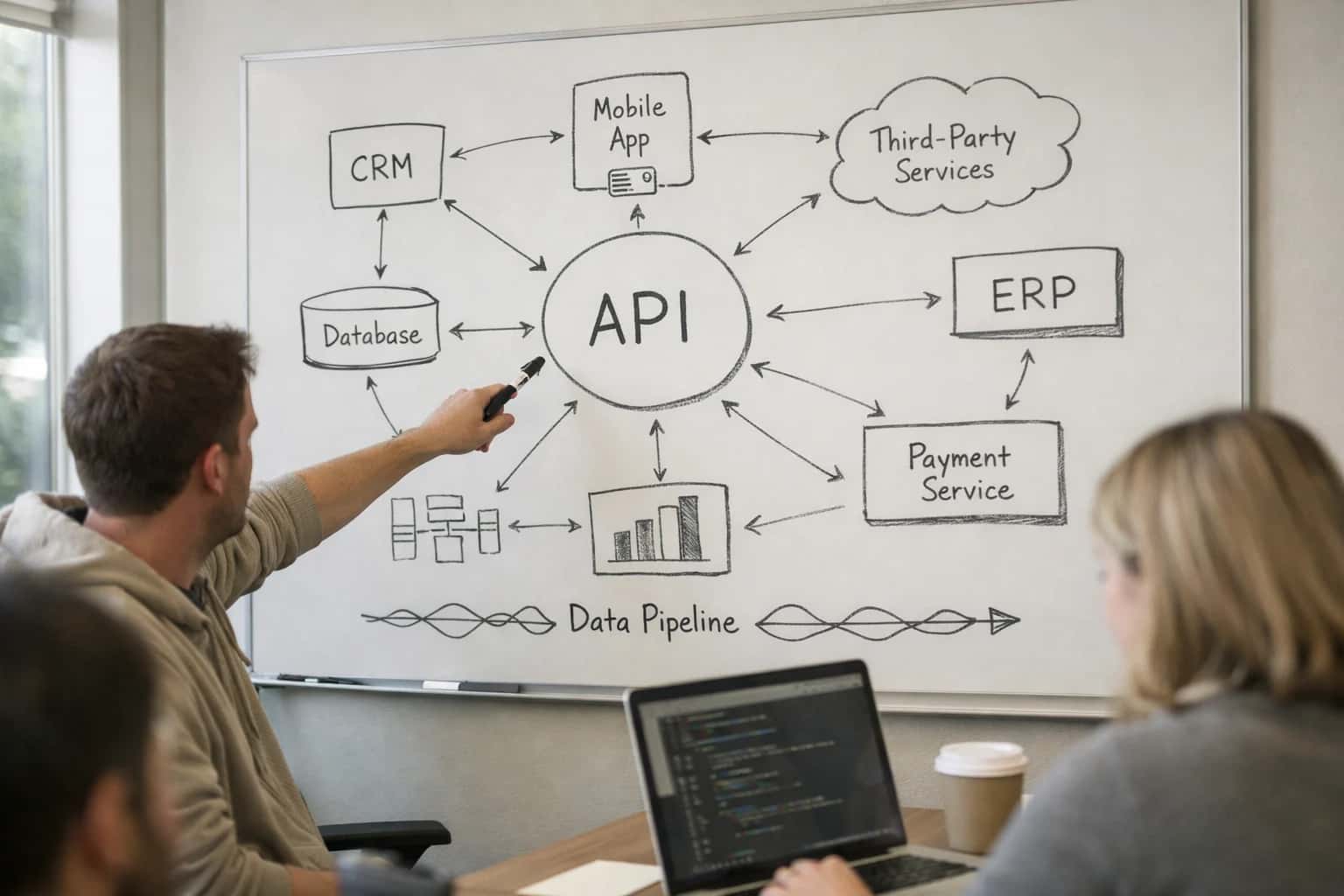
ARCHITECTURE AND ROLLOUT
From Static Dashboards to Intelligent Narrative Reporting
Move beyond charts to AI-generated narrative insights that explain the 'why' behind your IT service metrics.
The implementation is a serverless function or a lightweight microservice that queries the ITSM platform's REST API on a cron schedule. It ingests the raw JSON data, structures it with a system prompt focused on ITIL KPIs and business impact, and calls a configured LLM (e.g., GPT-4, Claude 3) to produce the analysis. Key governance controls include: prompt versioning to ensure consistent tone, a human-in-the-loop approval step for initial rollout, and strict RBAC to ensure reports are only generated for and accessible by authorized roles (e.g., IT Directors, Service Delivery Managers).
Rollout typically starts with a single, high-value report—like a Weekly Major Incident Review or Monthly SLA Performance Summary—delivered to a pilot group. This builds trust in the AI's accuracy and narrative clarity. The workflow can then be extended to other surfaces, such as auto-populating the 'Executive Summary' field in a ServiceNow Change Request or generating a narrative for the CAB agenda. The final architecture includes audit logging of all generated content, traceability back to the source data, and the ability for users to provide feedback (e.g., 'regenerate for more technical detail'), which is used to iteratively refine the prompts.
AI-Powered Reporting Automation for ITSM
Where AI Integrates with ITSM Reporting Modules
Automating Executive and Operational Reports
AI integrates directly into SLA and performance dashboards within ServiceNow Performance Analytics, Jira Service Management reports, and Freshservice analytics modules. Instead of static charts, AI agents can generate natural language summaries that explain weekly trends, highlight SLA breaches before they occur, and correlate ticket volume with deployment schedules or external events.
Key integration points include:
- Scheduled Report Generation: An AI agent is triggered by a platform scheduler (e.g., ServiceNow Scheduled Job) to query the reporting API, fetch raw metrics, and produce a narrative summary.
- Anomaly Detection & Alerting: The AI analyzes time-series data for unusual patterns—like a sudden spike in P1 incidents—and automatically creates a notification or a problem ticket record.
- Dynamic Commentary: For dashboard widgets, an AI endpoint can be called to provide context-aware insights, turning a chart showing "Increased Password Reset Requests" into a note suggesting a potential Active Directory sync issue.
This moves reporting from descriptive to prescriptive, enabling leaders to act on insights without manual analysis.
FROM MANUAL ANALYSIS TO AUTOMATED INSIGHT
High-Value AI Reporting Use Cases for ITSM
Move beyond static dashboards. Use AI to generate narrative-driven reports, predict trends, and deliver actionable insights directly within your ServiceNow, Jira Service Management, or Freshservice reporting modules.
01
Executive SLA & OLA Performance Digest
Automatically generate a weekly/monthly natural language summary of SLA and OLA performance. The AI analyzes raw metric data from the Performance Analytics or reporting modules, highlights trends (e.g., 'First Contact Resolution dipped 5% in EMEA'), flags at-risk agreements, and suggests focus areas. Delivers a ready-to-share narrative instead of a spreadsheet.
Hours -> Minutes
Report generation
02
Automated Root Cause Analysis (RCA) Reporting
For every Major Incident or Problem record closed, an AI agent synthesizes the timeline, contributing CI data, and resolution steps from the Incident and Problem modules. It drafts a structured RCA report, identifying probable causes and recommended preventive actions, populating a knowledge article or directly notifying stakeholders.
Same day
RCA availability
03
Predictive Ticket Volume & Staffing Forecasts
Integrate AI models with historical ticket data, calendar events (e.g., new hire cohorts), and system deployment schedules. Generate forecasts for incoming ticket volume by category, predicting peaks and recommending optimal agent staffing levels for the upcoming week within the Resource Management or scheduling views.
Batch -> Real-time
Forecast refresh
04
Intelligent Knowledge Gap Analysis
Continuously analyze resolved ticket data against the Knowledge Base (KB). The AI identifies common resolved issues lacking a published KB article, scores the potential deflection value, and auto-drafts article stubs for review. Turns resolution data into proactive self-service content.
1 sprint
KB coverage gain
05
Vendor & Contract Performance Dashboard
Connect AI to Contract Management and Supplier Management data. Generate comparative analyses of vendor performance against SLAs, cost per ticket, and resolution time. Produce narrative summaries for quarterly business reviews, highlighting top performers and areas for contract renegotiation.
Hours -> Minutes
Vendor review prep
06
User Satisfaction (CSAT) Sentiment & Trend Report
Go beyond average scores. Use NLP to analyze open-text feedback from CSAT surveys. The AI identifies emerging themes (e.g., 'praise for speed,' 'frustration with communication'), tracks sentiment trends over time, and correlates feedback with specific agent groups or service categories for targeted coaching.
Batch -> Real-time
Insight generation
IMPLEMENTATION PATTERNS
Example AI Reporting Workflows and Triggers
Concrete examples of how AI agents can be triggered to generate, analyze, and deliver natural language reports within your ITSM platform, turning raw data into actionable insights for IT leaders.
Trigger: Scheduled workflow runs at 7:00 AM local time.
Context Pulled: The agent queries the ITSM platform's API for the last 24 hours of data:
- New/Open/Resolved counts for Incident, Service Request, and Change records.
- Top 5 categories/CI's by ticket volume.
- SLA breaches (missed and at risk).
- Major Incident status.
AI Agent Action: An LLM (e.g., GPT-4, Claude 3) receives this structured data with a prompt to generate a concise, narrative summary. The prompt instructs it to:
- Highlight significant deviations from daily averages.
- Call out recurring issues or categories.
- Note any ongoing Major Incidents.
- Format with clear headings and bullet points.
System Update: The generated markdown report is:
- Posted to a dedicated
#it-standupSlack/Teams channel via webhook. - Attached as a comment to a pre-configured "Daily Operations" report record in the ITSM platform.
- (Optional) Key metrics are parsed and written back to a custom reporting table for historical trend analysis.
Human Review Point: The report is flagged for a manager's review if SLA breach count exceeds a threshold (e.g., >3) or a Major Incident is active.
BUILDING A GOVERNED, PLATFORM-NATIVE REPORTING AGENT
Implementation Architecture: Data Flow, APIs, and Guardrails
A practical blueprint for integrating AI into ITSM reporting modules to automate executive summaries, trend analysis, and SLA commentary.
The integration connects directly to the ITSM platform's reporting API or data warehouse (e.g., ServiceNow's sys_report tables, Jira Service Management's Analytics API, Freshservice's custom report endpoints). An orchestration agent, typically deployed as a scheduled Flow or Automation Rule, extracts aggregated KPIs—like incident volume, MTTR, SLA compliance %, and top categories—and structures this data into a context-rich prompt for an LLM. The AI's role is not to calculate metrics (the platform does that) but to generate narrative context: explaining weekly volatility, highlighting recurring problem records, or drafting executive-ready summaries of IT service health.
Architecturally, the AI agent acts as a middleware service that calls the ITSM API, processes the JSON/CSV payload, and invokes the LLM via a secure, governed endpoint. The generated narrative is then posted back to a dedicated reporting dashboard widget, a Knowledge Base article, or sent via email through the platform's notification engine. For example, a ServiceNow Scheduled Job could run every Monday, pull last week's performance data, and use the LLM to produce a "Weekly IT Service Review" summary, automatically attaching it to a sys_report record. Guardrails are implemented at the prompt layer with strict instructions to only comment on provided data, avoid speculation, and format findings with clear bullet points and actionable headings.
Rollout follows a phased approach: start with a single, high-impact report (e.g., Major Incident Review) in a sandbox instance, where outputs are reviewed by an IT manager before any automated publishing. Governance checks include human-in-the-loop approval steps for the first month, audit logging of all AI-generated content linked to the source data, and regular quality reviews comparing AI summaries against analyst-written ones. This ensures the integration augments—rather than replaces—existing oversight, turning raw dashboard data into immediately consumable intelligence for IT leadership and stakeholders.
IMPLEMENTATION PATTERNS
Code and Payload Examples for Key Interactions
Triggering AI-Powered Report Generation
Use platform REST APIs to trigger an AI agent that synthesizes ticket data into a narrative summary. This pattern is ideal for scheduled or on-demand reporting workflows.
Example: ServiceNow Scripted REST API Endpoint This GlideRecord query fetches recent high-priority incidents, then calls an external LLM service via an Integration Hub spoke or a custom REST step.
javascript// ServiceNow Server-side Script (Business Rule or Script Include) (function generateSLAReport() { var gr = new GlideRecord('incident'); gr.addQuery('priority', '1'); // Critical incidents gr.addQuery('sys_created_on', '>=', gs.daysAgoStart(7)); // Last 7 days gr.query(); var incidentData = []; while (gr.next()) { incidentData.push({ number: gr.getValue('number'), short_description: gr.getValue('short_description'), state: gr.getDisplayValue('state'), sys_created_on: gr.getValue('sys_created_on'), sla_due: gr.getValue('sla_due') }); } // Payload to LLM service var payload = { "report_type": "weekly_sla_summary", "timeframe": "last_7_days", "incidents": incidentData, "instruction": "Generate a 3-paragraph executive summary highlighting major incident trends, SLA performance against targets, and key resolution bottlenecks." }; // Call Integration Hub spoke for AI processing var result = sn_fd.FlowAPI.getRunner().subflow('ai_report_generation').inBackground().withInputs({ report_payload: JSON.stringify(payload) }).run(); })();
The AI service returns structured markdown or HTML, which can be posted to a ServiceNow Knowledge Base article, emailed, or attached to a dashboard widget.
AI-POWERED REPORTING AUTOMATION FOR ITSM
Realistic Time Savings and Operational Impact
How AI integration transforms manual reporting workflows in ServiceNow, Jira Service Management, and Freshservice, moving from reactive data compilation to proactive insight generation.
| Reporting Workflow | Before AI | After AI | Implementation Notes |
|---|---|---|---|
SLA Performance Report | Manual data pull, 4-6 hours per week | Automated generation, 15-minute review | AI queries platform APIs, structures data, drafts narrative |
Major Incident Post-Mortem | Analyst compiles timeline from tickets & chat logs, 1-2 days | AI summarizes threads & actions, draft in 30 minutes | RAG over ticket/chat history; human finalizes causality analysis |
Monthly Service Desk Volume & Trend Analysis | Spreadsheet assembly, pivot tables, 8-10 hours monthly | Scheduled AI report with insights, 1-hour review | AI identifies top ticket drivers, seasonality, and deflection opportunities |
CIO/Leadership Dashboard Narrative | Manual commentary on KPIs, 3-4 hours monthly | AI generates executive summary from metrics, 20-minute edit | Connects to dashboard APIs (Tableau, Power BI); tone tailored to audience |
Knowledge Base Gap Analysis | Periodic manual audit, sample-based, quarterly | Continuous AI analysis of ticket vs. KB search logs, weekly digest | Identifies unanswered recurring questions to prioritize article creation |
Vendor Performance Report (from tickets) | Manual ticket tagging & review, 6-8 hours quarterly | AI extracts & categorizes vendor mentions, draft in 1 hour | Entity recognition on ticket descriptions; summarizes resolution times |
Ad-hoc Report Request (e.g., 'Zoom issue impact last month') | Analyst investigates, queries, formats: 2-3 hours | AI generates initial answer with data citations: 10-15 minutes | Natural language query to reporting agent; results grounded in platform data |
ARCHITECTING CONTROLLED AI OPERATIONS
Governance, Security, and Phased Rollout
A production-ready AI reporting integration requires a structured approach to data access, model governance, and user adoption.
Implementation begins by mapping the AI agent's data access to specific ITSM reporting modules and underlying tables—such as incident, sc_task, cmdb_ci, and sys_audit in ServiceNow, or equivalent objects in Jira Service Management and Freshservice. The agent uses read-only API credentials, scoped to the necessary data sets, and all generated summaries are written to a dedicated ai_report_audit table or custom object for a complete lineage trail. This ensures the AI operates within the platform's existing RBAC and audit frameworks, never bypassing native security controls.
A phased rollout is critical for user trust and process refinement. Start with a pilot in a single, high-value reporting workflow—for example, weekly SLA performance summaries for a specific support team. In this phase, the AI generates drafts that are reviewed and approved by a manager before publication. This human-in-the-loop step validates output quality and gathers feedback. Subsequent phases can expand to automated daily digests, cross-functional trend reports (e.g., linking incident volume to change activity), and finally, proactive alerting when the AI detects anomalies in the data, such as a sudden spike in P1 incidents for a critical service.
Governance is maintained through a combination of technical and operational controls. Technically, prompts and data retrieval logic are version-controlled, and outputs are compared against a set of quality rules (e.g., factual accuracy checks against source numbers). Operationally, a designated AI Report Steward—often from IT Operations or Service Management—reviews usage metrics and feedback, and holds the authority to pause or roll back the integration. This structured approach ensures the AI augments the reporting function reliably, turning data into actionable intelligence without introducing operational risk.
Enabling Efficiency, Speed & Accuracy
Intelligent Analysis, Decision & Execution
We build AI systems for teams that need search across company data, workflow automation across tools, or AI features inside products and internal software.
Talk to Us
Search across company data
Give teams answers from docs, tickets, runbooks, and product data with sources and permissions.
Useful when people spend too long searching or get different answers from different systems.
Enterprise searchRAGPermissions
Read more
Automate internal workflows
Use AI to route work, draft outputs, trigger actions, and keep approvals and logs in place.
Useful when repetitive work moves across multiple tools and teams.
AI agentsWorkflow automationGovernance
Read more
Add AI to products and internal tools
Build assistants, guided actions, or decision support into the software your team or customers already use.
Useful when AI needs to be part of the product, not a separate tool.
AI integrationDecision supportModel routing
Read moreIMPLEMENTATION BLUEPRINT
Frequently Asked Questions on AI ITSM Reporting
Practical answers for technical leaders planning to integrate AI into ServiceNow, Jira Service Management, or Freshservice reporting workflows. Focused on architecture, data flow, and governance.
AI integrates via the platform's REST API and data export capabilities. A typical production architecture involves:
- Data Extraction: Scheduled jobs (e.g., ServiceNow Scheduled Report Export, Jira SM Analytics API) pull aggregated ticket, SLA, and performance data into a secure intermediate store.
- AI Processing Layer: An external service (your LLM endpoint) ingests this data. Context is provided via a system prompt that includes:
- The reporting period and key metrics (MTTR, backlog size, top categories).
- Definitions of key terms and SLA targets.
- Instructions on tone (executive vs. operational) and focus areas.
- Output & Ingestion: The generated natural language summary is posted back via API to a custom table or a rich-text field on a summary report record.
- User Access: Reports with AI summaries are surfaced in native dashboards, service portals, or scheduled email digests.
Key Consideration: This pattern keeps sensitive raw data within your environment; only aggregated, anonymized statistics are sent to the LLM for analysis.

About the author
Prasad Kumkar
CEO & MD, Inference Systems
Prasad Kumkar is the CEO & MD of Inference Systems and writes about AI systems architecture, LLM infrastructure, model serving, evaluation, and production deployment. Over 5+ years, he has worked across computer vision models, L5 autonomous vehicle systems, and LLM research, with a focus on taking complex AI ideas into real-world engineering systems.
His work and writing cover AI systems, large language models, AI agents, multimodal systems, autonomous systems, inference optimization, RAG, evaluation, and production AI engineering.
LinkedIn
Limited slotsGet a Free AI Consultation
Partnered with leading AI, data, and software stack.





How We Work
Custom AI workflows for your Business
One-fit-all AI don't work for modern businesses. At Inferensys, we aim to understand your business & custom requirements; which we use to define most efficient agentic workflows, the data, and the tools for your business.
01
Review the use case
We understand the task, the users, and where AI can actually help.
Read more02
Pick the right approach
We define what needs search, automation, or product integration.
Read more03
Build the first useful version
We implement the part that proves the value first.
Read more04
Improve from there
We add the checks and visibility needed to keep it useful.
Read moreThe first call is a practical review of your use case and the right next step.
Talk to Us