AI integration targets key ITFM surfaces: the ServiceNow ITBM Cost Plan and Project Portfolio modules, custom cost fields on Configuration Items (CIs) and Service Offerings, and the underlying CMDB relationships. The goal is to connect LLMs and analytics models to this data to automate spend analysis, forecast budgets, and generate chargeback insights without manual spreadsheet work. This typically involves an agent that periodically queries the cmdb_ci and fm_cost tables via REST API, processes usage and invoice data, and writes insights back as journal entries or dashboard widgets.

Integration
AI for IT Financial Management (ITFM) in ITSM Platforms
A practical guide to integrating AI with ITFM modules in ServiceNow, Jira Service Management, and Freshservice for automated spend analysis, budget forecasting, and intelligent chargeback insights.
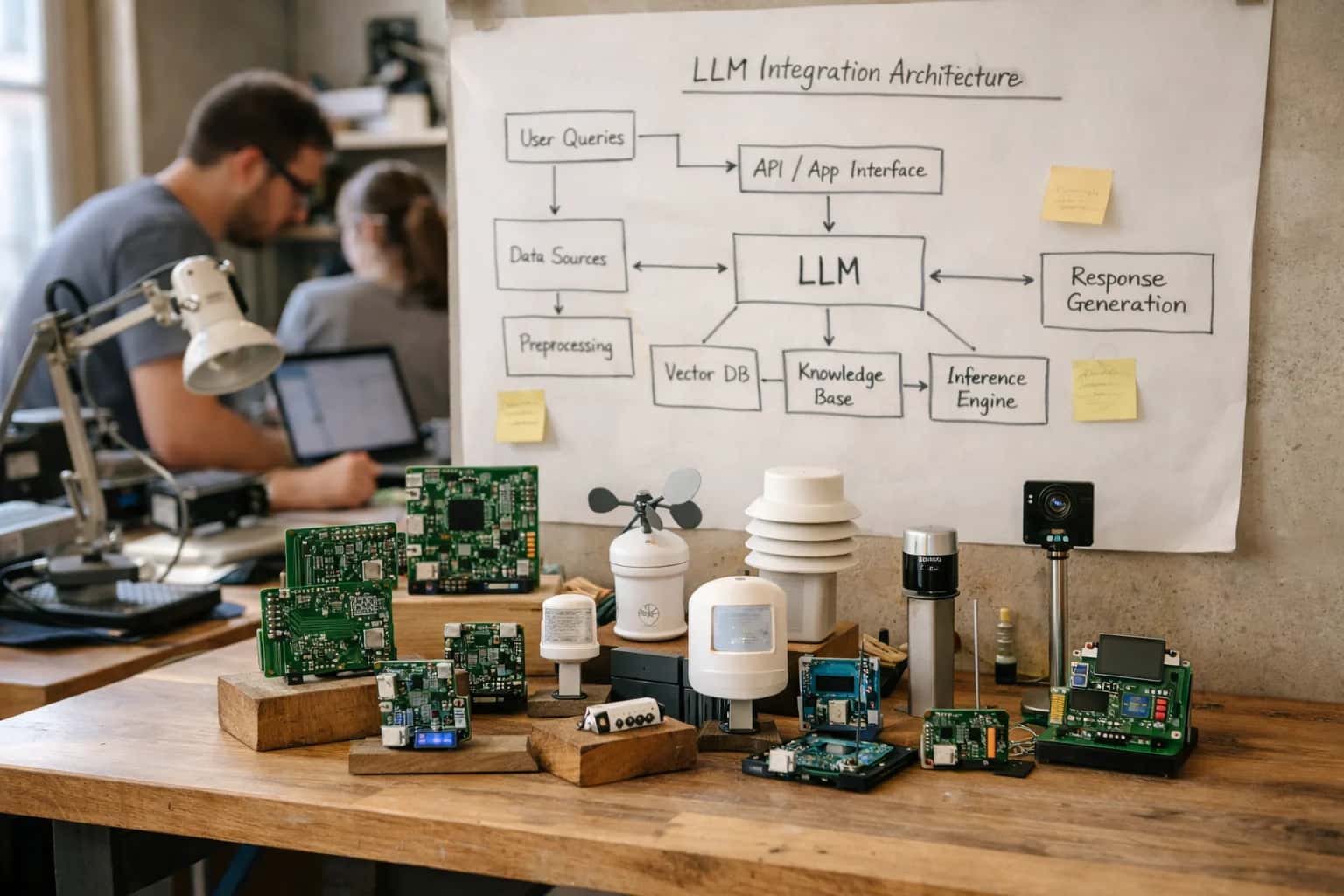
ARCHITECTURE FOR COST VISIBILITY AND FORECASTING
Where AI Fits into IT Financial Management
Integrating AI into ITFM transforms raw cost data into actionable financial intelligence, directly within platforms like ServiceNow IT Business Management (ITBM).
High-value use cases include: - Automated spend anomaly detection across cloud providers and software subscriptions, flagging unexpected spikes in the Cost Plan. - Forecast-to-actual analysis that uses historical project data to predict budget overruns for active portfolios. - Natural-language chargeback reporting, where finance or business unit leaders can ask, "What were my top 5 cost drivers last quarter?" and receive a summarized breakdown tied to specific services or departments. Impact is measured in reduced manual reconciliation time—shifting analysis from days to hours—and more proactive budget management.
A production rollout requires careful governance. The AI agent should run with read-only access initially, with its recommendations surfaced in a dedicated ITFM Copilot interface or as suggestions in a workflow that requires a financial analyst's approval. All generated forecasts and insights must be audit-logged with traceability back to the source data and model version. Start by piloting on a single cost center or cloud service to validate accuracy before scaling to the full portfolio, ensuring the AI augments—rather than replaces—existing financial controls and approval chains.
IT FINANCIAL MANAGEMENT (ITFM) WORKFLOWS
AI Integration Surfaces in Major ITSM Platforms
AI for Cost Transparency and Anomaly Detection
Integrate AI models with ITFM modules to analyze historical spend data from cloud providers, software vendors, and hardware purchases. The primary surfaces are cost transaction tables, vendor records, and CI cost fields linked to the CMDB.
Key Integration Points:
- ServiceNow ITBM (IT Business Management): Connect LLMs to the Financial Management application to query
fm_costandfm_spendrecords. Use AI to generate natural-language summaries of monthly spend by department, cost center, or service. - Custom Cost Fields in Jira/ServiceNow: For platforms without native ITFM, AI can analyze custom numeric fields on Configuration Items (CIs) or projects. Build scheduled jobs that call an AI API to flag anomalies (e.g., a 200% spike in AWS charges for a specific server group).
- Workflow Trigger: Set an automation rule to create a task or alert in the financial review queue when AI detects a spending anomaly, attaching the AI-generated analysis as a comment.
Example Workflow: An AI agent runs nightly, ingests the last 30 days of cloud cost data via platform API, and posts a summary to a dedicated ITFM dashboard channel in Microsoft Teams.
INTEGRATING AI WITH SERVICENOW ITBM & CUSTOM COST MODELS
High-Value AI Use Cases for ITFM
Move beyond static dashboards. Integrate AI directly with your ITSM platform's financial data to automate analysis, forecast spend, and generate actionable chargeback insights.
01
Automated IT Spend Categorization & Anomaly Detection
An AI agent monitors the ServiceNow ITBM Cost Plan or custom cost tables, classifying new vendor invoices and cloud bills against your chart of accounts. It flags anomalies—like unexpected spikes in SaaS spend or misallocated data center costs—for immediate review, turning monthly reconciliation from a batch process into continuous oversight.
Monthly -> Daily
Anomaly review cycle
02
AI-Powered Budget Forecasting & Scenario Modeling
Integrate LLMs with your ITFM project and portfolio data. The AI analyzes historical spend, project timelines, and resource plans to generate probabilistic forecasts. Finance teams can query the model in natural language (e.g., 'Forecast Q3 cloud spend if we onboard the marketing team') and receive narrative explanations alongside the numbers, directly within the platform.
1-2 Days
Typical modeling time saved
03
Intelligent Chargeback & Showback Report Generation
Replace manual, spreadsheet-based chargeback cycles. An AI workflow consumes ServiceNow CMDB relationships and usage data (e.g., virtual servers, software instances) to automatically attribute costs to business units. It then drafts detailed, narrative-driven showback reports, explaining cost drivers and suggesting optimization opportunities for each department head.
Hours -> Minutes
Report drafting time
04
Vendor Invoice & Contract Analysis for Sourcing
An AI agent integrated via ServiceNow Integration Hub extracts key terms, pricing models, and renewal dates from uploaded vendor contracts and invoices. It compares terms against historical spend in the ITFM module, highlighting non-standard clauses or opportunities for consolidation, and can auto-create sourcing intake requests in the procurement workflow.
Batch -> Real-time
Contract review trigger
05
Natural Language Q&A for Financial Data
Deploy a RAG-powered copilot connected to your ITFM tables, project records, and budget documents. Finance analysts and IT leaders can ask questions like 'What's our YTD spend on cybersecurity?' or 'Which projects are most at risk of going over budget?' and receive accurate, sourced answers with links back to the underlying records, eliminating manual report hunting.
06
AI-Driven Capital vs. Operational Expense (CapEx/OpEx) Guidance
An AI model reviews procurement requests and project plans flowing through ServiceNow SPM or Request Management, analyzing asset lifecycle, usage patterns, and accounting rules. It suggests whether an item should be classified as CapEx or OpEx, auto-populating justification fields and routing the request with the appropriate financial approval workflow.
Reduce Errors
In financial classification
IMPLEMENTATION PATTERNS FOR SERVICENOW ITBM & CUSTOM MODULES
Example AI-Powered ITFM Workflows
These workflows demonstrate how to connect LLMs and AI agents to your ITSM platform's financial data, automating analysis, forecasting, and chargeback operations that traditionally require manual spreadsheet work.
Trigger: Scheduled workflow runs on the 3rd business day after month-end.
Context/Data Pulled:
- Aggregated actual spend from the
fm_expense_linetable for the closed period. - Budget data from the
budgettable for corresponding cost centers and projects. - Prior period spend for comparison.
Model/Agent Action: An AI agent is invoked via a REST API (e.g., to an orchestration layer) with a structured prompt and the aggregated data payload. The LLM analyzes:
- Top 3 cost centers with the largest positive/negative variances (>10%).
- Recurring vs. one-time spend patterns.
- Potential causes based on linked change records or procurement data.
System Update/Next Step: The agent returns a structured JSON summary. A Flow Designer workflow:
- Creates a
ITFM Reviewrecord in ServiceNow, attaching the AI-generated narrative. - Tags relevant financial managers in the
assignment_group. - Posts a summary to a dedicated Microsoft Teams channel via webhook.
Human Review Point: The financial manager reviews the AI-generated narrative for accuracy, confirms or edits insights, and uses the record to initiate corrective actions.
AI-ENHANCED ITFM WORKFLOWS
Implementation Architecture: Data Flow & System Design
A production-ready architecture for integrating AI into IT Financial Management (ITFM) workflows within platforms like ServiceNow IT Business Management (ITBM).
The integration connects to core ITFM data objects—Cost Plans, Business Services, Cost Centers, Chargeback Rules, and Vendor Invoice records—via the platform's REST API. An orchestration layer, typically deployed as a middleware service or a custom scoped application, acts as the control plane. It polls for new financial transactions, approved forecasts, or updated service consumption data, then packages this context into structured prompts for an LLM. The AI's role is not to replace the financial logic within the ITFM module, but to augment human analysis by generating narrative insights, identifying anomalies in spend patterns, and drafting forecast justifications based on historical trends and CMDB-linked resource usage.
A practical workflow begins when a monthly cost plan is submitted for review. The system automatically calls the LLM with the plan data, prior period actuals, and associated business service KPIs. The AI generates a concise summary highlighting variances >10%, potential risks (e.g., a cloud service showing unsanctioned growth), and suggested commentary for stakeholders. This output is attached to the plan record as a Journal Entry or a Collaboration thread. For chargeback operations, AI can analyze service usage reports and draft personalized, plain-language summaries for cost center managers, explaining their allocation breakdown, which can be triggered via an Outbound Email automation.
Governance is critical. All AI-generated content is stored as Audit Log entries with traceability to the source data and prompt version. A human-in-the-loop approval step is configured for any AI-generated forecast or chargeback insight before it becomes official communication. Rollout follows a phased approach: start with read-only analysis and summary generation for Finance teams, then progress to draft chargeback communications, and finally to predictive scenario modeling for annual budget planning. The architecture ensures the ITFM module remains the single source of truth, with AI acting as a copilot that improves the speed and clarity of financial operations.
AI-ENHANCED ITFM WORKFLOWS
Code & Payload Examples
Automated Chargeback Logic
An AI agent can analyze raw cloud billing data and usage logs to assign costs to specific ServiceNow Configuration Items (CIs) or business services. This script calls an LLM to classify and map spend, then posts the allocation back to the ServiceNow Financial Management or a custom cost table.
pythonimport requests import json # Example: Classify AWS line item and map to ServiceNow CI def allocate_cloud_spend(line_item): prompt = f""" Analyze this cloud cost line item and return a JSON with: - 'service_name': The IT service (e.g., 'Prod Database', 'HR App Server') - 'cost_center': The internal cost center code - 'allocation_basis': The rationale (e.g., 'CPU hours', 'Data storage') Line Item: {line_item['description']} Amount: ${line_item['amount']} Resource Tags: {line_item.get('tags', {})} """ # Call LLM for classification llm_response = call_llm(prompt) allocation = json.loads(llm_response) # Build payload for ServiceNow Financial Management table sn_payload = { 'cost_amount': line_item['amount'], 'ci_name': allocation['service_name'], 'cost_center': allocation['cost_center'], 'allocation_notes': allocation['allocation_basis'], 'source_transaction_id': line_item['id'], 'period': '2024-04' } # Post to ServiceNow REST API response = requests.post( 'https://your-instance.service-now.com/api/now/table/fm_cost_line', auth=('api_user', 'api_pass'), json=sn_payload ) return response.json()
AI-ENHANCED IT FINANCIAL OPERATIONS
Realistic Time Savings & Operational Impact
This table illustrates the tangible impact of integrating AI with IT Financial Management (ITFM) modules in platforms like ServiceNow ITBM. It compares manual, periodic processes against AI-assisted, continuous workflows, highlighting realistic efficiency gains and improved decision-making.
| Financial Workflow | Before AI (Manual/Periodic) | After AI (Assisted/Continuous) | Implementation Notes |
|---|---|---|---|
Cost Allocation & Chargeback | Monthly spreadsheet reconciliation, manual tagging | Weekly automated classification, suggested allocations | AI analyzes service usage logs; finance reviews & approves |
Budget Forecasting | Quarterly reviews based on historical spend | Continuous rolling forecasts with anomaly alerts | LLM models trends and flags variances for planner review |
Vendor Invoice Review | Manual line-by-line check against contracts | Automated line-item matching & exception highlighting | AI extracts data from PDFs; analyst focuses on discrepancies |
Capital vs. Operational Spend Analysis | Ad-hoc analysis during planning cycles | Real-time dashboard with natural language Q&A | RAG on procurement data enables instant spend queries |
IT Service Cost Modeling | Model updates require days of data gathering | Dynamic models adjust with new consumption data | AI correlates CMDB, usage, and financial data streams |
Financial Report Generation | Days to compile and format monthly reports | Hours to generate draft narratives and visuals | LLMs synthesize data into executive summaries |
Anomaly & Overspend Detection | Spot-check during quarterly audits | Proactive alerts on unusual spend patterns | Machine learning baselines normal behavior per cost center |
Renewal & Contract Optimization | Manual review 60 days prior to renewal | 90-day forecast with savings recommendations | AI analyzes usage vs. commitment and market benchmarks |
IMPLEMENTING AI FOR ITFM
Governance, Security & Phased Rollout
A practical guide to deploying AI for IT Financial Management with the controls and phased approach required for financial data.
Integrating AI with ServiceNow IT Business Management (ITBM) or custom cost fields requires a data-first architecture. The AI agent typically connects via ServiceNow's REST API to read from tables like alm_cost_center, fm_expense_line, sn_cmdb_ci, and sn_cmdb_rel_ci. For custom implementations, the agent ingests data from custom tables housing chargeback rates, project budgets, and service consumption logs. The core workflow involves the AI analyzing this data to surface insights like budget variance, cost per service, or underutilized assets, which are then written back to a dedicated AI Recommendation related list or a custom dashboard widget for analyst review.
A phased rollout is critical for financial workflows. Phase 1 focuses on read-only analysis and reporting, where the AI generates weekly spend summaries and forecast vs. actual analyses delivered via ServiceNow reports or scheduled emails. Phase 2 introduces interactive copilot features within the ITFM module, allowing analysts to ask natural language questions (e.g., "Show me the top 3 cost drivers for Q1") with answers grounded in the platform's data. Phase 3 enables controlled write-back, such as AI-suggested budget adjustments or chargeback rule optimizations, which are submitted as records requiring manager approval via ServiceNow's standard workflow engine before any system update.
Governance is built on ServiceNow's native controls. All AI-generated recommendations and data accesses are logged to the sys_audit table, creating a full audit trail. Access to the AI agent's interface should be gated by existing ITFM Analyst and ITFM Manager roles. For chargeback or budget forecasting models, implement a human-in-the-loop approval step within a ServiceNow Flow before any financial record is modified. Data sent to external LLM APIs (e.g., for narrative generation) must be scrubbed of PII and use the platform's outbound REST API policies with encryption. Start with a pilot on non-production financial data to validate accuracy before granting the agent access to live cost tables.
Enabling Efficiency, Speed & Accuracy
Intelligent Analysis, Decision & Execution
We build AI systems for teams that need search across company data, workflow automation across tools, or AI features inside products and internal software.
Talk to Us
Search across company data
Give teams answers from docs, tickets, runbooks, and product data with sources and permissions.
Useful when people spend too long searching or get different answers from different systems.
Enterprise searchRAGPermissions
Read more
Automate internal workflows
Use AI to route work, draft outputs, trigger actions, and keep approvals and logs in place.
Useful when repetitive work moves across multiple tools and teams.
AI agentsWorkflow automationGovernance
Read more
Add AI to products and internal tools
Build assistants, guided actions, or decision support into the software your team or customers already use.
Useful when AI needs to be part of the product, not a separate tool.
AI integrationDecision supportModel routing
Read moreAI FOR IT FINANCIAL MANAGEMENT (ITFM)
Frequently Asked Questions
Practical answers for integrating AI with ITFM modules in ServiceNow, Jira Service Management, and other ITSM platforms to automate spend analysis, forecasting, and chargeback operations.
AI integrates via the ITSM platform's APIs and automation engine (like ServiceNow's Flow Designer or Jira's Automation Rules). The typical connection points are:
-
Data Ingestion: An AI agent is triggered on a schedule (e.g., nightly) or by an event (new invoice uploaded) to pull cost data from:
Cost CenterandProjecttablesSoftware LicenseandHardware AssetrecordsVendor InvoiceandPurchase Ordermodules- External cloud cost feeds (AWS Cost Explorer, Azure Cost Management APIs)
-
Context Enrichment: The agent uses Retrieval-Augmented Generation (RAG) against your internal policies and historical data to understand spending norms.
-
Analysis & Output: The LLM analyzes the data, and results are written back to platform records as:
- Comments on a cost record flagging an anomaly.
- Updated fields, like a
forecast_variance_percentageon a budget record. - New tasks, such as a "Review Overspend" task assigned to a finance manager.
- Dashboard widgets with natural language summaries.
The architecture is read-enrich-write, keeping your system of record intact.

About the author
Prasad Kumkar
CEO & MD, Inference Systems
Prasad Kumkar is the CEO & MD of Inference Systems and writes about AI systems architecture, LLM infrastructure, model serving, evaluation, and production deployment. Over 5+ years, he has worked across computer vision models, L5 autonomous vehicle systems, and LLM research, with a focus on taking complex AI ideas into real-world engineering systems.
His work and writing cover AI systems, large language models, AI agents, multimodal systems, autonomous systems, inference optimization, RAG, evaluation, and production AI engineering.
LinkedIn
Limited slotsGet a Free AI Consultation
Partnered with leading AI, data, and software stack.





How We Work
Custom AI workflows for your Business
One-fit-all AI don't work for modern businesses. At Inferensys, we aim to understand your business & custom requirements; which we use to define most efficient agentic workflows, the data, and the tools for your business.
01
Review the use case
We understand the task, the users, and where AI can actually help.
Read more02
Pick the right approach
We define what needs search, automation, or product integration.
Read more03
Build the first useful version
We implement the part that proves the value first.
Read more04
Improve from there
We add the checks and visibility needed to keep it useful.
Read moreThe first call is a practical review of your use case and the right next step.
Talk to Us