
Inferensys

Integration

AI Integration for Insurance Reserve Setting Tools

Architectural blueprint for integrating AI with claims systems to automate initial and ongoing reserve recommendations, explain model reasoning, and flag high-uncertainty claims for manual review.
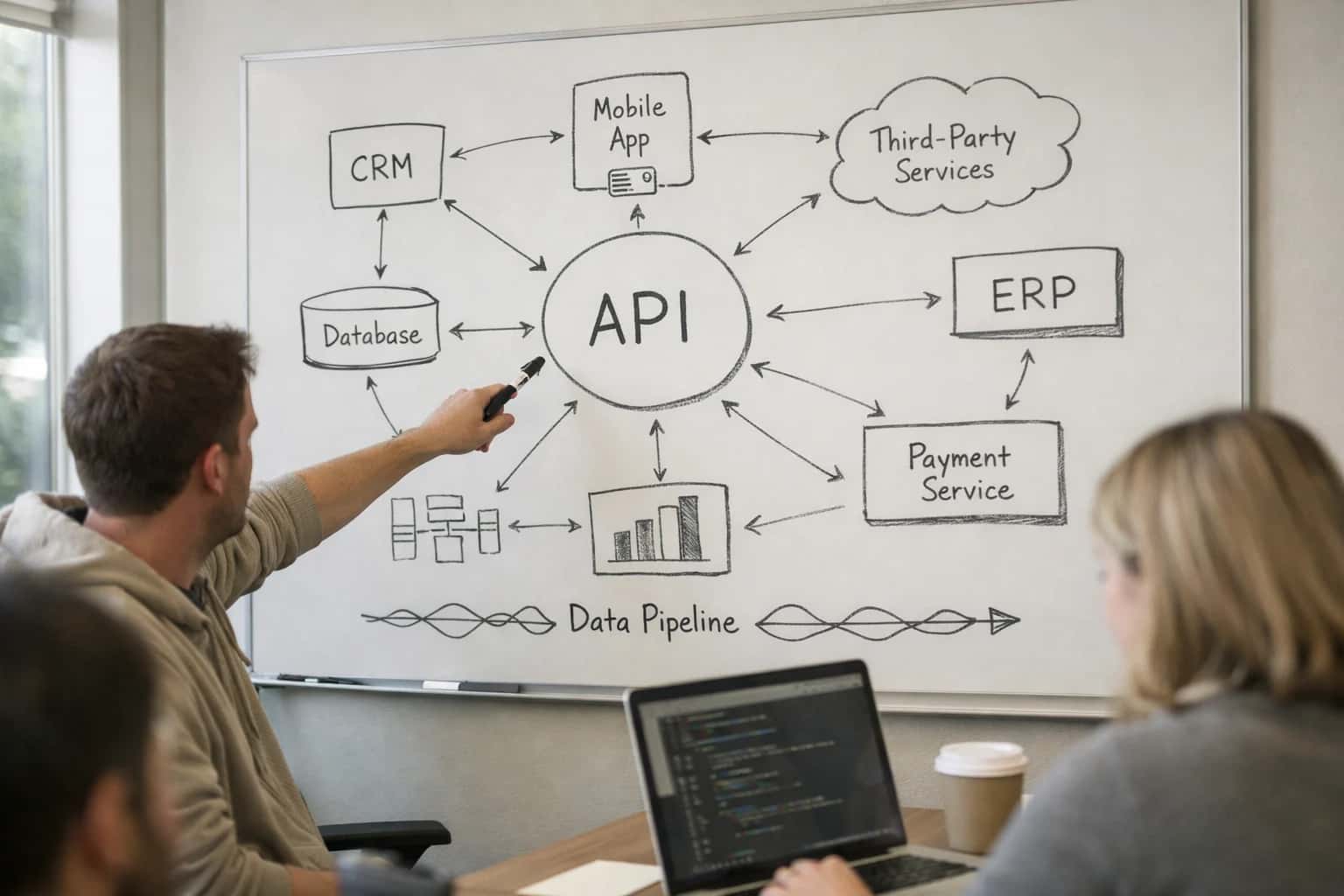
Enterprise integration architect reviewing API connections on laptop, diagram showing systems connecting, modern office setup.
ARCHITECTURE FOR PREDICTIVE RESERVING

Where AI Fits into the Reserve Setting Workflow

Integrating AI into reserve setting transforms a reactive, manual process into a proactive, data-driven workflow that augments—not replaces—your adjusters and actuaries.

AI connects to the reserve setting workflow at three key integration points within your claims platform (e.g., Guidewire ClaimCenter, Duck Creek Claims, Sapiens ClaimsPro):

  • At FNOL and Initial Setup: AI analyzes the first notice of loss details, policy coverage, and historical similar claims to generate an initial reserve recommendation, populating the Reserve object or financial worksheet automatically.
  • During Ongoing Case Development: As new documents (police reports, estimates, medical records) are ingested via the platform's Document Management API, AI continuously extracts key data (injury severity, repair costs, liability indicators) to reassess and update reserve recommendations, triggering diary entries or workflow tasks for adjuster review.
  • At Major Milestones: Before settlement negotiations or at regular review intervals, AI evaluates the complete claim file against internal benchmarks and external data (medical inflation, part delays) to flag claims where the current reserve may be insufficient, creating a prioritized review queue in the adjuster's workspace.


The implementation typically involves a microservices layer that sits between your claims system and AI models. When a claim reaches a configured status (e.g., First Review), a webhook from the claims platform triggers an AI service. This service calls your predictive models—or a hosted LLM for reasoning—and returns a structured JSON payload with a recommended reserve amount, confidence score, and a natural-language explanation citing relevant claim factors. This payload is posted back to a custom object or a dedicated AI_Recommendation field via the platform's REST API, logging the interaction for audit. Adjusters see the recommendation alongside manual override options and the model's reasoning, ensuring human oversight.

Rollout and governance are critical. Start with a human-in-the-loop pilot on a specific line of business (e.g., auto physical damage). AI recommendations should be logged in an Audit_Log object alongside the adjuster's final decision, creating a feedback loop to retrain models. Implement role-based access controls (RBAC) so only senior adjusters or managers can modify the AI's influence thresholds. This approach reduces manual reserve calculations from hours to minutes, improves accuracy by reducing cognitive bias, and creates an auditable trail for regulators. For a deeper dive on operationalizing predictive models within claims platforms, see our guide on /integrations/insurance-claims-platforms/ai-integration-for-insurance-predictive-modeling.

AI-POWERED RESERVE SETTING

Integration Surfaces in Leading Claims Platforms

Core Reserve Management Objects

AI integration for reserve setting primarily connects to the financial modules within claims platforms. This involves the Claim Financials object in Guidewire ClaimCenter, the Reserve Transaction tables in Duck Creek Claims, or the Financial Tracking modules in Sapiens ClaimsPro.

Key integration points include:

  • Initial Reserve Calculation: Trigger an AI model at FNOL or first assignment to analyze loss details, policy coverage, and historical similar claims. The model's recommended reserve amount and line-item breakdown (e.g., indemnity, expense) are posted as a pending transaction, requiring adjuster approval.
  • Supplemental Reserve Reviews: Monitor the claim diary or activity log. When new documents (medical reports, estimates) are added or a major activity occurs, automatically call the AI service to re-evaluate the total reserve and flag significant deviations from the initial set.
  • Explanatory Metadata: Post the AI's reasoning—key factors influencing the recommendation and confidence score—to a dedicated note or custom field. This provides auditability and helps the adjuster understand the model's logic.
ARCHITECTURE FOR AI-POWERED RESERVE SETTING

High-Value AI Use Cases for Reserve Setting

Integrate predictive models with Guidewire, Duck Creek, or Sapiens to provide data-driven reserve recommendations, explain model reasoning, and flag high-uncertainty claims for manual review. These patterns connect AI to the core claims data model and workflow engine.

01

Initial Reserve Recommendation

At FNOL or first assignment, an AI model analyzes structured claim data (loss type, coverage, jurisdiction) and unstructured notes to recommend an initial reserve amount. The recommendation, with key drivers, is posted directly to the reserve transaction screen for adjuster review and one-click approval.

First-day accuracy
Typical benefit
02

Continuous Reserve Monitoring

An AI agent monitors the claim diary and new document uploads (medical reports, estimates). When new information suggests a material change to exposure, it triggers a workflow task recommending a reserve increase or decrease, summarizing the new evidence and linking to the source documents.

Batch -> Real-time
Monitoring shift
03

Uncertainty & Manual Review Flagging

The AI model calculates a confidence score for each reserve recommendation. Claims with high uncertainty (e.g., conflicting reports, novel loss types) are automatically flagged in the adjuster's work queue with a clear rationale, ensuring complex cases get expert attention early.

Focus expert time
Operational goal
04

Explanatory Audit Trail

Every AI-generated reserve recommendation creates an audit record in the claim notes, detailing the model version, input factors (e.g., 'influenced by: claimant age 65+, lumbar MRI report'), and the confidence score. This supports compliance and adjuster trust.

Built-in governance
Key feature
05

Integration with Payment Forecasting

AI reserve forecasts are synchronized with the platform's financial reporting modules. This provides actuarial and finance teams with a dynamic, AI-informed view of loss development, improving cash flow forecasting and portfolio-level reserve adequacy analysis.

Improved financial visibility
Business impact
06

Bodily Injury Severity Triage

For casualty lines, an AI model analyzes medical reports and attorney representation to predict final severity tier (e.g., low, medium, high, complex). This prediction automatically sets a segment-specific reserve benchmark and triggers appropriate assignment to specialist adjuster teams.

Hours -> Minutes
Triage speed
ARCHITECTURE PATTERNS

Example AI-Powered Reserve Workflows

These workflows illustrate how AI integrates with claims platforms like Guidewire ClaimCenter, Duck Creek Claims, and Sapiens ClaimsPro to automate and enhance the reserve setting process, from initial recommendation to ongoing adjustment.

Trigger: A First Notice of Loss (FNOL) is submitted and reaches a status (e.g., 'First Review Complete') in the claims system.

Context/Data Pulled: The integration service retrieves the claim's core data via API:

  • Loss type, date, and description
  • Policy details (coverage limits, deductibles)
  • Involved parties and vehicles/property
  • Any uploaded initial photos or documents
  • Historical reserve patterns for similar claims

Model or Agent Action: A predictive model (or LLM agent with access to historical data) analyzes the claim context. It outputs:

  1. A recommended initial reserve amount, broken down by exposure (e.g., Vehicle Damage, BI).
  2. A confidence score (e.g., 85%).
  3. Key factors influencing the recommendation (e.g., 'High severity due to multi-vehicle collision, airbag deployment noted').

System Update: The AI service posts the recommendation back to the claims platform via API, creating a new activity note: "AI Initial Reserve Recommendation: $15,500. Confidence: High. Factors: Multi-vehicle, airbag deployment, similar historical claims averaged $16,200."

Human Review Point: The claim is automatically routed to an adjuster's "Initial Reserve Review" queue. The adjuster can accept, modify, or reject the AI's recommendation with a single click, triggering the official reserve posting.

PRODUCTION-READY INTEGRATION

Implementation Architecture: Data Flow & Guardrails

A secure, auditable architecture for injecting AI-powered reserve recommendations into your existing claims workflow.

The integration connects your claims system of record (like Guidewire ClaimCenter, Duck Creek Claims, or Sapiens ClaimsPro) to a dedicated AI inference service. The core data flow is triggered by key events: a new claim creation, a major diary update, or a manual request from an adjuster. The system packages relevant claim data—including loss details, policy coverage, initial notes, and any uploaded documents—into a secure payload. This payload is sent via a dedicated API to the AI service, which uses a combination of predictive models and RAG (Retrieval-Augmented Generation) against historical claims data to generate a reserve recommendation and a plain-English explanation of the model's reasoning.

The AI service returns a structured JSON response containing the recommended reserve amount, a confidence score, key influencing factors (e.g., 'high due to prior similar injury claims'), and a flag for manual review if confidence is low or data is contradictory. This response is posted back to the claims system, typically creating a reserve recommendation activity in the claim file. The system is designed for a human-in-the-loop model: the adjuster sees the AI's recommendation and reasoning directly in their workspace, can accept, modify, or reject it, and must provide a brief comment for audit purposes. All AI interactions, inputs, outputs, and user decisions are logged to a separate audit database for model performance tracking and compliance.

Critical guardrails are built into the architecture. A confidence threshold (e.g., 95%) determines if a recommendation is auto-applied to a preliminary reserve field or merely suggested. RBAC controls ensure only authorized adjusters can see or act on recommendations. The system includes a feedback loop where adjuster overrides are used to retrain and improve the models. For rollout, we recommend a phased approach: start with a shadow mode (recommendations logged but not shown), then a pilot with experienced adjusters for low-complexity claims, before a full production launch with continuous monitoring of recommendation adoption rates and impact on reserve accuracy over time.

ARCHITECTURE FOR AI-POWERED RESERVE SETTING

Code & Payload Examples

Triggering AI Reserve Analysis

When a new exposure is added or a medical report is received, your claims system should call an AI service via a secure API. This payload includes the claim's structured data and any extracted text from recent documents.

json
POST /api/v1/reserve/recommend
{
  "claim_id": "CL-2024-78901",
  "line_of_business": "auto_bodily_injury",
  "exposure_type": "medical_payments",
  "injuries": ["whiplash", "lower_back_strain"],
  "claimant_age": 42,
  "jurisdiction_state": "CA",
  "treatment_to_date": 8500.00,
  "extracted_document_text": "Patient reports ongoing neck pain... MRI shows mild disc herniation at C5-C6. Physical therapy recommended 2x/week for 8 weeks.",
  "historical_similar_claims": [
    {"claim_id": "CL-2023-45012", "final_reserve": 42500.00, "final_payment": 41250.00},
    {"claim_id": "CL-2023-55189", "final_reserve": 38000.00, "final_payment": 37500.00}
  ]
}

The AI model returns a recommended reserve range, confidence score, and key reasoning factors, ready for posting back to the claims system or routing to an adjuster's diary.

RESERVE SETTING WORKFLOW

Realistic Operational Impact & Time Savings

How AI integration changes the manual, periodic reserve review process into a continuous, data-driven workflow within platforms like Guidewire ClaimCenter or Duck Creek Claims.

Process StepBefore AI IntegrationAfter AI IntegrationImplementation Notes

Initial Reserve Recommendation

Manual entry based on adjuster experience and simple rules

AI-generated recommendation with confidence score and rationale

Model uses claim facts, historical similar claims, and external data (e.g., medical codes, repair costs)

Reserve Change Identification

Periodic manual diary reviews (e.g., weekly, monthly)

Continuous monitoring with automated alerts for claims needing review

AI flags claims where predicted severity deviates significantly from current reserve

Document Review for Reserve Support

Manual search and reading of medical reports, estimates, and notes

AI summary of key documents highlighting severity indicators and cost drivers

Extracts and surfaces specific data points (e.g., prognosis, part prices) to justify reserve changes

Reserve Justification & Note Drafting

Adjuster writes narrative from scratch for each change

AI drafts initial reserve justification note based on model reasoning

Adjuster reviews, edits, and approves; note is auto-logged to claim file

Supervisor Approval Workflow

All reserve changes above threshold require manual review

AI pre-screens and routes; only low-confidence or high-value changes require full review

Workflow rules in the claims platform use AI confidence score to triage approval queue

Regulatory & Audit Reporting

Manual compilation of reserve change logs and rationale

Automated audit trail of AI recommendations, human decisions, and overrides

System generates reports showing model influence and human oversight for compliance

Large Loss & Litigation Flagging

Relies on adjuster recognition or late-stage legal alerts

AI predicts litigation probability and flags high-severity claims early for specialist assignment

Integrates with assignment engines to route complex claims to appropriate teams sooner

ARCHITECTING FOR AUDIT AND CONTROL

Governance, Compliance, and Phased Rollout

Integrating AI into reserve setting requires a deliberate approach to model governance, compliance with actuarial standards, and a phased rollout that builds confidence.

The integration architecture must enforce a human-in-the-loop approval pattern for any AI-generated reserve recommendation before it is committed to the claims system (e.g., Guidewire ClaimCenter, Duck Creek Claims). This is typically implemented by posting AI outputs to a dedicated audit queue or creating a pending reserve activity that requires adjuster or supervisor review and explicit approval. The system must log the original AI recommendation, the reasoning (e.g., key factors from the model), the reviewing user, any modifications made, and the final approved amount, creating a complete audit trail for regulators and internal actuarial review.

A phased rollout is critical for managing risk and refining model performance. Start with a shadow mode where the AI provides reserve recommendations in a parallel interface without affecting production reserves, allowing you to compare AI suggestions against human-set reserves and calibrate the model. Next, move to a pilot phase for specific, lower-risk claim segments (e.g., low-severity auto property damage) where AI recommendations are presented as a primary suggestion but still require approval. Finally, progress to assisted automation for well-understood claim patterns, where the system can auto-approve reserves within pre-defined confidence thresholds and dollar limits, automatically escalating exceptions.

Compliance hinges on explainability and model monitoring. The integration must surface the key drivers behind each reserve recommendation—such as injury type, treatment codes, jurisdiction, and similar historical claims—directly in the adjuster's workspace. Continuous monitoring for model drift and bias is essential; implement dashboards that track the variance between AI recommendations and final approved reserves over time, flagging significant shifts that may require model retraining. This governance layer ensures the AI acts as a consistent, auditable assistant that augments—rather than replaces—actuarial judgment and company reserving philosophy.

AI INTEGRATION FOR RESERVE SETTING

FAQ: Technical and Commercial Questions

Practical answers on integrating predictive AI models with claims systems for automated reserve recommendations, uncertainty flagging, and explainable reasoning.

The integration is typically event-driven via API. Here’s a common pattern:

  1. Trigger: A claim event (e.g., FNOL completion, new medical report uploaded, major activity logged) fires a webhook from your claims system (Guidewire ClaimCenter, Duck Creek Claims, Sapiens ClaimsPro).
  2. Context Assembly: An orchestration service (often a lightweight middleware) receives the webhook, fetches the necessary claim context via the platform's REST API. This includes:
    • Claim details (loss type, date, jurisdiction)
    • Policy coverage limits
    • Involved parties
    • All attached documents (text extracted)
    • Initial reserve history
  3. Model Inference: The orchestration service formats this data into a feature vector and calls the AI reserve model's scoring endpoint (hosted on your cloud).
  4. Response & Action: The model returns:
    json
    {
      "recommended_reserve": 12500.00,
      "confidence_interval": [10000.00, 15000.00],
      "key_drivers": ["high_severity_medical_report", "jurisdiction_known_for_litigation"],
      "flag_for_review": true,
      "review_reason": "Confidence interval width exceeds threshold"
    }
  5. System Update: The orchestration service posts the recommendation back to the claims system as a diary note or activity, and if flag_for_review is true, can automatically assign the claim to a senior adjuster's queue.
Prasad Kumkar

About the author

Prasad Kumkar

CEO & MD, Inference Systems

Prasad Kumkar is the CEO & MD of Inference Systems and writes about AI systems architecture, LLM infrastructure, model serving, evaluation, and production deployment. Over 5+ years, he has worked across computer vision models, L5 autonomous vehicle systems, and LLM research, with a focus on taking complex AI ideas into real-world engineering systems.

His work and writing cover AI systems, large language models, AI agents, multimodal systems, autonomous systems, inference optimization, RAG, evaluation, and production AI engineering.


