Insurance AI copilots are not standalone chatbots; they are specialized assistants integrated directly into the systems-of-record like Guidewire ClaimCenter, Duck Creek Claims, or Sapiens CoreSuite. Their primary function is to retrieve context and execute actions. This requires a three-layer integration: 1) a secure connection to the core platform's APIs (REST/SOAP) to pull policy details, claim notes, and exposure data; 2) a tool-calling layer that allows the copilot to perform sanctioned actions like creating a diary entry, updating a reserve, or drafting a letter; and 3) a grounding service that ensures all responses are constrained by internal guidelines, state regulations, and the specific facts of the case.

Integration
AI Integration for Insurance AI Copilots
Implementation blueprint for building and integrating role-specific AI copilots that provide contextual assistance to insurance adjusters, underwriters, and agents, directly within core systems like Guidewire, Duck Creek, and Sapiens.
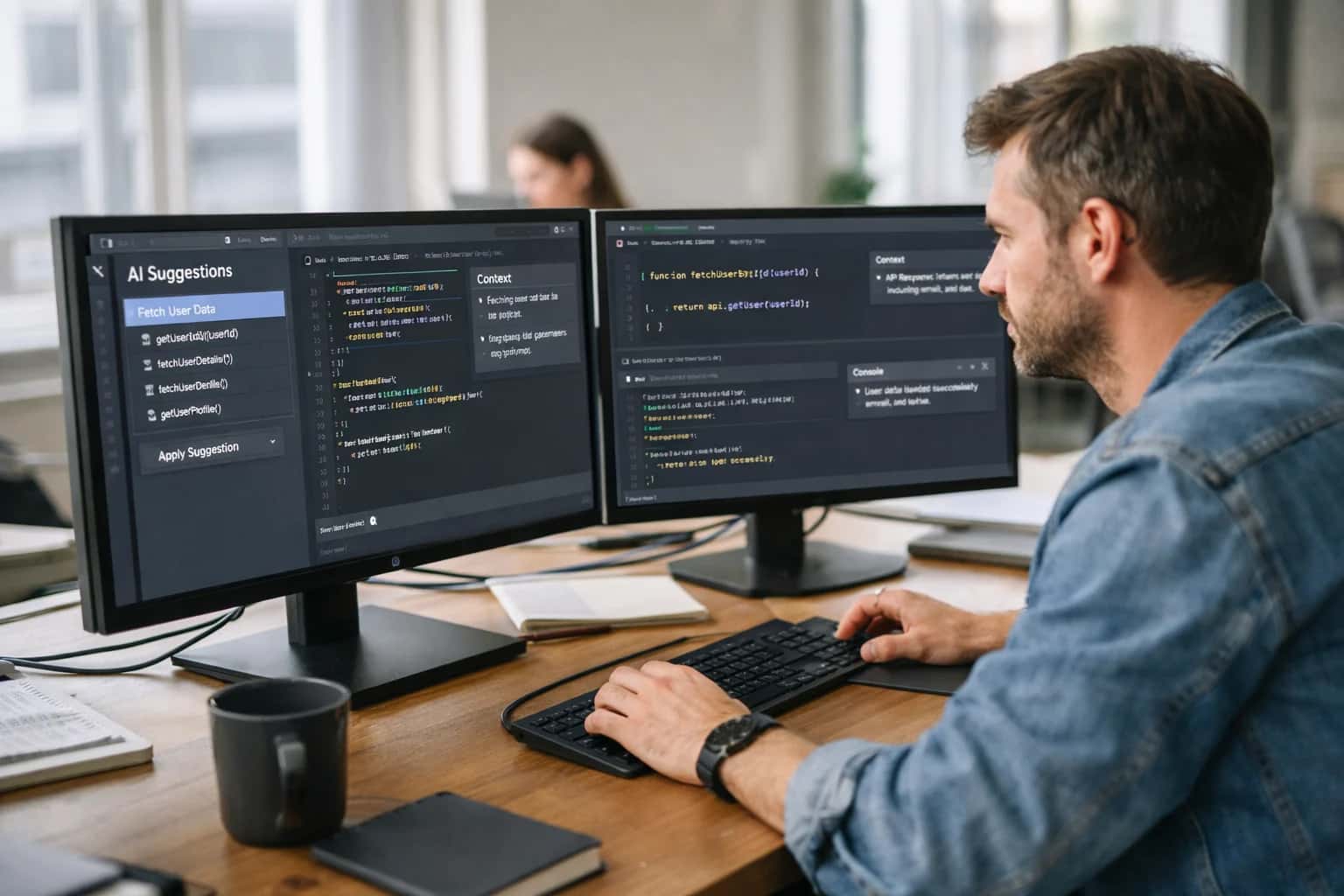
ARCHITECTURE FOR ROLE-SPECIFIC ASSISTANCE
Where AI Copilots Fit in Insurance Operations
A practical blueprint for integrating AI copilots into core insurance systems to augment adjusters, underwriters, and agents without disrupting existing workflows.
For an adjuster copilot, this means the AI has real-time access to the FNOL report, activity log, document repository, and reserve history. When the adjuster asks "Summarize the latest medical report," the copilot calls the DMS API, fetches the document, uses an LLM to extract key findings, and posts a summary back as a note—all within the same session. For an underwriter, the copilot might integrate with PolicyCenter or Duck Creek Policy to compare submission details against underwriting guidelines, flag missing inspections, and draft a list of follow-up questions, directly within the rating screen. The value is in reducing tab-switching, manual lookups, and administrative drafting, turning hours of research into minutes.
Rollout requires a phased, role-by-role approach. Start with a read-only copilot for a specific team (e.g., auto physical damage adjusters) to build trust in its context retrieval. Then, enable controlled write actions like note summarization, governed by human approval steps. Finally, integrate with the workflow engine to allow the copilot to suggest and trigger next steps (e.g., "Based on the police report, recommend assigning to Special Investigations"). Governance is critical: all copilot interactions must be logged to the claim file with an audit trail, and outputs should be clearly marked as AI-generated for human review. This architecture ensures copilots enhance—not replace—the judgment of experienced insurance professionals while accelerating routine operations.
IMPLEMENTATION BLUEPRINT
Integration Surfaces for Role-Specific Copilots
Core Claims System Integration
The Adjuster Copilot integrates directly with the claims adjudication workspace (e.g., Guidewire ClaimCenter, Duck Creek Claims). It uses the platform's APIs to retrieve the active claim file, including exposures, reserves, activities, and attached documents.
Key Integration Points:
- Activity Diary: Reads recent notes and summaries to provide context-aware next-step suggestions.
- Document Management: Calls AI services to summarize lengthy reports (police, medical) and extract key facts (date of loss, involved parties).
- Financials: Grounds reserve and payment recommendations in company guidelines by analyzing similar historical claims from the data warehouse.
- Workflow Engine: Can trigger automated tasks, like sending a templated correspondence or setting a diary, via the platform's automation APIs.
This copilot acts as a co-pilot, not an autopilot, surfacing insights and drafting actions for the adjuster to review and approve within their native interface.
IMPLEMENTATION PATTERNS
High-Value Use Cases for Insurance AI Copilots
Practical AI integration patterns for building role-specific copilots that connect to core insurance systems like Guidewire, Duck Creek, and Sapiens. These use cases focus on augmenting existing workflows with contextual assistance, tool-calling, and policy-grounded responses.
01
FNOL Triage & Intake Agent
AI copilot automates First Notice of Loss intake across channels (call, web, mobile). Integrates with core systems for instant coverage verification, uses NLP for intent recognition from voice/text, and triggers automated triage workflows in ClaimCenter or Duck Creek Claims. Reduces manual data entry and speeds up claim creation.
Minutes -> Seconds
Intake time
02
Adjuster Copilot Workspace
Context-aware assistant embedded within the adjuster's daily interface (e.g., Guidewire ClaimCenter). Provides next-step recommendations, drafts correspondence using claim history, performs rapid data lookups across policy and billing modules, and summarizes lengthy activity notes. Grounds all suggestions in company guidelines.
1 sprint
Typical pilot
03
Document Intelligence Pipeline
Automates the ingestion and processing of unstructured claim documents (PDFs, images, emails). Integrates with Sapiens or Guidewire Document Management to classify files, extract key data (e.g., dates, amounts, parties), and populate relevant claim fields. Flags inconsistencies for human review.
Batch -> Real-time
Processing
04
Reserve Setting & Financial Assistant
AI model analyzes claim details, historical similar claims, and external data to provide initial and ongoing reserve recommendations. Integrates via API with the claims financials module, explains reasoning, and flags high-uncertainty claims for manual review. Supports compliance with audit trails.
Hours -> Minutes
Analysis time
05
Subrogation & Recovery Identifier
Continuously analyzes settled and open claims to identify recovery opportunities. Integrates with policy systems to check coverage wordings, uses NLP to flag third-party liability in notes, and can automate initial demand package generation. Prioritizes cases by potential recovery value.
Same day
Post-settlement scan
06
Customer Self-Service Agent
AI-powered chatbot or voice agent embedded in customer portals (e.g., Guidewire Digital Engagement). Provides personalized claim status updates, answers coverage questions by querying PolicyCenter, guides document uploads, and escalates complex issues. All interactions log back to the contact record.
24/7
Availability
IMPLEMENTATION PATTERNS
Example Copilot Workflows in Action
These are concrete, production-ready workflows for role-specific AI copilots in insurance claims. Each pattern details the trigger, data flow, AI action, and system update, showing how to embed intelligence into existing adjuster, underwriter, and agent workflows.
Trigger: A new First Notice of Loss is submitted via a customer portal, call center transcript, or mobile app.
Context Pulled: The copilot service receives the FNOL payload and immediately queries:
- Policy details from PolicyCenter or Duck Creek Policy (coverage, limits, deductibles).
- Insured history from ClaimCenter (prior claims, frequency).
- External data via APIs (weather conditions, VIN decode for auto).
AI Agent Action: A multi-step reasoning agent analyzes the context:
- Classifies the loss type and complexity (e.g., 'simple glass claim' vs. 'complex bodily injury').
- Verifies coverage by comparing loss description to policy wording.
- Predicts initial severity and potential for litigation using a pre-trained model.
- Recommends the optimal assignment path: straight-through processing, specific adjuster unit, or special investigation.
System Update & Next Step: The copilot posts back to the core claims system:
- Sets initial reserve based on prediction.
- Creates initial activities and diary entries.
- Routes the claim via API to the recommended queue or adjuster with a summary note.
- Triggers an automated first contact to the claimant if it's a simple, validated claim.
Human Review Point: All recommendations are logged as suggestions. The system can be configured to auto-assign only low-complexity, high-confidence claims, requiring supervisor approval for others.
BUILDING A GROUNDED, ACTIONABLE ASSISTANT
Core Architecture: Connecting Copilots to Insurance Systems
A practical blueprint for integrating role-specific AI copilots with core insurance platforms like Guidewire, Duck Creek, and Sapiens.
An effective insurance copilot is not a standalone chatbot; it's a context-aware agent integrated directly into the systems of record. The core architecture connects three layers: 1) the copilot interface (chat, sidebar, or voice) used by adjusters, underwriters, or agents; 2) the orchestration & reasoning layer (often built with frameworks like LangChain or CrewAI) that manages prompts, tool calls, and conversation state; and 3) the integration fabric that securely accesses policy, claim, billing, and document data from platforms like Guidewire ClaimCenter, Duck Creek Policy, or Sapiens CoreSuite via their native REST APIs and event streams.
For the copilot to be useful, it must be able to perform actions and retrieve grounded context. This requires configuring the orchestration layer with specific tools, such as: search_claim_notes(claim_id), calculate_initial_reserve(exposure_details), draft_correspondence(template, claimant_data), or check_coverage_limitation(policy_number, loss_type). Each tool maps to an API call or a database query against the core system. Crucially, every response is grounded in company-specific data—policy wording, internal guidelines, state regulations—by using a Retrieval-Augmented Generation (RAG) system over your internal knowledge base, ensuring recommendations are compliant and consistent.
Rollout and governance are critical. Start with a pilot group (e.g., junior adjusters) and a contained use case like FNOL summarization or activity note generation. Implement a human-in-the-loop approval step for any copilot action that changes system state (e.g., creating a diary entry). All interactions must be logged to an audit trail linked to the user and claim file for compliance. Performance is measured by task completion rate, time savings, and user feedback, not by vague 'intelligence.' The goal is a copilot that acts as a seamless extension of the existing platform, reducing clicks and cognitive load while keeping the human expert firmly in control of the final decision.
ARCHITECTURAL BLUEPRINT
Code and Integration Patterns
Connecting Copilots to Policy & Claim Data
AI copilots require real-time, role-specific context from core systems like Guidewire or Duck Creek. This is achieved via secure API calls to retrieve the relevant policy, claim, or customer record before generating a response.
Key Integration Points:
- PolicyCenter/ClaimCenter APIs: Fetch active policy details, coverage limits, and claim history.
- Contact Manager: Retrieve communication history and customer profile.
- Document Management: Pull related documents (estimates, reports, photos) for summarization.
The copilot's context window is populated with this structured data, ensuring its guidance is grounded in the specific case. Implement robust error handling for API failures and fallback logic to request missing information from the user.
python# Example: Fetching claim context for an adjuster copilot import requests def get_claim_context(claim_number): """Calls Guidewire ClaimCenter API to get claim details.""" headers = {"Authorization": f"Bearer {API_KEY}"} # Use the platform's REST API for claim exposure data response = requests.get( f"{CLAIMCENTER_BASE_URL}/claims/{claim_number}/exposures", headers=headers ) response.raise_for_status() claim_data = response.json() # Format key data for the LLM context context = f"Claim {claim_number}: {claim_data['lossDescription']}. " context += f"Status: {claim_data['status']}. " context += f"Assigned Adjuster: {claim_data['assignedAdjuster']}." return context
IMPLEMENTING AI COPILOTS FOR ADJUSTERS AND UNDERWRITERS
Realistic Time Savings and Operational Impact
This table illustrates the measurable impact of integrating role-specific AI copilots with core insurance systems like Guidewire, Duck Creek, and Sapiens. Metrics are based on typical workflows before and after AI augmentation, assuming a human-in-the-loop governance model.
| Workflow / Task | Before AI Integration | After AI Integration | Implementation Notes |
|---|---|---|---|
FNOL Triage & Data Entry | 15-25 minutes manual form filling and call logging | 3-5 minutes with AI-assisted voice-to-text and auto-population | AI extracts data from call transcripts/web forms; adjuster reviews for accuracy |
Claim Document Review (e.g., Police Report) | 30-45 minutes to read, highlight, and summarize | 5-10 minutes to review AI-generated summary and extracted facts | AI classifies document, extracts key entities (date, parties, VIN), flags inconsistencies |
Reserve Setting Recommendation | Manual analysis based on similar historical claims | AI provides initial reserve range with reasoning in 2 minutes | Model uses claim details, jurisdiction, and injury type; adjuster approves final reserve |
Correspondence Drafting (Complex Letter) | 20-30 minutes to draft from templates and claim file | AI generates first draft in 2 minutes, ready for personalization | Copilot uses claim context and company guidelines; adjuster edits tone and adds nuance |
Subrogation Opportunity Identification | Periodic manual review of closed claims | AI flags potential subrogation cases at assignment in real-time | Model analyzes facts against policy wordings; creates task for specialist review |
Activity Note Summarization | Adjuster manually skims prior notes at handoff | AI provides one-paragraph case summary at click of a button | Summarizes last 7-10 diary entries; helps with daily handoffs and supervisor reviews |
Underwriting Support for Endorsement | 15-20 minutes to review policy history and assess risk | AI surfaces relevant policy clauses and risk alerts in 1 minute | Copilot retrieves policy data, prior notes, and flags coverage conflicts for underwriter |
ARCHITECTING FOR CONTROL AND CONFIDENCE
Governance, Security, and Phased Rollout
Deploying AI copilots in insurance requires a deliberate, phased approach that prioritizes data security, compliance, and user trust.
Effective governance starts with a clear data access and tool-calling policy. Each copilot role—adjuster, underwriter, agent—must be scoped to specific data objects and actions within the core system (e.g., Guidewire ClaimCenter, Duck Creek Policy). This is enforced via the platform's native RBAC, with AI services acting as a privileged user. All tool calls (e.g., updateReserve, requestMedicalRecords) are logged to an immutable audit trail, linking the AI's action to a human-in-the-loop approval where required by policy complexity or financial thresholds.
A phased rollout is critical for managing risk and building institutional confidence. We recommend a three-phase approach:
- Phase 1: Read-Only Assistant. Deploy a copilot with access to policy details, claim history, and internal guidelines via a RAG layer. It provides summaries and answers questions but cannot execute system actions. This validates grounding accuracy and user adoption.
- Phase 2: Assisted Workflow Execution. Enable controlled tool-calling for low-risk, high-volume tasks like drafting standard correspondence, setting simple diary entries, or populating form fields from extracted document data. All actions require a single-click user approval before submission to the core system.
- Phase 3: Conditional Automation. For pre-defined, rule-based scenarios (e.g., auto-assigning clear-cut glass claims, sending payment confirmation), the copilot can execute actions autonomously, with a full log generated for supervisory review queues. This phase is gated by proven accuracy metrics from Phases 1 & 2.
Security is architected at the integration layer. AI models never store persistent PII or PHI; context is streamed via secure APIs and resides only in ephemeral session memory. All prompts and responses are scrubbed for sensitive data before being used for model improvement. The integration should also include a circuit-breaker mechanism to gracefully degrade to a standard UI workflow if the AI service is unavailable or returns low-confidence outputs, ensuring claims operations continue uninterrupted.
Enabling Efficiency, Speed & Accuracy
Intelligent Analysis, Decision & Execution
We build AI systems for teams that need search across company data, workflow automation across tools, or AI features inside products and internal software.
Talk to Us
Search across company data
Give teams answers from docs, tickets, runbooks, and product data with sources and permissions.
Useful when people spend too long searching or get different answers from different systems.
Enterprise searchRAGPermissions
Read more
Automate internal workflows
Use AI to route work, draft outputs, trigger actions, and keep approvals and logs in place.
Useful when repetitive work moves across multiple tools and teams.
AI agentsWorkflow automationGovernance
Read more
Add AI to products and internal tools
Build assistants, guided actions, or decision support into the software your team or customers already use.
Useful when AI needs to be part of the product, not a separate tool.
AI integrationDecision supportModel routing
Read moreIMPLEMENTING INSURANCE AI COPILOTS
FAQ: Technical and Commercial Considerations
Key questions for technical leaders and operations heads planning the integration of role-specific AI copilots into existing insurance claims and policy platforms.
Secure integration typically follows a layered API architecture:
- Authentication & Authorization: The copilot service uses a dedicated service account with strict, role-based permissions (RBAC) scoped to the specific data objects (e.g., Claim, Policy, Contact) and actions (read, write) it needs within the core system.
- API Gateway Pattern: All requests from the copilot are routed through an internal API gateway or middleware layer. This layer handles:
- Rate limiting and load management.
- Logging and audit trails for all AI-initiated actions.
- Translation between the copilot's requests and the specific API formats of Guidewire ClaimCenter, Duck Creek Claims, or Sapiens ClaimsPro.
- Context Retrieval: For a user session (e.g., an adjuster working claim CL-12345), the copilot first calls the core system's REST/SOAP APIs to fetch the relevant claim details, notes, contacts, and policy data. This data is structured and passed as context to the LLM.
- Tool Calling: The copilot's ability to take action (e.g., create a diary entry, update a reserve) is implemented as discrete, approved "tools." Each tool is a function that makes a specific, validated API call back to the core system. The LLM decides which tool to call based on the user's request.
Security Note: Never pass raw system credentials to the LLM. The copilot service holds the credentials, and the LLM's role is to trigger pre-defined, secure functions.

About the author
Prasad Kumkar
CEO & MD, Inference Systems
Prasad Kumkar is the CEO & MD of Inference Systems and writes about AI systems architecture, LLM infrastructure, model serving, evaluation, and production deployment. Over 5+ years, he has worked across computer vision models, L5 autonomous vehicle systems, and LLM research, with a focus on taking complex AI ideas into real-world engineering systems.
His work and writing cover AI systems, large language models, AI agents, multimodal systems, autonomous systems, inference optimization, RAG, evaluation, and production AI engineering.
LinkedIn
Limited slotsGet a Free AI Consultation
Partnered with leading AI, data, and software stack.





How We Work
Custom AI workflows for your Business
One-fit-all AI don't work for modern businesses. At Inferensys, we aim to understand your business & custom requirements; which we use to define most efficient agentic workflows, the data, and the tools for your business.
01
Review the use case
We understand the task, the users, and where AI can actually help.
Read more02
Pick the right approach
We define what needs search, automation, or product integration.
Read more03
Build the first useful version
We implement the part that proves the value first.
Read more04
Improve from there
We add the checks and visibility needed to keep it useful.
Read moreThe first call is a practical review of your use case and the right next step.
Talk to Us