Guidewire Predictive Analytics (GWPA) provides a robust framework for model management and scoring, but its native capabilities are often limited to pre-packaged models or require extensive configuration for custom use cases. AI integration extends this by enabling the deployment of bespoke models—such as those for subrogation likelihood, litigation propensity, or severity forecasting—that are trained on your proprietary claims data. The integration architecture typically involves hosting custom models in a cloud inference service (like Azure ML, Amazon SageMaker, or a private Kubernetes cluster) and using GWPA's API or event framework to trigger model calls. Key integration points include the Claim and Exposure objects in ClaimCenter, where events like ClaimCreated, ExposureCreated, or ReserveChange can initiate a real-time or batch inference request to your AI service, passing relevant feature data (e.g., loss description, policy details, involved parties).

Integration
AI Integration for Guidewire Predictive Analytics
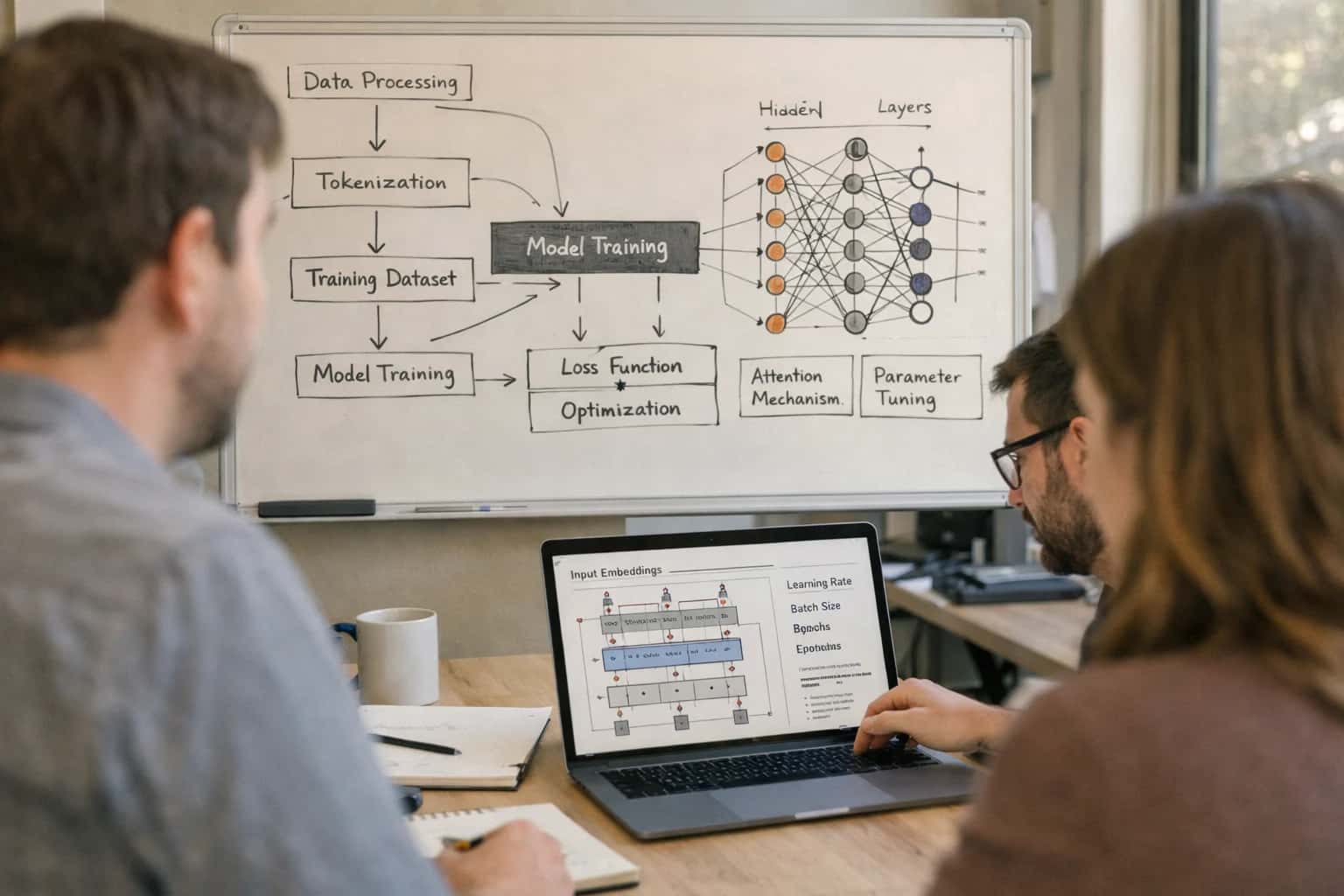
Where AI Extends Guidewire Predictive Analytics
A technical blueprint for deploying custom AI/ML models that trigger from ClaimCenter events and surface actionable recommendations directly within adjuster workspaces.
The output from your AI model—a score, classification, or recommendation—is then posted back into the claim file via a custom Activity or a dedicated AIRecommendation custom object. For adjuster visibility, these insights are surfaced directly in the ClaimCenter workspace through UI extensions, such as InfoCenters or custom screens, providing context-aware prompts like "High Subrogation Potential: 87%" or "Recommended Initial Reserve: $12,500". This creates a closed-loop system where the AI's predictions become part of the adjuster's workflow without requiring them to leave Guidewire. Governance is maintained by logging all model calls, inputs, and outputs to a dedicated audit table, and implementing approval steps or override flags for high-stakes recommendations, ensuring human oversight remains central.
Rollout should follow a phased approach: start with a single, high-impact model (e.g., initial severity scoring) in a pilot line of business. Use GWPA's champion/challenger framework to run the AI model in parallel with existing processes, comparing its recommendations against human adjuster decisions and historical outcomes. This allows for calibration, builds trust, and provides clear metrics on lift before broader deployment. The final architecture is not a replacement for GWPA, but a complementary layer that brings the flexibility of modern AI/MLops to Guidewire's proven predictive infrastructure, enabling carriers to innovate faster while maintaining platform stability and compliance.
Integration Surfaces in the Guidewire Platform
Deploying Custom Models to the Predictive Models Module
The Predictive Models module is the core runtime environment for AI within Guidewire. It's designed to host, manage, and execute models that generate scores and recommendations. Integration involves deploying your custom-trained model (e.g., for litigation propensity or severity forecasting) as a containerized service.
Key integration surfaces:
- Model Registry API: Register new model versions, specifying input schemas (claim attributes, exposure data) and output types (score, probability, recommendation).
- Inference Endpoints: Trigger model execution via API calls from ClaimCenter activities or batch jobs. The module handles scaling and load balancing.
- Model Monitoring: Surface model performance metrics (drift, accuracy) and operational logs within the Guidewire UI for MLOps oversight.
Deployment typically uses the platform's support for Docker containers, allowing you to bring models built in Python (scikit-learn, PyTorch) or R, provided they conform to the expected REST contract.
High-Value Use Cases for Custom AI Models
Extend Guidewire Predictive Analytics with custom AI models to move beyond traditional scoring. Deploy models that trigger from ClaimCenter events and surface actionable recommendations directly within adjuster workspaces, turning predictive insights into automated workflow steps.
Dynamic Reserve Setting Recommendations
Integrate a custom severity model that analyzes claim notes, photos, and third-party data to recommend initial and ongoing reserve amounts. The model triggers on key ClaimCenter events (e.g., FNOL completion, inspection upload) and posts recommendations with confidence scores to the claim file, enabling adjusters to set more accurate reserves faster.
Litigation Propensity Scoring
Deploy a model that predicts the likelihood of a claim escalating to litigation. The model uses features from Predictive Analytics combined with NLP analysis of correspondence and claimant history. High-risk scores automatically trigger workflow rules to route the claim to a specialized unit and populate a pre-litigation checklist.
Subrogation Opportunity Flagging
Enhance subrogation detection by integrating a model that scans FNOL narratives, police reports, and policy details to identify potential third-party liability. Positive matches create a Subrogation Review activity in ClaimCenter with a summary of the model's reasoning and suggested next steps for the adjuster.
Straight-Through Processing Triage
Build a triage model to identify low-complexity, high-confidence claims eligible for automated settlement. The model evaluates damage type, coverage clarity, and historical patterns. Claims meeting the threshold are automatically routed to a Digital Settlement workflow, bypassing manual assignment and accelerating payment.
Catastrophe Claim Severity Prioritization
During CAT events, deploy a custom model that rapidly assesses initial loss reports (photos, drone imagery, weather data) to predict final claim severity. Integrate the model's output with ClaimCenter's assignment engine to prioritize high-severity claims for immediate adjuster assignment, ensuring resources are focused where needed most.
Recovery Forecasting for Financial Operations
Integrate a recovery forecasting model that predicts potential subrogation and salvage recoveries at the claim level. Model outputs feed into financial dashboards and reserve adequacy analyses, giving finance teams a more accurate view of net loss and helping to inform quarterly reporting and reinsurance negotiations.
Example AI-Enhanced Predictive Workflows
These workflows demonstrate how to extend Guidewire Predictive Analytics (GPA) by integrating custom AI/ML models. Each pattern connects model inference to ClaimCenter events and surfaces actionable recommendations directly within adjuster workspaces, moving from batch analytics to real-time, in-process decision support.
Trigger: A new First Notice of Loss (FNOL) claim is created and saved in ClaimCenter.
Context/Data Pulled: The integration service listens for the ClaimCreated event via Guidewire's Event Messaging system. It extracts key structured fields (loss type, injury flag, claimant age, policy limits) and uses the ClaimCenter API to retrieve the initial loss description from the Activity entity.
Model/Agent Action: A pre-trained litigation propensity model (deployed as a containerized service) is invoked via a REST API call. The model analyzes the structured data and the unstructured loss description using NLP to generate a score (0-100) and a confidence level. Key risk factors (e.g., "mentions of attorney," "specific bodily injury details") are extracted.
System Update/Next Step: The score, confidence, and top risk factors are posted back to ClaimCenter via the ClaimMetric API, creating a new predictive metric linked to the claim. A Guidewire Activity is automatically created with the recommendation: "High litigation risk (87%). Assign to Senior Adjuster queue and consider early intervention strategy."
Human Review Point: The score and activity alert the claim owner immediately after FNOL completion, before first contact, enabling proactive handling.
Implementation Architecture: From Model to Workspace
A practical guide to deploying, triggering, and operationalizing custom AI models within Guidewire Predictive Analytics.
Integrating a custom AI model with Guidewire Predictive Analytics (GPA) involves three core architectural layers: model deployment, inference triggering, and recommendation delivery. First, your trained model is containerized and hosted on a scalable inference endpoint (e.g., AWS SageMaker, Azure ML, or a private Kubernetes cluster). This endpoint exposes a REST API that accepts a feature vector—constructed from Guidewire data like claim attributes, policy details, and historical notes—and returns a prediction score and supporting evidence. The feature engineering logic must align with GPA's data model, often pulling from Claim, Exposure, Contact, and Activity entities via Guidewire's Gosu-based data extracts or the ClaimCenter API.
The second layer is event-driven inference. Instead of batch scoring, production integrations typically trigger model calls in real-time from key ClaimCenter events using Plugin or Rule execution points. For example, a plugin can be configured to fire on Claim.rerequestAssignment() or after an ActivityPattern is completed. This plugin packages the relevant claim context, calls the external model API, and stores the raw prediction result—such as a litigation probability score or recommended reserve adjustment—in a custom Claim extension field. For latency-sensitive workflows, results can be cached, and calls can be queued using a service like Amazon SQS to ensure system resilience during high-volume events like CAT claims.
Finally, the prediction must be actionable within the adjuster's workspace. This is where GPA's native framework shines. The stored prediction score can feed into GPA's existing Predictive Model configuration, allowing it to appear alongside other models in the Predictive Analytics panel within ClaimCenter. More advanced integrations use the score to power Guidewire Workflow automations—for instance, automatically routing high-severity predictions to a senior adjuster's queue or creating a Diary entry for follow-up. All model inputs, outputs, and user actions should be logged to a dedicated audit table for model performance monitoring and regulatory compliance, creating a closed-loop system where claim outcomes are used to retrain and improve the model over time.
Code & Payload Examples
Deploying a Custom Model to Guidewire Predictive Analytics
Deploying a custom AI model (e.g., for litigation propensity) involves packaging it as a container, exposing a scoring endpoint, and registering it with the Guidewire Predictive Analytics service. The registration payload defines the model's input schema, output format, and metadata for the rules engine.
Example Registration Payload:
json{ "modelId": "litigation-propensity-v2", "displayName": "Litigation Propensity Score", "version": "2.1.0", "inputSchema": { "claimNumber": "string", "claimantAge": "integer", "injuryType": "string", "initialReserve": "decimal", "daysSinceFNOL": "integer", "adjusterNotes": "string" }, "outputSchema": { "score": "decimal", "confidence": "decimal", "keyFactors": ["string"] }, "endpoint": "https://your-ai-service.company.com/score", "authType": "API_KEY" }
Once registered, the model becomes available for invocation via ClaimCenter activities or batch jobs.
Realistic Operational Impact & Time Savings
How integrating custom AI/ML models with Guidewire Predictive Analytics changes adjuster workflows and operational efficiency.
| Metric | Before AI | After AI | Notes |
|---|---|---|---|
Model Deployment Cycle | Weeks for IT | Days for Data Science | Self-service model registry & API deployment |
Inference Triggering | Manual batch jobs | Real-time from ClaimCenter events | Webhooks on FNOL, diary, payment events |
Recommendation Latency | Next-day report | In-workspace within seconds | Scores surface in Activity Guide or custom UI |
Adjuster Investigation Time | Manual data gathering | Pre-populated evidence package | AI summarizes relevant notes, documents, and external data |
Model Accuracy Monitoring | Quarterly manual review | Continuous drift detection | Automated alerts trigger model retraining |
Pilot Rollout for New Model | 2-4 weeks for IT integration | 1 week for workflow configuration | Uses existing GPA integration framework |
Cross-Model A/B Testing | Complex, manual cohort management | Automated traffic routing & analysis | Built-in experimentation layer tracks business impact |
Governance, Compliance & Phased Rollout
A structured approach to deploying custom AI models into Guidewire Predictive Analytics that prioritizes control, auditability, and measurable impact.
Integrating custom AI models into Guidewire Predictive Analytics requires a governance-first architecture. This typically involves deploying your model as a containerized service (e.g., on AWS SageMaker or Azure ML) and exposing it via a secure API. Guidewire's PredictiveModel API is then configured to call this endpoint, passing relevant claim context—like Claim.claimNumber, Exposure.exposureType, and features from the ClaimCenter data model—as a JSON payload. All inference calls, inputs, and model outputs should be logged to a dedicated audit table, linking back to the Claim record for full traceability. This ensures every AI-driven recommendation in an adjuster's workspace can be explained and reviewed.
A phased rollout is critical for managing risk and building trust. Start with a shadow mode deployment, where the model runs in parallel with existing GPA models, logging predictions without affecting live workflows or scores. Analyze the model's performance against historical outcomes to validate its accuracy. Next, move to a human-in-the-loop phase, where recommendations are surfaced in a dedicated UI panel within the adjuster's workspace as "AI Suggestions," requiring explicit acceptance. Finally, progress to assisted automation, where high-confidence, low-risk recommendations (e.g., routing a simple glass claim) are executed automatically, but logged for a weekly compliance review. This gradual approach allows you to tune prompts, refine features, and establish guardrails.
Compliance hinges on model monitoring and explainability. Implement drift detection to alert when the distribution of input features (e.g., claim severity, loss type) shifts, which may degrade model performance. For regulated use cases like reserving or fraud scoring, ensure your AI service can generate reason codes (e.g., "Flagged due to claimant history and loss location mismatch") that are passed back to Guidewire and attached to the activity log. Regularly scheduled model retraining, using newly settled claims as ground truth, should be a governed workflow, potentially automated via Guidewire Integration (GW) APIs that extract approved training datasets from ClaimCenter. This controlled, phased approach turns AI integration from a black-box experiment into a reliable, auditable component of your claims analytics stack.
Enabling Efficiency, Speed & Accuracy
Intelligent Analysis, Decision & Execution
We build AI systems for teams that need search across company data, workflow automation across tools, or AI features inside products and internal software.
Talk to Us
Search across company data
Give teams answers from docs, tickets, runbooks, and product data with sources and permissions.
Useful when people spend too long searching or get different answers from different systems.

Automate internal workflows
Use AI to route work, draft outputs, trigger actions, and keep approvals and logs in place.
Useful when repetitive work moves across multiple tools and teams.

Add AI to products and internal tools
Build assistants, guided actions, or decision support into the software your team or customers already use.
Useful when AI needs to be part of the product, not a separate tool.
Frequently Asked Questions
Common questions about extending Guidewire Predictive Analytics with custom AI/ML models, covering deployment, integration, and operational governance.
Deploying a custom model for real-time inference from ClaimCenter involves a three-step integration pattern:
-
Model Deployment & API Exposure:
- Your custom model (e.g., a severity predictor) is containerized and deployed to a scalable inference endpoint (e.g., AWS SageMaker, Azure ML, or a Kubernetes service).
- This endpoint exposes a REST API that accepts a JSON payload of claim features and returns a prediction.
-
Event Trigger in Guidewire:
- Configure a ClaimCenter Business Rule or Plugin to fire on key events, such as
ClaimCreated,ExposureAdded, orActivityComplete. - This rule assembles the necessary context (e.g., claim details, policy info, notes) into a feature vector matching your model's input schema.
- Configure a ClaimCenter Business Rule or Plugin to fire on key events, such as
-
Outbound Call & Result Handling:
- The plugin makes a secure, synchronous HTTP call to your model's API.
- Upon receiving the prediction (e.g.,
{ "predicted_severity_score": 0.87, "confidence": 0.92 }), the integration can:- Write to a Custom Claim Entity: Store the score and metadata in a custom table for audit and reporting.
- Update the Claim/Exposure: Set a custom field like
AISeverityScore. - Trigger a Workflow: Use the score to automatically assign the claim, set a diary, or flag for supervisor review via Guidewire's workflow engine.
Example Payload to Model API:
json{ "claim_id": "C-2024-1001", "line_of_business": "Auto", "jurisdiction_state": "CA", "reported_damage": "front_collision", "injury_reported": true, "feature_vector": [0.65, 0.12, 1.0, 0.0, 0.8] }

About the author
Prasad Kumkar
CEO & MD, Inference Systems
Prasad Kumkar is the CEO & MD of Inference Systems and writes about AI systems architecture, LLM infrastructure, model serving, evaluation, and production deployment. Over 5+ years, he has worked across computer vision models, L5 autonomous vehicle systems, and LLM research, with a focus on taking complex AI ideas into real-world engineering systems.
His work and writing cover AI systems, large language models, AI agents, multimodal systems, autonomous systems, inference optimization, RAG, evaluation, and production AI engineering.
Partnered with leading AI, data, and software stack.





How We Work
Custom AI workflows for your Business
One-fit-all AI don't work for modern businesses. At Inferensys, we aim to understand your business & custom requirements; which we use to define most efficient agentic workflows, the data, and the tools for your business.
01
Review the use case
We understand the task, the users, and where AI can actually help.
Read more02
Pick the right approach
We define what needs search, automation, or product integration.
Read more03
Build the first useful version
We implement the part that proves the value first.
Read more04
Improve from there
We add the checks and visibility needed to keep it useful.
Read moreThe first call is a practical review of your use case and the right next step.
Talk to Us