The integration sits between raw IoT data streams and Guidewire's core transactional systems. Incoming telematics data from connected auto (OBD-II, smartphone sensors) or smart home devices (leak detectors, security systems) is first ingested into a scalable event pipeline (e.g., Apache Kafka, AWS Kinesis). Here, AI models perform real-time inference to transform raw signals into structured, insurance-relevant events: detecting hard braking, identifying unattended water flow, or scoring overall risk posture. These enriched events are then posted to Guidewire via its REST APIs or by writing to custom Integration Objects (like TelematicsEvent or PropertySensorAlert), which become part of the policy or claim record.

Integration
AI Integration for Guidewire IoT
Architectural blueprint for processing IoT and telematics data streams with AI, integrating actionable insights into Guidewire InsuranceSuite to enable dynamic policy pricing, proactive loss prevention alerts, and accelerated claims validation for connected home and auto policies.
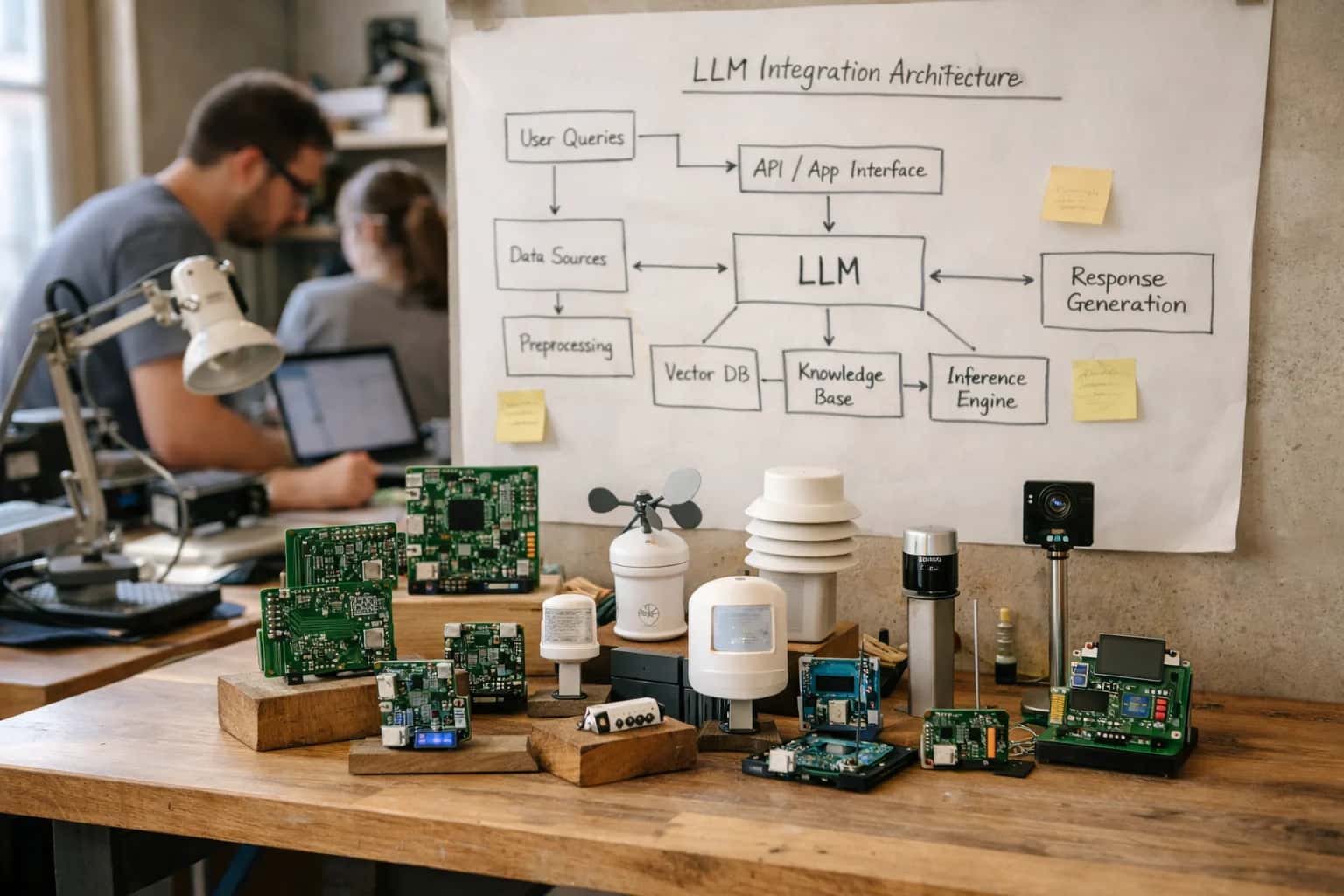
ARCHITECTURE FOR CONNECTED INSURANCE
Where AI Fits in the Guidewire IoT Data Pipeline
A practical blueprint for integrating AI models with Guidewire to process IoT and telematics streams, enabling dynamic underwriting and proactive claims.
This architecture creates two primary value loops. For PolicyCenter, enriched IoT data feeds automated underwriting rules and dynamic pricing models, allowing for usage-based insurance (UBI) adjustments at renewal or mid-term. For ClaimCenter, the pipeline enables proactive FNOL triggers—for example, an AI model analyzing accelerometer and GPS data can automatically create a First Notice of Loss with a preliminary fault assessment before the driver calls, prefilling the LossDescription and VehicleDamage exposures. The system also validates claimant-reported incidents against the telematics timeline, flagging inconsistencies for adjuster review.
Rollout requires a phased, event-driven approach. Start by instrumenting a single high-value data stream (e.g., commercial auto telematics) and connecting it to a single Guidewire module (e.g., ClaimCenter FNOL). Use a human-in-the-loop design where AI-generated alerts or recommendations appear as activities in the adjuster's workspace, requiring approval before any system-of-record updates. Governance is critical: establish audit logs for all AI inferences, implement RBAC to control who sees AI suggestions, and maintain the ability to explain model outputs (e.g., "high-risk score due to frequent late-night hard braking"). This ensures compliance while delivering operational gains, turning IoT data from a reporting novelty into a core underwriting and claims asset.
ARCHITECTURE BLUEPRINT
Guidewire Modules and Surfaces for IoT AI Integration
Dynamic Policy Pricing & Risk Assessment
Integrate AI models with PolicyCenter's rating engine and underwriting rules to enable usage-based insurance (UBI) and dynamic pricing. Process real-time IoT streams (e.g., connected car telematics, smart home sensors) via external APIs. Use AI to analyze driving behavior, home occupancy patterns, or equipment health to calculate a continuous risk score.
This score can trigger automated endorsements, premium adjustments, or proactive safety recommendations via CustomerCenter. Implementation involves extending the rating API to accept AI-generated risk modifiers and logging all model-influenced decisions for auditability within Guidewire's activity logs. The goal is to move from static annual premiums to personalized, behavior-based pricing.
ARCHITECTURE PATTERNS
High-Value AI + IoT Use Cases for P&C Insurers
Integrating IoT and telematics data streams with AI enables dynamic, data-driven workflows within Guidewire. These patterns connect real-time sensor data to policy, claims, and billing operations for proactive risk management and accelerated service.
01
Proactive Loss Prevention & Alerting
AI analyzes connected home (water leak, fire alarm) or auto (hard braking, location) telematics to detect high-risk events. Integration triggers create Guidewire Activity Center tasks for agent outreach or automatically dispatch mitigation services via partner APIs, potentially preventing a claim.
Reactive → Proactive
Risk posture
02
Dynamic UBI Policy Pricing & Endorsements
Real-time driving behavior or property sensor data feeds AI models that calculate personalized risk scores. Scores are posted via Guidewire PolicyCenter API to automatically adjust Usage-Based Insurance (UBI) premiums at renewal or trigger endorsements, moving from batch to continuous rating.
Batch → Real-time
Rating cycle
03
Accelerated FNOL & Fault Determination
For auto claims, AI instantly processes telematics crash data (G-force, impact vector) and dashcam footage. Findings auto-populate the Guidewire ClaimCenter FNOL, suggesting fault probability and initial reserve. This shifts intake from a 20-minute call to a near-instant, data-rich event.
Hours → Minutes
FNOL setup
04
Automated First-Party Claim Validation
AI correlates the IoT event (e.g., leak sensor activation timestamp) with the claimed loss description and policy coverage effective dates. A validation score is written to a custom ClaimCenter field, helping adjusters instantly triage plausible vs. suspect claims, reducing referral to Special Investigations.
Manual → Automated
Plausibility check
05
Catastrophe Response & Exposure Triage
During a weather event, AI ingests NOAA feeds and cross-references policyholder locations with IoT sensor alerts (e.g., flood sensors). A high-priority exposure report is generated in Guidewire, enabling the CAT team to proactively contact highest-risk insureds and pre-stage adjuster assignments.
Days → Hours
Exposure awareness
06
Repair Monitoring & Settlement Workflow
For auto claims, AI monitors connected vehicle data post-repair (e.g., diagnostic codes, mileage) to verify repair completion. A 'repair verified' status update is sent to Guidewire, automatically triggering the next workflow step (e.g., payment release, rental closure) and closing the repair monitoring diary task.
Manual → Event-driven
Settlement trigger
CONNECTED POLICY & CLAIMS AUTOMATION
Example AI-IoT Workflows Integrated with Guidewire
These workflows demonstrate how to process IoT and telematics data through AI models and integrate the resulting insights directly into Guidewire PolicyCenter and ClaimCenter to enable dynamic underwriting, proactive services, and accelerated claims.
Trigger: Weather service API detects a hail event in a policyholder's ZIP code, cross-referenced with the insured location in Guidewire PolicyCenter.
AI/Data Action:
- An AI service ingests historical hail damage images and recent weather radar data for the specific area.
- A computer vision model analyzes recent satellite or drone imagery (if available) for the neighborhood to assess probable damage intensity.
- The model scores each insured property for likely damage severity (High, Medium, Low, None).
Guidewire Integration:
- For properties scored High or Medium, the system automatically:
- Creates a
Claim Exposurein ClaimCenter in a "Proactive Review" status. - Generates a diary activity for a designated adjuster group.
- Triggers an outbound communication via Guidewire Contact Manager, sending a personalized email/SMS to the policyholder. The message includes:
- Acknowledgement of the weather event.
- Instructions for safely inspecting their property.
- A direct link to the customer portal to upload photos.
- A prompt to report any damage, which would convert the exposure to a formal FNOL.
- Creates a
- This pre-emptive workflow reduces reporting lag, improves customer satisfaction, and allows for triage before a surge of calls hits the contact center.
CONNECTED RISK ORCHESTRATION
Implementation Architecture: Data Flow, APIs, and Guardrails
A production-ready architecture for processing IoT and telematics data streams with AI, integrating actionable insights back into Guidewire for dynamic policy and claims operations.
The integration is built on a real-time event pipeline that ingests raw telematics data (e.g., from Samsara, Geotab, or connected home devices) via webhook or API listeners. An initial processing layer filters and normalizes the data, triggering AI models for two primary functions: risk scoring (for proactive underwriting in PolicyCenter) and incident detection (for automated FNOL in ClaimCenter). For example, a pattern of harsh braking and rapid acceleration from an auto telematics feed is scored for policy renewal pricing, while a sudden impact event coupled with GPS location data automatically creates a first notice of loss with initial severity triage.
Structured AI outputs—like a validated incident alert or a monthly risk score—are posted to Guidewire via its REST API. For PolicyCenter, this updates custom fields on the Policy or PolicyPeriod object, enabling dynamic pricing or triggering a UW referral workflow. For ClaimCenter, a detected crash creates a new Claim with pre-populated exposures, links the telematics data as a Document, and can automatically assign the claim based on predicted complexity. All AI inferences are logged with a unique correlation ID back to the source data packet, creating a full audit trail for compliance and model monitoring.
Critical guardrails are implemented at multiple layers: a human-in-the-loop approval step is configured in Guidewire's Workflow engine for any AI-recommended action above a configurable confidence threshold (e.g., creating a claim or adjusting a premium). Data privacy is enforced by anonymizing driver/occupant identifiers before AI processing and only re-associating the data within Guidewire's secure environment. The architecture also includes a fallback queue; if the AI service is unavailable, raw telematics data is stored in a secure blob store (like AWS S3) with a manual review flag, ensuring no data loss and allowing for batch processing once the service is restored.
ARCHITECTURE PATTERNS
Code and Payload Examples
Ingesting IoT Data for Real-Time Scoring
Process telematics data streams from connected vehicles or smart home devices to generate immediate risk and loss signals. This pattern involves a lightweight API gateway that validates payloads, enriches them with policy context from Guidewire, and forwards them to an AI inference service for scoring.
python# Example: API endpoint for telematics event ingestion from fastapi import FastAPI, HTTPException from pydantic import BaseModel import httpx app = FastAPI() class TelematicsEvent(BaseModel): device_id: str event_type: str # e.g., 'hard_brake', 'impact', 'water_leak_detected' timestamp: str payload: dict # sensor data policy_number: str @app.post("/api/v1/telematics/ingest") async def ingest_telematics_event(event: TelematicsEvent): """Ingest event, fetch policy context, call AI model.""" # 1. Fetch policy & risk details from Guidewire PolicyCenter policy_context = await fetch_guidewire_policy(event.policy_number) # 2. Prepare payload for AI model ai_payload = { "event": event.dict(), "policy": policy_context, "historical_events": await get_device_history(event.device_id) } # 3. Call AI service for risk/loss scoring async with httpx.AsyncClient() as client: response = await client.post( "https://ai-service/inference/telematics", json=ai_payload, timeout=30.0 ) score_result = response.json() # 4. If high-risk, trigger alert in Guidewire ClaimCenter if score_result.get("risk_score") > 0.8: await create_guidewire_alert( policy_number=event.policy_number, alert_type="Proactive_Loss_Prevention", message=score_result.get("reasoning") ) return {"status": "processed", "risk_score": score_result.get("risk_score")}
This flow enables real-time behavior scoring and proactive alerts, reducing loss ratios by intervening before a claim occurs.
GUIDEWIRE IOT DATA PROCESSING
Realistic Operational Impact and Time Savings
This table illustrates the tangible workflow improvements and time savings achieved by integrating AI to process IoT/telematics data streams and feed actionable insights into Guidewire.
| Process | Before AI Integration | After AI Integration | Implementation Notes |
|---|---|---|---|
FNOL Triage for Connected Auto | Manual review of driver statement and basic telematics | Automated severity scoring using crash pulse, g-force, and location data | AI pre-populates ClaimCenter exposure details; adjuster reviews score |
Proactive Loss Prevention Alerting | Reactive response after a loss is reported | Real-time alerts for high-risk behavior (harsh braking, speeding) sent to policyholder portal | Triggers automated, personalized safe-driving nudges via Guidewire Digital Engagement |
Claims Validation & Fraud Signal Detection | Adjuster manually compares statement to limited trip data | Automated timeline reconstruction and inconsistency flagging using full trip history | Flags added to ClaimCenter activity log for investigator review; reduces need for special investigation unit (SIU) on low-severity claims |
Dynamic Policy Pricing Inputs | Annual renewal based on static factors and self-reported mileage | Monthly/quarterly premium adjustments based on AI-analyzed driving patterns and vehicle usage | AI outputs feed Guidewire PolicyCenter rating engine via API; requires actuarial sign-off on model |
Accelerated Total Loss Determination | Manual waiting for appraisal and repair estimates | Immediate total loss probability scoring based on impact data and vehicle valuation | Informs initial reserve in ClaimCenter and triggers automated settlement workflow for high-probability cases |
Post-Loss Recovery Monitoring | No ongoing monitoring of claimant behavior | Continuous analysis of post-accident driving data for recovery fraud detection | Alerts are created in ClaimCenter diary for adjuster follow-up if patterns indicate potential fraud |
IoT Data Ingestion & Normalization | IT team builds custom parsers for each device/vendor format | AI pipeline auto-classifies data streams, handles missing values, and maps to Guidewire data model | Reduces ongoing maintenance; new device types can be onboarded in days, not weeks |
ARCHITECTING FOR PRODUCTION
Governance, Security, and Phased Rollout
A practical approach to deploying AI for IoT data in Guidewire with controlled risk and measurable impact.
Integrating AI with Guidewire IoT data requires a clear data governance model. Define which telematics streams (e.g., vehicle telemetry, connected home sensor data) are permissible for AI analysis, establish data retention policies for raw vs. processed signals, and implement strict access controls via Guidewire's role-based permissions. All AI inferences—such as a predicted driving risk score or a proactive leak alert—must be written back to designated custom objects in Guidewire PolicyCenter or ClaimCenter with a complete audit trail, linking the AI-generated insight to the source data and model version used.
Security is paramount when processing external IoT data. Architect the integration with an API gateway layer that handles authentication, rate limiting, and payload validation before data reaches AI services. Sensitive PII should be tokenized or filtered at the edge. For model inference, use private endpoints for services like OpenAI or Anthropic, and ensure all data in transit and at rest is encrypted. The AI system should only have read/write access to specific Guidewire APIs needed for its function, following the principle of least privilege.
A phased rollout mitigates risk and proves value. Start with a monitoring-only phase, where AI processes IoT data and generates insights logged to a separate dashboard without triggering any Guidewire actions. Next, move to assisted workflows, where AI recommendations for dynamic pricing or loss prevention are presented to underwriters or claims handlers within their Guidewire workspace for manual approval. Finally, after validation and tuning, enable controlled automation for high-confidence, low-risk actions, such as automatically updating a policy's risk tier or creating a first notice of loss (FNOL) activity in ClaimCenter from a validated crash detection signal—all with human-in-the-loop overrides.
Continuous governance is maintained through operational dashboards that track model performance (e.g., accuracy of proactive alert predictions), data drift in IoT signals, and business impact metrics like reduction in severity for alerted claims. Establish a review board to approve new AI use cases and model updates, ensuring alignment with underwriting guidelines and claims handling procedures. This structured approach allows insurers to harness IoT data intelligently while maintaining the robust control required for core insurance operations.
Enabling Efficiency, Speed & Accuracy
Intelligent Analysis, Decision & Execution
We build AI systems for teams that need search across company data, workflow automation across tools, or AI features inside products and internal software.
Talk to Us
Search across company data
Give teams answers from docs, tickets, runbooks, and product data with sources and permissions.
Useful when people spend too long searching or get different answers from different systems.
Enterprise searchRAGPermissions
Read more
Automate internal workflows
Use AI to route work, draft outputs, trigger actions, and keep approvals and logs in place.
Useful when repetitive work moves across multiple tools and teams.
AI agentsWorkflow automationGovernance
Read more
Add AI to products and internal tools
Build assistants, guided actions, or decision support into the software your team or customers already use.
Useful when AI needs to be part of the product, not a separate tool.
AI integrationDecision supportModel routing
Read moreIMPLEMENTATION AND ARCHITECTURE
Frequently Asked Questions
Common technical and strategic questions about integrating AI with Guidewire IoT and telematics data streams to enhance policy pricing, loss prevention, and claims validation.
AI acts as a middleware processing layer between raw telematics feeds and Guidewire's core systems. The typical architecture involves:
- Trigger: Incoming data stream from connected devices (e.g., OBD-II dongles, smart home sensors, fleet trackers).
- Context/Data Pulled: The AI service ingests the raw payload (GPS, accelerometer, brake usage, humidity, temperature) and enriches it with historical trip data, policy details (from Guidewire PolicyCenter), and external context (weather, traffic).
- Model or Agent Action: A trained model analyzes the stream for:
- Risk Scoring: Calculating a real-time driving score or property risk level.
- Anomaly Detection: Identifying hard braking, rapid acceleration, or sensor readings indicative of a leak or break-in.
- Event Classification: Determining if a pattern constitutes a "crash event," "hail impact," or "preventative alert."
- System Update: Structured results (risk score, event flag, confidence level) are posted via Guidewire API to:
- PolicyCenter: To trigger dynamic pricing adjustments or renewal offers.
- ClaimCenter: To automatically create a First Notice of Loss (FNOL) with pre-populated event data for a crash.
- Contact Manager: To log a proactive "severe weather alert" or "harsh driving detected" communication.
- Human Review Point: High-severity event classifications (e.g., major crash) can be configured to route to a human triage queue in ClaimCenter before FNOL creation, allowing for immediate outbound call verification.

About the author
Prasad Kumkar
CEO & MD, Inference Systems
Prasad Kumkar is the CEO & MD of Inference Systems and writes about AI systems architecture, LLM infrastructure, model serving, evaluation, and production deployment. Over 5+ years, he has worked across computer vision models, L5 autonomous vehicle systems, and LLM research, with a focus on taking complex AI ideas into real-world engineering systems.
His work and writing cover AI systems, large language models, AI agents, multimodal systems, autonomous systems, inference optimization, RAG, evaluation, and production AI engineering.
LinkedIn
Limited slotsGet a Free AI Consultation
Partnered with leading AI, data, and software stack.





How We Work
Custom AI workflows for your Business
One-fit-all AI don't work for modern businesses. At Inferensys, we aim to understand your business & custom requirements; which we use to define most efficient agentic workflows, the data, and the tools for your business.
01
Review the use case
We understand the task, the users, and where AI can actually help.
Read more02
Pick the right approach
We define what needs search, automation, or product integration.
Read more03
Build the first useful version
We implement the part that proves the value first.
Read more04
Improve from there
We add the checks and visibility needed to keep it useful.
Read moreThe first call is a practical review of your use case and the right next step.
Talk to Us