Integrating AI with Duck Creek Claims is about injecting intelligence into the platform's existing data model and workflow engine, not replacing it. The primary surfaces for AI are the Claim object, Activity/Note records, Document Management attachments, and the Assignment/Diary systems. AI services connect via the Duck Creek API layer to read from and write to these core entities, enabling use cases like automated FNOL data extraction from submitted documents, intelligent triage and routing based on claim complexity, and real-time summarization of lengthy activity notes for adjuster review.

Integration
AI Integration for Duck Creek Claims
Architectural blueprint for embedding AI agents and document intelligence into the Duck Creek Claims platform to automate FNOL processing, supplement review, and adjuster decision support within the native workflow engine.
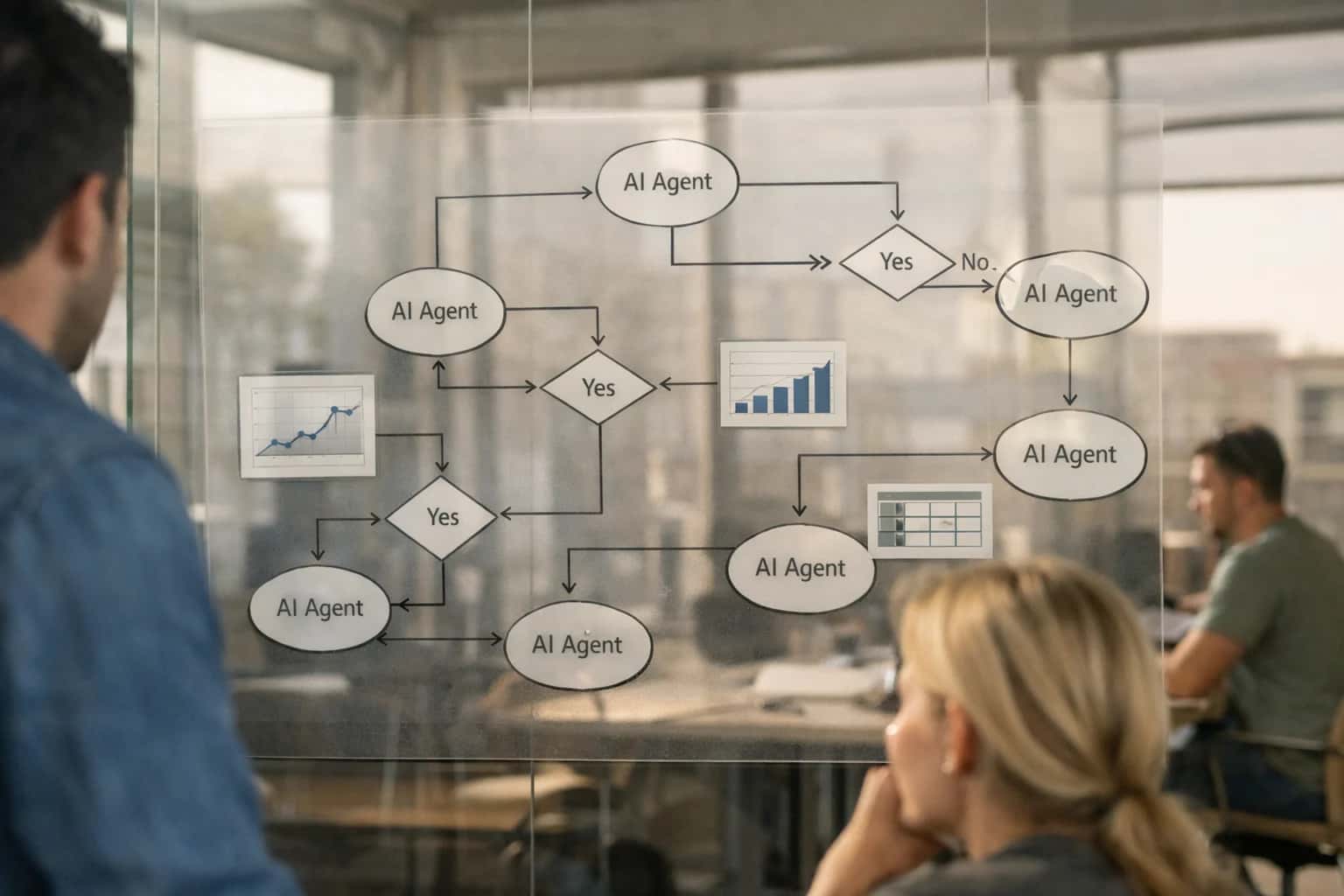
ARCHITECTURAL BLUEPRINT
Where AI Fits into Duck Creek Claims
A practical guide to embedding AI agents and document intelligence into the Duck Creek Claims platform to automate workflows and augment adjuster decisions.
Implementation typically involves a middleware layer that orchestrates between Duck Creek's event-driven architecture (listening for ClaimCreated, DocumentAdded, or ActivityPosted events) and external AI services. For example, when a new document is attached to a claim, a workflow can trigger an AI service to classify it (e.g., Police Report, Medical Record, Estimate), extract key fields (date of loss, involved parties, reported injuries), and post the structured data back to the claim as a new activity or populate custom fields. This keeps the adjuster in their native workspace while reducing manual data entry from hours to minutes.
Rollout and governance are critical. Start with a pilot on a specific line of business (e.g., auto glass claims) and a single use case like document extraction. Use Duck Creek's role-based access controls to limit AI-suggested actions to specific user groups and implement a human-in-the-loop pattern where all AI-generated outputs (like reserve recommendations or correspondence drafts) require adjuster approval before system-of-record updates. This ensures compliance, maintains adjuster oversight, and builds trust in the augmented workflow. For a deeper dive on orchestrating these AI-enhanced processes, see our guide on AI Integration for Insurance Workflow Automation.
ARCHITECTURAL BLUEPINT
Key Integration Surfaces in Duck Creek Claims
Automating First Notice of Loss
The FNOL process is the primary entry point for AI integration, where automation delivers the most immediate time-to-value. Key integration surfaces include the FNOL Web Service API for programmatic claim creation and the Document Ingestion Service for handling uploaded evidence (photos, police reports).
AI agents can be triggered via these APIs to:
- Perform real-time coverage verification by calling the Policy service.
- Execute initial triage using severity models (e.g., total loss flag, injury presence).
- Automatically populate exposure details (vehicle, property, claimant) from unstructured text or images.
- Route the claim to the appropriate assignment group based on complexity and loss type.
This layer reduces manual data entry from hours to minutes and ensures consistent application of business rules from the first touchpoint.
ARCHITECTURAL BLUEPRINT
High-Value AI Use Cases for Duck Creek Claims
Embedding AI into the Duck Creek Claims platform automates manual processes, augments adjuster decision-making, and accelerates cycle times. These are practical integration patterns that connect AI services to the platform's core APIs, workflow engine, and data model.
01
Automated FNOL & Intake Triage
Integrate AI voice-to-text and intent recognition with Duck Creek's FNOL APIs to automatically populate the claim file from call recordings, web chats, or mobile submissions. AI triages severity, verifies coverage in real-time, and recommends initial assignment rules, routing simple claims for straight-through processing.
Hours -> Minutes
Intake time
02
Document Intelligence for Supplement Review
Connect AI document analysis services to Duck Creek's document management layer. Extract line items, parts, and labor rates from repair estimates, medical bills, and police reports. Automatically flag discrepancies against initial appraisals, populating a review queue for adjusters with highlighted variances and recommended actions.
Batch -> Real-time
Review trigger
03
Adjuster Copilot & Activity Summarization
Build an AI copilot that integrates with the adjuster's workspace via Duck Creek's UI extension points. It provides contextual next-step recommendations, drafts complex correspondence using claim history, and automatically summarizes lengthy activity notes, phone logs, and emails into concise chronological timelines.
1 sprint
Pilot deployment
04
Predictive Reserve & Settlement Analytics
Integrate ML models via API to analyze claim characteristics, historical similar claims, and external data. Provide initial and ongoing reserve recommendations directly within the financials module. For settlement, AI suggests fair value ranges based on jurisdiction, injury type, and precedent, flagging outliers for manual review.
Same day
Reserve accuracy
05
Subrogation & Recovery Identification
Augment Duck Creek's rules engine with AI models that continuously scan claim narratives and evidence post-FNOL. Automatically identify potential third-party liability, prior carrier responsibility, or product defect scenarios. Generate flagged cases with recovery likelihood scores and pre-populated demand package drafts for the recovery unit.
06
CAT Claim Triage & Mass Assignment
Integrate AI with external weather/event feeds and Duck Creek's bulk operations APIs. Automatically tag and segment incoming claims as CAT-related upon FNOL. Use severity models to prioritize high-loss claims, and dynamically adjust assignment rules to balance adjuster workload across the CAT team, updating diaries and communication templates.
Batch -> Real-time
Response scaling
ARCHITECTURAL PATTERNS
Example AI-Augmented Workflows in Duck Creek
These concrete workflows illustrate how AI agents and document intelligence can be embedded into Duck Creek Claims to automate high-volume tasks and provide adjuster decision support, all while operating within the platform's native data model and workflow engine.
Trigger: A new FNOL record is created via any channel (agent portal, IVR, mobile app).
Context Pulled: The AI service receives the FNOL payload, including loss description, policy number, and any initial uploaded media (photos, videos).
Agent Action:
- Document Processing: If photos/videos are present, a computer vision model analyzes them for visible damage, extracting a preliminary severity score and damage type.
- Intent & Risk Classification: An LLM classifies the claim intent (e.g., "wind damage to roof," "minor rear-end collision") and scores it for complexity and potential fraud signals based on the narrative.
- Coverage Cross-Check: The agent calls Duck Creek's Policy API to retrieve the active policy, cross-referencing the loss type against covered perils and limits.
System Update: The AI service posts back to the Duck Creek Claims API, updating the claim with:
- A recommended Assignment Group (e.g., "Property - Complex," "Auto - Low Complexity").
- An initial Reserve Recommendation based on loss type and historical data.
- Populated Exposure fields (e.g.,
DamageType,SeverityScore). - Flags for potential subrogation or coverage issues.
Human Review Point: The claim is routed via Duck Creek's workflow engine. High-confidence, low-complexity claims can be auto-assigned; all others go to a supervisor's queue for final assignment approval.
A PRODUCTION BLUEPRINT
Implementation Architecture: Connecting AI to Duck Creek
A technical guide to embedding AI agents and document intelligence into the Duck Creek Claims platform for automated FNOL, supplement review, and adjuster decision support.
A production-ready AI integration for Duck Creek Claims connects at three primary layers: the API Gateway for real-time service calls, the Event Bus for asynchronous workflow triggers, and the Document Management system for batch intelligence. Key integration surfaces include the Claim and Exposure objects for data enrichment, the Activity diary for automated note creation, and the Document module for processing police reports, estimates, and medical records. AI services are invoked via secure REST APIs or message queues, with results written back to native fields or attached as structured notes, ensuring all AI-touched data is auditable within the standard claims journal.
For a high-impact initial rollout, focus on two parallel workflows: AI-Powered FNOL Triage and Intelligent Document Processing. The FNOL workflow uses natural language processing on the initial loss description—captured via portal, call transcript, or mobile app—to automatically set the Loss Type, suggest an initial Reserve, and trigger the appropriate Assignment rule. Concurrently, the document workflow ingests uploaded files via the DocumentService API, uses vision and NLP models to extract key data (e.g., vehicle VIN, repair line items, medical codes), and populates the relevant ClaimFact records. This creates immediate time savings by reducing manual data entry from hours to minutes and improves data consistency for downstream processes.
Governance is critical. Implement a human-in-the-loop pattern where AI suggestions for reserve changes above a threshold or complex coverage interpretations are routed to an Activity for adjuster approval. All AI interactions should log the model version, input data hash, and output to a dedicated AIAudit custom object. Rollout should follow a phased, claim-type-specific approach (e.g., start with comprehensive auto glass claims) to validate accuracy and user adoption before scaling. This architecture ensures AI augments the native Duck Creek workflow engine without creating a fragile, parallel system. For related patterns on orchestrating these services, see our guide on AI Agent Builder and Workflow Platforms.
INTEGRATION PATTERNS FOR DUCK CREEK CLAIMS
Code & Payload Examples
AI-Powered FNOL Data Capture
Integrate AI to extract structured data from unstructured FNOL sources like voice recordings, web chat transcripts, or uploaded documents. The pattern involves processing the raw input, calling an AI service for entity extraction, and posting the validated results to Duck Creek's Claim and InvolvedParty objects via the Claims API.
Example Workflow:
- A webhook from your customer portal triggers on a new FNOL submission containing a text description and a police report PDF.
- An orchestration service extracts text from the PDF and combines it with the description.
- An LLM service (e.g., via OpenAI or Anthropic API) is prompted to extract key entities:
dateOfLoss,lossDescription,vehicleMakeModel,otherPartyName. - The service validates and formats the extracted data, then uses the Duck Creek API to create the initial claim record and link involved parties.
python# Example: Call AI service to extract entities from FNOL text import openai def extract_fnol_entities(fnol_text: str) -> dict: prompt = f"""Extract insurance claim details from the following text. Return JSON with: dateOfLoss (YYYY-MM-DD), lossDescription, vehicleMakeModel, otherPartyName. Text: {fnol_text} """ response = openai.chat.completions.create( model="gpt-4o", messages=[{"role": "user", "content": prompt}], response_format={ "type": "json_object" } ) return json.loads(response.choices[0].message.content)
AI INTEGRATION FOR DUCK CREEK CLAIMS
Realistic Time Savings & Operational Impact
This table outlines the measurable impact of integrating AI agents and document intelligence into the Duck Creek Claims platform, focusing on high-frequency workflows where automation delivers immediate operational lift.
| Workflow / Metric | Before AI Integration | After AI Integration | Implementation Notes |
|---|---|---|---|
FNOL Data Entry & Triage | 15-25 minutes manual entry and routing | 3-5 minutes assisted intake with auto-population | AI extracts data from call transcripts/web forms, pre-fills claim, suggests initial assignment |
Document Indexing & Classification | Manual sorting and tagging of uploaded PDFs/images | Automated classification and linking to claim, exposure, or party | Integrates with Duck Creek Document Management; human review for edge cases |
Medical Record & Police Report Review | Adjuster reads full documents to extract key facts | AI summarizes key facts, extracts entities (injuries, parties, fault) | Summary and extracted data posted to claim notes; adjuster verifies critical details |
Correspondence Drafting (Status Updates) | Adjuster composes emails/letters from templates | AI generates personalized, compliant drafts using claim context | Adjuster reviews, edits if needed, and sends; maintains control and tone |
Supplement Review on Repair Estimates | Manual line-by-line comparison against initial appraisal | AI flags discrepancies, missed parts, and pricing outliers for review | Integrates with estimating platforms; focuses adjuster time on exceptions only |
Reserve Setting Recommendation | Adjuster relies on experience and simple benchmarks | AI provides initial and ongoing reserve ranges based on similar historical claims | Recommendation appears in adjuster workspace with reasoning; final decision remains manual |
Claim File Search & Knowledge Retrieval | Manual keyword search across notes and documents | Natural language semantic search finds relevant precedents and guidelines | Powered by RAG; retrieves grounded answers from internal manuals and past claims |
ARCHITECTING FOR PRODUCTION
Governance, Security & Phased Rollout
A practical approach to deploying AI within Duck Creek Claims that prioritizes control, compliance, and incremental value.
Integrating AI into claims handling requires a secure, auditable architecture. We recommend a sidecar pattern where AI services operate as a separate, governed layer that interacts with Duck Creek Claims via its robust API suite—ClaimService, DocumentService, and ActivityService. This keeps core logic intact while enabling AI actions like automated FNOL data extraction or supplement review to be logged as discrete system activities. All AI-generated outputs, such as a recommended reserve amount or a drafted correspondence, should be written to a dedicated audit object with traceability back to the source model, prompt, and user context, ensuring full transparency for compliance and QA reviews.
Security is managed through Duck Creek's native Role-Based Access Control (RBAC). AI tool access and the ability to approve AI-suggested actions are gated by existing adjuster roles and permissions. For instance, a junior adjuster might see AI-generated notes for review, while only a supervisor role can approve an AI-recommended settlement authorization. Sensitive data, like medical records or financial details extracted by document AI, is never persisted in third-party model training caches; processing is done via secure, ephemeral sessions with enterprise-grade LLMs, and all PII is redacted or tokenized before any external API call.
A phased rollout de-risks implementation. Start with a contained pilot on a single, high-volume, low-complexity line like comprehensive auto glass claims. Here, AI can handle initial document intake and triage, posting structured data to Duck Creek while flagging exceptions for human review. Measure success via cycle time reduction and adjuster feedback. Phase two expands to adjuster copilot features, such as activity note summarization and next-action suggestions, directly within the Claims workspace. The final phase targets complex decision support, like subrogation likelihood scoring or litigation prediction, integrated into workflow rules and diary systems. Each phase includes a parallel human review queue and performance monitoring dashboards to track AI accuracy and drift, ensuring the system learns and improves without compromising claim quality.
Enabling Efficiency, Speed & Accuracy
Intelligent Analysis, Decision & Execution
We build AI systems for teams that need search across company data, workflow automation across tools, or AI features inside products and internal software.
Talk to Us
Search across company data
Give teams answers from docs, tickets, runbooks, and product data with sources and permissions.
Useful when people spend too long searching or get different answers from different systems.
Enterprise searchRAGPermissions
Read more
Automate internal workflows
Use AI to route work, draft outputs, trigger actions, and keep approvals and logs in place.
Useful when repetitive work moves across multiple tools and teams.
AI agentsWorkflow automationGovernance
Read more
Add AI to products and internal tools
Build assistants, guided actions, or decision support into the software your team or customers already use.
Useful when AI needs to be part of the product, not a separate tool.
AI integrationDecision supportModel routing
Read moreIMPLEMENTATION PATTERNS
Frequently Asked Questions
Practical questions for architects and engineering leads planning an AI integration with Duck Creek Claims. Focused on workflow automation, data security, and production rollout.
The most common pattern is to use Duck Creek's Event Framework or a scheduled batch process to invoke an external AI service.
Typical Integration Flow:
- Trigger: A claim reaches a specific status (e.g.,
FirstNoticeOfLossComplete) or a user action creates a diary entry requiring analysis. - Context Assembly: Your integration service queries the Duck Creek API for the claim's
ClaimNumber,LossDescription,PolicyNumber, and linked documents (e.g., police report IDs). - AI Action: This payload is sent to your AI service (e.g., an orchestration layer like CrewAI or a custom service). The agent can:
- Summarize the loss description for the adjuster's dashboard.
- Extract key entities (date, location, vehicles) to pre-populate fields.
- Classify the claim for potential fraud or complexity.
- System Update: The AI service returns structured JSON. Your integration service then uses the Duck Creek API to:
- Update custom fields (e.g.,
AISummary,AIClaimComplexityScore). - Create a follow-up activity or diary note for the adjuster.
- Potentially trigger a workflow rule for assignment.
- Update custom fields (e.g.,
Key Consideration: Use idempotent operations and log all AI interactions to a separate audit table linked by ClaimNumber.

About the author
Prasad Kumkar
CEO & MD, Inference Systems
Prasad Kumkar is the CEO & MD of Inference Systems and writes about AI systems architecture, LLM infrastructure, model serving, evaluation, and production deployment. Over 5+ years, he has worked across computer vision models, L5 autonomous vehicle systems, and LLM research, with a focus on taking complex AI ideas into real-world engineering systems.
His work and writing cover AI systems, large language models, AI agents, multimodal systems, autonomous systems, inference optimization, RAG, evaluation, and production AI engineering.
LinkedIn
Limited slotsGet a Free AI Consultation
Partnered with leading AI, data, and software stack.





How We Work
Custom AI workflows for your Business
One-fit-all AI don't work for modern businesses. At Inferensys, we aim to understand your business & custom requirements; which we use to define most efficient agentic workflows, the data, and the tools for your business.
01
Review the use case
We understand the task, the users, and where AI can actually help.
Read more02
Pick the right approach
We define what needs search, automation, or product integration.
Read more03
Build the first useful version
We implement the part that proves the value first.
Read more04
Improve from there
We add the checks and visibility needed to keep it useful.
Read moreThe first call is a practical review of your use case and the right next step.
Talk to Us