AI integration for Duck Creek Billing focuses on three primary surfaces: the Invoice Exception Queue, the Payment Plan Engine, and the Dunning & Correspondence module. The goal is to inject intelligence into existing workflows—like InvoiceMatchException processing or PaymentPlan generation—without rebuilding core billing logic. AI agents can be triggered via webhook from a billing transaction (e.g., POST /api/InvoiceException) or scheduled batch job to analyze unstructured data—such as scanned remittance advices, vendor emails, or bank statements—and recommend corrective actions or auto-populate resolution fields.

Integration
AI Integration for Duck Creek Billing
Technical blueprint for integrating AI with Duck Creek Billing to automate exception handling, personalize dunning, and recommend payment plans using policyholder behavior and payment history.
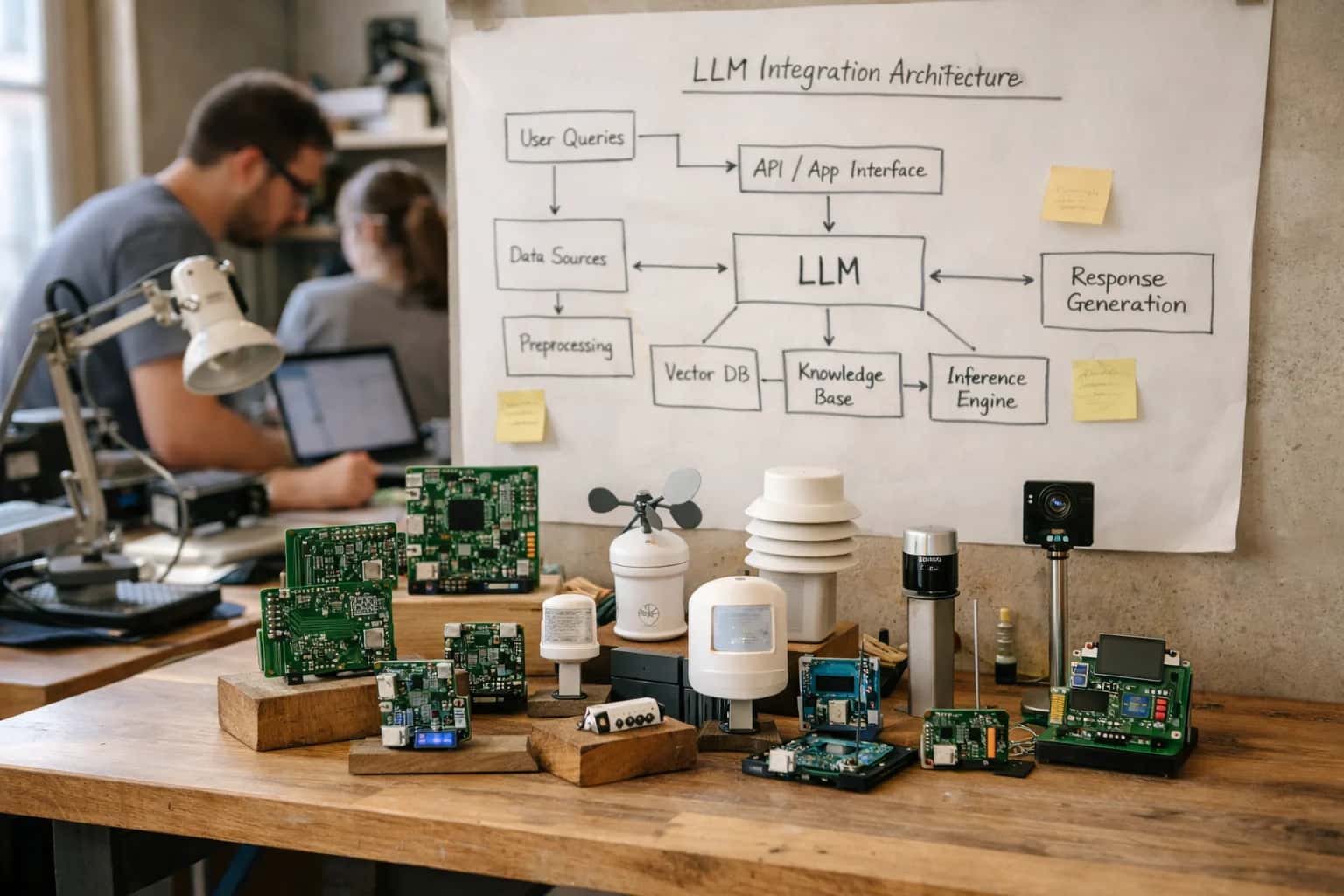
ARCHITECTURE FOR AUTOMATED EXCEPTION HANDLING AND PERSONALIZED COMMUNICATION
Where AI Fits in Duck Creek Billing Operations
A technical blueprint for integrating AI agents and document intelligence directly into Duck Creek Billing to automate exception workflows and personalize customer interactions.
High-value implementation patterns include:
- Automated Invoice Reconciliation: An AI service consumes exception records and attached documents, extracts payer, amount, and invoice number data, and suggests a matching
PolicyPeriodorBillingInvoice. It can post a proposed resolution back via the BillingCenter API for a human to approve, turning a 15-minute manual lookup into a 30-second review. - Predictive Payment Plan Recommendations: By analyzing a customer's
PaymentHistory,Balance, and external credit data via a secured API call, an AI model can recommend a personalized, compliant payment plan. This can be presented within the BillingCenter interface or automatically generated as aPaymentPlanRequestfor adjuster approval. - Personalized Dunning Communication: Instead of static templates, an AI agent can draft context-aware payment reminders. It synthesizes the customer's communication history, recent claim status (if integrated with Duck Creek Claims), and balance details to generate a personalized email or SMS draft, which is then queued in the Correspondence module for compliance review before sending.
A production rollout typically uses a middleware layer (like an Azure Function or AWS Lambda) to orchestrate between Duck Creek's APIs and AI services. This layer handles authentication, prompt construction with grounded context from the BillingAccount, logging for audit trails, and managing fallback paths to human operators. Governance is critical: all AI-generated actions—especially financial adjustments—should flow through an approval queue or require a supervisor override code, maintaining the existing segregation of duties and audit controls native to Duck Creek Billing.
ARCHITECTURAL BLUEPRINT
Key Integration Surfaces in Duck Creek Billing
Automating Exception Workflows
AI integrates directly with Duck Creek Billing's transaction processing and exception queues. The primary surfaces are the PaymentPosting and InvoiceGeneration services. AI agents can be triggered via webhook or scheduled job to analyze exceptions—such as partial payments, NSF returns, or invoice mismatches—against policyholder payment history and current policy status.
Key objects include BillingTransaction, BillingAccount, and Payment. An AI service reviews the exception context, accesses payment patterns via the Billing API, and either:
- Auto-resolves the exception by applying business logic (e.g., applying a tolerance, creating a waiver).
- Routes it to a human queue with a recommended action and reasoning.
This reduces manual review from hours to minutes and improves cash application accuracy.
INTEGRATION PATTERNS
High-Value AI Use Cases for Duck Creek Billing
Integrating AI with Duck Creek Billing automates high-volume, manual tasks in the revenue cycle, improving cash flow and customer experience. These patterns connect to the platform's APIs, rules engine, and communication modules to add intelligence without disrupting core operations.
01
Automated Invoice Exception Handling
Use AI to classify and route billing exceptions (e.g., disputed charges, missing policy numbers) by analyzing the unstructured text in notes and attached documents. Integrates with Duck Creek's BillingCenter APIs to automatically update account holds, trigger corrective workflows, or escalate complex cases.
Batch -> Real-time
Exception routing
02
Personalized Dunning Communication
Generate context-aware payment reminders and past-due notices by analyzing customer payment history, communication preferences, and policy value. Triggers via Duck Creek's communication framework, personalizing message tone, channel, and proposed solutions (e.g., payment plan links) to improve collection rates.
Same day
Personalized outreach
03
Payment Plan Recommendation Engine
Analyze customer financial behavior, policy tenure, and delinquency risk to recommend optimal payment plan structures (amount, duration). Presents options within the BillingCenter portal or agent workspace, with AI-generated justifications for compliance. Updates the billing schedule upon acceptance.
04
Cash Flow Forecasting & Anomaly Detection
Connect AI models to the Billing data model to predict daily cash inflows, flag unexpected payment shortfalls, and identify systemic issues (e.g., a specific payment gateway failure). Outputs feed executive dashboards and can trigger automated alerts to the finance team via webhook.
1 sprint
Implementation timeline
05
Bulk Transaction Reconciliation Support
Assist finance teams during the close process by using AI to match high volumes of bank deposits to Duck Creek billing transactions. Identifies and groups unapplied cash, suggests correct application against invoices, and prepares a reconciliation report for human review, reducing manual search time.
06
Proactive Refund Identification
Continuously scan billed accounts for overpayments, duplicate payments, or premium adjustments that warrant a refund. Integrates with the Billing financials engine to create pre-approved refund transactions with audit-ready reasoning, streamlining compliance and improving customer trust.
DUCK CREEK BILLING
Example AI-Enhanced Billing Workflows
These workflows illustrate how AI can be integrated with Duck Creek Billing's core objects and automations to handle exceptions, personalize communications, and optimize cash flow. Each pattern is triggered by a standard billing event and updates the system via API or webhook.
Trigger: A new Invoice is created in Duck Creek Billing with a status of Exception (e.g., due to a payment failure, validation error, or disputed line item).
Context Pulled: The AI service retrieves the invoice details, the associated Policy and Account records, and the specific exception code and history.
AI Action: A fine-tuned model analyzes the exception type, payment history, and customer profile to recommend a resolution. For example:
- Payment Failure: Suggests retrying the payment, updating the payment method, or offering a one-time courtesy waiver based on the customer's lifetime value.
- Disputed Charge: Summarizes the dispute reason from notes, cross-references the original policy endorsement, and drafts a clarification email or suggests a partial credit.
System Update: The recommended action and reasoning are posted back to the invoice as an Activity. For low-risk, high-confidence actions (e.g., retry ACH), the system can automatically execute the resolution via the Billing API, changing the invoice status to Pending.
Human Review Point: All recommendations for credits over a configurable threshold or involving a policy coverage dispute are routed to a Billing Specialist work queue in Duck Creek for manual approval.
ARCHITECTING AI-DRIVEN BILLING OPERATIONS
Implementation Architecture & Data Flow
A practical blueprint for integrating AI agents and document intelligence directly into Duck Creek Billing to automate exception handling, personalize dunning, and optimize payment workflows.
The integration architecture connects AI services to Duck Creek Billing's core data model and automation layer. Key touchpoints include the BillingAccount, Invoice, and PaymentPlan objects, the Billing Event Framework for triggering AI actions, and the Document Management system for processing incoming correspondence. AI models are invoked via secure APIs from a middleware orchestration layer (often deployed as a containerized service within the insurer's cloud). This layer listens for specific billing events—like an invoice exception flag, a missed payment, or a document upload—and calls the appropriate AI service (e.g., for document extraction, payment propensity scoring, or communication generation). The results—a classified exception reason, a recommended payment plan adjustment, or a draft customer message—are posted back to Duck Creek via its REST APIs, creating new activities, updating fields, or triggering the next step in a configured workflow.
A typical data flow for automated invoice exception handling illustrates this pattern: 1) A scanned bill or statement from a healthcare provider is uploaded to the Duck Creek document repository. 2) An event triggers the AI orchestration service, which retrieves the document. 3) A vision/OCR model extracts line items, dates, and amounts, while an NLP model classifies the document type (e.g., 'Final Hospital Bill'). 4) The service compares extracted data against the claim's reserves and policy coverage in Duck Creek, flagging discrepancies (e.g., out-of-network charges, duplicate billing). 5) A summary with confidence scores and a recommended action ("Approve", "Investigate", "Deny") is written back to a custom object or activity in the Billing module, ready for adjuster review or automated routing via Duck Creek's workflow engine. This reduces manual triage from hours to minutes.
Governance and rollout require a phased approach. Start with a single, high-volume exception type (e.g., Explanation of Benefits matching) in a pilot line of business. Implement a human-in-the-loop review queue in Duck Creek for all AI recommendations before auto-posting payments. Use Duck Creek's robust audit trail to log every AI-initiated action, including the source data, model version, and confidence scores. For personalized dunning, integrate payment history and customer segment from Duck Creek with external data (like credit trends) via the orchestration layer to generate nuanced communication variants, which are then delivered through Duck Creek's Customer Engagement channels. This controlled integration allows teams to measure impact on Days Sales Outstanding (DSO) and exception processing costs before scaling across the billing portfolio.
DUCK CREEK BILLING INTEGRATION PATTERNS
Code & Payload Examples
Automating Invoice Review with AI
Integrate AI to analyze incoming invoice PDFs and structured data feeds, automatically flagging exceptions for human review. The AI service extracts line items, validates them against policy terms and payment history, and posts a classification back to Duck Creek.
Typical Integration Flow:
- A new invoice document is attached to a
BillingTransaction. - A Duck Creek Billing automation rule triggers, sending the document and relevant policy data (e.g.,
PolicyNumber,Coverages) to an AI processing endpoint. - The AI service returns a structured JSON payload classifying the exception (e.g.,
{"exception_type": "non_covered_procedure", "confidence": 0.92, "suggested_action": "route_to_audit", "extracted_amount": 1250.75}). - A Billing workflow updates the transaction status and routes it to the appropriate queue.
json// Example API Payload to AI Service { "billing_transaction_id": "BTX-2024-78910", "policy_number": "AUTO-987654", "document_url": "https://storage.example.com/invoices/inv_78910.pdf", "context": { "coverage_limits": {"collision": 500}, "previous_payments": [ {"date": "2024-03-01", "amount": 250, "payee": "ABC Auto Body"} ] } }
AI INTEGRATION FOR DUCK CREEK BILLING
Realistic Time Savings & Operational Impact
How AI integration transforms key billing operations from manual, time-intensive tasks into automated, intelligent workflows, directly within the Duck Creek Billing platform.
| Billing Workflow | Before AI | After AI | Key Notes |
|---|---|---|---|
Invoice Exception Handling | Manual review of 100+ exceptions daily | AI pre-screens & categorizes 80% of exceptions | Team focuses on complex 20%; rules engine integration for auto-resolution |
Payment Plan Recommendation | Generic tiered plans based on policy age | Personalized plans using payment history & behavior | Dynamic offers via API; reduces payment defaults by 15-25% |
Dunning Communication | Batch, templated emails/letters | Personalized messaging based on customer segment & risk | Triggered via Billing events; improves response rates |
Cash Application & Reconciliation | Manual matching of payments to invoices | AI suggests matches for 90% of electronic payments | Human approves suggestions; exception queue for mismatches |
Dispute Intake & Triage | Support ticket creation & manual routing | AI extracts dispute reason from email & auto-routes | Integrates with Duck Creek Billing APIs; reduces triage time by 70% |
Regulatory & Compliance Review | Monthly manual sampling of communications | Continuous AI scan of all outbound billing comms | Flags potential compliance issues for audit; uses Duck Creek data model |
Billing Inquiry Support | Agent looks up history across multiple screens | AI copilot surfaces relevant policy & payment history | Agent assist tool via embedded UI; cuts handle time by 50% |
ARCHITECTING FOR PRODUCTION
Governance, Security & Phased Rollout
A practical approach to implementing AI in Duck Creek Billing with controlled risk and measurable impact.
Integrating AI with Duck Creek Billing requires a security-first architecture that respects the platform's data model. Key implementation patterns include:
- API-First Integration: Connecting AI services to Duck Creek's REST APIs and event listeners (e.g.,
InvoicePosted,PaymentPlanCreated) to trigger and receive AI inferences without direct database access. - Data Context Isolation: Structuring prompts and RAG retrievals to use only the necessary policy, customer, and billing record context (like
PolicyPeriod,Invoice,PaymentPlan) to maintain data privacy and relevance. - Audit Trail Integration: Logging all AI-generated recommendations (e.g., dunning message variants, payment plan terms) as system notes or custom objects, linking them to the source
InvoiceorAccountfor full traceability.
A phased rollout mitigates risk and builds organizational trust. Start with a pilot on a single, high-volume workflow:
- Phase 1: Assisted Exception Handling: Deploy an AI agent to analyze
Invoiceexceptions (e.g., failed auto-pay, short pays). The agent reviews thePaymentHistoryandCustomerCommunicationobjects, drafts a root-cause summary and a recommended action for a billing specialist, but requires manual approval and execution within Duck Creek. - Phase 2: Semi-Automated Recommendations: Expand to payment plan suggestions. For overdue invoices, the AI analyzes the customer's
PaymentPatternand openClaimhistory to propose personalized plan terms. The system pre-populates aPaymentPlanrecord in a "Draft" status, routed for a one-click adjust-and-approve by a specialist. - Phase 3: Controlled Automation: For low-risk, high-frequency tasks like personalized dunning communication, enable straight-through processing. The AI generates and sends a compliant message via Duck Creek's communication engine, but only for predefined segments (e.g., first reminder, under $500 balance) and with a daily limit and supervisor dashboard for override.
Governance is non-negotiable. Establish a cross-functional review board (IT, Compliance, Billing Ops) to approve new AI use cases against a checklist: data usage, model explainability, fallback procedures, and regulatory alignment. Implement a human-in-the-loop (HITL) framework using Duck Creek's workflow engine to route low-confidence AI outputs or exceptions above a pre-defined financial threshold to a manual queue. Monitor performance with KPIs tied to operational lift—like reduction in manual invoice review time or improvement in payment plan acceptance rates—rather than just AI accuracy. For a deeper dive into orchestrating these cross-module workflows, see our guide on AI Integration for Insurance Core Systems.
Enabling Efficiency, Speed & Accuracy
Intelligent Analysis, Decision & Execution
We build AI systems for teams that need search across company data, workflow automation across tools, or AI features inside products and internal software.
Talk to Us
Search across company data
Give teams answers from docs, tickets, runbooks, and product data with sources and permissions.
Useful when people spend too long searching or get different answers from different systems.
Enterprise searchRAGPermissions
Read more
Automate internal workflows
Use AI to route work, draft outputs, trigger actions, and keep approvals and logs in place.
Useful when repetitive work moves across multiple tools and teams.
AI agentsWorkflow automationGovernance
Read more
Add AI to products and internal tools
Build assistants, guided actions, or decision support into the software your team or customers already use.
Useful when AI needs to be part of the product, not a separate tool.
AI integrationDecision supportModel routing
Read moreIMPLEMENTATION BLUEPRINT
Frequently Asked Questions
Practical questions and workflow details for integrating AI with Duck Creek Billing to automate exception handling, payment recommendations, and dunning communications.
This workflow identifies and resolves billing discrepancies before they require manual intervention.
- Trigger: A new invoice is generated or a payment fails to post in Duck Creek Billing.
- Context Pulled: The AI service is called via API/webhook, receiving the invoice/payment record ID. It fetches the full transaction details, related policy data, and any prior exception history for the customer.
- Model Action: A classification model analyzes the discrepancy (e.g., mismatched premium amount, invalid bank details, unusual payment pattern). It cross-references the policy's latest endorsement history and payment terms.
- System Update: Based on confidence scoring:
- High Confidence (Auto-Resolve): The system posts a corrective journal entry, updates the invoice status, and logs the action with an AI-generated reason in the billing notes.
- Low Confidence (Human Review): The transaction is flagged in a dedicated "AI Exceptions" queue in Duck Creek with a summary of the issue and the model's reasoning for an analyst to review.
- Human Review Point: All auto-resolved exceptions are sampled for QA audits. Analysts can override any AI decision, providing feedback that retrains the model.

About the author
Prasad Kumkar
CEO & MD, Inference Systems
Prasad Kumkar is the CEO & MD of Inference Systems and writes about AI systems architecture, LLM infrastructure, model serving, evaluation, and production deployment. Over 5+ years, he has worked across computer vision models, L5 autonomous vehicle systems, and LLM research, with a focus on taking complex AI ideas into real-world engineering systems.
His work and writing cover AI systems, large language models, AI agents, multimodal systems, autonomous systems, inference optimization, RAG, evaluation, and production AI engineering.
LinkedIn
Limited slotsGet a Free AI Consultation
Partnered with leading AI, data, and software stack.





How We Work
Custom AI workflows for your Business
One-fit-all AI don't work for modern businesses. At Inferensys, we aim to understand your business & custom requirements; which we use to define most efficient agentic workflows, the data, and the tools for your business.
01
Review the use case
We understand the task, the users, and where AI can actually help.
Read more02
Pick the right approach
We define what needs search, automation, or product integration.
Read more03
Build the first useful version
We implement the part that proves the value first.
Read more04
Improve from there
We add the checks and visibility needed to keep it useful.
Read moreThe first call is a practical review of your use case and the right next step.
Talk to Us