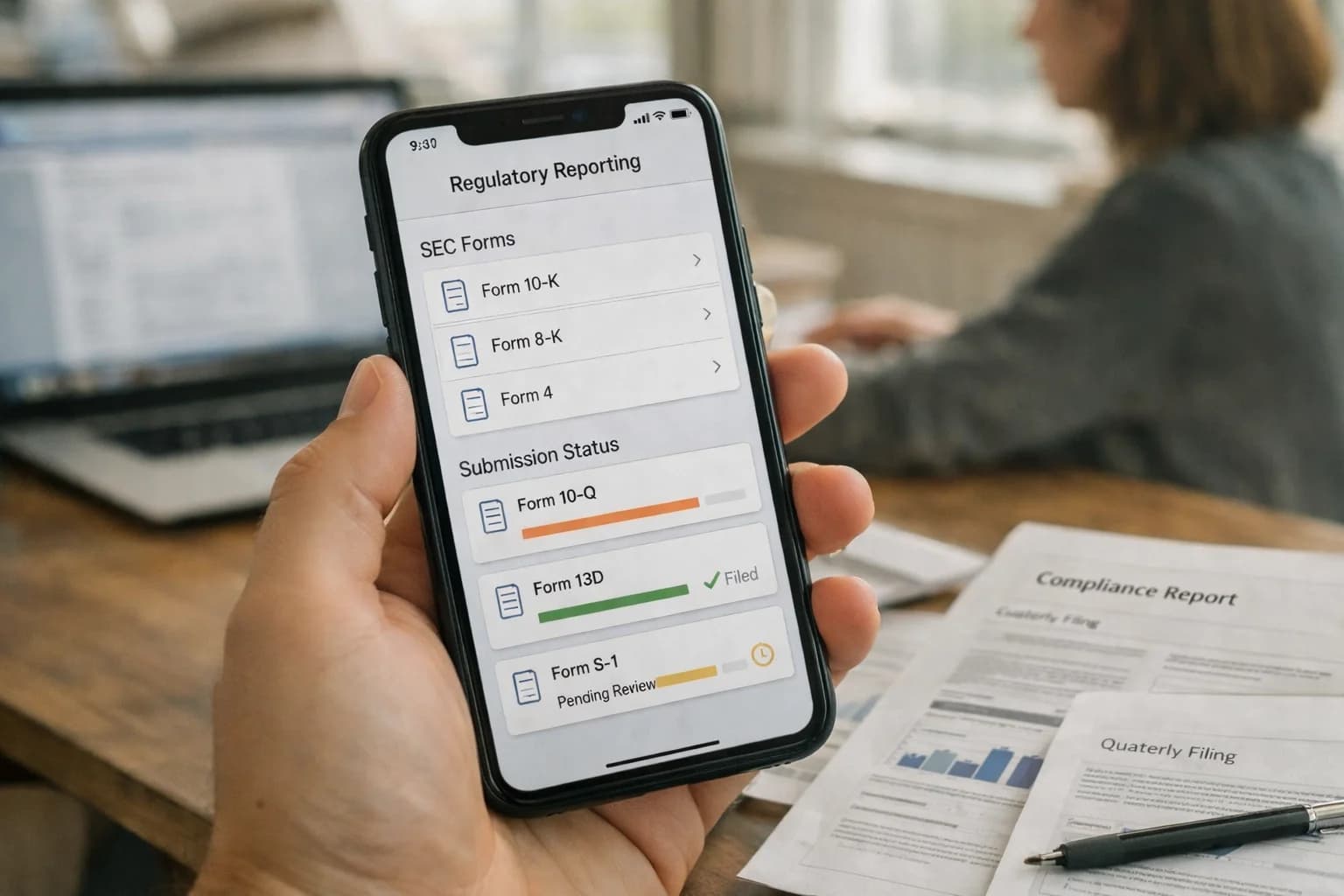
Automate the generation of SOX, SOC2, and PCI DSS compliance reports by using AI to query, summarize, and explain access data from Okta, Entra, Auth0, and Ping APIs. Reduce manual report assembly from days to hours.
AI transforms IAM compliance reporting from a reactive, manual audit to a proactive, automated workflow that explains access risk and generates audit-ready narratives.
AI integration for IAM compliance reporting connects directly to the core APIs and data models of platforms like Okta System Log, Microsoft Entra ID Audit Logs, and PingOne Activity Logs. The integration focuses on querying and analyzing key objects: user assignments, group memberships, role assignments, application access grants, and authentication events. Instead of exporting raw CSV files, an AI agent uses these APIs to fetch, correlate, and summarize data across users, resources, and timeframes to answer specific compliance questions.
The workflow typically involves an AI agent that accepts natural language queries (e.g., "Show me all users with privileged access to the finance app who haven't logged in over 90 days") or runs scheduled jobs. It translates these into precise API calls, joins data across endpoints, and generates a summarized report with explanations. For example, for a SOX control review, the agent can:
Pull all users in the Finance-Controllers group from Okta.
Cross-reference their active sessions and MFA status from the log API.
Identify any with anomalous login locations or dormant service accounts.
Output a narrative summary highlighting exceptions and suggesting remediation steps, ready for auditor review.
This turns a multi-day manual investigation into a same-day, repeatable process.
Rollout requires a read-only service account with appropriate API permissions (e.g., Okta's okta.users.read, okta.logs.read). Governance is critical: all AI-generated reports should be treated as recommendations, not actions, and be routed through existing approval workflows in your IAM platform or ticketing system. A key pattern is to use the AI to populate and justify items in an Okta Identity Governance certification campaign or a Microsoft Entra Access Review, where a human owner makes the final attestation. This maintains the separation of duties and audit trail required for compliance frameworks like SOC2 and SOX.
The business impact is measured in reduced manual effort for audit prep and faster risk identification. Teams shift from compiling evidence to analyzing insights. For a deeper dive on automating these certification workflows, see our guide on AI-Powered Access Reviews for IAM Platforms. To understand how to detect and investigate the anomalous access patterns these reports may uncover, explore our architecture for AI-Driven Anomaly Detection for Identity Platforms.
ARCHITECTURE FOR AI-READY COMPLIANCE WORKFLOWS
IAM Platform APIs and Data Sources for Compliance
Core APIs for Access Intelligence
Compliance reporting starts with raw access data. AI models need structured feeds from these primary IAM APIs to analyze who has access to what.
Okta System Log API & Users API: Retrieve user profiles, group memberships, application assignments, and authentication events. Essential for mapping user-to-application entitlements over time.
Microsoft Entra ID Graph API (Microsoft Graph): Query users, groups, service principals, role assignments (including PIM), and sign-in logs. The primary source for Azure AD and hybrid identity access data.
Ping Identity Directory REST API & PingOne API: Access user entries, group structures, and application mappings from PingDirectory or PingOne for Customers.
These APIs provide the foundational user, group, application, and role objects. AI workflows typically poll or stream this data into a vector store or data lake, creating a searchable knowledge base of entitlements for compliance questioning.
AUTOMATED ACCESS GOVERNANCE
High-Value AI Compliance Reporting Use Cases
Transform manual, error-prone compliance reporting into an automated, auditable process. By integrating AI directly with your IAM platform's APIs, you can query, summarize, and explain access data to generate evidence for SOX, SOC 2, ISO 27001, and internal audits in hours instead of weeks.
01
Automated SOX Control Evidence Generation
AI agents query Okta, Entra ID, or Ping APIs to generate reports on critical SOX controls like user access reviews (UAR), segregation of duties (SoD), and privileged access management (PAM). The system extracts user-role mappings, permission changes, and login patterns, producing narrative summaries and data tables ready for auditor review.
Weeks -> Hours
Report generation
02
SOC 2 User Access Review & Certification
Automate the entire access certification campaign. An AI workflow pulls user entitlements from the IAM platform, analyzes usage patterns (last login, API calls), and generates intelligent recommendations for access removal or retention. It then orchestrates the approval workflow, sends reminders, and logs all decisions for the SOC 2 audit trail.
90%+
Review completion rate
03
Real-Time Segregation of Duties (SoD) Conflict Monitoring
Move from periodic SoD checks to continuous monitoring. AI models analyze role assignments in real-time against a defined conflict matrix (e.g., approver and payer). When a high-risk assignment is detected via SCIM or group sync, the system alerts governance teams and can trigger an automated access review workflow.
Batch -> Real-time
Conflict detection
04
Narrative Explanation for Access Anomalies
Auditors demand explanations, not just data. For flagged anomalies—like a user gaining 10+ roles in a day—AI synthesizes data from IAM logs, HR systems, and ticketing platforms to generate a plain-English narrative. This explains the 'why' behind the change, referencing onboarding tickets or role-based workflow approvals, drastically reducing investigator follow-up.
05
Automated Compliance Dashboard & Health Scoring
Build a live compliance dashboard powered by AI. It continuously scores your IAM posture against frameworks (NIST, CIS), tracking metrics like % of dormant accounts, MFA enrollment rate, and certification backlog. AI highlights regressions, suggests remediation actions, and generates executive summaries for board reporting.
Same day
Visibility shift
06
AI-Powered Audit Trail Synthesis & Gap Detection
Reconstruct complex access events for auditors. Given a date range and user, AI queries the IAM System Log, Entra Audit Logs, and Ping directory logs to create a unified, chronological story of access changes, authentication events, and policy evaluations. It identifies and flags gaps in logging coverage for infrastructure improvement.
IMPLEMENTATION PATTERNS
Example AI-Powered Compliance Workflows
These workflows illustrate how AI agents can automate the heavy lifting of IAM compliance by querying platform APIs, analyzing access data, and generating structured outputs for reports and reviews. Each pattern connects to Okta, Microsoft Entra ID, or Ping Identity APIs.
Trigger: Scheduled monthly job or HRIS termination event.
Context Pulled:
User list and role assignments from Okta /api/v1/users or Microsoft Graph /users.
Group memberships and application assignments.
90-day sign-in activity logs from Okta System Log or Entra ID Sign-In Logs.
AI Agent Action:
For each user in scope, the agent calls the LLM with a structured prompt containing the user's profile, entitlements, and activity summary.
The model evaluates if the access aligns with the user's job function (based on title/department) and usage patterns.
It generates a recommendation (Approve, Revoke, Escalate) with a justification.
System Update:
Recommendations are written to a staging table or queue.
For Approve, the agent can automatically certify the user in the IAM platform's access review module (e.g., Okta IGA).
For Revoke or Escalate, a task is created in the IT service management (ITSM) platform with the AI-generated rationale for manual review.
Human Review Point: All Revoke recommendations and any case where the model's confidence score is below a defined threshold are routed to a manager or IT admin for final approval before any access is modified.
BUILDING A CONTROLLED, AUDITABLE PIPELINE
Implementation Architecture: Data Flow and Guardrails
A production-ready integration connects AI to IAM data sources, orchestrates analysis, and enforces governance before any report is generated.
The core architecture establishes a secure data pipeline from your IAM platforms—Okta System Log API, Microsoft Entra ID Audit and Sign-In Logs, or PingOne Event Hook—to a processing layer. This layer uses orchestration tools (like n8n or Azure Logic Apps) to batch-fetch user, group, role, and session data, then structures it for AI analysis. The AI service, typically a prompt-engineered LLM with retrieval-augmented generation (RAG) over your policy documents, queries this structured data to answer specific compliance questions (e.g., 'List all users with privileged access but no MFA in the last 90 days').
Critical guardrails are implemented at each stage: Data filtering scopes inputs to relevant systems and timeframes for the report (SOX, SOC 2). A human-in-the-loop approval step is required before the AI generates the final narrative or executive summary. All AI interactions, including the exact prompt, data context sent, and generated output, are logged to an immutable audit trail (e.g., Splunk or Azure Log Analytics). This creates a verifiable chain of custody for auditors, showing how the report was derived from raw IAM events.
Rollout follows a phased approach: start with a single, low-risk report type (e.g., dormant account review) and a defined user group (IAM analysts). Use this pilot to validate data accuracy, refine prompts, and socialize the AI-assisted output format with compliance teams. Governance is maintained by treating the prompts and data mappings as controlled assets, versioned in Git, with changes requiring review. This ensures the integration remains a predictable, compliant tool that accelerates report creation from days to hours, while keeping human experts firmly in control of the final deliverable.
IMPLEMENTATION PATTERNS
Code and Payload Examples
Retrieving User and Permission Data
To generate compliance reports, your AI system first needs structured access data. This typically involves querying the IAM platform's API for users, group memberships, and application assignments. The example below uses a Python client for the Okta API to fetch users with their group memberships, a common starting point for access review reports.
python
import requests
def get_users_with_groups(okta_domain, api_token):
"""Fetch users and their group memberships from Okta."""
headers = {
"Authorization": f"SSWS {api_token}",
"Accept": "application/json"
}
users_url = f"https://{okta_domain}/api/v1/users"
all_users_data = []
response = requests.get(users_url, headers=headers, params={"limit": 200})
users = response.json()
for user in users:
user_id = user['id']
groups_url = f"https://{okta_domain}/api/v1/users/{user_id}/groups"
groups_resp = requests.get(groups_url, headers=headers)
user_groups = [g['profile']['name'] for g in groups_resp.json()]
all_users_data.append({
"id": user_id,
"email": user['profile']['email'],
"status": user['status'],
"lastLogin": user.get('lastLogin'),
"groups": user_groups
})
return all_users_data
A similar pattern applies to Microsoft Graph API for Entra ID (/users and /users/{id}/memberOf) or PingDirectory's SCIM/REST endpoints. This data forms the raw material for AI summarization.
AI FOR IAM REPORTING AND COMPLIANCE AUTOMATION
Realistic Time Savings and Operational Impact
This table illustrates the operational impact of integrating AI with your IAM platform (Okta, Microsoft Entra, Ping Identity) to automate compliance reporting and access review workflows. Metrics are based on typical enterprise environments.
Process
Before AI
After AI
Notes
SOX/SOC2 Access Review Preparation
2-3 days manual data gathering and formatting
2-4 hours for automated report generation
AI queries IAM APIs, structures data, and drafts narrative summaries.
Segregation of Duties (SoD) Conflict Analysis
Weekly manual spreadsheet review
Continuous monitoring with daily exception reports
AI models analyze role assignments and entitlements against defined conflict matrices.
User Access Certification Campaign Creation
1-2 days to define scope, build lists, assign reviewers
1-2 hours for AI-scoped campaigns based on risk and change
AI prioritizes high-risk, recently changed, or dormant accounts for review.
Compliance Evidence Collection for Audits
Next-day response to auditor requests
Same-day retrieval with contextual explanations
AI retrieves historical access snapshots, policy logs, and approval trails on-demand.
Privileged Access Justification Narrative
Manual ticket review and email follow-up
AI-generated summary of request context and business rationale
Summarizes ticket history, user role, and resource sensitivity for approvers.
Anomalous Access Pattern Identification
Monthly log review by security analysts
Real-time alerts with ranked risk scores and suggested actions
AI baselines normal behavior and flags deviations in sign-in locations, times, and frequencies.
Access Policy Exception Reporting
Ad-hoc, post-violation discovery
Proactive weekly reports with trend analysis
AI correlates policy violations with business context to highlight systemic issues.
PRODUCTION ARCHITECTURE
Governance, Auditability, and Phased Rollout
A practical approach to deploying AI for IAM compliance that prioritizes control, audit trails, and incremental value.
Production implementations treat the AI as a governed data processor that never writes directly to your IAM platform. Instead, it interacts via secure, logged API calls to systems like the Okta System Log API, Microsoft Entra ID Audit Logs, or PingOne Event Hook API. All AI-generated recommendations—such as access review findings, role suggestions, or anomaly flags—are staged in an intermediate queue or database table. This creates a clear separation of duties: the AI proposes, but a human reviewer or an existing approval workflow in your IAM console (like Okta Identity Governance or Entra Entitlement Management) must approve the action. Every AI interaction is tagged with a session ID, user context, and the specific prompt or query used, creating a full audit trail for compliance evidence.
A phased rollout is critical for managing risk and proving value. A typical sequence starts with read-only reporting automation, where the AI queries IAM APIs to generate draft SOX or SOC2 access reports, summarizing user-role mappings and privileged account usage. This delivers immediate time savings for auditors without changing any permissions. Phase two introduces assisted review workflows, where the AI analyzes usage logs and entitlement patterns to pre-populate access review certifications in Okta or Entra with intelligent ‘maintain’ or ‘revoke’ recommendations for reviewer approval. The final phase enables predictive policy optimization, where the AI suggests new Conditional Access policies or role definitions based on aggregated patterns, but these are implemented only after rigorous change control.
Key governance controls include implementing role-based access control (RBAC) for the AI system itself, ensuring only authorized security or IAM admins can trigger compliance scans or review outputs. All AI-generated content should be watermarked to distinguish it from human work, and a regular human-in-the-loop evaluation process should be established to audit the AI's recommendations for accuracy and bias. By architecting the integration as a controlled advisory layer, you gain the efficiency of automation while maintaining the manual oversight required for SOX, SOC2, and internal ITGC controls.
Enabling Efficiency, Speed & Accuracy
Intelligent Analysis, Decision & Execution
We build AI systems for teams that need search across company data, workflow automation across tools, or AI features inside products and internal software.
IMPLEMENTATION AND OPERATIONS
Frequently Asked Questions
Practical questions for architects and compliance leaders planning AI integration with IAM platforms for automated reporting and audit workflows.
The integration connects via the platform's native APIs and, where available, log streaming services. This is a read-only, audit-focused connection.
Typical data sources:
Okta: System Log API (events), Reports API (insights), and Groups/Users API for entitlement snapshots.
Microsoft Entra ID: Microsoft Graph API (sign-in logs, audit logs, directory objects) and Identity Protection risk detections.
Ping Identity: PingOne API for logs, user profiles, and role assignments.
Security Model:
A dedicated service account with read-only, least-privilege API permissions (e.g., AuditLog.Read.All, User.Read.All).
Credentials are managed in a secrets vault; the integration never writes back or modifies access.
Data is pulled on a scheduled basis (e.g., nightly) or streamed in near-real-time via webhooks for continuous monitoring.
About the author
Prasad Kumkar
CEO & MD, Inference Systems
Prasad Kumkar is the CEO & MD of Inference Systems and writes about AI systems architecture, LLM infrastructure, model serving, evaluation, and production deployment. Over 5+ years, he has worked across computer vision models, L5 autonomous vehicle systems, and LLM research, with a focus on taking complex AI ideas into real-world engineering systems.
His work and writing cover AI systems, large language models, AI agents, multimodal systems, autonomous systems, inference optimization, RAG, evaluation, and production AI engineering.
Partnered with leading AI, data, and software stack.
How We Work
Custom AI workflows for your Business
One-fit-all AI don't work for modern businesses. At Inferensys, we aim to understand your business & custom requirements; which we use to define most efficient agentic workflows, the data, and the tools for your business.
The first call is a practical review of your use case and the right next step.