
Inferensys

Integration

AI Integration for Workday Journeys

A technical guide to augmenting Workday Journeys with AI for personalized, automated employee onboarding, transition guidance, and lifecycle event support.
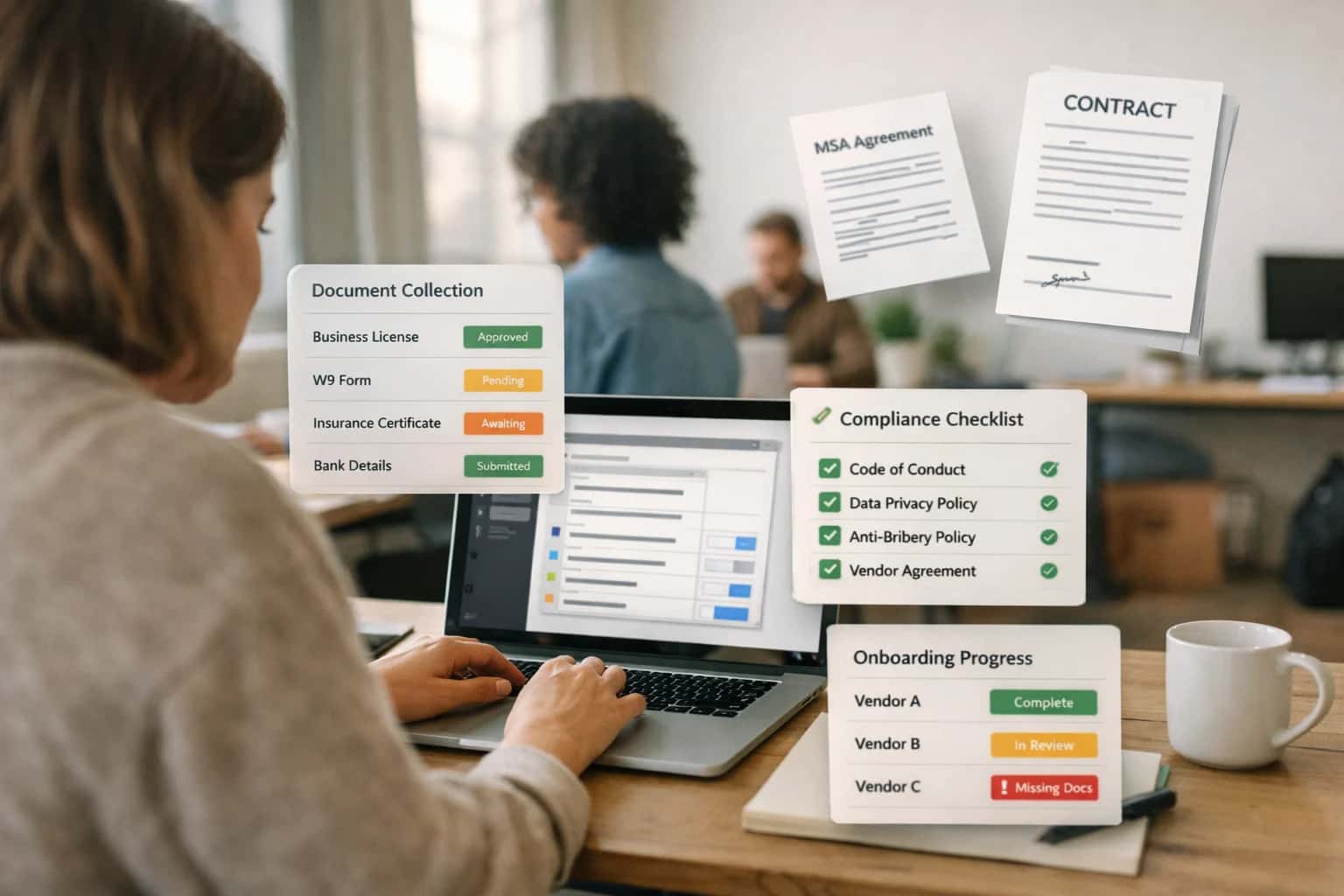
Operations team reviewing AI vendor onboarding platform on laptop, forms and contracts visible, casual office workspace.
ARCHITECTURE & ROLLOUT

Where AI Fits into Workday Journeys

A technical blueprint for integrating AI agents into Workday Journeys to automate and personalize employee lifecycle events.

Workday Journeys orchestrates multi-step processes like onboarding, role transitions, and offboarding by guiding employees through a sequence of tasks, approvals, and system updates. AI integration connects at three key surfaces:

  • Journey Triggers: AI can initiate a Journey by detecting a qualifying event in Workday HCM data, such as a promotion, location change, or new certification.
  • Task Automation: Within an active Journey, AI agents can execute manual tasks like sending personalized welcome emails, assigning learning modules based on role, or collecting documents via smart forms.
  • Guidance & Support: An AI copilot can be embedded as a step in the Journey, providing contextual help to the employee or manager, answering questions about the process, and nudging for pending actions.


Implementation typically involves Workday Extend to build custom UI components for the AI interface and the Workday REST API for secure data exchange. For example, an AI agent for onboarding can:

  1. Pull the new hire's profile, manager, and department from Workday via the workers API.
  2. Generate a personalized 30-60-90 day plan using an LLM, grounded in company role templates.
  3. Create and assign specific learning tasks in the Journey by posting to the journey_steps endpoint.
  4. Answer the new hire's questions in a chat interface, with responses constrained by HR policy data from Workday's knowledge base. This turns a static checklist into a dynamic, conversational guide that reduces HR admin work and improves the new hire experience.

Rollout requires careful governance. Start with a single, high-volume Journey like onboarding for a specific department. Implement audit logging for all AI-initiated transactions and maintain a human-in-the-loop approval for critical steps (e.g., system access provisioning). Use Workday's existing Role-Based Security to control which data fields the AI can access. By phasing the integration, you can measure impact on Journey completion time and HR support ticket reduction before scaling to more complex transitions like international relocations or parental leave.

ARCHITECTURAL BLUEPRINT

Key Integration Surfaces in Workday Journeys

The Core Orchestration Engine

Integrate AI directly into the Journey Builder to automate and personalize the creation and management of employee lifecycle events. This surface allows AI to act as a co-pilot for HR teams, suggesting next-best actions, generating personalized content, and dynamically adjusting journey paths based on real-time signals.

Key Integration Points:

  • Journey Templates & Triggers: Use Workday's event framework (hires, promotions, transfers) as triggers for AI-generated journey steps.
  • Conditional Logic & Branching: Inject AI decisioning to evaluate employee data (role, location, tenure) and personalize the journey path.
  • Task Generation: Automatically create and assign personalized tasks (e.g., "Complete security training for remote engineers") to the employee, manager, or HR.

Implementation Pattern: An AI agent listens for Workday business process events via Workday Extend or webhooks, evaluates the context, and calls back to the Journeys API to create or modify the employee's journey.

INTEGRATION PATTERNS

High-Value AI Use Cases for Workday Journeys

Workday Journeys orchestrates key employee lifecycle events. Integrating AI transforms these guided experiences from static checklists into intelligent, personalized workflows that adapt to the individual and automate administrative overhead.

01

Intelligent Onboarding Concierge

An AI agent personalizes the Day 1-90 journey by analyzing the new hire's role, location, and team. It dynamically suggests relevant learning modules, schedules intro meetings with key stakeholders via calendar APIs, and answers policy questions in real-time, reducing HR check-in load.

Hours -> Minutes
Admin time per hire
02

Automated Role Transition Support

For promotions, transfers, or returns from leave, AI automates the Journey configuration. It identifies required tasks (system access, compliance training, manager updates) by role change type, assigns them via Workday, and provides a transition guide. Integrates with /integrations/human-resources-information-systems/ai-integration-for-hr-operations-automation for cross-system orchestration.

03

Life Event Trigger & Guidance

AI monitors for life events (marriage, birth) submitted in Workday and instantly launches a tailored Benefits & Policy Journey. It explains impact on deductions, deadlines for enrollment changes, and generates required documents for upload, ensuring compliance and reducing errors.

Same day
Guidance delivery
04

Personalized Learning Path Orchestration

Connects Journeys to Workday Learning and Skills Cloud. AI analyzes an employee's career goals and skill gaps to recommend and enroll them in a curated learning journey. It sequences courses, suggests mentors, and tracks progress, automatically updating the skills profile upon completion.

05

Manager-Led Team Journey Activation

Empowers managers to launch custom Journeys for team events (reorgs, new project kick-offs). An AI copilot helps the manager define goals, select pre-built task templates, and identify participants. The agent then manages invitations, progress nudges, and collects feedback upon completion.

1 sprint
Setup time
06

Sentiment-Responsive Journey Adaptation

Integrates with Workday Peakon Employee Voice. AI analyzes real-time sentiment signals from surveys or feedback. For teams showing dips in engagement, it can automatically suggest or launch a 'Re-engagement & Recognition' Journey with tailored activities, connecting insights to action. Learn about foundational analytics at /integrations/human-resources-information-systems/ai-integration-for-people-analytics-in-hr-systems.

PRACTICAL IMPLEMENTATION PATTERNS

Example AI-Augmented Journeys Workflows

These workflows illustrate how AI can be embedded into Workday Journeys to create personalized, automated employee experiences. Each example details the trigger, data flow, AI action, and system update, providing a blueprint for technical implementation.

Trigger: A new hire's Worker record is activated in Workday HCM.

Context/Data Pulled:

  • The AI agent retrieves the new hire's Job Profile, Location, Manager, and Cost Center.
  • It fetches the standard Onboarding Journey template and any location/department-specific checklist items.

Model or Agent Action:

  1. Personalization: The LLM generates a welcome message and a brief, personalized overview of the first week's key meetings and goals, referencing the hire's role and team.
  2. Task Generation: The agent analyzes the role data and creates 2-3 tailored preparatory tasks (e.g., "Review the Q2 project brief for the X team" for an engineer, "Schedule intro with key account Y" for a salesperson).
  3. Multi-System Coordination: It calls external APIs (via Workday Extend or middleware) to trigger IT provisioning tickets, facility access requests, and swag orders, using the hire's data as context.

System Update or Next Step:

  • The personalized welcome message and custom tasks are injected into the new hire's Journey via the Workday Journeys API.
  • The agent logs all generated items and external system calls for auditability.
  • The journey is activated, and the manager receives a notification with the personalized plan.

Human Review Point: The manager can review and modify the AI-generated custom tasks before the journey is published to the new hire.

CONNECTING AI TO JOURNEY ORCHESTRATION

Implementation Architecture & Data Flow

A practical blueprint for integrating AI agents into Workday Journeys to personalize and automate employee lifecycle events.

The integration connects AI agents to the Workday Journeys API and Business Process Framework. Journeys act as the orchestration layer, while AI provides the dynamic, personalized content and decision support. Key touchpoints include:

  • Journey Steps & Milestones: AI can generate or tailor content for specific steps (e.g., a personalized welcome message or a checklist item explanation).
  • Conditional Logic & Triggers: AI can evaluate employee data (role, location, tenure) to recommend or trigger specific journey paths or resources.
  • Employee Interactions: An AI assistant can be embedded as a "Guide" step within a journey, answering questions in context (e.g., "What documents do I need for my visa?" during an international relocation journey).
  • Data Capture & Feedback: AI can analyze responses from journey feedback tasks to suggest adjustments to the journey template or flag employees needing additional support.

Implementation typically follows a webhook and API-driven pattern. A middleware layer (often built with Workday Extend or an external orchestration platform) hosts the AI agent logic. This layer:

  1. Listens for Journey Events (e.g., journey.step.started, user.question.submitted) via Workday webhooks.
  2. Enriches Context by fetching relevant employee data from Workday HCM APIs (Worker, Position, Benefits data).
  3. Calls the AI Model (e.g., GPT-4, Claude) with a carefully engineered prompt containing the context, permissible actions, and guardrails.
  4. Executes Approved Actions by calling back into Workday APIs to update a journey task, post a comment, or send a notification via the Workday Notifications framework. All data flows are logged for audit, and the AI's suggested actions can be routed through a human-in-the-loop approval step for sensitive operations.

Rollout should be phased, starting with a single, high-volume journey like Onboarding. Governance is critical: define clear boundaries for AI autonomy versus human review, establish prompt version control, and implement continuous evaluation against HR compliance rules. The result is a journey that feels less like a static checklist and more like a responsive, intelligent guide, reducing HR administrative load while improving the employee experience. For broader architectural patterns, see our guide on /integrations/human-resources-information-systems/ai-integration-for-workday-extend.

INTEGRATION PATTERNS

Code & Payload Examples

Triggering AI Actions from Journey Events

Workday Journeys exposes events via the Journeys API (e.g., journeyInstance.completed). Use these webhooks to trigger AI-driven personalization or next-step automation.

A common pattern is to call an AI service when a journey step is completed, passing relevant employee context (role, location, previous step outcomes) to generate a dynamic follow-up message or task.

Example Webhook Payload to AI Service:

json
{
  "event_type": "journey_step.completed",
  "employee_id": "EMP12345",
  "journey_id": "onboarding_2024",
  "step_id": "it_setup",
  "step_outcome": "success",
  "context": {
    "hire_date": "2024-05-15",
    "department": "Engineering",
    "location": "Remote_US"
  }
}

Your AI service processes this payload to decide the next action—like generating a personalized welcome note from the manager or queuing a custom learning module in the LMS.

AI-ENHANCED WORKDAY JOURNEYS

Realistic Time Savings & Operational Impact

How AI integration transforms manual, reactive employee lifecycle management into proactive, personalized guidance. This table shows typical operational improvements when AI agents are connected to Workday Journeys via APIs and Extend.

Workflow / TaskBefore AI IntegrationAfter AI IntegrationImplementation Notes

New Hire Onboarding Task Completion

7-10 days average

2-3 days average

AI assistant proactively nudges new hires, answers FAQs, and auto-fills repetitive forms.

Life Event Guidance (e.g., parental leave)

HR ticket (24-48 hr response) + manual research

Interactive AI guide provides instant, personalized steps & forms

Agent uses Workday data to personalize checklist; human review for final approvals.

Career Path Exploration & Internal Mobility

Manual manager conversations or static intranet pages

AI-powered internal talent marketplace suggests roles & skills

Integrates with Workday Skills Cloud and internal job postings.

Compliance & Policy Acknowledgment Tracking

Manual email campaigns and spreadsheet tracking

Automated, conversational nudges with completion reporting

AI agent triggers reminders via Workday Inbox; status syncs to core records.

Transition Support (e.g., promotion, transfer)

HR-driven, ad-hoc email communication

Personalized transition journey with automated task assignments

AI orchestrates tasks across HR, IT, and manager using Workday Extend workflows.

Employee Sentiment Check-ins

Quarterly survey cycles with delayed analysis

Continuous, lightweight pulse checks with real-time sentiment alerts

AI analyzes free-text feedback; triggers follow-up journeys for at-risk segments.

Benefits Enrollment Support During Open Season

Overwhelming PDF guides & help desk ticket surge

Conversational AI assistant for personalized plan comparisons

Agent answers Q&A, provides cost projections, and submits elections via API.

ARCHITECTING CONTROLLED AI ADOPTION

Governance, Security & Phased Rollout

Integrating AI into Workday Journeys requires a deliberate approach to security, data privacy, and change management to ensure value and trust.

A production-ready integration is built on Workday's security model. AI agents should authenticate via Workday's OAuth 2.0 APIs using a dedicated integration system user with principle of least privilege access—scoped only to the specific Journey and Worker data objects required. All prompts and generated content should be logged with full audit trails, linking actions to the initiating user's Workday ID for compliance. For personal data, consider a zero-data retention policy for the AI layer, where context is purged after the session, or implement strict data masking for sensitive fields like compensation or performance ratings within the prompt payload.

Rollout should follow a phased, use-case-driven approach. Start with a pilot Journey, such as 'New Manager Onboarding,' where AI provides contextual guidance on approving time-off or conducting one-on-ones. This limits exposure and allows for tuning. Use Workday Extend to host the AI interface as a custom application, ensuring a native user experience. Implement a human-in-the-loop approval step for any AI-suggested actions that modify data (e.g., enrolling a worker in a training) before the API call is made to Workday. Measure success through Workday's own analytics on Journey completion rates and user feedback scores.

Governance is continuous. Establish a cross-functional team (HR, IT, Legal) to review prompt libraries, monitor for drift in AI responses, and approve new use cases. Leverage Workday's Business Process Framework to embed AI-suggested tasks or approvals directly into existing Journeys, maintaining centralized control. For organizations using Workday Peakon, integrate sentiment analysis to proactively adjust AI guidance in Journeys based on real-time employee feedback, closing the loop between insight and automated support.

IMPLEMENTATION AND WORKFLOW DETAILS

Frequently Asked Questions

Common technical and operational questions about integrating AI agents and copilots into Workday Journeys to automate and personalize employee experiences.

This workflow automates the initial setup and ongoing guidance for a new employee.

  1. Trigger: A Hire business process event in Workday HCM creates a new Worker record. A webhook or Workday Extend API call notifies the AI orchestration layer.

  2. Context Pulled: The AI agent uses the worker's ID to fetch relevant data via Workday's REST APIs:

    • Role & Department: Job_Profile, Supervisory_Organization.
    • Location & Start Date: Primary_Work_Address, Contract_Effective_Date.
    • Manager: Manager reference.
    • Pre-hire data: Any submitted forms or documents from the recruiting stage.
  3. Agent Action: The AI uses this context to:

    • Generate a personalized welcome message and a dynamic Day 1 schedule.
    • Create a customized checklist in the associated Workday Journey, adding tasks relevant to the role (e.g., "Set up development environment" for engineers, "Review client portfolio" for sales).
    • Draft and send introductory emails to the new hire's team members, pulled from the org structure.
  4. System Update: The agent uses the Workday Journeys API or Extend to create and update the journey tasks. All actions are logged with the agent's service account for auditability.

  5. Human Review Point: The hiring manager receives a notification to review and approve the AI-generated plan before it's published to the new hire.

Prasad Kumkar

About the author

Prasad Kumkar

CEO & MD, Inference Systems

Prasad Kumkar is the CEO & MD of Inference Systems and writes about AI systems architecture, LLM infrastructure, model serving, evaluation, and production deployment. Over 5+ years, he has worked across computer vision models, L5 autonomous vehicle systems, and LLM research, with a focus on taking complex AI ideas into real-world engineering systems.

His work and writing cover AI systems, large language models, AI agents, multimodal systems, autonomous systems, inference optimization, RAG, evaluation, and production AI engineering.


