
Inferensys

Integration

AI Integration for Talent Management Suites

A technical blueprint for embedding AI agents and copilots into Workday Talent, UKG Pro, and ADP Talent modules to automate performance reviews, skills gap analysis, succession planning, and career development workflows.
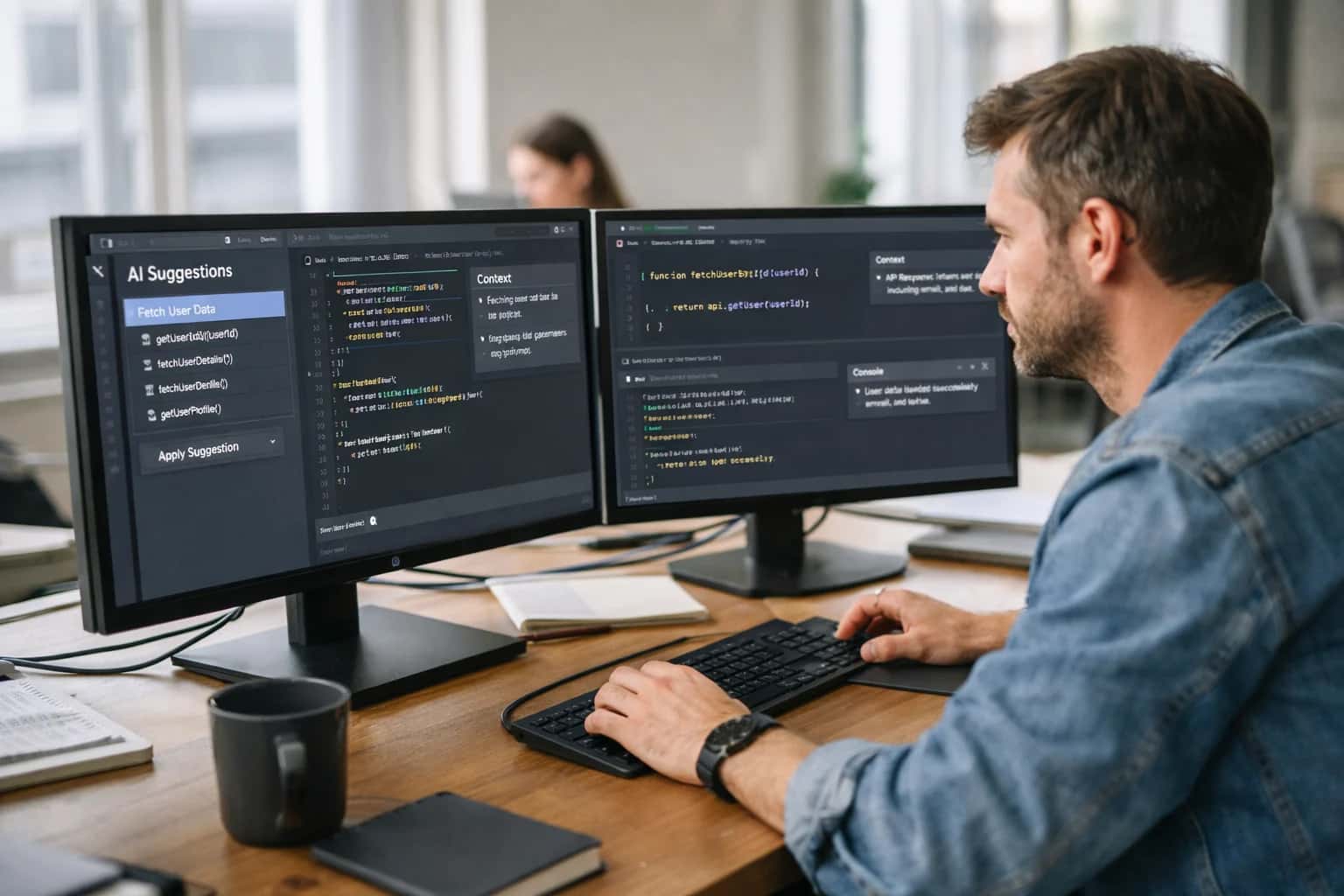
Developer using AI copilot for code completion, IDE visible on laptop screen, casual programming moment at desk.
ARCHITECTURE & ROLLOUT

Where AI Fits into Talent Management Modules

A practical guide to integrating AI into the performance, learning, and succession workflows of enterprise HR suites.

AI integration for talent management focuses on augmenting three core modules: Performance, Learning & Development (L&D), and Succession Planning. In platforms like Workday, UKG Pro, or ADP Talent, this means connecting AI agents to specific objects and APIs:

  • Performance Objects: Review cycles, goal libraries, feedback comments, and calibration sessions.
  • L&D Objects: Skills frameworks, course catalogs, completion records, and competency assessments.
  • Succession Objects: Talent pools, readiness ratings, career paths, and development plans. The integration surface is the workflow automation layer and the data model where these objects are created, updated, and reported on.


Implementation typically involves a middleware agent that listens for events (e.g., review_cycle_opened, skill_gap_identified) via webhooks or scheduled jobs. The agent then uses the platform's REST APIs—like Workday's Worker API or UKG's Personnel API—to retrieve context, processes it with an LLM, and takes action. For example:

An AI agent triggered by a new performance review can analyze draft manager comments for bias, suggest goal language aligned to company competencies, and automatically check for completion outliers before calibration meetings. Impact is measured in time saved (e.g., reducing manual review prep from hours to minutes), improved consistency, and surfacing latent insights from unstructured feedback.

Rollout requires a phased, role-based approach. Start with a Manager Copilot for performance reviews, as it has clear ROI and manageable scope. Use a secure, sandboxed environment to test API calls and prompt outputs against live data. Governance is critical: all AI-generated suggestions should be logged, require human approval before system writes, and be traceable to source data for audit. A successful pilot demonstrates value without disrupting core HR operations, paving the way for expansion into AI-driven learning path recommendations and predictive succession modeling.

ARCHITECTURAL BLUEPRINT

Key Integration Surfaces in Major Talent Suites

Performance, Goals, and Succession Modules

Integrating AI into performance management surfaces allows for intelligent augmentation of core talent processes. Key integration points include the goal-setting workspace, performance review cycles, and succession planning grids.

Primary Use Cases:

  • Feedback Synthesis: AI agents can analyze 360-degree feedback comments from tools like Workday Peakon, summarizing themes and suggesting actionable development points before submission to the manager's review form.
  • Calibration Support: During calibration meetings, an AI copilot can surface historical rating distributions, highlight potential bias in narrative comments, and suggest talking points based on comparative data.
  • Succession Readiness: By analyzing performance data, skills inventories, and career aspirations, AI can generate readiness scores and recommend targeted development activities for candidates in the succession plan.

Implementation Pattern: AI workflows are typically triggered via API when a review form is saved or a succession plan is opened. The agent processes unstructured text, queries relevant data (past reviews, skills, goals), and returns insights embedded directly into the user interface via a custom object or side panel.

INTEGRATION PATTERNS

High-Value AI Use Cases for Talent Modules

Integrating AI into talent management modules transforms static data into proactive intelligence. These patterns connect directly to Workday, UKG Pro, or ADP Talent APIs to automate workflows, enhance decision-making, and personalize the employee experience.

01

AI-Powered Performance Review Assistant

Integrates with the Performance Management module to analyze draft reviews for bias, suggest development-focused language, and calibrate ratings against peer data. Agents can pull historical feedback and goal data via API to generate structured talking points for managers, reducing review cycle time from weeks to days.

Weeks -> Days
Review cycle time
02

Skills Gap Analysis & Learning Paths

Connects to Talent Profile and Learning modules to infer skills from employee data, projects, and feedback. AI maps current skills against role requirements and organizational goals, then automatically recommends personalized courses from the integrated LMS. This closes the loop between talent data and development action.

Batch -> Real-time
Skill inference
03

Succession Planning Intelligence

Augments the Succession Planning module by analyzing performance, potential, and mobility data to identify high-potential employees and assess role readiness. AI models can simulate succession scenarios, flag critical role vulnerabilities, and recommend targeted development activities, turning a yearly exercise into a continuous process.

Yearly -> Continuous
Planning cadence
04

Career Pathing & Mobility Agent

Leverages the Talent Marketplace or internal mobility APIs to provide employees with AI-guided career navigation. By analyzing internal job history, skills adjacency, and employee preferences, the agent suggests realistic internal moves and generates a personalized action plan, increasing internal fill rates and retention.

05

360-Degree Feedback Synthesis

Integrates with feedback collection tools (often via Workday Extend or custom objects) to ingest unstructured 360-review comments. AI summarizes themes, extracts strengths and development areas, and detects sentiment shifts over time, providing managers with actionable insights without manual review of hundreds of comments.

Hours -> Minutes
Insight generation
06

Talent Calibration & Equity Analysis

Connects to Performance, Compensation, and Demographic data via secure APIs to run calibration sessions. AI highlights rating inconsistencies across teams, analyzes compensation equity against benchmarks, and flags potential demographic disparities in talent decisions, supporting fairer and more data-driven talent reviews.

IMPLEMENTATION PATTERNS

Example AI-Enhanced Talent Workflows

These concrete workflows illustrate how AI agents and automation can be integrated into core talent management modules within suites like Workday, UKG Pro, or ADP Talent. Each pattern connects to specific APIs, data objects, and user journeys.

Trigger: A manager initiates a performance review cycle for a direct report in the Talent module.

Workflow:

  1. Context Pull: An AI agent retrieves the employee's goals, completed projects, past feedback, and peer review comments via the HRIS API (e.g., Workday's Performance_Review or UKG's PerformanceManagement endpoints).
  2. Agent Action: Using a structured prompt, the LLM generates a draft review summary. It highlights achievements against goals, synthesizes feedback themes, and suggests developmental areas, citing specific data points.
  3. Bias & Consistency Check: A secondary agent scans the draft for biased language, ensures alignment with competency frameworks, and flags any significant rating deviations from calibrated team norms.
  4. System Update & Human Review: The draft, along with analysis flags, is presented to the manager in a side-panel UI or via email. The manager edits, approves, and submits the final version back to the HRIS via API, completing the workflow.

Key Integration Points: Performance Review API, Goals API, Feedback objects, Custom UI extension (e.g., Workday Extend).

ARCHITECTING FOR SCALE AND CONTROL

Implementation Architecture: Data Flow and Guardrails

A production-ready AI integration for talent management requires a secure, governed data flow that respects HR data sensitivity and system boundaries.

The core architecture connects to the talent suite's APIs—such as Workday's Web Services API, UKG Pro's REST API, or ADP's DataCloud—to read and write to key objects like Performance Reviews, Skills, Succession Pools, and Learning Assignments. AI agents act as an orchestration layer, processing natural language requests, retrieving relevant employee and talent data, and executing approved actions. For example, a manager asking, "Show me development opportunities for my top performer" triggers an agent that queries the Employee Profile, Completed Learning, and Open Roles APIs, synthesizes a response using an LLM, and can even initiate a Learning Assignment via a secure API call. This layer typically sits in a secure cloud environment, using a vector database for contextual retrieval of policy documents and historical review data to ground responses.

Data flow is strictly governed. All queries are scoped by role-based access control (RBAC) inherited from the HRIS, ensuring a manager only accesses their team's data. Sensitive processes, like generating a succession plan or calibrating performance ratings, are designed as multi-step workflows with human-in-the-loop approvals. For instance, an AI-suggested list of high-potential employees for a critical role is presented in a manager's workflow inbox within the HRIS for review and final submission. Audit logs capture every agent interaction, data query, and transaction, linking back to the user and business context for full traceability. This guardrail model is essential for compliance, fairness, and user trust.

Rollout follows a phased approach. We start with a read-only pilot, such as an AI-powered talent search agent that helps recruiters find internal candidates without making system changes. This validates data integration, performance, and user adoption. Subsequent phases introduce controlled write-backs, like automated feedback summarization for performance reviews or skills gap analysis that suggests learning paths. Each phase includes rigorous testing against the suite's data model and change management protocols. The final architecture is resilient, operating within the platform's rate limits and designed for zero-downtime updates, ensuring the talent suite's core operations remain uninterrupted while delivering intelligent augmentation.

TALENT MANAGEMENT SUITES

Code and Payload Examples

Analyzing Manager Feedback

Integrate AI to analyze qualitative feedback in performance reviews for bias, sentiment, and actionable themes. This workflow typically triggers after a review is submitted in the talent module, using the platform's webhook or event API.

Example JSON Payload (Webhook from Workday):

json
{
  "event_type": "performance_review.submitted",
  "review_id": "PR-2024-00123",
  "employee_id": "E56789",
  "manager_id": "M12345",
  "review_cycle": "Q2-2024",
  "feedback_text": "John consistently delivers high-quality code but could improve documentation. He is a great team player.",
  "rating": "Exceeds Expectations",
  "submitted_at": "2024-06-15T14:30:00Z"
}

An AI service consumes this payload, analyzes the feedback_text for sentiment and potential gendered language, and posts insights back to a custom object or triggers a workflow for HRBP review.

AI INTEGRATION FOR TALENT MANAGEMENT SUITES

Realistic Time Savings and Operational Impact

This table illustrates the operational impact of integrating AI agents into core talent management modules within platforms like Workday, UKG Pro, or ADP Talent. It focuses on realistic efficiency gains and workflow changes, not wholesale replacement of human judgment.

Talent Module / WorkflowBefore AI IntegrationAfter AI IntegrationImplementation Notes

Performance Review Drafting

Manager spends 45-60 minutes per review

AI assistant suggests feedback and goals in 5-10 minutes

Human manager reviews, edits, and finalizes; reduces writer's block

Succession Plan Identification

Quarterly manual review of talent grids by HRBP

AI surfaces at-risk roles and recommends candidates weekly

HRBP reviews AI-generated shortlist; focuses on validation and calibration

Skills Gap Analysis for a Role

Manual survey and spreadsheet analysis over 1-2 weeks

AI analyzes employee profiles and learning data, report in 1 day

Output feeds into learning module for automated course recommendations

Career Pathing Guidance

Static PDFs or infrequent manager conversations

Interactive AI agent suggests personalized paths based on internal mobility data

Agent integrates with learning and internal job boards; human coach provides final advice

Calibration Meeting Prep

HR manually compiles performance rating distributions and outliers

AI pre-populates calibration packets with analytics and potential bias flags

Leaders spend meeting time on discussion, not data gathering

360-Feedback Synthesis

Manager reads through dozens of individual comments

AI summarizes themes, strengths, and development areas from raw text

Manager receives a structured summary; can drill into anonymized source comments

Learning Content Curation

L&D manually tags content or uses broad categories

AI auto-tags content and matches to skills, suggesting personalized learning paths

Increases content discoverability and relevance; L&D oversees AI suggestions

Talent Review Reporting

Manual slide creation from disparate reports post-meeting

AI generates draft talent review decks with narratives and visualizations

HR analyst refines and adds strategic context; cuts reporting time by ~70%

ARCHITECTING CONTROLLED AI DEPLOYMENT

Governance, Security, and Phased Rollout

A practical framework for deploying AI in talent suites with enterprise-grade security, auditability, and change management.

Integrating AI into platforms like Workday Talent & Performance, UKG Pro Talent Management, or ADP Talent requires a governance-first approach. This starts with a clear data access model, where AI agents are granted specific, read-only API permissions to modules like Performance Documents, Succession Pools, Skills Inventories, and Learning Transcripts. All agent actions—such as retrieving a manager's team data for a performance summary or suggesting a learning path—must be logged against the initiating user's ID and tied to the relevant HRIS business object (e.g., Worker ID, Review Cycle ID). This creates a full audit trail for compliance reviews and ensures AI operates within the same role-based access controls (RBAC) as human users.

A phased rollout is critical for user adoption and risk management. A typical implementation follows this pattern:

  • Phase 1: Read-Only Copilot (Weeks 1-4). Deploy an AI assistant with access to talent data to answer manager questions (e.g., "Summarize my team's recent feedback trends") and generate draft review content. All outputs are suggestions requiring human review and manual submission back into the HRIS.
  • Phase 2: Assisted Workflow (Months 2-3). Introduce controlled write-backs for low-risk, high-volume tasks. For example, an agent can auto-populate a Skills Gap Analysis section in a performance document based on job role data, but requires manager approval before saving to the Workday Talent Review record.
  • Phase 3: Proactive Orchestration (Months 4+). Enable multi-step workflows, such as an agent that identifies employees eligible for a Succession Plan, recommends development activities from the Learning Catalog, and creates a draft Development Plan object—all within a single, auditable session that triggers standard HRIS notifications for approvals.

Security is non-negotiable. All prompts and context sent to LLMs must be scrubbed of direct identifiers (using tokenization or pseudonymization) before leaving your network. Responses should be validated against your HRIS data schema before any write operation. For sensitive workflows—like calibrating performance ratings or analyzing succession readiness—implement a human-in-the-loop checkpoint where a senior HRBP or talent leader must review and approve AI-generated insights before they influence system-of-record data. This controlled, incremental approach de-risks the integration, builds organizational trust, and ensures the AI augments—rather than disrupts—your established talent governance processes.

IMPLEMENTATION AND OPERATIONS

Frequently Asked Questions

Common technical and strategic questions about integrating AI agents and copilots into Workday, UKG, ADP, and other talent management suites.

Secure integration typically follows a layered architecture:

  1. API Gateway & Authentication: Use the platform's official REST APIs (e.g., Workday Web Services, UKG Pro API, ADP Workforce Now API) with OAuth 2.0 or client credentials for machine-to-machine authentication. Never store employee credentials.
  2. Context Broker Layer: Implement a middleware service (your own or a managed service like Inference Systems') that acts as a secure broker. This service:
    • Receives authenticated user requests from the AI agent.
    • Enforces Role-Based Access Control (RBAC), ensuring the agent only requests data the user is permitted to see.
    • Makes the authorized API call to the HRIS, fetches the data, and returns only the necessary context to the LLM.
  3. Prompt Context & Data Masking: The broker should strip or mask sensitive fields (like SSN, salary details) before sending context to the LLM, unless explicitly required for a specific, authorized workflow.
  4. Audit Logging: All broker transactions—user, agent action, data accessed, timestamp—are logged for compliance and auditability.

This pattern keeps PII out of the LLM's core context and maintains the HRIS as the single source of truth.

Prasad Kumkar

About the author

Prasad Kumkar

CEO & MD, Inference Systems

Prasad Kumkar is the CEO & MD of Inference Systems and writes about AI systems architecture, LLM infrastructure, model serving, evaluation, and production deployment. Over 5+ years, he has worked across computer vision models, L5 autonomous vehicle systems, and LLM research, with a focus on taking complex AI ideas into real-world engineering systems.

His work and writing cover AI systems, large language models, AI agents, multimodal systems, autonomous systems, inference optimization, RAG, evaluation, and production AI engineering.


