AI integration targets specific HRIS modules and data objects critical for hourly, shift-based workforces. In platforms like UKG Pro, Workday, or ADP Workforce Now, this means connecting to Time & Attendance, Scheduling, Safety & Compliance, and Skills/Certification records. The goal is to use AI to monitor, predict, and act on data from these surfaces—like flagging a potential OSHA violation from a safety report, predicting absenteeism based on shift patterns, or automatically routing a recertification reminder.

Integration
AI Integration for HR in Manufacturing and Logistics
A technical blueprint for augmenting HRIS platforms with AI to manage frontline workforces, automate safety compliance, predict absenteeism, optimize shift bidding, and track skills certification.
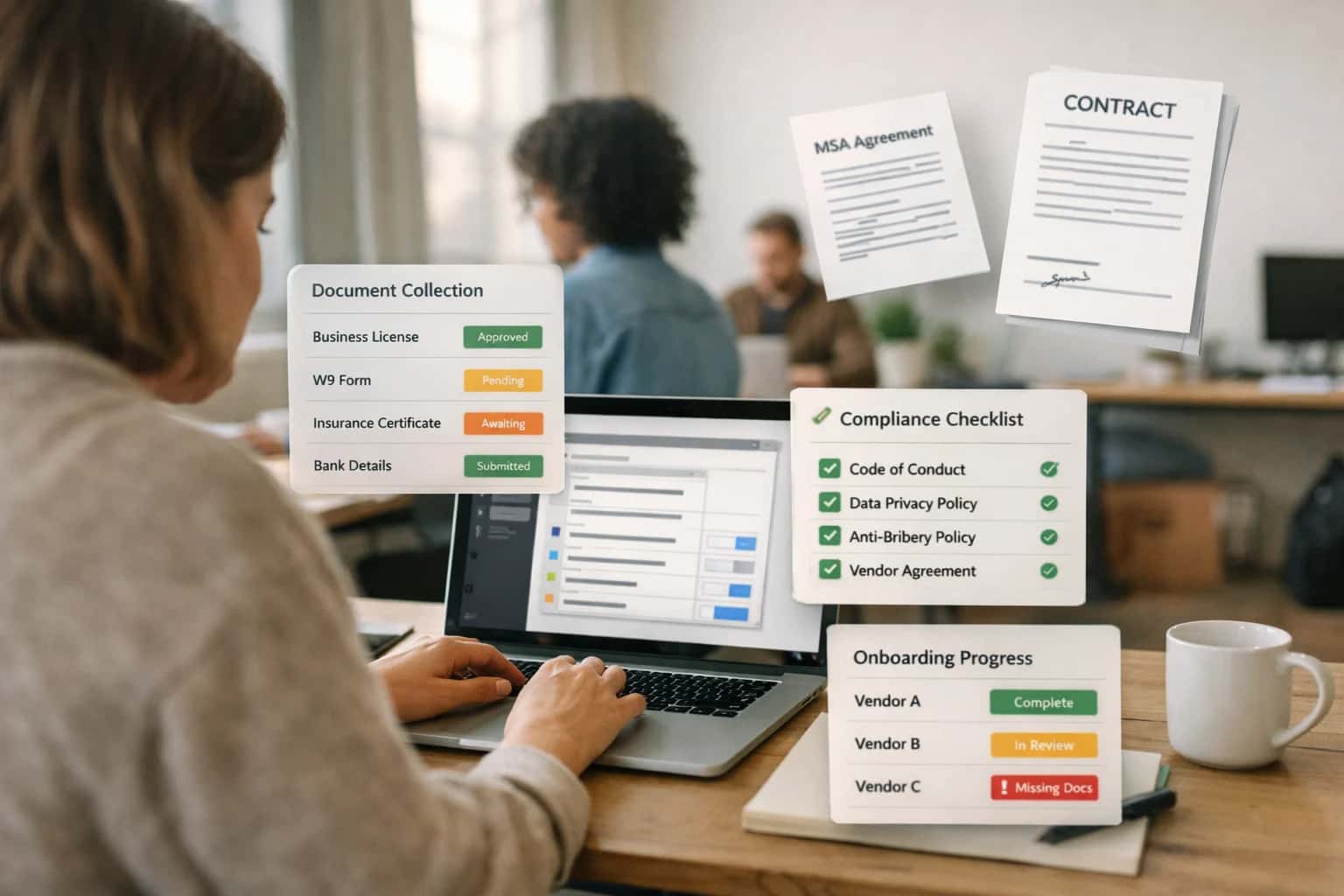
FRONTLINE WORKFORCE AUTOMATION
Where AI Fits in Manufacturing and Logistics HR
Integrating AI into HR systems for manufacturing and logistics focuses on automating high-volume, compliance-heavy tasks for frontline workers.
Implementation centers on event-driven workflows. For example, an AI agent can listen for a Shift_Bid_Submitted webhook from the HRIS, evaluate the request against seniority rules and operational needs, and either auto-approve or escalate it. For safety compliance, an AI process can periodically query the HRIS for expired certifications (e.g., forklift licenses), cross-reference them with scheduled shifts, and create tasks in the CMMS or EHS platform to block the employee from being scheduled. The impact is moving from manual, reactive tracking to automated, preventative operations.
Rollout requires a phased, location-based approach, starting with a single plant or distribution center. Governance is paramount: AI recommendations for schedule changes or safety interventions must be logged as suggestions, with a human-in-the-loop approval step before any write-back to the HRIS. This ensures accountability and allows local managers to apply situational context. The integration layer must also handle union rule variations and local labor laws, making the AI agent's logic configurable per site within the broader HRIS data model.
AI FOR MANUFACTURING & LOGISTICS HR
Key HRIS Touchpoints for AI Integration
Automating Compliance and Absenteeism Management
In manufacturing and logistics, managing hourly, shift-based workforces creates high-volume data in Time & Attendance modules (e.g., UKG Dimensions, Workday Time Tracking, ADP Time). AI integration here focuses on predictive absenteeism and automated policy enforcement.
Key integration points:
- Real-time schedule adherence: Monitor clock-in/out events against planned shifts via API. AI agents can detect tardiness patterns and trigger automated coaching or schedule adjustments.
- Absenteeism forecasting: Analyze historical attendance data, seasonality, and external factors (weather, local events) to predict short-notice absences, allowing proactive labor planning.
- Overtime and break compliance: Automatically review timesheets for missed breaks or unauthorized overtime against union rules and FLSA regulations, flagging exceptions for manager review before payroll submission.
python# Example: API call to fetch recent attendance anomalies for a site response = requests.get( f"{hris_api_base}/time/attendance/exceptions", params={"site_id": "warehouse_12", "date": "2024-05-15"}, headers={"Authorization": f"Bearer {api_token}"} ) # AI model scores exception severity for triage exceptions = ai_triage_attendance(response.json())
MANUFACTURING & LOGISTICS
High-Value AI Use Cases for Frontline HR
For HR teams managing frontline workforces, AI integration with HRIS platforms like UKG, Workday, or ADP can automate high-volume tasks, improve safety, and unlock workforce insights. These cards detail practical implementation patterns for manufacturing and logistics environments.
01
Automated Safety Compliance & Certification Tracking
AI agents monitor HRIS records and training systems to flag expired safety certifications (OSHA, forklift, HAZMAT). The agent can automatically assign required training in the LMS, notify managers, and restrict shift scheduling in the workforce management module until compliance is met.
Manual Audits → Automated Alerts
Compliance Workflow
02
Predictive Absenteeism & Shift Coverage
An AI model analyzes historical attendance patterns, seasonality, and short-term notice trends from the HRIS. It predicts daily understaffing risks and automatically posts open shifts to internal bidding boards or recommends contingent labor, integrating with UKG Dimensions or Workday for scheduling.
Reactive → Proactive
Staffing Approach
03
AI-Powered Internal Skills Marketplace
Using AI to parse job histories, training completions, and performance data within the HRIS to infer and tag employee skills. Creates a searchable internal talent pool, enabling managers in logistics or production to quickly find certified machine operators or inventory specialists for special projects or shift fills.
Days → Hours
Talent Identification
04
Intelligent Onboarding for High-Volume Hiring
A multi-step AI agent orchestrates onboarding for dozens of new hires simultaneously. It triggers IT provisioning for warehouse scanners, assigns facility access badges, schedules orientation, and verifies I-9 documents by integrating with the HRIS (e.g., ADP Workforce Now), document management, and physical access systems.
Batch → Orchestrated
Process Flow
05
Real-Time Policy & Payroll Q&A for Frontline Workers
Deploy a multilingual HR assistant chatbot accessible via shift kiosks or mobile apps. It answers questions about break policies, overtime rules, or paystub details by querying the HRIS API in real-time, reducing HR ticket volume and providing 24/7 support for off-shift employees.
Hours → Minutes
Query Resolution
06
Incident Reporting & Workers' Comp Intake Automation
An AI agent guides employees through structured incident reporting via a simple interface. It captures details, suggests relevant injury codes, and automatically creates a case in the HRIS (e.g., UKG HR Service Delivery) while triggering required workflows for supervisors, safety officers, and insurance carriers.
Paper Forms → Guided Digital Workflow
Process Modernization
FRONTLINE WORKFORCE OPERATIONS
Example AI-Augmented Workflows
For manufacturing and logistics HR teams, AI integration focuses on automating high-volume, compliance-critical tasks for frontline workers. These workflows connect AI agents to HRIS data (like UKG or Workday) and operational systems to reduce administrative burden and improve safety.
Trigger: A safety incident is logged in the EHS platform (e.g., Cority) or a worker's safety certification (e.g., forklift license) is nearing expiry in the HRIS.
Workflow:
- An AI agent monitors the HRIS
Certificationsobject and EHS incident feed via API. - For an expiring cert, the agent:
- Pulls the employee's record, manager, and work schedule from the HRIS.
- Checks training availability in the LMS (e.g., UKG Pro Learning).
- Sends a personalized notification to the employee and manager with a direct link to re-certify.
- Creates a task in the manager's HRIS dashboard if no action is taken in 7 days.
- For a reported incident, the agent:
- Fetches the incident details and involved employee records.
- Generates a summary and required follow-up actions (e.g., retraining course assignment, modified duty review).
- Creates a case in the HR Service Delivery platform with all context, triggering the mandated workflow.
Human Review Point: The agent's generated incident summary and action plan are sent to the EHS coordinator for approval before any HRIS records are updated or training is assigned.
FOR FRONTLINE WORKFORCE OPERATIONS
Implementation Architecture: Data Flow and Guardrails
A secure, event-driven architecture for integrating AI into HR systems to manage safety, attendance, and skills for manufacturing and logistics teams.
The integration connects to your core HRIS (Workday, UKG, ADP) via its Events API or webhooks, listening for changes to key objects like Employee Record, Time Off Request, Safety Incident, Certification, and Shift Bid. For example, when a UKG Pro timecard is submitted with an unplanned absence code, an event triggers an AI agent to assess patterns, check against labor forecasts, and optionally notify a supervisor via the HRIS's Alert Framework. The AI layer acts as a middleware orchestrator, never storing persistent PII, but using the HRIS as the single source of truth for all employee data queries and updates.
High-impact workflows are built around specific frontline challenges:
- Safety Compliance Tracking: An AI agent monitors the
Safety Incidentobject. When a new incident is logged, it automatically retrieves relevant training records, past incidents for the location/role, and generates a preliminary root-cause summary for the EHS team, appending it to the incident case. - Absenteeism & Shift Management: The system ingests real-time
Time and Attendancedata, cross-references it with production schedules from a connected MES or WMS, and uses a forecasting model to predict coverage gaps. It can then suggest eligible employees for shift bidding via a personalized message in the HRIS portal or mobile app, based on skills, certifications, and overtime preferences. - Skills Certification Workflows: AI agents periodically scan
Employee CertificationandTrainingrecords for expiry dates. For frontline roles requiring up-to-date licenses (e.g., forklift operation, HAZMAT), the agent proactively messages the employee and manager, initiates a re-training workflow in the LMS, and updates the HRIS record upon completion, ensuring audit-ready compliance.
Governance is enforced through a policy layer that sits between the AI and the HRIS. All agent-initiated write-backs (like updating a certification status or posting a shift opportunity) require approval via a configurable rule engine—either automated for low-risk actions or routed to a manager for review. Every interaction is logged with a full audit trail, linking the AI's reasoning to the source HRIS transaction ID. Rollout follows a phased approach: start with read-only agents for safety incident summarization and absenteeism reporting, then progress to interactive shift bidding, and finally to automated certification workflows, ensuring change management and union agreements are addressed at each step.
HRIS INTEGRATION PATTERNS FOR MANUFACTURING & LOGISTICS
Code and Payload Examples
Automated Certification & Incident Workflow
AI agents can monitor HRIS records for frontline worker safety certifications (e.g., forklift, HAZMAT) and training expirations. When a lapse is detected, the agent automatically creates a task in the HRIS for the manager, sends a notification, and can even restrict the worker's schedule in the connected Workforce Management system until compliance is restored. This pattern uses the HRIS as the system of record for certifications and triggers corrective workflows.
Example Payload for UKG Pro API (Create Compliance Task):
jsonPOST /api/tasks { "employeeId": "EMP_78910", "taskType": "SAFETY_CERTIFICATION_RENEWAL", "title": "Forklift Certification Expired", "description": "Certification #FL-2023-123 expired on 2024-05-15. Employee is not cleared for warehouse driving roles.", "assignedToManagerId": "MGR_456", "dueDate": "2024-05-22", "sourceSystem": "AI_Safety_Monitor", "metadata": { "certificationCode": "FL", "originalExpiry": "2024-05-15", "requiredTrainingCourse": "WH-101" } }
AI FOR FRONTLINE WORKFORCE MANAGEMENT
Realistic Operational Impact and Time Savings
This table illustrates the practical, high-frequency impact of integrating AI into HR systems for manufacturing and logistics operations, focusing on measurable time savings and operational improvements.
| Workflow / Metric | Before AI (Manual / Reactive) | After AI (Assisted / Proactive) | Implementation Notes |
|---|---|---|---|
Safety Incident Reporting & Triage | Paper forms or email to supervisor; review in 24-48 hrs | Voice/text report via mobile agent; automated triage & routing in <1 hr | Agent uses HRIS data (employee, site, role) to route to correct safety officer; logs case in HRIS. |
Absenteeism & Shift Coverage | Supervisor calls/texts to find replacements; 1-2 hours of downtime | AI predicts high-risk absences; auto-alerts qualified float pool via app; <15 min to fill | Integrates with WFM (UKG Dimensions, Workday) for real-time schedule and availability data. |
Skills Certification & Compliance Tracking | Manual spreadsheet audits before audits; reactive license expiry warnings | Automated monitoring of certs/licenses; alerts 60/30/7 days out; auto-assigns refresher training | AI agent scans HRIS records, triggers LMS enrollment, and updates compliance dashboard. |
New Hire Onboarding for Production Roles | Generic checklist; IT/facilities tickets submitted manually over first week | Personalized digital guide; auto-provisions system access & orders PPE on Day 1 | Orchestrates across HRIS (BambooHR), IT ticketing, and procurement systems via APIs. |
HR Policy Inquiries (Safety, Pay, Leave) | Call/email to HR; response in 4-24 business hours | 24/7 mobile chatbot answers 70%+ of common questions instantly using HRIS knowledge | Agent grounded in official HRIS policy docs; escalates complex cases with full context. |
Injury & Workers' Comp Intake | Paper forms, manual data entry into multiple systems, delayed filing | Guided digital intake; auto-populates HRIS incident record; initiates claim workflow same day | Reduces filing errors and ensures timely reporting; audit trail integrated with HRIS case management. |
Shift Bidding & Schedule Change Requests | Posted paper lists or mass emails; manual reconciliation of conflicts | AI-powered mobile interface shows open shifts based on skills/certifications; auto-approves within rules | Direct integration with UKG or Workday scheduling modules; enforces union/contract rules automatically. |
IMPLEMENTING AI FOR FRONTLINE WORKFORCES
Governance, Security, and Phased Rollout
A practical guide to deploying AI in HR systems for manufacturing and logistics, with a focus on safety, compliance, and operational resilience.
For manufacturing and logistics HR, AI governance starts with data access controls. AI agents must query HRIS objects like Employee, Shift, Certification, and Incident records, but should only see data relevant to their function (e.g., a safety agent needs certification status but not salary details). Implement role-based access at the API layer, using service accounts with scoped permissions in Workday, UKG, or ADP. All AI-initiated transactions—like updating a training record or creating a case for an expired forklift license—must write to a dedicated audit log within the HRIS or a linked system, creating a clear chain of custody for compliance audits.
A phased rollout is critical for frontline adoption. Start with a read-only pilot for a single high-impact use case, such as an AI agent that answers common policy questions about safety compliance or absenteeism by querying the HRIS knowledge base. This builds trust without risk. Phase two introduces assisted write-backs, like an agent that helps a supervisor log a near-miss incident via a conversational interface, which creates a draft record in the HRIS for final human review and submission. The final phase enables orchestrated workflows, where AI coordinates across systems—for example, triggering a skills gap alert in the HRIS when a warehouse worker's Hazmat Certification is nearing expiry, then automatically assigning a refresher course in the linked LMS and blocking shift bids for restricted roles until completion.
Security requires special attention for distributed workforces. AI interactions often occur via mobile devices or kiosks on the shop floor. Ensure all communications are encrypted and consider an edge processing model for latency-sensitive tasks like real-time translation for safety briefings. For sensitive operations like shift bidding or payroll inquiries, implement step-up authentication (like a PIN) before the AI agent can execute the transaction via the HRIS API. Roll out new AI capabilities in parallel with targeted change management—train supervisors first as power users, then provide simple guides for frontline teams, emphasizing how the AI saves time on administrative tasks and enhances safety.
Enabling Efficiency, Speed & Accuracy
Intelligent Analysis, Decision & Execution
We build AI systems for teams that need search across company data, workflow automation across tools, or AI features inside products and internal software.
Talk to Us
Search across company data
Give teams answers from docs, tickets, runbooks, and product data with sources and permissions.
Useful when people spend too long searching or get different answers from different systems.
Enterprise searchRAGPermissions
Read more
Automate internal workflows
Use AI to route work, draft outputs, trigger actions, and keep approvals and logs in place.
Useful when repetitive work moves across multiple tools and teams.
AI agentsWorkflow automationGovernance
Read more
Add AI to products and internal tools
Build assistants, guided actions, or decision support into the software your team or customers already use.
Useful when AI needs to be part of the product, not a separate tool.
AI integrationDecision supportModel routing
Read moreAI FOR FRONTLINE HR
Frequently Asked Questions
Practical questions about integrating AI into HR systems for manufacturing and logistics workforces, focusing on safety, scheduling, and compliance.
AI agents can monitor and enforce safety protocols by integrating with your HRIS (Workday, UKG) and connected systems.
Typical Workflow:
- Trigger: A new safety certification is uploaded to an employee's HRIS profile, or a compliance audit date is approaching.
- Context Pulled: The AI agent queries the HRIS API for the employee's role, location, and required certifications list.
- Agent Action: It cross-references the employee's record against compliance databases and training completion status. If a gap is found (e.g., expired forklift license), it triggers an alert.
- System Update: The agent can automatically:
- Create a task in the HRIS or a connected LMS (Cornerstone, Docebo) to assign the required training.
- Send a notification to the employee and their manager via email or SMS.
- Generate a case in a connected EHS platform (Cority, Intelex) for tracking.
- Human Review: The agent flags high-risk exceptions (e.g., a critical certification lapse for a hazardous role) for immediate HR or safety manager review.

About the author
Prasad Kumkar
CEO & MD, Inference Systems
Prasad Kumkar is the CEO & MD of Inference Systems and writes about AI systems architecture, LLM infrastructure, model serving, evaluation, and production deployment. Over 5+ years, he has worked across computer vision models, L5 autonomous vehicle systems, and LLM research, with a focus on taking complex AI ideas into real-world engineering systems.
His work and writing cover AI systems, large language models, AI agents, multimodal systems, autonomous systems, inference optimization, RAG, evaluation, and production AI engineering.
LinkedIn
Limited slotsGet a Free AI Consultation
Partnered with leading AI, data, and software stack.





How We Work
Custom AI workflows for your Business
One-fit-all AI don't work for modern businesses. At Inferensys, we aim to understand your business & custom requirements; which we use to define most efficient agentic workflows, the data, and the tools for your business.
01
Review the use case
We understand the task, the users, and where AI can actually help.
Read more02
Pick the right approach
We define what needs search, automation, or product integration.
Read more03
Build the first useful version
We implement the part that proves the value first.
Read more04
Improve from there
We add the checks and visibility needed to keep it useful.
Read moreThe first call is a practical review of your use case and the right next step.
Talk to Us