A global AI integration for HRIS platforms like Workday, UKG, or ADP Vantage HCM cannot treat all employee data as a single pool. The architecture must segment data and logic by country or region to comply with GDPR, CCPA, China's PIPL, and other data sovereignty laws. This means deploying separate AI agent instances, vector databases, and processing queues for each jurisdiction, connected to the corresponding regional HRIS instance or data partition. The core challenge is enabling centralized governance and model management while enforcing strict data isolation at runtime.

Integration
AI Integration for Global HR Operations
Architecting AI solutions for multinational companies, covering data privacy, local compliance, and multi-language support across global HRIS instances.
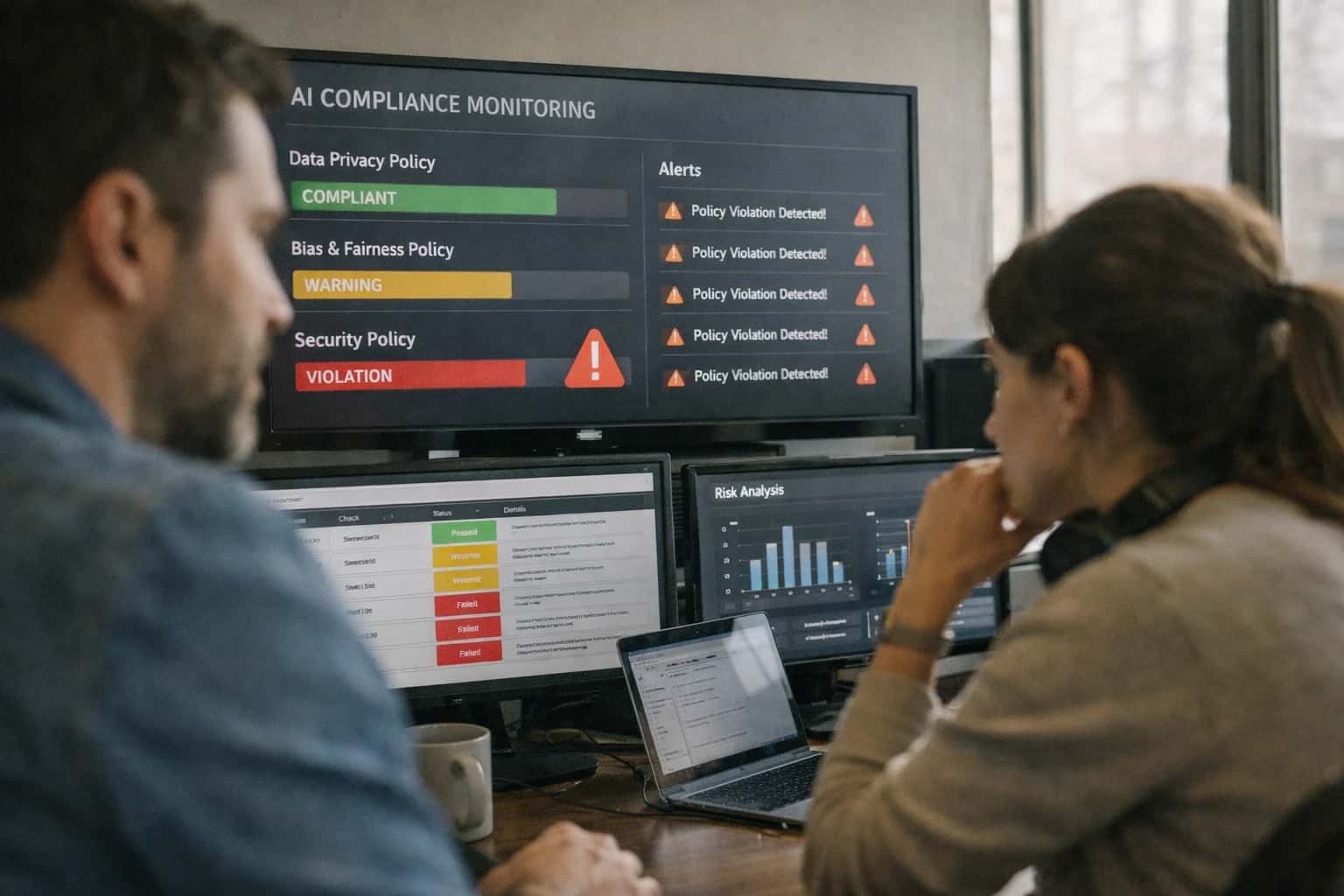
ARCHITECTING FOR DATA SOVEREIGNTY AND LOCALIZATION
AI for Global HR: A Cross-Border Architecture Problem
Adding AI to global HR operations requires a deliberate architecture that respects data residency laws, local labor regulations, and multi-language workflows.
Implementation requires mapping AI use cases to localized workflows. For example, an AI-powered onboarding assistant for Germany must reference German employment contracts, tax forms (like the Anmeldung), and works council agreements, while a similar agent in Brazil handles different forms and labor statutes. The integration layer must dynamically route employee queries to the correct regional agent based on their HRIS employee record location code. Furthermore, AI-generated communications—whether for policy guidance or benefits enrollment—must be served in the employee's primary language, requiring a multi-LLM strategy or a robust translation layer post-retrieval from the HRIS.
Rollout and governance for a global AI-HR integration is phased. Start with a single-country pilot (e.g., the US or UK) to validate the core integration pattern with Workday or UKG APIs, focusing on a high-volume use case like leave management. Then, expand region-by-region, adapting prompts, knowledge bases, and approval workflows for local compliance. A centralized LLMOps platform is critical for monitoring performance and drift across all regional deployments, while audit logs must capture which regional agent accessed which data to demonstrate compliance. This approach turns a compliance burden into a structured, scalable advantage.
For related architectural patterns, see our guides on AI Integration for HRIS Platforms and AI Integration for HR in Regulated Industries.
ARCHITECTURAL SURFACES
Where AI Connects in Global HRIS Platforms
The Foundation for AI Context
Global HRIS platforms like Workday, UKG, and ADP expose rich APIs for core HCM objects: Workers, Positions, Organizations, and Compensation. These endpoints provide the structured, real-time data layer for AI agents. For example, an employee support agent needs to query GET /workers/{ID} to verify employment status before answering a pay question. A retention prediction model consumes historical Worker and Termination records via bulk APIs. The key is to map AI context needs—employee profile, role, manager, location—to the platform's canonical data model.
Implementation involves secure service accounts with scoped permissions (e.g., Workday's SOAP/REST API with ISU groups). AI systems should cache this data to reduce latency but implement webhook listeners for change events (e.g., Worker_Change) to keep context fresh. This data layer enables all downstream AI use cases from personalized communications to predictive analytics.
MULTINATIONAL OPERATIONS
High-Value Use Cases for Global HR AI
For global enterprises, AI integration into HRIS platforms like Workday, UKG, and ADP must address data sovereignty, local compliance, and multi-language support. These use cases focus on operational workflows where AI delivers immediate efficiency while navigating complex regulatory landscapes.
01
Global Employee Support Agent
Deploy a multilingual AI assistant that answers policy, payroll, and benefits questions by querying the local HRIS instance for the employee's country. The agent respects data residency rules, provides answers in the employee's language, and can execute simple, approved transactions like downloading pay slips or updating contact details via secure API calls.
Hours -> Minutes
Inquiry resolution
02
Cross-Border Onboarding Orchestration
Automate complex onboarding for hires across different jurisdictions. An AI agent uses the hire's location and job data from the HRIS to generate a country-specific checklist, trigger provisioning workflows in local IT and facilities systems, and ensure compliance documents (like local tax forms) are collected and validated, all while keeping the master HRIS record updated.
Batch -> Real-time
Task coordination
03
Localized Compliance Monitoring
Continuously scan HRIS data and external regulatory feeds for country-specific rule changes. AI agents flag potential compliance risks—such as expired work permits, missed mandatory training, or overtime violations against local labor laws—and automatically create and route cases in the HR service management module for resolution.
Same day
Risk detection
04
Global Mobility & Assignment Support
Guide employees and HR through international transfers and assignments. An AI copilot accesses HRIS assignment objects and cost projection data to answer questions about compensation packages, tax implications, and relocation logistics. It can draft assignment letters and update the HRIS with key dates and status changes upon approval.
1 sprint
Process setup
05
Unified People Analytics with Regional Guardrails
Enable HR leaders to ask natural language questions (e.g., 'attrition in EMEA last quarter') against a logically unified but physically separated global HRIS data layer. The AI system generates aggregated insights while enforcing data access policies, masking personally identifiable information (PII) where required, and providing explanations sourced from local system metadata.
Batch -> Real-time
Insight generation
06
Multi-Country Payroll Anomaly Detection
Integrate AI with global payroll runs by analyzing pre-processed data extracts from regional ADP or Workday Payroll instances. The model looks for outliers in tax withholdings, benefit deductions, and net pay against historical patterns and local rules, flagging high-confidence exceptions for review before finalization, reducing corrective runs.
Hours -> Minutes
Review cycle
IMPLEMENTATION PATTERNS
Example Global HR AI Workflows
For multinational companies, AI integration must respect data residency, local labor laws, and language. These workflows show how to augment global HRIS instances like Workday, UKG, or ADP with compliant, intelligent automation.
An AI agent handles employee questions across regions, providing localized, compliant answers.
- Trigger: An employee asks a question via chat (e.g., "What is my maternity leave entitlement in France?").
- Context/Data Pulled: The agent uses the employee's location from the HRIS (
WorkLocationfield) and retrieves the relevant policy document from a knowledge base tagged with country/jurisdiction. - Model/Agent Action: A language model (e.g., GPT-4) is prompted with the policy text, the employee's specific scenario, and an instruction to cite its source. For privacy, the employee's PII is masked in the prompt.
- System Update or Next Step: The agent returns a clear answer, specifying the relevant policy section. If the query requires a case (e.g., a leave request), the agent uses the HRIS API (like
POST /casesin Workday) to create a ticket, pre-populated with the conversation context. - Human Review Point: Queries flagged as high-risk (e.g., involving disciplinary action, complex legal interpretation) are automatically routed to a regional HR expert for review before any answer is sent or action is taken.
GLOBAL HR OPERATIONS
Implementation Architecture: Data, Models, and Guardrails
A secure, multi-tenant architecture for deploying AI across distributed HRIS instances while enforcing local compliance.
The core architecture connects a central AI orchestration layer to regional HRIS instances (e.g., Workday for EMEA, UKG for North America, local ADP for APAC). This layer uses a unified API gateway to normalize calls to each platform's native APIs—Workday Web Services, UKG Pro API, ADP Workforce Now API—and a vector-enabled data plane that caches and embeds frequently accessed, non-sensitive policy data for low-latency retrieval. Sensitive employee data (compensation, identification) is never stored in the vector layer; AI agents query it live via secure, permission-scoped API calls using the employee's local HRIS as the system of record.
For a global employee support agent, the workflow is: 1) An employee in Germany asks a policy question in German. 2) The agent authenticates via SSO, identifies the user's home instance (Workday EMEA), and checks entitlements. 3) It retrieves the relevant German employment policy from a localized knowledge base, translates the query if needed, and fetches the user's specific leave balance via a real-time API call to Workday. 4) The response is logged with the user's data residency region for audit. Multi-language support is handled by routing queries through a translation service before intent classification, ensuring the core LLM operates on English, while final responses are localized.
Governance is enforced through a policy engine that sits between the AI agent and the HRIS APIs. This engine validates every proposed transaction (e.g., a data fetch, a workflow trigger) against the user's role, location, and data privacy rules (like GDPR Article 22 restrictions on automated decision-making). All agent interactions are logged to a centralized audit trail with immutable records of the query, data accessed, and response generated. Rollout follows a phased, region-by-region approach, starting with low-risk, high-volume use cases like policy Q&A and leave balance checks, before progressing to more complex workflows like cross-border transfer support.
GLOBAL HRIS INTEGRATION PATTERNS
Code and Payload Examples
Handling Employee Inquiries in Local Languages
An AI agent receives a natural language question from an employee in French, translates the intent, queries the HRIS, and returns a localized response. This pattern uses the HRIS API for data retrieval and a separate translation service, ensuring the system of record remains the single source of truth.
Key Components:
- Intent Recognition & Translation: Parse the user's query to identify the core HR object (e.g.,
TimeOffBalance). - HRIS API Call: Fetch the canonical data from the global HRIS instance using the employee's unique ID.
- Localized Response Generation: Format the response according to local date, currency, and policy norms.
python# Pseudocode for a multi-language support agent query = "Combien me reste-t-il de jours de congé?" # User query in French # 1. Detect language & translate intent to system fields intent = nlp_service.detect_intent(query, target_language="en") # intent → {'entity': 'TimeOffBalance', 'employee_id': 'EMP_789012'} # 2. Call HRIS API with translated parameters hris_payload = { "employeeId": intent['employee_id'], "balanceType": "VACATION", "asOfDate": "2024-05-15" } balance_data = hris_api.call("GET", "/timeOff/balances", hris_payload) # 3. Localize and format the response localized_response = localization_service.format_response( data=balance_data, target_locale="fr_FR", template="Il vous reste {balance} jours de congé payé." )
GLOBAL HR OPERATIONS
Realistic Time Savings and Operational Impact
How AI integration transforms multinational HR workflows, focusing on measurable efficiency gains and compliance assurance.
| Workflow / Task | Manual / Legacy Process | AI-Augmented Process | Key Impact & Considerations |
|---|---|---|---|
Employee Policy & Payroll Inquiry Resolution | HR agent manually searches knowledge base and HRIS; 15-30 min per ticket | AI assistant retrieves and synthesizes data; provides draft answer in <2 min | Deflects 40-60% of Tier 1 inquiries; agent reviews and approves final response |
Global Benefits Enrollment Support | Static guides and FAQ pages; high volume of support tickets during open enrollment | Interactive AI guide provides personalized recommendations; submits elections via API | Reduces support tickets by 50-70%; ensures compliance with local plan rules |
Cross-Border Employee Onboarding | Manual coordination across HR, IT, and local offices; checklist sent via email | AI orchestrates multi-system provisioning; sends personalized task lists and reminders | Cuts administrative lead time from 3-5 days to same-day; ensures local compliance steps |
Compliance Document Review (I-9, Visas, Licenses) | Periodic manual audits; high risk of missing expiry dates or incomplete files | AI continuously scans HRIS document store; flags exceptions and auto-creates cases | Shifts from reactive to proactive compliance; reduces audit preparation from weeks to days |
Multi-Language HR Support | Reliance on local HR teams or outsourced translation; delays for non-native speakers | AI provides real-time translation & localized policy answers from central knowledge base | Enables 24/7 support for all regions; ensures consistent policy interpretation globally |
Workforce Data Reporting for Leadership | Manual report building in BI tools; days to compile and validate regional data | Natural language querying of HRIS; AI generates insights and narrative summaries | Turns weekly reporting into an on-demand task; highlights trends (attrition, hiring) in minutes |
Employee Sentiment Analysis | Quarterly survey analysis; manual coding of open-text feedback | AI analyzes real-time feedback from multiple channels; alerts HR to emerging issues | Provides continuous pulse vs. point-in-time snapshot; enables faster intervention on morale |
ARCHITECTING FOR GLOBAL SCALE
Governance, Security, and Phased Rollout
A practical framework for deploying AI across multinational HR operations with control and compliance at the core.
For a global rollout, the AI integration architecture must be designed around data residency and sovereignty from day one. This typically involves deploying separate AI agent instances or data processing pipelines aligned with regional HRIS instances (e.g., Workday for EMEA, UKG for North America, ADP for APAC). The core integration connects via each platform's APIs—like Workday Web Services or UKG Pro's REST API—but all prompts, context, and generated outputs are processed within the same legal jurisdiction as the source HR data. A central orchestration layer manages global prompts, model versioning, and audit logs while enforcing strict data boundary policies.
Security is enforced through role-based access control (RBAC) mapped directly to HRIS permissions. An AI agent querying an employee's compensation data should inherit the same entitlement checks as a manager in Workday. All agent interactions are logged with immutable audit trails, capturing the original query, the data retrieved via API, the generated response, and the user who received it. For high-risk workflows like generating employment verification letters or processing data changes, we implement a human-in-the-loop approval step before the AI agent executes the final transaction via the HRIS API.
A phased rollout mitigates risk and builds trust. Phase 1 focuses on read-only, high-volume inquiries: answering policy questions from a centralized knowledge base and providing simple data lookups (e.g., 'How many vacation days do I have?'). Phase 2 introduces multi-language support for employee support agents and basic workflow automation, such as triggering a standard onboarding checklist in BambooHR. Phase 3 enables complex, multi-system orchestration and predictive analytics, like a retention alert that pulls data from Workday Peakon and the core HCM to notify a manager. Each phase includes controlled pilot groups, continuous model evaluation for bias or drift, and clear rollback procedures.
Enabling Efficiency, Speed & Accuracy
Intelligent Analysis, Decision & Execution
We build AI systems for teams that need search across company data, workflow automation across tools, or AI features inside products and internal software.
Talk to Us
Search across company data
Give teams answers from docs, tickets, runbooks, and product data with sources and permissions.
Useful when people spend too long searching or get different answers from different systems.
Enterprise searchRAGPermissions
Read more
Automate internal workflows
Use AI to route work, draft outputs, trigger actions, and keep approvals and logs in place.
Useful when repetitive work moves across multiple tools and teams.
AI agentsWorkflow automationGovernance
Read more
Add AI to products and internal tools
Build assistants, guided actions, or decision support into the software your team or customers already use.
Useful when AI needs to be part of the product, not a separate tool.
AI integrationDecision supportModel routing
Read moreAI INTEGRATION FOR GLOBAL HR OPERATIONS
Frequently Asked Questions
Architecting AI for multinational HR requires careful planning around data privacy, compliance, and multi-language support. Below are answers to common technical and operational questions.
We architect integrations with a privacy-by-design approach, treating the HRIS as the system of record.
- Data Locality: AI processing is configured to occur in cloud regions aligned with the employee's primary work country. For instance, prompts and vector stores for EU employees are hosted and processed entirely within the EU.
- Minimal Data Exposure: Agents query the HRIS via secure APIs using specific, permission-scoped queries. We avoid bulk data extraction. For example, an agent answering "What is my remaining leave?" calls the
GET /employees/{id}/leave-balancesAPI rather than accessing a full employee dataset. - Anonymization for Analytics: For cross-border people analytics (e.g., predicting regional attrition), we use aggregated, anonymized datasets exported from the HRIS data warehouse, not live PII.
- Consent & Transparency: AI interactions are logged with user ID, timestamp, and query intent. Employees can be provided with a clear disclosure and the ability to opt-out of non-essential AI-assisted services.
This ensures compliance while enabling localized AI support.

About the author
Prasad Kumkar
CEO & MD, Inference Systems
Prasad Kumkar is the CEO & MD of Inference Systems and writes about AI systems architecture, LLM infrastructure, model serving, evaluation, and production deployment. Over 5+ years, he has worked across computer vision models, L5 autonomous vehicle systems, and LLM research, with a focus on taking complex AI ideas into real-world engineering systems.
His work and writing cover AI systems, large language models, AI agents, multimodal systems, autonomous systems, inference optimization, RAG, evaluation, and production AI engineering.
LinkedIn
Limited slotsGet a Free AI Consultation
Partnered with leading AI, data, and software stack.





How We Work
Custom AI workflows for your Business
One-fit-all AI don't work for modern businesses. At Inferensys, we aim to understand your business & custom requirements; which we use to define most efficient agentic workflows, the data, and the tools for your business.
01
Review the use case
We understand the task, the users, and where AI can actually help.
Read more02
Pick the right approach
We define what needs search, automation, or product integration.
Read more03
Build the first useful version
We implement the part that proves the value first.
Read more04
Improve from there
We add the checks and visibility needed to keep it useful.
Read moreThe first call is a practical review of your use case and the right next step.
Talk to Us