Employee engagement platforms like Workday Peakon, Culture Amp, and Glint generate vast amounts of qualitative and quantitative feedback, but turning this data into action is a manual, time-intensive process for People teams. An AI integration connects directly to the platform's API to ingest survey responses, comments, and demographic data. Using natural language processing (NLP), an AI agent performs sentiment analysis, theme clustering, and driver analysis to identify the root causes behind engagement scores, moving beyond dashboards to explain the 'why' behind the numbers.

Integration
AI Integration for Employee Engagement Platforms
Architectural blueprint for connecting AI to employee survey platforms (Workday Peakon, Culture Amp, Qualtrics) to automate sentiment analysis, generate actionable insights, and recommend manager action plans.
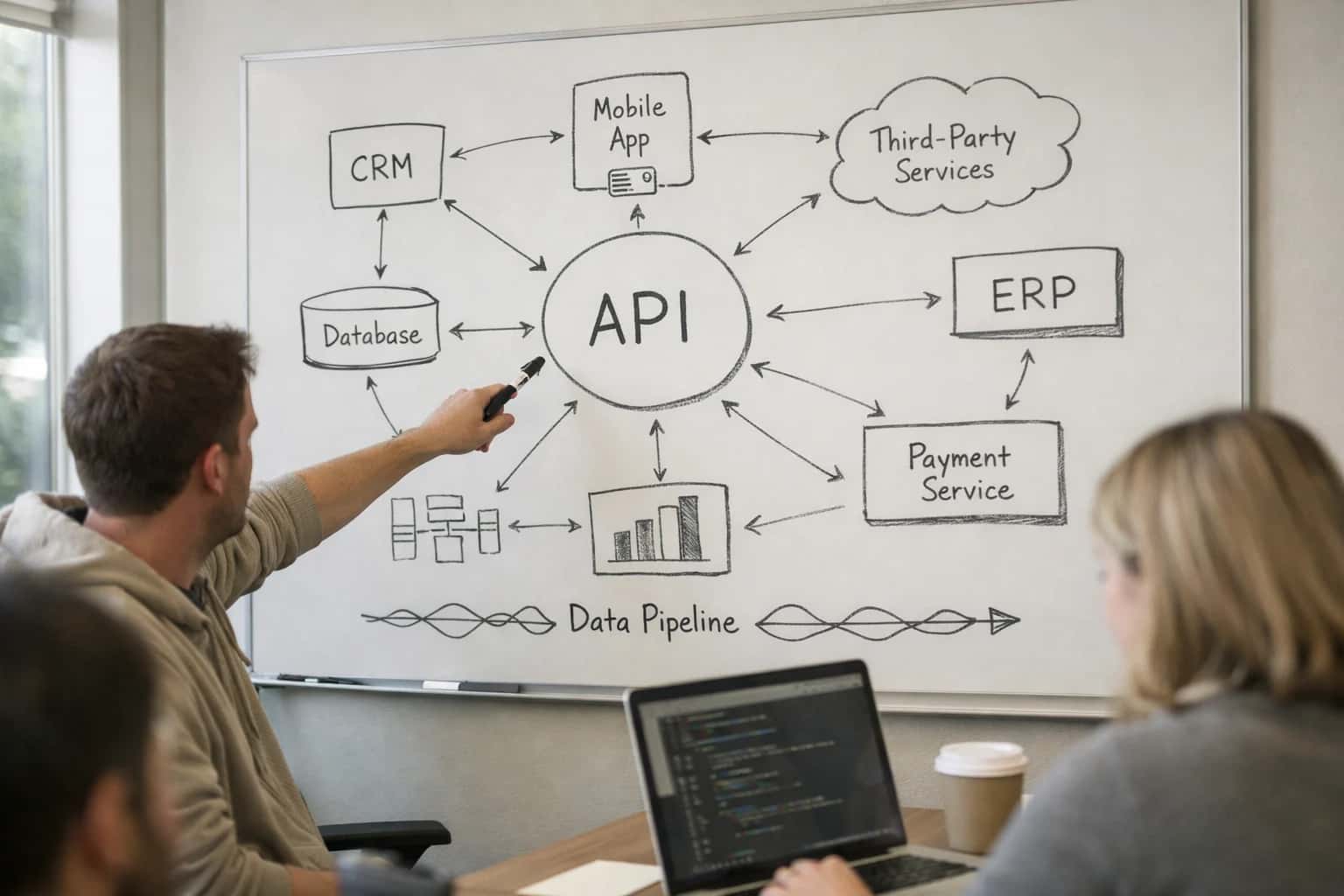
INTEGRATING WITH WORKDAY PEAKON, CULTURE AMP, AND GLINT
From Survey Data to Actionable Insights with AI
Transform raw employee feedback into prioritized action plans with AI agents that analyze sentiment, surface themes, and trigger manager workflows.
The implementation wires the AI into the existing feedback lifecycle. For example, after a survey cycle closes, an automated workflow can trigger the AI to analyze new comments, compare them to historical trends, and generate a summary insight report for each manager. This report highlights urgent themes (e.g., 'career growth' mentions spiked in Engineering), suggests evidence-based action items (like 'schedule career conversations using this template'), and can even draft a communication script for the manager to share with their team. These outputs are delivered via the manager's existing portal or through a secure Slack/Teams channel, creating a closed-loop system from feedback to follow-up.
Governance is critical. The AI should operate within a human-in-the-loop framework where insights are reviewed by HR Business Partners before being shared, ensuring nuance and compliance. All AI-generated recommendations and data accesses are logged to an audit trail for transparency. Rollout typically starts with a pilot group of managers, measuring the time saved in analysis and the quality of subsequent action plans before scaling. This integration doesn't replace the platform but amplifies its value, ensuring survey investments translate into tangible retention and performance improvements. For related architectural patterns, see our guide on AI Integration for People Analytics in HR Systems.
INTEGRATION SURFACES
Where AI Connects to Employee Engagement Platforms
Core Data Ingestion for AI
Employee engagement platforms like Workday Peakon, Culture Amp, and Qualtrics EX generate vast volumes of structured and unstructured feedback. AI connects here to analyze open-text responses, sentiment, and trend data at scale.
Key integration points:
- Survey Response APIs: Pull raw response data, including comments and NPS/engagement scores, for batch or real-time analysis.
- Sentiment & Theme Detection: Apply NLP models to categorize feedback into themes (e.g., 'workload', 'career growth', 'manager support') and detect sentiment shifts.
- Actionable Insight Generation: Transform analysis into summarized reports and recommended action plans, which can be pushed back to manager dashboards or case systems.
This turns periodic survey data into a continuous listening system, enabling leaders to move from data collection to proactive intervention.
INTEGRATION PATTERNS
High-Value AI Use Cases for Employee Engagement
Integrating AI directly into platforms like Workday Peakon, Qualtrics, or Culture Amp transforms raw survey data into automated, actionable intelligence. These patterns connect AI to the feedback lifecycle—from analysis to manager nudges—closing the insight-to-action gap.
01
Automated Sentiment & Theme Analysis
Deploy an AI agent that ingests raw, open-text survey responses via platform APIs (e.g., Workday Peakon Employee Voice). It performs sentiment scoring, topic clustering, and urgency detection, automatically tagging themes like 'remote work challenges' or 'recognition gaps'. This converts weeks of manual analysis into daily automated reports.
Weeks -> Days
Analysis cycle
02
AI-Generated Manager Action Plans
After analyzing team-level feedback, the AI generates personalized, context-aware recommendations for each manager. It pulls from a library of proven interventions and formats them as draft action plans within the engagement platform or via email/Slack. This drives consistent follow-up without overwhelming HR.
Proactive
Guidance delivery
03
Predictive Flight Risk Scoring
Combine engagement survey scores with HRIS data (tenure, performance, promotion history) to train a model that scores individual attrition risk. Integrate these scores back into manager dashboards or as alerts in systems like Workday HCM. This enables targeted retention conversations before resignations are submitted.
Early Signal
Risk identification
04
Real-Time Feedback Triage & Routing
Set up an AI workflow that monitors incoming feedback for critical sentiment or specific keywords (e.g., 'harassment', 'safety'). It can automatically classify urgency, redact PII, and route anonymized alerts to HR Business Partners or Ethics teams via ServiceNow or directly within the engagement platform's case management module.
Batch -> Real-time
Critical issue handling
05
Personalized Engagement Nudges
Build an AI system that analyzes an employee's feedback history and activity data to trigger personalized, micro-engagement actions. Examples: suggesting a manager schedule a 1:1 after a low-scoring response, or recommending a peer recognition via platforms like Bonusly. These nudges are delivered via existing communication channels (email, Teams).
Hyper-Personalized
Employee experience
06
Benchmarking & Trend Synthesis
An AI agent periodically queries engagement platform APIs to extract department, location, and role-level metrics. It then synthesizes trends, compares against historical data and industry benchmarks, and generates executive summaries. This automates the creation of quarterly board-ready reports, linking trends to business outcomes.
1 Sprint
Report automation
FROM SURVEY DATA TO MANAGER ACTION
Example AI-Enhanced Engagement Workflows
These workflows illustrate how AI agents, integrated directly with your employee engagement platform (e.g., Workday Peakon, Culture Amp), can transform raw sentiment data into timely, actionable insights and automated follow-ups.
Trigger: A weekly or bi-weekly survey batch is processed, or a real-time negative sentiment spike is detected in a specific team/department.
Context Pulled: The AI agent queries the engagement platform API for:
- Team-level scores (e.g., eNPS, satisfaction) with significant drops.
- Key driver analysis (e.g., comments tagged with 'Recognition', 'Workload').
- Manager and HRBP contact information from the linked HRIS (Workday, UKG).
Agent Action: A multi-step LLM call analyzes the aggregated comments for the flagged team:
- Summarizes the core themes and sentiment.
- Generates 2-3 specific, actionable recommendations for the manager (e.g., "Host a 15-minute team huddle to acknowledge recent project pressure and discuss workload distribution").
- Drafts a templated, empathetic alert email for the manager.
System Update: The agent creates a task in the manager's workflow tool (e.g., Asana, Microsoft Planner) or sends the drafted email via the corporate email system (with an option for HRBP review). A case is also logged in the HR service delivery platform (e.g., UKG HR Service Delivery) for tracking and follow-up.
Human Review Point: For severe sentiment drops or high-risk teams, the system can be configured to route the alert and recommendations to the HRBP for review and personal delivery before the manager is notified.
FROM SURVEY DATA TO ACTIONABLE INSIGHTS
Implementation Architecture: Data Flow & System Design
A production-ready blueprint for integrating AI with employee engagement platforms like Workday Peakon to analyze feedback and drive manager action.
The integration connects at the survey response data layer, typically via the platform's REST API or a scheduled data export to a cloud storage bucket. Core data objects include:
- Survey Responses & Comments: Raw, timestamped employee feedback.
- Demographic Segments: Department, tenure, location, and role data for slicing analysis.
- Manager Hierarchies: Organizational structure to route insights and assign action plans.
- Historical Trend Data: Prior survey scores and response rates for longitudinal analysis.
An orchestration agent ingests this data, triggering an AI analysis pipeline that performs sentiment analysis on open-text comments, clusters themes using NLP, and correlates sentiment scores with demographic segments to identify driver topics for specific manager groups.
Processed insights and recommended actions are written back to the engagement platform via its API or to a dedicated manager dashboard (often built using Workday Extend or a separate portal). Key workflows include:
- Automated Insight Reports: AI generates a concise summary of top themes, sentiment shifts, and risk groups for each manager, delivered within the platform or via email.
- Action Plan Suggestions: Based on historical "what works" data, the system recommends specific, templated actions (e.g., "host a team meeting on recognition," "review career pathing resources") linked to the identified themes.
- Follow-up Triggers: The system can create tasks in the manager’s Workday or Microsoft Teams queue and schedule reminders for check-in surveys, closing the feedback loop.
Impact is measured in reduced manual analysis time (from days to hours for HRBP teams) and increased manager engagement with survey results through personalized, immediately actionable guidance.
Governance is critical. The architecture includes:
- Anonymization & Aggregation Guards: AI models only analyze data aggregated to a level that protects individual anonymity (e.g., minimum group size).
- Human-in-the-Loop Review: For high-risk themes or small populations, insights are flagged for HR partner review before being released to managers.
- Audit Logging: All AI-generated insights, their source data, and any overrides are logged for compliance and model refinement.
Rollout is typically phased, starting with pilot manager groups to validate insight quality and action relevance before scaling. Inference Systems provides the integration layer, secure data pipelines, and fine-tuned analysis models, ensuring the AI augments—rather than replaces—your existing HR processes and platform investments.
AI INTEGRATION FOR EMPLOYEE ENGAGEMENT PLATFORMS
Code & Payload Examples
Ingesting Raw Feedback for Analysis
AI agents need structured access to employee survey data, typically via platform APIs. This example shows a Python function to fetch recent survey responses from a platform like Workday Peakon, preparing them for sentiment and theme analysis.
pythonimport requests import pandas as pd def fetch_survey_responses(api_key, survey_id, days_back=30): """Fetches survey responses from an engagement platform API.""" headers = { 'Authorization': f'Bearer {api_key}', 'Content-Type': 'application/json' } # Construct date filter from_date = (datetime.now() - timedelta(days=days_back)).isoformat() params = { 'survey_id': survey_id, 'from': from_date, 'limit': 1000 } response = requests.get( 'https://api.engagement-platform.com/v1/responses', headers=headers, params=params ) response.raise_for_status() # Transform to a clean DataFrame for AI processing data = response.json()['data'] df = pd.DataFrame([ { 'response_id': r['id'], 'employee_id': r['respondent']['id'], 'manager_id': r['respondent']['manager_id'], 'question_text': r['question']['text'], 'response_text': r['answer']['text'], 'score': r['answer']['score'], 'submitted_at': r['submitted_at'], 'department': r['respondent']['department'] } for r in data if r['answer']['type'] == 'text' ]) return df
This function retrieves text-based responses, which are the primary input for LLM-powered analysis to detect sentiment, emerging themes, and actionable feedback.
AI-ENHANCED EMPLOYEE ENGAGEMENT
Realistic Time Savings & Operational Impact
How AI integration transforms the collection, analysis, and actioning of employee feedback data within platforms like Workday Peakon, Culture Amp, and Qualtrics.
| Workflow / Metric | Before AI | After AI | Key Notes |
|---|---|---|---|
Survey Sentiment Analysis | Manual thematic coding by HR analysts | Automated theme extraction & sentiment scoring | Analysts shift from coding to validating insights and planning actions |
Insight Report Generation | 2-3 weeks post-survey close | Draft report with key drivers & quotes in 1-2 days | HR Business Partners can start manager conversations immediately |
Manager Action Plan Recommendations | Generic best-practice guides | Personalized recommendations based on team scores | Plans are context-aware, linking low-scoring items to relevant resources |
Follow-up & Check-in Workflows | Manual email reminders or none | Automated nudges & pulse surveys triggered by low scores | Creates a closed-loop system, increasing perceived actionability |
Identifying At-Risk Teams | Quarterly review of score trends | Real-time alerts on significant sentiment drops | Enables proactive support before issues escalate into attrition |
Benchmarking & Trend Analysis | Manual spreadsheet comparisons across periods | Automated dashboards showing trends vs. industry/company benchmarks | Frees up 10-15 hours monthly for strategic analysis vs. data prep |
Open-Text Comment Triage | HR reads all comments for severity | AI flags confidential or high-severity comments for immediate review | Ensures duty of care while reducing manual review volume by ~70% |
ARCHITECTING FOR CONTROLLED ADOPTION
Governance, Security & Phased Rollout
A practical framework for deploying AI on employee engagement data with security, auditability, and measurable impact.
Integrating AI with platforms like Workday Peakon, Glint, or Culture Amp requires a clear data governance model. The AI system should operate as a read-only analytics layer, consuming anonymized or aggregated survey response datasets, comment streams, and demographic metadata via secure APIs. All prompts and generated insights must be logged against the source data slice (e.g., department, tenure band) for full auditability. Access to the AI's output—such as sentiment trend analysis or manager action recommendations—should be controlled by the same role-based permissions (RBAC) that govern the underlying engagement platform, ensuring insights are delivered only to authorized leaders and people partners.
A phased rollout mitigates risk and builds trust. Start with a closed pilot analyzing historical, anonymized data to generate retrospective insights for a single business unit. This validates the AI's accuracy and utility without affecting live operations. Phase two introduces real-time analysis for that pilot group, where the AI surfaces emerging themes from open-text responses and suggests discussion points for manager check-ins. The final phase expands access, enabling automated insight delivery—such as weekly digest emails to managers or triggered workflows in Workday Journeys or ServiceNow HR for follow-up actions—across the organization, with continuous human-in-the-loop review to calibrate the system.
Key Consideration: AI-generated recommendations (e.g., "host a team-building session") are suggestions, not directives. The system should be designed to augment, not replace, human judgment and existing manager support programs. Establish a clear feedback loop where managers can flag irrelevant insights, which is used to retune the underlying models. This approach ensures the integration drives actionable empathy while maintaining the human-centric purpose of employee engagement programs.
Enabling Efficiency, Speed & Accuracy
Intelligent Analysis, Decision & Execution
We build AI systems for teams that need search across company data, workflow automation across tools, or AI features inside products and internal software.
Talk to Us
Search across company data
Give teams answers from docs, tickets, runbooks, and product data with sources and permissions.
Useful when people spend too long searching or get different answers from different systems.
Enterprise searchRAGPermissions
Read more
Automate internal workflows
Use AI to route work, draft outputs, trigger actions, and keep approvals and logs in place.
Useful when repetitive work moves across multiple tools and teams.
AI agentsWorkflow automationGovernance
Read more
Add AI to products and internal tools
Build assistants, guided actions, or decision support into the software your team or customers already use.
Useful when AI needs to be part of the product, not a separate tool.
AI integrationDecision supportModel routing
Read moreAI INTEGRATION FOR EMPLOYEE ENGAGEMENT PLATFORMS
Frequently Asked Questions
Practical questions for technical leaders evaluating how to connect AI to platforms like Workday Peakon, Culture Amp, or Qualtrics to analyze feedback and drive action.
Secure integration typically follows a read-only, API-first pattern:
- Service Account & API Credentials: Create a dedicated, non-human service account within your engagement platform (e.g., Workday Peakon) with the minimum necessary read-only permissions for survey responses, comments, and demographic segments.
- Data Pipeline: Use a secure data pipeline (e.g., via a middleware layer or directly from your cloud) to periodically fetch anonymized or pseudonymized data via the platform's REST API. Payloads are often in JSON format.
- Data Processing & Vectorization: The raw text (open-ended comments) is cleaned, chunked, and transformed into vector embeddings using a model like OpenAI's
text-embedding-3-small. Structured scores (e.g., eNPS, Likert scales) are processed separately for quantitative analysis. - Secure Storage: Embeddings and processed data are stored in a dedicated, encrypted vector database (e.g., Pinecone, Weaviate) within your own cloud environment, not the AI vendor's. This ensures data residency and isolation.
- Query Interface: An internal API or agent framework queries this vector store and the structured data to generate insights, always maintaining the original data's access controls.
Key Governance Points:
- All data flows should be logged for auditability.
- Ensure your data processing agreement (DPA) with the AI model provider covers employee data.
- Consider a human-in-the-loop review for insights before they are shared with managers.

About the author
Prasad Kumkar
CEO & MD, Inference Systems
Prasad Kumkar is the CEO & MD of Inference Systems and writes about AI systems architecture, LLM infrastructure, model serving, evaluation, and production deployment. Over 5+ years, he has worked across computer vision models, L5 autonomous vehicle systems, and LLM research, with a focus on taking complex AI ideas into real-world engineering systems.
His work and writing cover AI systems, large language models, AI agents, multimodal systems, autonomous systems, inference optimization, RAG, evaluation, and production AI engineering.
LinkedIn
Limited slotsGet a Free AI Consultation
Partnered with leading AI, data, and software stack.





How We Work
Custom AI workflows for your Business
One-fit-all AI don't work for modern businesses. At Inferensys, we aim to understand your business & custom requirements; which we use to define most efficient agentic workflows, the data, and the tools for your business.
01
Review the use case
We understand the task, the users, and where AI can actually help.
Read more02
Pick the right approach
We define what needs search, automation, or product integration.
Read more03
Build the first useful version
We implement the part that proves the value first.
Read more04
Improve from there
We add the checks and visibility needed to keep it useful.
Read moreThe first call is a practical review of your use case and the right next step.
Talk to Us