AI integrates into BambooHR onboarding by connecting to its REST API and leveraging webhooks. The primary touchpoints are the Employee and Onboarding objects. When a new hire is added, an AI agent can be triggered to automatically generate a personalized, role-specific onboarding checklist by pulling data from the job Title, Department, and Location. This checklist can include tasks for IT provisioning, facilities, and compliance training, which are then created as Tasks assigned to the new hire, their manager, or other stakeholders. The agent can also initiate welcome messages and pre-day-one communications via integrated channels like Slack or email, using BambooHR as the system of record for employee data.

Integration
AI Integration for BambooHR Onboarding
A technical blueprint for augmenting BambooHR onboarding workflows with AI to automate task generation, personalize new hire engagement, and orchestrate multi-system provisioning.
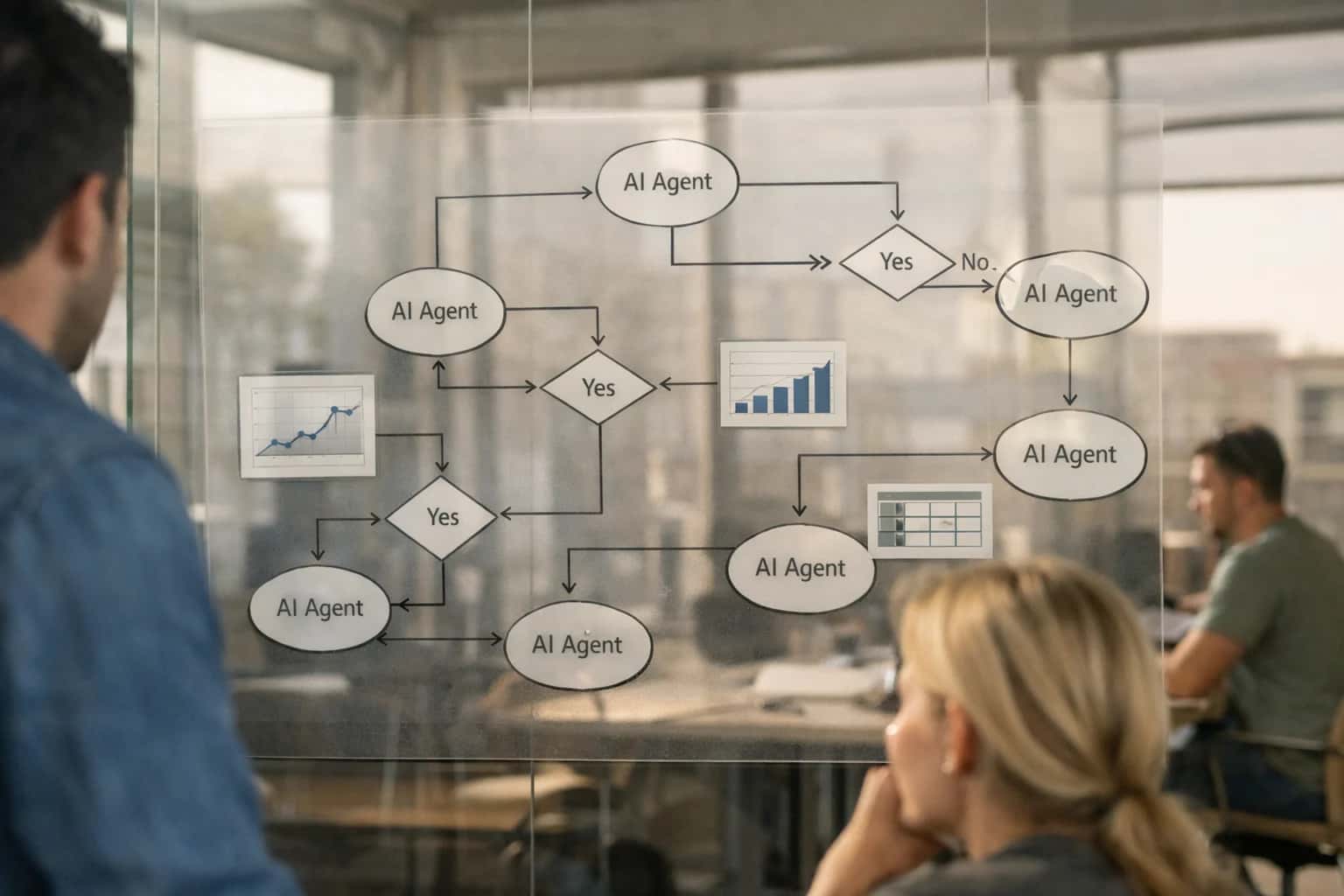
ARCHITECTURE AND ROLLOUT
Where AI Fits into BambooHR Onboarding
A practical blueprint for embedding AI agents into BambooHR's onboarding workflows to automate task generation, personalize the new hire journey, and reduce administrative burden.
For implementation, the AI agent acts as an orchestration layer. It listens for the employee.created webhook, retrieves the new hire's profile, and consults a knowledge base of role templates and company policies. Using this context, it drafts and posts tasks back to BambooHR via the POST /{companyDomain}/v1/employees/{id}/tasks endpoint. To personalize the experience, the agent can analyze the hire's background from their application (if accessible) to suggest relevant internal mentors or learning resources. A key nuance is managing the approval workflow for certain tasks (like equipment requests); the AI can route these for manager approval within BambooHR before finalizing the task list, ensuring governance is maintained.
Rollout should start with a pilot for a single department or role type. Governance is critical: all AI-generated content and tasks should be logged in an audit trail, and a human-in-the-loop review step should be initially configured for checklist approval. This allows HR to validate outputs before they become visible to the new hire. Over time, as confidence grows, the system can shift to fully automated execution for standard roles, with HR intervening only for exceptions. This approach turns a static, one-size-fits-all onboarding template into a dynamic, data-driven workflow that scales with your organization, reducing manual setup from hours to minutes while improving the new hire experience.
AI-POWERED ONBOARDING WORKFLOWS
Key Integration Surfaces in BambooHR
The Core Data Foundation
The BambooHR Employee API object is the primary integration point for AI-driven onboarding. This surface provides programmatic access to new hire profiles, personal details, and job information required to trigger and personalize workflows.
Key API Endpoints for AI:
GET /employees/{id}: Retrieve a new hire's profile to populate task lists or welcome messages.POST /employees: Create an employee record, often the initial trigger from an ATS.PUT /employees/{id}: Update records as onboarding progresses (e.g., adding bank details, completing forms).
An AI orchestration layer can use this API to fetch new hire data, then distribute tasks and documents to other systems (IT, facilities) while keeping BambooHR as the system of record. Webhooks on the employee.created event are critical for initiating zero-touch onboarding flows.
BAMBOOHR INTEGRATION
High-Value AI Use Cases for Onboarding
Transform the BambooHR onboarding workflow from a manual checklist into an intelligent, personalized experience. These use cases connect AI directly to BambooHR's API, webhooks, and data model to automate tasks, engage new hires, and reduce administrative burden.
01
Intelligent Onboarding Checklist Generator
An AI agent analyzes the new hire's role, department, and location in BambooHR to generate a personalized, day-by-day onboarding checklist. It automatically creates tasks in BambooHR's onboarding module, assigns them to the hire, manager, and IT, and sets dynamic due dates based on the start date.
1 sprint
Implementation timeline
02
Automated Document Collection & Verification
AI orchestrates the I-9, W-4, and policy acknowledgment workflow. It sends personalized requests via BambooHR, uses vision models to verify document completeness, and flags discrepancies for HR review. Completed forms are attached to the employee's BambooHR profile, and the onboarding task is marked complete.
Hours -> Minutes
HR review time
03
Personalized New Hire Communications Agent
A conversational AI agent, triggered via BambooHR webhook on hire, acts as a dedicated guide for the new employee. It answers FAQs about benefits, policies, and first-day logistics by querying BambooHR data. It can schedule 1:1s with the manager via calendar integration and send pre-start welcome messages.
Same day
Response to common questions
04
Multi-System Provisioning Orchestrator
AI acts as the workflow engine for IT and facilities setup. Upon hire creation in BambooHR, the agent uses the employee's data to trigger provisioning workflows in Slack, Google Workspace, and the VPN system. It monitors completion and updates the central onboarding status back to a custom BambooHR field.
Batch -> Real-time
Provisioning trigger
05
Manager Onboarding Copilot
An AI copilot for the hiring manager, accessible via a BambooHR-embedded interface or Slack. It provides actionable reminders (e.g., 'Schedule team intro'), suggests first-week agenda templates based on the role, and can draft a personalized welcome announcement using details from the new hire's BambooHR profile.
1 sprint
Time to pilot
06
Onboarding Analytics & Risk Flagging
AI continuously analyzes onboarding progress data from BambooHR tasks and survey responses. It flags at-risk hires (e.g., stalled checklists, negative sentiment) to HRBPs and managers via alerts. Provides a dashboard showing cohort completion rates and bottleneck analysis, helping optimize the process over time.
Same day
Risk identification
IMPLEMENTATION PATTERNS
Example AI-Augmented Onboarding Workflows
These workflows demonstrate how to connect AI agents to BambooHR's API and webhooks to automate and personalize the new hire experience. Each pattern triggers from a BambooHR event, uses AI to generate context-aware actions, and updates records or initiates tasks.
Trigger: A new Employee record is created in BambooHR with a Status of 'Onboarding'.
Context Pulled: The AI agent calls the BambooHR API to retrieve the new hire's jobTitle, department, location, and managerId. It also fetches company-wide onboarding templates.
AI Action: A language model analyzes the role and location data against the template library to generate a personalized, day-by-day checklist. It adds role-specific items (e.g., 'Request developer laptop access', 'Schedule security training') and location-specific items (e.g., 'Badge pickup at Front Desk', 'Parking permit application').
System Update: The agent uses the BambooHR API to create the tailored checklist as a series of Tasks assigned to the new hire, their manager, and the HR coordinator. It sets due dates relative to the start date.
Human Review Point: The HR coordinator receives a summary email of the generated checklist for a final review before it becomes active for the new hire.
BUILDING A PERSONALIZED ONBOARDING ENGINE
Implementation Architecture & Data Flow
A practical blueprint for integrating AI into BambooHR to automate and personalize the new hire experience.
The integration connects to BambooHR's REST API and webhook system to create a responsive, event-driven architecture. When a new hire is added to BambooHR, a webhook triggers the AI orchestration layer. This layer uses the new hire's role, department, and location data from the Employee and JobInfo API objects to generate a personalized onboarding checklist. The AI agent dynamically assembles tasks from a library of templates—such as IT provisioning, facility access, compliance training, and team introductions—tailoring the sequence and content for each individual.
The core workflow is managed by an AI agent that acts as both a coordinator and a communicator. It executes multi-step processes by calling external system APIs (e.g., submitting a ticket to the IT service desk) and uses BambooHR's API to update custom fields or notes to track progress. For the new hire, the agent provides a conversational interface via Slack, Teams, or email, answering questions (e.g., "Where do I pick up my badge?") and proactively sending reminders for pending documents or meetings. All task statuses and communications are logged back to a dedicated Onboarding tab or custom table within BambooHR for full visibility by HR and hiring managers.
Rollout should follow a phased approach, starting with a pilot group for a single department. Governance is critical: the AI's actions, such as sending communications or updating records, should operate under a human-in-the-loop approval model for the first 30-90 days. All agent decisions and data accesses must be written to an immutable audit log. This architecture ensures the integration scales securely, maintains data consistency with BambooHR as the system of record, and delivers a measurable reduction in manual HR coordination time while improving new hire readiness.
BAMBOOHR API INTEGRATION PATTERNS
Code & Payload Examples
Fetching Employee Context for AI
Before an AI agent can assist an employee or automate a workflow, it needs context. This typically involves retrieving the employee's record, job details, and manager information from BambooHR via its REST API. Use the employee's email (from a chat session) or ID (from a webhook) as the lookup key.
Key API Endpoints:
GET /employees/{id}for core demographics.GET /employees/{id}/tables/{table}for job information, employment status, or custom tables.GET /employees/directoryfor a lightweight list to resolve identities.
Always filter sensitive fields (like SSN or salary) at the API level using field aliases in your request. Cache employee data locally with a short TTL to reduce API calls and improve agent response time.
AI-ENHANCED BAMBOOHR ONBOARDING
Realistic Time Savings & Operational Impact
A realistic comparison of manual vs. AI-augmented workflows for new hire onboarding in BambooHR, showing where automation reduces administrative burden and accelerates time-to-productivity.
| Process | Manual Workflow | AI-Augmented Workflow | Key Impact & Notes |
|---|---|---|---|
Onboarding Task List Generation | HR manually creates a generic checklist for each role | AI generates a personalized checklist based on job title, department, and location using BambooHR data | Reduces prep time from 30-60 minutes per hire to under 5 minutes |
New Hire Document Collection & Review | HR sends emails, chases missing I-9s and W-4s, manually reviews for errors | AI agent sends reminders, performs initial validation on uploaded docs, flags discrepancies for HR review | Cuts follow-up time by 70%; ensures compliance with pre-submission checks |
IT & System Access Provisioning | HR submits separate tickets or forms to IT; manual entry creates delays | AI orchestrates workflow: creates Jira/ServiceNow tickets with correct access groups based on BambooHR role data | IT receives actionable, pre-filled requests; access granted same-day instead of 2-3 days |
First-Week Agenda & Introductions | Manager manually drafts an email schedule and identifies key contacts | AI suggests a tailored first-week agenda and auto-generates intro emails to key team members from BambooHR org chart | Saves managers 1-2 hours of coordination; improves new hire experience |
Policy Acknowledgment & Training Assignments | HR manually assigns required trainings and tracks completion in spreadsheets | AI automatically assigns mandatory courses based on BambooHR profile and sends completion reminders | Ensures 100% compliance tracking; eliminates manual assignment and follow-up |
New Hire Q&A and FAQ Support | HR fields repetitive questions via email and Slack, disrupting deep work | AI-powered assistant answers common policy and process questions by querying BambooHR knowledge base | Deflects 40-60% of tier-1 inquiries, freeing HR for strategic support |
Onboarding Completion & Compliance Reporting | HR manually audits checklists and compiles reports for legal/compliance | AI generates real-time dashboards and auto-flags incomplete items or expired documents for HR review | Audit prep time reduced from days to hours; provides continuous compliance visibility |
ARCHITECTING A CONTROLLED DEPLOYMENT
Governance, Security & Phased Rollout
A practical approach to deploying AI for BambooHR Onboarding that prioritizes data security, change management, and measurable impact.
A production-grade integration connects to BambooHR's API and webhooks to read and write data to key objects like Employee, Onboarding Task, and Employee File. Governance starts with scoping the AI agent's permissions using BambooHR's role-based access control (RBAC)—typically a dedicated service account with read/write access only to the Onboarding module and associated document folders. All AI-generated actions, such as creating a task or sending a welcome message, should be logged with a clear audit trail linking back to the triggering employee record and the source data used by the LLM.
We recommend a phased rollout to de-risk adoption and demonstrate value incrementally:
- Phase 1: Read-Only Assistant – Deploy an AI agent that answers new hire questions by querying BambooHR data (e.g., "What's my start date?") and generates personalized onboarding checklists, but does not execute writes. This validates accuracy and builds user trust.
- Phase 2: Automated Task Orchestration – Enable the agent to create and assign tasks in BambooHR, such as "Submit I-9 form" or "Complete IT provisioning request," based on new hire attributes like department and location.
- Phase 3: Multi-System Workflow – Expand the agent to trigger workflows in integrated systems (like IT ticketing or badge access) via webhooks, using BambooHR as the system of record, while maintaining a human-in-the-loop approval for sensitive steps.
Security is non-negotiable. Employee Personally Identifiable Information (PII) should never be sent to a third-party LLM without proper anonymization or a zero-data-retention agreement. For most clients, we implement a retrieval-augmented generation (RAG) pattern where the AI queries a secure, internal knowledge base populated from BambooHR policies and guides, ensuring all responses are grounded in approved content. All prompts and completions should be logged for quality monitoring and bias detection, especially for communications that set cultural tone or explain compensation. Start with a pilot group (e.g., a single department or location), measure time-to-productivity and HR ticket deflection, and then scale based on clear success criteria.
Enabling Efficiency, Speed & Accuracy
Intelligent Analysis, Decision & Execution
We build AI systems for teams that need search across company data, workflow automation across tools, or AI features inside products and internal software.
Talk to Us
Search across company data
Give teams answers from docs, tickets, runbooks, and product data with sources and permissions.
Useful when people spend too long searching or get different answers from different systems.
Enterprise searchRAGPermissions
Read more
Automate internal workflows
Use AI to route work, draft outputs, trigger actions, and keep approvals and logs in place.
Useful when repetitive work moves across multiple tools and teams.
AI agentsWorkflow automationGovernance
Read more
Add AI to products and internal tools
Build assistants, guided actions, or decision support into the software your team or customers already use.
Useful when AI needs to be part of the product, not a separate tool.
AI integrationDecision supportModel routing
Read moreIMPLEMENTATION DETAILS
Frequently Asked Questions
Practical questions for teams planning to add AI to their BambooHR onboarding workflows.
The workflow is triggered via a BambooHR webhook when a new hire's status changes to 'Onboarding' or a specific onboarding template is assigned.
- Trigger: BambooHR webhook sends a JSON payload containing the new hire's
employee_id,start_date,manager_id, and assignedonboarding_template_id. - Context Retrieval: The AI agent uses the BambooHR API to fetch additional context:
- Employee details (name, department, location, role)
- Manager and team information
- Template-specific task lists
- Agent Action: The agent personalizes the generic task list. For example:
- Task Generation: Creates role-specific items (e.g., "Request access to GitHub repo X" for an engineer).
- Document Assignment: Identifies required documents (I-9, W-4) and generates a pre-filled draft where possible using known data.
- Communication: Drafts a personalized welcome message from the manager for review.
- System Update: The agent uses the BambooHR API to update the employee's onboarding checklist with the new, personalized tasks and attaches draft documents.
- Human Review: The hiring manager receives a notification in BambooHR to review and approve the customized plan before it's visible to the new hire.

About the author
Prasad Kumkar
CEO & MD, Inference Systems
Prasad Kumkar is the CEO & MD of Inference Systems and writes about AI systems architecture, LLM infrastructure, model serving, evaluation, and production deployment. Over 5+ years, he has worked across computer vision models, L5 autonomous vehicle systems, and LLM research, with a focus on taking complex AI ideas into real-world engineering systems.
His work and writing cover AI systems, large language models, AI agents, multimodal systems, autonomous systems, inference optimization, RAG, evaluation, and production AI engineering.
LinkedIn
Limited slotsGet a Free AI Consultation
Partnered with leading AI, data, and software stack.





How We Work
Custom AI workflows for your Business
One-fit-all AI don't work for modern businesses. At Inferensys, we aim to understand your business & custom requirements; which we use to define most efficient agentic workflows, the data, and the tools for your business.
01
Review the use case
We understand the task, the users, and where AI can actually help.
Read more02
Pick the right approach
We define what needs search, automation, or product integration.
Read more03
Build the first useful version
We implement the part that proves the value first.
Read more04
Improve from there
We add the checks and visibility needed to keep it useful.
Read moreThe first call is a practical review of your use case and the right next step.
Talk to Us