AI integration for ADP connects at three primary layers: the employee and manager self-service portal, the administrative console, and the backend data and API layer. For ADP Workforce Now, this means embedding AI assistants into the homepage or navigational surfaces to handle common inquiries about pay, benefits, and time-off. For the more complex ADP Vantage HCM, AI can be wired into global HR operations, talent intelligence modules, and compliance workflows. The integration taps into ADP's comprehensive REST APIs and webhooks to securely query employee records, initiate transactions, and listen for events—turning the HRIS from a system of record into an interactive, intelligent platform.

Integration
AI Integration for ADP
Technical integration strategies for augmenting ADP Workforce Now and Vantage HCM with AI for payroll support, benefits enrollment, compliance monitoring, and employee communications.
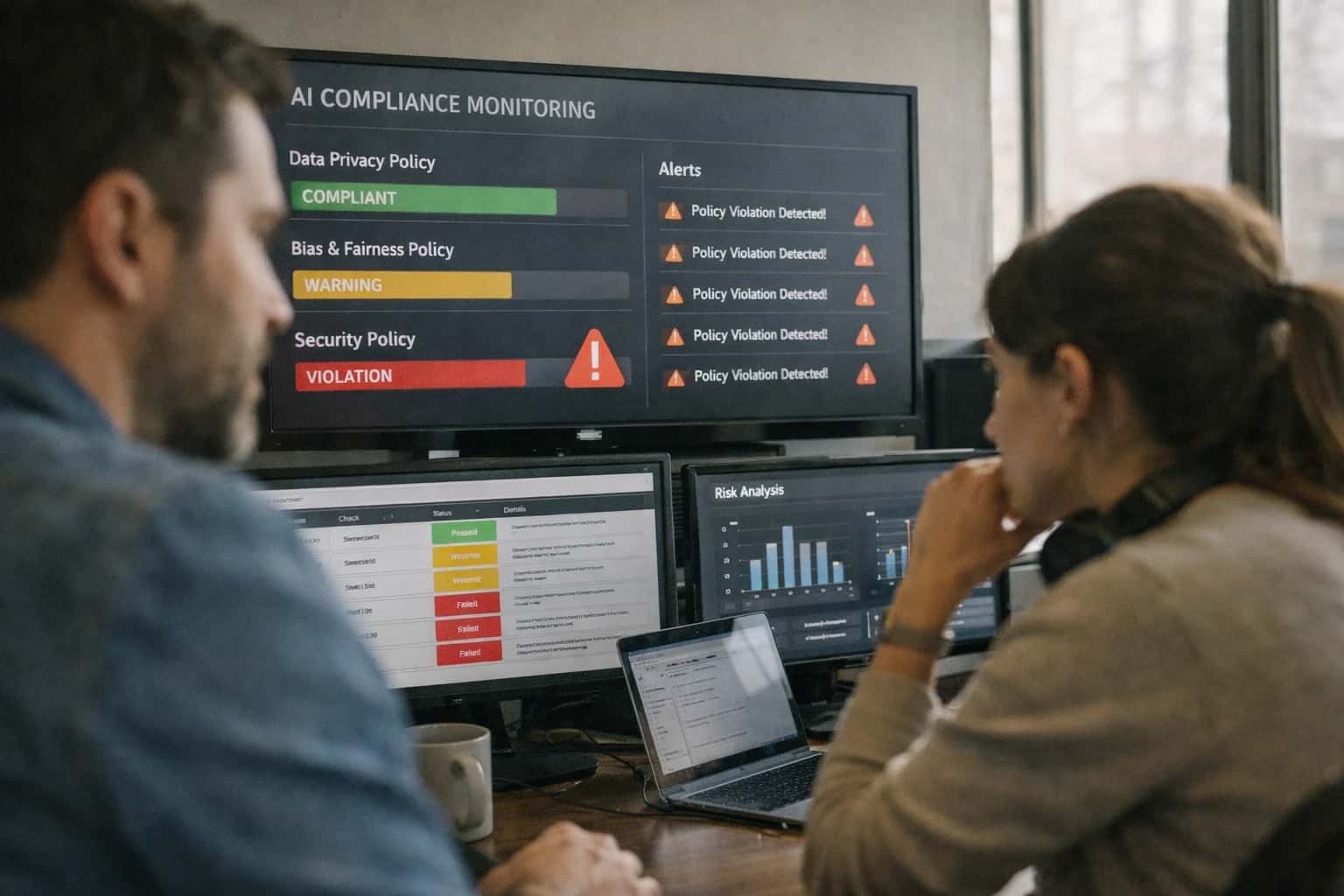
ARCHITECTURE & ROLLOUT
Where AI Fits into Your ADP Platform
A technical blueprint for integrating AI agents and copilots into ADP Workforce Now and Vantage HCM to automate support, guide workflows, and surface insights.
Implementation focuses on high-volume, repetitive tasks where AI can reduce manual HR workload. Key workflows include:
- Payroll Support: An AI agent that answers employee pay slip questions by retrieving earnings, deductions, and tax data from the
PayrollAPI, explaining discrepancies in plain language. - Benefits Guidance: A copilot that guides employees through open enrollment or life events by pulling plan details from the
Benefitsmodule, providing personalized recommendations, and submitting elections via API. - Compliance Monitoring: An automated agent that periodically audits
WorkerandTimedata against configured rules (e.g., overtime, certification expiry) and creates alerts or cases in ADP SmartCompliance or a connected ticketing system. - Manager Copilots: An assistant embedded in manager dashboards that answers team-related policy questions, drafts performance feedback by pulling historical review data, and initiates approval workflows for promotions or merit increases.
A production rollout requires a phased approach, starting with a read-only agent for Q&A to build trust, followed by supervised transactional capabilities. Governance is critical: all AI-initiated writes to ADP (e.g., submitting a timesheet correction) should route through a human-in-the-loop approval queue or require multi-factor verification. Audit logs must capture the source prompt, the data retrieved, and the action taken to ensure compliance. By treating ADP as the authoritative source and using AI as an intelligent interface, organizations can achieve faster resolution times, consistent policy application, and free HR staff for strategic work—without replacing the core system they rely on.
ARCHITECTURAL BLUEPRINT
ADP Modules and Integration Surfaces
Core HR and Payroll Data Layer
ADP Workforce Now and Vantage HCM serve as the system of record for employee profiles, payroll, benefits, and time data. AI integrations connect here to power employee self-service agents and automate operational workflows.
Key Integration Surfaces:
- Employee API: Retrieve and update employee demographic data, employment status, and job information.
- Payroll API: Access pay statements, earnings, deductions, and tax information for anomaly detection and employee inquiries.
- Time & Attendance API: Pull timesheet data for automated policy compliance checks and labor forecasting.
- Business Intelligence API: Extract aggregated data for people analytics dashboards and predictive modeling.
AI agents use these APIs to answer questions like "What's my remaining PTO?" or "When is my next payday?" and to trigger workflows like address changes or direct deposit updates, all within a governed, auditable framework.
PRACTICAL INTEGRATION PATTERNS
High-Value AI Use Cases for ADP
Augment ADP Workforce Now and Vantage HCM with AI to automate high-volume inquiries, guide complex processes, and surface insights—without replacing your core HR system.
01
AI-Powered HR Help Desk
Deploy a conversational agent that answers employee questions about pay, PTO, and policies by querying ADP APIs. It can execute simple transactions like generating verification letters, reducing HR ticket volume for common inquiries.
Hours -> Minutes
Response time for common asks
02
Intelligent Benefits Enrollment Guide
Build an AI assistant that guides employees through annual enrollment or life events. It provides personalized plan recommendations based on employee data from ADP and submits elections directly via the Benefits API, improving participation and reducing errors.
1 sprint
Typical pilot timeline
03
Payroll Anomaly & Compliance Monitor
Implement real-time AI monitoring on payroll data feeds within ADP to flag outliers, potential wage/hour violations, or unusual tax withholdings before finalization. Creates cases in your ticketing system for review.
Batch -> Real-time
Detection shift
04
Manager Copilot for Workforce Data
Embed an AI copilot in manager portals that answers natural language questions about team attendance, budgets, or compa-ratios by querying ADP DataCloud or reporting APIs. Summarizes data and suggests actions, empowering frontline leaders.
Same day
Access to insights
05
Automated Onboarding & Offboarding Orchestration
Use AI to trigger and monitor multi-system workflows from ADP hire/termination events. Coordinates IT provisioning, facility access, and equipment orders via webhooks, ensuring a consistent and auditable process.
06
Sentiment & Retention Insights from ADP Data
Connect AI analytics to ADP DataCloud and employee data to predict turnover risk, analyze engagement drivers from integrated survey tools, and alert managers with recommended retention actions—all within secure reporting dashboards.
ADP WORKFORCE NOW & VANTAGE HCM
Example AI-Augmented Workflows
These concrete workflows illustrate how AI agents can be integrated into ADP's core modules to automate high-volume tasks, provide instant support, and enhance data-driven decision-making. Each pattern connects to ADP's APIs, webhooks, or data exports to execute actions or retrieve context.
Trigger: An employee submits a question via a chat interface (e.g., Slack, Teams, HR portal) about their recent pay stub.
Context/Data Pulled:
- The AI agent authenticates via OAuth 2.0 to the ADP Workforce Now API.
- It retrieves the employee's most recent pay statement details using the
payroll/v1/pay-statementsendpoint. - It fetches the employee's YTD totals and deduction codes (e.g.,
DED_CODE: 401K,DED_CODE: MED).
Model/Agent Action:
- The LLM is prompted with the pay statement data, the employee's question ("Why was my net pay lower this period?"), and a knowledge base of common deduction explanations.
- It generates a plain-language, personalized response: "Your net pay was $X lower due to an increased 401(k) contribution of $Y you selected during open enrollment and the annual dental premium deduction of $Z which occurs every January."
System Update/Next Step:
- The response is delivered to the employee in the chat interface.
- If the agent cannot answer confidently (low confidence score), it creates a case in ADP's case management or a connected ticketing system (e.g., ServiceNow) with the full context for HR follow-up.
Human Review Point: All generated explanations are logged with the query, data accessed, and response for periodic audit by the HR or payroll team to ensure accuracy.
CONNECTING AI TO ADP'S DATA AND WORKFLOW LAYERS
Implementation Architecture and Data Flow
A practical blueprint for integrating AI agents and copilots with ADP Workforce Now and Vantage HCM.
A production-ready AI integration for ADP connects at three primary layers: the Employee and Manager Self-Service portal, the core HRIS API (ADP Workforce Now API or ADP Global View API for Vantage), and the reporting and analytics data streams. The most common pattern is to deploy an AI agent as a middleware service that authenticates via OAuth 2.0, listens for employee queries via chat or voice, and executes safe, read-first operations against ADP's workers, payroll, time, and benefits endpoints. For write operations—like submitting a time-off request or updating a personal detail—the agent constructs the proper JSON payload and triggers the ADP API call, often requiring a human-in-the-loop approval step for governance.
The data flow is event-driven. For example, an employee asks, "What's my remaining PTO?" The agent service authenticates, calls the ADP workers/{id}/timeoff endpoint, retrieves the balance, and formulates a natural language response. For a more complex workflow like benefits enrollment support, the agent can be pre-loaded with plan documents (via RAG), answer specific coverage questions, and then guide the user through the actual ADP SmartCompliance or benefits election screens, either via deep link or by preparing data for a bulk file upload. Critical implementation details include implementing strict role-based access control (RBAC) mirroring ADP permissions, maintaining a full audit log of all queries and transactions, and designing for graceful degradation when ADP APIs are under maintenance.
Rollout should be phased, starting with a read-only pilot for common inquiries (paystub explanations, policy Q&A, org chart lookups) to build trust and validate the data pipeline. The next phase introduces simple transactional workflows, like time sheet submission assistance or address change initiation, which are lower risk. Governance is paramount; all AI-generated transactions should be logged with a correlation ID back to the ADP audit trail, and prompts must be engineered to refuse speculative actions. This architecture ensures AI augments ADP by handling high-volume, repetitive inquiries and data retrieval, freeing HR staff for complex cases while keeping all system-of-record actions within ADP's secure, compliant platform.
ADP WORKFORCE NOW & VANTAGE HCM
Code and Payload Examples
Querying ADP for Agent Context
AI agents supporting employees or managers need secure, real-time access to HR data. Use ADP's REST APIs to retrieve core employee records, which serve as the foundational context for personalized interactions.
Common Use Case: An employee asks a chatbot, "How much PTO do I have left?" The agent first calls the ADP API to get the employee's profile and current balances before formulating a response.
Example Python API Call:
pythonimport requests # Authenticate and get bearer token (OAuth 2.0) auth_response = requests.post( 'https://accounts.adp.com/auth/oauth/v2/token', data={'grant_type': 'client_credentials', 'client_id': CLIENT_ID, 'client_secret': CLIENT_SECRET} ) token = auth_response.json()['access_token'] # Retrieve a specific worker's data headers = {'Authorization': f'Bearer {token}', 'Accept': 'application/json'} worker_response = requests.get( 'https://api.adp.com/hr/v2/workers', params={'search': 'employeeId eq "E12345"'}, headers=headers ) worker_data = worker_response.json() # Extract PTO balance from the response pto_balance = worker_data['workers'][0]['assignments'][0]['timeOffBalances']['vacation']
ADP WORKFORCE NOW & VANTAGE HCM
Realistic Operational Impact and Time Savings
Measurable improvements from integrating AI agents into core ADP workflows, based on typical enterprise implementation patterns.
| Workflow / Metric | Before AI Integration | After AI Integration | Implementation Notes |
|---|---|---|---|
Employee Pay Inquiry Resolution | HR agent manually logs ticket, researches in ADP, calls payroll, responds in 4-24 hours | AI agent answers common questions instantly via chat, deflects 60-70% of tier-1 inquiries | Agent queries ADP APIs for pay stub data; complex cases escalated with full context |
New Hire Onboarding Task Completion | Manual checklist sent via email; 5-7 day average completion with multiple follow-ups | AI assistant guides new hire, sends reminders, auto-updates ADP; 80% completion in 48 hours | Orchestrates ADP data entry, DocuSign, and IT provisioning via webhooks; human oversight for I-9 |
Benefits Enrollment Support | HR hosts live Q&A sessions; employees self-research plans, leading to sub-optimal choices | AI guide provides personalized plan comparisons via chat; answers specific coverage questions 24/7 | Reads ADP benefits data; does not submit elections without final human review and MFA |
Timesheet & Exception Approval | Manager reviews each submission manually; payroll chases missing approvals every cycle | AI pre-validates for policy compliance, flags anomalies; routes only exceptions for manager review | Integrates with ADP Time & Attendance; reduces manager review time by ~50% |
HR Compliance Audit Preparation | Manual quarterly report runs and sample audits take 20-40 person-hours | AI continuously monitors ADP data for I-9 expiry, certification lapses; generates audit-ready summaries | Scheduled reports from ADP DataCloud; alerts trigger cases in service management tool |
Manager HR Guidance (e.g., promotions) | Manager emails HRBP, waits for policy guidance and process steps (1-2 day latency) | AI copilot provides immediate policy summary, links to ADP forms, and initiates workflow draft | Trained on internal HR knowledge base; creates draft transaction in ADP for HRBP final review |
Payroll Reconciliation & Anomaly Detection | Finance manually spot-checks reports post-payroll; errors found days later | AI scans pre-payroll registers for outliers (overtime spikes, tax changes); flags 30 mins before lock | Reads ADP payroll preview extracts; requires defined business rules for alert thresholds |
ENTERPRISE AI DEPLOYMENT
Governance, Security, and Phased Rollout
A practical approach to deploying AI in ADP that prioritizes security, compliance, and controlled adoption.
Integrating AI with ADP Workforce Now or Vantage HCM requires a security-first architecture. This typically involves a middleware layer that acts as a secure broker, handling authentication via ADP's OAuth 2.0, enforcing role-based access control (RBAC) by syncing with ADP user roles, and logging all AI-generated queries and transactions for audit. Sensitive employee data—like compensation, performance reviews, or SSNs—should be masked or excluded from AI context by default, with access gated by explicit policy. The integration should call ADP's REST APIs (e.g., for Worker, Payroll, Benefits objects) using the principle of least privilege, ensuring the AI agent only has the permissions necessary for its specific use case, such as reading public directory info or submitting a time-off request on behalf of an employee.
A phased rollout is critical for managing risk and proving value. Start with a read-only pilot focused on a low-risk, high-volume use case, such as an AI assistant that answers general policy questions by querying the ADP knowledge base or provides employees with a natural-language interface to look up their own remaining PTO balance. This phase validates the integration's stability, user adoption, and accuracy without modifying core data. The next phase introduces controlled write-backs, such as automating the submission of approved data changes or initiating a benefits enrollment workflow, but only after implementing a human-in-the-loop approval step for the initial cycles. Final phases expand to more complex orchestration, like triggering multi-system onboarding workflows that provision assets in IT systems based on a new hire's ADP record.
Governance is sustained through continuous monitoring and a clear rollback plan. Establish a cross-functional steering committee (HR, IT, Legal, Security) to review AI-generated outputs, especially for compliance-sensitive areas like payroll guidance or FMLA leave calculations. Use ADP's audit logs in conjunction with your AI platform's tracing to maintain an immutable record of 'who asked what and what action was taken.' Regularly evaluate the integration for model drift or degradation in answer quality, and have a manual fallback process ready. By treating the ADP AI integration as a governed platform extension—not a one-off project—you ensure it scales securely, maintains ADP's compliance pedigree, and delivers reliable employee and manager support.
Enabling Efficiency, Speed & Accuracy
Intelligent Analysis, Decision & Execution
We build AI systems for teams that need search across company data, workflow automation across tools, or AI features inside products and internal software.
Talk to Us
Search across company data
Give teams answers from docs, tickets, runbooks, and product data with sources and permissions.
Useful when people spend too long searching or get different answers from different systems.
Enterprise searchRAGPermissions
Read more
Automate internal workflows
Use AI to route work, draft outputs, trigger actions, and keep approvals and logs in place.
Useful when repetitive work moves across multiple tools and teams.
AI agentsWorkflow automationGovernance
Read more
Add AI to products and internal tools
Build assistants, guided actions, or decision support into the software your team or customers already use.
Useful when AI needs to be part of the product, not a separate tool.
AI integrationDecision supportModel routing
Read moreADP AI INTEGRATION
Frequently Asked Questions
Common technical and strategic questions about augmenting ADP Workforce Now and Vantage HCM with AI for payroll support, benefits enrollment, compliance, and employee communications.
AI agents interact with ADP via its secure APIs, primarily the ADP Workforce Now API or ADP Global View API for Vantage HCM. Implementation follows a zero-trust, principle-of-least-privilege model:
- Authentication: The agent uses OAuth 2.0 with client credentials or user context (delegated) to obtain a scoped access token from ADP's authorization server.
- API Scopes: Permissions are limited to specific API endpoints (e.g.,
worker.demographics:read,payroll.register:read,worker.benefit.enrollment:write). The agent cannot access data or perform actions outside its granted scopes. - Data Flow: The agent calls ADP REST APIs, passing the token. Responses (JSON/XML) are parsed in memory; sensitive data is never persistently logged.
- Audit Trail: All agent-initiated API calls are logged with a correlation ID in your system, matching ADP's own audit logs for traceability.
- Updates: For write operations (e.g., submitting a benefits election), the agent constructs a payload per ADP's schema and sends a
POSTorPUTrequest. A human-in-the-loop approval step is often inserted before final submission for high-impact transactions.
Example Payload for a Read Request:
httpGET /hr/v2/workers?$filter=person/communication/emails/emailUri eq 'employee@company.com' Authorization: Bearer {access_token} Accept: application/json

About the author
Prasad Kumkar
CEO & MD, Inference Systems
Prasad Kumkar is the CEO & MD of Inference Systems and writes about AI systems architecture, LLM infrastructure, model serving, evaluation, and production deployment. Over 5+ years, he has worked across computer vision models, L5 autonomous vehicle systems, and LLM research, with a focus on taking complex AI ideas into real-world engineering systems.
His work and writing cover AI systems, large language models, AI agents, multimodal systems, autonomous systems, inference optimization, RAG, evaluation, and production AI engineering.
LinkedIn
Limited slotsGet a Free AI Consultation
Partnered with leading AI, data, and software stack.





How We Work
Custom AI workflows for your Business
One-fit-all AI don't work for modern businesses. At Inferensys, we aim to understand your business & custom requirements; which we use to define most efficient agentic workflows, the data, and the tools for your business.
01
Review the use case
We understand the task, the users, and where AI can actually help.
Read more02
Pick the right approach
We define what needs search, automation, or product integration.
Read more03
Build the first useful version
We implement the part that proves the value first.
Read more04
Improve from there
We add the checks and visibility needed to keep it useful.
Read moreThe first call is a practical review of your use case and the right next step.
Talk to Us