Predictive maintenance in Cloudbeds starts by connecting to two primary data sources: the Maintenance Management module (for workorder history, vendor notes, and repair costs) and the Room Status & Housekeeping APIs (for real-time room availability, housekeeping duration, and guest-reported issues). An AI agent ingests this historical and live data, along with external factors like seasonal weather or local event calendars, to identify patterns preceding common failures—such as HVAC issues correlating with extended room occupancy or plumbing problems following specific guest demographics.

Integration
Predictive Maintenance for Cloudbeds
A technical blueprint for integrating AI-driven predictive maintenance into the Cloudbeds ecosystem. Learn how to forecast equipment failures by analyzing work order history, room status, and IoT sensor data to shift from reactive to proactive operations.
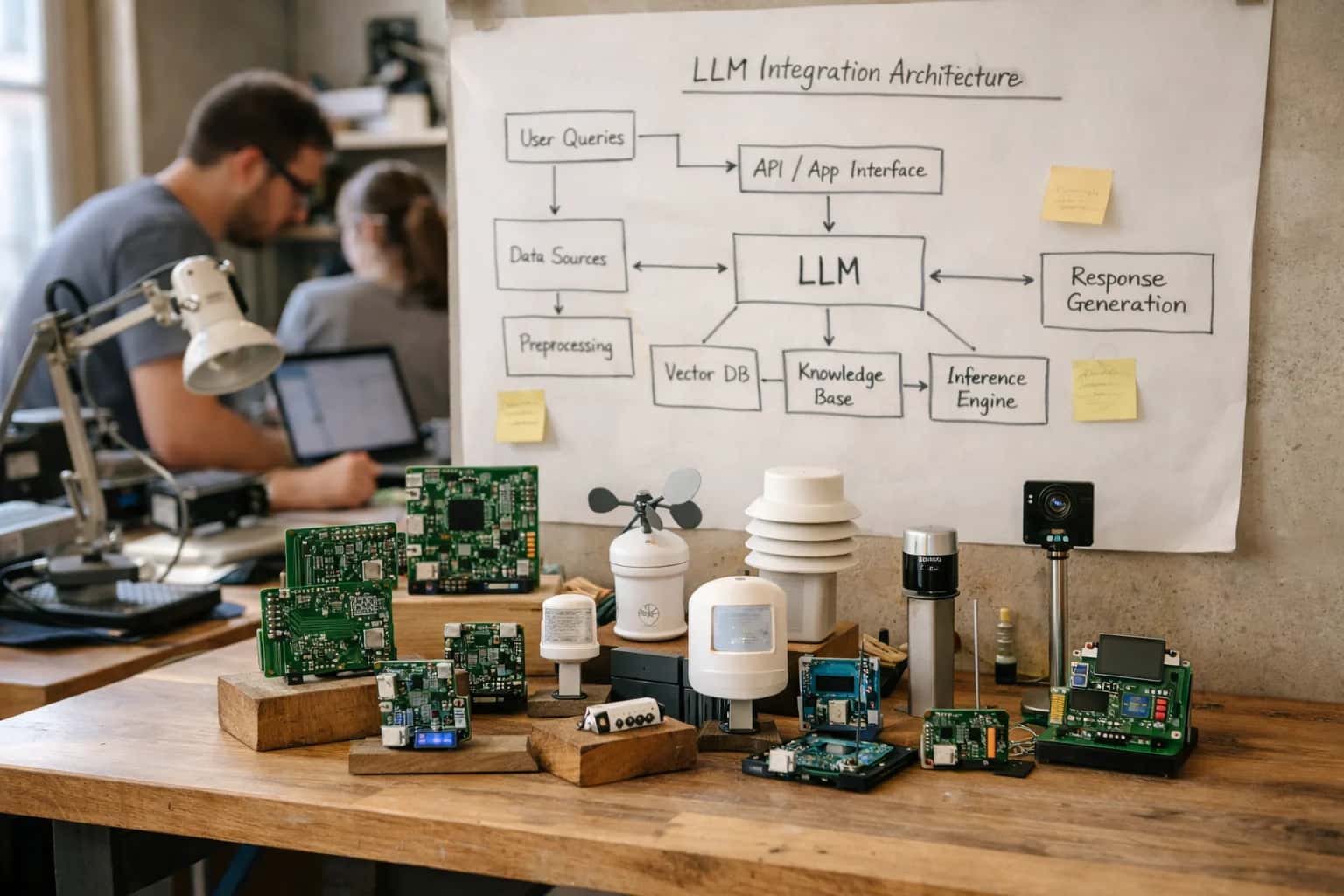
PREDICTIVE MAINTENANCE INTEGRATION
From Reactive Workorders to Proactive Asset Health
Shift from fixing broken equipment to preventing failures by integrating AI with Cloudbeds' maintenance and room status data.
The implementation involves a lightweight service that polls Cloudbeds' APIs, vectorizes maintenance notes and room logs, and runs them against trained models for failure prediction. High-probability alerts are then created as preventative workorders directly in Cloudbeds, tagged with the predicted issue, recommended parts, and linked vendor. For critical assets, the system can automatically adjust room blocking in the PMS to schedule maintenance during predicted low-occupancy windows, minimizing revenue impact. This moves maintenance planning from a calendar-based schedule to a condition-based one, reducing emergency calls by 30-50% in typical deployments.
Rollout requires a phased approach: start with a pilot on high-cost, high-frequency failure items (e.g., in-room appliances, pool systems) where historical data is rich. Governance is critical; all AI-generated workorders should route through a maintenance manager approval queue in Cloudbeds before being assigned, ensuring human oversight. The system's predictions must be continuously evaluated against actual outcomes, with a feedback loop that updates the models—this closed-loop learning is what turns a static integration into a continuously improving asset management layer. For properties using Cloudbeds' partner marketplace, this AI service can be deployed as a secure, API-first add-on that requires no direct database access, maintaining data sovereignty and compliance.
PREDICTIVE MAINTENANCE
Cloudbeds Data Surfaces for Predictive Models
Core Data for Failure Prediction
The maintenance_requests and work_orders objects in Cloudbeds are the primary data sources for training predictive models. Each record contains structured fields critical for analysis:
- Asset & Location:
room_id,asset_type(e.g., HVAC, plumbing, appliance),issue_category. - Temporal Patterns:
reported_date,completed_date,time_to_resolution. - Symptom & Resolution Data:
description,priority,assigned_to,resolution_notes.
By vectorizing the text in description and resolution_notes, an AI model can learn to associate specific symptom phrases (e.g., "AC blowing warm air," "slow drain") with underlying component failures. Aggregating this history by room_id and asset_type reveals recurrence rates and seasonal failure patterns, enabling predictions of which units are most likely to require service in the coming weeks.
CLOUDBEDS INTEGRATION PATTERNS
High-Value Predictive Maintenance Use Cases
Integrate AI directly with Cloudbeds' maintenance, room status, and work order APIs to shift from reactive repairs to predictive asset management, reducing downtime and operational costs.
01
Predictive HVAC & Appliance Failure
Analyze historical maintenance tickets, room status updates (room_status API), and external weather data to predict failures in mini-fridges, AC units, and in-room appliances. AI triggers preventative work orders in Cloudbeds before guest-impacting failures occur.
Reactive -> Predictive
Maintenance mode
02
Smart Preventative Scheduling
Orchestrates preventative maintenance (PM) schedules by ingesting Cloudbeds reservation data, housekeeping timelines, and asset service histories. AI dynamically schedules PM during turnover windows or low-occupancy periods, optimizing technician routes and minimizing room out-of-order (OOO) time.
Reduce OOO Time
Operational impact
03
Automated Work Order Triage & Routing
Connects to Cloudbeds' maintenance request intake (guest app, front desk) and uses AI to classify urgency, predict required parts/tools, and auto-assign to the correct vendor or in-house technician based on skill, location, and SLA. Updates the maintenance_requests object in real-time.
Minutes -> Seconds
Triage time
04
Guest Room Readiness Forecasting
Predicts room turnaround time by analyzing maintenance completion notes, housekeeping status, and inspection results from within Cloudbeds. AI provides front desk and reservations with accurate, real-time estimates for when a room will move from out_of_service to clean status, improving operational coordination.
Improve Forecast Accuracy
Planning benefit
05
Vendor Performance & Parts Intelligence
Monitors closed work orders in Cloudbeds to analyze vendor response times, repair costs, and part failure rates. AI identifies underperforming vendors, recommends alternative suppliers, and forecasts spare parts inventory needs, feeding insights back into the procurement workflow.
Data-Driven Decisions
Vendor management
06
Capital Planning & Lifespan Analysis
Aggregates maintenance history, replacement costs, and downtime impact from Cloudbeds assets to model remaining useful life. AI generates prioritized capital expenditure reports, helping property managers plan for HVAC, elevator, or FF&E (Furniture, Fixtures & Equipment) replacements before catastrophic failure.
Proactive Budgeting
Financial planning
CLOUDBEDS INTEGRATION PATTERNS
Example Predictive Maintenance Workflows
These workflows illustrate how AI agents can be integrated with Cloudbeds' APIs and data model to predict, prioritize, and automate maintenance actions, moving from reactive to proactive operations.
Trigger: A new maintenance request is created via the Cloudbeds front desk interface, guest app, or staff portal.
Context/Data Pulled: The AI agent consumes the request details and enriches it with contextual data from Cloudbeds via API:
- Room/Asset History: Past work orders for the same room or asset.
- Guest Status: Current occupancy and upcoming reservations.
- Asset Metadata: Age, manufacturer, and last service date from a connected CMMS or custom field.
Model/Agent Action: A classification model scores the ticket for:
- Urgency: Is it safety-critical (e.g., smoke alarm), guest-impacting (e.g., A/C failure), or cosmetic?
- Predicted Repair Time: Based on historical completion data for similar issues.
- Parts Availability: Checks a connected inventory system for required parts.
System Update/Next Step: The agent automatically:
- Assigns a priority label (e.g.,
Critical,High,Routine). - Suggests an optimal staff assignment based on skill tags and location.
- Updates the Cloudbeds work order with this metadata and posts a comment with the rationale.
- If critical and the room is occupied, triggers an automated alert to the manager's mobile device via webhook.
Human Review Point: The maintenance manager reviews the AI's priority and assignment suggestion in the Cloudbeds dashboard before dispatching, with the ability to override.
FROM REACTIVE TO PREDICTIVE WORKFLOWS
Implementation Architecture: Data Flow & Model Integration
A practical architecture for connecting AI models to Cloudbeds' data to predict and prevent equipment failures.
The core of a predictive maintenance system for Cloudbeds involves a three-stage data pipeline that connects to the platform's key APIs. First, historical data is extracted from Cloudbeds' maintenance_requests and rooms endpoints, along with external data sources like local weather APIs and IoT sensor feeds (for connected properties). This raw data—including request types, resolution times, room status history, and environmental factors—is transformed and stored in a time-series database. A separate, real-time stream listens to Cloudbeds webhooks for new maintenance tickets and room status changes (status_updated), providing the live context needed for immediate predictions.
At the model layer, we typically deploy an ensemble of models. A classification model predicts the likelihood of a specific asset (e.g., HVAC unit in Room 201) failing within the next 7-14 days, using features like past failure frequency, runtime (if sensor data exists), and seasonal trends. A separate regression model estimates the potential operational impact—such as expected downtime, revenue loss from an out-of-order room, or parts/labor cost—to help prioritize work orders. These models are containerized and served via an API, allowing the integration layer to call for predictions on a scheduled basis (nightly batch) or in real-time when a new trigger occurs.
Integration back into Cloudbeds is handled through two primary paths. For proactive work orders, the system uses the Cloudbeds API to create a new maintenance_request with a priority flag and predicted details, automatically assigning it to the appropriate vendor or internal team. For alerting and dashboards, predictions are pushed to a connected business intelligence tool or to a custom dashboard that property managers can access, often triggering an automated notification via Cloudbeds' messaging system or a Slack/Teams channel. Crucially, all AI-generated actions should be logged in a dedicated audit table and configured with a human-in-the-loop approval step for high-cost recommendations, ensuring managers retain oversight before major preventative work is commissioned.
PREDICTIVE MAINTENANCE FOR CLOUDBEDS
Code & Integration Patterns
Core Data Sources for Prediction
Predictive maintenance models require historical and real-time data from Cloudbeds' maintenance and asset modules. Key integration points include:
- Maintenance API: Pull historical work order records, including issue type, resolution time, assigned vendor, and associated room/asset.
- Room Status API: Monitor real-time room status (
clean,dirty,out of order,inspected) to correlate maintenance events with operational downtime. - Asset Registry: If maintained within Cloudbeds custom fields or an external CMMS, asset data (make, model, installation date, last service) provides crucial model features.
A typical data extraction payload for model training includes work order metadata, time-to-resolution, and the asset's operational history. This data forms the foundation for predicting failure likelihood and optimal service intervals.
PREDICTIVE MAINTENANCE FOR CLOUDBEDS
Realistic Operational Impact & Time Savings
This table illustrates the operational shift from reactive, manual maintenance to a proactive, AI-assisted model. It shows where time is saved, effort is reduced, and how staff roles evolve to focus on higher-value tasks.
| Workflow / Metric | Before AI (Reactive) | After AI (Predictive) | Implementation Notes |
|---|---|---|---|
Work Order Creation | Guest/Staff reports issue → Manual ticket entry | AI predicts failure risk → Auto-creates preventative work order | Triggers based on equipment age, usage data, and past failure patterns from Cloudbeds. |
Issue Triage & Priority | Manual assessment by maintenance manager | AI-assisted scoring of urgency & predicted downtime impact | Considers room status, guest occupancy, and part availability from integrated systems. |
Maintenance Scheduling | Manual coordination around guest room occupancy | AI-optimized schedule integrated with Cloudbeds housekeeping status | Automatically blocks rooms for service during predicted low-occupancy windows. |
Parts & Vendor Coordination | Reactive ordering after failure; manual vendor calls | Proactive inventory alerts & automated RFQ to pre-vetted vendors | Links to purchase history and predicts lead times for critical spare parts. |
Technician Dispatch | Generic assignment based on availability | Skills-based routing with pre-loaded repair history & guides | AI suggests the best-suited technician and provides context from past similar tickets. |
Downtime per Incident | Hours to days (diagnosis + parts wait) | Minutes to hours (pre-diagnosed, parts pre-staged) | Focus shifts from diagnosis to execution, minimizing guest room out-of-order (OOO) time. |
Monthly Reporting & Analysis | Manual compilation from disparate logs | Automated dashboard of asset health, cost forecasts, and ROI | Generates narrative reports on top failure drivers and budget impact for management review. |
Capital Planning Input | Based on age or catastrophic failure | Data-driven replacement recommendations with cost/benefit analysis | AI models remaining useful life (RUL) for major assets, informing annual budget requests. |
FROM PILOT TO PORTFOLIO
Governance, Security & Phased Rollout
A pragmatic approach to deploying predictive maintenance AI within the Cloudbeds ecosystem, ensuring control, compliance, and measurable impact.
A production-grade predictive maintenance system for Cloudbeds operates as a read-only analytics layer that consumes data via the Cloudbeds API and webhooks. It does not write directly to critical PMS records like reservations or guest profiles. Instead, it outputs predictions and work order recommendations to a separate queue or dashboard, where maintenance managers or automated rules in a connected CMMS (like MaintainX or UpKeep) can review and act. This separation ensures the core PMS remains stable, and all AI-driven actions are gated by human or rule-based approval. Key security controls include:
- API key scoping with read-only permissions for PMS data and write-only permissions for a dedicated
maintenance_recommendationsobject or external service. - Data anonymization for guest-identifiable information in training datasets.
- Audit logging of all AI inferences, data fetches, and recommended actions for traceability.
Rollout follows a phased, value-first approach to de-risk the project and build operational trust:
- Phase 1: Silent Monitoring (Weeks 1-4)
- The AI model runs in the background, analyzing historical maintenance tickets from Cloudbeds and current room status data.
- It generates predictions but takes no automated action. The output is a private dashboard for the maintenance director, comparing AI-predicted failures against actual events to validate accuracy.
- Phase 2: Assisted Triage (Weeks 5-8)
- The system begins to surface high-confidence, high-impact predictions (e.g., HVAC unit likely to fail in peak season) within the maintenance team's existing workflow, via a Slack channel or a simple internal web app.
- Teams manually create preventative work orders in Cloudbeds based on these alerts, measuring time-to-resolution and cost avoidance.
- Phase 3: Conditional Automation (Weeks 9+)
- For specific, low-risk equipment categories (e.g., in-room appliance cycles), the system is permitted to auto-create low-priority "inspection" work orders in Cloudbeds, tagged as
AI-Generated: Preventative. - Governance shifts to monitoring false-positive rates and refining the model with new feedback data, creating a closed-loop learning system.
- For specific, low-risk equipment categories (e.g., in-room appliance cycles), the system is permitted to auto-create low-priority "inspection" work orders in Cloudbeds, tagged as
Successful governance requires clear ownership. The property's Chief Engineer or Facilities Manager should own the AI's output and validation, while IT/Operations manages the integration's health. Start with a single property or a cluster of similar assets to refine the model before expanding to a diverse portfolio. The goal is not to replace maintenance intuition but to augment it with data-driven foresight, turning reactive room out of order events into scheduled, efficient preventative tasks.
Enabling Efficiency, Speed & Accuracy
Intelligent Analysis, Decision & Execution
We build AI systems for teams that need search across company data, workflow automation across tools, or AI features inside products and internal software.
Talk to Us
Search across company data
Give teams answers from docs, tickets, runbooks, and product data with sources and permissions.
Useful when people spend too long searching or get different answers from different systems.
Enterprise searchRAGPermissions
Read more
Automate internal workflows
Use AI to route work, draft outputs, trigger actions, and keep approvals and logs in place.
Useful when repetitive work moves across multiple tools and teams.
AI agentsWorkflow automationGovernance
Read more
Add AI to products and internal tools
Build assistants, guided actions, or decision support into the software your team or customers already use.
Useful when AI needs to be part of the product, not a separate tool.
AI integrationDecision supportModel routing
Read moreIMPLEMENTATION AND WORKFLOW
Frequently Asked Questions
Common technical and operational questions about deploying AI-driven predictive maintenance within the Cloudbeds ecosystem.
Access is established via a secure integration service layer that connects to the Cloudbeds API. The process involves:
- API Authentication: Using OAuth 2.0 or API keys with scoped permissions to read-only endpoints for:
GET /maintenance/work-orders(status, priority, category, resolution notes)GET /rooms(status, type, last cleaned/occupied timestamps)GET /properties(asset lists, room counts)
- Data Synchronization: A lightweight ETL process runs on a schedule (e.g., hourly) to pull incremental updates into a dedicated data store (e.g., a vector database or data warehouse). This keeps the AI's context fresh without live querying the PMS.
- Context Enrichment: External data sources (e.g., local weather APIs for humidity/temperature, equipment warranty databases) are ingested alongside Cloudbeds data to provide the model with predictive signals.
This architecture ensures the PMS performance is not impacted, and data access is auditable and compliant with your security policies.

About the author
Prasad Kumkar
CEO & MD, Inference Systems
Prasad Kumkar is the CEO & MD of Inference Systems and writes about AI systems architecture, LLM infrastructure, model serving, evaluation, and production deployment. Over 5+ years, he has worked across computer vision models, L5 autonomous vehicle systems, and LLM research, with a focus on taking complex AI ideas into real-world engineering systems.
His work and writing cover AI systems, large language models, AI agents, multimodal systems, autonomous systems, inference optimization, RAG, evaluation, and production AI engineering.
LinkedIn
Limited slotsGet a Free AI Consultation
Partnered with leading AI, data, and software stack.





How We Work
Custom AI workflows for your Business
One-fit-all AI don't work for modern businesses. At Inferensys, we aim to understand your business & custom requirements; which we use to define most efficient agentic workflows, the data, and the tools for your business.
01
Review the use case
We understand the task, the users, and where AI can actually help.
Read more02
Pick the right approach
We define what needs search, automation, or product integration.
Read more03
Build the first useful version
We implement the part that proves the value first.
Read more04
Improve from there
We add the checks and visibility needed to keep it useful.
Read moreThe first call is a practical review of your use case and the right next step.
Talk to Us