For portfolio managers, the challenge isn't a lack of data—it's synthesizing it across dozens of properties, each with its own RMS Cloud instance, into a single source of revenue intelligence. A production-grade AI integration connects to the RMS Cloud API at the portfolio level, pulling key data objects like OccupancyForecast, RateShoppingResult, Actuals, and Budget records from each property on a scheduled basis. This aggregated data lake becomes the foundation for AI models that perform cross-property analysis, identifying underperforming assets, spotting regional demand trends invisible at the property level, and benchmarking RevPAR performance against a custom portfolio composite.

Integration
AI Integration for RMS Cloud Multi-Property Management
A technical blueprint for portfolio managers to connect AI systems across multiple RMS Cloud properties, enabling consolidated forecasting, cross-property benchmarking, and automated budget analysis.
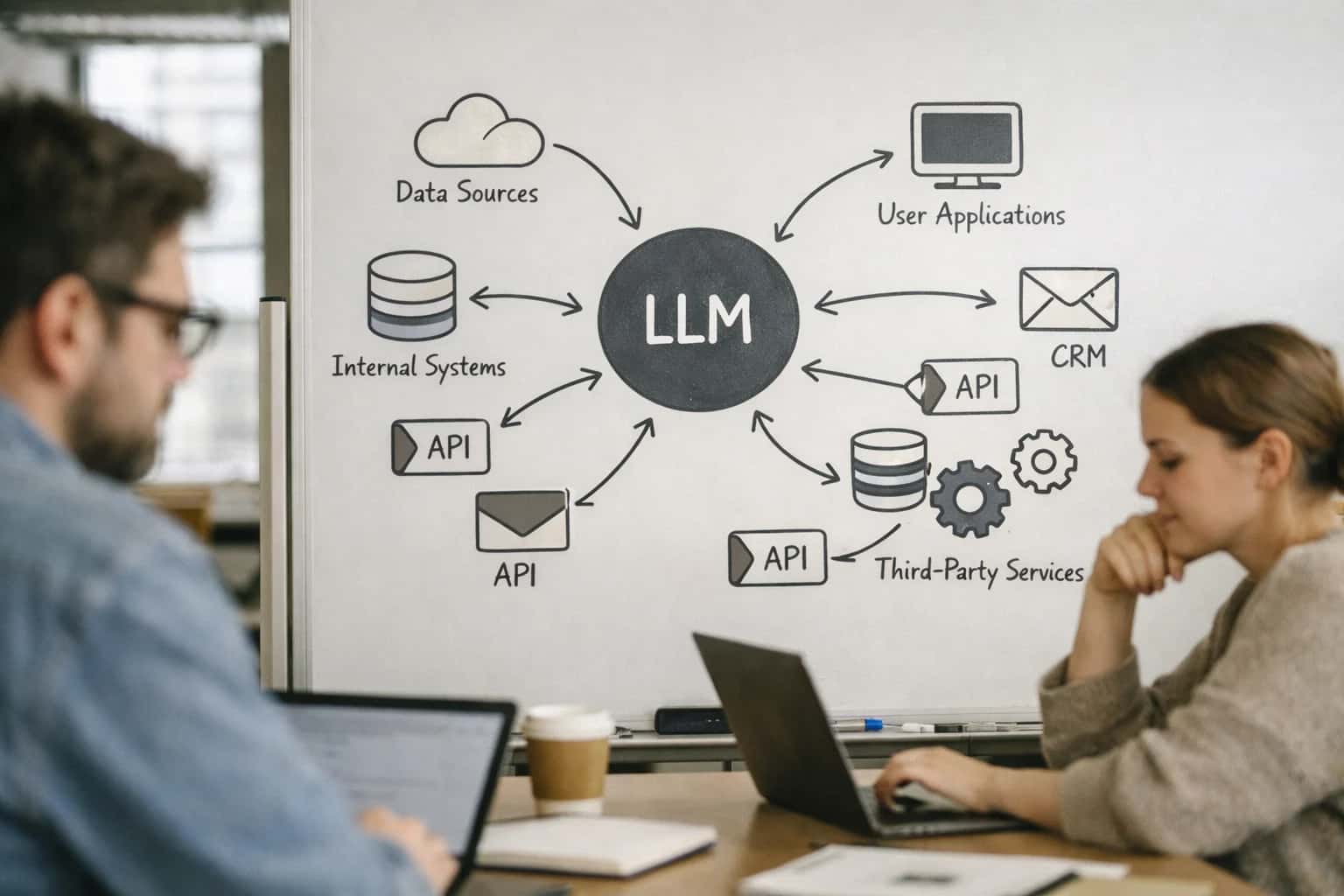
MULTI-PROPERTY MANAGEMENT
AI for Portfolio-Wide Revenue Intelligence
Deploy AI systems that aggregate and analyze data across your entire RMS Cloud portfolio to drive consolidated forecasting, cross-property benchmarking, and centralized budget analysis.
The implementation focuses on high-impact, centralized workflows: Automated Portfolio Forecasting agents that ingest property-level forecasts and adjust them based on cross-property leading indicators (e.g., one property's group bookings signal demand for another). Budget Variance Analysis copilots that read monthly P&L data from each property's RMS Cloud, flag outliers, and generate narrative explanations for finance reviews. Dynamic Benchmarking that moves beyond static comp sets to create peer groups based on real-time performance, location, and asset type, delivering alerts when a property deviates from its cohort. These systems typically run on a separate orchestration layer that respects RMS Cloud's API rate limits, with results pushed back into RMS Cloud as custom reports or via a centralized BI dashboard.
Rollout requires a phased, governance-first approach. Start with a pilot group of 3-5 properties to establish data pipelines and validate model accuracy. Implement strict role-based access control (RBAC) so property-level GMs see insights for their asset, while regional VPs and corporate revenue leaders see the consolidated portfolio view. All AI-generated recommendations should be logged with an audit trail, and key decisions (like overriding a forecast) should maintain a human-in-the-loop approval step within RMS Cloud's workflow tools. This ensures the AI augments—rather than disrupts—existing accountability structures.
ARCHITECTURE SURFACES
Where AI Connects to RMS Cloud for Portfolio Management
The Portfolio-Level Forecasting Engine
AI connects to RMS Cloud's consolidated data warehouse and reporting APIs to build a unified forecasting engine across all properties. This surface ingests historical performance, forward bookings, and external market signals (events, competitor rates, weather) to generate property-level and portfolio-level forecasts with higher accuracy than traditional models.
Key integration points:
- Budget Module APIs: Push AI-generated budget scenarios and forecasts back into RMS Cloud for variance tracking.
- Data Export/ODBC Connections: Pull nightly performance data (occupancy, ADR, RevPAR) for all properties into a centralized AI model training pipeline.
- Alerting Webhooks: Configure RMS Cloud to send webhook notifications when actuals deviate significantly from AI forecasts, triggering automated analysis.
The output is a single source of truth for revenue projections, enabling portfolio managers to allocate capital and set targets based on AI-driven insights rather than spreadsheets.
RMS CLOUD INTEGRATION PATTERNS
High-Value AI Use Cases for Multi-Property Portfolios
For portfolio managers, AI integration with RMS Cloud moves beyond single-property automation to deliver centralized intelligence, cross-property benchmarking, and portfolio-wide operational leverage. These patterns connect to RMS Cloud's data warehouse, forecasting modules, and multi-property APIs.
01
Consolidated Portfolio Forecasting
Deploy AI models that ingest RMS Cloud forecast data, market demand signals, and event calendars across all properties to generate a unified, probabilistic portfolio forecast. This enables scenario planning for capital allocation, staffing, and marketing spend at the group level.
Batch -> Real-time
Forecast refresh
02
Cross-Property Rate Optimization Agent
An AI agent that analyzes RMS Cloud pricing data and competitor sets for the entire portfolio to detect cannibalization risks, recommend strategic rate differentials between properties, and automate tactical adjustments to maximize total portfolio RevPAR.
Same day
Strategy adjustment
03
Centralized Budget Variance Analysis
Connect AI to RMS Cloud's budgeting module and actuals data feeds. Automatically flag significant variances across all properties, generate narrative explanations linking performance to market events or operational issues, and route insights to regional managers.
Hours -> Minutes
Monthly review
04
Portfolio-Wide Guest Sentiment Dashboard
Integrate AI sentiment analysis with RMS Cloud's guest feedback channels aggregated by brand or region. Automatically surface emerging complaint trends (e.g., housekeeping, WiFi), identify top-performing properties for best practice sharing, and trigger corrective workflows.
Real-time
Trend detection
05
Automated Group Business Displacement Analysis
For properties sharing sales teams, an AI system evaluates incoming group RFPs in RMS Cloud against the entire portfolio's forecast. It recommends optimal property placement, calculates displacement impact on transient business, and drafts proposal responses.
1 sprint
Implementation
06
Unified Capital Planning Assistant
An AI copilot that correlates RMS Cloud's performance data with property-level CapEx requests and maintenance logs. It prioritizes projects based on projected ROI impact across the portfolio and generates consolidated budget justifications for ownership.
Weeks -> Days
Planning cycle
RMS CLOUD MULTI-PROPERTY MANAGEMENT
Example AI Workflows for Portfolio Operations
For portfolio managers overseeing multiple hotels, AI integration with RMS Cloud enables centralized intelligence and automated workflows. These examples illustrate how AI agents can connect to RMS Cloud's portfolio-level APIs and data warehouse to drive efficiency and insight.
Trigger: A scheduled daily job or a manual request from a portfolio manager.
Context/Data Pulled: The agent queries the RMS Cloud Data Warehouse API for the last 30 days of booking pace, ADR, and occupancy data across all designated properties. It also fetches forward-looking market events and competitor rate feeds for each property's comp set.
Model or Agent Action: A time-series forecasting model (e.g., Prophet or an LSTM) analyzes the aggregated data to generate a 90-day consolidated forecast for RevPAR, occupancy, and ADR. A separate LLM agent summarizes key drivers and variances between properties into a narrative report.
System Update or Next Step: The forecast metrics are written back to a dedicated portfolio dashboard table in RMS Cloud. The narrative summary is posted to a shared channel (e.g., Microsoft Teams, Slack) and attached as a note to the portfolio record.
Human Review Point: The portfolio manager reviews the narrative summary and forecast. The AI system flags any property forecast with a variance >15% from the previous day's forecast for manual inspection.
FROM SINGLE-PROPERTY TO MULTI-PROPERTY INTELLIGENCE
Implementation Architecture: Building the Portfolio Intelligence Layer
A practical blueprint for deploying a centralized AI intelligence layer on top of RMS Cloud to unify forecasting, benchmarking, and financial analysis across your entire portfolio.
The core architectural pattern involves deploying a centralized data orchestration service that pulls key data objects from each RMS Cloud property via its API. This service aggregates Reservation, RatePlan, Occupancy, Revenue, and Budget records into a unified data lake. From there, a portfolio-wide AI forecasting agent analyzes cross-property trends, seasonality, and external market signals to generate consolidated occupancy and RevPAR forecasts. A separate benchmarking engine compares performance metrics—like ADR, length of stay, and channel mix—across properties, flagging outliers and identifying best practices to propagate.
For budget analysis, an AI financial copilot connects to the aggregated data and your centralized financial planning tools. It automates variance analysis by comparing actuals from each RMS Cloud property against portfolio-level budgets, generating narrative explanations for discrepancies (e.g., "Property A's Q3 RevPAR is 8% below plan due to a 12% dip in group business from the canceled convention"). This layer typically sits as a middleware service, using secure API service accounts with role-based access to each property's RMS Cloud instance, ensuring data isolation is maintained while enabling portfolio-wide views.
Rollout is phased, starting with read-only data aggregation and reporting to establish trust in the data pipeline. Phase two introduces forecasting agents for a pilot property group, with human-in-the-loop validation before full automation. Governance is critical: all AI-generated recommendations, especially those affecting rates or budgets, should route through an approval workflow in your existing portfolio management system, with clear audit trails. The final architecture provides portfolio managers with a single pane of glass for AI-driven insights, while keeping operational execution within the familiar, governed environment of each property's RMS Cloud.
MULTI-PROPERTY DATA ORCHESTRATION
Code and Payload Examples
Aggregating Portfolio Data for AI Analysis
To build a consolidated forecasting or benchmarking model, you first need to aggregate key performance indicators (KPIs) from multiple RMS Cloud properties. This involves querying the RMS Cloud API for each property in the portfolio, normalizing the data, and structuring it for AI processing. A common pattern is to schedule a nightly ETL job that pulls data into a central data warehouse.
Key API endpoints include:
GET /properties/{propertyId}/reports/occupancyfor daily occupancy and ADR.GET /properties/{propertyId}/bookingsfor future reservation data.GET /properties/{propertyId}/ratesfor current and historical rate structures.
The aggregated payload should be timestamped and include property metadata (e.g., segment, location, room count) to enable meaningful cross-property comparisons. This unified dataset becomes the foundation for portfolio-level AI agents.
FOR PORTFOLIO MANAGERS
Realistic Time Savings and Operational Impact
How AI integration transforms multi-property reporting, forecasting, and analysis workflows in RMS Cloud, shifting focus from manual data consolidation to strategic decision-making.
| Metric | Before AI | After AI | Notes |
|---|---|---|---|
Consolidated Portfolio Forecast | Manual spreadsheet modeling, 1-2 days per cycle | Automated model runs with narrative summaries, 2-4 hours | AI aggregates RMS Cloud data, runs scenarios, and generates executive-ready insights |
Cross-Property Benchmarking | Ad-hoc report building, limited to predefined metrics | Dynamic, natural-language queries across all properties | Managers ask questions like 'Which property has the highest RevPAR growth vs. comp set?' |
Budget Variance Analysis | Monthly manual review of 20+ property P&L exports | Automated anomaly detection and alerting for significant variances | AI monitors RMS Cloud actuals vs. budget, flags outliers for review |
Market Demand Aggregation | Manual review of individual property demand calendars | Unified demand heatmap with predictive alerts for soft periods | AI synthesizes forward-looking data across the portfolio to identify regional trends |
Capital Planning Support | Historical performance review based on static annual reports | AI-generated projections on ROI for renovations or upgrades by property | Models use RMS Cloud revenue history and forecast data to prioritize investments |
Executive Reporting Pack Creation | Days spent collating slides, charts, and commentary from each GM | Automated generation of a draft portfolio report with charts and insights | Human editor reviews and refines AI-generated narrative and visuals |
Rate Strategy Coordination | Weekly calls to align on pricing across similar properties | AI-powered dashboard showing recommended rate corridors and competitive gaps | System suggests harmonized strategies, but final approval remains with regional directors |
ARCHITECTING FOR ENTERPRISE PORTFOLIOS
Governance, Security, and Phased Rollout
A practical guide to deploying AI across a multi-property RMS Cloud portfolio with controlled risk and measurable impact.
For portfolio managers, AI integration must respect the segmented data architecture of RMS Cloud. Each property typically operates as a distinct data silo within the platform. A production-ready integration establishes a centralized orchestration layer that securely aggregates key datasets—like forecast snapshots, actualized revenue, budget variances, and market comp sets—from each property's RMS Cloud instance via its API. This layer, not RMS Cloud itself, becomes the system of intelligence, running consolidated models for cross-property benchmarking, portfolio-wide demand forecasting, and automated budget variance analysis. All data flows are logged, and access is governed by property-level RBAC, ensuring a hotel manager only sees insights for their specific assets.
A phased rollout is critical for adoption and risk management. Phase 1 focuses on read-only data aggregation and a single high-value workflow, such as automated daily forecast reconciliation across 5-10 properties, delivering a consolidated variance report. This proves the data pipeline and provides immediate value without altering core RMS workflows. Phase 2 introduces interactive AI agents, like a budget analysis copilot that revenue managers can query in natural language to compare property performance against portfolio benchmarks. Phase 3 enables prescriptive actions, such as AI-generated pricing recommendations fed back into RMS Cloud's rate management modules, but only after implementing a mandatory human-in-the-loop approval step within the orchestration layer.
Security and governance are non-negotiable. The integration architecture must include: encrypted data in transit and at rest; audit trails for all AI-generated insights and recommendations; and a clear data retention policy for aggregated model inputs. For financial workflows like budget analysis, implement a multi-stage review process where AI-generated narratives and suggestions are flagged for finance leader approval before being shared with property teams. Start with a pilot group of 3-5 properties, measure impact on forecasting accuracy and analyst time saved, and use those metrics to define the business case for broader portfolio rollout.
Enabling Efficiency, Speed & Accuracy
Intelligent Analysis, Decision & Execution
We build AI systems for teams that need search across company data, workflow automation across tools, or AI features inside products and internal software.
Talk to Us
Search across company data
Give teams answers from docs, tickets, runbooks, and product data with sources and permissions.
Useful when people spend too long searching or get different answers from different systems.
Enterprise searchRAGPermissions
Read more
Automate internal workflows
Use AI to route work, draft outputs, trigger actions, and keep approvals and logs in place.
Useful when repetitive work moves across multiple tools and teams.
AI agentsWorkflow automationGovernance
Read more
Add AI to products and internal tools
Build assistants, guided actions, or decision support into the software your team or customers already use.
Useful when AI needs to be part of the product, not a separate tool.
AI integrationDecision supportModel routing
Read moreAI INTEGRATION FOR RMS CLOUD MULTI-PROPERTY MANAGEMENT
Frequently Asked Questions for Portfolio Managers
Practical answers for leaders overseeing multiple properties, focused on how AI integrates with RMS Cloud to centralize forecasting, benchmarking, and budget analysis without disrupting daily operations.
AI systems connect to RMS Cloud via its REST API using OAuth 2.0 authentication. For a multi-property setup, the integration typically follows this pattern:
- Centralized Service Account: A single, dedicated service account with appropriate role-based access control (RBAC) is provisioned in RMS Cloud, granted read access to the necessary property datasets.
- Data Pipeline: The AI system calls the RMS Cloud API endpoints (e.g.,
/properties/{id}/forecasts,/properties/{id}/actuals,/properties/{id}/budgets) for each property in your portfolio. This is often done via a scheduled, secure ETL job. - Data Consolidation: The AI platform ingests this data into a centralized vector database or data warehouse (e.g., Snowflake, BigQuery), tagging each record with property IDs and timestamps.
- Security & Governance: All data is encrypted in transit (TLS 1.2+) and at rest. The AI system acts as a read-only consumer, ensuring no accidental writes back to RMS Cloud. Audit logs track all data access by the AI service.
This architecture creates a unified data layer for portfolio-wide analysis without modifying your core RMS Cloud instances.

About the author
Prasad Kumkar
CEO & MD, Inference Systems
Prasad Kumkar is the CEO & MD of Inference Systems and writes about AI systems architecture, LLM infrastructure, model serving, evaluation, and production deployment. Over 5+ years, he has worked across computer vision models, L5 autonomous vehicle systems, and LLM research, with a focus on taking complex AI ideas into real-world engineering systems.
His work and writing cover AI systems, large language models, AI agents, multimodal systems, autonomous systems, inference optimization, RAG, evaluation, and production AI engineering.
LinkedIn
Limited slotsGet a Free AI Consultation
Partnered with leading AI, data, and software stack.





How We Work
Custom AI workflows for your Business
One-fit-all AI don't work for modern businesses. At Inferensys, we aim to understand your business & custom requirements; which we use to define most efficient agentic workflows, the data, and the tools for your business.
01
Review the use case
We understand the task, the users, and where AI can actually help.
Read more02
Pick the right approach
We define what needs search, automation, or product integration.
Read more03
Build the first useful version
We implement the part that proves the value first.
Read more04
Improve from there
We add the checks and visibility needed to keep it useful.
Read moreThe first call is a practical review of your use case and the right next step.
Talk to Us