AI integration for Oracle OPERA Mobile PMS focuses on three primary surfaces: the mobile manager dashboard, push notification channels, and voice-activated interfaces. The goal is to inject intelligence into workflows that are inherently mobile-first, such as real-time status checks, on-the-spot reporting, and immediate response to critical alerts. This means connecting AI agents to OPERA's mobile APIs and webhooks for events like roomStatusChange, newMaintenanceRequest, or highPriorityAlert to trigger context-aware, actionable insights directly to a manager's device.

Integration
AI Integration for Oracle OPERA Mobile PMS
A practical guide for technical teams on embedding AI agents and workflows into Oracle OPERA Mobile PMS, enabling voice-activated status checks, automated reporting, and intelligent push alerts for hotel managers and staff.
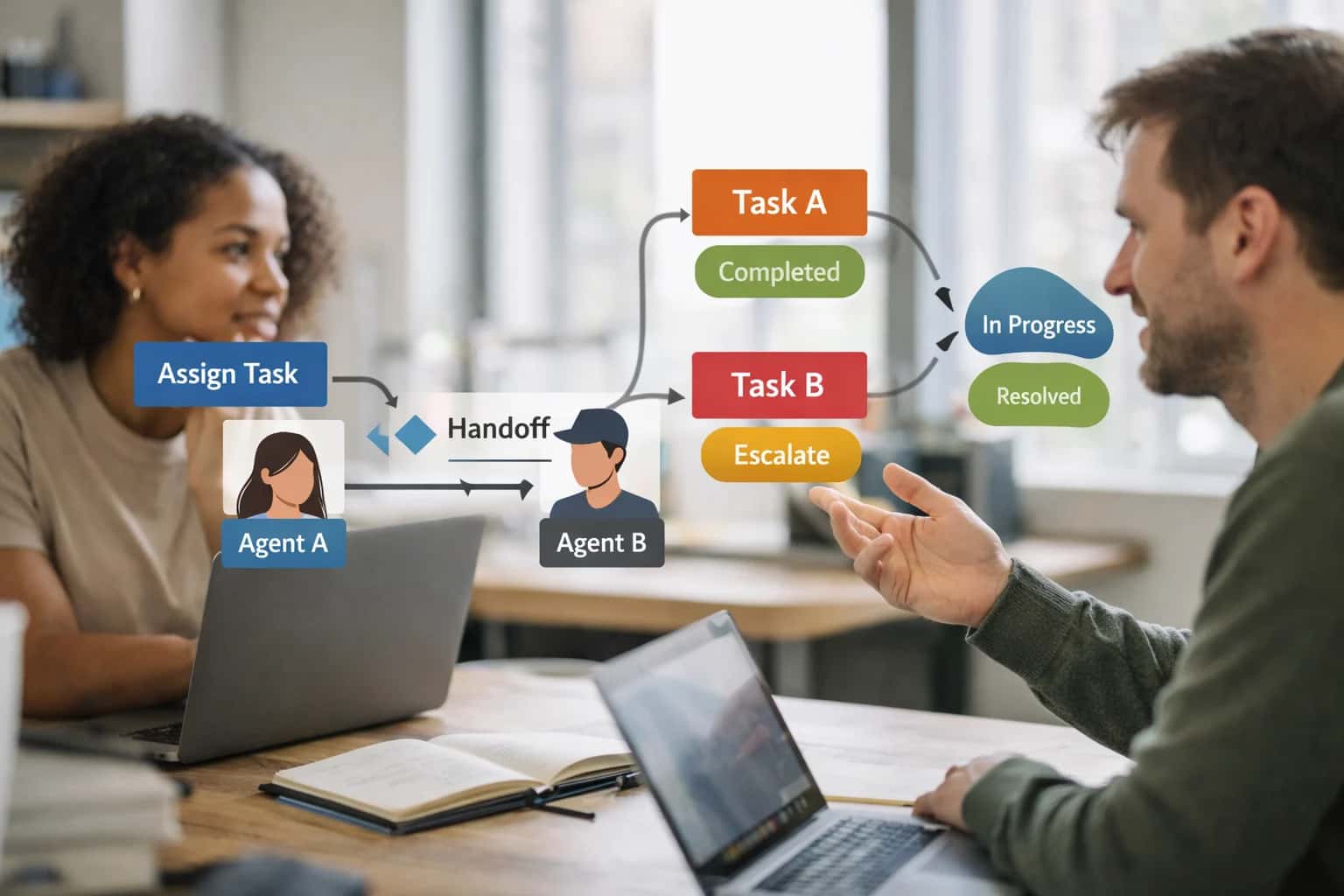
ARCHITECTURE & ROLLOUT
Where AI Fits into OPERA Mobile Workflows
A practical blueprint for embedding AI agents into mobile extensions of Oracle OPERA to empower managers and staff on the move.
Implementation typically involves a middleware layer that subscribes to OPERA Cloud events or polls the OPERA Mobile API. For example, an AI agent can be triggered by a lowOccupancyForecast webhook to analyze same-day booking patterns and competitor rates, then push a mobile notification with a recommended 'flash sale' rate and a one-tap approval button back into OPERA. For voice workflows, a secure integration with platforms like Amazon Alexa for Business or Google Assistant can allow a manager to ask, "Alexa, ask OPERA for today's VIP arrivals," where the AI agent handles the natural language query, fetches and summarizes the data from OPERA's GuestProfiles and Reservations modules, and returns a concise audio summary.
Rollout requires careful governance, starting with read-only agents for status reporting before progressing to agents with approved write-back actions (e.g., approving a comp stay, escalating a maintenance ticket). All agent interactions should be logged back to a dedicated AIAuditTrail object in OPERA or a sidecar database, linking the action to the user's OPERA ID. A phased approach is key: begin with a single-property pilot for mobile reporting agents, measure time saved on daily operational briefings, then expand to multi-property alerting and voice-controlled workflows.
ARCHITECTURE FOR MOBILE-FIRST AI AGENTS
Key Integration Surfaces in OPERA Mobile
Real-Time Data Access for Mobile Agents
The OPERA Mobile API provides read/write access to core guest and folio data, which is essential for building voice-activated or chat-based status agents for managers on the move. Key endpoints include:
- Guest Profile Search: Retrieve guest details, preferences, and stay history using name, confirmation number, or room number. This powers quick-lookup agents.
- Folio Inquiry: Access open charges, payments, and allowances. An AI agent can summarize a guest's current balance or recent transactions in natural language.
- Reservation Status: Check in/out status, room assignment, and special requests. This enables agents to answer common manager queries like "Is room 401 checked out yet?"
Integrating here allows AI to serve as a mobile copilot, reducing the need for managers to return to a workstation for basic information. Ensure your implementation respects rate limits and caches frequently accessed data to maintain mobile app performance.
ORACLE OPERA MOBILE PMS
High-Value AI Use Cases for Mobile Operations
Extend the power of OPERA to the field by embedding AI directly into mobile workflows. These use cases connect to OPERA Mobile's APIs and event streams to deliver intelligence where managers and staff need it most.
01
Voice-Activated Status Checks
Enable managers to query OPERA data hands-free via mobile. Workflow: A manager asks, 'What's the status of room 412?' The AI agent parses the query, calls the OPERA Mobile API for the room's housekeepingStatus and occupancyStatus, and returns a synthesized voice or text response. Value: Instant operational visibility without navigating menus, crucial during walk-throughs or emergencies.
Seconds
Query response time
02
Mobile Reporting Agents
Deploy AI copilots that generate and explain daily reports on-demand. Workflow: A director requests, 'Show me today's arrivals vs. departures by segment.' The agent fetches Reservations and Profiles data via the Mobile API, performs the analysis, and returns a summary with key anomalies highlighted. Value: Turns complex data pulls into conversational insights, empowering faster, data-driven decisions in the field.
Batch -> Real-time
Report access
03
Push-Notification Alert Triage
Use AI to prioritize and contextualize OPERA Mobile push alerts. Workflow: An alert for a No-Show or High-Balance folio is triggered. The AI system evaluates the guest's historyValue, current marketCode, and any attached comments, then routes a prioritized notification with suggested action (e.g., 'VIP guest - call personally'). Value: Reduces alert fatigue for mobile users by surfacing only the critical, context-rich notifications that require immediate action.
80% Reduction
In low-priority alerts
04
Mobile-Initiated Workflow Automation
Trigger multi-step OPERA and external processes from a mobile command. Workflow: A manager uses the mobile app to command, 'Prepare VIP arrival for Smith.' The AI orchestrator executes a sequence: checks the Reservation for amenities, creates a Task for housekeeping, updates the Guest Profile with preferences, and sends a pre-arrival message via the CRM integration. Value: Coordinates cross-departmental readiness from a single mobile interface, ensuring consistent VIP treatment.
1 Command
Replaces 5+ manual steps
05
Offline-Capable Guest Lookup
Empower staff with intelligent guest assistance during network outages. Workflow: A concierge's device loses connectivity. The AI system, using a locally cached and indexed subset of OPERA data (synced via Mobile API), still allows natural language queries like 'Find the guest in the blue jacket.' It searches cached Profiles and Reservations to provide relevant details. Value: Maintains service quality and data access when the network is unreliable, a common challenge in large properties.
100% Uptime
Critical guest service
06
Real-Time Translation for Guest Interactions
Break language barriers at the point of service using mobile devices. Workflow: A front-desk agent uses the OPERA Mobile app during check-in. The AI listens to the guest's speech, provides real-time translation via text/speech, and can even translate agent responses back to the guest. All interaction summaries are logged to the Reservation comments field. Value: Dramatically improves service for international travelers without requiring multilingual staff at every post.
Hours -> Minutes
To resolve language barriers
ORACLE OPERA MOBILE PMS INTEGRATION PATTERNS
Example AI-Powered Mobile Workflows
These workflows demonstrate how AI agents, integrated via the OPERA Mobile API, can transform handheld operations for managers and staff. Each pattern connects real-time PMS data with generative AI to automate tasks, surface insights, and trigger actions directly from mobile devices.
Trigger: A manager uses a voice command on their mobile device (e.g., "Status of 542" or "VIP arriving in 30 minutes").
Context Pulled: The AI agent authenticates via the OPERA Mobile API and queries:
- Room status (clean, dirty, inspected, out-of-order) from
ROOM_STATUS. - Current and next-day reservations for the room from
RESERVATIONS. - Guest profile and history for any associated reservation from
GUEST_PROFILES. - Any pending maintenance requests or housekeeping notes.
Agent Action: A multimodal LLM (e.g., GPT-4o) processes the query, synthesizes the data, and generates a concise, natural-language summary.
System Update / Next Step: The summary is delivered via push notification or in-app message. For a VIP check, the agent can also:
- Automatically check the pre-arrival checklist in OPERA.
- If an item is missing (e.g., amenity not set), create a task in OPERA's
TASKSmodule assigned to the relevant department. - Send a confirmation alert back to the manager.
Human Review Point: The manager reviews the summary and any created tasks. The agent does not change room status or post charges without explicit confirmation.
MOBILE-FIRST OPERATIONS
Implementation Architecture: Connecting AI to OPERA Mobile
A technical blueprint for embedding AI agents and workflows into the Oracle OPERA Mobile PMS to empower on-the-go managers and staff.
The integration connects AI to OPERA Mobile's core surfaces: the Guest Lookup API, Task Management modules, and Real-Time Alerting webhooks. This allows AI to act as a co-pilot for mobile users, processing voice or text queries like "status of room 401" or "generate today's arrival report" and returning synthesized data from OPERA's reservation, housekeeping, and folio objects. The architecture typically involves a secure middleware layer that authenticates with OPERA's OAuth, translates natural language into precise OXI or direct database queries (where permitted), and formats the response for mobile push notifications or in-app chat.
Key implementation patterns include:
- Voice-Activated Status Agents: Using speech-to-text and the OPERA Mobile API to fetch real-time room status, expected departure times, or guest details, reducing manual navigation for managers inspecting the property.
- Mobile Reporting Agents: Scheduled or on-demand AI jobs that query OPERA's reporting views, summarize key metrics (e.g., today's ADR, occupancy, outstanding balances), and push a concise narrative to designated mobile users.
- Event-Driven Alerting: Subscribing to OPERA's event streams for critical triggers (e.g., high-balance folio, VIP check-in, maintenance request). An AI layer evaluates context, prioritizes the alert, and routes a smart notification with suggested actions to the appropriate staff member's mobile device.
Rollout requires careful governance: AI responses should be clearly labeled as assistant-generated, all queries must be logged for audit trails, and human-in-the-loop approval steps should be configured for sensitive operations like adjusting rates or comping charges directly from mobile. The integration is designed to augment, not replace, the mobile interface—shifting routine information retrieval from minutes to seconds and allowing staff to focus on high-touch guest interactions. For a deeper dive into core OPERA integrations, see our guide on AI Integration for Oracle OPERA.
MOBILE PMS INTEGRATION PATTERNS
Code and Payload Examples
Voice-Actated Guest Lookup
A common use case for OPERA Mobile PMS is enabling managers to perform quick status checks via voice commands (e.g., "What's the status of room 402?"). This requires an AI agent that processes natural language, calls the OPERA Mobile API, and returns a structured summary.
The workflow involves:
- Voice-to-Text & Intent Recognition: Convert speech to text and identify the intent (e.g.,
room_status). - Entity Extraction: Parse the room number from the query.
- API Call: Fetch the current room status from OPERA Mobile.
- Response Generation: Format a concise, natural-language response for the mobile app or push notification.
python# Example: AI Agent handling a room status query import openai import requests # 1. Process user query (from voice) user_query = "What's the status of room 402?" # 2. Extract intent & entities (simplified example) # In production, use a dedicated NLU service or function-calling LLM. room_number = "402" # Extracted from query # 3. Call OPERA Mobile API for room details # Note: This is illustrative; consult Oracle documentation for exact endpoints. opera_api_url = "https://your-opera-instance.com/mobile/api/rooms/status" auth_token = "YOUR_OPERA_MOBILE_TOKEN" headers = { "Authorization": f"Bearer {auth_token}", "Content-Type": "application/json" } params = {"roomNumber": room_number} response = requests.get(opera_api_url, headers=headers, params=params) room_data = response.json() # e.g., {"status": "DIRTY", "guestName": "Smith", "departureDate": "2024-05-20"} # 4. Generate a natural language summary prompt = f"Summarize this room status for a hotel manager: {room_data}" ai_response = openai.chat.completions.create( model="gpt-4", messages=[{"role": "user", "content": prompt}] ) status_summary = ai_response.choices[0].message.content # Returns: "Room 402 is currently Dirty. Guest Smith is scheduled to depart on May 20th."
MOBILE OPERATIONS FOCUS
Realistic Time Savings and Operational Impact
This table shows the tangible impact of integrating AI agents and workflows into Oracle OPERA Mobile PMS, focusing on time savings for managers and operational improvements for mobile-first hotel staff.
| Mobile Workflow | Before AI | After AI | Key Impact & Notes |
|---|---|---|---|
Manager Status Check (e.g., Occupancy, ADR) | Manual login to desktop OPERA or wait for daily report | Voice query to mobile agent for real-time snapshot | Hours -> Seconds. Enables on-the-go decision making without interrupting workflow. |
Critical Alert Triage (e.g., system outage, high no-show rate) | Reactive; relies on email or manual monitoring | Proactive push notifications with AI-summarized context and suggested actions | Next-day awareness -> Real-time response. Reduces potential revenue loss and guest impact. |
Mobile Reporting Generation | Export data to spreadsheet, manual manipulation and charting | Natural language request ("show me last week's RevPAR by segment") to mobile agent | 30-60 minutes -> 2-3 minutes. Frees managers for analysis instead of data gathering. |
Guest Issue Escalation via Mobile | Front desk calls manager, relays fragmented details from OPERA notes | AI agent summarizes guest history, current issue, and past resolutions directly in mobile alert | 10-15 minute call for context -> 30-second review. Improves resolution quality and speed. |
Housekeeping Status Coordination | Radio or chat-based back-and-forth to confirm room statuses | Mobile agent provides real-time clean/dirty/inspected status via voice or chat query | Minutes of coordination per request -> Instant answer. Optimizes room turnover during peak hours. |
Daily Briefing for Department Heads | Manual compilation of key metrics from multiple OPERA reports | AI-generated, personalized mobile briefing sent at scheduled time with highlights and anomalies | Manager's 20-minute prep -> Automated delivery. Ensures consistent, data-driven start to shift. |
Mobile Audit Trail for Actions | Manual note-taking or reliance on memory for off-site decisions | AI agent logs voice commands and key decisions, syncing summaries back to OPERA guest/event notes | Unrecorded actions -> Automated, compliant audit trail. Essential for governance and handovers. |
ENTERPRISE-GRADE DEPLOYMENT FOR MOBILE PMS
Governance, Security, and Phased Rollout
A practical guide to deploying AI on OPERA Mobile with controlled access, audit trails, and incremental value delivery.
Integrating AI with Oracle OPERA Mobile PMS requires a security-first architecture that respects the platform's role-based access control (RBAC). Your implementation should authenticate AI agents using dedicated service accounts with scoped permissions—for example, granting read-only access to Reservations and Guest Profiles for a status-check agent, while a reporting agent may need Night Audit and Financial Summary modules. All AI-initiated actions, such as generating a push notification for a critical event or updating a mobile work log, must be logged in OPERA's audit trail with a clear AI Agent source identifier, ensuring full traceability for compliance and troubleshooting.
A phased rollout mitigates risk and builds operational confidence. Phase 1 typically starts with a single, high-impact workflow like a voice-activated status check for managers, deployed to a pilot group of super-users. This agent, triggered via a secure mobile webhook, queries OPERA's Reservation and Room Status APIs to deliver real-time occupancy or VIP arrival info. Phase 2 expands to mobile reporting agents that synthesize data from Daily Operations and Revenue modules into push-notification alerts for overbookings or system outages. Phase 3 introduces more complex, multi-step automations, such as an agent that reviews Housekeeping status and guest Requests to proactively alert managers of potential service delays, all while maintaining a human-in-the-loop approval for any system writes.
Governance is critical for mobile-scale AI. Establish a clear protocol for prompt management and model updates, storing approved prompts (e.g., for generating alert messages) in a version-controlled system. Implement circuit breakers to deactivate agents if API error rates spike or if anomalous data patterns are detected. Finally, align the rollout with property-level training, using the mobile interface itself to deliver quick-reference guides for new AI features. This controlled approach ensures the integration enhances mobile productivity without disrupting core OPERA operations or data integrity. For related architectural patterns, see our guide on AI Integration for Oracle OPERA.
Enabling Efficiency, Speed & Accuracy
Intelligent Analysis, Decision & Execution
We build AI systems for teams that need search across company data, workflow automation across tools, or AI features inside products and internal software.
Talk to Us
Search across company data
Give teams answers from docs, tickets, runbooks, and product data with sources and permissions.
Useful when people spend too long searching or get different answers from different systems.
Enterprise searchRAGPermissions
Read more
Automate internal workflows
Use AI to route work, draft outputs, trigger actions, and keep approvals and logs in place.
Useful when repetitive work moves across multiple tools and teams.
AI agentsWorkflow automationGovernance
Read more
Add AI to products and internal tools
Build assistants, guided actions, or decision support into the software your team or customers already use.
Useful when AI needs to be part of the product, not a separate tool.
AI integrationDecision supportModel routing
Read moreAI INTEGRATION FOR MOBILE PMS
Frequently Asked Questions
Practical questions for technical leaders evaluating AI integration with Oracle OPERA Mobile PMS, covering architecture, security, and rollout.
Secure integration requires a layered approach focused on OPERA's mobile-specific endpoints and hospitality data governance.
Primary Architecture:
- API Gateway & Middleware: Deploy a secure middleware layer (e.g., a cloud function or containerized service) that acts as a bridge. This service handles authentication with OPERA's OAuth 2.0 or API keys, manages rate limits, and performs initial request validation.
- Context Enrichment: The middleware queries the OPERA Mobile API for the necessary context. For a voice status check, this might involve a call to
GET /mobile/api/v1/reservations/{confNumber}to pull the guest's folio, room status, and upcoming charges. - Secure AI Call: The enriched context is sent to your AI model endpoint (e.g., Azure OpenAI, Anthropic) over a private connection. The prompt is engineered to only perform actions on the provided data.
- Action or Response: The AI's response (a summary, an alert, a structured data payload) is returned through the middleware. If a system update is needed (e.g., creating a task), the middleware makes the authorized
POSTcall back to OPERA's API.
Key Security Controls:
- Role-Based Access (RBAC): The service account used for the API connection should have the minimum necessary permissions, typically a custom role for mobile read/write operations.
- Data Masking: Implement PII masking in the middleware before data is sent to the AI model for non-essential fields.
- Audit Logging: Log all API calls from the middleware to OPERA, including the user/agent context and the data accessed, for compliance.

About the author
Prasad Kumkar
CEO & MD, Inference Systems
Prasad Kumkar is the CEO & MD of Inference Systems and writes about AI systems architecture, LLM infrastructure, model serving, evaluation, and production deployment. Over 5+ years, he has worked across computer vision models, L5 autonomous vehicle systems, and LLM research, with a focus on taking complex AI ideas into real-world engineering systems.
His work and writing cover AI systems, large language models, AI agents, multimodal systems, autonomous systems, inference optimization, RAG, evaluation, and production AI engineering.
LinkedIn
Limited slotsGet a Free AI Consultation
Partnered with leading AI, data, and software stack.





How We Work
Custom AI workflows for your Business
One-fit-all AI don't work for modern businesses. At Inferensys, we aim to understand your business & custom requirements; which we use to define most efficient agentic workflows, the data, and the tools for your business.
01
Review the use case
We understand the task, the users, and where AI can actually help.
Read more02
Pick the right approach
We define what needs search, automation, or product integration.
Read more03
Build the first useful version
We implement the part that proves the value first.
Read more04
Improve from there
We add the checks and visibility needed to keep it useful.
Read moreThe first call is a practical review of your use case and the right next step.
Talk to Us