AI integration for Oracle OPERA Group Bookings focuses on three core modules: the Central Reservation System (CRS) for availability and blocks, Sales & Catering for event details and BEOs, and Accounts Receivable for complex billing. The primary integration points are OPERA's Group Booking API, Event Management objects, and the Folio/Posting engine. AI agents can be triggered by new RFPs in the sales queue, changes to rooming lists, or the creation of a master folio, acting as a copilot for sales managers and group coordinators.

Integration
AI Integration for Oracle OPERA Group Bookings
A technical blueprint for embedding AI agents into Oracle OPERA's group business workflows to automate RFP analysis, block management, rooming list optimization, and contract generation.
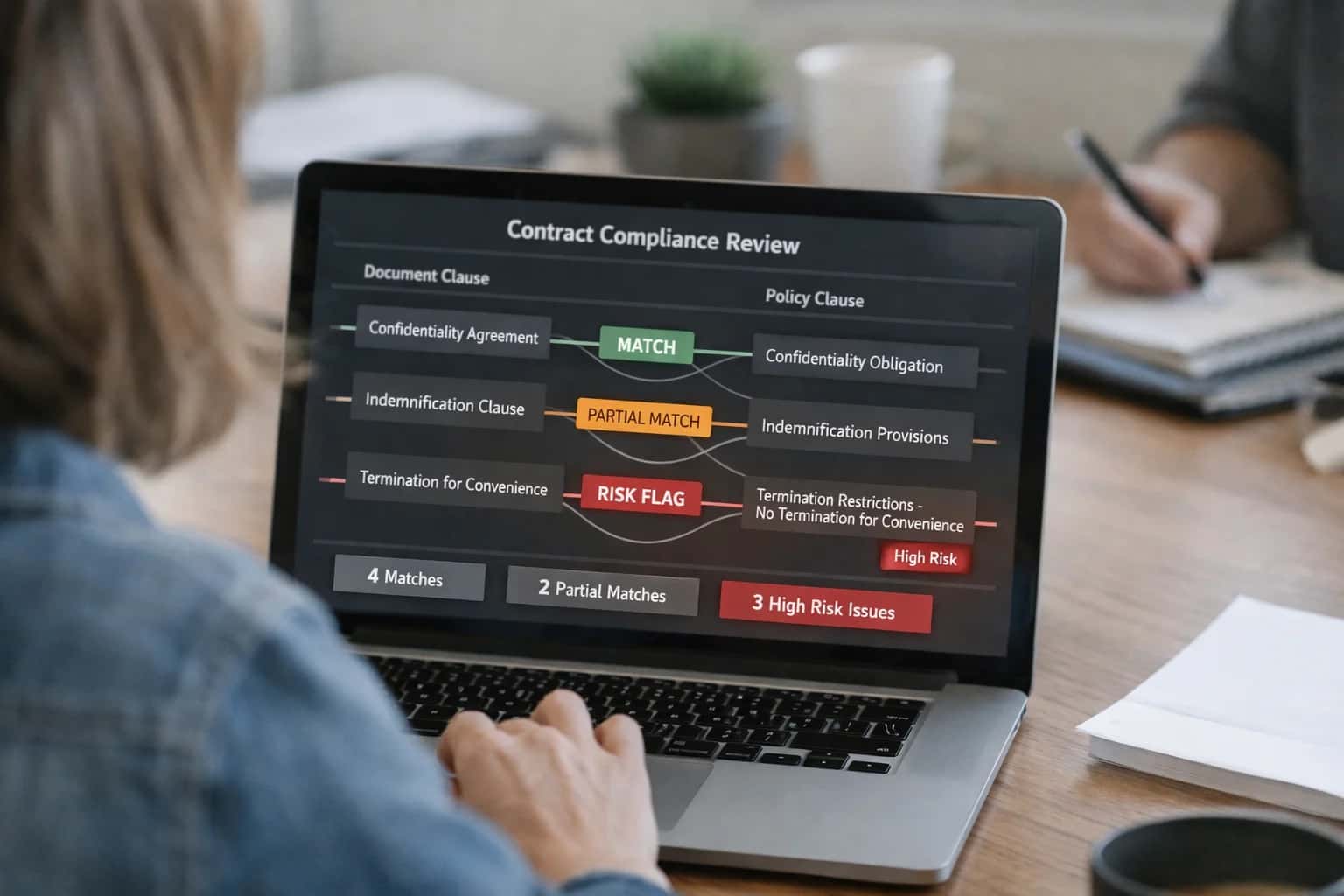
ARCHITECTURE FOR COMPLEX BOOKINGS
Where AI Fits into OPERA Group Business Workflows
Integrating AI into Oracle OPERA's group booking workflows automates high-touch, manual processes from RFP to billing.
A practical workflow begins when an RFP email is ingested. An AI agent analyzes the request against OPERA's block availability, historical pick-up for similar groups, and competing group holds on the same dates. It then drafts a proposal response with optimized room mix, rates, and concessions, which is pushed back into OPERA as a draft group record for manager review. During the booking lifecycle, another agent monitors the rooming list module, flagging discrepancies, suggesting room type upgrades based on remaining inventory, and automating attendee communication for information collection.
For implementation, AI systems typically sit as a middleware layer, subscribing to OPERA's webhooks for key events (e.g., Group.Status.Changed) and making authenticated API calls to read and update records. Governance is critical: all AI-generated contracts or billing proposals should be routed through OPERA's existing approval workflows and maintain a full audit trail within the system. A phased rollout starts with RFP triage and summarization, then moves to automated block management, before tackling the complexity of dynamic billing and attrition analysis.
ARCHITECTURE FOR GROUP BUSINESS AUTOMATION
Key OPERA Modules and Integration Surfaces for AI
Core Data Objects for AI Orchestration
The Group Blocks and Rooming List modules are the primary surfaces for AI-driven group management. AI agents can be integrated via OPERA's API or database triggers to automate the lifecycle of a group booking.
Key Integration Points:
- Block Creation & RFP Analysis: Ingest incoming RFPs (often PDF/email) via webhook. An AI agent can extract key terms (dates, room types, rates, attrition clauses) and automatically create a tentative block in OPERA, populating fields like
BLOCK_NAME,START_DATE,END_DATE, andROOM_NIGHTS. - Dynamic Rooming List Management: As group details solidify, an AI workflow can process attendee lists (from spreadsheets or registration platforms) to assign specific rooms (
ROOM_NUMBER), manage name changes, and track special requests (GUEST_PREFERENCES). This reduces manual data entry errors. - Automated Cut-off Date Actions: AI can monitor the
CUTOFF_DATEfield and trigger automated communications to the group contact for rooming list finalization or release unused rooms back into general inventory.
ORACLE OPERA INTEGRATION PATTERNS
High-Value AI Use Cases for Group Bookings
Group business in OPERA involves complex, manual workflows from RFP to departure. These AI integration patterns target specific modules and surfaces to automate analysis, reduce errors, and accelerate contract-to-cash cycles.
01
Automated RFP Analysis & Scoring
AI agents ingest incoming RFPs (email, web form) and connect to OPERA Sales & Catering to auto-populate lead records. They analyze historical data from OPERA Business Intelligence to score lead quality, predict conversion likelihood, and recommend competitive rate/space offers. This shifts manual triage from hours to immediate prioritization for sales managers.
Hours -> Minutes
Lead Triage
02
Intelligent Block & Rooming List Management
Integrates with the OPERA Group Blocks module. AI monitors pick-up against the block, automatically suggests room type reallocations based on forecasted demand, and identifies potential wash. For rooming lists, it parses unstructured guest lists (PDFs, spreadsheets), matches to profiles in OPERA Guest History, and flags discrepancies for review before bulk loading.
Batch -> Real-time
Block Optimization
03
AI-Generated Group Contracts & Proposals
Leverages data from the OPERA Group Profile and Catering Event Order modules. An AI workflow drafts initial contract language and BEOs using approved clause libraries, populates rates/terms, and highlights non-standard requests for legal review. This ensures consistency and reduces back-and-forth drafting cycles.
Same Day
Initial Draft
04
Dynamic Group Billing & Folio Reconciliation
Post-stay, AI agents analyze complex group folios in OPERA Accounts Receivable. They automatically segment charges (master account, rooming list, incidental), identify posting errors or missing authorizations, and generate a summarized billing proposal with narrative for the group contact. This cuts reconciliation time for the accounting team.
1-2 Days Saved
Per Group Departure
05
Group Attrition & Cancellation Forecasting
Connects to OPERA Reservation and Forecasting data. AI models continuously assess group pick-up patterns against the contract, predicting final room nights and potential attrition liabilities. Alerts are pushed to sales managers via OPERA dashboard integrations, enabling proactive conversations with group contacts.
Proactive Alerts
Reduce Revenue Risk
06
Post-Event Group Feedback Synthesis
Integrates with survey tools and OPERA's guest profile system. AI aggregates feedback from group attendees, performs sentiment analysis on comments, and summarizes key themes (e.g., banquet service, check-in experience). The synthesis is attached to the OPERA Group Profile for future sales reference and operational improvement.
Batch -> Insight
Feedback Analysis
ORACLE OPERA INTEGRATION PATTERNS
Example AI-Automated Group Workflows
These are production-ready workflow examples showing how AI agents connect to OPERA's group modules, automating complex, manual processes from RFP intake to final billing. Each pattern uses OPERA's APIs, webhooks, and data model to trigger actions, pull context, and update records.
Trigger: A new Request for Proposal (RFP) is entered into OPERA's Sales & Catering module or arrives via email and is logged.
Context/Data Pulled: The AI agent retrieves the RFP record and analyzes:
- Group details (dates, room block size, meeting space requirements, food & beverage budget).
- Historical data for similar group segments and dates from OPERA's history tables.
- Current availability and competing group blocks from OPERA's inventory.
- Corporate account history and negotiated rates (if applicable).
Model/Agent Action: A multi-step agent:
- Classifies the RFP's priority using historical win-rate and profitability data.
- Generates a draft group contract with proposed rates, rooming allocations, and concessions, respecting OPERA's configured business rules (minimum revenue, attrition clauses).
- Drafts a personalized email response to the planner, highlighting key selling points.
System Update/Next Step: The draft contract is saved as a PDF attachment to the Group Master record. The drafted email is queued in the salesperson's OPERA activity log for review and send.
Human Review Point: The sales manager reviews and approves the AI-generated contract and email before anything is sent to the client. The agent provides a confidence score and rationale for its recommendations.
GROUP BOOKINGS WORKFLOW AUTOMATION
Implementation Architecture: Connecting AI to OPERA
A technical blueprint for integrating AI agents into Oracle OPERA's group booking lifecycle, from RFP to final billing.
Integrating AI into OPERA's group business workflows requires a multi-layered architecture that respects the platform's data model. The core connection is via the OPERA Sales & Catering (S&C) API or direct database integration for on-premise deployments, focusing on key objects: Group Blocks, Rooming Lists, Business Profiles, Reservations, and Event Orders. AI agents are deployed as middleware services that listen for webhooks (e.g., new RFP creation, block modification) and execute tasks like analyzing RFP text for group requirements, forecasting displacement impact against transient demand, and drafting contract clauses.
A production implementation typically involves three coordinated systems: 1) An Orchestration Agent that sequences multi-step workflows (e.g., receives an RFP, triggers analysis, routes for approval, updates the block); 2) Specialized Tools for document intelligence (scanning PDF proposals), data enrichment (pulling company data from external sources), and optimization (suggesting room allocations); and 3) A Governance Layer that logs all AI actions to OPERA's audit trail, requires human-in-the-loop approvals for critical changes like contract generation, and enforces business rules on rate integrity and commission structures. This ensures the AI operates within the guardrails of hotel policy.
Rollout is phased, starting with assistive copilots for sales managers—such as an RFP summarization tool in their OPERA console—before progressing to semi-automated workflows like automated rooming list population from a spreadsheet or AI-generated billing proposals. The final phase involves closed-loop automation for high-volume, low-complexity groups, where the AI can handle the entire booking from qualified lead to confirmed block, with oversight. This staged approach builds trust, allows for tuning against OPERA's specific configuration, and delivers incremental ROI by reducing manual data entry, accelerating response times, and minimizing allocation errors in complex group blocks.
ORACLE OPERA GROUP BOOKINGS
Code and Payload Examples
Automating Group Request Evaluation
An AI agent can ingest incoming RFPs from email or a web portal, parse the unstructured text, and score them against hotel criteria. The agent extracts key entities like dates, room block size, food & beverage minimum, and history with the group. It then calls the OPERA Sales & Catering (S&C) API to create a preliminary opportunity record, pre-populating fields with the extracted data and an AI-generated score.
Example Python payload for creating a scored opportunity:
pythonimport requests # Payload from AI analysis of RFP text opportunity_payload = { "accountId": "CORP_12345", # Matched from master account list "name": "Global Tech Summit 2025", "stage": "Qualified Lead", "probability": 0.75, # AI-generated score "estimatedValue": 125000.00, "customFields": { "aiRfpScore": 82, "extractedRoomNights": 450, "extractedFbMinimum": 25000, "primaryContact": "Jane Doe", "decisionDate": "2024-11-15", "competition": "Hotel Marquis" # Extracted from RFP text }, "notes": "AI Analysis: High-value repeat customer. Strong F&B spend. Dates conflict with city-wide convention; check availability pressure." } # POST to OPERA S&C API response = requests.post( "https://{opera_instance}/api/sales/v1/opportunities", json=opportunity_payload, headers={"Authorization": "Bearer {api_token}"} )
AI FOR GROUP BOOKING OPERATIONS
Realistic Time Savings and Operational Impact
This table illustrates the measurable impact of integrating AI agents into Oracle OPERA's group booking workflows, focusing on time savings, error reduction, and improved staff productivity.
| Metric | Before AI | After AI | Notes |
|---|---|---|---|
RFP Initial Triage & Scoring | Manual review, 30-60 minutes per RFP | AI-assisted scoring & summary in <5 minutes | Revenue manager reviews AI-ranked shortlist; human approval remains |
Block Creation & Rooming List Draft | Manual entry, 1-2 hours for complex groups | AI-generated draft in 15-20 minutes | Agent reviews and adjusts AI-proposed allocations against real-time inventory |
Contract & Billing Proposal Drafting | Copy-paste from templates, 2-3 hours | AI-assembled first draft in 30 minutes | AI pulls clauses from approved library and populates with RFP terms; legal review required |
Post-Event Folio Reconciliation | Manual line-item review, 4-8 hours | AI anomaly detection & summary in 1 hour | AI flags discrepancies (e.g., missing F&B covers) for focused human review |
Group Guest Communication (Pre-Arrival) | Bulk emails, manual list management | Personalized, triggered messaging workflows | AI segments guests by arrival day/package; sends tailored info & collects dietary needs |
Yield Analysis for Group Displacement | Spreadsheet modeling, next-day analysis | Real-time displacement scoring during RFP review | AI models impact of proposed group on transient revenue; supports same-day decisioning |
Master Account Billing Audit | Periodic manual audit, risk of missed charges | Continuous AI audit against signed BEOs | AI compares posted charges to contract terms nightly; generates exception report |
ENTERPRISE INTEGRATION PATTERNS
Governance, Security, and Phased Rollout
A practical framework for deploying AI into OPERA group workflows with controlled risk and measurable impact.
Production AI for OPERA group bookings requires a secure, event-driven architecture that respects the system's data model and business logic. We typically implement a middleware layer that subscribes to OPERA's Group Block, Profile, and Reservation APIs via webhooks for events like RFP creation, block modification, or rooming list updates. This layer, often built on a secure cloud service, hosts the AI agents, manages prompt templates, and calls approved LLM APIs. All data flows are encrypted in transit, and sensitive PII or commercial terms from group contracts are masked or pseudonymized before processing. The system writes all AI-generated suggestions—like proposed contract clauses or optimized room allocations—back to designated custom fields in OPERA or a linked system of record, maintaining a clear audit trail of machine-generated content for review.
A phased rollout is critical for user adoption and risk management. We recommend starting with a non-transactional copilot for sales managers. Phase 1 involves an AI agent that analyzes incoming RFPs from the OPERA Sales & Catering module, summarizing key requirements (dates, room nights, rate tiers) and pulling historical data on similar groups to provide a first-draft revenue assessment. This gives the team value without automating any system writes. Phase 2 introduces automated drafting for non-binding sections of group contracts and billing proposals, saving hours of manual work. These drafts are saved to a staging area in OPERA or SharePoint, requiring manager approval before becoming official. The final phase focuses on predictive optimization, where AI suggests real-time adjustments to room blocks based on pickup patterns, triggering alerts in OPERA for the coordinator to review and action.
Governance is built into the workflow. Every AI-generated output is tagged with a confidence score and source data references. A human-in-the-loop approval step is mandatory for any AI action that modifies a confirmed block, updates a rooming list, or generates a formal contract attachment. Role-based access in OPERA ensures only authorized users (e.g., Group Sales Director, Revenue Manager) can approve these suggestions. Furthermore, we implement regular model evaluation and drift detection to ensure the AI's recommendations on rate optimization or displacement analysis remain aligned with the hotel's commercial strategy, with performance reviewed in monthly business meetings alongside traditional OPERA reports.
Enabling Efficiency, Speed & Accuracy
Intelligent Analysis, Decision & Execution
We build AI systems for teams that need search across company data, workflow automation across tools, or AI features inside products and internal software.
Talk to Us
Search across company data
Give teams answers from docs, tickets, runbooks, and product data with sources and permissions.
Useful when people spend too long searching or get different answers from different systems.
Enterprise searchRAGPermissions
Read more
Automate internal workflows
Use AI to route work, draft outputs, trigger actions, and keep approvals and logs in place.
Useful when repetitive work moves across multiple tools and teams.
AI agentsWorkflow automationGovernance
Read more
Add AI to products and internal tools
Build assistants, guided actions, or decision support into the software your team or customers already use.
Useful when AI needs to be part of the product, not a separate tool.
AI integrationDecision supportModel routing
Read moreORACLE OPERA GROUP BOOKINGS
Frequently Asked Questions
Common technical and operational questions about integrating AI agents and workflows into Oracle OPERA's complex group and catering modules.
AI integrations typically connect via OPERA's Sales & Catering API (SCAPI) or direct database access for on-premise deployments. Key data objects include:
- Group Blocks (
BLOCKS): The core reservation entity. - Rooming Lists (
ROOMING_LIST): Individual guest assignments within a block. - Business Profiles (
BUSINESS_PROFILE): Company and travel agent records. - Event Orders (
EVENT_ORDER): Banquet and meeting space bookings. - Quotes and Proposals (
QUOTE): Rate and contract drafts.
An AI agent acts as a middleware layer, querying these objects via API, processing unstructured data (like RFPs in emails), and writing back structured updates—such as creating a new block header or updating a rooming list status—using OPERA's standard transaction codes to maintain data integrity.

About the author
Prasad Kumkar
CEO & MD, Inference Systems
Prasad Kumkar is the CEO & MD of Inference Systems and writes about AI systems architecture, LLM infrastructure, model serving, evaluation, and production deployment. Over 5+ years, he has worked across computer vision models, L5 autonomous vehicle systems, and LLM research, with a focus on taking complex AI ideas into real-world engineering systems.
His work and writing cover AI systems, large language models, AI agents, multimodal systems, autonomous systems, inference optimization, RAG, evaluation, and production AI engineering.
LinkedIn
Limited slotsGet a Free AI Consultation
Partnered with leading AI, data, and software stack.





How We Work
Custom AI workflows for your Business
One-fit-all AI don't work for modern businesses. At Inferensys, we aim to understand your business & custom requirements; which we use to define most efficient agentic workflows, the data, and the tools for your business.
01
Review the use case
We understand the task, the users, and where AI can actually help.
Read more02
Pick the right approach
We define what needs search, automation, or product integration.
Read more03
Build the first useful version
We implement the part that proves the value first.
Read more04
Improve from there
We add the checks and visibility needed to keep it useful.
Read moreThe first call is a practical review of your use case and the right next step.
Talk to Us