An effective AI integration for Cloudbeds front desk operations connects to three primary surfaces: the Cloudbeds API for real-time data access, the Cloudbeds front-end (via browser extension or embedded widget) for agent copilot interfaces, and Cloudbeds webhooks for event-driven automation. The core data objects an AI system must interact with are Reservations, Guests, Folios, and Tasks. This allows the AI to perform context-aware actions like pulling up a guest's full stay history with a natural language query (e.g., "Show me Ms. Chen's folio from last October") or initiating a check-out procedure by accessing the correct reservation record and its associated charges.

Integration
AI Integration for Cloudbeds Front Desk Operations
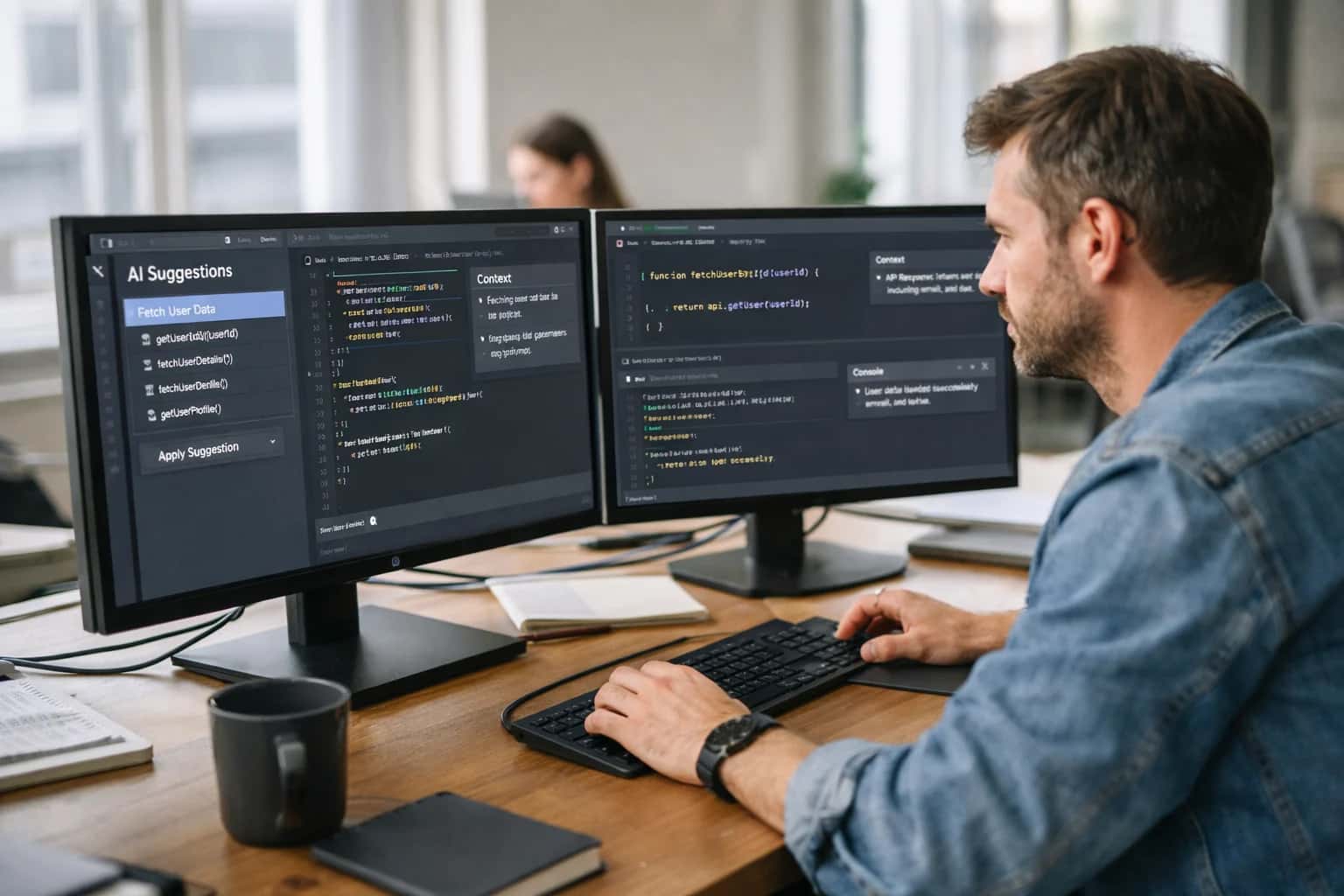
Embed AI copilots directly into Cloudbeds to assist front desk agents with guest lookups, check-in/out procedures, folio inquiries, and operational questions, reducing manual search time and improving guest service speed.
A PRACTICAL ARCHITECTURE GUIDE
Where AI Fits into the Cloudbeds Front Desk Workflow
A technical blueprint for embedding AI agents into the Cloudbeds front desk to reduce manual lookups, accelerate guest service, and automate routine procedures.
Implementation typically involves a middleware layer that handles authentication, manages API rate limits, and orchestrates between the LLM and Cloudbeds. For example, a front desk agent copilot can be built as a chat interface that uses the Cloudbeds API to:
- Execute quick guest lookups by name, confirmation number, or room number.
- Summarize a folio's outstanding charges or payment history.
- Generate a step-by-step guide for complex procedures like splitting a folio or applying a manual adjustment, referencing Cloudbeds' own help documentation.
- Draft personalized check-in/out messages by pulling guest preferences and stay details. The impact is operational: turning 2-3 minute manual navigation tasks into 10-second conversational interactions.
Rollout should be phased, starting with read-only queries to build trust, then progressing to assisted writes (where the agent reviews and confirms an AI-suggested action). Governance is critical: all AI-generated actions should be logged in an audit trail linked to the Cloudbeds user ID, and sensitive operations like posting charges require a human-in-the-loop approval step. This architecture ensures the AI augments—without disrupting—the established front desk workflow and security model of the Cloudbeds platform.
FRONT DESK OPERATIONS
Cloudbeds Integration Surfaces for AI Copilots
Core Reservation Data for AI Agents
The Cloudbeds API provides comprehensive access to reservation objects, which serve as the primary data source for front desk AI copilots. An effective integration surfaces key fields for quick guest lookups and operational context.
Key API Objects & Fields:
reservation_id,status(checked-in, checked-out, no-show)guest_first_name,guest_last_name,guest_email,guest_phonearrival_date,departure_date,room_type_name,room_numberbalance,total_amount,payment_statusspecial_requests,tags(VIP, early check-in)
AI Use Case Example: A front desk agent asks, "What room is John Smith in?" The AI copilot queries the reservations endpoint with a fuzzy name match, retrieves the room number, arrival date, and any special requests, and presents a concise summary in seconds, eliminating manual search through multiple tabs.
OPERATIONAL AUTOMATION
High-Value AI Use Cases for Cloudbeds Front Desk
Integrate AI directly into the Cloudbeds front desk interface and API to reduce manual lookups, accelerate guest service, and resolve common inquiries without leaving the PMS. These use cases are designed for front desk agents, supervisors, and night auditors.
01
Guest Lookup & Folio Copilot
Agents ask natural language questions like "What's the balance for Smith in room 205?" or "When did the Johnson party check in?" An AI agent connected to the Cloudbeds API retrieves the exact folio, reservation details, and guest notes in seconds, displaying a concise summary within the agent's existing interface. Eliminates tab-switching and manual filtering in the reservations grid.
30s -> 5s
Info retrieval
02
Automated Check-in/Out Workflow Assistant
Guides agents step-by-step through complex procedures. At check-in, the AI verifies ID against the booking, prompts for incidental holds, assigns the best available room based on preferences and housekeeping status, and prints keys. At check-out, it reviews the folio for pending charges, processes the final payment, and generates the receipt. Reduces training time and ensures policy compliance.
Batch -> Guided
Procedure support
03
24/7 Policy & Procedure Q&A
A secure, internal knowledge agent trained on the property's SOPs, rate plans, and package details. Front desk staff ask: "What's the pet fee for a suite?" or "How do I process a late check-out for a VIP?" The AI provides the exact policy, steps, and a link to the relevant Cloudbeds screen. Cuts down on supervisor interruptions, especially during night audit.
1 sprint
To deploy
04
Incident & Request Triage Agent
When a guest calls or messages with an issue (e.g., "TV not working," "room too cold"), the front desk agent describes it to the AI. The agent classifies the request, checks if it's a known issue, retrieves the correct internal contact or vendor, and can even draft a work order in Cloudbeds' maintenance module or a message to engineering. Prioritizes and routes issues faster.
Manual -> Triaged
Request routing
05
Group & Multi-Room Booking Support
Handles the complexity of group arrivals and multi-room reservations. The AI analyzes the block in Cloudbeds, pre-generates rooming lists, identifies special requests across rooms, and helps agents quickly assign rooms contiguously. It can also summarize charges across the master folio. Turns a 30-minute manual process into a coordinated workflow.
Hours -> Minutes
Group coordination
06
Night Audit Reconciliation Assistant
Integrates with Cloudbeds' night audit process to automate the review of daily transactions. The AI agent scans posted charges, payments, and adjustments, flagging potential discrepancies (e.g., missing deposits, outlier postings) for the auditor's review. It can generate a plain-language summary of the day's financial activity. Reduces audit time and surfaces exceptions earlier.
Same night
Exception review
CLOUDBEDS INTEGRATION PATTERNS
Example AI-Assisted Front Desk Workflows
These are concrete examples of how AI agents and copilots can be integrated into Cloudbeds' front desk operations. Each workflow connects to specific Cloudbeds APIs and surfaces, automating manual tasks while keeping agents in control.
Trigger: Front desk agent opens a reservation or types a guest name into the search bar.
AI Agent Action:
- The AI copilot, running as a browser extension or integrated sidebar, listens for the reservation ID or guest name.
- It calls the Cloudbeds API to fetch the core reservation and guest profile data.
- Simultaneously, it queries connected systems (with proper permissions) to retrieve additional context:
- Past stay notes from the CRM integration.
- Recent support tickets or special requests.
- Loyalty tier and point balance from the loyalty module.
- The AI synthesizes this data into a concise, natural-language summary.
System Update / Agent View: A summary panel appears next to the Cloudbeds interface for the agent:
"Maria Chen (Gold Member, 12,500 pts). Last stayed 6 months ago in Room 314. Noted preference for a high floor and feather-free pillows. Submitted a pre-arrival message asking about late check-out options. Her current booking is for a King Deluxe, arriving today at 3:00 PM."
Human Review Point: The agent reviews the summary for accuracy before engaging the guest, ensuring no sensitive or incorrect information is presented.
FRONT DESK OPERATIONS
Implementation Architecture: Connecting AI to Cloudbeds
A technical blueprint for integrating AI copilots into Cloudbeds' front desk workflows to reduce manual lookups and accelerate guest service.
The integration connects to Cloudbeds via its REST API and Webhooks, focusing on key data objects: Reservations, Guests, Folios, and Tasks. An AI agent layer, typically deployed as a secure microservice, listens for events like new check-ins or folio inquiries. It uses this context to query a RAG-augmented knowledge base—populated with property FAQs, policy documents, and historical guest interactions—to provide instant, accurate answers to front desk agents within the Cloudbeds interface or a connected communication channel like Slack or Microsoft Teams.
A core workflow automates the guest lookup and summary process. When an agent initiates a query (e.g., "guest Smith arriving today"), the system calls the Cloudbeds API for the reservation, enriches it with past stay notes from the vector store, and uses an LLM to generate a concise summary: arrival time, special requests, loyalty tier, and any unresolved folio items. This reduces a multi-screen navigation task to a single, conversational interaction. For common operational questions (e.g., "late check-out policy for a VIP" or "how to process a refund"), the AI copilot retrieves the relevant policy document, interprets it in the current guest's context, and provides step-by-step guidance, often including the exact Cloudbeds menu path or API call needed.
Rollout is phased, starting with read-only assistance for a pilot group of agents, governed by audit logs of all AI interactions and a human-in-the-loop review step for any suggested transactional actions (like posting a charge). The AI service must respect Cloudbeds' rate limits and implement robust error handling for API downtime. This architecture doesn't replace the PMS but layers intelligence atop it, aiming to turn 5-minute manual investigations into 30-second assisted resolutions, improving both agent efficiency and guest satisfaction scores.
FRONT DESK INTEGRATION PATTERNS
Code and Payload Examples
Real-Time Guest Profile Retrieval
Front desk agents often need to quickly pull up guest details during check-in or service interactions. Instead of manual searches, an AI copilot can use the Cloudbeds API to fetch comprehensive profiles, including stay history, preferences, and notes, and present a concise summary.
Example API Call (Python):
pythonimport requests # Authenticate and fetch guest by reservation ID def get_guest_profile(reservation_id, api_key): headers = {'api-key': api_key} # Fetch reservation details reservation_url = f'https://api.cloudbeds.com/api/v1.1/getReservation?reservationID={reservation_id}' reservation_resp = requests.get(reservation_url, headers=headers).json() # Extract guest ID and fetch full profile guest_id = reservation_resp['data']['guestID'] guest_url = f'https://api.cloudbeds.com/api/v1.1/getGuest?guestID={guest_id}' guest_resp = requests.get(guest_url, headers=headers).json() # Structure data for LLM context profile_context = { 'guest_name': guest_resp['data']['firstName'] + ' ' + guest_resp['data']['lastName'], 'preferences': guest_resp['data'].get('preferences', []), 'previous_stays': guest_resp['data'].get('stayHistory', []), 'current_booking_details': reservation_resp['data'] } return profile_context
This structured payload allows an AI agent to answer agent questions like "What room did this guest stay in last time?" or "Do they have any noted preferences?" instantly.
FRONT DESK AGENT WORKFLOWS
Realistic Time Savings and Operational Impact
This table shows how AI copilots integrated with Cloudbeds can reduce manual effort and improve service speed for common front desk tasks.
| Task / Workflow | Before AI | After AI | Operational Notes |
|---|---|---|---|
Guest Lookup & Profile Review | Manual search across multiple screens, 2-3 minutes | Instant retrieval with natural language query, <30 seconds | Agent remains in control; AI surfaces key notes, preferences, and recent interactions |
Folio Inquiry & Simple Charge Explanation | Agent navigates to folio, manually reviews line items, 3-5 minutes | AI summarizes charges, answers questions in chat, 1-2 minutes | Reduces call transfers to accounting; AI cites source data for transparency |
Check-in/Out Procedure Guidance | Agent follows memorized or printed checklist, prone to missed steps | AI provides step-by-step guidance in context, flags exceptions | Ensures compliance, especially for new hires; reduces training time |
Common Policy & FAQ Resolution | Agent searches knowledge base or asks supervisor, 2-4 minutes | AI provides instant, accurate answers sourced from property policies | Answers grounded in property rules; human verifies for complex cases |
Post-Stay Refund or Adjustment Request | Manual review of stay history, policy check, draft email, 10-15 minutes | AI drafts request with context, suggests approval path, 3-5 minutes | Manager approval required; AI prepares all documentation for review |
Inter-Departmental Request (e.g., Maintenance) | Agent calls or messages department, waits for acknowledgment | AI auto-creates & routes ticket via API, provides ETA, <1 minute | Creates audit trail in Cloudbeds; status updates flow back to agent |
Shift Handover & Priority Alert Summary | Manual note-taking, 10-15 minutes at shift end | AI auto-generates summary of open items & alerts, 2 minutes | Based on Cloudbeds activity log; ensures continuity and reduces missed follow-ups |
IMPLEMENTING AI FOR FRONT DESK OPERATIONS
Governance, Security, and Phased Rollout
A practical guide to securely deploying and governing AI copilots for Cloudbeds front desk agents.
A production AI integration for Cloudbeds front desk operations must be built on secure, governed access to the PMS API. This means implementing a dedicated service account with scoped permissions—typically read/write for reservations, guests, and folios—and never storing raw guest data in external AI systems. All tool calls to Cloudbeds should be logged with a full audit trail, linking each AI-generated action (like a folio lookup or check-in status update) to the initiating agent session and user. For sensitive operations, such as processing a payment or modifying a rate, the architecture should enforce a human-in-the-loop approval step before the API call is executed.
A phased rollout is critical for adoption and risk management. Start with a read-only pilot focused on agent assistance: deploy a copilot that can answer questions like "What's the ETA for guest in room 205?" or "Summarize the charges for the Smith reservation" by querying the Cloudbeds API. This provides immediate utility without operational risk. Phase two introduces controlled write-backs, such as automating the creation of a maintenance work order from a guest conversation or sending a pre-arrival message via Cloudbeds' messaging API, but only after agent review. The final phase enables multi-step workflows, like a fully automated late check-out process that updates the reservation, calculates the fee, posts it to the folio, and notifies housekeeping—all governed by a rules engine that respects property-specific policies.
Governance extends to the AI models themselves. Use a dedicated, fine-tuned model for hospitality terminology and Cloudbeds' data schema to reduce hallucinations. Implement a prompt management layer to ensure all queries are grounded with context like property ID and shift code. Regularly evaluate copilot performance against key metrics: reduction in average handle time for common inquiries, agent satisfaction scores, and accuracy of API calls made. This controlled, iterative approach ensures the AI augments your team's efficiency while maintaining the security and integrity of your core Cloudbeds operations. For a deeper technical dive on connecting to the Cloudbeds API, see our foundational guide on AI Integration for Cloudbeds.
Enabling Efficiency, Speed & Accuracy
Intelligent Analysis, Decision & Execution
We build AI systems for teams that need search across company data, workflow automation across tools, or AI features inside products and internal software.
Talk to Us
Search across company data
Give teams answers from docs, tickets, runbooks, and product data with sources and permissions.
Useful when people spend too long searching or get different answers from different systems.
Enterprise searchRAGPermissions
Read more
Automate internal workflows
Use AI to route work, draft outputs, trigger actions, and keep approvals and logs in place.
Useful when repetitive work moves across multiple tools and teams.
AI agentsWorkflow automationGovernance
Read more
Add AI to products and internal tools
Build assistants, guided actions, or decision support into the software your team or customers already use.
Useful when AI needs to be part of the product, not a separate tool.
AI integrationDecision supportModel routing
Read moreIMPLEMENTATION DETAILS
Frequently Asked Questions
Practical questions for technical teams planning AI integration into Cloudbeds front desk workflows.
Secure integration requires a dedicated service account with scoped API permissions, not a front desk user's credentials.
Typical Architecture:
- Service Account: Create a dedicated Cloudbeds user with a role granting minimal necessary permissions (e.g.,
Reservations: Read,Guest Profiles: Read,Folio: Read/Write). - API Gateway: Your AI agent calls a secure middleware API (your infrastructure) that handles authentication with Cloudbeds.
- Token Management: The middleware uses OAuth 2.0 client credentials flow to obtain and refresh access tokens from Cloudbeds.
- Data Flow: Agent → Secure Middleware (Auth) → Cloudbeds API.
Key Security Practices:
- Store API credentials in a secrets manager (e.g., AWS Secrets Manager, Azure Key Vault).
- Implement strict IP allow-listing for the middleware's outbound calls to Cloudbeds.
- Log all data access for audit trails. The AI agent should never store raw PII; it should retrieve, process, and forget within a session context.

About the author
Prasad Kumkar
CEO & MD, Inference Systems
Prasad Kumkar is the CEO & MD of Inference Systems and writes about AI systems architecture, LLM infrastructure, model serving, evaluation, and production deployment. Over 5+ years, he has worked across computer vision models, L5 autonomous vehicle systems, and LLM research, with a focus on taking complex AI ideas into real-world engineering systems.
His work and writing cover AI systems, large language models, AI agents, multimodal systems, autonomous systems, inference optimization, RAG, evaluation, and production AI engineering.
LinkedIn
Limited slotsGet a Free AI Consultation
Partnered with leading AI, data, and software stack.





How We Work
Custom AI workflows for your Business
One-fit-all AI don't work for modern businesses. At Inferensys, we aim to understand your business & custom requirements; which we use to define most efficient agentic workflows, the data, and the tools for your business.
01
Review the use case
We understand the task, the users, and where AI can actually help.
Read more02
Pick the right approach
We define what needs search, automation, or product integration.
Read more03
Build the first useful version
We implement the part that proves the value first.
Read more04
Improve from there
We add the checks and visibility needed to keep it useful.
Read moreThe first call is a practical review of your use case and the right next step.
Talk to Us