AI integrations for Cloudbeds are not monolithic; they connect to specific functional surfaces within the platform's API and event-driven architecture. The primary integration points are the Reservations API (for booking, guest, and folio data), the Messages API (for bi-directional guest communication), and the Tasks API (for housekeeping and maintenance workflows). Secondary surfaces include the Rates & Availability API for pricing logic and the Webhooks system for triggering real-time AI agents based on events like new bookings, check-ins, or task completions.

Integration
AI Integration for Cloudbeds
A technical blueprint for connecting AI agents and workflows to the Cloudbeds PMS API to automate guest communications, optimize operations, and enhance revenue management for hotels, hostels, and vacation rentals.
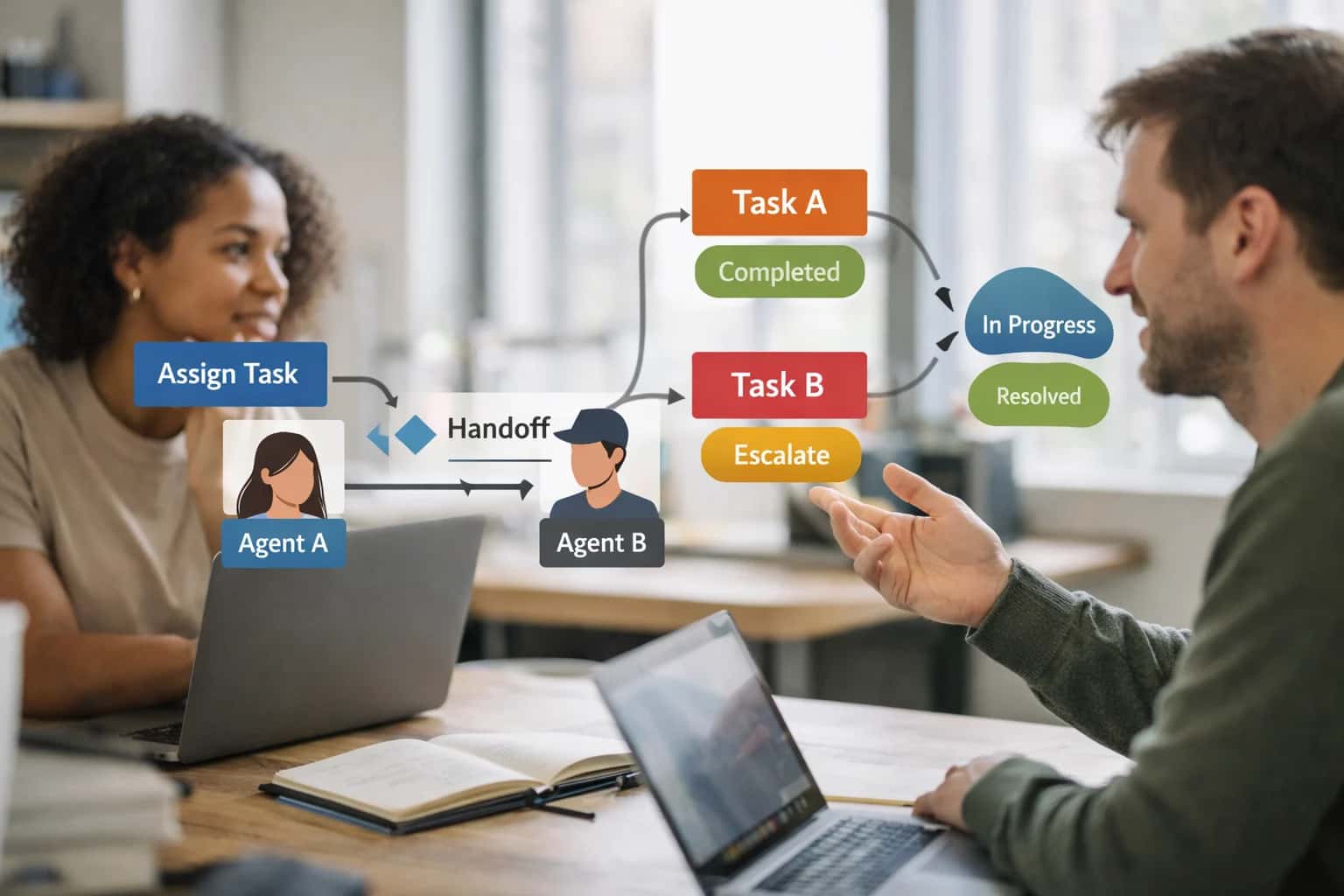
ARCHITECTURE BLUEPRINT
Where AI Fits into the Cloudbeds Stack
A practical guide to the key API surfaces, data objects, and workflow triggers where AI can augment Cloudbeds operations.
Implementation typically involves a middleware layer—often built with tools like n8n or a custom orchestrator—that sits between Cloudbeds and AI services (e.g., OpenAI, Anthropic). This layer handles authentication, data mapping, prompt construction with relevant context (e.g., past guest stays, current room status), and the execution of consequential actions back into Cloudbeds, such as creating a task, sending a message, or adjusting a rate. For example, an AI agent triggered by a reservation.created webhook can instantly draft and send a personalized pre-arrival message via the Messages API, pulling in local event data for that guest's stay dates.
Rollout and governance are critical. Start with a single, high-impact workflow like automated pre-arrival FAQ handling or AI-assisted housekeeping dispatch. Use Cloudbeds' user roles and permissions to control which AI-generated actions require human approval (e.g., rate changes over 10%) versus which are automated (e.g., sending a standard check-out message). Always maintain an audit trail by logging all AI interactions and the resulting Cloudbeds API calls, ensuring you can trace any guest-facing communication or system change back to the triggering prompt and data context. This controlled, phased approach minimizes risk while delivering operational lift where it matters most: reducing manual load on staff and accelerating guest service response times.
ARCHITECTURE BLUEPRINT
Cloudbeds API Surfaces for AI Integration
Core Booking and Profile APIs
Integrating AI with Cloudbeds starts with the Reservation API and Guest API. These surfaces provide the foundational data for AI-driven personalization and operational automation.
Key Integration Points:
GET /reservations: Retrieve real-time booking data including stay dates, room types, and guest counts. Use this to power predictive arrival/departure workflows.GET /guests/{id}: Access detailed guest profiles, including contact information, preferences, and historical stay data. This fuels AI models for personalized offers and communication.POST /reservations/{id}/notes: Append AI-generated insights or action items directly to a reservation record for staff visibility.
AI Use Case Example: An agent monitors new reservations, enriches guest profiles with inferred preferences from past stays, and automatically triggers a pre-arrival email sequence with personalized recommendations.
AUTOMATE OPERATIONS, ENHANCE GUEST EXPERIENCE
High-Value AI Use Cases for Cloudbeds
Integrating AI directly into Cloudbeds' API-driven platform automates manual workflows, personalizes guest interactions, and provides data-driven insights for revenue and operations teams. These are practical, production-ready patterns.
01
Automated Guest Messaging & Support
Deploy a 24/7 AI agent connected to Cloudbeds' Messaging API to handle pre-arrival FAQs, check-in instructions, amenity requests, and post-stay feedback. The agent can update guest profiles, create tasks, and escalate complex issues to staff, reducing front-desk volume.
24/7 Coverage
Guest support
02
Intelligent Upsell & Cross-Sell Engine
Integrate an AI recommendation model with the Booking Engine API and Folio API. Analyze booking data, guest history, and real-time inventory to trigger personalized offers for room upgrades, late check-out, or ancillary services during booking and pre-arrival, boosting ancillary revenue.
Context-Aware
Personalized offers
03
Predictive Housekeeping Coordination
Connect AI workflow agents to Cloudbeds' Housekeeping Status and Tasks APIs. Predict cleaning times, optimize room assignment sequences based on check-out forecasts and VIP arrivals, and automatically notify staff via integrated comms, streamlining turn-day operations.
Hours -> Minutes
Schedule optimization
04
Dynamic Channel Management & Rate Parity
Build an AI monitor that uses the Channel Manager API to analyze competitor rates, demand signals, and parity across OTAs. Automate stop-sell recommendations, tactical rate adjustments, and generate alerts for parity violations, protecting margin and occupancy.
Real-time
Market analysis
05
Maintenance Triage & Workflow Automation
Implement an AI copilot for maintenance teams by integrating with Cloudbeds' Tasks API. Use natural language processing on guest and staff reports to categorize issues, predict urgency, auto-assign vendors, and track resolution—all linked back to the specific room or asset record.
Batch -> Real-time
Request routing
06
Revenue Manager Copilot
Create an AI analytics agent that connects to Cloudbeds' Reporting API and external data sources. Provide natural language querying of performance data, generate automated forecast narratives, highlight booking pattern anomalies, and suggest rate strategies for upcoming periods.
1 Sprint
Insight generation
CONCRETE AUTOMATION PATTERNS
Example AI-Powered Workflows
These are production-ready workflows that connect AI agents to Cloudbeds' APIs and event-driven architecture. Each pattern is designed to automate high-volume operational tasks, enhance guest personalization, and provide data-driven support to staff.
This workflow uses an AI agent to handle common pre-arrival and in-stay questions 24/7, reducing front desk call volume.
- Trigger: A new message arrives in Cloudbeds' Inbox via the
GET /inbox/messagesAPI or a configured webhook. - Context Pulled: The agent retrieves the guest's reservation details (
GET /reservations), profile history (GET /profiles), and any recent interactions. - Agent Action: A classification model determines intent (e.g., "check-in time," "Wi-Fi password," "late check-out request"). A grounded LLM generates a personalized, accurate response using property policies and the guest's specific booking data.
- System Update: The response is posted back to the Cloudbeds Inbox via
POST /inbox/messages. For actionable items like a late check-out request, the agent can create a task in Cloudbeds' Task Management for staff review. - Human Review Point: Queries flagged as "complex" (e.g., billing disputes, special complaints) or requiring override (approving a late check-out against policy) are routed to a human agent queue with full context.
Payload Example (Webhook to Agent):
json{ "event": "inbox.message.created", "data": { "message_id": "msg_123", "reservation_id": "res_456", "guest_name": "Jane Doe", "message_body": "What time is check-in? And can I get an early check-in?", "channel": "booking_engine" } }
CONNECTING AI AGENTS TO CLOUDBEDS' OPERATIONAL CORE
Implementation Architecture & Data Flow
A production-ready AI integration for Cloudbeds connects to its REST API and webhook system, orchestrating workflows across reservations, guest profiles, housekeeping, and channel management.
The integration is anchored on Cloudbeds' REST API, which provides programmatic access to core objects: Reservations, Guests, Properties, Rooms, HousekeepingStatuses, and Channels. AI agents act as middleware, subscribing to key webhook events—such as reservation.created, reservation.modified, or housekeeping.status_updated—to trigger automated workflows. For example, a new booking event can fire a webhook that prompts an AI agent to generate a personalized pre-arrival message, check for upsell opportunities based on room type and guest history, and update the guest profile in Cloudbeds with inferred preferences.
Data flows bidirectionally. AI systems retrieve context from Cloudbeds (e.g., guest stay history, current housekeeping status, rate plans) to inform decisions, then write back actions via API calls. Common patterns include:
- Guest Communication Agent: Listens for
reservation.created, fetches guest/profile data, uses an LLM to draft & send a context-aware welcome message via Cloudbeds' messaging API. - Housekeeping Coordination Agent: Monitors
housekeeping.status_updatedandreservation.checked_out, combines with forecasted arrivals from theReservationsendpoint, and uses a scheduling algorithm to optimize cleaner assignments, pushing updated task lists back to Cloudbeds. - Rate Management Agent: Periodically polls the
Channelsendpoint for competitor rates and theReservationsendpoint for pickup, uses a forecasting model to suggest adjustments, and applies new rates via theRatePlansAPI—all within configurable business rules.
A production rollout follows a phased, event-driven architecture. Start with a single, stateless orchestrator service that handles webhooks, manages API calls to Cloudbeds, and delegates tasks to specialized AI agents (e.g., messaging, pricing, tasking). Implement idempotency keys on all writes to prevent duplicate actions from retried webhooks. Critical for governance, all AI-generated content and decisions should be logged to a separate audit trail with references to the source Cloudbeds record ID (reservation_id, guest_id). For high-stakes actions like rate changes or direct guest charges, integrate a human-in-the-loop approval step via a simple dashboard or Slack alert before the API call is executed.
CLOUDBEDS API INTEGRATION PATTERNS
Code & Payload Examples
Fetching Guest Context for AI Agents
AI agents need real-time reservation and guest profile data to personalize interactions. Use the Cloudbeds API to retrieve this context before an agent engages.
pythonimport requests # Fetch reservation details by ID def get_reservation_context(reservation_id, api_key): headers = { 'Authorization': f'Bearer {api_key}', 'Content-Type': 'application/json' } url = f'https://api.cloudbeds.com/api/v1.1/getReservation' params = {'reservation_id': reservation_id} response = requests.get(url, headers=headers, params=params) reservation = response.json() # Extract key fields for AI context context = { 'guest_name': f"{reservation['guestFirstName']} {reservation['guestLastName']}", 'check_in': reservation['startDate'], 'check_out': reservation['endDate'], 'room_type': reservation['roomTypeName'], 'status': reservation['status'], 'special_requests': reservation.get('specialRequests', '') } return context
This payload provides the AI agent with the guest's name, stay dates, room type, and any pre-submitted requests, enabling personalized and relevant communication.
CLOUDBEDS AI INTEGRATION
Realistic Operational Impact & Time Savings
This table shows the typical operational impact of embedding AI agents into key Cloudbeds workflows, based on production implementations. Savings are directional and depend on property size and existing process maturity.
| Workflow / Metric | Before AI | After AI | Implementation Notes |
|---|---|---|---|
Guest Messaging Response Time | 2-4 hours for non-urgent | Under 2 minutes for common FAQs | AI handles 60-80% of routine inquiries via Cloudbeds Messaging API; escalates complex issues. |
Pre-Arrival Information Collection | Manual email follow-ups | Automated, conversational intake | AI agent triggers via booking confirmation webhook, updates guest profiles in Cloudbeds. |
Housekeeping Room Assignment | Manual scheduling each shift | AI-optimized routing & ETAs | Integrates with Cloudbeds housekeeping status; considers check-outs, VIPs, and maintenance. |
Upsell Offer Generation | Static email blasts or front desk prompts | Personalized, context-aware offers at booking & pre-arrival | Leverages booking data & guest history via API; rules-based execution maintains rate integrity. |
Channel Manager Rate Parity Check | Weekly manual audit across OTAs | Daily automated scan & alerting | AI agent monitors connected channels via Cloudbeds API; flags discrepancies for review. |
Maintenance Request Triage | Front desk logs & manually routes | Automated categorization & priority routing | Parses guest or staff requests via Cloudbeds work orders; routes to correct vendor/team. |
Group Booking Analysis (for larger properties) | Manual review of block requests | Assisted displacement & profitability scoring | AI analyzes historical data via Cloudbeds reports; provides recommendations to revenue manager. |
Post-Stay Review Analysis | Monthly manual report compilation | Real-time sentiment dashboards & alerting | AI connects to survey/ review platforms; summarizes trends and auto-drafts management responses. |
ENTERPRISE AI IMPLEMENTATION
Governance, Security & Phased Rollout
A practical framework for deploying, governing, and scaling AI within Cloudbeds with minimal risk and maximum control.
A production AI integration for Cloudbeds must be built on a secure, observable, and governable foundation. This starts with a service account strategy for the Cloudbeds API, using scoped tokens with least-privilege access to specific endpoints like reservations, messages, housekeeping, and rates. All AI agent interactions with the PMS should be logged to a dedicated audit trail, linking each action (e.g., "sent upsell offer", "updated cleaning status") to the specific reservation ID, user, and AI session for full traceability. Data flows should be architected to keep sensitive PII within your secure environment, using techniques like data masking before sending context to external LLM APIs, ensuring compliance with hospitality data regulations.
A phased rollout is critical for managing change and measuring impact. We recommend a three-phase approach:
- Phase 1: Silent Pilot & Data Enrichment. Deploy read-only AI agents that analyze reservation data and guest messages to generate insights (e.g., "suggested reply," "predicted cleaning time") but require a human agent in Cloudbeds to review and execute. This builds trust and refines prompts without affecting live operations.
- Phase 2: Controlled Automation. Activate write access for a single, high-value workflow, such as automated pre-arrival FAQ responses via the Cloudbeds messaging API. Implement a human-in-the-loop approval step for the first N interactions and establish clear business rules (e.g., "never auto-send a response containing a discount"). Monitor accuracy and guest satisfaction scores closely.
- Phase 3: Scale & Orchestration. Expand to multi-step agent workflows, such as a housekeeping coordination agent that reads room status, predicts cleaning times, and automatically updates the Cloudbeds housekeeping module while notifying staff via integrated comms. At this stage, implement a centralized AI operations dashboard to monitor agent performance, cost, and exception rates.
Governance is maintained through a combination of technical and operational controls. Establish a cross-functional steering committee (IT, Operations, Revenue) to approve new AI use cases and associated API scope expansions. Technically, implement guardrail models to screen all AI-generated content for brand voice and compliance before it's posted to Cloudbeds. Use feature flags to instantly disable any automated workflow if metrics drift. Finally, integrate performance feedback loops by connecting AI action logs back to key Cloudbeds KPIs—like guest satisfaction scores from post-stay surveys or upsell conversion rates—to directly measure the business impact of the integration and guide continuous improvement.
Enabling Efficiency, Speed & Accuracy
Intelligent Analysis, Decision & Execution
We build AI systems for teams that need search across company data, workflow automation across tools, or AI features inside products and internal software.
Talk to Us
Search across company data
Give teams answers from docs, tickets, runbooks, and product data with sources and permissions.
Useful when people spend too long searching or get different answers from different systems.
Enterprise searchRAGPermissions
Read more
Automate internal workflows
Use AI to route work, draft outputs, trigger actions, and keep approvals and logs in place.
Useful when repetitive work moves across multiple tools and teams.
AI agentsWorkflow automationGovernance
Read more
Add AI to products and internal tools
Build assistants, guided actions, or decision support into the software your team or customers already use.
Useful when AI needs to be part of the product, not a separate tool.
AI integrationDecision supportModel routing
Read moreIMPLEMENTATION AND SECURITY
Frequently Asked Questions
Common technical and operational questions for teams planning to integrate AI agents and workflows with the Cloudbeds platform.
Secure integration requires a layered approach focused on Cloudbeds' OAuth 2.0 authentication and principle of least privilege.
Key Steps:
- Create a Dedicated Integration User: In Cloudbeds, create a service account with a role scoped to only the necessary permissions (e.g.,
Reservations Read/Write,Guest Profiles Read). Never use a front-desk user's credentials. - Implement OAuth 2.0 Flow: Your AI service must authenticate via Cloudbeds' OAuth endpoint to obtain a short-lived access token. Store the refresh token securely (e.g., in a vault like AWS Secrets Manager or Azure Key Vault) for token rotation.
- Enforce API Rate Limiting: Cloudbeds enforces API limits. Your AI agent logic must include retry logic with exponential backoff and respect the
X-RateLimit-*headers to avoid being throttled during high-volume operations. - Data Encryption: Ensure all data in transit (TLS 1.2+) and sensitive data at rest (like PII) is encrypted. Your AI model endpoints should also be secured behind API gateways.
Security Checklist:
- Audit logs for all AI-initiated API calls.
- Regular rotation of OAuth client secrets and refresh tokens.
- Network-level restrictions (IP allow-listing) for your AI service's outbound calls, if supported.

About the author
Prasad Kumkar
CEO & MD, Inference Systems
Prasad Kumkar is the CEO & MD of Inference Systems and writes about AI systems architecture, LLM infrastructure, model serving, evaluation, and production deployment. Over 5+ years, he has worked across computer vision models, L5 autonomous vehicle systems, and LLM research, with a focus on taking complex AI ideas into real-world engineering systems.
His work and writing cover AI systems, large language models, AI agents, multimodal systems, autonomous systems, inference optimization, RAG, evaluation, and production AI engineering.
LinkedIn
Limited slotsGet a Free AI Consultation
Partnered with leading AI, data, and software stack.





How We Work
Custom AI workflows for your Business
One-fit-all AI don't work for modern businesses. At Inferensys, we aim to understand your business & custom requirements; which we use to define most efficient agentic workflows, the data, and the tools for your business.
01
Review the use case
We understand the task, the users, and where AI can actually help.
Read more02
Pick the right approach
We define what needs search, automation, or product integration.
Read more03
Build the first useful version
We implement the part that proves the value first.
Read more04
Improve from there
We add the checks and visibility needed to keep it useful.
Read moreThe first call is a practical review of your use case and the right next step.
Talk to Us