
Inferensys

Integration

AI Integration for Submittable Reporting Operations

Automate narrative analysis, data extraction, and compliance checks for post-award grantee reports in Submittable, reducing manual review from hours to minutes.
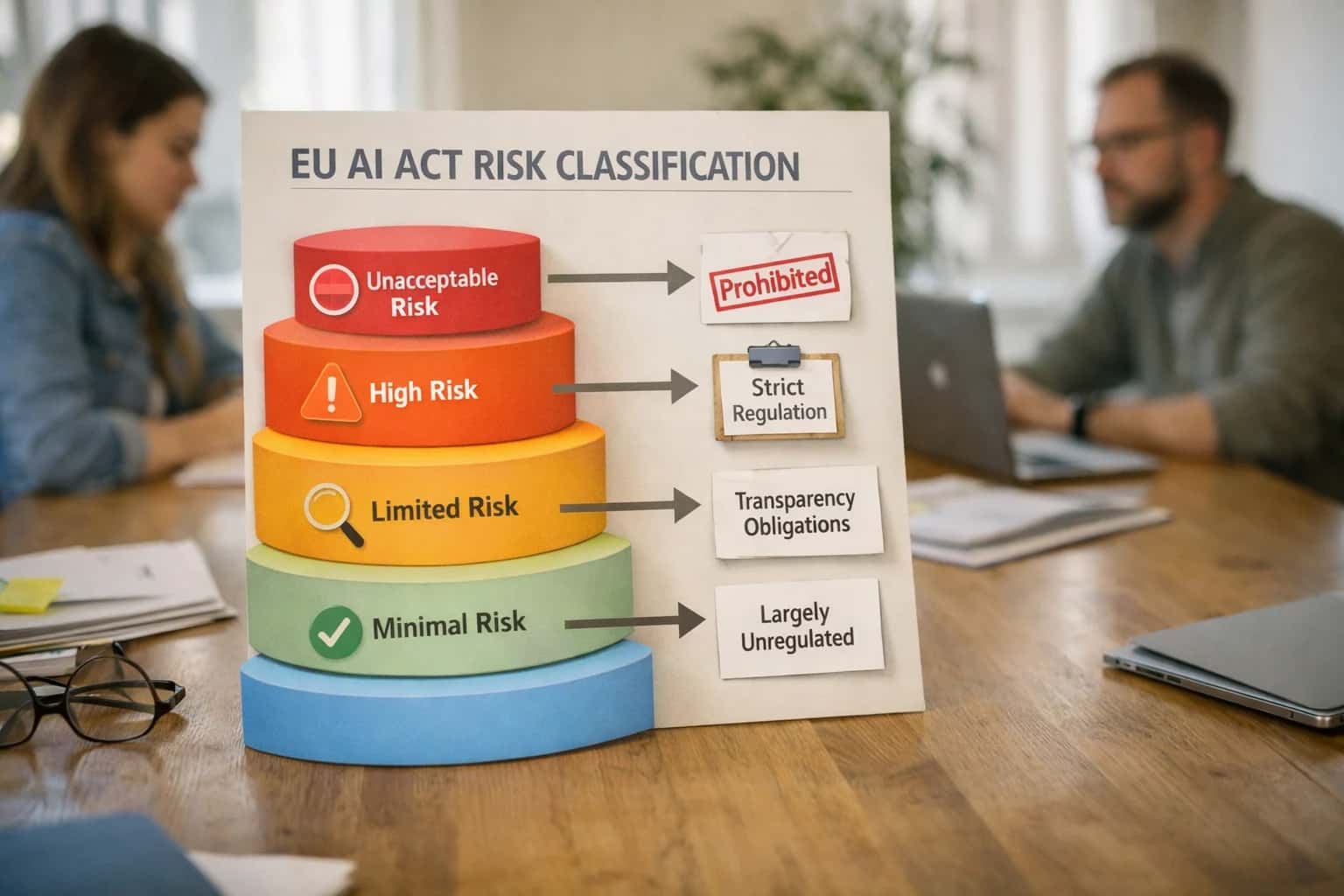
Legal team reviewing EU AI Act compliance documents on laptop in modern office, coffee cups and papers on table, casual meeting.
AUTOMATING GRANTEE REPORTING AND COMPLIANCE

Where AI Fits into Submittable's Post-Award Workflow

A technical blueprint for integrating AI into Submittable's post-award modules to automate narrative analysis, data extraction, and compliance flagging for grant managers.

AI integration targets Submittable's report submission objects, custom form fields, and workflow engine to transform manual, qualitative review into a structured, auditable process. Key surfaces include:

  • Report Intake Queues: Incoming narrative and financial reports submitted via Submittable forms become the primary data source for AI processing.
  • File Attachments: AI agents with OCR and document intelligence parse uploaded PDFs, spreadsheets, and images to extract key metrics, milestones, and budget figures.
  • Custom Field Mapping: Extracted data is programmatically written back to structured custom fields in the Submittable record, enabling reporting dashboards and trigger-based alerts.
  • Comment & Task System: AI-generated summaries, compliance flags, or follow-up questions are posted as internal comments or assigned as tasks to specific grant managers.


A typical implementation wires a secure middleware layer between Submittable's webhooks/API and your AI stack. When a grantee submits a final report, the workflow executes:

  1. Submittable fires a report.submitted webhook with the record ID and file URLs.
  2. An orchestration service (e.g., n8n, a custom microservice) fetches the report content and attachments.
  3. LLM-powered agents perform specific analysis tasks:
    • Narrative Summarization: Condenses lengthy progress reports into executive briefs for portfolio managers.
    • Data Extraction & Validation: Pulls quantitative outcomes (e.g., "served 250 individuals") and cross-references them against the original grant proposal's goals and budget lines.
    • Compliance Flagging: Scans for missing elements, deadline adherence, or narrative mismatches against required reporting criteria, tagging the record with a review_priority score.
  4. Results are posted back to the Submittable record via API, updating custom fields and triggering conditional workflow paths—for example, auto-approving clean reports or routing flagged ones for human review.

Rollout requires a phased approach, starting with a single grant program to calibrate AI prompts and validation rules against existing staff review patterns. Governance is critical: implement a human-in-the-loop approval step for all AI-generated flags and summaries before any automated communications are sent to grantees. This ensures accuracy and maintains the grantee relationship. Audit trails should log all AI actions (extractions, flags, summaries) as system comments within the Submittable record itself, providing full transparency for compliance. For grant managers, the impact is operational: shifting from reading every report line-by-line to reviewing AI-curated summaries and exception reports, turning a monthly batch process into a continuous, real-time monitoring operation.

POST-AWARD REPORTING AUTOMATION

Key Integration Surfaces in Submittable

Automating Qualitative Report Review

AI integration surfaces within Submittable's reporting module to analyze uploaded narrative reports, progress updates, and supporting documents. By connecting to Submittable's file storage API, AI services can process PDFs, Word docs, and images to extract key themes, measure alignment with grant objectives, and flag inconsistencies.

Primary Use Cases:

  • Sentiment & Tone Analysis: Assess the positivity, confidence, or concern in grantee narratives to identify potential risks.
  • Keyword & Theme Extraction: Automatically tag reports with relevant topics (e.g., "community engagement," "capacity building") for portfolio analysis.
  • Compliance Spot-Checking: Scan for required sections, mentioned deliverables, or prohibited activities based on grant agreement terms.

This layer transforms unstructured text into structured, actionable data for grant managers, reducing manual reading time from hours to minutes per report.

SUBITTABLE POST-AWARD OPERATIONS

High-Value AI Use Cases for Grant Reporting

Automate the most time-consuming and error-prone aspects of post-award reporting in Submittable. These AI integration patterns connect directly to Submittable's API and workflow engine to extract data, analyze narratives, and flag compliance issues, freeing grant managers for strategic oversight.

01

Automated Narrative Report Analysis

AI reads submitted narrative reports, extracting key outcomes, challenges, and budget variances. It generates a structured summary for the grant manager and flags sections requiring follow-up based on grant agreement terms.

Hours -> Minutes
Review time per report
02

Financial Data Extraction & Validation

Connects to Submittable's document storage to process uploaded budget reports, invoices, and receipts. AI extracts line items, matches them to approved budgets, and flags discrepancies for financial review, automating the first pass of fiscal compliance.

Batch -> Real-time
Compliance check
03

Proactive Compliance & Deadline Monitoring

An AI agent monitors Submittable's reporting deadlines and grantee submission status. It predicts late reports based on historical patterns and automates reminder workflows, while scanning submitted content for missing required data points or attachments.

Same day
Risk alerting
04

Impact Metric Synthesis & Dashboard Update

AI aggregates quantitative and qualitative data from multiple grantee reports across a portfolio. It synthesizes impact narratives and automatically updates KPIs in connected dashboards or BI tools, providing real-time intelligence for program officers.

1 sprint
Portfolio reporting cycle
05

Intelligent Grantee Support & FAQ

Deploys an AI copilot within the grantee portal, trained on program guidelines and historical Q&A. It provides instant, accurate answers to reporting questions, guides grantees through form completion, and reduces support ticket volume for program staff.

80% Deflection
Common inquiries
06

Audit Trail & Evidence Package Generation

For audit or funder reporting, AI compiles a complete evidence package from Submittable. It links narrative reports, financial documents, approval logs, and communications into a chronological, searchable audit trail, automating a manual, high-risk process.

Days -> Hours
Audit preparation
POST-AWARD AUTOMATION

Example AI-Augmented Reporting Workflows

These workflows illustrate how AI can automate the extraction, analysis, and compliance checking of narrative and financial reports submitted by grantees, turning manual review into a managed, exception-based process for grant managers.

Trigger: A grantee submits a final narrative report (PDF, Word) via the Submittable reporting form.

AI Action:

  1. The attached document is processed via an AI service with OCR and text extraction.
  2. A summarization model (e.g., GPT-4, Claude) generates a concise executive summary (3-5 bullet points) highlighting key activities, outcomes, and challenges.
  3. A secondary sentiment analysis pass flags sections indicating significant risk, frustration, or exceptional positivity.

System Update:

  • The AI-generated summary and sentiment score are written back to custom fields on the Submittable submission record via API.
  • A comment is auto-posted to the submission's activity feed: "AI Summary Generated. Sentiment: Neutral. Key points: [Bullet 1], [Bullet 2]."

Human Review Point: The grant manager reviews the summary instead of the full 20-page report. Sentiment flags (e.g., "High Risk Detected") trigger an immediate alert for closer inspection.

POST-AWARD REPORTING AUTOMATION

Implementation Architecture: Data Flow & APIs

A practical blueprint for connecting AI to Submittable's reporting module to automate narrative analysis, data extraction, and compliance monitoring.

The integration architecture connects to Submittable's REST API and webhook system. The primary data flow begins when a grantee submits a final or interim report, triggering a webhook to an orchestration service. This service fetches the full report record via the GET /reports/{id} endpoint, which includes the narrative text, attached files (PDFs, spreadsheets), and structured form responses. The core AI processing—narrative summarization, sentiment analysis, and key metric extraction—runs in a secure, containerized environment, with results written back to Submittable as structured data in custom fields or as synthesized comments via the PUT /reports/{id} or POST /comments APIs.

For financial and quantitative data locked in attachments, the pipeline first uses Submittable's API to download files, then routes them through OCR and document intelligence services. Extracted figures—such as budget vs. actual spend, beneficiary counts, or outcome metrics—are validated against the grant's original budget object (pulled via GET /grants/{id}) and flagged for review if variances exceed thresholds. Compliance checks are executed by comparing extracted narrative claims and data points against a rules engine loaded with the grant's specific reporting requirements, generating actionable flags in a dedicated 'AI Insights' panel within the Submittable report view for the grant manager.

Rollout is typically phased, starting with a single grant program. Governance is critical: all AI-generated insights are logged with confidence scores and source references, and a human-in-the-loop approval step is configured in Submittable's workflow builder before any automated status change or communication is sent. The system is designed for audit, maintaining a separate audit trail that links each AI action to the source report, processing timestamp, and model version used.

AI FOR POST-AWARD OPERATIONS

Code & Payload Examples

Extracting Insights from Progress Reports

Use AI to analyze the qualitative content of grantee narrative reports submitted via Submittable. This automates the extraction of key themes, sentiment, alignment with funded objectives, and potential risks.

A typical workflow involves:

  1. Triggering an analysis when a new report file is uploaded to a Submittable submission.
  2. Using an LLM to summarize the narrative, flagging sections that lack detail or deviate from the grant's scope.
  3. Returning structured data (themes, confidence scores, quotes) to populate custom fields in the Submittable record for easy reviewer access.
python
# Example: Call an AI service when a webhook fires for a new report upload
import requests

def analyze_narrative(report_text, grant_objectives):
    prompt = f"""
    Analyze this grantee progress report.
    Grant Objectives: {grant_objectives}
    Report Text: {report_text[:5000]}
    
    Return a JSON with:
    - summary (string)
    - alignment_score (0-10)
    - key_themes (list)
    - risk_flags (list)
    """
    
    # Call your LLM endpoint (e.g., OpenAI, Anthropic, hosted model)
    response = requests.post(
        'https://api.your-ai-service.com/v1/chat/completions',
        json={"model": "gpt-4", "messages": [{"role": "user", "content": prompt}]}
    )
    return response.json()

# Webhook payload from Submittable would contain submission ID and file URL
# Fetch text, call function, then update Submittable via PATCH to custom fields
AI FOR POST-AWARD REPORTING

Realistic Time Savings & Operational Impact

How AI integration transforms manual, time-intensive reporting tasks in Submittable, enabling grant managers to focus on strategic oversight and grantee support.

MetricBefore AIAfter AINotes

Narrative Report Review

Manual reading & summary (1-2 hours/report)

AI-generated summary & key point extraction (5-10 minutes)

Human review for nuance and final approval remains essential.

Data Extraction from Attachments

Manual entry from PDFs and spreadsheets

Automated OCR and structured data capture

Reduces errors and ensures data flows into reporting dashboards.

Compliance & Deadline Flagging

Calendar reminders and manual tracking

Automated monitoring & predictive alerts for late/missing reports

Proactive system alerts grant managers 1-2 weeks before deadlines.

Report Quality & Completeness Check

Manual checklist review per submission

AI-driven completeness scoring and gap identification

Flags incomplete narratives or missing financials before manager review.

Grantee Communication on Report Issues

Manual email drafting for follow-ups

AI-assisted drafting of personalized feedback & requests

Manager edits and approves templated communications, saving 70% of drafting time.

Consolidated Portfolio Reporting

Manual aggregation across reports for board updates

AI auto-generates draft impact summaries and metrics

Provides a first draft for managers to refine, cutting preparation from days to hours.

Audit Trail & Documentation

Manual filing and evidence linking

Automated logging of AI actions, extractions, and decisions

Creates a transparent, searchable record for compliance and internal audits.

OPERATIONALIZING AI FOR POST-AWARD REPORTING

Governance, Security & Phased Rollout

A practical guide to implementing AI for Submittable reporting with controlled risk and measurable impact.

Integrating AI into Submittable's reporting operations requires a security-first approach to data handling. Since post-award reports contain sensitive financial data, narrative progress updates, and personally identifiable information (PII), all AI processing must be governed by strict access controls. We architect solutions where AI agents interact with Submittable data via its secure API, operating within a dedicated, isolated environment. Key security measures include:

  • Role-Based Data Access: AI agents are assigned service accounts with the minimum necessary permissions, typically read-only for Report objects and File attachments, scoped to specific programs or portfolios.
  • Data Minimization & Anonymization: Before processing, reports can be stripped of direct identifiers. For financial extraction, only relevant line items and totals are passed to the AI model.
  • Audit Trail Integration: Every AI action—from document ingestion to compliance flagging—is logged as a system note within the corresponding Submittable report record, creating a transparent chain of custody for auditors and grant managers.

A successful rollout follows a phased, value-driven approach, starting with a single, high-volume grant program. Phase 1 focuses on automating the extraction of structured data from narrative and financial attachments, such as pulling actual spend figures or milestone completion dates into structured fields for dashboarding. This delivers immediate time savings for grant managers who manually compile this data. Phase 2 introduces AI-driven narrative analysis to flag reports that deviate from the grant's stated objectives or contain potential compliance issues, such as unapproved budget reallocations. This analysis is presented as a confidence score and highlighted excerpts within Submittable, keeping the grant manager in the loop for final review and decision.

Governance is maintained through a continuous feedback loop. Initially, all AI-generated extractions and flags are reviewed by a grant manager, with corrections fed back to fine-tune the models. Over time, as confidence thresholds are met for specific tasks (e.g., numeric extraction from standardized budget forms), those workflows can transition to full automation. This phased, human-in-the-loop model mitigates risk, builds institutional trust, and ensures the AI augments—rather than replaces—critical grant manager oversight. The end state is a scalable system where routine data consolidation happens automatically, allowing staff to focus on high-touch grantee support and strategic portfolio analysis.

AI INTEGRATION FOR SUBMITTABLE REPORTING OPERATIONS

FAQ: Technical & Commercial Questions

Common questions from grant managers and technical teams planning AI automation for post-award reporting in Submittable.

AI integrates with Submittable's reporting operations primarily through its REST API and webhook system. The typical architecture involves:

  1. Trigger: A grantee submits a final report or progress update, triggering a Submittable webhook to an external AI service.
  2. Context Retrieval: The AI service calls back to Submittable's API to fetch the submitted report files (PDFs, DOCs, spreadsheets) and associated grant data (award amount, reporting requirements).
  3. Processing: The AI system processes the documents—using OCR for scanned PDFs and parsing for digital files—to extract narrative text, financial tables, and key metrics.
  4. System Update: Results (compliance flags, extracted data, summaries) are posted back to Submittable via API, often writing to custom fields on the submission record or creating internal staff comments.

This keeps the AI logic external, maintainable, and scalable, while Submittable remains the system of record for all report submissions and communications.

Prasad Kumkar

About the author

Prasad Kumkar

CEO & MD, Inference Systems

Prasad Kumkar is the CEO & MD of Inference Systems and writes about AI systems architecture, LLM infrastructure, model serving, evaluation, and production deployment. Over 5+ years, he has worked across computer vision models, L5 autonomous vehicle systems, and LLM research, with a focus on taking complex AI ideas into real-world engineering systems.

His work and writing cover AI systems, large language models, AI agents, multimodal systems, autonomous systems, inference optimization, RAG, evaluation, and production AI engineering.


