AI security integration for SmartSimple focuses on three core surfaces: the platform's audit log API, user and role management objects, and file attachment storage. By consuming the granular audit trail—which logs user logins, record access, field edits, and file downloads—an AI agent can establish behavioral baselines for administrators, program officers, and external reviewers. This enables real-time detection of anomalies, such as a user downloading an unusual volume of applicant budgets outside of a review cycle or accessing records for programs outside their assigned portfolio.

Integration
AI Integration for SmartSimple Security Features
Add AI-powered security monitoring to SmartSimple's native access controls and audit logs for automated anomaly detection, compliance reporting, and proactive threat response in grant management.
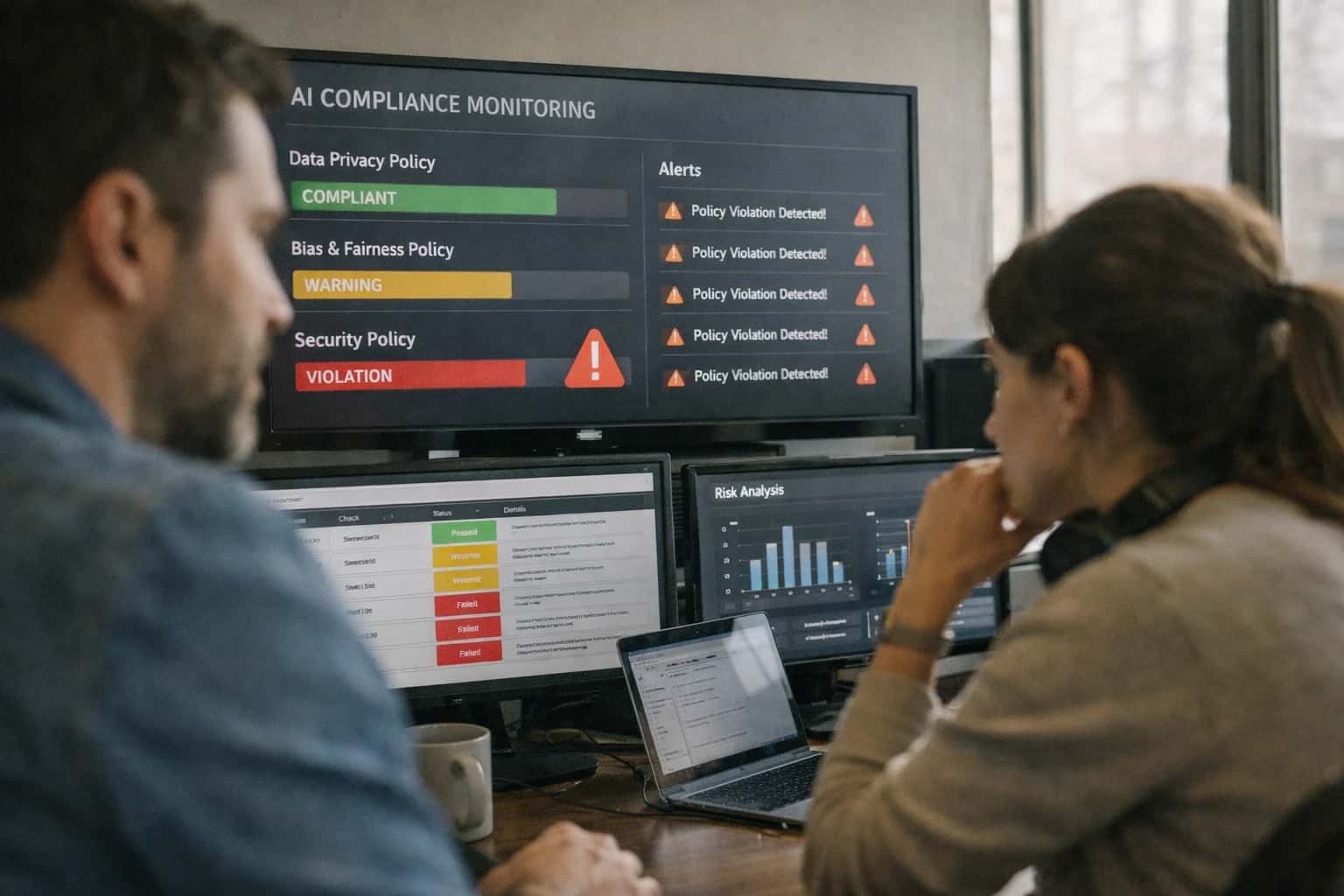
ANOMALY DETECTION & COMPLIANCE AUTOMATION
Where AI Fits into SmartSimple's Security Posture
Integrating AI-powered security monitoring with SmartSimple's native access controls and audit logs for proactive threat detection and streamlined compliance.
For implementation, a lightweight service polls SmartSimple's audit log API, vectorizes the event data (user, action, object, timestamp, IP), and runs it against a detection model. High-confidence anomalies trigger alerts in a security dashboard or create tickets in a connected ITSM like Jira Service Management. Crucially, this AI layer works with SmartSimple's native Role-Based Access Controls (RBAC), not against it, providing a continuous compliance check. For example, it can flag when a user's activity pattern suggests their assigned role is too permissive or identify dormant accounts that should be reviewed for de-provisioning.
Rollout requires a phased approach: start with monitoring administrative users and high-value data objects like financial reports or personally identifiable information (PII) in applications. Governance is key; all AI-generated alerts must feed into an existing SOC or IT review workflow, with clear rules for escalation. This integration turns SmartSimple's comprehensive logging from a passive compliance record into an active security asset, reducing the mean time to detect (MTTD) insider risks and simplifying evidence collection for audits like SOC 2 or GDPR.
SECURITY MONITORING & COMPLIANCE
SmartSimple Security Surfaces for AI Integration
Monitoring User Permissions and Role Drift
SmartSimple's role-based access control (RBAC) system defines who can view, edit, or approve grant applications, financial data, and sensitive reports. AI integration here focuses on anomaly detection within permission sets and user activity.
Key integration surfaces:
- User Role Audit Logs: Continuously analyze role assignment and permission change events. AI models can flag unusual patterns, such as a user granted excessive permissions outside their department.
- Session & Login Analytics: Monitor login locations, times, and frequencies against baselines to detect potential credential compromise or insider threats.
- Data Access Patterns: Track which records (applications, budgets, reports) users are accessing. AI can identify users browsing unrelated programs or downloading large volumes of data, triggering a security review.
Implementation typically involves consuming SmartSimple's audit API feeds, enriching logs with contextual data, and routing high-risk alerts to your security team or ticketing system.
SECURITY MONITORING & COMPLIANCE
High-Value AI Security Use Cases for SmartSimple
Integrate AI-powered security monitoring directly with SmartSimple's access controls, audit logs, and data model to automate anomaly detection, enforce compliance, and reduce manual oversight for grant administrators and IT security teams.
01
Anomalous Access & Login Detection
Monitor SmartSimple's authentication logs and user session data in real-time. AI models profile typical access patterns by role (e.g., Program Officer, Reviewer, Grantee) and flag deviations—such as logins from unusual locations, after-hours bulk data exports, or privilege escalation attempts—triggering automated alerts or temporary access suspensions.
Batch -> Real-time
Detection speed
02
Automated User Entitlement Reviews
Leverage AI to analyze SmartSimple's role-based permissions (RBAC) against user activity logs. The system identifies dormant accounts, excessive permissions (e.g., reviewers with unintended financial data access), and segregation-of-duty conflicts, generating actionable reports for quarterly access recertification workflows mandated by funders like NIH or NSF.
1 sprint
Review cycle reduction
03
Compliance Audit Trail Synthesis
Automate the synthesis of SmartSimple's granular audit trails for internal and external compliance audits. AI agents extract, categorize, and summarize all system events related to a specific grant or applicant—including document views, field edits, and approval steps—producing a chronological, narrative-ready audit report that satisfies 2 CFR 200 and funder-specific requirements.
Hours -> Minutes
Report generation
04
Sensitive Data Leakage Prevention
Integrate AI classifiers with SmartSimple's file upload and text field modules. The system scans applicant attachments (budgets, narratives) and internal comments for unprotected Personally Identifiable Information (PII), proprietary research data, or confidential financials, automatically redacting or quarantining content before broader sharing within review workflows.
Same day
Policy enforcement
05
Predictive Risk Scoring for Applications
Enhance due diligence by applying security-focused AI models to application data. Analyze historical patterns to flag high-risk proposals—such as those from organizations with previously flagged compliance issues, mismatched budget narratives, or duplicate submissions—providing program officers with a risk-augmented view alongside standard review scores.
06
Automated Security Incident Response
Connect AI alerting to SmartSimple's workflow engine. When a security event is detected (e.g., a flagged login or data export), an AI agent can automatically trigger a predefined SmartSimple workflow: creating an incident ticket, notifying the security lead via the platform, temporarily restricting the affected user's permissions, and logging all actions for the audit trail.
Manual -> Automated
Response workflow
INTELLIGENT MONITORING & COMPLIANCE
Example AI Security Workflows for SmartSimple
Integrating AI with SmartSimple's security and audit features enables proactive anomaly detection, automated compliance reporting, and intelligent access governance. These workflows show how to layer AI-driven security monitoring onto SmartSimple's existing access controls, audit logs, and data model.
Trigger: A user logs into SmartSimple or performs a high-privilege action (e.g., downloading all applications for a program, modifying user roles).
Context/Data Pulled: The AI service consumes a real-time feed of SmartSimple audit log events via API or webhook. It enriches this with historical baselines for that user, role, and typical time-of-day/geolocation patterns.
Model or Agent Action: A lightweight anomaly detection model evaluates the session against the baseline. High-risk signals include:
- Login from a new country/region not associated with the user.
- Bulk data export at an unusual time.
- Rapid succession of role permission changes.
- Access to programs outside the user's typical portfolio.
System Update or Next Step: If a high-confidence anomaly is detected, the AI agent automatically:
- Creates a high-priority incident in the organization's SIEM or ticketing system (e.g., Jira, ServiceNow).
- Sends an alert to the security team via a dedicated Slack/MS Teams channel.
- Optionally, triggers a SmartSimple workflow to temporarily require step-up authentication (if configured) for the user's next action.
Human Review Point: All alerts are queued for a security analyst's review in a dedicated dashboard. The AI provides a reasoning summary (e.g., "Flagged due to login from new IP range combined with atypical bulk export"). The analyst can confirm, dismiss, or escalate, providing feedback that fine-tunes the model.
SECURITY AND COMPLIANCE INTEGRATION
Implementation Architecture: Connecting AI to SmartSimple
A practical blueprint for integrating AI-powered security monitoring with SmartSimple's access controls and audit logs.
A production-ready integration for security features connects to SmartSimple's audit log API and user/role management endpoints. The AI service acts as a downstream consumer, ingesting log events—such as User Login, Record Access, Permission Change, and Data Export—via a secure webhook or batch extraction. The core AI model is trained to establish a behavioral baseline for each user role (e.g., Program Officer, Reviewer, Grantee) and flag anomalies like after-hours access from unusual locations, bulk downloads of sensitive applicant data, or permission escalation attempts. These detections are written back to SmartSimple as flagged security events in a custom object or used to trigger automated workflows, such as requiring step-up authentication or notifying system administrators.
The implementation must respect SmartSimple's role-based access control (RBAC) model. The AI system itself requires a dedicated service account with read-only access to audit trails and user directories, never write access to core grant data. Detections and risk scores are typically stored in a separate, secure data store (like a vector database for behavioral context) and surfaced through a dedicated dashboard or integrated into SmartSimple via iFrame or a custom portal page. For compliance reporting, AI can automatically generate summaries of security events, map them to control frameworks (like NIST or GDPR), and prepare evidence packs for auditors by correlating SmartSimple audit entries with external identity provider logs.
Rollout should be phased, starting with monitoring administrative users and high-value data objects like Application, Financial Report, and Award records. Governance is critical: establish a clear review workflow where AI-generated alerts are triaged by a human security analyst before any automated action (like disabling an account) is taken. This creates a feedback loop to refine the AI model, reducing false positives. The integration's value is operational: it transforms SmartSimple's native audit log from a reactive, manual-review tool into a proactive system that can identify potential insider threats or credential compromise before a data breach or compliance violation occurs.
AI-POWERED SECURITY MONITORING
Code and Payload Examples
Real-Time Log Analysis for Suspicious Activity
Integrate an AI agent to monitor SmartSimple's audit log streams via webhook or API polling. The agent analyzes patterns in user logins, record access, permission changes, and data exports to flag deviations from baseline behavior.
Example Python Webhook Handler:
pythonfrom flask import Flask, request import json from inference_agent import SecurityMonitorAgent app = Flask(__name__) agent = SecurityMonitorAgent() @app.route('/smartsimple/webhook/audit', methods=['POST']) def handle_audit(): payload = request.json # Extract key fields from SmartSimple audit event event = { 'user_id': payload.get('userId'), 'action': payload.get('actionType'), 'record_type': payload.get('objectType'), 'timestamp': payload.get('eventTime'), 'ip_address': payload.get('sourceIp') } # Analyze with AI agent for anomalies risk_score, explanation = agent.analyze_audit_event(event) if risk_score > 0.7: # High-risk threshold # Trigger alert in SmartSimple or external SIEM create_incident_ticket(event, risk_score, explanation) # Optionally trigger a SmartSimple workflow to freeze user trigger_smartsimple_workflow('SECURITY_REVIEW', user_id=event['user_id']) return json.dumps({'status': 'processed'}), 200
This pattern enables proactive detection of compromised accounts, insider threats, or policy violations by analyzing the sequence and context of audit events.
AI-POWERED MONITORING FOR SMARTSIMPLE
Realistic Time Savings and Security Impact
This table illustrates the operational and security improvements achievable by integrating AI-powered monitoring with SmartSimple's native security features. It shows a shift from reactive, manual oversight to proactive, assisted governance.
| Security Workflow | Before AI Integration | After AI Integration | Implementation Notes |
|---|---|---|---|
User Access Anomaly Detection | Manual audit log review (quarterly) | Real-time alerting on unusual logins/patterns | AI models baseline normal user behavior; alerts sent to security queue |
Compliance Evidence Collection | Manual spreadsheet compilation for audits | Automated report generation from audit trails | AI parses logs to map user actions to control frameworks (e.g., NIST, GDPR) |
Role & Permission Drift Review | Semi-annual manual review of user roles | Continuous RBAC analysis with drift reports | AI compares assigned roles against activity to flag over/under-provisioning |
Sensitive Data Exposure Check | Ad-hoc searches for PII/PCI in free-text fields | Automated scanning of submissions & documents | AI classifiers identify sensitive data in narratives and attachments; alerts on unprotected sharing |
Failed Login & Lockout Triage | Help desk tickets for locked users | Automated risk scoring & tiered response | Low-risk lockouts trigger self-service reset; high-risk patterns trigger immediate admin alert |
Third-Party Integrations Audit | Point-in-time manual review of API tokens | Continuous monitoring of integration usage & scope | AI flags unused tokens, anomalous API call volumes, or calls exceeding typical data scope |
Security Incident Investigation | Manual timeline reconstruction from logs | AI-assisted timeline & root cause summary | AI correlates events across user, object, and IP address to accelerate SOC analysis |
SECURE AI INTEGRATION FOR GRANTMAKING
Governance, Compliance, and Phased Rollout
A practical approach to deploying AI-powered security monitoring in SmartSimple with controlled risk and clear auditability.
Integrating AI for security monitoring in SmartSimple requires a governance-first architecture that respects the platform's existing access controls, audit logs, and data segregation models. The AI agent should be deployed as a read-only service account with scoped API permissions, consuming logs from UtaActivityLog and UtaSecurityLog objects to detect anomalies like unusual login patterns, bulk data exports, or permission changes outside of standard workflows. All AI-generated alerts should be written back to a dedicated Security Findings custom object, triggering existing SmartSimple workflows for investigation and resolution, ensuring the AI augments—not bypasses—your established security operations.
For compliance reporting, the AI system can be configured to automatically generate summaries of security events for internal audits or frameworks like SOC 2 or NIST. By analyzing log data, it can produce narratives on access review completion, privileged user activity, and data access trends. These summaries can be attached as files to relevant grant records or program objects, creating a verifiable link between security posture and specific funding activities. This is critical for foundations managing sensitive applicant data or adhering to donor privacy requirements.
A phased rollout is essential. Start with a detection-only pilot on a single, low-risk program or internal user group, focusing on high-confidence signals like after-hours access from new locations. Use SmartSimple's workflow engine to route AI alerts to a designated security lead for manual review, building trust in the system's accuracy. In phase two, introduce automated ticket creation in your ITSM platform via SmartSimple webhooks for confirmed incidents. The final phase involves enabling predictive recommendations, such as suggesting access reviews for roles with excessive permissions, always presenting them as actionable insights within SmartSimple for human approval before any system change is executed.
Enabling Efficiency, Speed & Accuracy
Intelligent Analysis, Decision & Execution
We build AI systems for teams that need search across company data, workflow automation across tools, or AI features inside products and internal software.
Talk to Us
Search across company data
Give teams answers from docs, tickets, runbooks, and product data with sources and permissions.
Useful when people spend too long searching or get different answers from different systems.
Enterprise searchRAGPermissions
Read more
Automate internal workflows
Use AI to route work, draft outputs, trigger actions, and keep approvals and logs in place.
Useful when repetitive work moves across multiple tools and teams.
AI agentsWorkflow automationGovernance
Read more
Add AI to products and internal tools
Build assistants, guided actions, or decision support into the software your team or customers already use.
Useful when AI needs to be part of the product, not a separate tool.
AI integrationDecision supportModel routing
Read moreAI SECURITY INTEGRATION
Frequently Asked Questions
Common questions about implementing AI-powered security monitoring within SmartSimple's access control and audit framework.
The integration works by analyzing SmartSimple's audit logs and user session data in real-time. Here's the typical workflow:
- Data Ingestion: An agent consumes audit log events (logins, record access, permission changes) via SmartSimple's API or a configured webhook.
- Behavioral Baseline: The AI model establishes a baseline for normal user activity per role (e.g., Program Officer, Reviewer, Grantee).
- Anomaly Scoring: It flags deviations, such as:
- A user accessing an unusually high volume of applications outside their assigned program.
- Logins from atypical geographic locations or at strange hours for that user.
- Rapid-fire permission changes by an administrator.
- Alert & Enrichment: The system creates a high-fidelity security alert in your SIEM or a dedicated dashboard, enriched with user context and a risk score.
- Automated Response (Optional): For critical risks, a workflow can be triggered in SmartSimple to temporarily suspend the user's account and notify IT security.
This provides proactive threat detection beyond simple rule-based alerts.

About the author
Prasad Kumkar
CEO & MD, Inference Systems
Prasad Kumkar is the CEO & MD of Inference Systems and writes about AI systems architecture, LLM infrastructure, model serving, evaluation, and production deployment. Over 5+ years, he has worked across computer vision models, L5 autonomous vehicle systems, and LLM research, with a focus on taking complex AI ideas into real-world engineering systems.
His work and writing cover AI systems, large language models, AI agents, multimodal systems, autonomous systems, inference optimization, RAG, evaluation, and production AI engineering.
LinkedIn
Limited slotsGet a Free AI Consultation
Partnered with leading AI, data, and software stack.





How We Work
Custom AI workflows for your Business
One-fit-all AI don't work for modern businesses. At Inferensys, we aim to understand your business & custom requirements; which we use to define most efficient agentic workflows, the data, and the tools for your business.
01
Review the use case
We understand the task, the users, and where AI can actually help.
Read more02
Pick the right approach
We define what needs search, automation, or product integration.
Read more03
Build the first useful version
We implement the part that proves the value first.
Read more04
Improve from there
We add the checks and visibility needed to keep it useful.
Read moreThe first call is a practical review of your use case and the right next step.
Talk to Us