AI connects to SmartSimple's reporting layer at three key points: the Data Model, the Report Builder, and the Output Distribution workflow. For the data model, AI agents query the platform's REST API or direct database (where permitted) to pull structured data from UDFs (User Defined Fields), Application objects, Review scores, Financial records, and Milestone tables. In the Report Builder, AI acts as a co-pilot, interpreting natural language requests like "show me all environment grants over $50k with delayed Q1 reports" and translating them into the correct filter logic, joins, and calculated fields. For output, AI doesn't just generate a PDF; it creates executive summaries, identifies anomalies and trends across the data, and drafts the narrative context required by funders, turning raw query results into actionable insight.

Integration
AI Integration for SmartSimple Reporting Automation
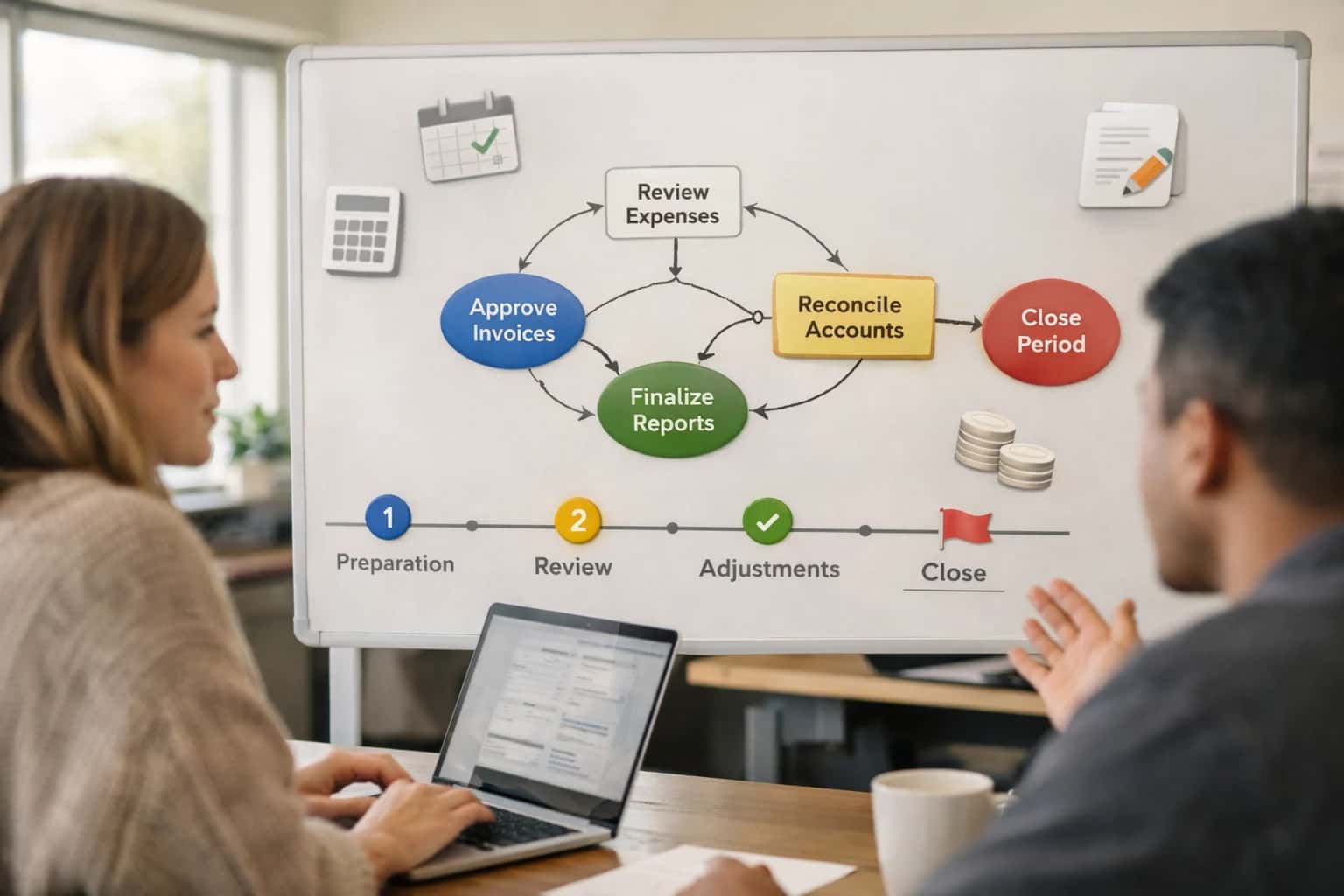
Where AI Fits into SmartSimple Reporting
AI integration transforms static data extraction into dynamic, narrative-driven intelligence for board, funder, and operational reporting.
The implementation typically involves a middleware service that sits between SmartSimple and your BI tools or email systems. This service: 1) Listens for triggers (e.g., a scheduled job, a webhook from a milestone completion), 2) Executes the data pull via SmartSimple's API, 3) Processes the dataset through an LLM with a carefully tuned prompt for your reporting templates and compliance rules, and 4) Pushes the finished report back to SmartSimple as a Document, attaches it to a relevant Grant record, and/or distributes it via email. High-value use cases include automated Board Pack generation, Funder-Specific Report drafting (e.g., tailoring the same data to NIH vs. private foundation formats), and Operational Health Dashboards that flag grants at risk based on spending velocity or missed reporting deadlines.
Rollout should be phased, starting with internal operational reports before moving to external funder deliverables. Governance is critical: all AI-generated narratives and summaries must be reviewed by a program officer before external release, and the system should maintain a clear audit trail linking the generated report back to the source data and the prompt used. This ensures accountability and allows for continuous refinement of the AI's output. For teams managing hundreds of active grants, this integration shifts reporting from a multi-day, manual compilation task to a same-day, consistent, and data-rich operation. Explore our related guide on [/integrations/grant-management-platforms/ai-integration-for-smartsimple-document-management](AI for SmartSimple Document Management) to see how extracted data from grantee attachments can feed these automated reports.
Key SmartSimple Surfaces for AI Reporting Automation
Core Data Objects for Report Generation
AI reporting agents primarily pull from SmartSimple's central application and review records. Key objects include:
- Application Records: Contain narrative proposals, budgets, demographic data, and attached documents (PDFs, Word files).
- Review Records: Store scores, comments, and recommendations from internal staff and external reviewers.
- Custom UDFs: User-defined fields for program-specific data like impact metrics, geographic focus, or alignment scores.
An AI integration consumes this data via SmartSimple's REST API or webhooks triggered on status changes. For example, when an application moves to 'Awarded' status, a webhook can fire, sending the application ID to an AI service. The service retrieves the full record, including nested review data, to populate a standard award report template. This eliminates manual copy-pasting from multiple screens into Word or Excel for board packages.
High-Value AI Reporting Use Cases for SmartSimple
Transform manual, time-consuming reporting processes into automated, intelligent workflows. These use cases show where AI can connect to SmartSimple's data model and API to generate standard and ad-hoc reports, satisfying board, funder, and internal requirements with greater speed and insight.
Automated Funder & Board Report Generation
AI agents pull data from application, review, and financial modules to draft narrative and quantitative reports. The system uses predefined templates, fills in current metrics, and highlights variances or notable outcomes, ready for program officer review. This turns a multi-day compilation task into a same-day process.
Ad-Hoc Portfolio Analysis & Insight Summaries
Enable natural language queries against the grant portfolio. Users ask questions like "Show me all environment grants in the Northeast with budgets over $50k," and an AI-powered agent queries SmartSimple's API, structures the data, and generates a summary with key takeaways. This empowers strategic decision-making without IT support.
Grantee Financial Report Data Extraction & Validation
AI processes uploaded grantee financial reports (PDFs, spreadsheets), extracting line-item expenses and comparing them against the awarded budget within SmartSimple. It flags discrepancies, missing documentation, or unallowable costs, automating the first pass of financial compliance review for grant managers.
Impact Narrative Synthesis from Final Reports
For outcome reporting, AI analyzes qualitative final reports from grantees. It identifies common themes, extracts quoted impact statements, and quantifies mentions of key terms (e.g., 'jobs created', 'communities served'). This synthesizes dozens of narratives into a consolidated impact summary for leadership and communications teams.
Predictive Reporting for At-Risk Grants
AI monitors activity and data patterns to predict which active grants are at risk of late or incomplete reporting. It analyzes historical submission timeliness, communication gaps, and grantee profile data, then generates a proactive report for grant managers to prioritize outreach, improving overall portfolio compliance.
Automated Dashboard & KPI Refresh
Instead of manual monthly updates, an AI workflow triggers on schedule or data change to recalculate key performance indicators (KPIs) like application volume, award rates, and geographic distribution. It updates embedded dashboard widgets or dispatches a summary email to stakeholders, ensuring leaders always have current data.
Example AI Reporting Workflows in SmartSimple
These workflows illustrate how AI can automate the creation of standard and ad-hoc reports in SmartSimple, pulling from application, review, and financial data to satisfy board and funder requirements with greater speed and consistency.
Trigger: Scheduled cron job runs on the last day of the fiscal quarter.
Context/Data Pulled:
- AI agent queries SmartSimple APIs for all active grants in the period.
- Pulls key data: grantee name, award amount, disbursed funds, current status, and linked milestone completion flags.
- Aggregates data from attached final reports and financial documents using OCR and key-value extraction.
Model or Agent Action: A structured generation model is prompted with a template and the aggregated data:
json{ "instruction": "Generate a 2-page executive summary for the board of directors.", "template": "Q{quarter} {year} Grant Portfolio Report", "sections": ["Portfolio Overview", "Key Financials", "Highlighted Outcomes", "Risks & Upcoming Deadlines"] }
The model produces narrative summaries of financial performance, highlights 3-5 standout outcomes based on report sentiment and metric achievement, and flags any grants with missed milestones or budget variances >10%.
System Update or Next Step: The generated report (PDF and Word doc) is automatically attached to a dedicated 'Board Reports' object in SmartSimple. A workflow is triggered to notify the Director of Grants via email and SmartSimple task, requesting review.
Human Review Point: The Director reviews the AI-generated draft, can make edits directly in the Word document, and then uses SmartSimple's native distribution workflow to send the finalized report to the board portal.
Implementation Architecture: Connecting AI to SmartSimple
A technical blueprint for integrating AI agents with SmartSimple's data model and API to automate grant reporting.
The core integration pattern connects an AI orchestration layer to SmartSimple's REST API and webhook system. The AI service acts as a middleware, listening for events like Report Submitted or Milestone Reached via SmartSimple webhooks. It then uses the API to pull related records—such as the full application (UDF data), associated financial transactions, previous report narratives, and attached documents from the File Library—to construct a complete context for the AI. This data is processed through a retrieval-augmented generation (RAG) pipeline, where key financial figures, outcome metrics, and narrative text are indexed in a vector store, allowing the AI to ground its responses in the specific grant's history and requirements.
For a standard Final Report Generation workflow, the system executes a multi-step sequence: 1) The AI agent parses the funder's required report template (often a Word or PDF attachment in the Program record). 2) It queries the RAG index and SmartSimple API to fetch relevant data points (e.g., Budget vs. Actuals from the Financials module, participant counts from custom UDFs). 3) Using a structured prompt, it drafts narrative sections that connect quantitative outcomes to the grant's objectives, flagging any discrepancies for human review. 4) The draft is posted back to SmartSimple as a new File attachment on the report record, and a task is created in the Workflow Engine for the grant manager to review and submit. This reduces report compilation from hours to a reviewed first draft in minutes.
Rollout requires careful governance. We recommend a phased approach: start with internal Progress Reports for a single program, using AI to summarize grantee-submitted updates against milestones. This allows for calibration of prompts and data mappings without external risk. Implement a human-in-the-loop approval step in the SmartSimple workflow before any AI-generated content is shared with funders. Audit trails are maintained by logging all AI actions—including the source data retrieved and the prompt used—as notes on the corresponding SmartSimple record, ensuring full traceability for compliance. This architecture ensures AI augments the existing process without disrupting SmartSimple's built-in approvals, roles, and audit controls.
Code and Payload Examples
Triggering AI-Powered Report Generation
Use SmartSimple's REST API to trigger an AI agent that compiles data from multiple UTA objects (Applications, Reviews, Financial Records) and generates a narrative report. The API call sends a payload specifying the report type, date range, and output format. The AI service processes this request, retrieves the necessary data via SmartSimple's GET /api/v3/objects endpoints, and returns a structured JSON containing the generated report text and key metrics.
pythonimport requests # Example: Trigger a Quarterly Board Report payload = { "report_type": "board_quarterly", "program_id": "PRG-2024-001", "date_range": { "start": "2024-01-01", "end": "2024-03-31" }, "sections": ["executive_summary", "financials", "portfolio_highlights", "risks"], "output_format": "html" # or 'docx', 'pdf' } headers = { "Authorization": "Bearer YOUR_SMARTSIMPLE_API_KEY", "X-AI-Service-Key": "YOUR_AI_SERVICE_KEY" } response = requests.post( "https://api.inferencesystems.com/smartsimple/reports/generate", json=payload, headers=headers ) # Response contains report ID and status report_data = response.json() print(f"Report Generation Job ID: {report_data['job_id']}")
This pattern allows you to embed report generation into SmartSimple workflows or scheduled tasks, moving from manual compilation to automated, on-demand reporting.
Realistic Time Savings and Operational Impact
How AI integration transforms manual reporting workflows into automated, insight-driven processes for board, funder, and internal requirements.
| Reporting Workflow | Before AI Integration | After AI Integration | Implementation Notes |
|---|---|---|---|
Standard Board Report Generation | 4-6 hours manual data pull, spreadsheet assembly, narrative drafting | 30-45 minutes for review and finalization of AI-generated draft | AI pulls from application, review, and financial modules; human edits for tone and nuance |
Ad-hoc Funder Report Creation | Next-day turnaround for custom data queries and formatting | Same-day delivery with structured data and narrative summary | Natural language query to SmartSimple API; AI structures response per funder template |
Financial Performance Summary | Manual reconciliation across budget vs. actuals, grantee submissions | Automated variance detection and narrative explanation of discrepancies | AI cross-references SmartSimple financial data with uploaded grantee reports; flags for review |
Portfolio Impact Narrative | Quarterly effort: compiling qualitative outcomes from hundreds of reports | Weekly updates: AI synthesizes key themes and quotes from new report submissions | Continuous analysis of text fields in grantee reports; highlights trends for program officers |
Compliance & Deadline Reporting | Manual tracking of due dates; last-minute scramble for missing documents | Proactive alerts 2 weeks out; AI drafts reminder communications for late grantees | Integrates with SmartSimple workflow engine; suggests escalations based on grantee history |
Data Quality & Validation Checks | Spot-checking 10% of submissions for errors and inconsistencies | 100% automated validation of numerical data and required attachments | AI scans all incoming report attachments (PDFs, spreadsheets) for completeness and anomalies |
Executive Dashboard Refresh | IT or analyst resource needed to update KPIs and visualizations | Scheduled, automated refresh with AI-generated commentary on metric changes | Connects to SmartSimple reporting APIs; commentary explains 'why' behind the numbers |
Governance, Security, and Phased Rollout
A production-ready AI integration for SmartSimple reporting requires deliberate governance, secure data handling, and a phased rollout to manage risk and prove value.
Governance starts with defining which data objects and users the AI can access. In SmartSimple, this typically means scoping access to specific UDFs (User Defined Fields), application records, financial data modules, and report attachments via secure API calls with role-based permissions. An AI agent should operate under a dedicated service account with audit-logged access, never directly interacting with the core database. For reporting automation, a key control is implementing a human-in-the-loop approval step before any AI-generated report—pulling from Application, Review, and Financial data—is finalized or shared externally with boards or funders.
Security is non-negotiable when handling sensitive grantee data. The integration architecture should treat the AI service as a stateless processor: SmartSimple data is retrieved via its REST API over TLS, processed in a secure, isolated environment (e.g., a private cloud VPC), and results are posted back without persistence. All prompts and data sent to foundational models (like OpenAI or Anthropic) should be scrubbed of PII and use vendor data privacy commitments. For document-heavy reporting, implement a secure file handling pipeline where attachments are temporarily staged for OCR and analysis, then purged after processing.
A phased rollout mitigates risk and builds organizational trust. Start with a pilot on a single, low-risk report type—such as an internal Monthly Activity Summary—using a controlled set of test data. In this phase, the AI generates a draft report in a designated SmartSimple Report Draft UDF, which is then reviewed and manually published by a program officer. Measure accuracy and time savings. Phase two expands to more complex, board-facing reports, integrating AI-suggested visualizations from financial data. The final phase enables ad-hoc, natural language reporting where authorized users can query the grant portfolio via a secure chat interface, with results written back to a SmartSimple record as a draft report for approval and audit trail.
Enabling Efficiency, Speed & Accuracy
Intelligent Analysis, Decision & Execution
We build AI systems for teams that need search across company data, workflow automation across tools, or AI features inside products and internal software.
Talk to Us
Search across company data
Give teams answers from docs, tickets, runbooks, and product data with sources and permissions.
Useful when people spend too long searching or get different answers from different systems.

Automate internal workflows
Use AI to route work, draft outputs, trigger actions, and keep approvals and logs in place.
Useful when repetitive work moves across multiple tools and teams.

Add AI to products and internal tools
Build assistants, guided actions, or decision support into the software your team or customers already use.
Useful when AI needs to be part of the product, not a separate tool.
Frequently Asked Questions on AI Reporting for SmartSimple
Practical answers for technical leaders and grant managers planning AI-driven reporting automation in SmartSimple.
AI integrates with SmartSimple primarily through its REST API and webhook system. The typical data flow involves:
- Trigger: A scheduled job, a webhook from a report due date, or a manual request from a user dashboard.
- Data Pull: The integration service calls SmartSimple's API to fetch relevant data. Key objects include:
Applicationrecords for narrative and scoring data.FinancialTransactionandBudgetobjects for expense and payment data.MilestoneandTaskrecords for progress updates.Custom Fieldvalues, which often contain critical unstructured data.
- Context Assembly: Data is structured into a prompt context, often using a Retrieval-Augmented Generation (RAG) pattern against a vector store of historical reports and guidelines to ensure consistency.
- Generation & Enrichment: An LLM (like GPT-4 or Claude) generates narrative summaries, identifies anomalies, and calculates derived metrics.
- System Update: The completed report draft, along with structured data highlights, is posted back to SmartSimple as a
Fileattachment on the grant record or used to populate a dedicated report object.
Security is maintained via OAuth 2.0 service accounts with scoped permissions, ensuring the AI only accesses data necessary for the report.

About the author
Prasad Kumkar
CEO & MD, Inference Systems
Prasad Kumkar is the CEO & MD of Inference Systems and writes about AI systems architecture, LLM infrastructure, model serving, evaluation, and production deployment. Over 5+ years, he has worked across computer vision models, L5 autonomous vehicle systems, and LLM research, with a focus on taking complex AI ideas into real-world engineering systems.
His work and writing cover AI systems, large language models, AI agents, multimodal systems, autonomous systems, inference optimization, RAG, evaluation, and production AI engineering.
Partnered with leading AI, data, and software stack.





How We Work
Custom AI workflows for your Business
One-fit-all AI don't work for modern businesses. At Inferensys, we aim to understand your business & custom requirements; which we use to define most efficient agentic workflows, the data, and the tools for your business.
01
Review the use case
We understand the task, the users, and where AI can actually help.
Read more02
Pick the right approach
We define what needs search, automation, or product integration.
Read more03
Build the first useful version
We implement the part that proves the value first.
Read more04
Improve from there
We add the checks and visibility needed to keep it useful.
Read moreThe first call is a practical review of your use case and the right next step.
Talk to Us