
Inferensys

Integration

AI Integration for Foundant Grantmaking Software

A technical blueprint for embedding AI into Foundant's grant lifecycle to automate application review, scoring, financial reporting, and grantee communications, reducing manual workload for program officers and finance teams.
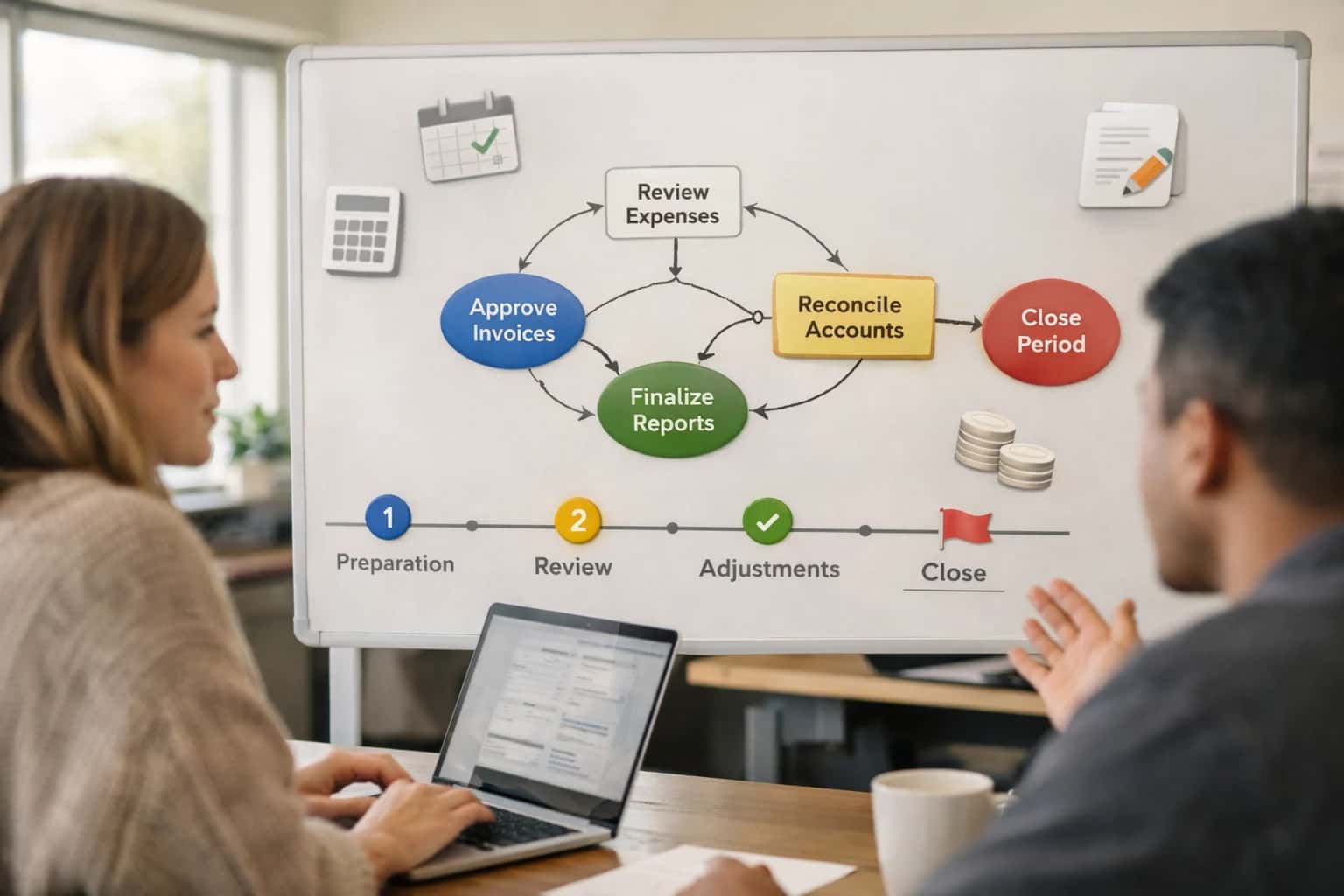
Accountant using AI for financial close automation, accounting software on screen, home office evening work session.
ARCHITECTURE BLUEPRINT

Where AI Fits into the Foundant Grant Lifecycle

A practical guide to augmenting Foundant's core modules with AI, from intake to impact reporting.

AI integration for Foundant targets specific surfaces where manual review, data entry, and communication create bottlenecks. Key integration points include:

  • Application Intake & GLM Online: AI can pre-screen submissions for completeness, flag potential duplicates, and extract key data from narratives and budgets into structured fields via the API.
  • Review & Scoring Workflows: Within committee review stages, AI agents can provide summarization of long applications, suggest scoring based on rubric alignment, and synthesize reviewer comments into consensus memos.
  • Grantee Relationship Management (GRM) & Portals: AI-powered chatbots can handle common FAQ from grantees, trigger personalized report reminders, and recommend capacity-building resources based on grantee profile and stage.
  • Impact & Financial Reporting: AI can extract quantitative metrics and qualitative themes from submitted narrative reports, auto-populate performance dashboards, and highlight variances between budgeted and actual expenses.


A production implementation typically wires a secure AI service layer between Foundant and your data. This involves:

  1. Using Foundant's REST API and webhooks to push/pull application, review, and report data to a dedicated processing queue.
  2. Applying LLMs and custom classifiers for tasks like summarization, extraction, and scoring, with results written back to relevant custom objects or fields.
  3. Embedding AI outputs into user workflows—for example, displaying an AI-generated summary on the application review screen or sending an AI-drafted clarification request via the integrated email system.
  4. Maintaining a full audit trail of all AI interactions and decisions within Foundant's activity logs for transparency and model governance.

Rollout should be phased, starting with a single, high-volume workflow like application triage. Governance is critical: establish clear human-in-the-loop checkpoints for high-stakes decisions (e.g., final scoring, payment approvals) and continuously evaluate AI outputs against reviewer benchmarks. This approach reduces administrative burden while keeping program officers in control, turning weeks of manual processing into days of assisted review. For a deeper technical comparison of approaches across platforms, see our guide on AI Integration for Grant Management Platform APIs.

WHERE TO CONNECT AI WORKFLOWS

Key Integration Surfaces in Foundant

Foundant's Core Review Engine

The Application & Review Hub is the primary surface for AI integration, managing the entire lifecycle from submission to scoring. AI can be injected at multiple points via Foundant's REST API and webhooks.

Key Integration Points:

  • Pre-Submission: Use AI to provide real-time feedback on draft applications, checking for completeness, eligibility flags, and narrative clarity before the final submit.
  • Post-Submission Triage: Automatically classify incoming applications by program fit, complexity, or requested amount using AI, routing them to the appropriate reviewer queue.
  • Reviewer Augmentation: Integrate AI scoring models directly into custom review forms. These models can provide a preliminary score or highlight sections of long narratives for reviewer attention, reducing cognitive load.
  • Consensus Building: After individual reviews are complete, use AI to synthesize disparate reviewer comments, identify areas of agreement or conflict, and generate a consolidated summary for the committee chair.

Implementation typically involves a middleware service that listens for application.submitted or review.completed webhooks, processes the attached documents and data, and posts back scores or metadata to custom fields via the API.

GRANTMAKING AUTOMATION

High-Value AI Use Cases for Foundant

Integrating AI into Foundant transforms manual, repetitive tasks into automated, intelligent workflows. These use cases target specific modules and operational surfaces to reduce administrative burden, accelerate decision cycles, and enhance grantee support.

01

Automated Application Triage & Completeness Check

AI reviews incoming applications in Foundant GLM against program-specific checklists. It flags missing attachments, incomplete budgets, or narrative sections that don't meet word counts, automatically routing complete apps to reviewers and sending tailored requests for information to applicants. This reduces manual pre-screening by program officers.

Hours -> Minutes
Intake processing
02

AI-Powered Narrative Summarization for Reviewers

For each application in Foundant's review workspace, an AI agent generates a concise, structured summary of the project narrative, goals, and key metrics. This allows reviewers to quickly grasp core proposals before deep reading, standardizing initial assessments and saving time in high-volume review cycles.

Batch -> Real-time
Reviewer prep
03

Intelligent Grantee Report Analysis

AI processes qualitative narrative reports and quantitative financial data submitted via the Foundant Grantee Portal. It extracts key outcomes, flags variances against planned budgets, and identifies risks or compliance issues, generating an executive summary for the grant manager. This turns manual report review into a monitored, exception-based workflow.

Same day
Report insights
04

Dynamic FAQ & Grantee Support Agent

An AI chatbot integrated into the Foundant Grantee Portal answers common questions about reporting deadlines, payment processes, and portal navigation by grounding responses in the specific grant's data and program guidelines. It escalates complex queries to a human manager, drastically reducing support ticket volume for program staff.

24/7
Applicant support
05

Predictive Alerting for Grant Milestones

Using historical data from Foundant's award management module, AI models predict the likelihood of late reports or budget deviations for active grants. The system proactively alerts grant managers to high-risk grants and can trigger automated reminder workflows to grantees, shifting management from reactive to proactive.

Weeks -> Days
Risk lead time
06

Automated Award Letter & Agreement Drafting

Upon final approval in Foundant, AI populates standardized award letters and grant agreement templates with specific terms, amounts, payment schedules, and reporting requirements pulled from the application and review data. This ensures accuracy, eliminates manual copy-paste errors, and accelerates the post-decision to notification timeline.

1 sprint
Implementation
FOUNDANT GRANTMAKING

Example AI-Augmented Workflows

These concrete workflows illustrate how AI integrates with Foundant's data model and automation layer to reduce administrative burden and enhance decision-making. Each flow connects to specific modules, surfaces, and APIs.

Trigger: A new application is submitted via the Foundant Grant Lifecycle Manager (GLM) portal.

Context Pulled: The AI service consumes the application payload via a Foundant webhook, which includes the full application JSON, attached narratives, budgets (often as PDFs), and applicant profile data.

Agent Action: A multi-step AI agent executes:

  1. Completeness Check: Validates all required fields and attachments against the program's configuration.
  2. Narrative Summarization: Uses an LLM to generate a 200-word executive summary of the project proposal.
  3. Preliminary Scoring: Applies a configured rubric (e.g., alignment with RFP, geographic focus) to generate a preliminary score and flag for missing financial documentation.
  4. Duplication Detection: Checks applicant name and project abstract against recent awards in the Foundant database via API call to identify potential duplicate submissions.

System Update: The agent posts results back to the Foundant application record via API, creating:

  • A custom field for the AI-generated summary.
  • A custom field for the preliminary score.
  • An internal note flagging any completeness issues or duplication alerts.
  • An automatic update to the application's status (e.g., from 'Submitted' to 'In Review - Complete').

Human Review Point: The program officer reviews the AI-generated summary and flags. Incomplete applications are automatically routed to a "Needs Info" status, triggering a templated email to the applicant.

CONNECTING AI TO FOUNDANT'S GRANT LIFECYCLE

Implementation Architecture: Data Flow & APIs

A practical blueprint for integrating AI agents and models into Foundant's core modules using its API and webhook ecosystem.

A production-ready AI integration for Foundant is built on a secure, event-driven architecture that respects the platform's data model. The primary touchpoints are Foundant's REST API for bidirectional data sync and its webhook system for real-time triggers. Key data objects to synchronize include Applications, Organizations, Reviews, Awards, Payments, and Reports. An integration layer, typically a cloud-hosted middleware service, listens for webhook events (e.g., application.submitted, report.received) and orchestrates AI workflows—such as triggering an automated completeness check or generating a review summary—before posting results back to relevant custom fields or activity logs via the API.

For high-value workflows, the architecture incorporates specific AI services: a Document Intelligence Pipeline for uploaded narratives and budgets (using OCR and LLMs for summarization), a Scoring & Triage Engine that processes application content against program criteria, and a Grantees Communications Agent that drafts personalized messages. Data flow is governed by strict RBAC, ensuring AI services only access data scoped to the triggering user's permissions. All AI-generated content and scores should be written to auditable custom objects or activity streams, maintaining a clear lineage for human review and override.

Rollout follows a phased approach: start with a single, high-volume workflow like Application Intake Triage to validate the data pipeline and user acceptance. Use Foundant's staging environment for initial integration. Governance is critical; establish a review panel for the AI's outputs during a pilot phase, and implement a human-in-the-loop approval step for any AI-driven status changes or communications. This architecture ensures the integration augments Foundant's workflows without disrupting existing processes, providing a scalable path to intelligent automation across the grant lifecycle.

FOUNDANT API INTEGRATION PATTERNS

Code & Payload Examples

Automating Initial Application Review

Integrate AI with Foundant's API to triage incoming applications as soon as they are submitted. A webhook listener can be configured to receive the application.submitted event, triggering an AI service to perform completeness checks, flag potential duplicates, and generate a preliminary summary for program officers.

Example Webhook Payload & Processing:

json
// Sample payload from Foundant webhook
{
  "event": "application.submitted",
  "object_id": "APP-2024-00123",
  "object_type": "Application",
  "timestamp": "2024-05-15T14:30:00Z",
  "data": {
    "applicant_organization": "Community Health Nonprofit",
    "program_name": "General Operating Support",
    "submission_url": "https://yourinstance.foundant.com/applications/APP-2024-00123"
  }
}
python
# Python handler to call AI triage service
import requests

def handle_application_webhook(payload):
    # Fetch full application details via Foundant API
    app_response = requests.get(
        f"https://api.foundant.com/v1/applications/{payload['object_id']}",
        headers={"Authorization": "Bearer YOUR_API_KEY"}
    )
    application_data = app_response.json()
    
    # Send narrative and attachments to AI service for analysis
    ai_payload = {
        "narrative": application_data["project_narrative"],
        "budget_summary": application_data["budget_attachment_text"],  # Extracted via OCR
        "eligibility_criteria": ["501(c)(3)", "serves_local_county"]
    }
    
    triage_result = requests.post(
        "https://your-ai-service.com/triage",
        json=ai_payload
    ).json()
    
    # Update Foundant application with AI-generated score and flags
    update_data = {
        "custom_fields": {
            "ai_triage_score": triage_result["completeness_score"],
            "ai_red_flags": triage_result["flagged_issues"],
            "ai_executive_summary": triage_result["summary"]
        }
    }
    requests.patch(
        f"https://api.foundant.com/v1/applications/{payload['object_id']}",
        json=update_data,
        headers={"Authorization": "Bearer YOUR_API_KEY"}
    )
AI INTEGRATION FOR FOUNDANT

Realistic Time Savings & Operational Impact

A practical look at how AI integration transforms key grantmaking workflows within Foundant's suite, based on typical implementation outcomes.

Workflow / MetricBefore AIAfter AIKey Notes

Initial Application Triage & Completeness Check

Manual review by program staff (30-60 min/app)

Automated scoring & flagging (2-5 min/app)

Staff focus shifts to exceptions; reduces intake backlog

Reviewer Assignment & Matching

Manual spreadsheet matching based on keywords

AI-suggested matches using semantic analysis

Improves reviewer fit; reduces assignment time by ~70%

Narrative & Financial Report Summarization

Staff reads full reports (15-30 min each)

AI-generated executive summary in 30 seconds

Enables faster committee briefings; highlights risks

Grantee Support & FAQ Handling

Manual email responses or portal searches

AI-powered portal chatbot for instant answers

Deflects ~40% of routine inquiries; 24/7 support

Post-Award Compliance & Deadline Tracking

Manual calendar checks and reminder emails

Predictive alerts for late reports/budget variance

Proactive risk management; reduces missed deadlines

Qualitative Impact Analysis from Reports

Manual coding and theme extraction

AI-driven sentiment & theme analysis across corpus

Unlocks insights from unstructured data for storytelling

Multi-Year Grant Renewal Recommendation

Manual review of past performance data

AI-scored renewal priority based on historical outcomes

Data-informed decision support for portfolio strategy

ARCHITECTING FOR CONFIDENCE AND CONTROL

Governance, Security & Phased Rollout

A production-ready AI integration for Foundant requires a governance-first architecture and a phased rollout to manage risk and build user trust.

A secure integration starts by mapping AI access to Foundant's data model and user roles. AI agents should interact via service accounts with role-based API permissions, scoped to specific modules like Applications, Reviews, Financials, or Grantees. All AI-generated content—from application summaries to payment recommendations—must be written to Foundant's audit logs with a clear AI_SYSTEM source tag. For data leaving the platform, implement a secure proxy layer that strips PII and sensitive financials before sending payloads to external LLM APIs, ensuring compliance with your data residency and donor privacy policies.

Rollout should follow a phased, use-case-led approach. Start with a low-risk, high-volume workflow like automating the initial completeness check and categorization of incoming applications. This provides immediate staff relief without touching final decisions. Phase two might introduce AI-assisted scoring as a "second reviewer" for a pilot program, where scores are visible only to administrators for calibration. The final phase integrates AI into the grantee portal for automated FAQ responses and report deadline reminders, monitored by a human-in-the-loop dashboard for quality assurance.

Governance is maintained through continuous evaluation and clear ownership. Designate an AI Steering Committee with members from program, IT, compliance, and finance to review model outputs, assess bias, and approve new use cases. Implement a prompt registry within your integration to version-control all instructions sent to LLMs, ensuring consistency and enabling rapid adjustments. Connect evaluation metrics—like time saved per application or grantee satisfaction scores—back to Foundant's reporting modules to demonstrate tangible ROI. For a deeper technical blueprint on connecting evaluation systems, see our guide on /integrations/grant-management-platforms/ai-integration-for-grant-evaluation-platforms.

AI INTEGRATION FOR FOUNDANT

Frequently Asked Questions

Practical answers for technical leaders planning to embed AI into Foundant's grantmaking workflows, from architecture to rollout.

A secure integration typically uses a dedicated service account with role-based permissions, communicating over HTTPS with API keys or OAuth 2.0 stored in a secrets manager.

Standard Architecture:

  1. Provision API Credentials: Create a dedicated service account/user in Foundant with the minimum necessary permissions (e.g., Read Applications, Write Review Scores).
  2. Build a Middleware Service: Develop a lightweight service (e.g., in Python/Node.js) that:
    • Polls Foundant's REST API for new records or consumes webhooks for real-time triggers.
    • Calls your AI model (e.g., hosted on Azure OpenAI, Anthropic, or a fine-tuned model).
    • Posts results back to the appropriate Foundant object or custom field.
  3. Implement Security & Logging:
    • Never hardcode API keys; use environment variables or a vault.
    • Log all AI interactions and data sent/received for auditability.
    • Implement rate limiting and retry logic to respect Foundant's API limits.

See our guide on API integration patterns for common code snippets and authentication details.

Prasad Kumkar

About the author

Prasad Kumkar

CEO & MD, Inference Systems

Prasad Kumkar is the CEO & MD of Inference Systems and writes about AI systems architecture, LLM infrastructure, model serving, evaluation, and production deployment. Over 5+ years, he has worked across computer vision models, L5 autonomous vehicle systems, and LLM research, with a focus on taking complex AI ideas into real-world engineering systems.

His work and writing cover AI systems, large language models, AI agents, multimodal systems, autonomous systems, inference optimization, RAG, evaluation, and production AI engineering.


