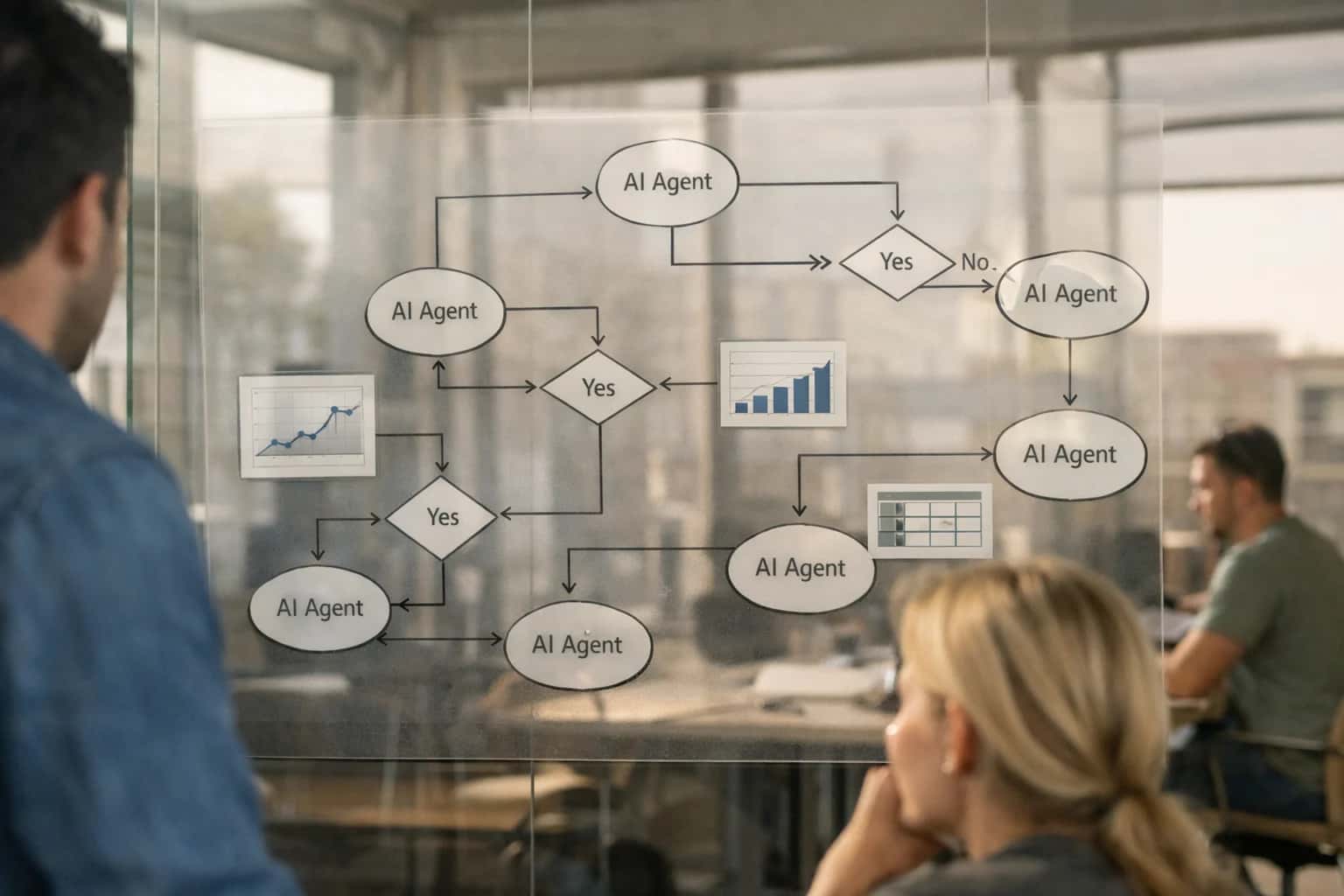
AI integration for Foundant grantee communications focuses on three functional surfaces: the Contact Management module for recipient targeting, the Email and Messaging automation engine for content delivery, and the Grantee Portal for self-service support. The integration connects via Foundant's API to inject AI-generated content into templated communications and to analyze inbound messages from grantees. Key data objects include contact records, grant records, communication history, and submitted report attachments, which provide the context needed for personalization.

Integration
AI Integration for Foundant Grantee Communications
Automate and personalize bulk and one-to-one communications with grantees within Foundant using AI for content generation, channel selection, and workflow integration.
ARCHITECTURE & ROLLOUT
Where AI Fits into Foundant Communications
A practical blueprint for embedding AI into Foundant's grantee communication workflows to automate personalization and reduce manual outreach.
Implementation typically involves a middleware service that listens for Foundant webhooks (e.g., report_submitted, milestone_approaching) or polls the API on a schedule. This service calls an LLM with context—such as the grantee's name, award amount, report due dates, and past communication history—to generate personalized email drafts, portal notification text, or SMS reminders. For inbound support, AI can triage messages arriving via the portal or to a dedicated inbox, categorizing them (e.g., "technical issue," "reporting question," "payment inquiry") and either drafting a response for staff review or routing them to the correct team queue.
Rollout should start with a single, high-volume workflow like report reminder notifications. Governance is critical: all AI-generated communications should be logged in Foundant's activity history, include a clear opt-out mechanism, and pass through a human-in-the-loop approval step for the first several cycles. This phased approach allows for calibration of tone and accuracy, ensuring the AI augments—rather than disrupts—the trusted relationship between funder and grantee. For a deeper look at building intelligent self-service experiences, see our guide on Foundant Grantee Portals.
GRANTEE COMMUNICATIONS
Key Foundant Surfaces for AI Integration
Automating High-Volume Communications
Foundant's email and bulk messaging tools are the primary channel for grantee outreach. AI integration here focuses on personalization at scale and intelligent scheduling.
Key surfaces include the Email Center and Communication History objects. An AI agent can:
- Generate personalized content for award letters, report reminders, or deadline alerts by pulling data from the grant record, applicant profile, and past interactions.
- Dynamically segment lists based on grant status, report due dates, or geographic location to ensure relevant messaging.- Optimize send times by analyzing historical open rates for different grantee segments.
Integration is typically via API calls to trigger sends or webhooks to log AI-generated responses back to the Communication History for a complete audit trail.
FOUNDANT INTEGRATION PATTERNS
High-Value AI Use Cases for Grantee Communications
Automate and personalize bulk and one-to-one communications with grantees within Foundant, using AI to generate content, select channels, and trigger workflows based on grant lifecycle events.
01
Automated Award & Decline Notifications
Generate personalized award letters and respectful decline communications by pulling data from the Foundant award record. AI drafts the initial narrative, inserts specific grant details and next steps, and routes for final human approval before sending via Foundant's email system.
Hours -> Minutes
Draft generation
02
Proactive Report & Milestone Reminders
Trigger intelligent, multi-channel reminders (email, portal notification) based on grantee history and grant terms. AI personalizes the message tone and suggested resources, and can escalate reminders based on predicted risk of lateness, pulling data from Foundant's reporting modules.
Batch -> Real-time
Reminder logic
03
Intelligent Grantee Portal FAQ Agent
Deploy a context-aware AI agent within the Foundant Grantee Portal that answers common questions about reporting, payments, and program guidelines. The agent is grounded in your foundation's specific policy documents and past communications, reducing support ticket volume for program staff.
1 sprint
Typical deployment
04
Personalized Capacity-Building Outreach
Segment grantees based on Foundant application scores, report history, and demographic data to automate targeted communications about relevant workshops, templates, or funding opportunities. AI generates the outreach copy and suggests the optimal channel (e.g., newsletter highlight vs. direct email).
Same day
Segment & send
05
Narrative Report Feedback & Synthesis
When grantees submit narrative reports via Foundant, AI provides initial feedback on clarity, alignment with goals, and data completeness. It can also synthesize key outcomes across multiple reports into a summary for program officers, flagging areas for follow-up.
Hours -> Minutes
Initial review
06
Multi-Channel Campaign Orchestration
Orchestrate complex, timed communication sequences (e.g., for a new RFP or program launch) that span Foundant emails, portal announcements, and scheduled tasks for program officers. AI helps draft consistent messaging variants and can adjust send timing based on open/engagement metrics.
FOUNDANT INTEGRATION PATTERNS
Example AI-Augmented Communication Workflows
These workflows illustrate how AI agents can be embedded into Foundant's communication surfaces to automate personalized, context-aware interactions with grantees, reducing manual effort for program staff.
Trigger: A grant's Next Report Due Date field in Foundant is 30 days away.
Context/Data Pulled: The AI agent queries Foundant's API for:
- Grantee contact information and primary contact name.
- Grant details (award amount, period, project title).
- Previous report submission history and any noted challenges.
- Required report template and fields from the linked
Programrecord.
Model/Agent Action:
- Generates a personalized email reminder using a templated prompt that includes the grantee's name, specific due date, and a reference to their project.
- Key differentiator: It analyzes the required report template and the grant's past narrative data to generate a "starter draft" outline or a set of guiding questions tailored to this grant's objectives. This is attached as a PDF or included in a secure portal message.
- The agent selects the optimal channel (email vs. portal message) based on the grantee's historical engagement patterns from Foundant logs.
System Update/Next Step:
- The personalized message and draft guide are sent via Foundant's communication API, logging the activity in the grant's timeline.
- A follow-up task is created in Foundant for the Program Officer, scheduled for 7 days before the due date, to review submission status.
Human Review Point: The initial communication is sent automatically. The agent flags grantees with a history of late submissions for the Program Officer's manual follow-up list.
CONNECTING AI TO FOUNDANT'S COMMUNICATION SURFACES
Implementation Architecture: Data Flow and APIs
A practical blueprint for wiring AI into Foundant's grantee communication workflows, focusing on data flow, API integration points, and rollout sequencing.
Integrating AI for grantee communications centers on Foundant's Contact Manager, Email Templates, and Activity Log modules. The core data flow begins by querying the Foundant API for active grantee records, pulling contact details, grant status, and recent interaction history. This payload is sent to an orchestration layer (e.g., an AI agent platform) which uses the context to generate or select personalized message content. For bulk communications, the system processes batches via Foundant's POST /communications endpoint, while one-to-one interactions can be triggered by webhooks from the Grant Lifecycle Manager for events like report submissions or payment milestones. All AI-generated content should be logged as a system activity with a traceable source: ai_assist flag for auditability.
A production implementation typically uses a middleware service to manage the handoff between Foundant and LLM providers. This service handles:
- Prompt Context Assembly: Merging grantee data from Foundant with approved messaging guidelines and tone.
- Channel Routing Logic: Deciding whether to send an email, portal notification, or SMS based on grantee preference and message urgency.
- Approval Workflows: For high-stakes or financial communications, the system can draft content and route it through Foundant's existing approval chains or a separate human-in-the-loop queue before sending.
- Feedback Loop: Capturing open/click rates from Foundant's email reports or portal engagement metrics to fine-tune future AI communication strategies.
Rollout should start with low-risk, high-volume notifications like report reminders or portal welcome messages, gradually expanding to more complex use cases like personalized check-ins or impact summary communications. Governance is critical: establish clear content guardrails, maintain a human review percentage for sensitive grants, and use Foundant's field-level security to ensure AI only accesses appropriate data. For teams managing this integration, our guide on AI Governance for Grant Platforms covers policy templates and monitoring setups.
AI-ENHANCED COMMUNICATION WORKFLOWS
Code and Payload Examples
Generating Personalized Bulk Communications
Use Foundant's API to retrieve grantee data (award amount, program name, report due dates) and pass it to an LLM to draft personalized emails. The key is structuring the prompt with clear placeholders and tone guidelines.
Example Python API Call:
pythonimport requests import json # 1. Fetch grantee data from Foundant foundant_api_url = "https://api.foundant.com/v1/grants/active" headers = {"Authorization": "Bearer YOUR_API_KEY"} response = requests.get(foundant_api_url, headers=headers) grantees = response.json()['data'] # 2. Construct LLM prompt for each grantee for grantee in grantees: prompt = f""" Draft a friendly reminder email to a grantee. Grantee: {grantee['contact_name']} Organization: {grantee['org_name']} Grant Program: {grantee['program']} Next Report Due: {grantee['report_due_date']} Use a supportive, collaborative tone. Include the due date and a link to the report portal. """ # Call your LLM service (e.g., OpenAI, Anthropic) llm_payload = { "model": "gpt-4o-mini", "messages": [{"role": "user", "content": prompt}], "temperature": 0.7 } # ... LLM call ... # 3. Queue email for sending via Foundant's communication module or your ESP """
AI-POWERED COMMUNICATIONS
Realistic Time Savings and Operational Impact
How AI integration transforms manual, time-intensive grantee communication tasks within Foundant into scalable, personalized workflows.
| Metric | Before AI | After AI | Notes |
|---|---|---|---|
Bulk award/decline notifications | Manual template selection & mail merge | Dynamic content generation & channel routing | Personalizes based on application data; maintains brand voice |
Response to common grantee inquiries | Manual lookup & reply drafting | AI-powered FAQ agent in portal | Reduces support ticket volume; deflects simple questions |
Report reminder & follow-up sequences | Calendar-based manual email blasts | Predictive, behavior-triggered nudges | Sends reminders based on grantee history; improves on-time submission |
Personalized capacity-building content | Generic resource library links | AI-curated resource recommendations | Suggests guides/tools based on grant focus and reported challenges |
Drafting one-off clarification requests | Manual review & composition | AI-assisted drafting with human review | Summarizes application gaps; suggests clear questions for program officer approval |
Communication audit & sentiment tracking | Manual sampling of email threads | Automated analysis of all grantee interactions | Flags at-risk grantees; provides insights for relationship management |
New grantee onboarding sequence setup | Copy-paste from previous program | AI-generated welcome series from program guidelines | Creates tailored timelines and key contacts; reduces setup from hours to minutes |
ARCHITECTING A CONTROLLED DEPLOYMENT
Governance, Security, and Phased Rollout
Implementing AI for grantee communications requires a secure, governed approach that builds trust and demonstrates value incrementally.
A production integration connects to Foundant's REST API and webhook system to listen for communication triggers—like a new report submission or a status change on a grant record. The AI service, hosted in your secure cloud environment, processes the request, generates or selects content, and posts the response back to the appropriate Contact record, Application, or Task via the API. All outbound messages should be logged as system notes with a clear AI-Generated label for a complete audit trail. For security, API keys are managed via a secrets vault, and all data in transit is encrypted; no grantee PII or sensitive proposal data is sent to external LLM providers without explicit anonymization or use of a private endpoint.
Start with a controlled pilot on a single, low-risk communication stream, such as automated acknowledgments for submitted reports. This allows you to:
- Validate the integration's reliability and data flow.
- Gather feedback from a small group of grantees on tone and usefulness.
- Establish a human-in-the-loop review step where a program officer approves all AI-drafted messages before sending.
Once the pilot is stable, expand to more complex workflows like personalized reminders for upcoming deadlines or FAQ responses in the grantee portal, always maintaining the ability for staff to review and override.
Governance is critical for maintaining trust and compliance. Implement a prompt management system to ensure all generated content aligns with your foundation's voice and grant agreements. Establish clear rules for the AI agent, such as never making funding promises or providing legal advice. Regularly audit communication logs to check for accuracy and appropriateness. This phased, governed approach de-risks the integration, demonstrates tangible time savings for program staff (shifting communication drafting from hours to minutes), and creates a scalable model for rolling out AI across other Foundant modules like application intake or review scoring. For a deeper look at integrating AI across the entire grant lifecycle, see our guide on AI Integration for Foundant Grant Lifecycle.
Enabling Efficiency, Speed & Accuracy
Intelligent Analysis, Decision & Execution
We build AI systems for teams that need search across company data, workflow automation across tools, or AI features inside products and internal software.
Talk to Us
Search across company data
Give teams answers from docs, tickets, runbooks, and product data with sources and permissions.
Useful when people spend too long searching or get different answers from different systems.
Enterprise searchRAGPermissions
Read more
Automate internal workflows
Use AI to route work, draft outputs, trigger actions, and keep approvals and logs in place.
Useful when repetitive work moves across multiple tools and teams.
AI agentsWorkflow automationGovernance
Read more
Add AI to products and internal tools
Build assistants, guided actions, or decision support into the software your team or customers already use.
Useful when AI needs to be part of the product, not a separate tool.
AI integrationDecision supportModel routing
Read moreIMPLEMENTATION DETAILS
Frequently Asked Questions
Common technical and operational questions about integrating AI into Foundant's communication workflows for personalized, automated grantee engagement.
The integration is built using Foundant's API and webhook system, ensuring data never leaves your controlled environment unless explicitly configured.
Primary Connection Pattern:
- API Service Account: Create a dedicated, scoped API service account in Foundant with read/write permissions only to the specific modules and fields required (e.g., Contact records, Communication History, Application data).
- Secure Endpoint: Deploy the AI agent or service (e.g., an Inference Systems microservice) within your cloud environment (AWS, Azure, GCP).
- Outbound Calls: The agent uses the Foundant API to fetch context (e.g., grantee contact info, award history, recent reports).
- Webhook Triggers: Configure Foundant webhooks to send event payloads (e.g.,
report.submitted,application.status_changed) to a secure endpoint on your AI service, triggering automated communications.
Security Controls:
- All communication is over HTTPS with mutual TLS (mTLS) where supported.
- API keys and secrets are managed in a secrets vault, never in code.
- The AI service's data retention policy can be configured to cache only ephemerally for the duration of a request.
- All generated communications are written back to Foundant's Communication History, creating a full audit trail.

About the author
Prasad Kumkar
CEO & MD, Inference Systems
Prasad Kumkar is the CEO & MD of Inference Systems and writes about AI systems architecture, LLM infrastructure, model serving, evaluation, and production deployment. Over 5+ years, he has worked across computer vision models, L5 autonomous vehicle systems, and LLM research, with a focus on taking complex AI ideas into real-world engineering systems.
His work and writing cover AI systems, large language models, AI agents, multimodal systems, autonomous systems, inference optimization, RAG, evaluation, and production AI engineering.
LinkedIn
Limited slotsGet a Free AI Consultation
Partnered with leading AI, data, and software stack.





How We Work
Custom AI workflows for your Business
One-fit-all AI don't work for modern businesses. At Inferensys, we aim to understand your business & custom requirements; which we use to define most efficient agentic workflows, the data, and the tools for your business.
01
Review the use case
We understand the task, the users, and where AI can actually help.
Read more02
Pick the right approach
We define what needs search, automation, or product integration.
Read more03
Build the first useful version
We implement the part that proves the value first.
Read more04
Improve from there
We add the checks and visibility needed to keep it useful.
Read moreThe first call is a practical review of your use case and the right next step.
Talk to Us