AI integration targets the core surfaces of Fluxx's permission model: custom objects, record types, field-level security, user groups, and portal access rules. An AI agent, acting as a policy engine, can analyze user activity logs, role assignments, and data access patterns to recommend RBAC adjustments. For example, it can suggest adding a program officer to a specific Grant Application object's reviewer group based on their historical scoring activity, or flag when a user's composite permissions across multiple roles create unintended data visibility.

Integration
AI Integration for Fluxx Role-Based Permissions
A technical blueprint for using AI to automate and secure role-based access controls (RBAC) in the Fluxx grant management platform, reducing manual overhead and preventing security gaps.
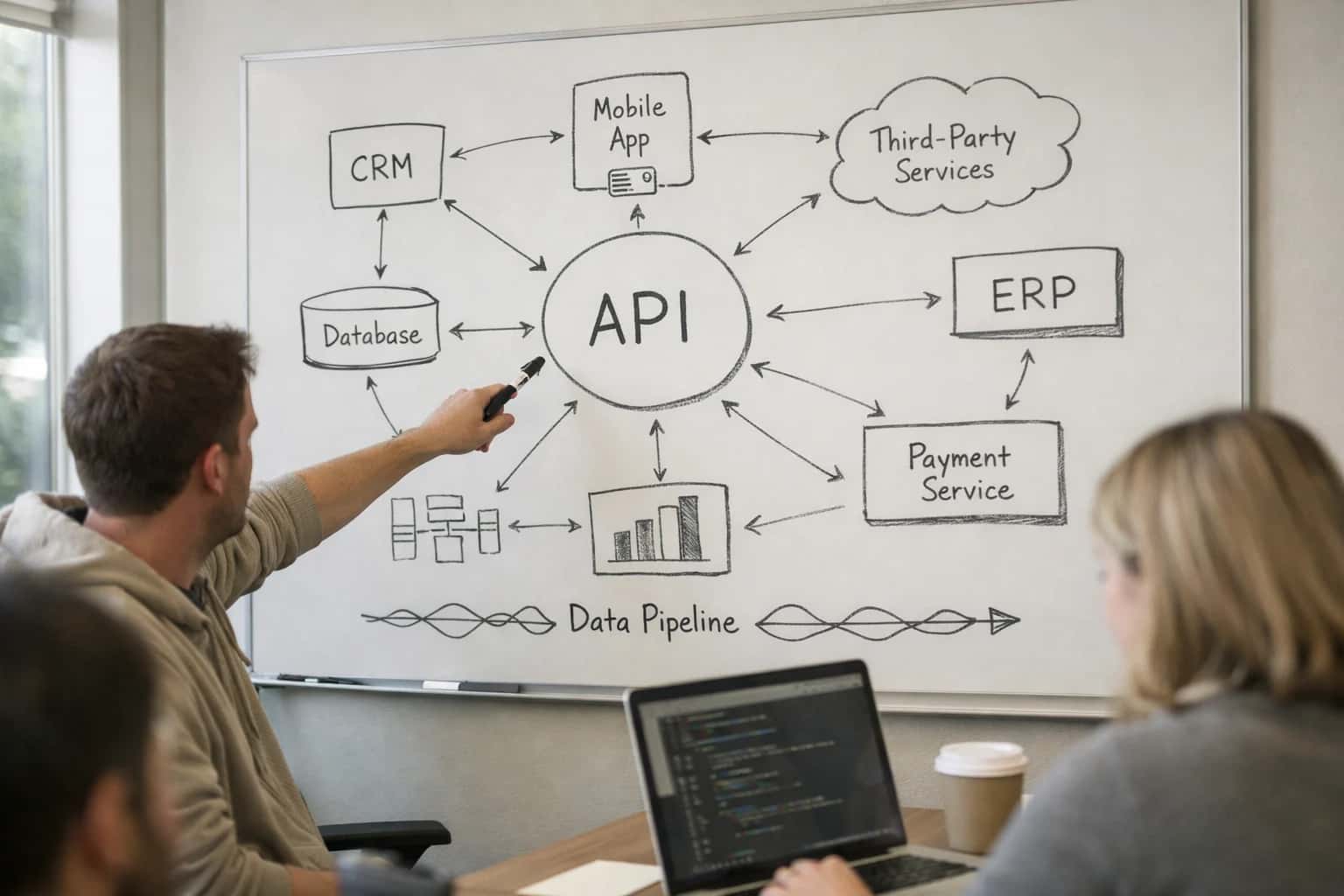
ARCHITECTURE & GOVERNANCE
Where AI Fits into Fluxx RBAC
Integrating AI with Fluxx's role-based access control (RBAC) to automate permission recommendations, audit security, and enforce least-privilege principles.
Implementation connects via Fluxx's REST API to read User, Role, and Permission Set objects, and to write to Group Membership and Profile assignments. The AI system processes audit trails and workflow participation to build a model of "necessary access." This enables automated provisioning for new hires, periodic access reviews, and dynamic permission adjustments during peak review cycles—reducing manual admin work and security gaps. A key pattern is using AI to generate and justify RBAC change tickets within integrated systems like Jira Service Management, creating an auditable governance trail.
Rollout requires a phased approach: start with a read-only analysis phase to build trust in the AI's recommendations, then move to a human-in-the-loop approval workflow within Fluxx itself. Governance is critical; the AI must operate within a clearly defined policy framework and its suggestions should be explainable, referencing specific Fluxx objects and user actions. This integration ensures AI augments security posture without compromising the granular control that makes Fluxx's RBAC powerful for complex grantmaking.
ARCHITECTURAL BLUEPRINTS
Key Fluxx Surfaces for AI-Powered RBAC
Core Data Model for AI-Driven Permissions
AI systems for RBAC must interact directly with Fluxx's core user and role objects. The primary surfaces are the User Profile, Role Definition, and User-Role Assignment records. An AI agent can analyze historical access patterns, user attributes (e.g., department, program affiliation), and activity logs to recommend role modifications or new role creations.
For example, an AI model can process login frequency, accessed applications, and modified records to suggest that a user in the "Program Officer - Environment" role may need temporary "Finance Reviewer" permissions for specific grants. These recommendations are generated as structured payloads that can create or update assignment records via the Fluxx API, ensuring changes are logged in the system's audit trail.
Key API Endpoints:
GET /api/v1/usersto retrieve user attributes and current assignments.POST /api/v1/role_assignmentsto apply AI-generated permission changes.GET /api/v1/audit_logsto feed historical data into the AI model for pattern analysis.
ROLE-BASED ACCESS CONTROL (RBAC) AUTOMATION
High-Value AI Use Cases for Fluxx Permissions
Integrating AI with Fluxx's role-based permissions model automates security governance, reduces manual configuration errors, and ensures reviewers and staff only access relevant grant data. These patterns leverage Fluxx's API and custom objects to audit, recommend, and enforce least-privilege access.
01
Automated Role Recommendation
Analyzes user activity logs, project assignments, and historical data access patterns to recommend optimal Fluxx role assignments (e.g., Program Officer, Reviewer, Finance). Workflow: AI scans user behavior and suggests role modifications via a nightly report, which an admin approves via a custom Fluxx action. This reduces over-provisioning and manual role reviews.
1 sprint
Setup to first recommendations
02
Dynamic Permission Auditing
Continuously audits active Fluxx permissions against defined security policies (e.g., segregation of duties, confidential field access). Workflow: An AI agent runs scheduled checks against Fluxx's API, flags policy violations (e.g., a user with both 'Payment Approver' and 'Payment Creator' roles), and creates remediation tickets in a connected ITSM like Jira.
Batch -> Real-time
Audit frequency
03
Context-Aware Field Masking
Uses AI to dynamically mask sensitive fields (e.g., applicant SSN, budget details) within a Fluxx record based on the user's role, project phase, and data classification tags. Workflow: AI evaluates the record context and user permissions in real-time via a middleware layer, returning a filtered payload to the Fluxx UI, ensuring compliance without complex static rule maintenance.
Hours -> Minutes
Policy update time
04
Just-in-Time Access Provisioning
Grants temporary, elevated permissions for specific tasks (e.g., financial review of a high-value grant) based on AI-triggered approval workflows. Workflow: When a user requests access to a restricted module, AI evaluates the request against historical patterns and manager approvals, provisions access via Fluxx API for a set duration, and automatically revokes it.
Same day
Access turnaround
05
Anomalous Access Detection
Monitors Fluxx login and data export patterns to identify potential security risks, such as after-hours access from unusual locations or bulk downloads by users with limited roles. Workflow: AI analyzes audit logs, sends real-time alerts to security teams via Slack or Microsoft Teams, and can trigger an automated Fluxx workflow to temporarily suspend the user's session for investigation.
06
Cross-Platform Entitlement Reconciliation
Compares user roles and permissions in Fluxx with those in integrated systems (e.g., Active Directory, financial software) to ensure consistency. Workflow: AI maps role definitions across platforms, identifies discrepancies (e.g., a user deprovisioned in AD but still active in Fluxx), and generates a unified reconciliation report or sync ticket, centralizing identity governance.
Hours -> Minutes
Reconciliation cycle
FLUXX INTEGRATION PATTERNS
Example AI-Powered RBAC Workflows
These workflows demonstrate how AI can dynamically recommend, enforce, and audit role-based access controls in Fluxx, ensuring reviewers and staff only see relevant data while maintaining strict security and compliance.
Trigger: A new grant application is submitted and marked as 'Ready for Review' in a Fluxx program.
AI Action:
- The AI agent analyzes the application's content (narrative, budget, focus area) and metadata (geography, applicant type).
- It queries Fluxx's user directory via API, evaluating reviewer profiles for:
- Expertise tags and historical scoring patterns.
- Current workload and availability.
- Potential conflicts of interest (COI) by cross-referencing applicant names/affiliations with reviewer history.
- The agent generates a ranked list of recommended reviewers and their appropriate review stage role (e.g.,
Primary Reviewer,Secondary Reviewer,Committee Chair).
System Update:
- The agent calls the Fluxx API to automatically assign the top-matched reviewers to the application.
- It simultaneously provisions the necessary object-level and field-level permissions for that application record, ensuring reviewers cannot see identifying information from other applicants or access administrative financial fields.
- An audit log entry is created noting the AI-recommended assignment and the specific data points used for the match.
Human Review Point: Program officers receive a notification with the AI's recommendation rationale and can override assignments before permissions are finalized.
ARCHITECTING SECURE, POLICY-AWARE AI ACCESS
Implementation Architecture & Data Flow
A production-ready blueprint for integrating AI agents with Fluxx's role-based permissions model.
The core integration pattern involves deploying a dedicated AI service layer that acts as a policy-aware intermediary between your LLM (e.g., OpenAI, Anthropic) and the Fluxx API. This service authenticates using a dedicated service account with appropriate system-level permissions and is responsible for every data request. Before any query is executed, the AI service calls Fluxx's permission APIs (or caches role-object matrices) to dynamically filter the data payload returned to the LLM. For example, an AI agent summarizing reviewer comments will only receive comments from applications where the requesting user's role (e.g., Program Officer, Reviewer) has explicit read access, as defined in Fluxx's Roles, Permission Sets, and Record-Level Security.
Data flows through a secure, auditable pipeline: 1) A user query triggers the AI agent via a UI widget embedded in a Fluxx portal or dashboard. 2) The request, containing the user's Fluxx session context, is routed to the AI service layer. 3) The service resolves the user's roles and queries Fluxx's permission system to build a scoped data query. 4) Only permitted data is fetched via the Fluxx REST API and sent to the LLM with a prompt constrained to that context. 5) The LLM's response is logged with the user ID, timestamp, and accessed record IDs before being returned. This ensures AI outputs are grounded in data the user is already authorized to see, maintaining the integrity of your RBAC framework.
Rollout requires a phased approach, starting with read-only AI copilots for low-risk data surfaces like summarizing publicly posted grant guidelines or a user's own task list. Governance is critical: implement audit logs that track all AI-generated data accesses alongside the Fluxx native audit trail, and establish a review process for the permission-mapping logic. This architecture not only automates tasks like generating role-specific report summaries or flagging potential permission conflicts but does so within the security model your compliance team has already configured and trusts.
AI-PERMISSION WORKFLOWS
Code & Payload Examples
Suggesting Roles Based on User Context
An AI agent can analyze a user's historical activity, assigned grants, and review history to recommend appropriate Fluxx roles. This payload example shows a call to an AI service that returns a role suggestion and justification, which can be used to pre-populate a role assignment request for admin approval.
json{ "user_id": "usr_789012", "context": { "assigned_grant_types": ["capacity_building", "general_operating"], "review_history": ["grant_123", "grant_456"], "department": "Programs", "access_patterns": ["read_applications", "submit_scores"] }, "ai_suggestion": { "recommended_role": "Program Officer - Reviewer", "confidence_score": 0.87, "justification": "User's activity aligns with 92% of existing 'Program Officer - Reviewer' role holders. They primarily interact with capacity-building grants and have consistent scoring patterns.", "permissions_summary": [ "View applications in assigned programs", "Submit scores and comments", "Access grantee reports for active awards" ] } }
The result can trigger a Fluxx workflow to create a Role Assignment Request object, notifying an administrator for final approval.
AI-ASSISTED ROLE GOVERNANCE
Realistic Time Savings & Operational Impact
How AI integration for Fluxx role-based permissions reduces manual effort and improves security posture across common grant administration tasks.
| Permission Task | Before AI | After AI | Implementation Notes |
|---|---|---|---|
New role creation & mapping | Manual review of 10+ job functions | AI-recommended role templates | Leverages historical access patterns from similar users |
Quarterly access review cycle | Manual user-by-user audit (2-3 days) | AI-prioritized exception report (2-3 hours) | Flags anomalies, expired projects, and dormant accounts for human review |
Onboarding a new program officer | Manual configuration of 15-20 object permissions | AI-suggested profile based on peer group | Human final approval required; reduces setup errors |
Cross-program collaboration setup | Manual ticket for IT to map shared objects | AI-detected need & proposes secure sharing rules | Triggers a workflow for manager approval before applying |
Offboarding & access revocation | Manual checklist across multiple modules | AI-generated revocation plan with dependencies | Prevents orphaned records while ensuring clean cutover |
Compliance audit evidence collection | Manual screenshot and log exports | AI-compiled access change report with narrative | Automates evidence for SOX, NIST, or internal audits |
Emergency access request triage | Manual review of request vs. policy | AI-powered policy check & risk scoring | Provides context to approver; standard requests auto-approved |
IMPLEMENTING AI WITH FLUXX RBAC
Governance, Security, and Phased Rollout
A practical guide to deploying AI-powered role and permission recommendations within Fluxx's security model.
Integrating AI with Fluxx's role-based access control (RBAC) requires a security-first approach. The AI system should operate as a recommendation engine, not an enforcement layer. It analyzes user activity logs, data access patterns, and role definitions to suggest permission adjustments—such as granting a program officer read access to a new grant portfolio or flagging an outdated edit permission for a departed reviewer. All suggestions are routed through Fluxx's existing approval workflows, ensuring changes are logged in the system audit trail and adhere to your organization's segregation of duties policies.
Implementation typically involves a secure microservice that consumes Fluxx's audit API and user/role objects. This service uses the data to train a lightweight model on permissible access patterns. For example, it might learn that users with the "Reviewer" role should only see applications tagged with their assigned program area. The AI then compares live permissions against this model, generating a queue of suggested RBAC updates in a tool like Jira Service Management or a simple internal dashboard for your system administrator to review and apply in Fluxx.
A phased rollout is critical. Start with a read-only analysis phase, where the AI audits permissions and generates reports without making changes, validating its recommendations against known good states. Phase two introduces recommendations for a single pilot program, allowing a controlled group of admins to approve AI-suggested role tweaks. The final phase enables organization-wide RBAC hygiene automation, focusing on high-confidence, low-risk changes like cleaning up orphaned user permissions. This crawl-walk-run approach builds trust, ensures compliance, and aligns the AI's output with your Fluxx governance framework.
Enabling Efficiency, Speed & Accuracy
Intelligent Analysis, Decision & Execution
We build AI systems for teams that need search across company data, workflow automation across tools, or AI features inside products and internal software.
Talk to Us
Search across company data
Give teams answers from docs, tickets, runbooks, and product data with sources and permissions.
Useful when people spend too long searching or get different answers from different systems.
Enterprise searchRAGPermissions
Read more
Automate internal workflows
Use AI to route work, draft outputs, trigger actions, and keep approvals and logs in place.
Useful when repetitive work moves across multiple tools and teams.
AI agentsWorkflow automationGovernance
Read more
Add AI to products and internal tools
Build assistants, guided actions, or decision support into the software your team or customers already use.
Useful when AI needs to be part of the product, not a separate tool.
AI integrationDecision supportModel routing
Read moreAI INTEGRATION FOR FLUXX RBAC
Frequently Asked Questions
Common technical and operational questions about implementing AI to enhance role-based access control (RBAC) and security within the Fluxx grant management platform.
An AI agent analyzes user activity logs, data access patterns, and workflow bottlenecks to suggest RBAC optimizations. A typical implementation flow is:
- Trigger: A scheduled job runs nightly, pulling audit logs from Fluxx's reporting API.
- Context Pulled: The agent analyzes logs for patterns like:
- Users frequently requesting access to records outside their current role scope.
- Users with similar job functions (e.g., "Program Officer West") having divergent effective permissions.
- Inactive permissions assigned to users who haven't accessed related modules in a defined period.
- Model Action: A classification model processes this data, cross-referencing it with the official role definitions in your Fluxx instance. It generates recommendations such as:
- "Add 'View Financial Reports' permission to the 'Grant Manager' role for Region X."
- "User [ID] exhibits patterns matching the 'Reviewer Lead' role; consider role upgrade."
- "Permission 'Edit Master Templates' is unused by all users in role 'Coordinator'; consider removal for security hardening."
- System Update: Recommendations are posted to a secure internal dashboard (e.g., a Slack channel via webhook or a dedicated admin panel) for a security officer's review.
- Human Review Point: No changes are made automatically. A human must approve and then manually execute the role change within the Fluxx Admin UI or via a sanctioned API call.

About the author
Prasad Kumkar
CEO & MD, Inference Systems
Prasad Kumkar is the CEO & MD of Inference Systems and writes about AI systems architecture, LLM infrastructure, model serving, evaluation, and production deployment. Over 5+ years, he has worked across computer vision models, L5 autonomous vehicle systems, and LLM research, with a focus on taking complex AI ideas into real-world engineering systems.
His work and writing cover AI systems, large language models, AI agents, multimodal systems, autonomous systems, inference optimization, RAG, evaluation, and production AI engineering.
LinkedIn
Limited slotsGet a Free AI Consultation
Partnered with leading AI, data, and software stack.





How We Work
Custom AI workflows for your Business
One-fit-all AI don't work for modern businesses. At Inferensys, we aim to understand your business & custom requirements; which we use to define most efficient agentic workflows, the data, and the tools for your business.
01
Review the use case
We understand the task, the users, and where AI can actually help.
Read more02
Pick the right approach
We define what needs search, automation, or product integration.
Read more03
Build the first useful version
We implement the part that proves the value first.
Read more04
Improve from there
We add the checks and visibility needed to keep it useful.
Read moreThe first call is a practical review of your use case and the right next step.
Talk to Us