AI integration for Fluxx application intake targets three primary surfaces: the submission API/webhook, the form builder and validation engine, and the initial workflow routing rules. When an application is submitted, an AI agent can be triggered via webhook to perform an immediate, automated triage. This agent analyzes the full submission payload—including narrative responses, uploaded attachments (budgets, IRS forms, supporting docs), and applicant profile data—to execute completeness checks, flag potential duplicates against past submissions, and extract key entities for tagging.

Integration
AI Integration for Fluxx Application Intake
Automate the initial screening of grant applications in Fluxx using AI for completeness checks, duplication detection, and program stream routing, reducing manual review time from hours to minutes.
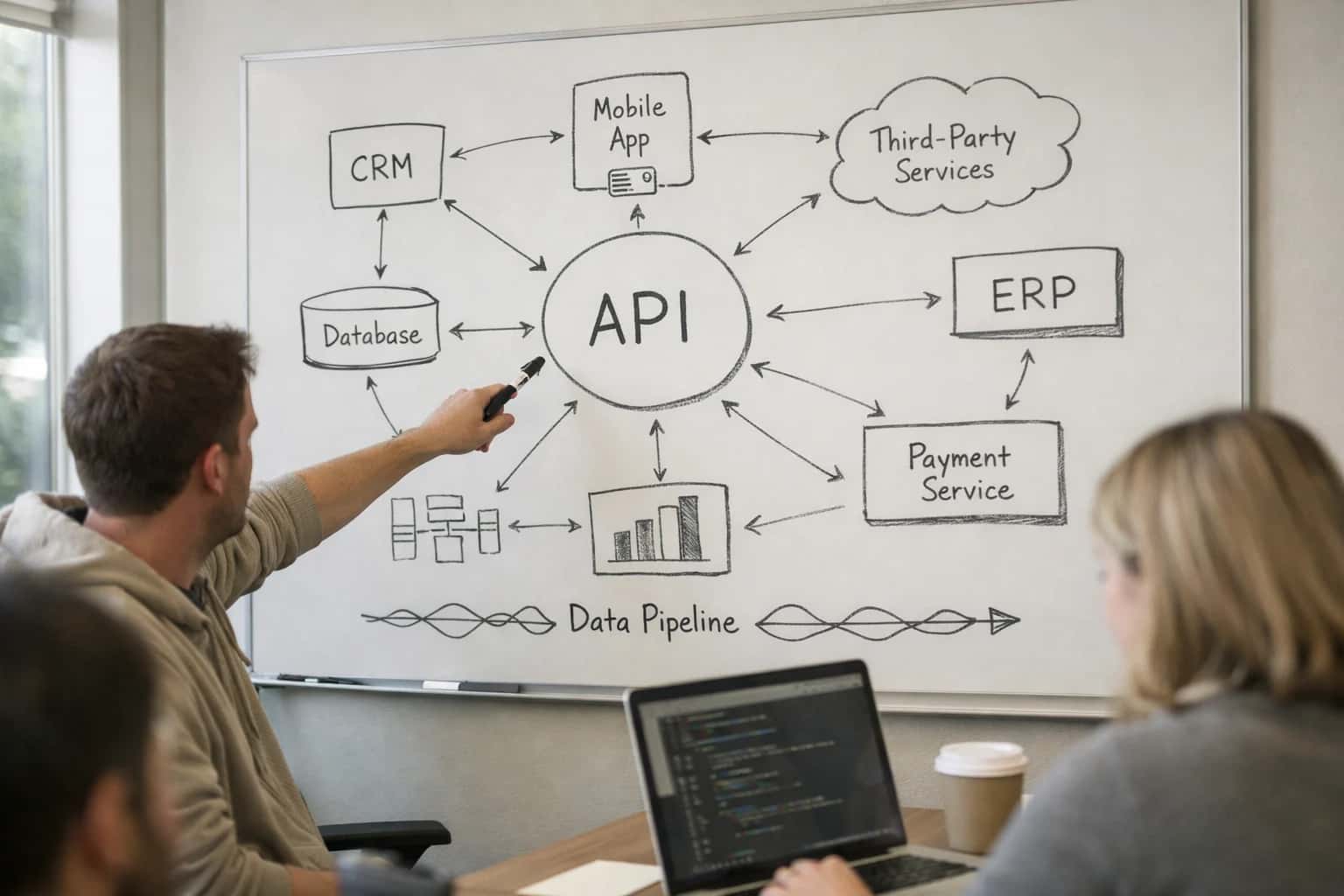
ARCHITECTURE & ROLLOUT
Where AI Fits into Fluxx Application Intake
A practical blueprint for integrating AI agents into Fluxx's application submission and initial processing workflows.
The implementation typically involves a lightweight microservice that sits between the applicant and Fluxx's core. This service consumes the submission, calls configured LLMs for analysis (e.g., OpenAI GPT-4, Anthropic Claude for document reasoning), and then uses the Fluxx API to write back scores, tags, and routing recommendations to custom objects or fields on the application record. For example, the AI can populate a Triage_Status field with values like "Complete - Ready for Review", "Incomplete - Missing Budget", or "Potential Duplicate - Flag for Staff". This data then powers dynamic workflow routing, automatically sending applications to the appropriate program officer queue or a dedicated triage bin.
Rollout should be phased, starting with a single program or form to calibrate the AI's checks against human judgment. Governance is critical: all AI-generated tags and recommendations should be logged in an audit trail, and a human-in-the-loop review step should be maintained for any application the AI routes to a "reject" or "high-risk" path. This approach reduces manual first-pass review from hours to minutes for program staff, while maintaining oversight and allowing the system to learn from corrections over time.
APPLICATION INTAKE
Key Fluxx Surfaces for AI Integration
The Data Entry Point
Fluxx's custom application forms are the primary surface for AI to interact with incoming data. AI integration here focuses on real-time assistance and validation.
Key Integration Points:
- Field-Level Validation: Use AI to analyze text entries in narrative fields (e.g., project description, need statement) for completeness, clarity, and alignment with program goals before submission. This can provide instant, constructive feedback to applicants.
- Attachment Pre-Screening: As applicants upload supporting documents (budgets, IRS forms, letters), an AI agent can perform OCR, extract key figures, and flag discrepancies or missing required elements.
- Dynamic Help: Based on the applicant's entries, an AI copilot can suggest relevant help text or examples from past successful applications, reducing support calls.
Integration typically occurs via webhooks triggered on form save or submission, sending field data to an external AI service for processing and returning actionable flags or suggestions.
AUTOMATE APPLICATION PROCESSING
High-Value AI Use Cases for Fluxx Intake
Integrating AI into the Fluxx application intake phase transforms manual, time-consuming tasks into automated, intelligent workflows. These use cases target the initial submission-to-review handoff, where AI can pre-screen, validate, and route applications, freeing program staff for higher-value strategic work.
01
Automated Completeness & Eligibility Triage
AI reviews each submission against program requirements in real-time, checking for required attachments, completed fields, and basic eligibility criteria. Incomplete or ineligible applications are flagged or returned to the applicant with specific guidance, reducing manual pre-screening by 60-80%.
Hours -> Minutes
Pre-screening time
02
Narrative Summarization & Thematic Tagging
For long-form narrative responses, AI generates concise executive summaries and extracts key themes (e.g., 'community engagement,' 'capacity building,' 'sustainability'). These tags and summaries are written back to Fluxx custom fields, giving reviewers instant context and enabling portfolio-level analysis from day one.
Batch -> Real-time
Insight generation
03
Duplicate & Similarity Detection
AI cross-references new applications against historical submissions within Fluxx to detect potential duplicates or highly similar proposals from the same organization. This prevents double-funding and surfaces connections for program officers, protecting grant integrity and enabling strategic conversations.
Proactive Flagging
Risk mitigation
04
Intelligent Routing to Program Streams
Based on extracted themes, geographic data, and budget size, AI automatically suggests or assigns the application to the most appropriate program, funding stream, or reviewer group within Fluxx. This ensures applications land with the right experts faster, accelerating the entire review cycle.
Same day
Initial assignment
05
Budget & Financial Data Validation
AI parses uploaded budget documents and cross-checks totals, line-item consistency, and mathematical accuracy against figures entered in Fluxx form fields. Discrepancies are flagged for staff review, catching errors early and streamlining financial due diligence.
06
Dynamic Applicant Communication
Triggered by intake events (submission, incompleteness flag, successful routing), AI drafts personalized, context-aware email communications to applicants. These can confirm next steps, request clarifications, or provide reassurance, improving the applicant experience while reducing staff communication load.
1 sprint
To implement
FLUXX INTEGRATION PATTERNS
Example AI-Augmented Intake Workflows
These workflows illustrate how AI can be embedded into Fluxx's application intake process, from initial submission to first-stage review. Each pattern connects to specific Fluxx objects, fields, and APIs to create a seamless, automated experience that reduces manual effort and accelerates triage.
Trigger: A new application is submitted via a Fluxx form.
Context Pulled: The AI service is triggered via a Fluxx webhook. It fetches the full application record via the Fluxx REST API, including all form responses, uploaded attachments (budgets, narratives, IRS forms), and associated organization data.
Agent Action: A pre-configured AI agent performs a multi-step analysis:
- Field Completeness: Checks for required fields left blank or with placeholder text.
- Document Validation: Uses OCR and document intelligence on uploaded PDFs to verify key elements (e.g., EIN on IRS Form 990, signature on letter of intent).
- Eligibility Scoring: Cross-references applicant responses against program-specific eligibility criteria stored in the agent's context (e.g., geographic focus, organization type, budget size).
System Update: The agent posts results back to the Fluxx application record via API:
- Sets a custom checkbox field
ai_eligibility_passtotrueorfalse. - Populates a long text field
ai_completeness_noteswith a structured summary of missing items or validation issues. - Updates a picklist field
ai_intake_statustoReady for Review,Needs Applicant Info, orIneligible - Auto-hold.
Human Review Point: Applications flagged Needs Applicant Info trigger an automated Fluxx email to the applicant with the specific missing items. Those flagged Ineligible - Auto-hold are routed to a dedicated Fluxx view for program officer confirmation before formal rejection.
A BLUEPRINT FOR PRODUCTION
Implementation Architecture: Connecting AI to Fluxx
A practical guide to wiring AI services into Fluxx's API and workflow engine for automated application intake.
A production-ready integration connects to Fluxx's REST API and webhook system. The core pattern is event-driven: when a new application is submitted or a form is saved, Fluxx fires a webhook payload to a secure endpoint. This payload contains the Application ID, Custom Field data, and File Attachment references. An AI service processes this payload to perform initial triage—checking for completeness against a program's required fields, detecting potential duplicates by comparing organization names and project abstracts against historical records, and extracting key data from uploaded budgets or narratives for validation.
The AI service, typically a containerized microservice, calls a combination of LLMs for text analysis and custom classifiers for data validation. Results are written back to Fluxx via API calls to update Custom Fields (e.g., AI_Completeness_Score, AI_Flag_Duplicate, AI_Extracted_Budget_Total) or to create Internal Notes for program officers. For routing, the service can update the application's Stage or assign it to a specific Reviewer Group based on the AI's analysis of the project's alignment with program streams. All AI actions are logged in a dedicated Audit Object within Fluxx for transparency and model governance.
Rollout should be phased, starting with a single program or grant cycle. Implement a human-in-the-loop approval step where AI recommendations are presented as suggestions in a Fluxx dashboard or task list for a program officer to confirm before any automated routing occurs. This builds trust and provides a feedback loop for model calibration. Governance requires monitoring the AI Custom Fields for drift and establishing a review process for edge cases flagged by the system, ensuring the integration reduces manual work without introducing opaque decision-making.
FLUXX APPLICATION INTAKE
Code and Payload Examples
Handling New Submissions
When a new application is submitted in Fluxx, a webhook can trigger an immediate AI triage process. This handler validates the payload, extracts key fields, and calls an AI service for an initial completeness and eligibility check.
pythonimport json from flask import request, Response from inference_ai_client import TriageAgent # Initialize your AI service client ai_triage = TriageAgent(api_key=os.getenv('INFERENCE_API_KEY')) def handle_fluxx_submission(): """Webhook endpoint for Fluxx application submission events.""" payload = request.json # Extract core application data from Fluxx payload application_id = payload.get('application_id') program_id = payload.get('program_id') applicant_data = payload.get('applicant', {}) attachments = payload.get('attachments', []) # Prepare context for AI triage triage_context = { "application_id": application_id, "program_guidelines": get_program_rules(program_id), # Fetch from Fluxx "applicant_profile": applicant_data, "attachment_count": len(attachments) } # Call AI service for initial triage triage_result = ai_triage.assess_completeness(triage_context) # Update Fluxx record with triage outcome update_fluxx_application(application_id, { "ai_triage_status": triage_result.get('status'), # e.g., 'complete', 'incomplete', 'needs_review' "ai_triage_notes": triage_result.get('notes'), "missing_items": triage_result.get('missing_fields', []), "routing_recommendation": triage_result.get('recommended_stream') }) return Response(status=200)
This pattern allows for real-time validation, reducing manual follow-up by flagging incomplete submissions immediately.
AI-ASSISTED FLUXX APPLICATION INTAKE
Realistic Time Savings and Operational Impact
How AI integration transforms manual application processing in Fluxx, focusing on time savings, staff capacity, and data quality.
| Metric | Before AI | After AI | Notes |
|---|---|---|---|
Initial application triage | Manual review of each submission | Automated completeness & duplication checks | Staff review flagged exceptions only |
Routing to program streams | Manual assignment by program officer | AI-suggested routing based on content | Human retains final approval; reduces misroutes |
Data entry from attachments | Manual extraction of budgets, narratives | AI extracts key fields into Fluxx custom objects | Focus shifts to validation, not transcription |
Eligibility pre-screening | Checklist review against PDF guidelines | AI cross-references criteria with application text | Generates pass/fail summary with citations |
Reviewer assignment preparation | Manual compilation of application packets | AI auto-generates executive summaries & scoring sheets | Reviewers get context in minutes, not hours |
High-volume period support | Overtime & temporary staff for peak cycles | AI handles baseline triage, scaling with load | Enables consistent SLA without proportional headcount |
Intake to first review lag | 3-5 business days | Same day to next business day | Accelerates entire review cycle; improves applicant experience |
ARCHITECTING FOR CONTROL AND SCALE
Governance, Security, and Phased Rollout
A production-ready AI integration for Fluxx application intake requires a deliberate approach to security, oversight, and incremental delivery.
A robust integration architecture treats the AI as a governed service, not a black box. We typically implement a dedicated microservice layer that sits between Fluxx and the AI models. This service handles all interactions: it receives webhooks from Fluxx's Application and Submission objects, orchestrates calls to LLMs (like OpenAI or Anthropic) or custom scoring models, and posts structured results back to Fluxx via its REST API. This layer enforces critical guardrails: it redacts sensitive PII before sending data to external AI services, logs all inputs and outputs for an audit trail, applies rate limiting, and manages API keys securely. The AI's outputs—such as a completeness score, duplication flag, or suggested program stream—are written to designated custom fields in Fluxx, ensuring the data remains within the platform's existing permission and reporting structures.
Rollout is phased to build trust and validate impact. Phase 1 often starts with a "copilot" mode: the AI performs completeness checks and generates a summary for reviewers, but all routing and scoring decisions remain manual. This allows staff to calibrate the AI's suggestions against their judgment. Phase 2 introduces automated, low-risk actions, like flagging likely duplicate applications or auto-routing clearly ineligible submissions to a holding queue. Phase 3 escalates to prescriptive automation, such as automatically advancing fully complete, high-scoring applications to the next review stage. Each phase includes a parallel human review process and regular feedback loops to retrain or adjust prompts, ensuring the system adapts to your specific program's nuances.
Governance is continuous. We establish a cross-functional oversight group (program officers, IT, compliance) to review the AI's performance metrics—accuracy, bias checks, and user feedback—on a quarterly basis. Access to configure or modify the AI workflows is controlled via Fluxx's existing role-based permissions, typically reserved for system administrators. This structured, incremental approach de-risks the integration, aligns it with your operational maturity, and ensures the AI augments your team's expertise without introducing uncontrolled variability into a critical funding process. For related architectural patterns, see our guide on AI Integration for Grant Management Platform APIs.
Enabling Efficiency, Speed & Accuracy
Intelligent Analysis, Decision & Execution
We build AI systems for teams that need search across company data, workflow automation across tools, or AI features inside products and internal software.
Talk to Us
Search across company data
Give teams answers from docs, tickets, runbooks, and product data with sources and permissions.
Useful when people spend too long searching or get different answers from different systems.
Enterprise searchRAGPermissions
Read more
Automate internal workflows
Use AI to route work, draft outputs, trigger actions, and keep approvals and logs in place.
Useful when repetitive work moves across multiple tools and teams.
AI agentsWorkflow automationGovernance
Read more
Add AI to products and internal tools
Build assistants, guided actions, or decision support into the software your team or customers already use.
Useful when AI needs to be part of the product, not a separate tool.
AI integrationDecision supportModel routing
Read moreIMPLEMENTATION AND OPERATIONS
Frequently Asked Questions
Common technical and operational questions about integrating AI into Fluxx application intake workflows.
AI integrates with Fluxx primarily through its REST API and webhook system. A typical architecture involves:
- Trigger: A new application submission in Fluxx fires a configured webhook to your AI service endpoint.
- Context Pull: The AI service calls back to Fluxx's API using the provided
application_idto fetch the full submission payload, including custom field data, attached documents (budgets, narratives), and applicant profile. - AI Processing: The service runs the data through configured models for tasks like completeness checking, duplication detection, or preliminary scoring.
- System Update: The AI service uses the Fluxx API to write results back, typically by:
- Updating custom fields (e.g.,
AI_Completeness_Score,AI_Flag_Duplicate). - Adding internal notes or comments for program officers.
- Triggering a subsequent Fluxx workflow stage (e.g., moving an application from "Intake" to "Review" or "Needs Info").
- Updating custom fields (e.g.,
This keeps Fluxx as the system of record while enabling intelligent, automated pre-processing.

About the author
Prasad Kumkar
CEO & MD, Inference Systems
Prasad Kumkar is the CEO & MD of Inference Systems and writes about AI systems architecture, LLM infrastructure, model serving, evaluation, and production deployment. Over 5+ years, he has worked across computer vision models, L5 autonomous vehicle systems, and LLM research, with a focus on taking complex AI ideas into real-world engineering systems.
His work and writing cover AI systems, large language models, AI agents, multimodal systems, autonomous systems, inference optimization, RAG, evaluation, and production AI engineering.
LinkedIn
Limited slotsGet a Free AI Consultation
Partnered with leading AI, data, and software stack.





How We Work
Custom AI workflows for your Business
One-fit-all AI don't work for modern businesses. At Inferensys, we aim to understand your business & custom requirements; which we use to define most efficient agentic workflows, the data, and the tools for your business.
01
Review the use case
We understand the task, the users, and where AI can actually help.
Read more02
Pick the right approach
We define what needs search, automation, or product integration.
Read more03
Build the first useful version
We implement the part that proves the value first.
Read more04
Improve from there
We add the checks and visibility needed to keep it useful.
Read moreThe first call is a practical review of your use case and the right next step.
Talk to Us