Integrating AI with Workday Time Tracking for public sector agencies means connecting to specific data objects and workflows to automate high-friction, high-risk processes. The primary integration surfaces are the Time Block, Time Off Request, and Time and Labor calculation objects. AI agents can be triggered via Workday's Web Services API or Business Process Event notifications to perform pre-submission checks on timesheets, analyzing them against complex public sector rules like FLSA, union bargaining agreements, and agency-specific pay policies. This moves compliance review from a manual, post-payroll audit to an automated, pre-approval guardrail.

Integration
AI Integration with Workday Time Tracking for Public Sector
Automate timesheet compliance, flag FLSA violations, and streamline approval workflows by integrating AI agents directly with Workday Time Tracking APIs for government HR operations.
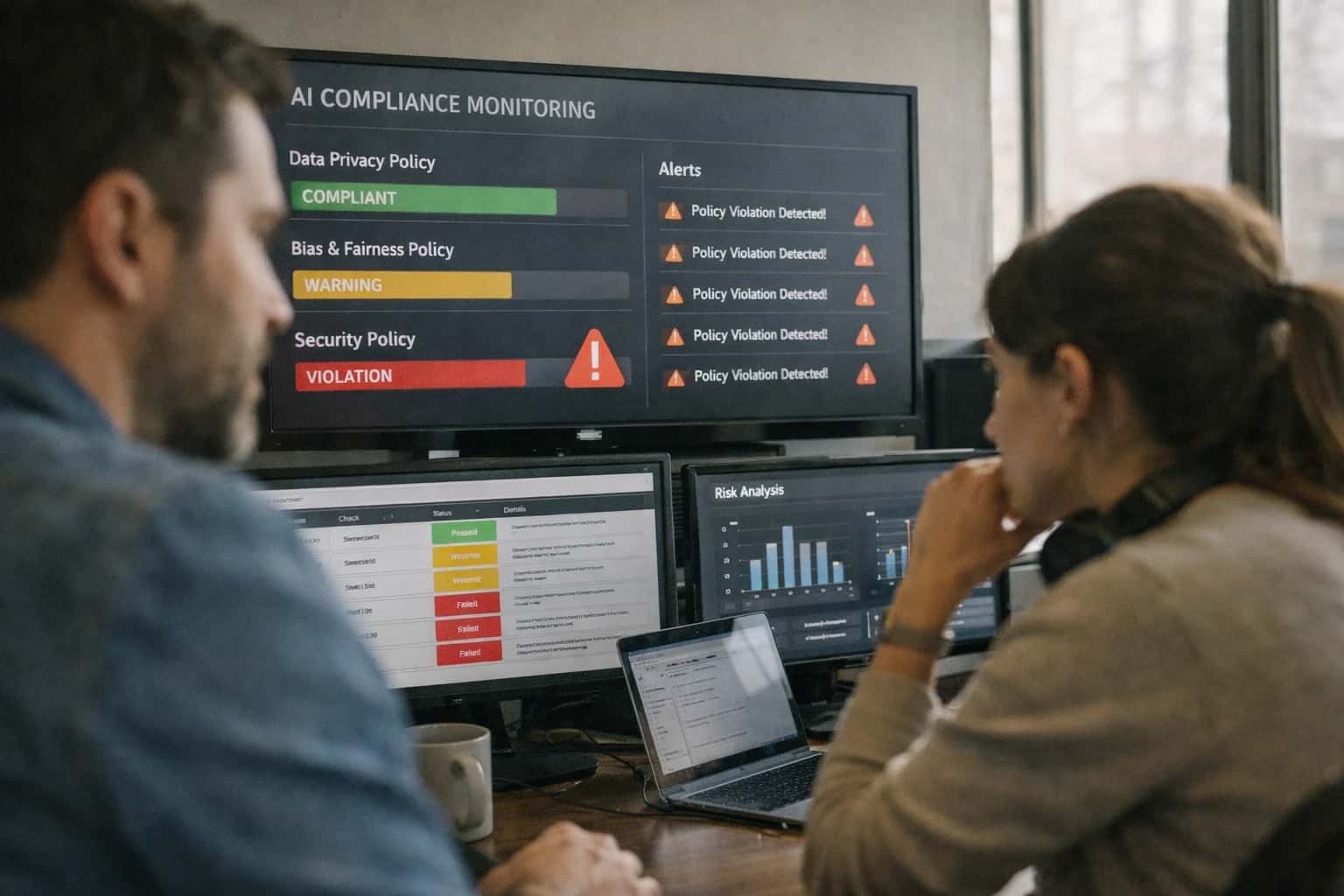
ARCHITECTING FOR COMPLIANCE AND EFFICIENCY
Where AI Fits into Public Sector Timekeeping
A practical guide to integrating AI with Workday Time Tracking for government agencies, focusing on automating compliance, streamlining approvals, and reducing administrative burden.
The implementation typically involves a middleware layer that subscribes to timesheet submission events. An AI service then evaluates the submission, checking for patterns like unauthorized overtime, missed meal periods, or incorrect grant code charging. It can cross-reference the employee's Workday Worker Profile for their bargaining unit and accrual balances. Findings are written back as Custom Objects or comments on the Business Process for the manager's review. For managers, an AI copilot can summarize team time data, highlight approvals awaiting action, and even draft approval justifications based on historical patterns, all surfaced within the familiar Workday inbox or a dedicated dashboard.
Rollout requires careful governance. AI suggestions should be logged as Audit Trail entries, and any automated actions (like flagging a violation) should be configurable by agency policy. A phased approach starts with a 'co-pilot' mode providing recommendations to timekeepers and managers, only moving to automated blocking for clear, policy-based violations after validation. This integration reduces the risk of costly payroll errors and compliance findings while freeing HR and managers from routine timesheet policing, allowing them to focus on workforce strategy and employee support.
PUBLIC SECTOR FOCUS
Key Integration Surfaces in Workday Time Tracking
Timesheet Entry & Compliance
The primary integration surface is the Timesheet business object and its associated Time Block sub-objects. AI can be injected at submission to perform real-time compliance checks against public sector labor rules (FLSA, union contracts, agency-specific policies).
Key integration points:
- Pre-submission validation webhooks: Call an AI service to analyze the proposed timesheet against worker attributes (exempt status, bargaining unit) and calendar data (holidays, pay periods). Flag potential violations like unauthorized overtime or missed meal breaks before submission.
- Automated comment generation: For flagged entries, the AI can draft a contextual note for the employee or manager explaining the potential issue, reducing back-and-forth.
- Integration with Workday Extend or Calculated Fields: Use AI outputs to populate custom fields that drive conditional approval routing or trigger corrective tasks.
This layer focuses on preventing errors upstream, reducing payroll corrections and compliance risks for government entities.
WORKDAY INTEGRATION PATTERNS
High-Value AI Use Cases for Public Sector Time Tracking
Integrating AI with Workday Time Tracking automates compliance, reduces administrative burden, and provides managers with actionable insights. These patterns connect to Workday's Time Tracking, Absence, and Payroll APIs to create intelligent, governed workflows.
01
Automated FLSA & Union Rule Compliance
AI agents monitor submitted timesheets against FLSA regulations and collective bargaining agreement rules in real-time. The system flags potential violations (e.g., missed meal breaks, incorrect overtime calculations) for review before payroll approval, reducing liability and manual audit work.
Batch -> Real-time
Compliance check
02
Intelligent Timesheet Pre-Fill & Correction
An AI copilot analyzes calendar events, project codes, and historical patterns to suggest time entries. It can identify missing hours, propose corrections for misplaced allocations, and answer employee questions via chat, cutting down submission errors and follow-up.
Hours -> Minutes
Submission time
03
Manager Approval Workflow Copilot
For managers, an AI agent summarizes team timesheet status, highlights exceptions (large variances, PTO conflicts), and recommends approval/denial based on policy. It integrates with Workday Inbox and can auto-approve low-risk submissions, streamlining the bi-weekly approval cycle.
Same day
Approval cycle
04
Predictive Overtime & Leave Forecasting
By analyzing historical time data, project workloads, and absence trends, AI models forecast overtime needs and leave shortages for departments. These insights feed into Workday Adaptive Planning or manager dashboards for proactive resource planning and budget control.
1 sprint
Forecast lead time
05
Audit Trail & Explanation Generation
For every automated check or correction, the AI system generates a human-readable audit log stored as a Workday document. This creates a clear lineage for auditors, explaining why a timesheet was flagged or how a pay rule was applied, simplifying compliance reporting.
06
Integrated Payroll Inquiry Resolution
An AI-powered virtual assistant connects Workday Time Tracking data with Payroll results. Employees can ask natural language questions ("Why was my overtime pay different?") and receive grounded answers, deflecting routine inquiries from HR staff and reducing case volume.
80% Deflection
HR inquiry volume
WORKDAY PUBLIC SECTOR INTEGRATION PATTERNS
Example AI-Powered Time Tracking Workflows
These workflows demonstrate how AI agents, integrated directly with Workday's Time Tracking APIs and business process framework, can automate compliance, reduce administrative burden, and provide proactive insights for public sector managers and payroll teams.
Trigger: An employee submits a timesheet for approval in Workday.
AI Agent Action:
- The agent is triggered via a Workday webhook on the
Timesheet_Submitevent. - It retrieves the timesheet details, employee record (including FLSA status, union code, and pay rules), and recent pay period history via the Workday
Get_WorkersandGet_Time_EntriesSOAP APIs. - Using a rules-based LLM prompt, the agent analyzes the hours against configured thresholds:
- Flags potential overtime violations (e.g., non-exempt employee working >40 hours without prior approval).
- Checks for missed meal or rest period compliance based on jurisdiction rules stored in a vector database.
- Validates special pay codes (e.g., hazard, standby) against employee eligibility.
- System Update: The agent posts a comment directly to the Workday business process task via the
Put_Business_Process_CommentAPI, summarizing findings (e.g., "Potential FLSA overtime violation detected: 42 regular hours logged. Awaiting manager justification."). - For high-confidence violations, it can automatically route the timesheet to a secondary "Payroll Review" step instead of the direct manager.
Human Review Point: The manager sees the AI-generated comment within the standard Workday approval inbox, providing audit-ready context for their decision.
TIME TRACKING FOR PUBLIC SECTOR
Implementation Architecture: Connecting AI to Workday
A practical blueprint for integrating AI agents with Workday Time Tracking to automate compliance, accelerate approvals, and reduce managerial overhead.
The integration connects AI agents directly to the Workday Web Services API and Business Process Framework. Key data objects include Time_Block, Worker, Payroll_Run, and Time_Off_Request. The AI system acts as a pre-approval layer, scanning submitted timesheets against a governed rule set that includes agency-specific policies, union contracts (CWA, AFSCME), and FLSA regulations. For each block, the agent validates correct Earning Codes, flags potential overtime threshold violations, and checks for missing project or grant charge codes required for federal reporting.
In a typical workflow, when a timesheet is submitted, an event is pushed via Workday Studio or an External Event to a secure queue. An AI agent retrieves the timesheet data, along with the worker's FTE status and accrual balances from the Worker object. It performs a multi-step review: 1) Compliance Check: Compares hours against the worker's schedule and approved Time_Off_Request records. 2) Anomaly Detection: Uses historical patterns to flag unusual entries (e.g., 12-hour days without prior approval). 3) Narrative Generation: Creates a plain-English summary for the manager, highlighting only the exceptions that require human judgment, such as a potential FLSA misclassification for a non-exempt employee approaching overtime.
Rollout is phased, starting with a pilot group. The AI's recommendations are logged as Custom_Object records in Workday, creating a full audit trail. Managers retain final approval authority within the standard Business Process; the AI simply prepopulates the approval comment with its findings. Governance is critical: the rule set is maintained in a version-controlled repository, and the AI's flagging accuracy is continuously evaluated against a human-in-the-loop review for the first 90 days. This architecture shifts compliance review from a manual, post-payroll corrective process to an automated, preventative step, reducing payroll errors and audit exposure.
WORKDAY TIME TRACKING INTEGRATION PATTERNS
Code and Payload Examples
Automated FLSA & Policy Review
This Python example uses the Workday REST API to fetch pending timesheets, then calls an AI service to analyze them for compliance violations before returning a flagged status.
pythonimport requests # 1. Fetch pending timesheets from Workday workday_response = requests.get( 'https://api.workday.com/time/v1/timesheets/pending', headers={'Authorization': 'Bearer YOUR_TOKEN'}, params={'limit': 50} ).json() # 2. Prepare payload for AI analysis ai_payload = { "timesheets": workday_response['data'], "policies": [ "FLSA overtime rules", "Union contract CBA Article 12", "Agency holiday pay policy" ] } # 3. Send to AI service for compliance check ai_result = requests.post( 'https://api.inferencesystems.com/v1/compliance/check', json=ai_payload, headers={'X-API-Key': 'YOUR_AI_KEY'} ).json() # 4. Update Workday with flagged status for violation in ai_result['violations']: requests.patch( f"https://api.workday.com/time/v1/timesheets/{violation['timesheet_id']}/flags", json={'flag_reason': violation['rule'], 'severity': 'HIGH'} )
This workflow runs as a scheduled job, catching policy violations before manager approval, reducing manual audit time by 70-90%.
AI-ENHANCED WORKDAY TIME TRACKING
Realistic Time Savings and Operational Impact
How AI integration transforms manual compliance and approval workflows for public sector HR and payroll teams.
| Workflow | Before AI | After AI | Notes |
|---|---|---|---|
Timesheet Compliance Review | Manual audit of 100+ sheets per pay period | Automated flagging of 5-10% for human review | Focuses analyst time on high-risk exceptions like potential FLSA violations |
Overtime Approval Routing | Manager manually calculates & routes for budget approval | AI pre-calculates impact, suggests approvers based on project codes | Reduces approval cycle from 2-3 days to same-day |
Leave Request & Accrual Validation | HR verifies balances against policy documents | AI cross-references accrual banks and policy rules in real-time | Cuts validation time from 15 minutes to <1 minute per request |
Timesheet Error Resolution | Employee submits ticket, payroll researches, emails back-and-forth | AI identifies error type, suggests correction, auto-generates reply | Reduces resolution from 48 hours to 2-4 hours |
Manager Approval Workload | 30-60 minutes per pay period reviewing each direct report | AI highlights anomalies and provides summary for batch approval | Cuts manager review time by 70%, focusing on exceptions |
FLSA Classification Audit | Quarterly manual sampling for exempt/non-exempt misclassification | Continuous AI monitoring of hours vs. duties, flags potential misclassifications | Proactive risk mitigation vs. reactive audit findings |
Payroll Exception Reporting | Post-payroll manual reconciliation to identify discrepancies | Pre-payroll AI report of all anomalies with root-cause analysis | Shifts from correcting errors to preventing them before payroll runs |
Policy Change Communication | Broad email blasts, follow-up tickets for clarification | AI-powered assistant answers specific employee questions based on new rules | Reduces HR support ticket volume by 40-60% during policy updates |
ARCHITECTING FOR PUBLIC SECTOR COMPLIANCE
Governance, Security, and Phased Rollout
A secure, governed approach to integrating AI with Workday Time Tracking for public sector agencies.
Integrating AI into Workday Time Tracking for government requires a security-first architecture that respects the sensitivity of employee data and public funds. The implementation typically connects via Workday's Web Services API or REST API to read time entry objects (Time_Entry), worker data, and approval workflows. AI agents operate on a secure middleware layer, processing data to flag potential FLSA violations, overtime discrepancies, or missing certifications before timesheets reach a manager. All AI interactions should be logged against the Business_Process_Transaction for a full audit trail, and any automated suggestions must be presented as recommendations within the existing approval chain, never as autonomous actions.
A phased rollout is critical for adoption and risk management. We recommend starting with a pilot group, such as a single department or employee classification (e.g., non-exempt field staff). Initial use cases focus on low-risk, high-volume tasks: automated completeness checks (e.g., missing project codes), basic policy validation (e.g., overtime pre-approval flags), and manager summarization (e.g., a weekly digest of pending approvals). This allows for tuning prompts, validating accuracy, and building trust before expanding to more complex compliance analysis, such as detecting patterns that suggest off-the-clock work or inconsistent leave usage across pay periods.
Governance is enforced through a human-in-the-loop design and strict access controls. AI-generated flags are surfaced as comments or tasks within the native Workday Approve_Time process, requiring manager review and action. The system should integrate with your agency's existing Identity and Access Management (IAM) framework, ensuring AI tools only access data permissible for the triggering user's role. Regular model evaluations against historical, anonymized data help monitor for drift, while a clear rollback plan ensures business continuity. This controlled approach allows public sector organizations to harness AI for operational efficiency while maintaining the accountability and transparency required for government operations.
Enabling Efficiency, Speed & Accuracy
Intelligent Analysis, Decision & Execution
We build AI systems for teams that need search across company data, workflow automation across tools, or AI features inside products and internal software.
Talk to Us
Search across company data
Give teams answers from docs, tickets, runbooks, and product data with sources and permissions.
Useful when people spend too long searching or get different answers from different systems.
Enterprise searchRAGPermissions
Read more
Automate internal workflows
Use AI to route work, draft outputs, trigger actions, and keep approvals and logs in place.
Useful when repetitive work moves across multiple tools and teams.
AI agentsWorkflow automationGovernance
Read more
Add AI to products and internal tools
Build assistants, guided actions, or decision support into the software your team or customers already use.
Useful when AI needs to be part of the product, not a separate tool.
AI integrationDecision supportModel routing
Read moreAI INTEGRATION WITH WORKDAY TIME TRACKING
Frequently Asked Questions
Practical answers for public sector teams planning to integrate AI with Workday Time Tracking to automate compliance, streamline approvals, and reduce manual oversight.
AI integration connects via Workday's REST APIs and Web Services. The typical architecture involves:
- Data Ingestion: A secure middleware service (often deployed within your government cloud) polls or receives webhooks from Workday for new or updated timesheets, typically focusing on the
Time_EntryandWorkerobjects. - Context Enrichment: The service pulls related data—such as employee pay rules, FLSA status, collective bargaining agreements, and prior period approvals—using Workday's
Get_WorkersandGet_Organizationweb services. - AI Processing: This enriched payload is sent to a governed AI service (e.g., a fine-tuned model or a rules-augmented LLM) for analysis.
- System Update: Results (flags, suggested actions) are written back to a custom Workday object or an external case management system, or used to trigger alerts within Workday via the
Put_Time_Entry_Approvalor similar APIs.
Key security consideration: The integration service must use a Workday service account with least-privilege access, scoped only to the necessary web service domains and tenant data.

About the author
Prasad Kumkar
CEO & MD, Inference Systems
Prasad Kumkar is the CEO & MD of Inference Systems and writes about AI systems architecture, LLM infrastructure, model serving, evaluation, and production deployment. Over 5+ years, he has worked across computer vision models, L5 autonomous vehicle systems, and LLM research, with a focus on taking complex AI ideas into real-world engineering systems.
His work and writing cover AI systems, large language models, AI agents, multimodal systems, autonomous systems, inference optimization, RAG, evaluation, and production AI engineering.
LinkedIn
Limited slotsGet a Free AI Consultation
Partnered with leading AI, data, and software stack.





How We Work
Custom AI workflows for your Business
One-fit-all AI don't work for modern businesses. At Inferensys, we aim to understand your business & custom requirements; which we use to define most efficient agentic workflows, the data, and the tools for your business.
01
Review the use case
We understand the task, the users, and where AI can actually help.
Read more02
Pick the right approach
We define what needs search, automation, or product integration.
Read more03
Build the first useful version
We implement the part that proves the value first.
Read more04
Improve from there
We add the checks and visibility needed to keep it useful.
Read moreThe first call is a practical review of your use case and the right next step.
Talk to Us