AI integration for Tyler Public Safety focuses on three primary functional surfaces: the Computer-Aided Dispatch (CAD) console for real-time situational awareness, the Records Management System (RMS) for post-incident documentation, and the Field Mobile Solution (FMS) for officer support. The goal is to inject intelligence at key decision points—like using natural language processing to auto-populate CAD incident details from a 911 call transcript, or an AI agent scanning RMS narratives to flag related cases or suggest evidence logging protocols. These integrations connect via Tyler's published APIs and event streams, ensuring the core system remains the single source of truth while AI acts as a copilot layer.

Integration
AI Integration with Tyler Public Safety
A technical blueprint for embedding AI agents into Tyler Public Safety solutions (Incode, FMS) to automate incident reporting, assist dispatchers, optimize resource deployment, and ensure compliance.
ARCHITECTURE & ROLLOUT
Where AI Fits into Tyler Public Safety Operations
A practical blueprint for embedding AI agents into Tyler's Public Safety suite to augment, not replace, critical workflows for dispatchers, officers, and administrators.
Implementation follows a phased, workflow-specific approach. For example, an initial rollout might target automated report drafting: an agent listens to an officer's post-incident voice notes via the FMS app, transcribes and structures a preliminary narrative, and pushes a draft into the RMS for review and submission. This reduces administrative time from hours to minutes. A subsequent phase could add predictive resource allocation, where an AI model analyzes historical CAD data, weather, and event calendars to recommend optimal unit positioning, surfacing alerts directly in the dispatcher's workflow. Each use case is wired as a microservice that subscribes to system events, processes data, and returns actionable insights or drafts without disrupting the validated Tyler workflow.
Governance is non-negotiable. All AI outputs are treated as drafts requiring human validation before system-of-record updates. Audit trails log every AI-suggested action, the prompting context, and the approving officer. Rollout prioritizes workflows with clear operational impact and lower regulatory risk, such as internal report summarization, before moving to public-facing or evidentiary functions. This controlled, use-case-driven method allows agencies to demonstrate value quickly while building the trust and infrastructure needed for more advanced AI-assisted public safety operations.
WHERE AI AGENTS CONNECT TO INCORE AND FMS
Key Integration Surfaces in Tyler Public Safety
Incident Reporting & Case Management
AI integration for Tyler Incode focuses on automating the narrative-heavy workflows that slow down officers and dispatchers. Key surfaces include the Incident Report and Case objects, where AI agents can draft initial summaries from CAD notes, extract entities (people, vehicles, locations) for automatic field population, and flag reports for supervisor review based on configurable risk criteria.
Integration is typically achieved via the Incode API or by processing data from the RMS staging database. A common pattern is a webhook-triggered workflow where a new or updated report payload is sent to an AI orchestration service. The service returns structured data (summary, entities, risk score) which is written back to the report via API, triggering follow-up automations in the RMS or notifying a human for review. This reduces report completion time from hours to minutes and ensures critical details are captured consistently.
TYLER PUBLIC SAFETY INTEGRATION
High-Value AI Use Cases for Public Safety
Integrating AI with Tyler Public Safety solutions (Incode, FMS) transforms reactive data entry into proactive intelligence. These patterns connect to CAD, RMS, and evidence systems to support dispatchers, officers, and command staff.
01
Real-Time Dispatch Intelligence
AI analyzes incoming 911 calls and CAD data in real-time, providing dispatchers with priority scoring, historical context for the address, and recommended unit assignments. Integrates with Tyler FMS to surface officer proximity and status.
Seconds
Context delivery
02
Automated Report Generation & Summarization
Officer voice notes or rough narratives are transformed into structured, compliant incident reports for Tyler Incode. AI extracts entities, suggests penal codes, and drafts narrative sections, cutting administrative time post-shift.
Hours -> Minutes
Report drafting
03
Predictive Resource Allocation
AI models ingest historical incident data, weather, and event calendars from Tyler systems to forecast demand by beat and shift. Outputs feed into scheduling modules to optimize patrol coverage and reduce response times.
Proactive
Staffing guidance
04
Evidence Logging & Audit Automation
AI reviews body-worn camera footage and officer-submitted media, automatically logging timestamps, objects, and persons of interest into the evidence chain of custody within Tyler's property management system, ensuring compliance.
Batch -> Real-time
Cataloging
05
Case Triage & Investigative Lead Prioritization
For detectives, AI scans new RMS cases, summarizing facts, linking to similar past incidents, and flagging potential leads from connected records. This surfaces high-priority cases and reduces manual data correlation.
Same day
Lead identification
06
Officer Support Agent
A secure, mobile-accessible AI copilot answers policy questions, provides step-by-step guidance for complex procedures (e.g., warrant service), and retrieves suspect history—all by querying the authoritative Tyler knowledge base and RMS.
24/7
Field support
TYLER PUBLIC SAFETY
Example AI-Augmented Workflows
These concrete workflows illustrate how AI agents and copilots can be integrated into Tyler Public Safety solutions (Incode, FMS) to augment dispatchers, officers, and command staff without replacing core systems.
Trigger: A new incident report is submitted in Tyler Incode via mobile reporting or CAD interface.
Context Pulled: The AI agent retrieves the full unstructured narrative, associated officer notes, location data, and involved person/vehicle records via Incode APIs.
Agent Action: A fine-tuned LLM (e.g., GPT-4, Claude 3) performs:
- Summarization: Creates a concise, structured summary highlighting key facts (who, what, when, where).
- Classification: Tags the incident type (e.g.,
theft,disturbance,traffic stop) and assigns a preliminary priority score based on severity keywords and historical patterns. - Entity Extraction: Pulls out named persons, addresses, vehicle plates, and property descriptions into structured fields.
System Update: The structured summary, tags, priority score, and extracted entities are written back to designated custom fields in the Incode incident record via API.
Human Review Point: The AI-generated summary and tags are presented to the supervising sergeant or records clerk for verification and approval before finalizing the report. The system logs all AI-generated content with an audit trail.
A PRACTICAL BLUEPRINT FOR PUBLIC SAFETY
Implementation Architecture: Connecting AI to Tyler APIs
A production-ready architecture for integrating AI agents with Tyler Public Safety solutions like Incode and FMS, focusing on secure, governed API connections.
A robust AI integration for Tyler Public Safety is built on a secure middleware layer that orchestrates communication between your chosen LLM (like OpenAI, Anthropic, or Azure OpenAI) and Tyler's APIs. This layer, often deployed within your government cloud (Azure Gov, AWS GovCloud), handles authentication, request transformation, logging, and fallback logic. It connects to key Tyler surfaces: the Incode REST API for incident and case data, the Field Reporting System for officer narratives, and the FMS (Fleet Management System) API for vehicle and resource status. The middleware ensures all AI-generated actions—like drafting a report or suggesting a resource dispatch—are executed as auditable API calls back into the Tyler system, maintaining data integrity and a complete chain of custody.
For real-time workflows, the architecture supports event-driven patterns. For example, a new CAD event can trigger a webhook to the AI orchestration layer, which immediately calls the LLM with the incident details and relevant historical context pulled from Tyler. The AI can then summarize the situation for the dispatcher, suggest initial unit assignments based on predictive models, and even draft the first lines of the electronic report—all presented within the existing Tyler interface via a secure widget or side-panel. For officers in the field, mobile interactions are routed through the same middleware, allowing voice or text queries (e.g., "check for prior contacts at this address") to be processed, with the AI fetching and summarizing data from Incode before returning a concise audio or text response.
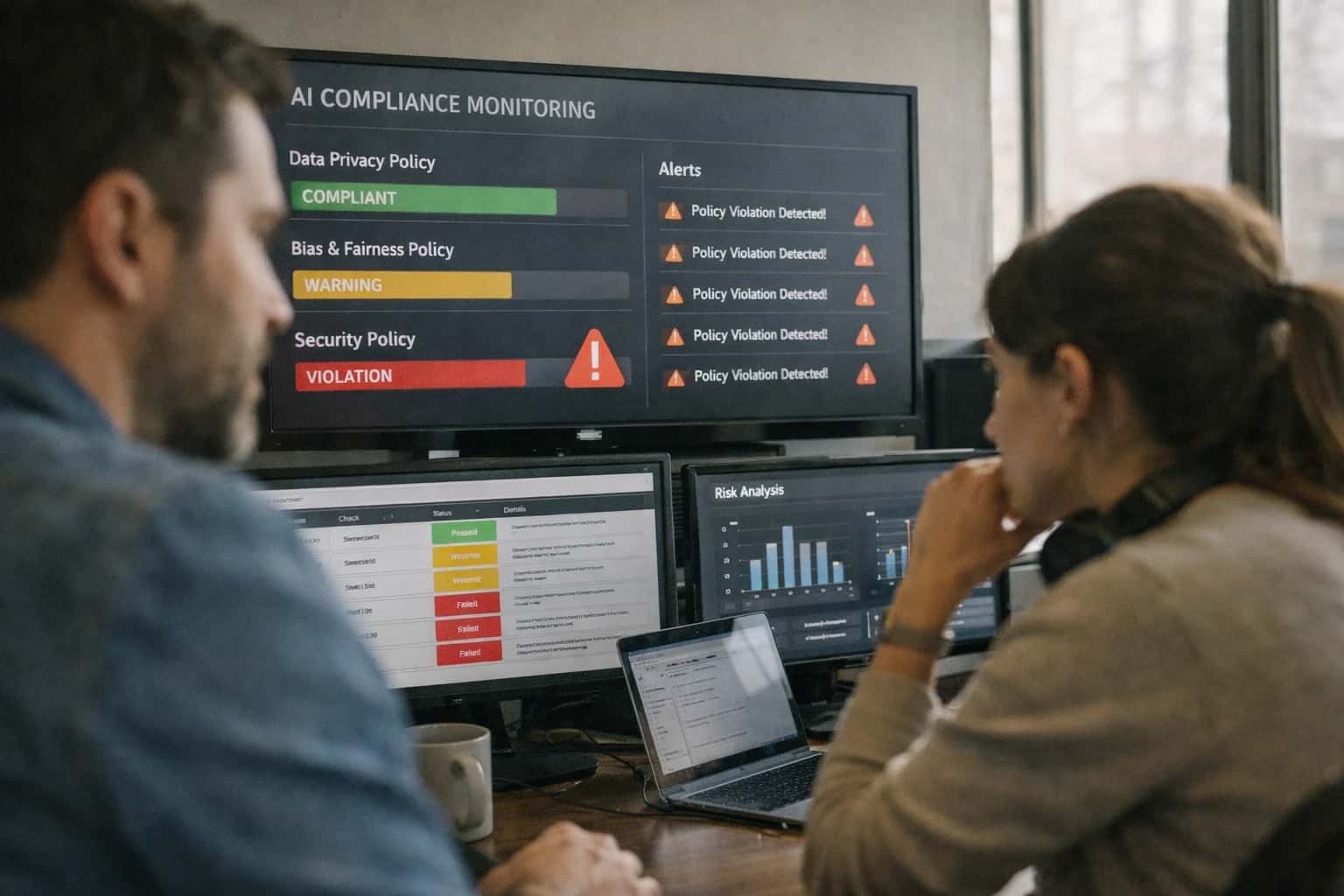
Governance is critical. Every AI interaction is logged with the source data, the prompt used, the full AI response, and the resulting system action (if any). This audit trail is stored separately and linked to the Tyler record ID. A human-in-the-loop pattern is enforced for high-stakes actions; for instance, an AI-drafted use-of-force report is presented to the supervisor for review and approval within Tyler before submission. The rollout typically starts with read-only, assistive use cases—like report summarization for shift briefings—before progressing to supervised drafting and, eventually, conditionally automated tasks like evidence logging or resource flagging, all controlled through RBAC within the Tyler environment.
TYLER PUBLIC SAFETY INTEGRATION PATTERNS
Code and Payload Examples
Automating Narrative Generation from CAD/RMS Data
When an officer submits a preliminary report via mobile data terminal (MDT), an AI agent can ingest the structured CAD data and unstructured officer notes to generate a coherent, detailed narrative for the RMS. This reduces post-shift administrative burden.
Typical Integration Flow:
- A webhook from Tyler Incode triggers on report
status: draft_submitted. - The integration service fetches the incident ID, location codes, involved party objects, and officer notes via the Incode REST API.
- A prompt orchestrator constructs a structured request for an LLM, grounding it in agency-specific terminology and report templates.
- The generated narrative is posted back to a dedicated field in the RMS, flagged for officer review and approval.
json// Example Payload to LLM for Narrative Generation { "incident_id": "24-04567", "incident_type": "Burglary - Residential", "location": "123 Main St, APT 4B", "officer_notes": "RP stated returned home at approx 1830 hrs, found front door ajar. Missing: laptop, jewelry box. No sign of forced entry. Neighbor reported seeing unknown male in area around 1700.", "involved_parties": [ { "type": "Reporting Party", "name": "Jane Doe" }, { "type": "Suspect", "description": "Male, 20-30s, grey hoodie" } ], "template_guidelines": "Use plain language. Chronological order. Include all facts from notes. Do not infer motives or conclusions." }
AI INTEGRATION WITH TYLER INCORE & FMS
Realistic Time Savings and Operational Impact
This table outlines realistic operational improvements for public safety agencies integrating AI with Tyler Public Safety solutions. Metrics are based on typical workflows before and after deploying AI agents for data analysis and reporting.
| Workflow / Metric | Before AI Integration | After AI Integration | Implementation Notes |
|---|---|---|---|
Incident Report Drafting | 30-45 minutes per report | 5-10 minute review & finalization | AI drafts from CAD/RMS data; officer reviews and confirms |
Evidence Logging & Categorization | Manual entry per item | Batch upload with auto-tagging | AI extracts metadata from photos/videos; human verification required |
Daily Activity Report Compilation | End-of-shift manual compilation | Automated draft generated post-shift | Pulls from RMS, CAD, and body-worn camera logs |
Resource Allocation Recommendations | Supervisor intuition & spreadsheets | Data-driven shift & patrol suggestions | AI analyzes historical incident patterns and unit availability |
Compliance Check (Use of Force, Pursuits) | Manual audit sampling | Automated flagging of high-risk events | AI scans all reports against policy library; flags for supervisor review |
Public Records Request Triage | Manual review of each request | Automated redaction suggestions & routing | AI identifies responsive documents and suggests exemptions; legal final review |
Training Scenario Generation | Manual research & writing | AI-generated scenarios from local crime data | Creates realistic drills based on recent trends and identified skill gaps |
ARCHITECTING FOR PUBLIC SECTOR TRUST
Governance, Security, and Phased Rollout
A practical blueprint for deploying AI in Tyler Public Safety with the controls and phased approach required for law enforcement and emergency response.
Integrating AI with Tyler Incode and Tyler FMS requires a security-first architecture that respects the sensitivity of public safety data. This means implementing AI agents as a governed middleware layer, not a direct replacement for core systems. Key patterns include:
- API Gateways & Webhooks: Agents interact with Incode's REST APIs for incident data and FMS for fleet status, using secure, audited service accounts with strict RBAC.
- Data Minimization & PII Handling: AI prompts are engineered to exclude direct identifiers; sensitive data like names or addresses is referenced by system IDs, with actual values retrieved only when necessary for a human-in-the-loop step.
- Audit Trails: Every AI-generated summary, recommendation, or automated action is logged back to the relevant Incident Report or Case File in Incode, creating a transparent lineage.
A successful rollout follows a phased, risk-managed approach, starting with low-risk, high-volume tasks to build trust and operational familiarity:
- Phase 1: Officer & Dispatcher Copilot (Read-Only): Deploy AI agents that summarize lengthy narrative fields from CAD feeds or prior incident reports, giving dispatchers and officers situational context in seconds without writing back to the system.
- Phase 2: Assisted Documentation & Workflow: Introduce AI to draft narrative sections for Offense Reports or Evidence Logs based on officer voice notes or structured data, requiring supervisor review and approval within Incode before submission.
- Phase 3: Predictive & Prescriptive Analytics: Integrate advanced models for resource allocation, analyzing historical Incode data and real-time FMS telematics to recommend patrol zones or predict vehicle maintenance needs, with recommendations surfaced as alerts for commander review.
Governance is non-negotiable. We establish a Public Safety AI Steering Committee with representatives from IT, records, operations, and legal to oversee use cases, validate outputs, and manage the human review queue for all Phase 2+ automations. Technical governance includes regular model performance audits against a golden dataset of past incidents and continuous monitoring for prompt drift or hallucination in critical workflows. This controlled, incremental path ensures AI augments—never undermines—the mission-critical integrity of Tyler Public Safety platforms.
Enabling Efficiency, Speed & Accuracy
Intelligent Analysis, Decision & Execution
We build AI systems for teams that need search across company data, workflow automation across tools, or AI features inside products and internal software.
Talk to Us
Search across company data
Give teams answers from docs, tickets, runbooks, and product data with sources and permissions.
Useful when people spend too long searching or get different answers from different systems.
Enterprise searchRAGPermissions
Read more
Automate internal workflows
Use AI to route work, draft outputs, trigger actions, and keep approvals and logs in place.
Useful when repetitive work moves across multiple tools and teams.
AI agentsWorkflow automationGovernance
Read more
Add AI to products and internal tools
Build assistants, guided actions, or decision support into the software your team or customers already use.
Useful when AI needs to be part of the product, not a separate tool.
AI integrationDecision supportModel routing
Read moreIMPLEMENTATION DETAILS
Frequently Asked Questions
Practical questions for public safety leaders and IT architects planning an AI integration with Tyler Public Safety solutions like Incode and FMS.
AI agents connect via Tyler's published APIs or a secure middleware layer, adhering to CJIS compliance requirements.
Typical Integration Pattern:
- Authentication: Agents use service accounts with strict, role-based access control (RBAC) scoped to specific data objects (e.g.,
Incidents,PersonRecords,Units). - Data Flow: For real-time analysis, the integration listens to CAD event webhooks (e.g.,
IncidentCreated,UnitDispatched). The agent receives a payload containing the incident ID and key fields. - Context Enrichment: The agent uses the incident ID to make a subsequent, authorized API call to the RMS to pull full context—prior history, associated persons, locations—before analysis.
- Audit Trail: Every agent-initiated API call is logged with the service account ID, timestamp, and purpose, creating a clear audit trail for compliance reviews.
This pattern ensures data is accessed on a need-to-know basis for a specific workflow, never bulk-extracted.

About the author
Prasad Kumkar
CEO & MD, Inference Systems
Prasad Kumkar is the CEO & MD of Inference Systems and writes about AI systems architecture, LLM infrastructure, model serving, evaluation, and production deployment. Over 5+ years, he has worked across computer vision models, L5 autonomous vehicle systems, and LLM research, with a focus on taking complex AI ideas into real-world engineering systems.
His work and writing cover AI systems, large language models, AI agents, multimodal systems, autonomous systems, inference optimization, RAG, evaluation, and production AI engineering.
LinkedIn
Limited slotsGet a Free AI Consultation
Partnered with leading AI, data, and software stack.





How We Work
Custom AI workflows for your Business
One-fit-all AI don't work for modern businesses. At Inferensys, we aim to understand your business & custom requirements; which we use to define most efficient agentic workflows, the data, and the tools for your business.
01
Review the use case
We understand the task, the users, and where AI can actually help.
Read more02
Pick the right approach
We define what needs search, automation, or product integration.
Read more03
Build the first useful version
We implement the part that proves the value first.
Read more04
Improve from there
We add the checks and visibility needed to keep it useful.
Read moreThe first call is a practical review of your use case and the right next step.
Talk to Us