AI integration targets three primary surfaces within records management platforms like Tyler Content Manager, OpenText, or Hyland OnBase: the ingestion pipeline, the active records repository, and the archival/retrieval layer. At ingestion, AI agents can be triggered via API or folder watch to automatically classify incoming documents—such as permits, ordinances, meeting minutes, or case files—against your retention schedule, extract key metadata, and apply initial security tags. For active records, AI enables semantic search across millions of documents, allowing staff to find records by intent (e.g., 'all variance requests for downtown in the last two years') rather than exact file names. This layer also powers automated redaction workflows for FOIA requests, where AI identifies and masks PII, signatures, and exempted information directly within the DMS before release.

Integration
AI Integration with Public Sector Records Management
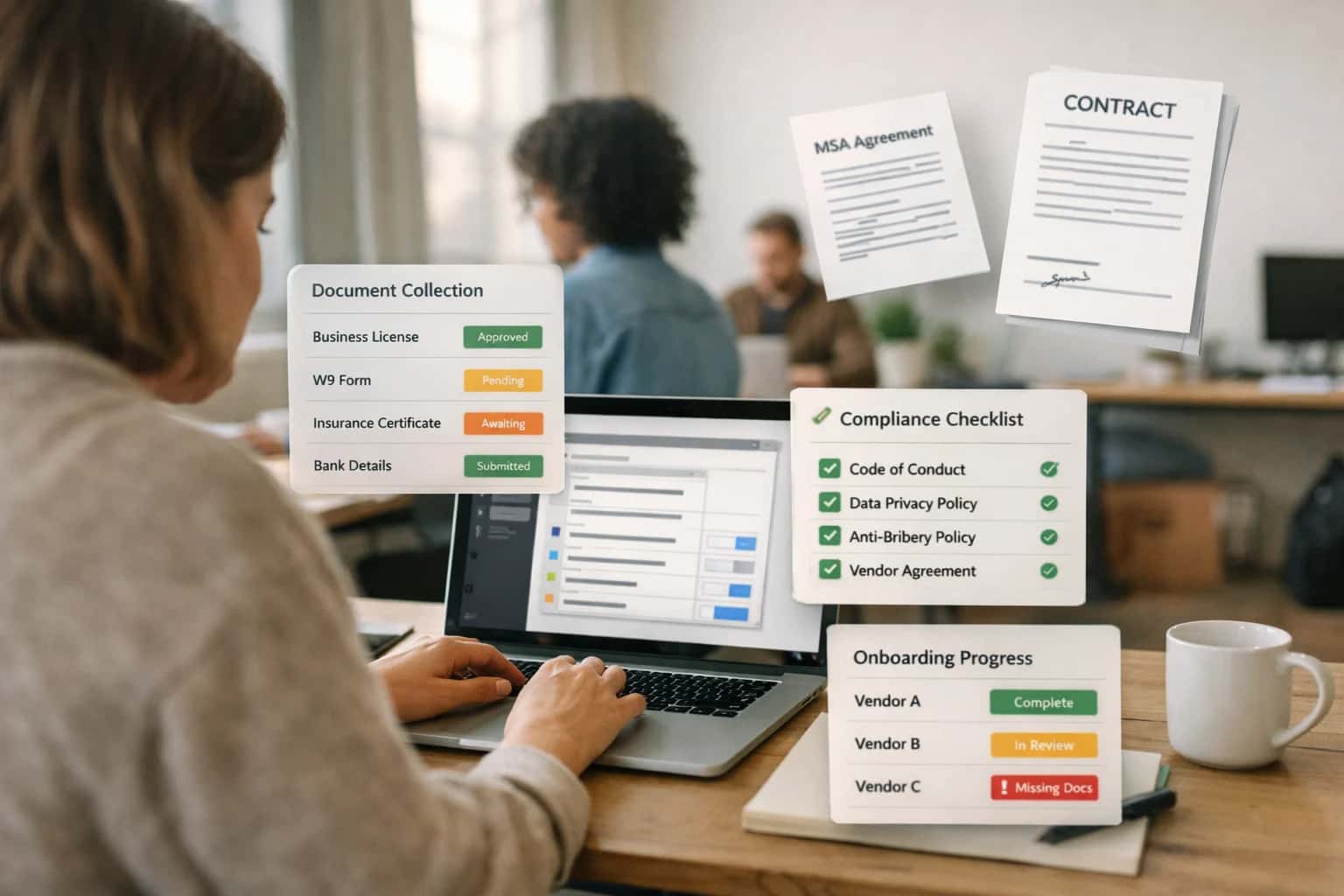
Where AI Fits into Public Sector Records Management
A practical blueprint for integrating AI into government records platforms to automate classification, redaction, and archival workflows.
The implementation typically involves deploying a secure middleware layer—often on government cloud infrastructure—that hosts the AI models (for OCR, NLP, and classification) and orchestrates calls to the records management system's APIs. For example, when a new document is uploaded to a 'FOIA Inbox' in your DMS, a webhook triggers the AI service to process the file, apply redaction models, and post the redacted version back as a new record, all while logging the action in an immutable audit trail. This architecture keeps sensitive data within the government's control plane and allows for human-in-the-loop review steps before finalizing any AI-generated action, such as a classification or redaction.
Rollout requires a phased, records-series-specific approach. Start with a high-volume, low-risk series like public meeting agendas or published reports to validate accuracy and workflow integration. Governance is critical: establish a records management oversight committee to approve AI classification rules, define the acceptable confidence thresholds for automated actions, and mandate regular sampling for quality assurance. This ensures the integration enhances compliance with records laws rather than creating new risks. For a deeper dive into connecting AI to specific document workflows, see our guide on AI Integration for Government Document Management Systems.
Key Integration Surfaces in Government Records Platforms
Core DMS & Content Manager Integration
AI connects directly to government Document Management Systems (DMS) like Tyler Content Manager, OpenText, or SharePoint to automate the lifecycle of unstructured records. Key integration surfaces include:
- Ingestion APIs: Automatically classify incoming documents (permits, ordinances, FOIA requests) using AI models as they are uploaded via citizen portals or email.
- Metadata Extraction: Use NLP to populate critical fields—document type, originating department, effective dates, related case numbers—reducing manual data entry.
- Retention Schedule Triggers: Analyze document content to automatically apply the correct records retention schedule and flag items for archival or destruction.
- Semantic Search Layer: Build a RAG-powered search index atop the DMS, enabling staff to find records using natural language queries instead of rigid folder paths or keywords.
This integration turns passive document repositories into intelligent, self-classifying systems that enforce policy and accelerate discovery.
High-Value AI Use Cases for Government Records
AI can transform high-volume, manual records workflows in public sector platforms like Tyler Content Manager, Laserfiche, and SharePoint. These integration patterns connect document intelligence to core government operations, automating classification, redaction, and retrieval.
Automated FOIA Request Redaction
Integrate AI redaction models with your Records Management System to process FOIA requests. The system ingests responsive documents, identifies and redacts PII, exempt material, and third-party information, then logs the redaction rationale for the audit trail. This moves redaction from a manual, legal-review bottleneck to a supervised, high-throughput workflow.
Intelligent Records Classification & Retention
Deploy AI classifiers on the document ingestion pipeline of systems like Tyler Content Manager or Laserfiche. Incoming permits, ordinances, agendas, and correspondence are automatically tagged with record series, retention schedules, and security classifications. This ensures compliance, powers auto-filing, and triggers disposal workflows, eliminating manual filing backlog.
Semantic Search Across Archives
Build a RAG (Retrieval-Augmented Generation) layer atop your enterprise content management system. Ingest and index document archives into a vector database. Enable staff and the public to ask natural language questions (e.g., 'Show me sidewalk repair ordinances from the last 5 years') and receive accurate, cited excerpts, not just keyword matches.
Meeting Minute & Agenda Generation
Connect AI summarization to your agenda management and streaming systems. Ingest audio/video from public meetings, generate draft minutes with speaker attribution, extract action items and votes, and link them back to agenda items. Clerks review and publish, cutting post-meeting documentation work from days to same-day.
Automated Case File Assembly
Integrate AI with case management systems for social services, code enforcement, or permitting. For a new case, the agent pulls relevant ordinances, past similar cases, parcel data, and citizen correspondence from connected systems, assembling a preliminary case file for the officer. This reduces pre-work research from hours to minutes.
Bulk Document Review for Audits
During internal or external audits, use AI agents to review thousands of transactions, contracts, or permits against policy criteria. The AI flags anomalies, missing documentation, or non-compliant clauses, populating a review queue in your audit management platform. This allows auditors to focus on high-risk exceptions instead of manual sampling.
Example AI-Augmented Records Management Workflows
These workflows illustrate how AI agents can be integrated into public sector records management platforms like Tyler Content Manager, Laserfiche, or SharePoint to automate high-volume, high-compliance tasks. Each example connects AI processing to specific system objects, triggers, and governance checkpoints.
This workflow uses AI to identify and redact personally identifiable information (PII) and exempt material from documents in response to Freedom of Information Act (FOIA) requests.
- Trigger: A new FOIA request case is logged in the records management system, linked to a set of responsive documents.
- Context/Data Pulled: The workflow agent retrieves the document set from the connected DMS (e.g., Tyler Content Manager) via its API, along with the request's metadata (requestor type, specific exemptions cited).
- Model/Agent Action: A specialized NLP model processes each document, performing:
- Named Entity Recognition (NER) to locate names, addresses, SSNs, and other PII.
- Classification to identify text falling under common exemptions (e.g., personnel records, investigative techniques).
- The agent applies redaction boxes to the identified text in the document's PDF/image layer.
- System Update: The redacted document version is saved as a new record in the DMS, linked to the FOIA case. A log entry is created detailing what was redacted and under which exemption, creating an audit trail.
- Human Review Point: The redacted documents are placed in a "Review" queue for the designated records officer. The officer can approve, adjust redactions, or send back for reprocessing before final release.
Implementation Architecture: Connecting AI to Records Systems
A practical blueprint for integrating AI into government records platforms to automate classification, redaction, and archival workflows.
A production-ready AI integration for public sector records management typically connects to three primary surfaces: the document repository (e.g., Tyler Content Manager, Laserfiche, SharePoint), the case or workflow engine (e.g., within permitting or FOIA systems), and the citizen portal or CRM. The core pattern involves an orchestration layer—often a secure microservice—that listens for document uploads via webhook or monitors designated queues. When a new record arrives (e.g., a permit application PDF, a scanned FOIA request, or meeting minutes), the service extracts text via OCR, classifies it against a trained model of document types (ordinances, contracts, inspection reports), and applies metadata tags for retention scheduling and search.
For high-value use cases like FOIA request redaction, the architecture adds a dedicated pipeline. After classification, documents are routed through a privacy detection model trained to identify PII, sensitive operational details, or exempt material. The AI suggests redaction zones, but the final review and approval remain a human-in-the-loop step, logged within the records system's audit trail. The redacted version is then stamped and stored as a new record version, linked to the original. This can reduce manual review from hours to minutes per request while ensuring defensible compliance. Similarly, for archival processes, AI can automatically apply retention codes based on content and trigger disposition workflows in the records management platform, moving records to cold storage or scheduling deletion.
Rollout requires a phased, department-by-department approach, starting with a contained pilot (e.g., the Clerk's office for agenda management). Governance is critical: all AI actions must be traceable to source records and user IDs, with human approval gates for high-stakes decisions. Inference Systems builds these integrations using a modular approach, ensuring the AI layer is an API-first service that respects the existing security model (RBAC, encryption at rest) of your records platform. We provide the orchestration, model training on your document corpus, and integration connectors, leaving your team with a governed automation layer that plugs into Tyler, SAP, or other core systems without a platform replacement. For related architectural patterns, see our guide on AI Integration for Government Document Management Systems.
Code and Payload Examples
Automated Records Classification
Integrating AI with a records management system like Tyler Content Manager or OpenText begins with classifying incoming documents. A Python service can process uploaded files, extract text via OCR, and call an LLM to assign retention codes and keywords based on content and metadata.
Example Python Service Call:
pythonimport requests def classify_document(file_path, document_type): # 1. Extract text (simplified) extracted_text = ocr_service.process(file_path) # 2. Prepare payload for classification LLM payload = { "text": extracted_text, "document_type": document_type, # e.g., 'Council Minutes', 'Building Permit' "metadata": { "department": "Planning", "date_created": "2024-01-15" } } # 3. Call orchestration layer (e.g., Inference Systems platform) response = requests.post( 'https://api.your-ai-orchestrator.com/v1/classify', json=payload, headers={'Authorization': 'Bearer YOUR_API_KEY'} ) # 4. Return structured classification for DMS ingestion classification = response.json() return { "retention_schedule": classification.get('retention_code'), # e.g., 'PERM-10' "primary_subject": classification.get('primary_subject'), "tags": classification.get('suggested_keywords', []), "confidence_score": classification.get('confidence') }
This structured output can be posted via the DMS API to auto-populate metadata fields, ensuring consistent filing and triggering retention workflows.
Realistic Time Savings and Operational Impact
How AI integration reduces manual effort and accelerates core records workflows in government platforms like Tyler Content Manager, Laserfiche, and SharePoint.
| Workflow | Before AI | After AI | Implementation Notes |
|---|---|---|---|
FOIA Request Document Redaction | Manual review: 2-4 hours per request | AI-assisted redaction: 20-40 minutes | AI flags PII/PHI; human reviewer validates final output |
Records Classification & Retention Tagging | Clerk assigns codes per retention schedule | AI suggests codes with >90% accuracy | Integrates with DMS metadata; final approval required |
Citizen Records Search & Retrieval | Keyword search across siloed folders | Semantic search across all document types | RAG architecture on vectorized records; cites source documents |
Meeting Minutes & Agenda Generation | Staff transcribes and formats from recordings | AI drafts minutes; staff edits for approval | Syncs with agenda management software; tags action items |
Archival Review for Disposition | Manual sampling of records boxes | AI scans and classifies digital records for disposal eligibility | Runs against retention rules; flags exceptions for legal hold |
Constituent Inquiry Triage (Records) | Manual routing to correct department | AI classifies intent and retrieves relevant records for agent | Integrates with CRM/311 system; reduces transfer rate |
Batch Document Ingestion & Indexing | Manual data entry for each new record | AI extracts metadata (date, type, subject) on upload | Pre-processes scanned documents via OCR; validates against schema |
Governance, Security, and Phased Rollout
A practical approach to deploying AI in public sector records management with built-in controls and measurable phases.
Integrating AI with platforms like Tyler Content Manager, OpenText, or SharePoint for Government requires a security-first architecture. This means implementing AI agents that operate within a governed sandbox, accessing records via secure APIs with strict role-based access control (RBAC) and maintaining a complete audit trail of all AI interactions, prompts, and data retrievals. For FOIA redaction workflows, the system must enforce a human-in-the-loop approval step before any redacted document is released, with the AI's suggested redactions logged alongside the reviewing officer's final decision.
A phased rollout is critical for adoption and risk management. A typical implementation starts with a pilot phase targeting a single, high-volume, low-risk records series—such as incoming correspondence or standard permit applications—for automated classification and routing. Success metrics here focus on accuracy and time savings. The second phase expands to more complex workflows, like connecting the classification engine to retention schedules to auto-tag records for disposal or archival. The final production phase integrates AI-driven semantic search across the entire records repository, enabling staff to find related cases, ordinances, or permits using natural language, drastically reducing research time from hours to minutes.
Governance is sustained through continuous monitoring. This includes tracking model drift in classification accuracy, regularly reviewing audit logs for unusual access patterns, and maintaining a prompt library with version control to ensure consistency in how the AI handles sensitive queries. By treating the AI integration as a governed subsystem of the core records management platform, agencies can achieve operational gains—like reducing backlog processing from days to same-day—while maintaining the compliance and transparency required for public trust. For a deeper look at connecting these AI workflows to core financial systems, see our guide on AI Integration for Fund Accounting Software.
Enabling Efficiency, Speed & Accuracy
Intelligent Analysis, Decision & Execution
We build AI systems for teams that need search across company data, workflow automation across tools, or AI features inside products and internal software.
Talk to Us
Search across company data
Give teams answers from docs, tickets, runbooks, and product data with sources and permissions.
Useful when people spend too long searching or get different answers from different systems.

Automate internal workflows
Use AI to route work, draft outputs, trigger actions, and keep approvals and logs in place.
Useful when repetitive work moves across multiple tools and teams.

Add AI to products and internal tools
Build assistants, guided actions, or decision support into the software your team or customers already use.
Useful when AI needs to be part of the product, not a separate tool.
Frequently Asked Questions
Practical questions for public sector IT leaders, records managers, and compliance officers planning AI integration for records management systems.
The standard pattern is to deploy a secure integration layer, often as a containerized service within your government data center or approved cloud environment. This layer acts as a bridge:
- API Gateway & Authentication: The layer exposes secure REST APIs or listens to message queues (e.g., RabbitMQ, Apache Kafka). All calls require authentication via your existing Identity and Access Management (IAM) system, ensuring RBAC is enforced.
- Data Sanitization & PII Handling: Before any document or record metadata is sent to an AI model (even a private one), the integration layer can redact or tokenize sensitive fields (SSNs, addresses) based on pre-defined policies.
- Model Orchestration: The layer calls the appropriate AI service. This could be:
- A private instance of an open-source model (like Llama 3) deployed on your GPU cluster.
- A vendor LLM API (OpenAI, Anthropic) via a dedicated, compliant gateway with strict data processing agreements.
- A hybrid approach where classification uses a local model, and complex summarization uses a governed API call.
- Audit Logging: Every transaction—document ID, action taken (e.g., "classified as FOIA-Exempt-B"), user/system initiator, and timestamp—is written to an immutable audit log, separate from the core records system.
This pattern keeps your core Records Management System (RMS) database behind the firewall, with only the integration layer handling external AI communication. For more on secure architecture, see our guide on /integrations/government-erp-platforms/ai-integration-with-sap-public-sector which details BTP and similar integration hubs.

About the author
Prasad Kumkar
CEO & MD, Inference Systems
Prasad Kumkar is the CEO & MD of Inference Systems and writes about AI systems architecture, LLM infrastructure, model serving, evaluation, and production deployment. Over 5+ years, he has worked across computer vision models, L5 autonomous vehicle systems, and LLM research, with a focus on taking complex AI ideas into real-world engineering systems.
His work and writing cover AI systems, large language models, AI agents, multimodal systems, autonomous systems, inference optimization, RAG, evaluation, and production AI engineering.
Partnered with leading AI, data, and software stack.





How We Work
Custom AI workflows for your Business
One-fit-all AI don't work for modern businesses. At Inferensys, we aim to understand your business & custom requirements; which we use to define most efficient agentic workflows, the data, and the tools for your business.
01
Review the use case
We understand the task, the users, and where AI can actually help.
Read more02
Pick the right approach
We define what needs search, automation, or product integration.
Read more03
Build the first useful version
We implement the part that proves the value first.
Read more04
Improve from there
We add the checks and visibility needed to keep it useful.
Read moreThe first call is a practical review of your use case and the right next step.
Talk to Us