AI integration targets specific modules and data objects within platforms like Workday Government, Tyler Munis, or SAP Public Sector Payroll. The primary surfaces are the payroll calculation engine, employee self-service portal, tax withholding tables, and general ledger interface. AI agents can be connected via these systems' APIs or middleware to monitor payroll batches for anomalies in gross-to-net calculations, automate year-end tax form adjustments (like W-2s and 1095-Cs), and power conversational interfaces for employees to ask questions about pay stubs, leave balances, and deductions without involving HR staff.

Integration
AI Integration with Public Sector Payroll Platforms
Implement AI agents and copilots within government payroll systems to automate anomaly detection, adjust tax withholdings, and answer employee pay inquiries, reducing manual workload and improving accuracy.
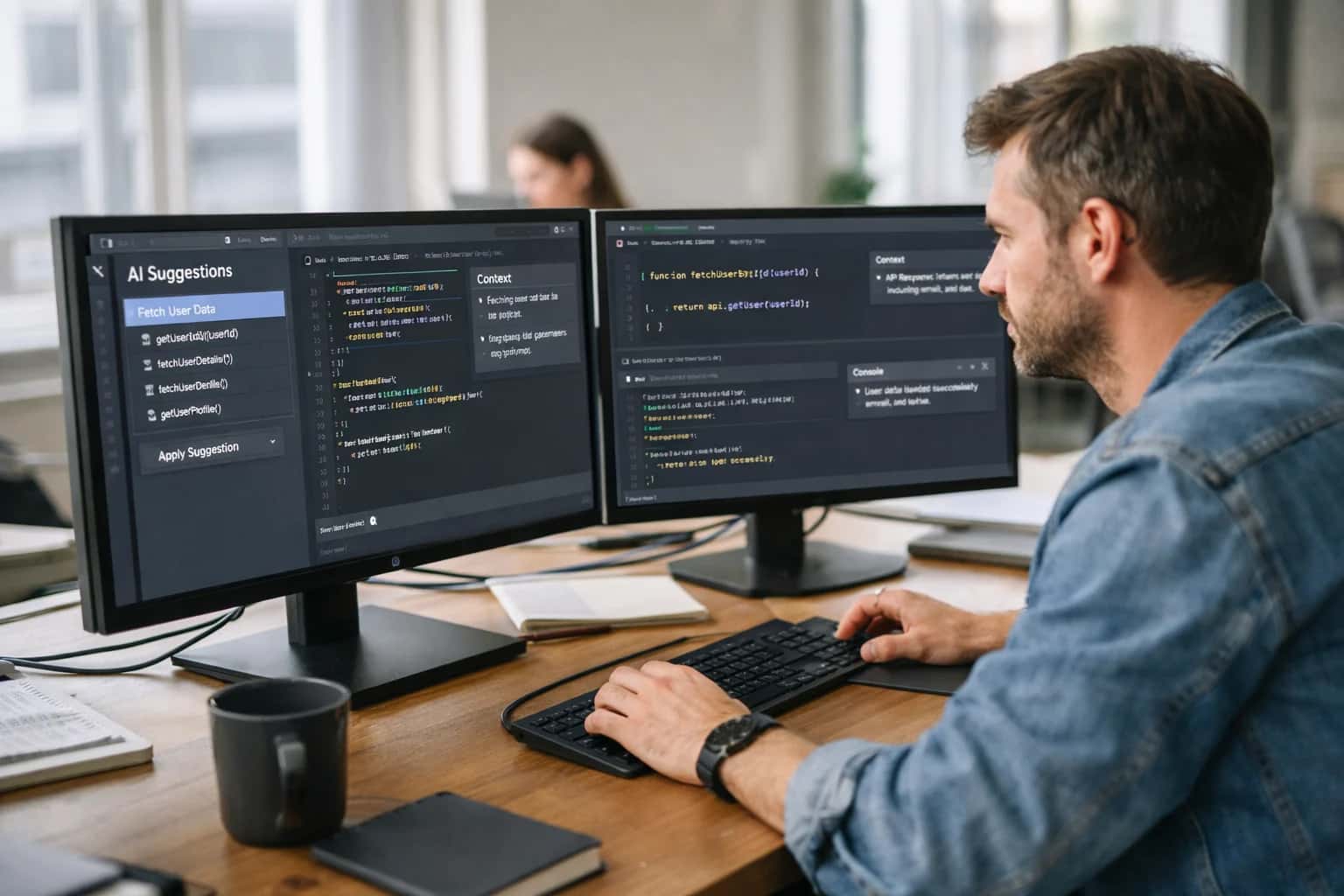
ARCHITECTURE AND GOVERNANCE
Where AI Fits in Government Payroll Operations
Integrating AI into public sector payroll systems requires a precise understanding of data flows, compliance surfaces, and employee touchpoints.
Implementation focuses on creating governed workflows that augment, not replace, existing controls. For example, an AI model can pre-screen direct deposit files for outlier amounts against historical patterns, flagging them in a queue for a payroll analyst's review within the system's audit trail. For employee inquiries, a RAG-powered chatbot can be grounded in the official payroll policy handbook, union contracts, and the employee's own secure pay history, providing accurate, instant answers while logging all interactions. The integration architecture typically involves a secure middleware layer (like Infor OS or SAP BTP) that orchestrates API calls between the AI services and the payroll platform, ensuring data never leaves the approved environment and all actions are permissioned via the platform's existing RBAC.
Rollout must prioritize risk mitigation and change management. Start with a low-risk use case, such as using AI to generate plain-language summaries of complex payroll rule changes for managers. Then, phase in anomaly detection for non-discretionary payments like overtime, where rules are clear. Finally, deploy the employee self-service agent, initially in a "copilot" mode where it suggests answers for HR staff to verify and send. This controlled approach allows for tuning the AI's responses against the platform's unique configuration—such as complex collective bargaining agreements or state-specific pension rules—while building trust. Governance is critical; all AI-driven actions must be logged to the same audit trails as manual actions, and there must always be a clear path for human review and override, especially for any transaction that affects an employee's net pay or tax status.
AI PAYROLL WORKFLOWS
Integration Touchpoints by Platform
Core Payroll Engine Integration
AI integrates directly with the payroll calculation engine to monitor transactions in real-time. The primary touchpoints are the payroll batch processing queues and the post-payroll audit logs. By connecting to these data streams, AI models can analyze gross-to-net calculations, tax withholdings, and deductions for anomalies before final submission.
Key integration surfaces include:
- Batch Job APIs: Ingest transaction data for pre-validation.
- Audit Trail Tables: Flag high-risk entries for human review.
- Exception Queues: Automatically route flagged items to payroll specialists.
Implementation typically involves a sidecar service that subscribes to payroll events, runs anomaly detection models (e.g., for outlier overtime, unusual tax rate changes, or duplicate payments), and creates review tickets in the payroll system's workflow module. This prevents errors from reaching direct deposit or warrant issuance.
PAYROLL AUTOMATION
High-Value AI Use Cases for Government Payroll
Integrating AI with public sector payroll platforms like Tyler Munis, SAP Public Sector, and Workday Government can automate complex compliance tasks, reduce manual review, and provide instant support for employees and administrators.
01
Automated Tax Withholding & Garnishment Compliance
AI agents monitor federal, state, and local tax table updates, as well as court-ordered garnishment rules. They automatically flag employee records needing adjustment in the payroll system, generate change requests for review, and draft compliance reports. This reduces the risk of costly penalties from manual oversight.
Batch -> Real-time
Compliance monitoring
02
Anomaly Detection in Payroll Batches
AI models analyze each payroll run against historical patterns, union contracts, and position funding sources. They flag outliers like duplicate payments, unusual overtime spikes, or payments to terminated employees before disbursement, routing exceptions to a human-in-the-loop queue within the ERP.
Hours -> Minutes
Pre-audit review
03
Employee Self-Service Pay Inquiry Agent
A secure chatbot integrated with the payroll and HRIS system allows employees to ask natural language questions about pay stubs, leave balances, W-2s, and deductions. The agent retrieves personal data via API, explains calculations in plain language, and can initiate ticket creation for complex issues in the help desk.
80% Deflection
Typical HR ticket volume
04
Collective Bargaining Agreement (CBA) Pay Rule Engine
For agencies with multiple unions, AI parses complex CBA documents into a structured rule set. During payroll processing, it validates pay calculations, differentials, and leave accruals against the correct agreement for each employee group, ensuring contractual compliance and reducing grievance risks.
1 sprint
To model a new CBA
05
Automated Payroll Journal Entry & Reconciliation
Post-payroll, AI generates the detailed journal entries for the general ledger, mapping wage allocations to the correct funds, departments, and grants. It then performs a preliminary reconciliation between payroll registers and the ERP's financial modules, highlighting variances for the finance team.
Same day
Close acceleration
06
Retirement & Benefits Enrollment Support
An AI copilot guides employees through complex retirement plan (e.g., PERS, 401a) and benefits enrollment workflows within the self-service portal. It answers eligibility questions, models contribution impacts on net pay, and pre-fills forms by pulling data from the HRIS, increasing participation and accuracy.
30% Reduction
In follow-up calls
GOVERNMENT PAYROLL AUTOMATION
Example AI-Powered Payroll Workflows
These workflows demonstrate how AI can be integrated with public sector payroll platforms like Tyler Munis, SAP Public Sector, and Workday Government to automate complex, rule-driven tasks, reduce manual review, and provide instant support for employees and payroll administrators.
This workflow uses AI to review employee-submitted tax withholding forms (e.g., W-4, state equivalents) for completeness and flag potential errors before submission to the payroll calculation engine.
- Trigger: An employee submits a new tax withholding form via a self-service portal.
- Context Pulled: The AI agent retrieves the employee's current payroll record and relevant tax tables.
- AI Agent Action: An LLM-powered agent reviews the form fields:
- Validates mathematical consistency (e.g., allowances, additional withholdings).
- Flags entries that deviate significantly from historical patterns for that employee.
- Checks for missing signatures or required fields.
- Generates a plain-language summary of the change for manager approval.
- System Update: The agent creates a task in the payroll system's workflow engine. Clean forms are routed for automated system update; flagged forms are routed to a payroll specialist with the AI's notes.
- Human Review Point: A payroll specialist reviews only the exceptions flagged by the AI, dramatically reducing manual review volume.
SECURE, GOVERNED, AND NON-DISRUPTIVE
Typical Implementation Architecture
A production-ready AI integration for public sector payroll connects to core HRIS and financial systems through a secure orchestration layer, ensuring data governance and auditability.
The integration typically connects to the payroll calculation engine (e.g., within Tyler Munis, SAP Public Sector Payroll, or Workday Payroll for Government) and the employee self-service portal. Key data objects include payroll journals, employee master records, tax withholding elections, time and attendance logs, and deduction/benefit codes. AI agents interact via secure APIs or event webhooks to read payroll runs, employee inquiries, and timecard submissions, and to write back flagged anomalies or generated responses to a dedicated audit queue.
A common pattern uses a middleware layer (often on-premises or in a government cloud) to host the AI orchestration. This layer:
- Ingests payroll journals post-calculation but pre-posting to the general ledger.
- Listens for employee questions from the self-service portal's chat interface or ticket system.
- Calls LLM APIs (like OpenAI or Azure OpenAI) with strictly de-identified data or uses on-premises models for sensitive PII.
- For anomaly detection, models compare current pay elements against historical patterns for the employee, job class, and department, flagging outliers like unusual overtime, tax withholding changes, or deduction errors for review by a payroll analyst.
- For employee Q&A, a RAG system grounds answers in the official payroll policy handbook, union contracts, and the employee's own anonymized pay history, providing specific guidance on paystub line items, leave balances, or tax forms.
Rollout is phased, starting with read-only anomaly detection and a pilot group for the Q&A agent. Governance is critical: all AI-generated actions (e.g., a suggested journal correction or a drafted response to an employee) are routed to a human-in-the-loop approval workflow within the payroll platform's existing audit module. The system maintains a full audit trail linking the source transaction, the AI model's reasoning, and the human reviewer's decision, which is essential for public sector accountability and compliance with data protection regulations.
AI PAYROLL INTEGRATION PATTERNS
Code and Payload Examples
Real-Time Payroll Anomaly Detection
Integrate AI to monitor payroll batches in real-time by setting up a webhook listener. When a payroll run is initiated in your system (e.g., Tyler Munis, SAP Public Sector), the platform posts a payload to your AI service for pre-validation.
Typical Payload for Review:
json{ "batch_id": "PAY-2024-04-26-001", "agency": "Public Works", "employee_count": 347, "gross_total": 284567.89, "transaction_lines": [ { "employee_id": "PW-4512", "name": "Jane Doe", "regular_hours": 80, "ot_hours": 8, "gross_pay": 3200.00, "withholdings": { "federal": 480.00, "state": 160.00, "fica": 198.40 } } ], "historical_baseline": { "avg_gross_per_employee": 815.00, "avg_ot_percentage": 0.05 } }
The AI service analyzes this against historical patterns and labor rules, returning a risk score and flagging outliers (e.g., excessive overtime, withholding mismatches) before final submission.
AI-Enhanced Payroll for Government
Realistic Time Savings and Operational Impact
A practical comparison of manual vs. AI-assisted workflows for public sector payroll, showing where time is saved and operational control is improved.
| Metric | Before AI | After AI | Notes |
|---|---|---|---|
Tax Withholding Exception Review | Manual audit of 100+ flagged records per pay period | AI pre-screens & prioritizes top 10 high-risk exceptions | Analyst reviews AI-ranked list; human judgment remains final |
Employee Pay Inquiry Resolution | Tier 1 support manually searches knowledge base and pay stubs | AI chatbot provides instant, sourced answers for common questions | Complex cases are escalated; reduces call volume by ~40% |
Anomaly Detection in Payroll Run | Post-payment review via sample-based audits | Real-time pre-payment scan for duplicate payments, outlier amounts | Prevents errors before disbursement; audit trail for all flags |
Garnishments & Levy Processing | Manual entry and tracking across spreadsheets and mainframe | AI extracts data from court orders and suggests system entries | Reduces keying errors; case status is automatically tracked |
Retirement Contribution Reconciliation | Monthly manual match of payroll feed to pension system file | AI performs daily automated match and highlights discrepancies | Finance team addresses issues proactively, not at month-end close |
Payroll Journal Entry Generation | Manual compilation and entry from multiple fund reports | AI drafts journal entries based on rules, ready for accountant review | Cuts JE preparation time from hours to minutes per cycle |
Year-End Tax Form (W-2/1095) Support | High-volume, seasonal help desk for form questions | AI assistant answers verification and correction process questions | Frees HR staff for complex corrections and regulatory updates |
IMPLEMENTING AI IN REGULATED PAYROLL ENVIRONMENTS
Governance, Security, and Phased Rollout
A controlled approach to deploying AI for public sector payroll, ensuring compliance, security, and user trust.
Integrating AI with platforms like Tyler Munis, SAP Public Sector Payroll, or Workday HCM for Government requires a governance-first architecture. This means implementing AI agents as a secure middleware layer that interacts with payroll APIs—never storing sensitive PII like Social Security Numbers or direct deposit details. Key integration points include the payroll calculation engine, time and attendance modules, and the employee self-service portal. All AI operations should be logged to a dedicated audit trail, linking each query or anomaly alert back to the source transaction ID and user, ensuring full traceability for auditors.
A phased rollout is critical for adoption and risk management. Start with a low-risk, high-impact use case: an AI-powered employee inquiry assistant deployed in the self-service portal. This agent, grounded in official policy documents and historical Q&A, can handle common questions about pay stubs, tax withholdings, and leave balances without accessing live payroll runs. Subsequent phases can introduce anomaly detection for payroll batches, where the AI reviews gross-to-net calculations, tax withholdings, and special pay allowances (like hazard or overtime) to flag outliers for human review before final approval and disbursement.
Security is non-negotiable. All AI tool calls to the payroll system must use service accounts with strictly scoped, read-only API permissions (except for flagged anomaly workflows which may require a "hold for review" status update). Implement a human-in-the-loop approval for any AI-suggested changes to master data, such as tax withholding adjustments. Finally, establish a continuous monitoring dashboard to track AI accuracy, user satisfaction, and system performance, ensuring the integration remains a compliant and reliable component of the public trust infrastructure.
Enabling Efficiency, Speed & Accuracy
Intelligent Analysis, Decision & Execution
We build AI systems for teams that need search across company data, workflow automation across tools, or AI features inside products and internal software.
Talk to Us
Search across company data
Give teams answers from docs, tickets, runbooks, and product data with sources and permissions.
Useful when people spend too long searching or get different answers from different systems.
Enterprise searchRAGPermissions
Read more
Automate internal workflows
Use AI to route work, draft outputs, trigger actions, and keep approvals and logs in place.
Useful when repetitive work moves across multiple tools and teams.
AI agentsWorkflow automationGovernance
Read more
Add AI to products and internal tools
Build assistants, guided actions, or decision support into the software your team or customers already use.
Useful when AI needs to be part of the product, not a separate tool.
AI integrationDecision supportModel routing
Read moreAI INTEGRATION FOR PUBLIC SECTOR PAYROLL
Frequently Asked Questions
Practical questions and workflow details for integrating AI into government payroll systems like Tyler Munis, SAP Public Sector, and Workday Government to automate compliance, answer inquiries, and detect anomalies.
This workflow uses AI to monitor payroll batches before finalization, flagging transactions that deviate from expected patterns for a given employee, jurisdiction, or pay component.
- Trigger: A payroll batch is submitted for pre-calculation or approval within the ERP (e.g., Tyler Munis, SAP Public Sector Payroll).
- Context/Data Pulled: The integration layer extracts the batch details, including employee master data (filing status, exemptions), historical pay records, and current pay components (regular pay, overtime, bonuses, deductions).
- Model Action: An anomaly detection model compares the proposed withholdings (federal, state, local) against:
- The employee's historical withholding patterns.
- Statutory tax tables for the relevant jurisdictions.
- Peer-group averages for similar employees. The model flags entries where the delta exceeds a configured threshold (e.g., >15% variance from expected).
- System Update: Flagged transactions are routed to a dedicated "Payroll Review" queue within the ERP or a connected case management system. The payroll analyst receives an alert with the specific discrepancy highlighted and the AI's reasoning (e.g., "State withholding appears low for bonus payment based on CA supplemental rate").
- Human Review Point: The analyst reviews the flagged item, makes any necessary corrections in the payroll system, and marks the review as complete. All actions are logged for audit.

About the author
Prasad Kumkar
CEO & MD, Inference Systems
Prasad Kumkar is the CEO & MD of Inference Systems and writes about AI systems architecture, LLM infrastructure, model serving, evaluation, and production deployment. Over 5+ years, he has worked across computer vision models, L5 autonomous vehicle systems, and LLM research, with a focus on taking complex AI ideas into real-world engineering systems.
His work and writing cover AI systems, large language models, AI agents, multimodal systems, autonomous systems, inference optimization, RAG, evaluation, and production AI engineering.
LinkedIn
Limited slotsGet a Free AI Consultation
Partnered with leading AI, data, and software stack.





How We Work
Custom AI workflows for your Business
One-fit-all AI don't work for modern businesses. At Inferensys, we aim to understand your business & custom requirements; which we use to define most efficient agentic workflows, the data, and the tools for your business.
01
Review the use case
We understand the task, the users, and where AI can actually help.
Read more02
Pick the right approach
We define what needs search, automation, or product integration.
Read more03
Build the first useful version
We implement the part that proves the value first.
Read more04
Improve from there
We add the checks and visibility needed to keep it useful.
Read moreThe first call is a practical review of your use case and the right next step.
Talk to Us