AI integration for public sector licensing targets three primary surfaces within platforms like Tyler EnerGov, Infor CloudSuite Public Sector, or custom-built systems: the application intake portal, the back-office review queue, and the renewal and compliance engine. At intake, AI agents can act as a virtual assistant, guiding applicants through form completion, performing initial completeness checks against checklists, and answering common questions about requirements—reducing call center volume and application rejections. In the review queue, AI copilots can be embedded directly into case worker dashboards, automatically extracting and validating data from uploaded documents (e.g., proof of insurance, certifications, site plans), flagging discrepancies for human review, and drafting initial approval or deficiency letters based on configured rules.

Integration
AI Integration with Public Sector Licensing Systems
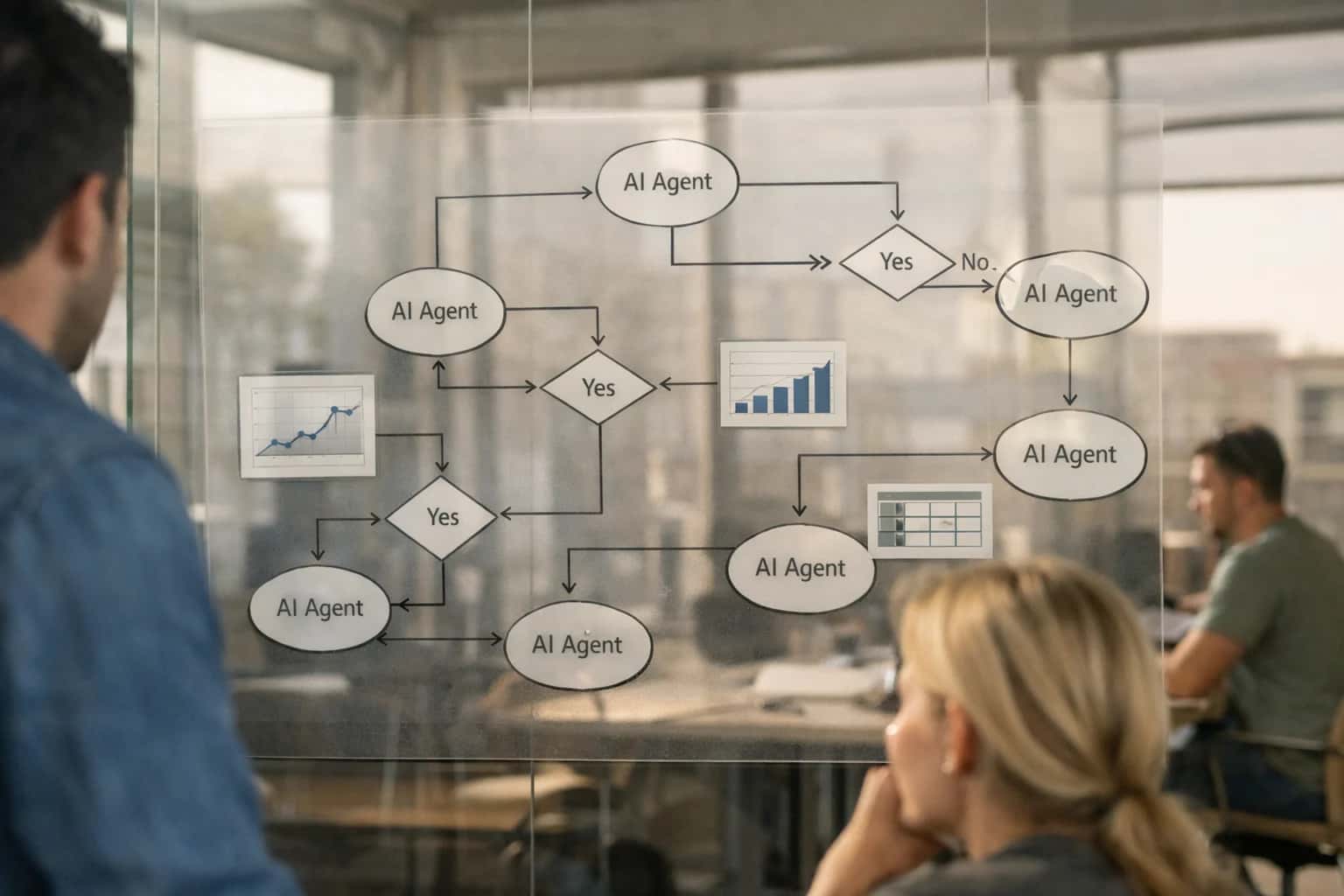
Where AI Fits in Public Sector Licensing
A practical blueprint for integrating AI into business and professional licensing workflows to reduce processing times and improve constituent service.
The implementation typically involves connecting an AI orchestration layer (hosted securely within the government's cloud or data center) to the licensing system's APIs and database. Key integration points include:
- REST APIs or direct database connectors to pull application data and document binaries for processing.
- Webhook listeners to trigger AI workflows when a new application is submitted or reaches a specific status.
- A vector database (like Pinecone or Weaviate) to index policy manuals, ordinance text, and historical decisions, enabling RAG-powered Q&A for both staff and applicants.
- A workflow engine to manage multi-step review processes, such as routing applications that fail an automated check to a specialist, while auto-approving low-risk, complete submissions. This architecture keeps the core system of record intact while augmenting its capabilities.
Rollout should be phased, starting with a single, high-volume license type (e.g., business tax receipts or contractor registrations) to validate the AI's accuracy and build trust. Governance is critical: all AI-generated outputs, such as deficiency notices or eligibility determinations, should be logged with a human-in-the-loop approval step during the pilot phase. Over time, as confidence grows, certain workflows can move to "AI-assisted" (where the AI proposes an action) or fully automated for unambiguous cases. This approach manages risk while delivering tangible operational gains, turning licensing from a multi-week process into a same-day service for qualified applicants.
Integration Touchpoints in Common Licensing Systems
Connecting AI to the Application Pipeline
AI integration begins at the initial application submission, typically via a citizen portal or uploaded PDF. Key integration points include:
- Document Intelligence Layer: An AI service processes uploaded documents (business plans, certificates, insurance forms) using OCR and NLP to extract structured data. This data populates backend application records in systems like Tyler EnerGov or Infor CloudSuite, reducing manual data entry.
- Completeness & Eligibility Agent: Before human review, an AI agent cross-references extracted data against eligibility rules and checklists stored in the licensing database. It flags missing documents, conflicting information, or prerequisite failures, automatically updating the application status and notifying the applicant via the portal.
- Triage & Routing: Based on application type, complexity, and extracted risk signals, AI can assign the case to the appropriate reviewer queue or priority level within the workflow engine, optimizing reviewer capacity.
This layer cuts initial review cycles from days to hours by automating the tedious data extraction and pre-screening steps.
High-Value AI Use Cases for Licensing
Integrating AI into business and professional licensing workflows reduces manual review, accelerates application cycles, and improves constituent service. These are practical, production-ready patterns for Tyler EnerGov, SAP Public Sector, and other core licensing platforms.
Application Completeness & Triage
AI reviews incoming applications against checklists, flagging missing documents, unsigned forms, or incorrect fees before human review. Integrates via platform APIs to update case status and trigger automated requests to applicants, reducing back-and-forth.
Automated Eligibility Verification
Agents cross-reference applicant data (e.g., professional credentials, business registrations, tax status) with external databases and internal records via API calls. Results and discrepancies are logged to the license record, providing a verified audit trail for officers.
Intelligent Renewal & Notification Workflow
AI orchestrates renewal campaigns by analyzing license expiration dates, identifying holders with past compliance issues, and personalizing communication. Integrates with the licensing module and communication systems (email/SMS) to send tailored notices, payment links, and educational content.
Constituent Inquiry Chatbot
A secure chatbot, integrated with the licensing system's citizen portal, answers common questions about status, requirements, and fees. It retrieves real-time case data via APIs and can initiate standard requests (e.g., duplicate license), escalating complex issues to human agents with full context.
Document Intelligence for Plan Review
For construction or specialized licenses, AI extracts and validates key data (plots, contractor IDs, scope) from uploaded PDFs, CAD files, and images. Findings are populated into the licensing system's review checklist, highlighting areas for officer attention and reducing manual data entry.
Compliance Monitoring & Alerting
Post-issuance, AI monitors integrated data sources (e.g., inspection results, complaint systems, state databases) for triggers that may affect license status. Automatically creates review cases or alerts compliance officers within the licensing platform when potential violations are detected.
Example AI-Powered Licensing Workflows
These are practical, production-ready workflows showing how AI agents connect to licensing system APIs and data models to automate high-volume, manual tasks for business and professional licensing operations.
Trigger: Applicant submits a new business or professional license application via the public portal.
AI Agent Action:
- The agent retrieves the submitted application package (PDFs, form data) via the licensing platform's API or from a designated document repository.
- Using a multi-step orchestration, it:
- Extracts & Validates Data: Pulls key fields (business name, NAICS code, applicant details) using OCR/NLP and cross-references them against the submitted forms for consistency.
- Checks for Required Documents: Verifies all mandatory attachments (e.g., proof of insurance, floor plans, professional certifications) are present and legible.
- Performs Initial Eligibility Screen: Queries internal databases (via API) to check for outstanding violations, expired related licenses, or disqualifying criteria based on business type and location.
System Update:
- The agent posts a structured JSON payload back to the licensing case record, flagging the application as
Complete,Incomplete - Missing Items, orIneligible - Review Required. - For incomplete applications, it generates a specific, actionable checklist of deficiencies and triggers an automated email to the applicant via the system's communication engine.
- This shifts reviewer time from clerical checking to substantive evaluation.
Human Review Point: Applications flagged Ineligible or with complex discrepancies are routed to a senior licensing specialist's queue with the agent's analysis attached.
Typical Implementation Architecture
A secure, phased architecture for adding AI to business and professional licensing workflows without disrupting core system operations.
The integration is typically built as a middleware layer that sits between the licensing system's API (e.g., Tyler EnerGov, Infor CloudSuite, or a custom platform) and AI services. This layer handles secure data exchange, prompt orchestration, and audit logging. Key integration points include the application intake portal for completeness checks, the license record object for renewal and status updates, and the workflow engine for routing exceptions. A common pattern uses a message queue to process incoming applications, where an AI agent reviews attached documents against a checklist, extracts key data (business name, owner details, required certifications), and flags missing items or potential eligibility issues before a human reviewer sees the case.
For automated renewal workflows, the architecture connects to the system's scheduling module. The AI service queries expiring licenses, cross-references them with external data sources (like state professional boards for disciplinary actions), and generates personalized renewal notices with specific instructions. It can also power a self-service chatbot integrated into the citizen portal, using a Retrieval-Augmented Generation (RAG) system grounded in the municipal code and FAQs to answer eligibility questions 24/7. All AI-generated outputs—like suggested application decisions or extracted data—are written back to a dedicated audit log field in the licensing record, maintaining a clear human-in-the-loop approval step for final issuance.
Rollout follows a phased approach, starting with a single, high-volume license type (e.g., business occupational licenses). Governance is critical; the architecture includes role-based access controls (RBAC) to limit which AI suggestions are auto-applied, and a feedback loop where human adjudicator overrides are used to continuously fine-tune the models. This pattern ensures the integration reduces manual data entry and triage time while keeping the authoritative licensing system as the single source of truth.
Code & Payload Examples
Automating Initial Application Review
Integrate AI at the point of application submission via the licensing platform's public API or webhook system. An AI agent can review uploaded documents and form data against a checklist of requirements before the application enters a human queue.
Typical Workflow:
- Webhook triggers on new application submission.
- Agent retrieves application payload and document references.
- AI performs completeness check: verifies required signatures, checks for missing supporting docs (e.g., proof of insurance, certifications), and validates data format.
- Result is posted back to the application record, auto-advancing complete apps or flagging deficiencies for immediate applicant communication.
json// Example Webhook Payload from Licensing System { "event": "application.submitted", "application_id": "LIC-2024-05892", "applicant_type": "business", "license_type": "contractor", "form_data": { "business_name": "ABC Construction", "fein": "12-3456789" }, "document_urls": [ "https://agency.gov/docs/LIC-2024-05892/insurance.pdf", "https://agency.gov/docs/LIC-2024-05892/certificate.pdf" ], "callback_url": "https://api.agency.gov/applications/LIC-2024-05892/status" }
The AI service processes this payload, calls the document URLs to perform OCR and analysis, and posts a structured completeness report back to the callback_url.
Realistic Time Savings & Operational Impact
How AI integration reduces manual effort and accelerates core licensing processes in systems like Tyler EnerGov, Accela, and other government licensing platforms.
| Metric | Before AI | After AI | Notes |
|---|---|---|---|
Application Completeness Check | Manual review: 30-60 minutes | Automated scan: 2-5 minutes | AI flags missing documents/info for officer review |
Eligibility Verification | Cross-reference across 2-3 systems | Single-query consolidation | AI queries internal databases & public records APIs |
Renewal Notice Generation | Batch process run weekly | Dynamic, triggered notices | Integrated with payment & compliance status |
Citizen Inquiry Handling | Phone/email; 10-15 min resolution | Chatbot first response: <1 min | Escalates complex cases to live agent |
Inspection Scheduling & Routing | Manual dispatch based on location/type | Optimized, predictive scheduling | Considers inspector specialty, travel time, priority |
License Document Generation | Template find & fill: 20-30 minutes | Automated data population: <2 minutes | Pulls from approved application, ensures regulatory wording |
Compliance Monitoring | Periodic manual audit sampling | Continuous transaction monitoring | AI flags anomalies (e.g., expired insurance) for follow-up |
Governance, Security & Phased Rollout
A production AI integration for licensing systems requires a security-first architecture and a phased rollout to manage risk and build trust.
AI agents must operate within the strict RBAC and audit logging of the core licensing platform—whether it's Tyler EnerGov, a custom .NET application, or another system. We architect integrations where the AI acts as a governed user, with permissions scoped to specific modules like Application Intake, Renewal Processing, or Eligibility Verification. All AI-generated actions—such as flagging an incomplete application or sending a renewal notice—are logged as system-generated events tied to a service account, creating a clear audit trail for compliance reviews and public records requests.
A phased rollout is critical for public sector adoption. We recommend starting with a low-risk, high-volume workflow: Application Completeness Checks. An AI agent reviews submitted PDFs and web forms against a checklist, flagging missing signatures or supporting documents for a human reviewer in the Pending Review queue. This delivers immediate value (reducing back-and-forth with applicants) while operating in an advisory mode. Subsequent phases can introduce AI-driven Renewal Notice Personalization and Eligibility Pre-Screening, each gated by stakeholder approval and measured against accuracy KPIs before full automation.
Security is non-negotiable. We implement integrations where sensitive applicant data (SSNs, financial records) is never sent directly to a third-party LLM. Instead, we use retrieval-augmented generation (RAG) patterns where the AI queries a secure, internal knowledge base containing approved policy language and FAQ content. For document analysis, we deploy private, containerized models for initial OCR and data extraction, sending only de-identified, structured data (e.g., 'Document Type: Business License') to external AI services for validation when necessary. This data-centric approach aligns with CJIS, FedRAMP, and state data residency requirements.
Enabling Efficiency, Speed & Accuracy
Intelligent Analysis, Decision & Execution
We build AI systems for teams that need search across company data, workflow automation across tools, or AI features inside products and internal software.
Talk to Us
Search across company data
Give teams answers from docs, tickets, runbooks, and product data with sources and permissions.
Useful when people spend too long searching or get different answers from different systems.

Automate internal workflows
Use AI to route work, draft outputs, trigger actions, and keep approvals and logs in place.
Useful when repetitive work moves across multiple tools and teams.

Add AI to products and internal tools
Build assistants, guided actions, or decision support into the software your team or customers already use.
Useful when AI needs to be part of the product, not a separate tool.
Frequently Asked Questions
Practical questions for public sector IT leaders and licensing managers planning an AI integration for business and professional licensing systems.
This workflow automates the initial review of new license applications for completeness and basic eligibility.
- Trigger: A new application is submitted via the online portal (e.g., Tyler EnerGov, Accela) and a webhook or API event is sent.
- Context Pulled: The AI agent retrieves the application payload, including uploaded documents (PDFs, scans) and form data.
- Agent Action: The agent uses a multi-step process:
- Document Parsing: Extracts text from uploaded documents (business registration, certificates of insurance, professional credentials).
- Completeness Check: Compares extracted data and form fields against a configured checklist for that license type.
- Eligibility Pre-screen: Checks basic rules (e.g., "applicant business address must be within jurisdiction").
- System Update: The agent calls the licensing system's API to:
- Update the application record with a status (e.g.,
Ready for Review,Incomplete). - Log specific missing items or eligibility flags in a notes field.
- Optionally, trigger an automated email to the applicant via the system's comms module.
- Update the application record with a status (e.g.,
- Human Review Point: Applications flagged
Incompleteor with complex eligibility questions are routed to a specialist queue.Ready for Reviewapplications move directly to an analyst's dashboard, saving 15-30 minutes of manual triage per application.

About the author
Prasad Kumkar
CEO & MD, Inference Systems
Prasad Kumkar is the CEO & MD of Inference Systems and writes about AI systems architecture, LLM infrastructure, model serving, evaluation, and production deployment. Over 5+ years, he has worked across computer vision models, L5 autonomous vehicle systems, and LLM research, with a focus on taking complex AI ideas into real-world engineering systems.
His work and writing cover AI systems, large language models, AI agents, multimodal systems, autonomous systems, inference optimization, RAG, evaluation, and production AI engineering.
Partnered with leading AI, data, and software stack.





How We Work
Custom AI workflows for your Business
One-fit-all AI don't work for modern businesses. At Inferensys, we aim to understand your business & custom requirements; which we use to define most efficient agentic workflows, the data, and the tools for your business.
01
Review the use case
We understand the task, the users, and where AI can actually help.
Read more02
Pick the right approach
We define what needs search, automation, or product integration.
Read more03
Build the first useful version
We implement the part that proves the value first.
Read more04
Improve from there
We add the checks and visibility needed to keep it useful.
Read moreThe first call is a practical review of your use case and the right next step.
Talk to Us