AI integration for public sector benefits administration connects to the core data objects and workflows of platforms like Tyler Munis, SAP Public Sector, or specialized case management systems. The primary integration surfaces are the benefits application module, eligibility engine, constituent profile, and document management system. AI agents can be triggered via API calls from the citizen portal to handle initial inquiries, pre-screen for eligibility using rules-based logic augmented with NLP for document review, and populate application forms by extracting data from uploaded proofs of income or residency. This reduces manual data entry for caseworkers at the point of intake.

Integration
AI Integration with Public Sector Benefits Administration
Build AI assistants for benefits enrollment platforms to provide personalized plan recommendations, answer eligibility questions, and automate form completion for SNAP, Medicaid, TANF, and housing assistance.
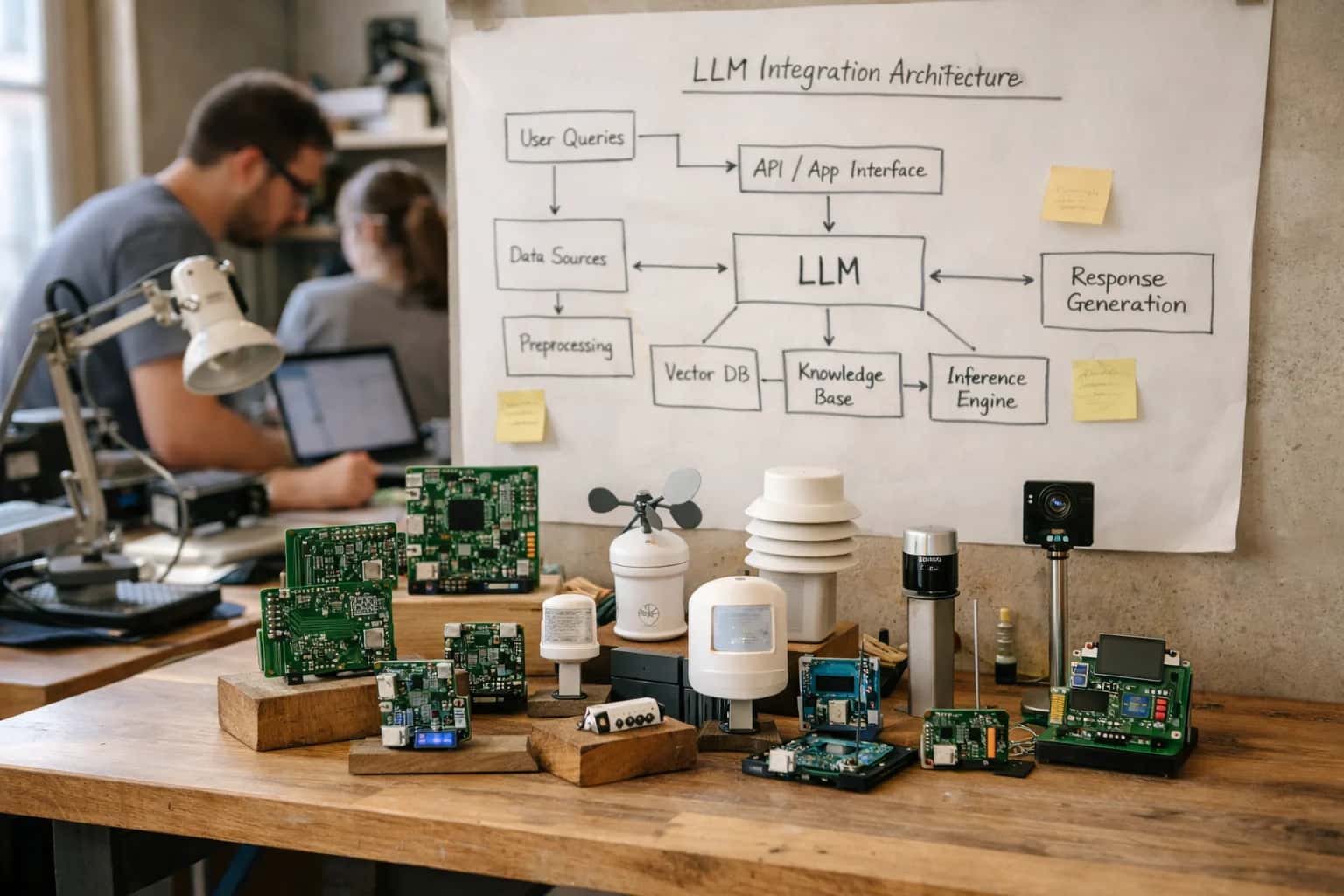
ARCHITECTURE AND IMPLEMENTATION
Where AI Fits in Public Sector Benefits Workflows
A practical blueprint for integrating AI agents into benefits enrollment and administration platforms to automate intake, provide personalized guidance, and accelerate service delivery.
For ongoing case management, AI can monitor the benefits case object for status changes or missing documentation, automatically generating personalized, plain-language notifications to applicants via SMS or email. High-value use cases include:
- Personalized Plan Recommendations: An AI copilot analyzes a constituent's profile against program rules to suggest the most suitable benefits packages, explaining trade-offs.
- Eligibility Q&A: A secure chatbot, grounded in the latest policy manuals and integrated with the eligibility engine, provides instant, accurate answers to common questions, freeing up call center staff.
- Automated Form Completion: Using document intelligence, AI extracts relevant data from pay stubs, tax returns, or IDs to auto-fill digital forms, with a human-in-the-loop review step for verification.
- Renewal and Recertification Workflows: AI agents proactively identify cases nearing review deadlines, initiate the process, and gather necessary information, ensuring continuity of benefits.
A production implementation is typically wired through a middleware layer or API gateway that sits between the AI service (e.g., a hosted LLM) and the core benefits platform. This layer handles authentication, rate limiting, prompt governance, and audit logging of all AI interactions. Data flows are designed to be read-heavy for analysis and Q&A, with write-back actions (like updating a case note or submitting a form) gated behind approval workflows or supervisor review. Rollout should be phased, starting with a low-risk, high-volume use case like initial triage and Q&A, measuring impact on call deflection and application processing time before expanding to more complex transactional workflows.
AI FOR PUBLIC SECTOR BENEFITS ADMINISTRATION
Key Integration Surfaces in Benefits Platforms
Front-End Citizen Interaction Layer
AI integration surfaces here focus on the citizen-facing application and portal. This is where conversational AI agents handle initial eligibility screening, guide users through complex forms, and answer plan-specific questions in real-time.
Key Integration Points:
- Form-Filling Assistants: AI pre-populates known applicant data from master citizen records (via APIs) and guides completion of missing fields using natural language.
- Dynamic Q&A Engines: RAG-powered chatbots are connected to the latest policy manuals, benefit guides, and FAQ knowledge bases to provide accurate, cited answers.
- Document Intake & Verification: AI reviews uploaded documents (IDs, pay stubs, proofs of residency) for completeness and legibility, flagging issues before submission to reduce back-and-forth.
Integrating at this layer reduces call center volume and application abandonment, turning a multi-session process into a single, guided interaction.
PUBLIC SECTOR INTEGRATION PATTERNS
High-Value AI Use Cases for Benefits Administration
Integrating AI into public sector benefits platforms like state-run Medicaid, SNAP, TANF, and unemployment systems can automate high-volume manual tasks, improve constituent access, and reduce administrative overhead. These patterns connect AI agents to eligibility engines, case management workflows, and constituent portals.
01
Automated Eligibility Pre-Screening & Intake
Deploy an AI chatbot on the public benefits portal to conduct initial eligibility interviews. The agent asks dynamic questions based on applicant responses, pulls pre-filled data from integrated systems (like state wage databases), and generates a structured intake packet for the caseworker in the benefits administration system (e.g., a state's custom platform or a vendor solution like IBM Curam). This reduces call center volume and incomplete applications.
Hours -> Minutes
Intake time
02
Document Processing for Verification
Integrate an AI document pipeline with the case management module to automatically classify, OCR, and extract key data from uploaded verification documents (pay stubs, utility bills, lease agreements). The AI validates information against application answers, flags discrepancies for review, and updates case notes. This connects to the document management layer of platforms like Tyler Technologies or SAP Public Sector solutions.
Batch -> Real-time
Document review
03
Caseworker Copilot for Complex Determinations
Embed an AI assistant within the caseworker's benefits administration interface. The copilot surfaces relevant policy clauses, suggests next steps based on case history, drafts denial or approval letters with personalized reasoning, and auto-populates reporting fields. This integrates via API with the core eligibility engine and workflow tools to act as a real-time advisor, reducing manual policy lookup and ensuring consistency.
1 sprint
Implementation cycle
04
Proactive Renewal & Life-Event Management
Use AI to monitor integrated data sources (state employment records, vital statistics) for triggers like income changes or address updates. The system automatically generates personalized renewal reminders, pre-populated forms, or alerts caseworkers to potential eligibility changes. This pattern requires event-driven integration between the AI layer, the benefits platform, and external data hubs, often orchestrated through a platform like SAP BTP or Infor OS.
Same day
Event detection
05
Multilingual Constituent Support Agent
Deploy a secure, voice-enabled AI agent integrated with the telephony and case management system to handle high-volume constituent inquiries about benefit status, missing documents, and appeal processes. The agent authenticates callers, retrieves real-time case status via API, provides answers in the caller's language, and can create service tickets in the CRM module if escalation is needed. This offloads routine calls from staff.
24/7 Coverage
Support availability
06
Anomaly Detection for Fraud & Overpayment
Implement AI models that continuously analyze transaction and case data within the benefits financials module. The system flags anomalous patterns (e.g., duplicate claims, inconsistent household data) for investigator review, creates prioritized work items in the fraud management system, and generates evidence packets. This integrates at the data layer, often requiring a feed to a dedicated analytics environment before pushing alerts back into operational workflows.
PRACTICAL AUTOMATION PATTERNS
Example AI-Powered Benefits Workflows
These workflows illustrate how AI agents can be integrated into public sector benefits administration platforms to automate high-volume tasks, provide personalized constituent support, and reduce manual processing burdens. Each pattern connects to core system APIs and data objects.
Trigger: A constituent initiates a benefits inquiry via a web portal, interactive voice response (IVR) system, or chatbot.
Context/Data Pulled: The AI agent uses a secure API session to pull relevant data based on the constituent's identifier (e.g., from a master citizen index) to pre-fill known demographics, household composition, and prior benefit history from the case management system.
Model or Agent Action:
- The agent engages in a natural language conversation (text or voice) to gather remaining eligibility information (income, assets, household changes).
- Using a pre-configured rules engine mapped to program guidelines (SNAP, TANF, Medicaid), the agent performs a real-time preliminary eligibility assessment.
- It identifies missing documentation and can generate a personalized checklist.
System Update or Next Step:
- For likely eligible applicants, the agent populates a draft application in the benefits platform (e.g., creates a case record with pre-filled data) and schedules an interview.
- It sends a secure summary and document request to the constituent via their preferred channel (email, SMS, portal).
- The case is routed to a human caseworker with a pre-populated worksheet and the agent's assessment notes, cutting initial processing time from days to minutes.
Human Review Point: The final eligibility determination and benefit calculation always remain with the qualified caseworker. The agent's role is to accelerate information gathering and initial sorting.
GOVERNMENT ERP PLATFORMS
Implementation Architecture: Connecting AI to Benefits Systems
A practical blueprint for integrating AI agents with public sector benefits administration platforms to automate enrollment, answer eligibility questions, and provide personalized guidance.
The integration connects AI agents to the core data objects and workflows of your benefits platform—whether it's a module within Tyler Munis, SAP Public Sector, Workday HCM for Government, or a specialized system. The AI layer typically interfaces via secure APIs to read and write to key records: Applicant Profiles, Eligibility Rules, Program Definitions, Submitted Forms, and Case Notes. This allows the AI to perform real-time eligibility pre-screening by cross-referencing applicant data against complex, multi-program criteria, and to initiate or update enrollment workflows directly within the system-of-record.
For high-value use cases like personalized plan recommendations, the AI agent orchestrates a multi-step workflow: 1) It ingests the applicant's profile and historical data via API, 2) queries a vector database containing the latest program guidelines, benefit summaries, and FAQ knowledge, 3) uses a reasoning model to match individual circumstances to suitable programs, and 4) generates a plain-language summary with next-step actions. This workflow can be triggered from a citizen portal, a 311 system integration, or an internal caseworker dashboard, with all interactions logged to the Case object for audit and continuity.
Rollout focuses on a phased, human-in-the-loop approach. Start with a copilot for internal caseworkers, where the AI suggests eligibility determinations and drafts communication for review before system submission. This builds trust and surfaces edge cases. Phase two introduces a secure public-facing chatbot, grounded in the official knowledge base and restricted to read-only actions or form pre-filling. Governance is critical: implement role-based access controls (RBAC) so the AI only accesses data permissible for the user's role, and maintain a full audit trail of all AI-generated suggestions and actions taken within the benefits platform for compliance and model improvement. For a deeper look at integrating AI with constituent service workflows, see our guide on AI Integration with Public Sector Citizen Relationship Management.
INTEGRATION PATTERNS FOR BENEFITS PLATFORMS
Code and Payload Examples
API Integration for Real-Time Eligibility
Integrating AI with benefits platforms requires real-time access to applicant data. A common pattern is to call an AI service from within the eligibility engine's workflow, passing a structured payload for analysis.
Example Payload to AI Service:
json{ "case_id": "APP-2024-78910", "applicant_data": { "household_size": 3, "gross_monthly_income": 3200, "program": "SNAP", "state": "CA", "residency_status": "verified", "assets": 1500 }, "questions": [ "Based on the provided data, is this household preliminarily eligible for SNAP in California?", "What is the estimated monthly benefit amount?", "List the specific documentation likely required for full verification." ] }
This payload allows the AI to ground its response in the specific case data, providing a personalized, instant assessment that a caseworker or applicant can use before starting a full application.
AI FOR BENEFITS ADMINISTRATION WORKFLOWS
Realistic Time Savings and Operational Impact
This table illustrates the operational impact of integrating AI assistants into public sector benefits platforms like those from Tyler, SAP, or Workday. Metrics are based on typical workflows for SNAP, Medicaid, TANF, and WIC programs.
| Workflow / Metric | Before AI Integration | After AI Integration | Implementation Notes |
|---|---|---|---|
Initial Eligibility Pre-Screening | Manual form review by caseworker (15-30 min/app) | AI-assisted triage & completeness check (2-5 min/app) | AI flags missing docs & calculates preliminary score; caseworker makes final determination. |
Beneficiary Inquiry Handling | Call center queue or email backlog (hours-days for response) | 24/7 chatbot answers common policy questions (immediate) | Agent escalates complex cases to live staff with full conversation history. |
Document Verification & Data Entry | Caseworker manually reviews PDFs/scan (10-20 min/case) | AI extracts data from uploads & populates system fields (1-2 min/case) | Human-in-the-loop review for accuracy; learns from corrections. |
Periodic Redetermination Notices | Batch manual process; generic communications | Personalized, plain-language notices generated & queued | AI drafts using case history; staff approves & sends via preferred channel. |
Case Status Updates & Reporting | Manual compilation from multiple systems for reporting | Automated weekly summaries & exception alerts | AI aggregates data from ERP, CRM, document store; highlights anomalies. |
Plan Recommendation & Outreach | Generalized outreach based on broad eligibility categories | Targeted communication for likely eligible populations | AI analyzes demographic & public data to identify and prioritize outreach. |
Policy Change Implementation | Manual updates to guides & retraining staff (weeks) | AI knowledge base updated centrally; agents reflect changes (days) | Reduces time-to-accuracy for front-line staff and public-facing bots. |
Appeal & Fair Hearing Prep | Caseworker manually compiles case file (1-2 hours) | AI auto-assembles relevant documents & timeline (15-20 min) | Generates a draft summary of key facts for caseworker review and submission. |
ENSURING CONTROLLED, COMPLIANT AI DEPLOYMENT
Governance, Security, and Phased Rollout
A practical framework for deploying AI in benefits administration with strict adherence to public sector security, privacy, and change management protocols.
Integrating AI into benefits platforms like Tyler Munis, SAP Public Sector, or specialized eligibility systems requires a security-first architecture. This means implementing AI agents as a governed middleware layer that never stores PII in vector databases, uses role-based access control (RBAC) to enforce eligibility worker versus citizen data views, and maintains a full audit log of all AI-generated recommendations and data accesses. API calls to LLMs should be routed through a secure gateway with payload scrubbing, and all automated decisions (e.g., plan recommendations) should be flagged for human-in-the-loop review during initial phases.
A phased rollout is critical for managing risk and building trust. Phase 1 typically involves a read-only AI assistant for eligibility workers, connected to policy manuals and historical case data via RAG, to answer complex policy questions and reduce manual lookup time. Phase 2 introduces a secure citizen-facing chatbot for common eligibility FAQs and document checklist generation, integrated with the benefits portal's authentication. Phase 3 automates form pre-filling by extracting data from uploaded documents (W-2s, proof of residency) and populating the correct enrollment objects, with all changes requiring a final human verification and submission step within the core system.
Governance is established through a cross-functional steering committee (IT, Legal, Program Office) that approves all prompts, data sources, and use cases. Model outputs are continuously evaluated for accuracy and bias, with a clear escalation and override workflow integrated directly into the case management module. This controlled approach allows agencies to capture efficiency gains—reducing manual data entry and inquiry resolution time—while maintaining strict compliance with regulations like HIPAA, PII safeguards, and state-specific administrative procedures.
Enabling Efficiency, Speed & Accuracy
Intelligent Analysis, Decision & Execution
We build AI systems for teams that need search across company data, workflow automation across tools, or AI features inside products and internal software.
Talk to Us
Search across company data
Give teams answers from docs, tickets, runbooks, and product data with sources and permissions.
Useful when people spend too long searching or get different answers from different systems.
Enterprise searchRAGPermissions
Read more
Automate internal workflows
Use AI to route work, draft outputs, trigger actions, and keep approvals and logs in place.
Useful when repetitive work moves across multiple tools and teams.
AI agentsWorkflow automationGovernance
Read more
Add AI to products and internal tools
Build assistants, guided actions, or decision support into the software your team or customers already use.
Useful when AI needs to be part of the product, not a separate tool.
AI integrationDecision supportModel routing
Read moreIMPLEMENTATION & WORKFLOW DETAILS
FAQ: AI Integration for Benefits Administration
Practical questions and workflow blueprints for integrating AI into public sector benefits platforms like those from Tyler, SAP, or Workday to automate enrollment, answer eligibility questions, and provide personalized plan recommendations.
This workflow automates the first touchpoint, determining if a citizen should proceed with a full application.
- Trigger: A citizen asks a question via a web chat, IVR system, or SMS (e.g., "Am I eligible for SNAP benefits?").
- Context Pulled: The AI agent uses a secure API call to the benefits platform to retrieve:
- The citizen's existing profile (if authenticated).
- Current program rules and eligibility criteria (from a managed knowledge base).
- Agent Action: The LLM, grounded by the retrieved rules and citizen data, formulates a conversational, plain-language response. It asks clarifying questions if needed (e.g., household size, income estimate) and provides a preliminary eligibility assessment.
- System Update: The interaction log, including the citizen's stated parameters and the agent's assessment, is written back to the case management system via API, creating a pre-application record.
- Human Review Point: If the agent's confidence score is low or the inquiry is complex, it flags the conversation for a live specialist review and seamlessly transfers the chat with full context.
Key Integration: Connects to the benefits platform's citizen profile API and case management API. Relies on a RAG system over the latest policy manuals for accurate grounding.

About the author
Prasad Kumkar
CEO & MD, Inference Systems
Prasad Kumkar is the CEO & MD of Inference Systems and writes about AI systems architecture, LLM infrastructure, model serving, evaluation, and production deployment. Over 5+ years, he has worked across computer vision models, L5 autonomous vehicle systems, and LLM research, with a focus on taking complex AI ideas into real-world engineering systems.
His work and writing cover AI systems, large language models, AI agents, multimodal systems, autonomous systems, inference optimization, RAG, evaluation, and production AI engineering.
LinkedIn
Limited slotsGet a Free AI Consultation
Partnered with leading AI, data, and software stack.





How We Work
Custom AI workflows for your Business
One-fit-all AI don't work for modern businesses. At Inferensys, we aim to understand your business & custom requirements; which we use to define most efficient agentic workflows, the data, and the tools for your business.
01
Review the use case
We understand the task, the users, and where AI can actually help.
Read more02
Pick the right approach
We define what needs search, automation, or product integration.
Read more03
Build the first useful version
We implement the part that proves the value first.
Read more04
Improve from there
We add the checks and visibility needed to keep it useful.
Read moreThe first call is a practical review of your use case and the right next step.
Talk to Us