Integrating AI into the Tyler ecosystem means connecting to its modular, system-of-record platforms—Munis for finance, Odyssey for courts, EnerGov for permitting, Incode for public safety—via their published APIs and data models. The goal is to augment, not replace, these core systems by adding intelligent layers that automate high-friction, manual tasks. For example, an AI agent can be triggered by a new citizen service request in Munis Citizen Self-Service, retrieve relevant parcel and account history via the Munis API, draft a personalized response, and log the interaction back to the case record, all before a human agent is assigned. This pattern applies across modules: using the Odyssey REST API to summarize case documents for clerks, the EnerGov API to pre-fill permit application checklists, or the Incode API to extract entities from incident reports for logging.

Integration
AI Integration for Tyler Technologies
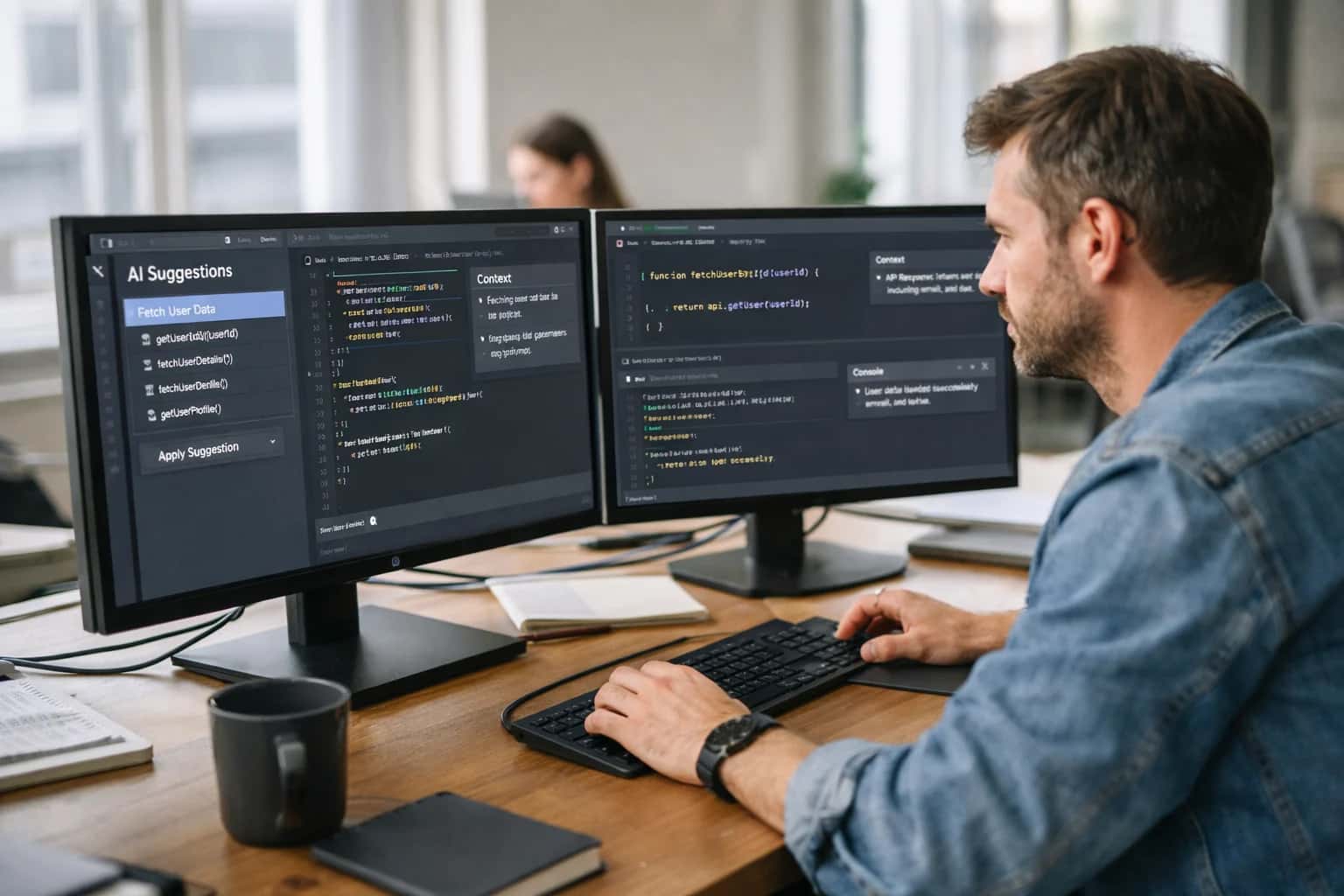
Where AI Fits in the Tyler Ecosystem
A practical blueprint for integrating AI agents and copilots across Tyler's modular platforms without disrupting core operations.
A production implementation typically involves a central AI orchestration layer (hosted on-premises or in a government-approved cloud) that acts as a secure broker between Tyler systems and AI models. This layer manages authentication, data governance, prompt templates, and audit logs. It subscribes to webhooks from Tyler modules (e.g., a new PermitApplicationSubmitted event from EnerGov) and executes multi-step workflows: retrieving the application PDF via API, sending it through a document intelligence pipeline for completeness checks, querying a vector database of municipal codes for relevant regulations, and finally posting a status update and task to the planner's queue. Crucially, all AI-generated outputs should route through a human-in-the-loop approval step within the existing Tyler workflow before any system-of-record data is modified, ensuring control and accountability.
Rollout should be phased, starting with a single, high-volume workflow in one department—such as automating initial triage for utility billing inquiries in Munis or routine FOIA requests in Content Manager. This allows for controlled testing of the integration patterns, performance under load, and user acceptance. Governance is paramount; the AI layer must enforce existing RBAC permissions from Tyler, maintain a complete audit trail of all AI actions for compliance, and be designed for explainability (e.g., showing the source documents used to generate an answer). By treating AI as a governed service that plugs into Tyler's existing integration points, agencies can incrementally improve citizen service and operational efficiency while maintaining the stability and security of their core Tyler investments. For a deeper technical dive on connecting to specific Tyler APIs, see our guide on Munis integration patterns.
Key Integration Points Across Tyler Suites
Financials, Utility Billing & Tax
Integrate AI agents directly into Munis ERP to automate high-volume, rule-based workflows and provide intelligent self-service. Key surfaces include the Utility Billing module for handling citizen payment inquiries and generating payment plans, and the General Ledger for automated journal entry suggestions and anomaly detection in fund transactions.
For Tax Assessment, AI can pre-fill property data from uploaded documents and answer common assessor questions via a copilot interface. Implement these agents by connecting to Munis' .NET-based APIs or by deploying microservices that listen to database events, ensuring all AI-generated actions are logged in the audit trail. This reduces manual data entry in revenue offices and accelerates citizen service resolution from hours to minutes.
High-Value AI Use Cases for Tyler
Integrating AI into the Tyler ecosystem automates manual workflows, accelerates constituent service, and surfaces insights from operational data. These use cases connect AI agents directly to Tyler's core modules via APIs and data layers.
Permit & License Application Triage
Deploy an AI agent on the front-end of Tyler EnerGov to handle initial applicant inquiries, check application completeness against checklists, and pre-fill data from uploaded plans or documents. Reduces manual intake work for planners.
Utility Billing Dispute Resolution
Connect an AI copilot to Tyler Munis utility billing data and customer history. The agent can analyze meter reads, compare to historical usage, draft explanation letters, and suggest payment plans—escalating only complex cases to staff.
Case Document Summarization for Odyssey
Integrate an AI pipeline with Tyler Odyssey's document management system. Automatically generate concise summaries of lengthy case filings, pleadings, and discovery documents for judges, clerks, and public defenders, accelerating review.
Citizen Service Request Routing
Implement an NLP layer atop Tyler's CRM or 311 interface to classify incoming citizen requests (phone, web, text) by department, urgency, and location. Auto-creates and routes work orders in Munis or EnerGov with high accuracy.
Financial Anomaly Detection in Munis
Deploy AI models to monitor Munis General Ledger and Accounts Payable feeds in near-real-time. Flag unusual transactions, duplicate payments, or vendor pattern deviations for audit review, strengthening financial controls.
Inspection Prioritization & Scheduling
Build an AI scheduler for EnerGov Code Enforcement. Analyzes complaint severity, property history, and inspector location/availability to dynamically prioritize the daily inspection queue and optimize route planning.
Example AI-Augmented Workflows
These concrete workflows illustrate how AI agents and copilots connect to Tyler's core modules, automating manual steps and augmenting staff decision-making. Each pattern is designed to integrate via Tyler's APIs, webhooks, or data exports, triggering AI actions that return structured updates to the system of record.
Trigger: Citizen submits a digital permit application via the EnerGov citizen portal.
Context Pulled: AI agent receives the application payload (PDFs, form data) and fetches related parcel history, applicant records, and current permit queue from EnerGov APIs.
AI Action: A multi-step agent performs:
- Document Intelligence: Extracts key data (address, valuation, contractor info) from uploaded plans and forms using vision/OCR models.
- Completeness Check: Cross-references extracted data against a rules engine for the permit type (e.g., building, electrical) to identify missing signatures, required documents, or incomplete fields.
- Initial Routing & Priority: Classifies application complexity and estimates review timeline based on historical data. Flags high-priority or expedited requests.
System Update: The agent posts a structured JSON update back to EnerGov, creating a work log note with:
- A completeness score and list of deficiencies.
- Recommended reviewer assignment based on workload and specialty.
- Predicted review timeline.
- Extracted data populating relevant application fields, reducing manual data entry.
Human Review Point: The assigned plans examiner reviews the AI-generated summary and deficiency list before initiating the formal review, correcting any agent errors.
Implementation Architecture: Connecting AI to Tyler
A technical guide to architecting AI agents and copilots that integrate with Tyler's Munis, Odyssey, and EnerGov platforms.
Integrating AI into Tyler's ecosystem requires a platform-aware approach that respects the distinct data models and user workflows of each product. For Munis, AI agents typically connect via its .NET-based API layer to read and write to core financial objects like GL journals, vendor invoices, and utility customer accounts. In Odyssey, integration focuses on the justice system's web services and data tables for cases, parties, and documents, enabling summarization and workflow triggers. For EnerGov, the integration surface is often the citizen portal and backend APIs for permits, inspections, and licenses, where AI can automate intake and status updates. The architecture must broker between these proprietary interfaces and modern AI services, using a middleware layer for orchestration, logging, and governance.
A production implementation follows a hub-and-spoke model. A central integration platform (often built on tools like n8n or Microsoft Copilot Studio) acts as the orchestration hub, securely calling Tyler APIs, processing data with AI models, and returning results or taking automated actions. This hub manages critical concerns: RBAC synchronization to enforce Tyler's security profiles on AI actions, audit logging for all AI-triggered data changes, and human-in-the-loop approvals for high-risk operations like journal entry posting or permit approval. For example, an AI agent reviewing building plans in EnerGov would extract data via OCR, run compliance checks, and then create a draft inspection task—all logged and requiring a human final sign-off within the Tyler workflow.
Rollout is phased, starting with read-only or assistive use cases to build trust and refine prompts. Initial pilots often target high-volume, repetitive tasks: using an AI copilot to answer citizen payment questions by querying the Munis CIS module, or summarizing lengthy court documents in Odyssey for clerk review. Successful pilots then expand to write-back automations, such as auto-populating permit application fields in EnerGov from uploaded site plans, or generating draft journal entries in Munis from scanned invoices. Governance is maintained through continuous evaluation of AI accuracy against Tyler data and strict change management for any integration touching production financial or regulatory records.
Code and Payload Examples
Handling Citizen Payment Queries via API
An AI agent can resolve common utility billing questions by querying the Munis API, reducing call center volume. The agent authenticates, retrieves account data, and generates a plain-language summary.
Example Python Payload for Account Lookup:
pythonimport requests # Authenticate to Munis REST API (example endpoint) auth_response = requests.post( 'https://<your-munis-instance>/api/auth', json={'username': 'service_account', 'password': '***'} ) token = auth_response.json()['token'] # Query customer account by service address or account number account_lookup = requests.get( 'https://<your-munis-instance>/api/utility/accounts', headers={'Authorization': f'Bearer {token}'}, params={'search': '123 MAIN ST'} ) # AI agent processes the JSON response to answer: # - Current balance and due date - Last payment amount & date - Usage history summary - Payment plan options
The agent uses this structured data to construct a response, cite sources, and, if needed, initiate a payment workflow via a secure link.
Realistic Time Savings and Operational Impact
Expected efficiency gains from integrating AI agents into core Tyler Munis, Odyssey, and EnerGov workflows, based on typical public sector implementation patterns.
| Workflow / Metric | Before AI Integration | After AI Integration | Implementation Notes |
|---|---|---|---|
Citizen Payment Inquiry Resolution | Manual lookup across Munis & Cashiering: 15-25 mins | AI agent provides answer via chat in <2 mins | Agent accesses APIs for real-time account status; human agent escalates complex cases |
Permit Application Intake & Completeness Check | Planner manual review: 30-60 mins per application | AI pre-screens & flags missing items: 5-10 mins | Integrated with EnerGov; reduces back-and-forth, accelerates review queue |
Utility Billing Discrepancy Triage | Customer service rep investigates: 20-40 mins | AI analyzes usage history & suggests cause: <5 mins | Connects to Munis billing & meter data; provides draft response for rep approval |
Case Document Summarization (Odyssey) | Paralegal manual review & summarization: 1-2 hours | AI generates initial summary from filings: 10-15 mins | RAG on case management system; attorney reviews & edits output |
Code Enforcement Complaint Prioritization | Supervisor manually scores based on static rules: daily batch | AI scores & routes based on risk & location: real-time | Integrates with EnerGov & GIS data; allows dynamic resource allocation |
Public Records Request (FOIA) Document Redaction | Manual redaction across Content Manager: hours per request | AI identifies PII for reviewer approval: minutes per request | Human-in-the-loop required for final verification; audit trail maintained |
Budget Variance Explanation Drafting | Financial analyst compiles data & writes narrative: 4-8 hours | AI drafts narrative from Munis GL data: 30-60 mins | Analyst provides oversight, adds context; integrates with reporting platforms |
Governance, Security, and Phased Rollout
A practical blueprint for deploying AI across Tyler Technologies platforms with the controls, auditability, and phased approach required for government operations.
Integrating AI into Munis, Odyssey, or EnerGov requires a security-first architecture that respects the platform's existing RBAC, data classification, and audit trails. We design integrations to operate as a governed layer, where AI agents interact with Tyler APIs and databases through a secure middleware. This ensures all AI-initiated actions—like updating a permit status in EnerGov or creating a case note in Odyssey—are logged with a service account, preserving a clear audit trail. Sensitive data, such as PII in constituent records or financial data in Munis, is never sent directly to external LLMs. Instead, we use retrieval-augmented generation (RAG) patterns with a local vector store for Tyler Content Manager documents, or employ function-calling agents that execute approved, parameterized queries against Tyler's APIs, keeping data within your environment.
A successful rollout follows a phased, risk-managed approach. We typically start with a read-only pilot in a non-critical workflow, such as an AI agent that summarizes public comments for agenda items or answers internal FAQs by querying Tyler knowledge bases. This builds trust and validates the integration pattern without touching transactional systems. Phase two introduces assisted write-backs, like an agent that drafts inspection reports in EnerGov for an officer's review and approval, or suggests journal entry descriptions in Munis based on invoice line items. The final phase enables conditional automation for high-volume, rule-based tasks, such as auto-classifying incoming permit applications or triaging 311 service requests, always with a human-in-the-loop override and regular sampling for quality assurance.
Governance is operationalized through a centralized AI Control Plane. This layer, which can be built on your existing infrastructure or integrated with Tyler's platform extensions, manages prompt versions, logs all AI interactions, enforces data filters, and triggers manual review workflows for low-confidence outputs. For example, an AI suggestion to adjust a utility bill in Munis Cashiering would require supervisor approval via a configured workflow before the API call is executed. This controlled, phased methodology minimizes disruption, ensures compliance with state and local IT policies, and allows your team to scale AI value from a single department to enterprise-wide adoption across the Tyler ecosystem.
Enabling Efficiency, Speed & Accuracy
Intelligent Analysis, Decision & Execution
We build AI systems for teams that need search across company data, workflow automation across tools, or AI features inside products and internal software.
Talk to Us
Search across company data
Give teams answers from docs, tickets, runbooks, and product data with sources and permissions.
Useful when people spend too long searching or get different answers from different systems.

Automate internal workflows
Use AI to route work, draft outputs, trigger actions, and keep approvals and logs in place.
Useful when repetitive work moves across multiple tools and teams.

Add AI to products and internal tools
Build assistants, guided actions, or decision support into the software your team or customers already use.
Useful when AI needs to be part of the product, not a separate tool.
Frequently Asked Questions
Practical answers for government IT leaders and operations managers planning AI integration across the Tyler ecosystem.
A secure integration typically uses a dedicated service account with role-based permissions, calling Munis APIs or querying a replicated reporting database. The workflow is:
- Trigger: A citizen query arrives via a web portal chatbot, SMS, or interactive voice response (IVR) system.
- Context Pull: The AI agent extracts the account number or property address, then calls a secure API endpoint (e.g.,
GET /api/customer/account/{id}/balance) or queries a read-only data store synced from Munis. - Agent Action: The LLM formulates a natural language response using the retrieved data (current balance, due date, last payment).
- System Update: The interaction is logged to an audit table with the citizen ID, query, and response for compliance. No direct writes to Munis occur in this flow.
- Human Review: Complex disputes or payment plan requests are escalated as a case to the cashiering module, with the full conversation history attached.
Key Consideration: Use a middleware layer (like an API gateway) to enforce rate limits, log all accesses, and mask sensitive data like full SSNs before sending to the AI model.

About the author
Prasad Kumkar
CEO & MD, Inference Systems
Prasad Kumkar is the CEO & MD of Inference Systems and writes about AI systems architecture, LLM infrastructure, model serving, evaluation, and production deployment. Over 5+ years, he has worked across computer vision models, L5 autonomous vehicle systems, and LLM research, with a focus on taking complex AI ideas into real-world engineering systems.
His work and writing cover AI systems, large language models, AI agents, multimodal systems, autonomous systems, inference optimization, RAG, evaluation, and production AI engineering.
Partnered with leading AI, data, and software stack.





How We Work
Custom AI workflows for your Business
One-fit-all AI don't work for modern businesses. At Inferensys, we aim to understand your business & custom requirements; which we use to define most efficient agentic workflows, the data, and the tools for your business.
01
Review the use case
We understand the task, the users, and where AI can actually help.
Read more02
Pick the right approach
We define what needs search, automation, or product integration.
Read more03
Build the first useful version
We implement the part that proves the value first.
Read more04
Improve from there
We add the checks and visibility needed to keep it useful.
Read moreThe first call is a practical review of your use case and the right next step.
Talk to Us