A centralized AI orchestration layer sits between your core government platforms—like Tyler Munis, SAP Public Sector, or Workday Government—and various AI models and services. Its primary function is to provide a single, governed point of integration for AI capabilities such as document processing, predictive analytics, and conversational agents. This layer handles critical functions like API routing, prompt management, audit logging, role-based access control (RBAC), and response validation before any AI-generated output reaches your transactional systems of record. It ensures that a chatbot answering citizen questions about utility bills has the same governance, security, and data access policies as an agent summarizing case files in Odyssey.

Integration
AI Integration for AI in Public Sector Operations
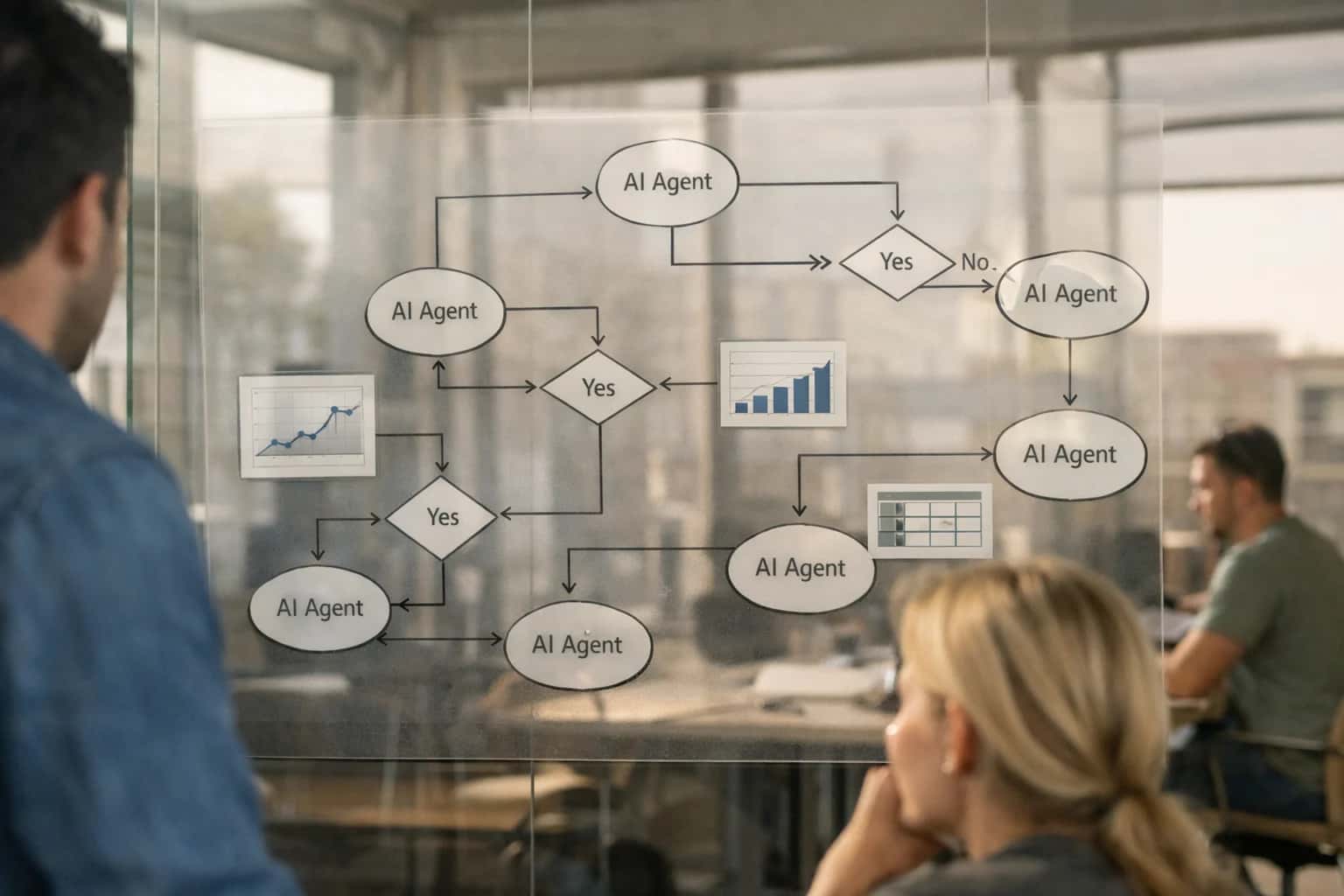
Building a Centralized AI Orchestration Layer for Government
A practical guide to designing a secure, scalable AI orchestration hub that serves multiple departments and their core enterprise systems.
Implementation begins by mapping high-value, cross-departmental use cases to specific integration points. For example, an AI-powered document intake pipeline could serve both the permitting office (EnerGov) and social services (case management), extracting data from uploaded PDFs and writing it to the correct objects via each system's APIs. The orchestration layer manages the entire workflow: receiving the document, calling the appropriate OCR and NLP services, applying data quality checks, and then triggering the correct update or create API call in the target system. This approach prevents the proliferation of point-to-point integrations and consolidates security reviews, cost management, and performance monitoring into one platform.
Rollout requires a phased, department-by-department adoption. Start with a low-risk, high-volume workflow like automating FOIA request redaction or citizen inquiry triage for a 311 system. Use this to establish the operational playbook for human-in-the-loop review, model performance tracking, and change management. Governance is non-negotiable; the orchestration layer must enforce strict data sovereignty rules, maintain immutable audit trails of all AI interactions, and provide configurable approval gates for sensitive operations like generating financial narratives or prioritizing code enforcement cases. This centralized model is what allows large public sector organizations to move from isolated AI experiments to enterprise-grade, responsible AI operations.
Primary Integration Surfaces for Centralized AI
Financial Management & Fund Accounting
Centralized AI must integrate with the core financial modules of platforms like Tyler Munis, SAP S/4HANA Public Sector, and Workday Financial Management. Key surfaces include:
- Journal Entry & Reconciliation APIs: Automate the creation of adjusting entries based on variance analysis or extract data from scanned invoices and receipts.
- Grant & Project Accounting Objects: Monitor budget-to-actual spend against specific grants (CFDA numbers), automatically flagging potential overruns or compliance issues for officer review.
- Vendor & Procurement Records: Enrich vendor profiles with risk scores from external sources and analyze purchase order patterns for consolidation opportunities.
A centralized AI layer can call these APIs to perform scheduled audits, generate narrative for financial statements, and trigger workflows in the ERP based on AI-driven insights, ensuring all financial AI actions are logged within the system of record.
High-Value Use Cases for a Shared AI Layer
A centralized AI orchestration layer enables multiple departments to leverage a common intelligence engine, reducing redundant investments and ensuring consistent governance across Tyler, SAP, Workday, and Infor systems.
Cross-Platform Constituent Service Agent
Deploy a single, multilingual AI agent that integrates with Tyler CRM, Infor CRM, and SAP Customer Service to handle citizen inquiries. The agent uses a shared knowledge base to answer questions about permits, billing, and case status, routing complex issues to the correct department's backend system.
Unified Document Intelligence Pipeline
Build a central AI service for processing permits, applications, and FOIA requests. It extracts and classifies data from documents uploaded to Tyler Content Manager, Infor OS, or SAP ArchiveLink, then pushes structured data into the relevant ERP module (e.g., Munis, CloudSuite) for workflow initiation.
Centralized Grant Compliance Monitor
Implement an AI layer that ingests transactional data from Workday Grants, SAP Funds Management, and Tyler Munis to continuously monitor expenditures against grant terms. It flags potential non-compliance across all funding sources in a single dashboard for officers.
Predictive Asset Maintenance Orchestrator
A shared model analyzes sensor and work order data from Infor EAM, SAP EAM, and Tyler FleetFocus to predict failures for vehicles, buildings, and infrastructure. It generates prioritized work orders in each native system, optimizing maintenance budgets across departments.
Multi-ERP Financial Anomaly Detection
Deploy a single AI service to monitor journal entries and payments across disparate fund accounting systems. It establishes a unified baseline to detect unusual patterns in Tyler, SAP, and Workday financials, reducing fraud and error risk for the entire jurisdiction.
Inter-Departmental Workflow Router
An AI orchestration layer intelligently routes and prioritizes tasks that span departments. For example, a complex business license application from Tyler EnerGov can trigger automated background checks in justice systems and vendor setup in SAP Ariba, all coordinated through a central agent.
Example Cross-System AI Workflows
These workflows illustrate how a centralized AI layer can connect disparate public sector systems—like an ERP, a CRM, and a permitting platform—to automate complex, cross-departmental processes without replacing core software.
Trigger: A grant award notification is logged in the Grants Management System (e.g., Workday Grants).
Context Pulled: The AI orchestration layer retrieves:
- Grant terms, reporting requirements, and eligible expense categories from the grant record.
- The associated project ID and chart of accounts from the Project Portfolio Management (PPM) system.
- The linked vendor record from the procurement system (e.g., SAP Ariba).
Agent Action: For each incoming invoice from the vendor:
- An AI agent extracts line-item details and matches them to the grant's budget categories.
- It cross-references the expense against the project's progress reports in the PPM system.
- It checks for any duplicate payments or policy violations against historical data in the ERP.
- It generates a compliance summary and a recommended action ("Approve," "Review," "Reject").
System Update: The recommendation and summary are posted as a comment in the ERP's accounts payable workflow. For "Approve," the agent can trigger the next approval step automatically. For "Review," it routes the invoice and its analysis to the designated grants officer in the CRM case queue.
Human Review Point: Any expense flagged as high-risk (e.g., outside budget category, precedes reported project milestone) is automatically escalated for manual review before any payment is released.
Implementation Architecture: The Orchestration Hub
A centralized AI orchestration layer connects multiple government departments and their core enterprise systems, enabling shared intelligence while maintaining strict data governance.
Instead of deploying isolated AI agents into each department's Tyler, SAP, or Workday instance, a hub-and-spoke architecture uses a central orchestration platform (like an MCP server, custom middleware, or a cloud-native integration platform) as the single point of contact for AI services. This hub securely brokers requests between departmental systems—such as Tyler Munis for finance, SAP Public Sector for procurement, and Infor EAM for assets—and a suite of AI models and tools. It handles authentication via existing Active Directory or IAM systems, enforces role-based access controls (RBAC) to data, maintains a unified audit log of all AI interactions, and manages prompt templates and guardrails specific to public sector compliance.
The orchestration layer executes multi-step workflows that span systems. For example, a citizen's 311 request about a pothole can trigger a sequence where the hub: 1) classifies the request via NLP, 2) queries Tyler EnerGov for any active permits on the street, 3) checks Infor EAM for nearby scheduled maintenance, 4) drafts a status response using a governed LLM, and 5) creates a work order in the public works management system if needed—all within a single, traceable transaction. This approach prevents data silos, reduces integration complexity, and allows IT to manage AI costs, performance, and security policies from a single control plane.
Rollout is phased, starting with a non-critical, high-volume workflow like document intake for permits or FAQ automation for HR. The hub is deployed in the government's preferred cloud or on-premises environment, with initial connections built to one core system's APIs. Governance is baked in from day one, with human-in-the-loop approval steps for certain actions and continuous evaluation of AI outputs against ground-truth data. This central model ensures that as AI use expands from finance to public safety to health, every department benefits from shared learnings and consistent oversight, without rebuilding foundational security and integration patterns.
Code & Payload Examples
SAP Business Technology Platform (BTP) Integration
For SAP-centric environments, BTP serves as the ideal orchestration hub. Use its Cloud Integration (CI) service to broker secure API calls between SAP modules and external AI services, applying governance and logging.
python# Example: BTP Python function to call AI service for grant application scoring from sap import xssec import requests import json def score_grant_application(request_json): """Called via BTP workflow from SAP Grantor Management.""" # 1. Authenticate & get context security_context = xssec.create_security_context(request_json['auth_token']) if not security_context.check_scope('$GRANTMGMT'): return {'error': 'Unauthorized'} # 2. Prepare payload from SAP data app_data = request_json['application'] ai_payload = { "applicant_history": app_data['prior_awards'], "narrative": app_data['project_description'], "budget_items": app_data['line_items'], "compliance_flags": app_data['regulatory_codes'] } # 3. Call external AI scoring service (e.g., Azure OpenAI) ai_response = requests.post( os.environ['AI_SCORING_ENDPOINT'], json=ai_payload, headers={'Authorization': f'Bearer {os.environ["AI_API_KEY"]}'} ) # 4. Return score to SAP workflow return { 'application_id': app_data['id'], 'ai_score': ai_response.json()['score'], 'rationale': ai_response.json()['key_factors'], 'recommended_action': 'APPROVE' if ai_response.json()['score'] > 0.7 else 'REVIEW' }
This pattern keeps AI logic external while maintaining SAP's security context and audit trail.
Realistic Operational Impact & Time Savings
This table illustrates the tangible workflow improvements and time savings achievable by implementing a centralized AI layer that serves Tyler, SAP, Workday, and Infor systems across government departments.
| Metric | Before AI | After AI | Notes |
|---|---|---|---|
Constituent Inquiry Resolution | Manual routing via phone/email; 1-3 day response | AI chatbot triage & automated answers; 80% resolved in <5 min | Human agents handle complex escalations; integrates with CRM case management |
Grant Application Intake & Scoring | Manual review by committee; 4-6 week cycle | AI pre-screens for completeness & scores against rubric; committee reviews top 20% | Reduces administrative burden; ensures consistent scoring; final human decision |
Permit/Application Document Review | Manual checklist verification; 2-5 business days | AI extracts & validates data from uploaded PDFs; flags discrepancies in <1 hour | Planner reviews AI-highlighted exceptions; integrates with EnerGov or SAP |
Financial Transaction Anomaly Detection | Monthly audit sampling; anomalies found weeks later | AI monitors ERP feeds in real-time; alerts on outliers within 24 hours | Proactive fraud/error detection; integrates with Tyler Munis, SAP, Workday Financials |
Public Records Request (FOIA) Processing | Manual search & redaction; 10-30 business days | AI identifies responsive documents & suggests redactions; cuts initial review by 60% | Legal staff reviews AI suggestions; integrates with Content Manager or document systems |
Infrastructure Work Order Prioritization | Reactive, based on complaint volume or scheduled cycles | AI analyzes sensor data, citizen reports & asset history to predict & prioritize failures | Optimizes crew dispatch; integrates with Infor EAM or Maximo |
Inter-Departmental Data Request for Reporting | Manual data pulls & consolidation; 1-2 weeks per report | AI agent queries authorized APIs, consolidates data, drafts narrative; 1-2 days | Analyst reviews & finalizes; uses centralized orchestration layer for cross-system access |
Governance, Security & Phased Rollout
A centralized AI orchestration layer must be built with public sector security, auditability, and change management as first principles.
A production AI layer for government must integrate with existing Identity and Access Management (IAM) systems like Okta or Microsoft Entra ID to enforce role-based access control (RBAC). Every AI agent call should be scoped to the user's departmental permissions and logged with a full audit trail, linking back to the originating user in the ERP (e.g., Workday, SAP S/4HANA). Data flows must be designed to keep sensitive citizen and financial data within the agency's cloud boundary, using the AI orchestration platform as a secure broker that sends only contextually necessary, de-identified prompts to external LLM APIs.
Implementation follows a phased, risk-based rollout. Phase 1 typically targets low-risk, high-volume workflows like internal Q&A bots for HR policy or procurement guidelines, using a tightly curated knowledge base. Phase 2 introduces semi-automated agents for tasks like drafting grant narrative reports or pre-screening permit applications, where a human-in-the-loop approves all outputs before system-of-record updates. Phase 3 deploys predictive and autonomous agents for forecasting or anomaly detection, but actions are limited to generating alerts and recommendations within dashboards in systems like Tyler Munis or Infor EAM.
Governance is maintained through a centralized LLMOps platform (e.g., Credo AI, Arize) that manages prompt versions, performs bias and accuracy evaluations, and monitors for model drift. This platform integrates with the agency's existing IT service management (e.g., ServiceNow) for change control and incident response. All AI-assisted decisions, especially those affecting citizens or funds, must be explainable; the architecture must store the chain-of-thought reasoning and source data citations, enabling compliance officers to audit decisions for FOIA requests or program reviews.
Enabling Efficiency, Speed & Accuracy
Intelligent Analysis, Decision & Execution
We build AI systems for teams that need search across company data, workflow automation across tools, or AI features inside products and internal software.
Talk to Us
Search across company data
Give teams answers from docs, tickets, runbooks, and product data with sources and permissions.
Useful when people spend too long searching or get different answers from different systems.

Automate internal workflows
Use AI to route work, draft outputs, trigger actions, and keep approvals and logs in place.
Useful when repetitive work moves across multiple tools and teams.

Add AI to products and internal tools
Build assistants, guided actions, or decision support into the software your team or customers already use.
Useful when AI needs to be part of the product, not a separate tool.
Frequently Asked Questions
Architecting a centralized AI layer for government operations requires careful planning around governance, integration, and rollout. These FAQs address the key technical and operational questions from public sector CTOs and enterprise architects.
A centralized orchestration layer acts as a secure middleware, managing all connections to backend systems like Tyler Munis, SAP Public Sector, and Infor EAM. The pattern involves:
- API Gateway & Service Accounts: Establish a dedicated API gateway (e.g., Kong, Apigee) that uses service accounts with strictly scoped, read/write permissions to each target system.
- Unified Data Model: Create a canonical data model within the orchestration layer to normalize data from different sources (e.g., a unified "Citizen" or "Work Order" object).
- Tool Calling Framework: Implement a secure tool-calling framework where AI agents request actions (e.g.,
get_citizen_case,create_permit_workflow). The orchestration layer validates the request, maps it to the correct system API, executes it, and returns a standardized response. - Audit Logging: Every agent action, data query, and system call is logged with user/agent ID, timestamp, and payload metadata for full auditability.
This abstracts complexity from the AI models and centralizes security, rate limiting, and compliance checks.

About the author
Prasad Kumkar
CEO & MD, Inference Systems
Prasad Kumkar is the CEO & MD of Inference Systems and writes about AI systems architecture, LLM infrastructure, model serving, evaluation, and production deployment. Over 5+ years, he has worked across computer vision models, L5 autonomous vehicle systems, and LLM research, with a focus on taking complex AI ideas into real-world engineering systems.
His work and writing cover AI systems, large language models, AI agents, multimodal systems, autonomous systems, inference optimization, RAG, evaluation, and production AI engineering.
Partnered with leading AI, data, and software stack.





How We Work
Custom AI workflows for your Business
One-fit-all AI don't work for modern businesses. At Inferensys, we aim to understand your business & custom requirements; which we use to define most efficient agentic workflows, the data, and the tools for your business.
01
Review the use case
We understand the task, the users, and where AI can actually help.
Read more02
Pick the right approach
We define what needs search, automation, or product integration.
Read more03
Build the first useful version
We implement the part that proves the value first.
Read more04
Improve from there
We add the checks and visibility needed to keep it useful.
Read moreThe first call is a practical review of your use case and the right next step.
Talk to Us