AI integration for Icicle Sanitation Monitoring focuses on three functional surfaces: the Cleaning Schedule module, Environmental Monitoring data logs, and Verification Records. The goal is to move from reactive, calendar-based cleaning to a predictive, condition-based model. AI models ingest historical swab results, ATP readings, equipment runtime logs, and product changeover events from Icicle to predict when microbial or allergen risks are likely to exceed thresholds. These predictions can then trigger preventive work orders in Icicle's task management system or adjust the master sanitation schedule before a non-conformance occurs.

Integration
AI Integration with Icicle Sanitation Monitoring
A technical guide for integrating AI with Icicle's sanitation monitoring data to predict cleaning protocol failures, schedule preventive actions, and generate automated verification records for food safety compliance.
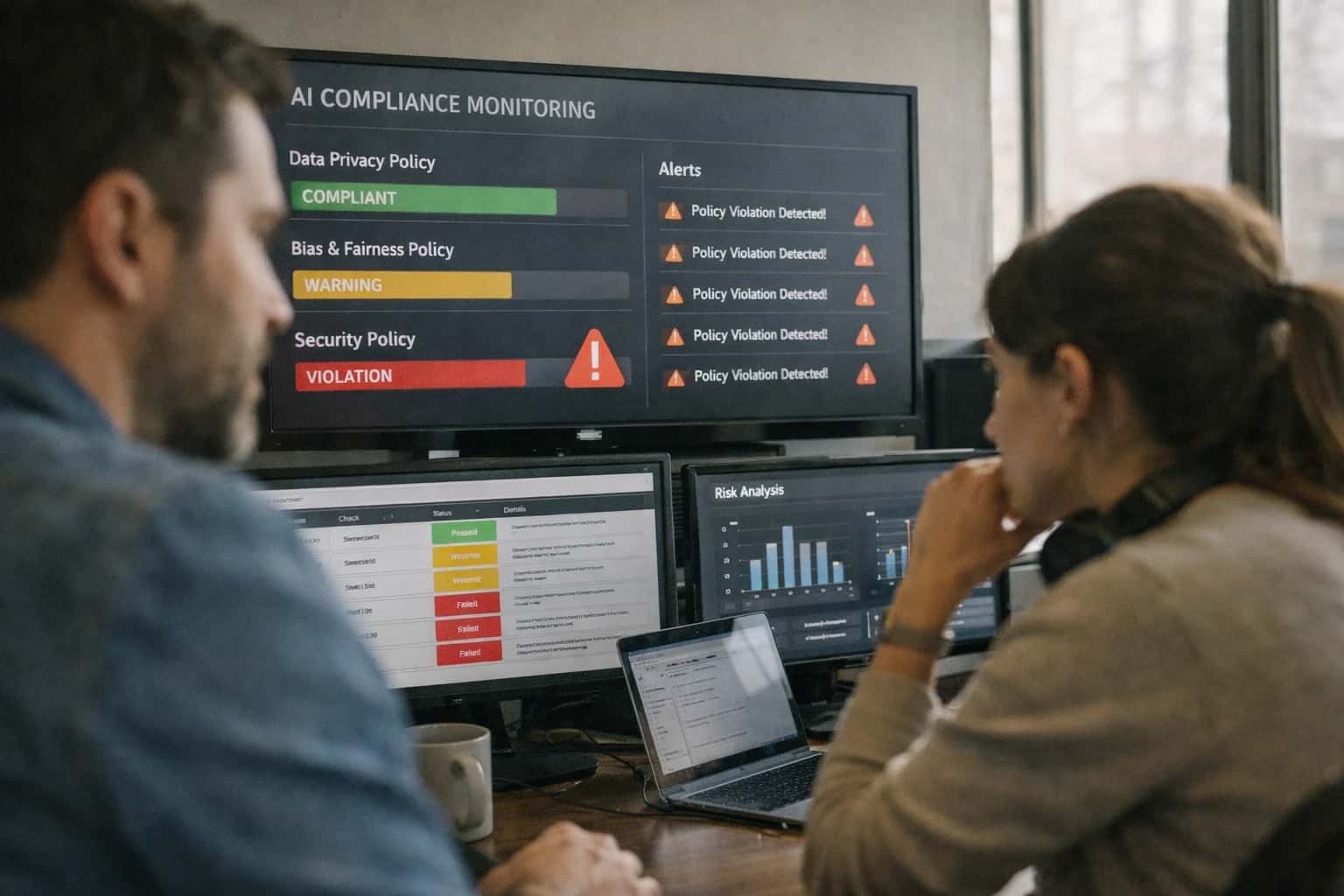
PREDICTIVE CLEANING AND VERIFICATION AUTOMATION
Where AI Fits into Icicle Sanitation Workflows
Integrating AI with Icicle's sanitation monitoring data to predict protocol failures, schedule preventive actions, and generate automated verification records.
Implementation typically involves a lightweight middleware service that polls Icicle's REST APIs for new monitoring data and pushes back predicted alerts and recommended actions. For example, an AI agent might analyze a week of post-cleaning swab data from a filler head and detect a rising trend in colony counts. It would then create a Preventive Action record in Icicle, linked to the specific equipment and zone, suggesting an enhanced clean or a parts inspection. The system can also auto-generate verification records by pulling the executed task details and attaching the subsequent, passing swab results, creating a closed-loop audit trail that reduces manual paperwork for QA supervisors.
Rollout should start with a pilot zone or high-risk equipment line. Governance is critical: all AI-generated recommendations should be routed through an approval step (e.g., a QA manager's dashboard in Icicle) before they modify the official schedule. This maintains human oversight while automating the detection and suggestion workload. The impact is operational: shifting sanitation from a fixed cost center to an intelligent, risk-mitigating function that reduces unscheduled downtime, prevents potential contamination events, and cuts the time QA spends on record review and manual scheduling by 30-50%.
WHERE TO INJECT INTELLIGENCE
Key Icicle Sanitation Data Surfaces for AI Integration
The Core Sanitation Record
Cleaning logs are the foundational data surface in Icicle, capturing every wash-down, CIP cycle, and sanitation event. Each log contains structured fields for chemicals used, concentrations, contact times, temperatures, and the equipment or zone cleaned. This historical dataset is ideal for training AI models to predict protocol failure.
AI Integration Points:
- Predictive Scheduling: Analyze log completion times, chemical usage trends, and seasonal factors to forecast when the next cleaning will be required, moving from calendar-based to condition-based scheduling.
- Anomaly Detection: Monitor real-time log submissions via webhook. Flag entries where parameters (e.g., temperature, contact time) deviate from the validated plan, triggering immediate review before production resumes.
- Automated Verification: Use AI to cross-reference completed logs against the master sanitation schedule and required parameters, auto-generating verification records and closing the loop without manual QA sign-off.
SANITATION MONITORING INTEGRATIONS
High-Value AI Use Cases for Icicle Sanitation
Integrating AI with Icicle's sanitation data surfaces transforms reactive cleaning into predictive, automated operations. These use cases connect AI to Icicle's monitoring records, cleaning schedules, and verification workflows to prevent failures and reduce compliance risk.
01
Predictive Cleaning Protocol Failure
AI models analyze historical sanitation logs, environmental sensor data (temperature, humidity), and production schedules from Icicle to predict when a cleaning protocol is likely to fail. The system triggers a preventive task in Icicle's workflow engine before a scheduled clean, recommending adjustments to chemical concentration, contact time, or crew assignment.
Reactive -> Predictive
Risk shift
02
Automated Verification Record Generation
After a clean, an AI agent ingests swab test results, equipment run-time logs, and operator checklists. It cross-references this data against the master sanitation schedule in Icicle to auto-generate and file the verification record, flagging any discrepancies for human review. This cuts manual record assembly from post-shift work to a real-time audit trail.
Hours -> Minutes
Record completion
03
Dynamic Sanitation Scheduling
Instead of fixed clean-in-place (CIP) cycles, AI optimizes the sanitation schedule in Icicle based on real-time factors: product changeovers (allergen risk), equipment utilization, and pending maintenance. The system proposes schedule adjustments via Icicle's API, maximizing production uptime while adhering to food safety prerequisites.
Fixed -> Dynamic
Scheduling mode
04
Root-Cause Analysis for Deviations
When a post-cleaning ATP or microbiological test fails in Icicle, an AI workflow automatically correlates the deviation with dozens of potential causes: water quality reports, chemical lot data, employee training records, and equipment sensor logs. It presents a ranked list of probable root causes to the quality team, accelerating the corrective action (CAPA) process.
Days -> Hours
Investigation time
05
Sanitation Supply & Inventory Intelligence
AI monitors chemical usage rates from Icicle cleaning logs and integrates with inventory systems. It predicts when sanitizer or detergent supplies will run low, accounting for upcoming intensive cleans, and automatically generates purchase requisitions or alerts the procurement team via connected platforms, preventing operational delays.
Stock-out -> Just-in-time
Inventory management
06
Compliance Dashboard & Anomaly Detection
An AI-powered dashboard aggregates all Icicle sanitation data—completion rates, test results, corrective actions—and applies statistical process control. It surfaces anomalies and trends (e.g., gradual increase in rinse water pH) to management via email or Slack, providing actionable intelligence for continuous improvement and audit readiness.
Batch -> Real-time
Insight delivery
IMPLEMENTATION PATTERNS
Example AI-Enhanced Sanitation Workflows
These workflows illustrate how AI can be integrated with Icicle's sanitation monitoring data to move from reactive record-keeping to predictive, automated compliance. Each pattern connects to specific Icicle APIs, data objects, and user roles.
Trigger: A sanitation event is logged in Icicle (e.g., ATP swab result, visual inspection record).
Context Pulled: The AI agent calls Icicle's API to retrieve:
- The last 30 sanitation records for the same equipment/zone.
- Associated environmental data (temperature, humidity) from linked sensors.
- Production schedule data preceding the clean.
- Personnel records for the cleaning crew.
Agent Action: A machine learning model (running outside Icicle) analyzes the historical trend and current context. It predicts the probability that the next scheduled cleaning will fail to meet standards based on drifting parameters.
System Update: If the probability exceeds a configured threshold (e.g., >70%), the agent:
- Creates a Preventive Action record in Icicle via POST to
/api/v1/preventive_actions. - Auto-assigns it to the Sanitation Supervisor.
- Attaches the predictive analysis as a note.
- Optionally, triggers a re-cleaning or deep-clean workflow in the connected CMMS.
Human Review Point: The supervisor reviews the alert and the supporting trend data within Icicle before approving the preventive action, ensuring AI recommendations are governed.
PREDICTIVE SANITATION & AUTOMATED VERIFICATION
Implementation Architecture: Data Flow & System Design
A production-ready architecture for integrating AI with Icicle's sanitation monitoring data to predict failures, schedule preventive actions, and generate automated verification records.
The integration connects to Icicle's sanitation data model—specifically the Cleaning Schedule, Environmental Monitoring Results, and Verification Logs modules—via its REST API and webhook system. A central AI service subscribes to Icicle's event stream for new swab results, ATP readings, and visual inspection logs. This data is enriched with contextual metadata from linked production schedules, equipment master lists, and previous corrective actions. The enriched dataset is vectorized and stored alongside time-series features in a dedicated analytics layer, enabling the AI to learn site-specific patterns of microbial load and cleaning efficacy over time.
Core predictive workflows are triggered on a scheduled basis or by incoming data events. For example, an AI agent analyzes the last 30 days of sanitation data for a specific processing line, correlates it with upcoming production of high-risk product, and predicts a high probability of a cleaning protocol failure before the next scheduled sanitation cycle. This prediction generates a Preventive Action Request in Icicle, which automatically schedules an additional deep-clean, reassigns the necessary labor via integrated workforce management, and places a temporary quality hold on the associated equipment. Upon completion, the system ingests the new verification data (e.g., post-cleaning swabs), compares it against the prediction, and closes the loop, continuously refining the model.
Governance is built into the flow. All AI-generated recommendations require review or approval based on a risk-based ruleset configured in Icicle (e.g., auto-approve for low-risk predictions, require QA supervisor sign-off for high-risk). Every prediction, action, and outcome is logged in Icicle's audit trail with a traceable ai_session_id. The system supports a human-in-the-loop mode where predictions are presented as insights within Icicle's dashboard for sanitation managers to review before any automated actions are taken. Rollout typically starts in a single facility, monitoring a subset of critical control points, with a phased expansion to full plant coverage as confidence in the predictions is validated against real-world outcomes, measured by reductions in pre-operational inspection failures and microbial positives.
AI-POWERED SANITATION MONITORING
Code & Payload Examples for Icicle API Integration
Triggering Predictive Reschedules
Use Icicle's schedule API to fetch upcoming cleaning tasks and apply an AI model to predict failure risk based on historical sensor data (e.g., ATP swab trends, equipment runtime). The AI agent can then call the API to reschedule a task for preventive action before a protocol fails.
Example Python Request to Fetch & Reschedule:
pythonimport requests # Fetch upcoming sanitation tasks for a specific line response = requests.get( 'https://api.icicleplatform.com/v1/schedules/cleaning', headers={'Authorization': 'Bearer YOUR_API_KEY'}, params={'line_id': 'line_7', 'status': 'scheduled', 'days_ahead': 3} ) tasks = response.json()['tasks'] # AI model predicts high risk for task ID 'clean_202' high_risk_task_id = 'clean_202' # Reschedule task to an earlier time slot reschedule_payload = { 'task_id': high_risk_task_id, 'new_scheduled_time': '2024-05-15T06:00:00Z', 'reason': 'AI_PREDICTIVE_RESCHEDULE', 'risk_score': 0.87 } update_response = requests.post( 'https://api.icicleplatform.com/v1/schedules/update', headers={'Authorization': 'Bearer YOUR_API_KEY'}, json=reschedule_payload )
AI-ENHANCED SANITATION MONITORING
Realistic Operational Impact & Time Savings
How integrating AI with Icicle's sanitation data changes daily operations, reduces reactive work, and improves compliance outcomes.
| Operational Metric | Before AI Integration | After AI Integration | Implementation Notes |
|---|---|---|---|
Sanitation Protocol Failure Detection | Manual review of logs after a non-conformance is found | Predictive alerts 24-48 hours before a likely failure | AI analyzes historical pass/fail data, environmental factors, and equipment runtimes |
Corrective Action Initiation Time | Hours to days after a failure, following investigation | Automated task creation within minutes of a predictive alert | Triggers a preventive work order in the CMMS via Icicle API before a failure occurs |
Verification Record Generation | Manual compilation of logs, checklists, and swab results | Automated draft report generated post-cleaning for review | AI assembles data from IoT sensors, digital checklists, and lab results into an audit-ready template |
Scheduling of Preventive Deep Cleans | Calendar-based or reactive scheduling | Dynamic scheduling based on predictive risk scores and production windows | AI recommends optimal times, minimizing downtime; scheduler approves and books resources |
Root Cause Analysis for Recurring Issues | Ad-hoc, time-intensive manual correlation of data | Automated trend analysis highlighting contributing factors | AI clusters similar failures, correlates with maintenance records and supplier changes |
Regulatory Audit Preparation for Sanitation | Days of manual record gathering and validation | Pre-audit package generated in hours, with AI-flagged gaps | System continuously monitors for missing data (e.g., ATP swabs, chemical logs) against SOPs |
Microbiological Swab Result Triage | Lab emails results; QA manually reviews against limits | Automated alerting for out-of-spec results with suggested actions | AI ingests lab data via API, maps to zones/equipment in Icicle, and routes to appropriate personnel |
OPERATIONALIZING AI FOR SANITATION
Governance, Permissions, and Phased Rollout
A practical guide to deploying AI for Icicle sanitation monitoring with controlled access, audit trails, and incremental value delivery.
Integrating AI with Icicle's sanitation monitoring surfaces requires a clear data and permission model. AI agents should be configured as a dedicated service account within Icicle, granted read access to cleaning logs, environmental monitoring data, equipment master lists, and preventive maintenance schedules. Write permissions should be scoped to specific objects, such as creating predictive work orders or verification records, and should follow Icicle's existing role-based access control (RBAC) to ensure only authorized systems can modify operational data. All AI-generated actions must be logged in Icicle's audit trail with a clear source identifier (e.g., AI-Predictive-Model-v1) for traceability.
A phased rollout minimizes risk and builds operational trust. Phase 1 (Monitoring & Alerts) deploys AI models in a read-only mode, analyzing historical and real-time Icicle data to generate internal dashboards and email alerts predicting potential cleaning protocol failures—no automated actions are taken. Phase 2 (Assisted Workflow) introduces AI-generated recommendations directly into Icicle's task management module, where sanitation supervisors can review, modify, and approve suggested preventive actions before they become scheduled work orders. Phase 3 (Conditional Automation) enables fully automated creation of low-risk verification records and scheduling of routine preventive tasks based on high-confidence AI predictions, with a defined escalation path to human reviewers for any prediction falling below a set confidence threshold.
Governance is anchored in Icicle's existing change management and document control workflows. AI model versions, their training data sources, and performance metrics (e.g., false-positive rates for failure predictions) should be documented as controlled assets within Icicle or a linked quality management system. Regular review cycles should assess the AI's impact on key sanitation KPIs—such as reduction in corrective actions or improvement in audit readiness—and validate that automated record-keeping aligns with GFSI and FDA regulatory expectations for data integrity. This approach ensures the AI integration enhances, rather than disrupts, the validated state of your food safety operations.
Enabling Efficiency, Speed & Accuracy
Intelligent Analysis, Decision & Execution
We build AI systems for teams that need search across company data, workflow automation across tools, or AI features inside products and internal software.
Talk to Us
Search across company data
Give teams answers from docs, tickets, runbooks, and product data with sources and permissions.
Useful when people spend too long searching or get different answers from different systems.
Enterprise searchRAGPermissions
Read more
Automate internal workflows
Use AI to route work, draft outputs, trigger actions, and keep approvals and logs in place.
Useful when repetitive work moves across multiple tools and teams.
AI agentsWorkflow automationGovernance
Read more
Add AI to products and internal tools
Build assistants, guided actions, or decision support into the software your team or customers already use.
Useful when AI needs to be part of the product, not a separate tool.
AI integrationDecision supportModel routing
Read moreICICLE SANITATION MONITORING
Frequently Asked Questions (FAQ)
Practical questions for teams planning to integrate AI with Icicle's sanitation monitoring data to predict failures, automate verification, and schedule preventive actions.
The most predictive data typically comes from Icicle's sanitation logs and environmental monitoring modules. Key data points include:
- Cleaning Procedure Logs: Chemical concentrations, contact times, temperatures, and personnel IDs.
- Pre-Op Inspection Results: ATP swab readings, allergen swab results, and visual inspection pass/fail flags.
- Equipment & Surface Metadata: Equipment ID, material type (e.g., stainless steel, plastic), age, and last major maintenance date.
- Environmental Conditions: Ambient temperature and humidity readings from connected sensors at the time of cleaning.
- Historical Non-Conformance Data: Past failures linked to specific equipment, shifts, or cleaning protocols.
An effective AI integration pulls this data via Icicle's APIs, often using a nightly batch sync or real-time webhooks for inspection results, to build a time-series dataset for model training.

About the author
Prasad Kumkar
CEO & MD, Inference Systems
Prasad Kumkar is the CEO & MD of Inference Systems and writes about AI systems architecture, LLM infrastructure, model serving, evaluation, and production deployment. Over 5+ years, he has worked across computer vision models, L5 autonomous vehicle systems, and LLM research, with a focus on taking complex AI ideas into real-world engineering systems.
His work and writing cover AI systems, large language models, AI agents, multimodal systems, autonomous systems, inference optimization, RAG, evaluation, and production AI engineering.
LinkedIn
Limited slotsGet a Free AI Consultation
Partnered with leading AI, data, and software stack.





How We Work
Custom AI workflows for your Business
One-fit-all AI don't work for modern businesses. At Inferensys, we aim to understand your business & custom requirements; which we use to define most efficient agentic workflows, the data, and the tools for your business.
01
Review the use case
We understand the task, the users, and where AI can actually help.
Read more02
Pick the right approach
We define what needs search, automation, or product integration.
Read more03
Build the first useful version
We implement the part that proves the value first.
Read more04
Improve from there
We add the checks and visibility needed to keep it useful.
Read moreThe first call is a practical review of your use case and the right next step.
Talk to Us