Generative AI connects to the core data objects and workflows within platforms like Samsara or Motive. It ingests structured data from the Safety & Compliance modules—including incident reports, driver scorecards, and dash cam video metadata—alongside unstructured data from Driver Vehicle Inspection Reports (DVIRs) and maintenance logs. By grounding the AI in this operational context, it can generate relevant content. For example, an AI agent can be triggered by a webhook from the Coaching module when a driver's harsh braking score exceeds a threshold. The agent then pulls the driver's recent routes and weather data to draft a personalized coaching note that explains the risk in the specific context of a wet highway exit ramp they frequently use.

Integration
Generative AI for Fleet Safety Policy and Training
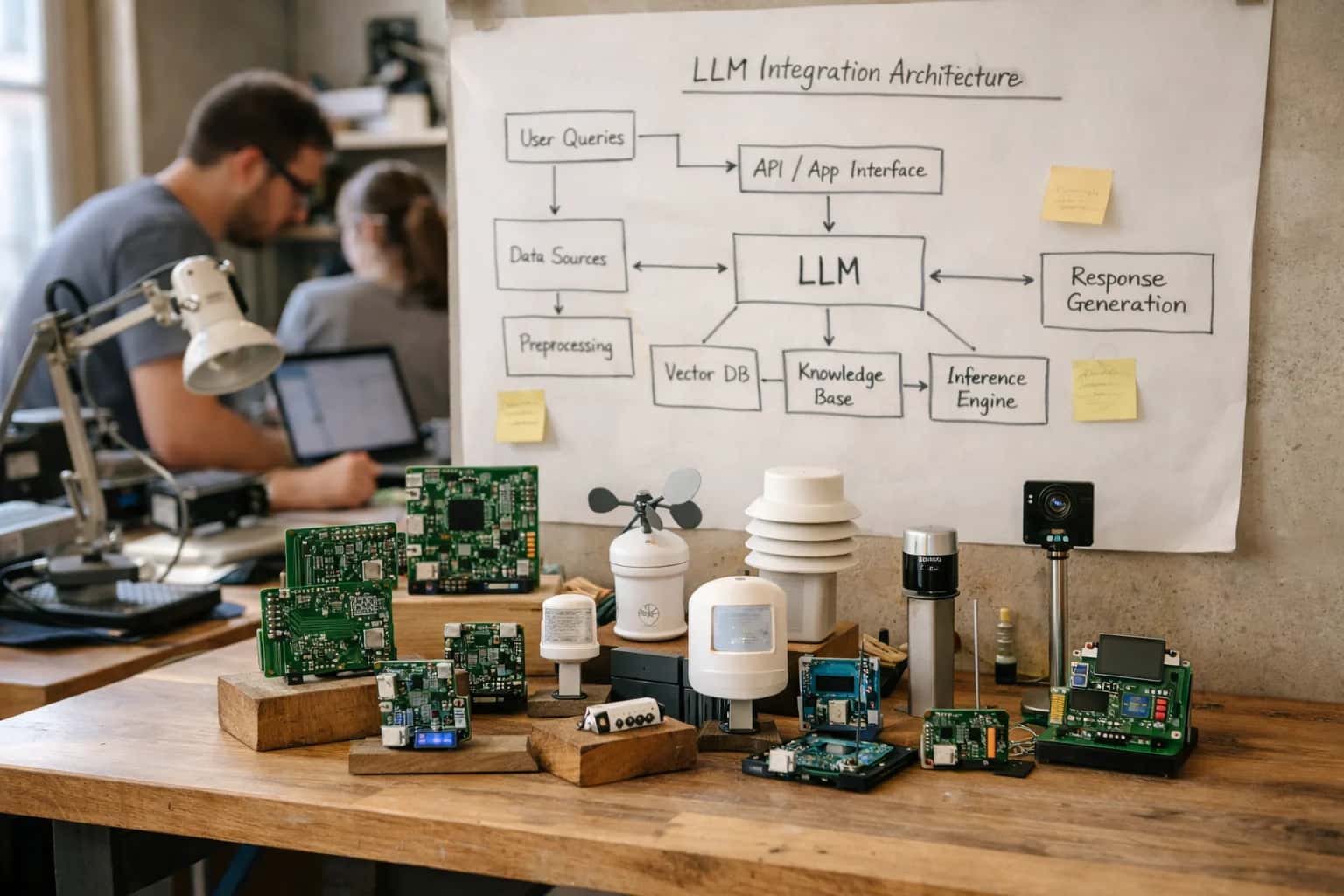
Where AI Fits into Fleet Safety and Training Workflows
Integrating generative AI into fleet safety operations transforms static policy manuals and generic training into dynamic, data-driven programs that adapt to real-world risks.
Implementation typically involves a middleware layer that subscribes to platform webhooks and polls APIs (like Samsara's /safety/events or Motive's /driver-behavior/scores). This layer enriches raw telematics data with external context (e.g., local regulations, weather history) before sending a structured prompt to a hosted LLM. The generated output—a revised policy clause, a 5-minute training module script, or a quiz question—is then posted back to the platform's Documents or Training library via API, or routed through a human-in-the-loop approval workflow in a system like Jira or ServiceNow before publication. This creates a closed-loop system where safety outcomes feed back into the training content.
Rollout requires careful governance. Start with a pilot focused on a single, high-impact workflow, such as automating the generation of weekly safety briefings based on the previous week's top incident types. Use role-based access controls (RBAC) to ensure only authorized safety directors can publish AI-generated content. Maintain a full audit trail linking generated materials back to the source incidents and data points for compliance. This phased approach allows teams to validate AI output quality, establish guardrails, and demonstrate tangible ROI—like reducing the time to update training materials from days to hours—before scaling to more complex use cases like predictive policy updates based on regulatory change scanning.
Integration Surfaces Within Fleet Management Platforms
Core Safety Workflow Surfaces
Generative AI integrates directly into the safety and compliance modules of platforms like Samsara Safety, Motive Safety Center, and Geotab Safety. These modules are the system of record for incidents, driver coaching, and policy documents.
Key integration points include:
- Incident Reports: AI can analyze structured incident data (location, vehicle, driver) alongside unstructured dash cam footage descriptions to draft preliminary reports and suggest policy updates.
- Coaching Workflows: After a safety event is logged, an AI agent can trigger, recommending a tailored training module based on the violation type (e.g., following distance vs. harsh braking).
- Policy Repository: AI can monitor this repository, using RAG to answer driver or manager questions about current policies and identify sections that are outdated based on new regulatory bulletins.
Integration is typically achieved via the platform's REST APIs to read incident objects and write back coaching assignments or updated policy documents.
High-Value Use Cases for Safety and Training Teams
Transform static safety manuals and reactive training into dynamic, data-driven programs. Integrate generative AI with platforms like Samsara, Motive, and Geotab to create policies and training content that adapt to real-world incidents, regulatory shifts, and driver behavior trends.
Automated Safety Policy Updates
AI agents monitor DOT regulatory feeds, internal incident reports, and geofenced local ordinances to draft updated policy language. Changes are routed for legal review within your CMS, ensuring manuals in Samsara Driver or Motive Driver apps are always current.
Personalized Driver Training Modules
Generate tailored video-based training by analyzing a driver's recent telematics: harsh events, specific locations of violations, and dash cam clips. AI creates a custom learning path in your LMS (Docebo, Cornerstone) with quizzes focused on their unique risk patterns.
Incident-Based Quiz & Refresher Content
After a safety incident is logged in Samsara, AI automatically generates scenario-based quiz questions and short explainer content. This is pushed to all drivers via mobile app to reinforce lessons learned, turning isolated events into fleet-wide learning opportunities.
Multilingual Safety Briefings
Use AI to instantly translate newly created safety policies, training summaries, and pre-trip briefings into drivers' preferred languages. Integrated with platform communications (Samsara Driver Messaging, Motive Alerts) to ensure comprehension and compliance across diverse teams.
Regulatory Change Impact Summaries
When new ELD or HOS rules are published, AI analyzes the document and generates a plain-language summary highlighting changes that affect driver workflows and dispatcher planning. This summary is attached to the relevant policy in your safety portal for quick reference.
Training Gap Analysis & Curriculum Planning
AI correlates training completion data from your LMS with safety performance metrics from Motive/Samsara. It identifies which training modules have the highest impact on reducing incidents and recommends curriculum adjustments to safety directors for the next quarter.
Example AI-Powered Safety Workflows
These workflows demonstrate how generative AI integrates with platforms like Samsara, Motive, and Geotab to automate the creation and personalization of safety content. Each flow connects telematics data, incident trends, and regulatory feeds to produce actionable policies, training modules, and assessments.
Trigger: A weekly scheduled job runs, or a safety manager manually triggers a policy review after a cluster of similar incidents (e.g., three lane departure warnings in a specific corridor).
Context/Data Pulled:
- Recent 30-day incident data from the fleet platform API (Samsara Safety Events, Motive AI Dash Cam clips), filtered by type (harsh braking, collisions, speeding).
- Geofence data to identify high-risk locations.
- Current company safety policy document from a connected ECM (e.g., SharePoint).
- Latest FMCSA regulatory updates from a monitored RSS feed or regulatory database.
Model/Agent Action: An LLM agent is prompted with the data and instructed to:
- Analyze incident trends and identify the primary root cause (e.g., "fatigue-related incidents increased 15% on routes over 500 miles").
- Compare current policy language to the identified risk and regulatory baseline.
- Draft specific, updated policy clauses. For example:
markdown
**Proposed Update to Section 4.2 - Long-Haul Scheduling:** For routes exceeding 500 miles, dispatchers must schedule a mandatory 10-hour rest break before the final 200-mile segment, subject to available parking as predicted by the AI parking availability tool.
System Update/Next Step: The drafted policy update is posted as a task in the safety team's project management tool (e.g., Asana) for review and approval. Once approved, the final version is saved back to the document management system and its effective date is logged.
Human Review Point: The safety director must review and approve the AI-generated draft before it becomes official policy. The agent's reasoning (root cause analysis) is attached to the task for auditability.
Implementation Architecture: Data Flow and AI Layer
A practical blueprint for connecting generative AI to your fleet safety data, automating policy updates and personalized training creation.
The integration architecture connects three core layers: the Data Ingestion Layer, the AI Processing & Orchestration Layer, and the Content Delivery & Workflow Layer. The process begins in the Data Ingestion Layer, where safety-critical data is pulled via API from your fleet management platform (e.g., Samsara, Motive, Geotab). Key data objects include: incident reports (from AI Dash Cams), driver behavior scores (harsh events, speeding), vehicle inspection records (DVIRs), and regulatory update feeds. This raw data is normalized, timestamped, and stored in a secure data lake, creating a unified safety event timeline.
In the AI Processing Layer, orchestrated agents analyze this consolidated dataset. A Policy Analysis Agent uses Retrieval-Augmented Generation (RAG) over your existing safety manuals and new regulatory texts (e.g., FMCSA updates) to identify gaps and required changes. Concurrently, a Training Content Agent clusters recent incidents by root cause (e.g., 'following distance,' 'intersection behavior') and driver segments to determine training priorities. These agents call foundational LLMs via a governed gateway, using carefully engineered prompts that incorporate your company's safety philosophy and specific operational jargon. Outputs are structured JSON payloads containing draft policy clauses, training module outlines, and quiz questions.
The final Content Delivery Layer integrates these AI-generated drafts into your safety team's existing workflows. Drafts are pushed into a human-in-the-loop review queue within your safety platform or a connected system like SharePoint or Google Workspace. Approved content is then programmatically published: updated policies are versioned in your document management system, and tailored training modules are scheduled in your Learning Management System (LMS) like Docebo or Cornerstone, assigned to specific driver groups based on their risk profiles. The entire pipeline is logged for audit, tracing each final safety document back to the originating telematics events and AI model versions used.
Code and Payload Examples
Generating Updated Safety Policies
This workflow uses an LLM to analyze recent incident reports from your fleet platform and draft updated safety policies. The agent pulls structured data (e.g., incident type, location, vehicle) via API, then uses a prompt to generate context-aware policy language.
Example Python Payload to LLM:
pythonimport requests # 1. Fetch recent incidents from Samsara API incidents_response = requests.get( 'https://api.samsara.com/v1/fleet/safety/incidents', headers={'Authorization': 'Bearer YOUR_API_TOKEN'}, params={'startTime': '2024-01-01T00:00:00Z', 'limit': 50} ).json() # 2. Structure prompt with incident context prompt_context = { "incident_summary": incidents_response.get('data', []), "current_policy_version": "SAF-2023-Q4", "regulatory_updates": ["FMCSA Hours of Service Final Rule"] } # 3. Call LLM for policy draft llm_payload = { "model": "gpt-4-turbo", "messages": [ {"role": "system", "content": "You are a fleet safety policy expert. Generate clear, actionable policy language."}, {"role": "user", "content": f"Based on these incidents {prompt_context['incident_summary']} and regulatory updates, draft an updated section on 'Urban Delivery Speed Management'."} ], "temperature": 0.2 }
The output is a markdown draft ready for legal and safety director review, with citations linking back to source incident IDs.
Realistic Time Savings and Operational Impact
How AI integration transforms manual, reactive safety processes into proactive, data-driven operations within platforms like Samsara and Motive.
| Process | Before AI | After AI | Implementation Notes |
|---|---|---|---|
Policy Update Drafting | Manual research, 8-16 hours per quarter | AI-assisted draft generation, 2-4 hours | AI drafts based on recent incident trends and regulatory feeds; human legal review required |
Driver Training Module Creation | Generic, annual module refresh, 40+ hours | Personalized, quarterly modules, 8-12 hours | AI tailors content to specific driver risk profiles and recent fleet incidents |
Post-Incident Training Assignment | Manual review and assignment, next business day | Automated, rule-based assignment, same day | AI analyzes dash cam footage and telematics to recommend specific coaching within hours |
Safety Quiz & Assessment Generation | Static question bank, reused quarterly | Dynamic quiz generation, refreshed monthly | AI creates questions from recent policy updates and high-frequency violation types |
Regulatory Change Monitoring | Manual scanning of DOT/FMCSA sites, 4-8 hours/month | AI summarization of relevant updates, 1 hour/month | AI filters and summarizes changes; safety director approves for policy integration |
Safety Meeting Agenda & Content Prep | Manual compilation of reports, 3-5 hours/meeting | AI-generated talking points and data visuals, 1 hour/meeting | AI pulls key metrics and incident summaries from the last period into a structured brief |
Training Compliance Reporting | Manual data pull and spreadsheet work, 6-8 hours/month | Automated report generation and distribution, 1 hour/month | AI agent queries the LMS and fleet platform, compiles completion rates, and emails stakeholders |
Governance, Security, and Phased Rollout
Implementing generative AI for safety policy and training requires a deliberate approach that prioritizes accuracy, compliance, and user trust.
The integration architecture must enforce strict data governance, pulling only from approved sources within your fleet management platform (e.g., Samsara's Safety Events and Incident Reports or Motive's AI Dashcam clips). AI-generated policies and training modules should be treated as draft content that is automatically routed through existing approval workflows—typically to the Safety Director or a designated compliance officer—before publication to your Learning Management System (LMS) or driver communication channels. All AI-generated content must be version-controlled and include an audit trail linking it back to the source incident data and regulatory citations used in its creation.
A phased rollout is critical for managing risk and building confidence. Start with a pilot program focused on a single, high-impact use case, such as generating weekly safety briefing content based on the previous week's top three incident types. This allows the safety team to review, edit, and validate the AI's output in a controlled environment. Phase two can expand to automated, personalized quiz generation for drivers involved in specific events (e.g., following a hard-braking incident). The final phase involves full integration, where the system proactively suggests updates to the master safety policy handbook based on trending violations and new FMCSA regulatory announcements.
Security is paramount, as the AI processes sensitive driver and incident data. Implement role-based access control (RBAC) to ensure only authorized personnel can trigger policy generation or access training modules before approval. All prompts and AI interactions should be logged for compliance, and the system should be designed to never use driver Personally Identifiable Information (PII) within the prompts sent to third-party LLM APIs. For maximum control, consider a hybrid deployment where sensitive data processing and policy drafting occur within a private, secure cloud environment, with optional LLM calls for language refinement only after data has been anonymized and aggregated.
Enabling Efficiency, Speed & Accuracy
Intelligent Analysis, Decision & Execution
We build AI systems for teams that need search across company data, workflow automation across tools, or AI features inside products and internal software.
Talk to Us
Search across company data
Give teams answers from docs, tickets, runbooks, and product data with sources and permissions.
Useful when people spend too long searching or get different answers from different systems.

Automate internal workflows
Use AI to route work, draft outputs, trigger actions, and keep approvals and logs in place.
Useful when repetitive work moves across multiple tools and teams.

Add AI to products and internal tools
Build assistants, guided actions, or decision support into the software your team or customers already use.
Useful when AI needs to be part of the product, not a separate tool.
Frequently Asked Questions
Practical questions for safety directors and technical teams planning AI integration to automate policy updates and training content creation within fleet management platforms.
This workflow automates the creation of policy drafts by analyzing new data and regulations.
- Trigger: A scheduled job runs weekly, or a webhook fires when a new regulatory bulletin is published in a monitored source.
- Context/Data Pulled: The AI agent fetches:
- Recent incident reports from the fleet platform (e.g., Samsara/Motive) filtered for specific event types (e.g., rear-end collisions).
- Updated regulatory text from sources like the FMCSA website or a compliance database.
- The current version of the relevant safety policy (e.g., "Following Distance Policy") from your document repository.
- Model/Agent Action: An LLM (like GPT-4) is prompted with a structured template:
code
You are a fleet safety policy expert. Analyze the provided incident trends and new regulation. - Summarize the key risk pattern from the last 30 days of incidents. - Highlight any new regulatory requirements. - Draft specific, actionable updates to Section 3.2 of the attached policy to address these findings. - Flag any sections that may conflict with the new regulation. - System Update: The draft update is saved as a new version in your document management system (e.g., SharePoint, Google Drive) with a
[DRAFT - AI Generated]tag and linked to the source incident/regulation data. - Human Review Point: The draft is automatically assigned via email or task in your project management tool (e.g., Asana) to the designated safety director for review, approval, and final publishing.

About the author
Prasad Kumkar
CEO & MD, Inference Systems
Prasad Kumkar is the CEO & MD of Inference Systems and writes about AI systems architecture, LLM infrastructure, model serving, evaluation, and production deployment. Over 5+ years, he has worked across computer vision models, L5 autonomous vehicle systems, and LLM research, with a focus on taking complex AI ideas into real-world engineering systems.
His work and writing cover AI systems, large language models, AI agents, multimodal systems, autonomous systems, inference optimization, RAG, evaluation, and production AI engineering.
Partnered with leading AI, data, and software stack.





How We Work
Custom AI workflows for your Business
One-fit-all AI don't work for modern businesses. At Inferensys, we aim to understand your business & custom requirements; which we use to define most efficient agentic workflows, the data, and the tools for your business.
01
Review the use case
We understand the task, the users, and where AI can actually help.
Read more02
Pick the right approach
We define what needs search, automation, or product integration.
Read more03
Build the first useful version
We implement the part that proves the value first.
Read more04
Improve from there
We add the checks and visibility needed to keep it useful.
Read moreThe first call is a practical review of your use case and the right next step.
Talk to Us