AI integration for subcontractor and carrier management focuses on three core surfaces within your fleet platform: the carrier/vendor master record, the load/trip execution data, and the compliance and payment workflow engines. By connecting AI agents to these modules, you can automate the scoring of carrier performance using real-time telematics on their equipment (e.g., on-time pickup rates, harsh event frequency from Samsara data), trigger automated onboarding workflows for new carriers by extracting data from insurance certificates and MC numbers, and streamline payment reconciliation by matching invoices to completed trips logged in your TMS or fleet platform.

Integration
AI Integration for Fleet Subcontractor and Carrier Management
For brokerages and managed fleets, this guide details how to embed AI agents into platforms like Samsara and Motive to automate subcontractor performance scoring, onboarding, compliance checks, and payment workflows using telematics data.
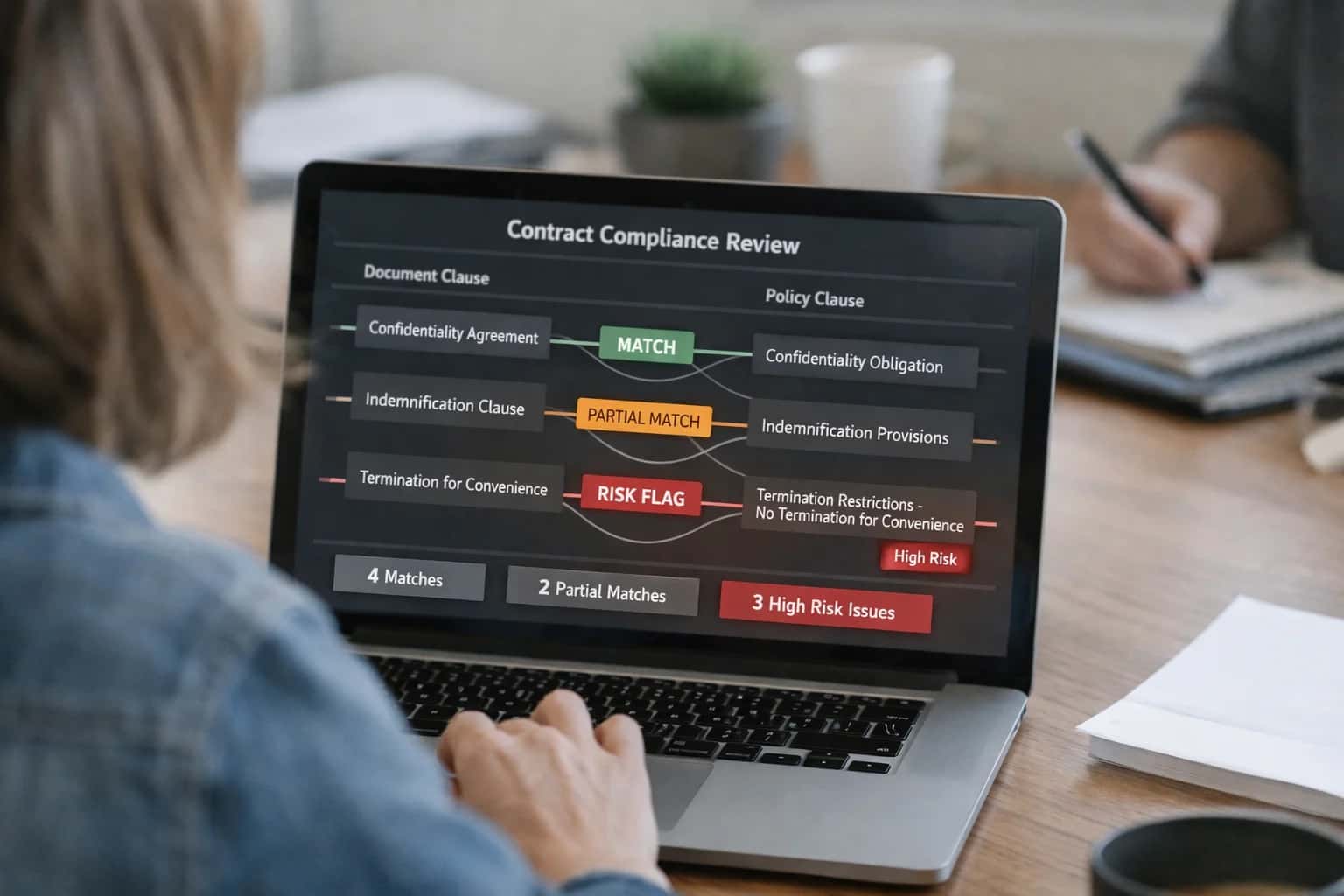
ARCHITECTURE FOR BROKERAGES AND MANAGED FLEETS
Where AI Fits into Subcontractor and Carrier Management
A technical blueprint for integrating AI into the complex workflows of managing subcontractors and carriers, using telematics and operational data from platforms like Samsara, Motive, and Geotab.
Implementation typically involves an AI middleware layer that ingests webhooks from your fleet management platform (e.g., trip completion events from Motive) and your transportation management system. This layer uses LLMs to analyze unstructured data (like carrier safety reports or scanned documents) and RAG over historical performance data to generate a dynamic carrier score. This score can then be written back to the carrier record via API and used to automatically route loads, trigger compliance reviews, or populate payment approval queues. For example, an AI agent can monitor a subcontractor's CSA score changes and their fleet's average idling time, then automatically adjust their available capacity or flag them for a required check-in call.
Rollout requires careful governance, starting with a pilot group of carriers. Key considerations include establishing clear, explainable scoring criteria to avoid black-box decisions, implementing a human-in-the-loop approval step for any automated load assignment or payment hold, and maintaining a full audit trail of all AI-generated recommendations and actions within your system of record. The goal is not to replace dispatcher relationships but to augment them with data-driven insights, turning carrier management from a reactive, manual process into a proactive, exception-based operation.
AI FOR SUBCONTRACTOR AND CARRIER MANAGEMENT
Key Integration Surfaces in Fleet Management Platforms
Automating Carrier Vetting and Setup
AI integration surfaces here focus on the initial qualification and digital onboarding of new subcontractors. Key platform modules include carrier profiles, document management, and compliance dashboards.
Integration Points:
- Document Processing: Use AI to extract and validate carrier insurance certificates, operating authority (MC/FF numbers), W-9s, and safety ratings (CSA scores) uploaded via portal or email. Automate flagging of expirations or discrepancies.
- Performance Data Ingestion: Connect AI agents to the platform's API to ingest a prospective carrier's historical telematics data (if available via ELD integration) for an initial safety and reliability score.
- Automated Workflow Triggers: Based on AI scoring, automatically route carriers to "approved," "needs review," or "declined" statuses within the platform, triggering subsequent steps like contract generation or compliance follow-ups.
FLEET MANAGEMENT PLATFORMS
High-Value AI Use Cases for Subcontractor and Carrier Management
For brokerages and managed fleets, AI integration with platforms like Samsara and Geotab transforms subcontractor oversight from a reactive, manual process into a proactive, automated system. These use cases focus on scoring performance, automating workflows, and ensuring compliance using real-time telematics data.
01
Automated Subcontractor Onboarding & Qualification
AI agents ingest carrier packets (insurance, authority, safety ratings) and cross-reference them with telematics data from their existing fleet. The system automatically scores risk, flags discrepancies, and triggers compliance workflows in platforms like Samsara, moving qualification from a weeks-long manual review to a same-day process.
Weeks -> Days
Onboarding time
02
Dynamic Performance Scoring & Monitoring
Continuously analyze a subcontractor's real-time Samsara or Geotab data—including on-time performance, HOS compliance, idling, and safety events—to generate a live performance score. This score automatically updates carrier profiles and can trigger tiered payments, load assignments, or corrective action workflows without manual intervention.
Batch -> Real-time
Scoring cadence
03
AI-Powered Payment & Settlement Automation
Integrate AI with telematics and TMS data to automate invoice reconciliation. The system validates load completion (using geofence exits), checks for compliance violations that affect pay, and processes settlements. This reduces manual data entry errors and cuts payment processing from days to hours.
Days -> Hours
Settlement cycle
04
Predictive Capacity & Availability Forecasting
Use AI models on historical subcontractor telematics data (location, dwell times, load history) to predict future availability and preferred lanes. This allows dispatchers and load planners to proactively offer loads to the most reliable and available carriers, improving fleet utilization and reducing spot market reliance.
05
Compliance & Audit Trail Automation
Automatically monitor subcontractor ELD/HOS logs, vehicle inspection reports (DVIR), and maintenance records from their connected platforms. AI flags potential violations, generates audit-ready summaries, and can auto-file documentation with shippers or regulators, turning a multi-day audit prep into a one-click report.
1 sprint
Audit prep time
06
Exception-Based Carrier Management
Move from constant monitoring to intelligent exception handling. AI agents watch live subcontractor feeds for critical deviations—severe delays, geofence breaches, safety incidents—and automatically triage alerts, notify relevant managers, and even initiate contingency workflows (like finding a backup carrier) within the dispatch console.
SUBCONTRACTOR & CARRIER MANAGEMENT
Example AI-Powered Workflows for Carrier Operations
These workflows demonstrate how AI agents, integrated with your fleet management platform (Samsara, Motive, Geotab) and back-office systems, automate the lifecycle of managing subcontractors and carriers—from scoring and onboarding to payment and compliance.
Trigger: A new carrier submits an application via a portal or a broker initiates a search.
Workflow:
- An AI agent pulls the prospective carrier's DOT number and MC number.
- It queries the FMCSA SAFER system and other compliance databases via API to retrieve safety ratings, inspection history, and insurance status.
- Simultaneously, if the carrier uses a compatible telematics platform, the agent requests read-only access to their historical performance data (on-time percentage, average speed, harsh event rate).
- An LLM synthesizes this data against your company's scoring rubric (weighted for safety, on-time performance, insurance limits).
- System Update: The agent creates a new "Carrier" record in your TMS or procurement system, populating a calculated risk score and flagging any required manual review items (e.g., recent violations).
- Human Review Point: For carriers scoring below a defined threshold or with critical violations, the workflow pauses and creates a task for the carrier manager with a summary of the risk factors.
- For approved carriers, the agent automatically generates and sends onboarding documentation (W-9, carrier agreement) via a tool like DocuSign for e-signature.
FOR MANAGED FLEETS AND BROKERAGES
Implementation Architecture: Data Flow and System Design
A technical blueprint for integrating AI into subcontractor and carrier management workflows, connecting telematics data to operational and financial systems.
The core integration pattern establishes a real-time data pipeline from your fleet management platform (Samsara, Motive, Geotab, Verizon Connect) to a central AI orchestration layer. This pipeline ingests key telematics objects via API or webhook: vehicle_location, driver_behavior_scores, engine_fault_codes, fuel_transactions, and dash_cam_events. For subcontractor management, the AI layer first performs entity resolution, matching incoming vehicle IDs and driver records to your master carrier database to ensure performance scoring is attributed correctly across owned and subcontracted assets.
Once data is unified, AI agents execute specific workflows. For subcontractor performance scoring, an agent consumes 30+ days of telematics data to generate a composite scorecard, weighing factors like on-time pickup/delivery (from geofence logs), safety (harsh event frequency), fuel efficiency (idling vs. fleet average), and vehicle health (active fault codes). This score automatically updates a carrier_score field in your TMS or procurement system. For automated onboarding and compliance, another agent monitors for new subcontractor contracts, triggers the collection of required documents (insurance, W-9, carrier packet), and uses document intelligence to validate them against minimum requirements before updating status in your platform.
Critical workflows like automated payment and settlement are triggered by the completion of a load. An AI agent validates the trip against the original rate confirmation, checks for any compliance flags (e.g., HOS violations, unauthorized stops), and if clean, initiates the invoicing workflow in your accounting platform (QuickBooks, NetSuite). For exception handling, a separate agent continuously monitors real-time alerts for subcontractor vehicles—like geofence deviations or severe speeding—and uses LLM reasoning to triage them. Low-risk events may trigger an automated warning message to the dispatcher; high-risk events can pause payment workflows and escalate to a human manager via Slack or Teams.
Governance and rollout require a phased approach. Start by implementing the data ingestion and entity resolution layer, focusing on a single high-value workflow like subcontractor scorecard generation. Use a human-in-the-loop approval step for the first 30 days to validate AI scoring logic before automating downstream actions like payment holds. Architect for auditability: every AI-generated score, decision, and automated message should log the source telematics data points and reasoning to a dedicated audit table, linking back to the original API call IDs from your fleet platform for full traceability.
AI INTEGRATION PATTERNS
Code and Payload Examples
Automating Carrier Qualification
AI can ingest a new subcontractor's application packet (MC/DOT numbers, insurance certificates, safety ratings) and cross-reference it against FMCSA databases and your internal risk criteria. The agent returns a structured risk score and a list of missing or expiring documents, triggering automated follow-up workflows in your carrier management portal.
python# Example: AI-powered carrier vetting webhook handler from inference_systems import CarrierVettingAgent import requests def vet_new_carrier_webhook(request_data): """Process a new carrier application from your TMS.""" agent = CarrierVettingAgent() # Analyze submitted documents and external data vetting_result = agent.vet_carrier( dot_number=request_data['dot_number'], insurance_docs=request_data['insurance_files'], safety_score=request_data.get('fmcsa_score') ) # Format payload for TMS update tms_payload = { "carrier_id": request_data['carrier_id'], "status": "approved" if vetting_result.risk_score < 7 else "pending", "risk_score": vetting_result.risk_score, "required_actions": vetting_result.missing_items, "next_review_date": vetting_result.next_review_date } # Update carrier record in your TMS (e.g., MercuryGate, Oracle TMS) requests.post(f"{TMS_API_URL}/carriers/{request_data['carrier_id']}/status", json=tms_payload) return tms_payload
This pattern reduces manual vetting from days to hours and ensures consistent, auditable risk assessment.
AI FOR SUBCONTRACTOR MANAGEMENT
Realistic Time Savings and Operational Impact
This table illustrates the operational impact of integrating AI agents with your fleet management platform (e.g., Samsara, Motive) to automate subcontractor and carrier oversight workflows. Metrics are based on typical brokerage and managed fleet operations.
| Workflow / Metric | Manual Process | AI-Assisted Process | Implementation Notes |
|---|---|---|---|
Carrier Onboarding & Qualification | 2-3 business days per carrier | Same-day preliminary scoring | AI pre-screens safety scores, insurance docs, and telematics history; human final approval required. |
Weekly Performance Monitoring | 4-6 hours manual report compilation | Automated daily scorecard generation | AI analyzes Samsara/Motive data for on-time performance, idling, safety events; flags outliers. |
Invoice & Payment Reconciliation | Next-day processing with manual matching | Same-day automated validation & routing | AI matches load confirmations, GPS proofs of delivery, and rate sheets; flags discrepancies for review. |
Compliance & Document Expiry Tracking | Monthly manual audit, risk of missed renewals | Real-time alerts 30 days prior to expiry | AI monitors carrier portal for MC numbers, insurance certificates, and driver qualifications. |
Incident Triage & Claim Initiation | 2-4 hours to gather video, logs, and reports | Automated preliminary report in <30 minutes | AI synthesizes dash cam footage, telematics G-force data, and location for adjuster review. |
Load Tender Acceptance & Capacity Matching | Manual phone/email blasts, 1-2 hour response lag | AI-assisted matching & automated tender in minutes | AI scores carrier history and real-time location against load requirements; dispatcher makes final assignment. |
Quarterly Carrier Scorecard & Review | 1-2 weeks of analyst time for data aggregation | Automated report generation with trend analysis | AI pulls YTD data, generates narrative insights on cost, service, and safety for negotiation prep. |
ARCHITECTING CONTROLLED AI FOR CARRIER MANAGEMENT
Governance, Security, and Phased Rollout
Implementing AI for subcontractor management requires a secure, phased approach that integrates with existing fleet platform governance.
A production integration connects AI agents to the Samsara or Motive API to ingest telematics data (GPS, HOS, safety events) and the carrier/vendor object within your TMS or brokerage platform. Governance starts with role-based access control (RBAC), ensuring AI tools and the insights they generate are only accessible to authorized roles—like safety managers for coaching scores or procurement for payment automation. All AI-generated actions, such as flagging a carrier for review or auto-approving an invoice, should be logged to an immutable audit trail linked to the original telematics data point and the prompting user's session.
A phased rollout mitigates risk and builds trust. Phase 1 (Pilot) focuses on a single, high-value workflow like automated subcontractor onboarding, where an AI agent reviews a new carrier's CSA scores, insurance documents, and telematics history from the fleet platform to generate a risk score and pre-populate compliance checklists. Phase 2 (Expansion) adds performance monitoring, where AI analyzes a carrier's on-time pickup/delivery rates, idling fuel usage, and safety event frequency from Samsara to produce a weekly performance scorecard. Phase 3 (Automation) introduces conditional workflows, such as auto-routing payments for carriers with a score above a defined threshold or triggering a manual review for those below.
Security is paramount when handling carrier PII and operational data. The AI layer should never store raw telematics data; instead, it uses ephemeral contexts and calls the fleet platform's APIs on-demand. All data in transit should be encrypted, and any vector embeddings used for RAG (e.g., searching past performance incidents) must be stored in a dedicated, encrypted vector database like Pinecone, isolated from primary systems. Implement a human-in-the-loop approval step for any AI-recommended contract changes or compliance holds, especially during initial rollout. This controlled approach ensures the AI augments—rather than disrupts—existing carrier relationship management and compliance workflows.
Enabling Efficiency, Speed & Accuracy
Intelligent Analysis, Decision & Execution
We build AI systems for teams that need search across company data, workflow automation across tools, or AI features inside products and internal software.
Talk to Us
Search across company data
Give teams answers from docs, tickets, runbooks, and product data with sources and permissions.
Useful when people spend too long searching or get different answers from different systems.
Enterprise searchRAGPermissions
Read more
Automate internal workflows
Use AI to route work, draft outputs, trigger actions, and keep approvals and logs in place.
Useful when repetitive work moves across multiple tools and teams.
AI agentsWorkflow automationGovernance
Read more
Add AI to products and internal tools
Build assistants, guided actions, or decision support into the software your team or customers already use.
Useful when AI needs to be part of the product, not a separate tool.
AI integrationDecision supportModel routing
Read moreIMPLEMENTATION BLUEPRINT
Frequently Asked Questions
Practical questions for integrating AI into subcontractor and carrier management workflows within platforms like Samsara, Motive, and Geotab.
This workflow uses AI to evaluate and onboard new carriers using their existing telematics data.
- Trigger: A new subcontractor application is submitted via your portal or broker management system.
- Context Pulled: An AI agent uses the carrier's MC/DOT number to automatically pull their public safety record (via FMCSA SAFER API) and requests read-only access to their Samsara or Geotab telematics account (via OAuth).
- Agent Action: The AI analyzes 90 days of historical data, scoring the carrier on:
- Safety: Harsh event frequency, speeding violations.
- Compliance: ELD/HOS adherence, inspection records.
- Performance: On-time delivery history (from GPS stop data), fuel efficiency benchmarks.
- System Update: The agent generates a composite risk score and a summary report, then creates a new
Carrierrecord in your system. It automatically populates fields and attaches the report. For high-scoring carriers, it can trigger the next step in the contracting workflow. - Human Review Point: Carriers scoring below a configurable threshold are flagged for manual review by a procurement manager, with the AI highlighting the specific areas of concern (e.g., "Excessive idling (22% above fleet average) and 3 severe speeding incidents in the last month").

About the author
Prasad Kumkar
CEO & MD, Inference Systems
Prasad Kumkar is the CEO & MD of Inference Systems and writes about AI systems architecture, LLM infrastructure, model serving, evaluation, and production deployment. Over 5+ years, he has worked across computer vision models, L5 autonomous vehicle systems, and LLM research, with a focus on taking complex AI ideas into real-world engineering systems.
His work and writing cover AI systems, large language models, AI agents, multimodal systems, autonomous systems, inference optimization, RAG, evaluation, and production AI engineering.
LinkedIn
Limited slotsGet a Free AI Consultation
Partnered with leading AI, data, and software stack.





How We Work
Custom AI workflows for your Business
One-fit-all AI don't work for modern businesses. At Inferensys, we aim to understand your business & custom requirements; which we use to define most efficient agentic workflows, the data, and the tools for your business.
01
Review the use case
We understand the task, the users, and where AI can actually help.
Read more02
Pick the right approach
We define what needs search, automation, or product integration.
Read more03
Build the first useful version
We implement the part that proves the value first.
Read more04
Improve from there
We add the checks and visibility needed to keep it useful.
Read moreThe first call is a practical review of your use case and the right next step.
Talk to Us