AI integration for urban compliance targets specific data objects and automation surfaces within platforms like Samsara, Geotab, and Verizon Connect. The core architecture connects to vehicle location streams, engine diagnostics (OBD-II), and auxiliary sensor data to monitor real-time entry into geo-fenced Low-Emission Zones (LEZs) and analyze driving patterns that generate excessive noise. Key workflows involve automated rule evaluation against municipal regulations—such as London's ULEZ or New York's idling laws—triggering alerts for non-compliant vehicles and logging evidence for audit trails.

Integration
AI for Fleet Noise and Emissions Compliance in Urban Areas
Technical blueprint for integrating AI with fleet management platforms to automate compliance with urban low-emission zones (LEZs) and noise ordinances, reducing fines and manual oversight.
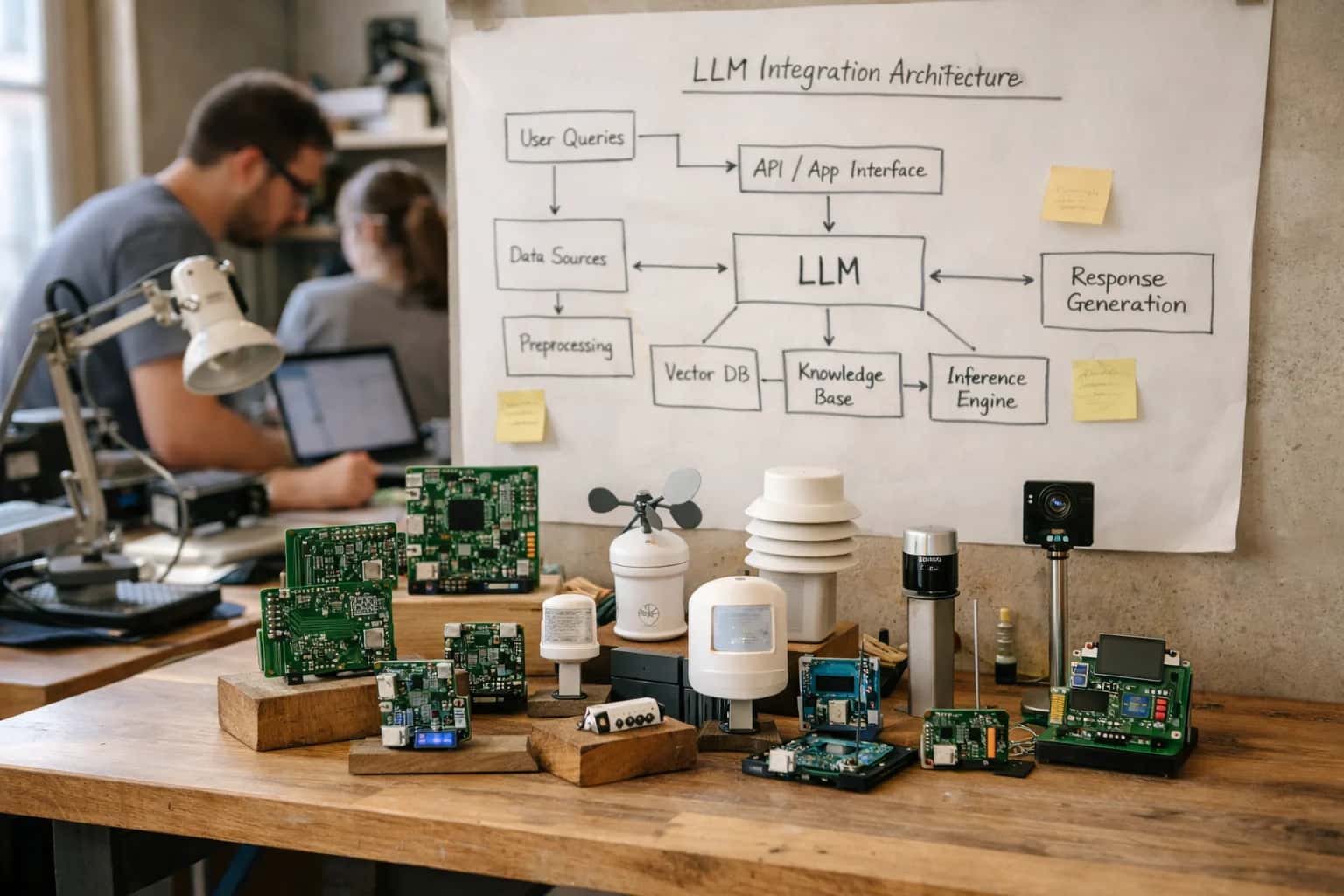
ARCHITECTURE FOR LOW-EMISSION ZONES AND NOISE ORDINANCES
Where AI Fits into Urban Fleet Compliance
A technical blueprint for integrating AI into fleet platforms to automate compliance with urban environmental regulations.
Implementation focuses on predictive routing and proactive driver guidance. An AI agent consumes real-time traffic, vehicle emission class (Euro standard), and historical noise complaint data to suggest compliant alternative routes before a driver enters a restricted zone. For noise compliance, models analyze telematics data for harsh acceleration, engine RPM, and time-of-day in residential areas, flagging patterns likely to violate local ordinances. These insights are delivered via in-cab alerts (Samsara Driver App) or dispatcher dashboards, and non-compliance events are automatically logged to a dedicated 'Compliance Violations' custom entity within the fleet platform for reporting.
Rollout requires a phased approach, starting with a pilot group of vehicles in a single metropolitan area. Governance is critical: AI-generated compliance flags should route through a human-in-the-loop approval workflow in the platform (e.g., a Samsara Tasks queue for safety managers) before any official report is filed. Integration must also account for regulatory variance between cities; the system should be built on a flexible rules engine that pulls from a maintained database of zone boundaries and ordinance thresholds. This ensures the AI adapts as fleets expand into new urban markets without requiring a full reimplementation.
AI FOR FLEET NOISE AND EMISSIONS COMPLIANCE
Integration Surfaces in Fleet Management Platforms
Core Telematics and Sensor Ingestion
AI models for noise and emissions compliance require clean, structured access to the vehicle data layer within platforms like Samsara, Geotab, and Verizon Connect. This includes:
- Engine Control Unit (ECU) Data: Real-time RPM, engine load, and after-treatment system status (e.g., Diesel Particulate Filter regeneration events) are critical for calculating instantaneous emissions.
- GPS & Geofence Context: Precise vehicle location is needed to enforce Low-Emission Zones (LEZs) and urban noise ordinances. AI workflows trigger when a vehicle enters a regulated polygon.
- Auxiliary IoT Sensors: Data from noise level meters or particulate matter sensors, if connected via the platform's IoT gateway, provide direct compliance measurements.
Integration typically occurs via the platform's historical reports API for batch analysis and real-time webhooks for live policy enforcement. The AI system acts as a downstream consumer, enriching this raw telematics data with compliance logic.
FLEET NOISE AND EMISSIONS
High-Value AI Compliance Use Cases
For municipal, last-mile, and urban delivery fleets, AI integration with platforms like Samsara, Geotab, and Motive transforms reactive compliance into a proactive, automated operation. These use cases show where AI connects to telematics data, vehicle sensors, and route planning modules to ensure adherence to low-emission zones (LEZs) and noise ordinances.
01
Dynamic Route Scoring for LEZ Adherence
AI agents analyze planned routes against municipal geofence databases and real-time vehicle emission profiles (Euro standard, fuel type). The system scores each route leg for compliance risk and automatically suggests cleaner alternatives within the dispatch console, preventing violations before the trip starts.
Pre-trip
Compliance check
02
Real-Time Idle & Noise Event Monitoring
Integrates AI with engine data and external microphone feeds (where available) to detect and classify excessive idling and noise events (e.g., engine braking, reefer units) in sensitive zones. Automatically triggers driver coach-in-cab alerts and logs events for compliance reporting.
Batch -> Real-time
Violation detection
03
Automated Emissions Reporting & Audit Trail
AI pipelines consume fuel/energy usage, mileage, and engine load data from the telematics platform. They calculate Scope 1 emissions per vehicle, per zone, and auto-generate formatted reports for municipal authorities. Creates an immutable audit trail linking raw data to final submissions.
Hours -> Minutes
Report generation
04
Predictive Compliance for Fleet Electrification
For mixed fleets, AI models analyze trip patterns (stop frequency, daily mileage, dwell times) from historical telematics data to identify which diesel vehicles are best suited for EV replacement to meet tightening urban emission caps. Outputs a prioritized transition plan.
1 sprint
Transition analysis
05
Noise Ordinance Exception Workflow
When an unavoidable noisy operation (e.g., overnight delivery) is required, an AI agent guides the dispatcher through a permit application workflow. It drafts justification narratives using historical on-time performance data and submits requests via integrated city portals, tracking approval status.
Same day
Permit drafting
06
Driver Coaching for Quiet & Clean Operation
Post-trip, AI synthesizes data on gear selection, acceleration smoothness, and idling in regulated zones to generate personalized, micro-training modules. These are delivered via the driver mobile app, focusing on behavior changes that reduce both noise and emissions.
Personalized
Feedback loops
FLEET NOISE AND EMISSIONS
Example AI-Driven Compliance Workflows
For municipal, last-mile, and urban delivery fleets, AI can automate the monitoring, analysis, and reporting required to comply with low-emission zones (LEZs), zero-emission zones (ZEZs), and local noise ordinances. These workflows integrate telematics, geofencing, and operational data from platforms like Samsara, Geotab, and Motive to generate actionable insights and automated compliance actions.
Trigger: A vehicle's GPS position, transmitted via the fleet telematics platform (e.g., Samsara), enters a geofenced LEZ.
Context/Data Pulled:
- Real-time vehicle location and timestamp.
- Vehicle profile data (VIN, year, make, model, engine type, Euro emission standard).
- Historical entry logs for the same vehicle/zone.
- Local municipal LEZ rules database (via integrated API or static file).
Model or Agent Action:
- An AI agent evaluates if the vehicle is compliant based on its profile and the zone's active rules (e.g., "Euro 6 diesel or later permitted").
- If non-compliant, the agent immediately:
- Calculates the potential fine based on duration in zone.
- Generates a violation event record.
- Pulls a snapshot of the vehicle's telematics data (speed, RPM) during the entry period.
System Update or Next Step:
- A violation alert is posted to the fleet platform's alert dashboard and sent via SMS/email to the fleet manager.
- A structured violation record (vehicle, time, zone, rule broken, calculated fine) is appended to a dedicated "Compliance Incidents" log in the platform or a connected system.
- The agent can automatically generate a first draft of any required municipal reporting form.
Human Review Point: The fleet manager reviews the incident dashboard daily. The AI-generated report draft is reviewed for accuracy before submission to the municipality.
FROM TELEMATICS TO COMPLIANCE REPORTS
Implementation Architecture: Data Flow & Guardrails
A production-ready architecture for integrating AI with fleet platforms to automate noise and emissions compliance for urban fleets.
The core data flow begins by ingesting high-frequency telematics streams from Samsara, Motive, or Geotab—specifically GPS coordinates, engine RPM, vehicle speed, and auxiliary IoT sensor data like noise levels (if equipped). This raw data is processed in near-real-time by an AI pipeline that maps vehicle locations against municipal geofenced low-emission zones (LEZs) and noise-sensitive areas (e.g., near hospitals, schools, residential zones post-8 PM). The AI model, often a lightweight classifier or regression model, evaluates each data point against dynamic compliance rules (e.g., "Euro 6 standard required in Zone A," "max dB limit of 72 in Zone B") to flag potential violations. Flagged events are enriched with contextual data like vehicle type (diesel vs. electric), time of day, and route purpose before being written to a dedicated compliance_events table via the fleet platform's API or a webhook.
For governance, each predicted violation triggers a multi-step workflow. First, a human-in-the-loop review queue is created in a connected system like ServiceNow or Jira, where a fleet supervisor can confirm or dismiss the alert using dash cam snapshots and route history. Confirmed violations automatically generate corrective actions: an AI agent drafts a personalized driver coaching note via the platform's driver messaging API (e.g., Samsara Driver App) and schedules a mandatory training module in the LMS. For emissions, the system aggregates violation trends to produce a weekly compliance scorecard, which is pushed to the fleet platform's custom reporting dashboard and attached to the vehicle's digital record. All data flows are logged with full audit trails, including the AI's confidence score, the reviewer's decision, and the final action taken, ensuring defensibility for municipal audits.
Rollout is phased, starting with a pilot group of vehicles in one urban corridor. The AI model is initially run in shadow mode, comparing its predictions against manual audits to calibrate thresholds and reduce false positives. Integration points are built using the fleet platform's official APIs and webhooks for event ingestion and action execution, ensuring compatibility with existing automations. Critical guardrails include RBAC controls to limit who can modify compliance rules, rate limiting on API calls to avoid platform throttling, and a weekly model drift check that retrains the classifier if violation patterns shift due to new city ordinances or fleet vehicle upgrades. This architecture turns reactive compliance into a proactive, automated operational workflow, reducing manual monitoring by 60-80% and providing auditable proof of adherence to urban sustainability mandates.
IMPLEMENTATION PATTERNS
Code & Payload Examples
Analyzing Routes for Noise & Emissions Risk
This pattern uses a scheduled job to fetch recent trip data, score it against municipal regulations, and flag non-compliant routes for review. The AI model considers factors like time of day (for noise ordinances), vehicle type/class, and proximity to sensitive zones (schools, hospitals).
python# Example: Fetch trip data and score for compliance import requests from inference_systems import compliance_scorer # 1. Fetch recent completed trips from fleet platform API trips_response = requests.get( 'https://api.fleetplatform.com/v1/trips', headers={'Authorization': 'Bearer YOUR_API_KEY'}, params={'completed_after': '2024-01-01T00:00:00Z', 'limit': 50} ).json() # 2. For each trip, run the compliance analysis for trip in trips_response['data']: # Prepare context: route geoJSON, vehicle specs, timestamps analysis_payload = { 'trip_id': trip['id'], 'vehicle_class': trip['vehicle']['euro_class'], # e.g., 'Euro VI' 'route_geojson': trip['route'], 'start_time': trip['start_time'], 'urban_zones': ['LEZ_CENTER', 'NOISE_CONTROL_AREA'] } # 3. Call AI service for scoring score_result = compliance_scorer.analyze_route(analysis_payload) # 4. Log high-risk trips for manager review if score_result['overall_risk'] == 'HIGH': log_compliance_event(trip['driver_id'], score_result)
The output includes a risk score, specific regulation violations, and suggested alternative routes, which can be pushed back to the driver app or dispatch console.
AI FOR URBAN NOISE & EMISSIONS COMPLIANCE
Realistic Time Savings & Operational Impact
How AI integration with platforms like Samsara, Geotab, and Motive transforms manual compliance workflows for municipal and last-mile fleets operating in regulated urban zones.
| Compliance Workflow | Before AI | After AI | Implementation Notes |
|---|---|---|---|
Low-Emission Zone (LEZ) Entry Violation Detection | Manual weekly report review, 2-3 hours | Real-time alerting & automated daily report, 15 minutes | AI cross-references GPS coordinates with dynamic zone maps via API; flags occur within minutes of entry. |
Noise Ordinance Reporting for Night Deliveries | Driver logs & manual decibel estimates, inconsistent | Automated analysis of dash cam audio & time/location data | AI processes telematics timestamps and audio feeds to generate evidence-ready compliance logs. |
Monthly Emissions Calculation & Reporting | Spreadsheet consolidation from fuel cards & telematics, 8+ hours | Automated data pull, calculation, and report draft, 1 hour | AI agent ingests fuel, idle time, and mileage data; formats for city portals like Clean Air Zone reporting. |
Route Planning for Compliance | Manual check of zone maps and time windows, per dispatch | AI-optimized routes that pre-avoid restricted zones/times | Integrates with dispatch (Samsara Routes); suggests compliant alternatives, considering all constraints. |
Driver Coaching for Idle Reduction | Quarterly review of idling reports, generic feedback | Weekly personalized alerts & micro-training based on high-idle zones | AI correlates idling events with specific urban locations (e.g., loading docks) to provide contextual guidance. |
Audit Preparation & Documentation | Manual gathering of logs, reports, and proofs over days | Automated compilation of compliance packet on-demand | AI workflow pulls 90 days of relevant data from fleet platform into a structured PDF for regulators. |
Exception Triage & Management | Operations manager reviews all zone alerts, high volume | AI prioritizes alerts by severity & auto-creates corrective tickets | Reduces alert fatigue by 70%; only critical violations (e.g., repeat offender in sensitive zone) require immediate review. |
Regulatory Change Monitoring | Manual checking of city websites or email bulletins | AI scans for ordinance updates & flags impacted fleet assets | Agent monitors official sources and cross-references fleet vehicle classes/locations; notifies compliance officer. |
ENSURING COMPLIANCE AND CONTROLLED ADOPTION
Governance, Security & Phased Rollout
Implementing AI for noise and emissions compliance requires a secure, governed approach that integrates with existing fleet platform workflows and audit trails.
The integration architecture is built around your existing Samsara, Geotab, or Motive data pipeline. AI models consume real-time telematics (GPS, engine diagnostics, accelerometer data) and historical route logs via secure API calls or webhook streams. All processed data—including AI-generated compliance scores, predicted violation zones, and recommended route adjustments—is written back to custom fields or external logs within the fleet platform, maintaining a single source of truth and a complete audit trail for municipal or regulatory review. Access to the AI's configuration and outputs is controlled via the fleet platform's existing Role-Based Access Control (RBAC), ensuring only authorized personnel like compliance officers or fleet superintendents can modify rules or override recommendations.
A phased rollout is critical for managing change and validating the AI's impact. Phase 1 focuses on a pilot group of 10-20 vehicles operating in a single low-emission zone (LEZ). The AI runs in 'observation mode,' analyzing routes and engine data to flag potential violations without enacting any automated dispatches or driver alerts. This generates a baseline report comparing AI-predicted issues against actual compliance records. Phase 2 introduces driver-facing guidance within the Samsara Driver App or Motive Driver Portal, providing in-cab notifications for approaching high-noise areas or suggesting real-time reroutes to stay within emission limits. Phase 3 expands to the full fleet and automates reporting workflows, where the AI agent automatically generates weekly compliance summaries and pre-fills sections of mandatory disclosure reports for platforms like Workiva or Enablon.
Governance is embedded into the workflow. Every AI-generated recommendation or automated action includes an explainability layer—a simple reason code like "Route avoids school zone during peak hours" or "Predicted NOx levels exceed zone threshold." High-stakes actions, such as automatically rerouting a vehicle carrying time-sensitive cargo, can be gated with a human-in-the-loop approval step via a Slack or Teams alert to a dispatcher. Regular model performance reviews are scheduled to check for drift, ensuring predictions remain accurate as vehicle fleets change (e.g., adding electric vehicles) or municipal ordinances are updated. This structured approach ensures the AI acts as a controlled copilot, enhancing compliance operations without introducing unmanaged risk.
Enabling Efficiency, Speed & Accuracy
Intelligent Analysis, Decision & Execution
We build AI systems for teams that need search across company data, workflow automation across tools, or AI features inside products and internal software.
Talk to Us
Search across company data
Give teams answers from docs, tickets, runbooks, and product data with sources and permissions.
Useful when people spend too long searching or get different answers from different systems.
Enterprise searchRAGPermissions
Read more
Automate internal workflows
Use AI to route work, draft outputs, trigger actions, and keep approvals and logs in place.
Useful when repetitive work moves across multiple tools and teams.
AI agentsWorkflow automationGovernance
Read more
Add AI to products and internal tools
Build assistants, guided actions, or decision support into the software your team or customers already use.
Useful when AI needs to be part of the product, not a separate tool.
AI integrationDecision supportModel routing
Read moreAI FOR FLEET NOISE AND EMISSIONS COMPLIANCE
FAQ: Technical & Commercial Questions
Practical questions for municipal, last-mile, and urban fleet managers evaluating AI integration to meet tightening low-emission zone (LEZ) and noise ordinance requirements.
AI integration typically works through a middleware layer that consumes real-time and historical data from your fleet management platform's APIs (Samsara, Geotab, Motive, Verizon Connect). The key data points ingested are:
- Engine Data: RPM, load percentage, after-treatment system status (for emissions modeling).
- GPS & Telematics: Precise location, speed, altitude, and geofence status (to correlate with LEZ boundaries).
- Vehicle Metadata: Make, model, engine type (gas, diesel, hybrid, EV), Euro/EPA emission standard.
- Ambient Data: Time of day (for noise ordinances, often stricter at night).
Implementation Pattern:
- An AI agent is triggered by a vehicle entering a geofenced LEZ or a scheduled compliance check.
- It pulls the last 24 hours of engine and location data for that vehicle via the fleet platform's API.
- A pre-trained model estimates
NOx,PM2.5, andCO2emissions based on engine load, speed, and known emission factors for that vehicle class. - For noise, the model correlates high-RPM events and rapid acceleration in residential zones (defined by GIS layers) with likely noise violations.
- Results are pushed back to the platform as custom vehicle attributes or used to generate automated driver alerts and compliance reports.

About the author
Prasad Kumkar
CEO & MD, Inference Systems
Prasad Kumkar is the CEO & MD of Inference Systems and writes about AI systems architecture, LLM infrastructure, model serving, evaluation, and production deployment. Over 5+ years, he has worked across computer vision models, L5 autonomous vehicle systems, and LLM research, with a focus on taking complex AI ideas into real-world engineering systems.
His work and writing cover AI systems, large language models, AI agents, multimodal systems, autonomous systems, inference optimization, RAG, evaluation, and production AI engineering.
LinkedIn
Limited slotsGet a Free AI Consultation
Partnered with leading AI, data, and software stack.





How We Work
Custom AI workflows for your Business
One-fit-all AI don't work for modern businesses. At Inferensys, we aim to understand your business & custom requirements; which we use to define most efficient agentic workflows, the data, and the tools for your business.
01
Review the use case
We understand the task, the users, and where AI can actually help.
Read more02
Pick the right approach
We define what needs search, automation, or product integration.
Read more03
Build the first useful version
We implement the part that proves the value first.
Read more04
Improve from there
We add the checks and visibility needed to keep it useful.
Read moreThe first call is a practical review of your use case and the right next step.
Talk to Us