AI integration for public safety fleets focuses on three core surfaces within platforms like Samsara and Geotab: the real-time vehicle location/status API, the incident/alert management queue, and the dispatch/communication module. The goal is to inject intelligence into the seconds between an emergency call and unit dispatch, and throughout the response. AI agents consume live telematics—GPS location, vehicle status (lights/sirens on, fuel), and traffic feed integrations—to continuously evaluate and rank all available units based on dynamic variables beyond simple proximity.

Integration
AI for Fleet Emergency Response and First Responder Coordination
Integrate AI with Samsara, Motive, Geotab, and Verizon Connect to automate emergency vehicle prioritization, dynamic routing around road closures, and real-time unit coordination for public safety fleets.
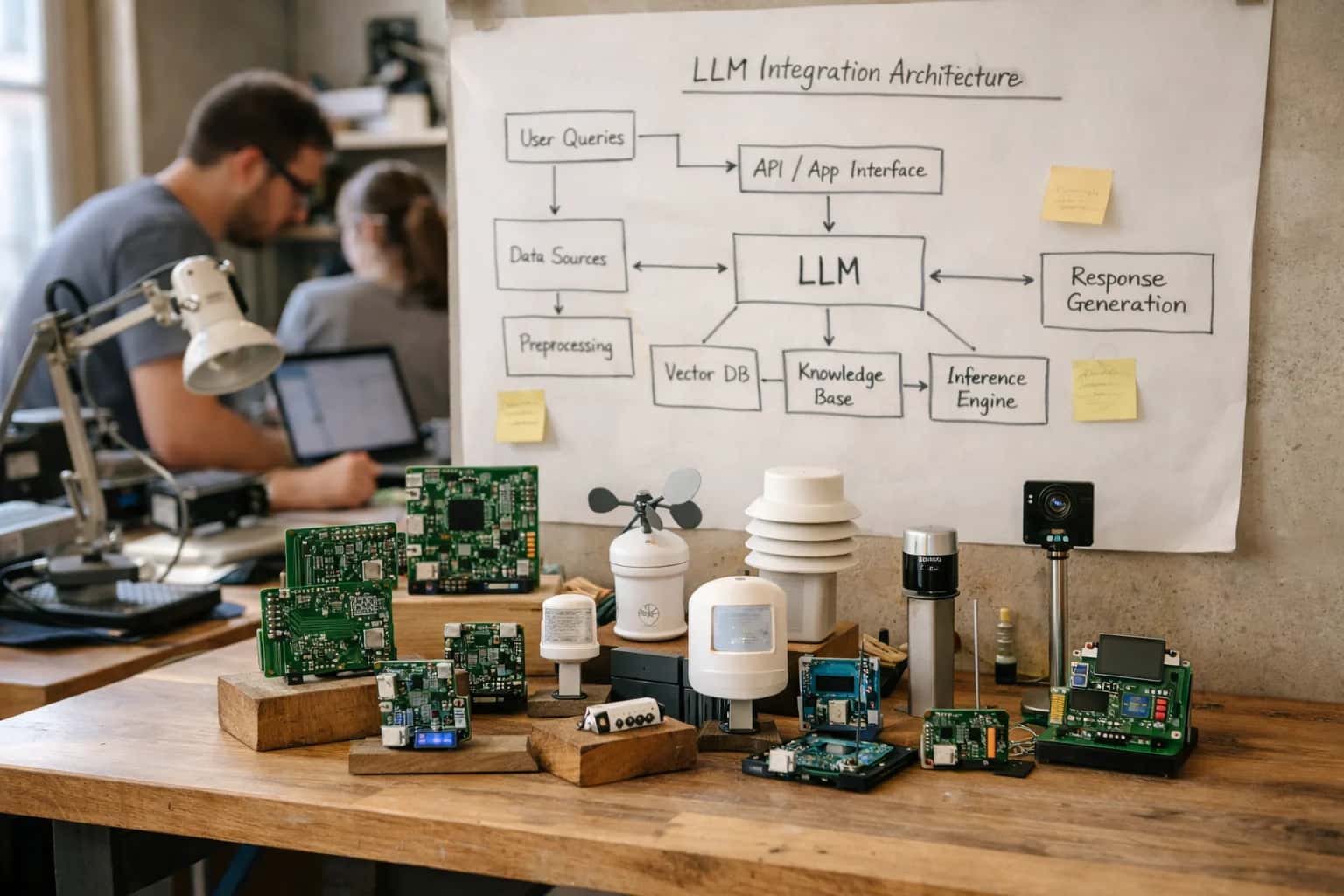
ARCHITECTURE FOR CRITICAL RESPONSE
Where AI Fits into Public Safety Fleet Operations
Integrating AI with platforms like Samsara and Geotab to transform telematics data into real-time, life-saving operational intelligence for emergency fleets.
A production implementation typically involves an AI orchestration layer that sits between the Computer-Aided Dispatch (CAD) system and the fleet management platform. This layer uses a RAG (Retrieval-Augmented Generation) pipeline grounded in historical response data, road closure feeds, and unit capability matrices. When a high-priority incident is created in the CAD, the AI agent is triggered via webhook. It instantly queries the fleet platform's API for all unit states, runs a predictive routing model considering real-time traffic and road conditions, and returns a prioritized dispatch recommendation with estimated ETAs to the CAD screen and dispatcher's console. Concurrently, it can trigger automated pre-emptive actions in the fleet platform, such as activating the nearest unit's in-vehicle tablet with turn-by-turn navigation and incident details.
Governance and rollout are critical. AI recommendations should operate in a human-in-the-loop mode initially, where the dispatcher approves or overrides the AI's top suggestion, with all decisions logged to an audit trail. The system must include explainability features, showing the dispatcher the key factors behind each recommendation (e.g., "Unit 5 recommended due to +3 min faster ETA, clear route, and 95% fuel level"). Rollout follows a phased approach: starting with non-critical medical transfers to validate the model, then expanding to fire and police response. Continuous evaluation against key metrics—average response time reduction and unit utilization efficiency—ensures the AI adapts to operational patterns without compromising safety for marginal gains.
EMERGENCY RESPONSE COORDINATION
AI Integration Surfaces Across Fleet Platforms
Core Dispatch System Integration
AI integration surfaces directly within the dispatch console of platforms like Samsara or Verizon Connect. The primary goal is to augment human decision-making during high-pressure incidents.
Key Integration Points:
- Live Vehicle Map & Status API: AI agents consume real-time location, speed, and availability status of all units. This data fuels dynamic prioritization algorithms that consider incident severity, unit proximity, and specialized equipment needs.
- Traffic & Road Closure Feeds: Integrate third-party data (e.g., Waze, state DOT APIs) via webhooks. AI models synthesize this with telematics to predict route blockage and calculate multiple contingency ETAs.
- Unit Assignment Workflow: Embed AI recommendations into the existing 'Assign Unit' interface. The system can suggest the optimal unit, provide a reason (e.g., 'Closest ALS unit with clear route'), and, with approval, automatically update the CAD event and notify the crew via in-cab tablet or mobile app.
FOR PUBLIC SAFETY FLEETS
High-Value AI Use Cases for Emergency Response
Integrating AI with platforms like Samsara, Motive, and Geotab transforms reactive emergency dispatch into a proactive, intelligent coordination system. These use cases show how to leverage real-time telematics, traffic, and unit data to accelerate response times and improve first responder safety.
01
Dynamic Emergency Vehicle Routing
AI agents consume real-time traffic, road closure, and incident data from sources like Waze or HERE, then integrate with the fleet platform's GPS to calculate and push optimal routes to responding units. The system continuously re-evaluates based on live conditions, overriding standard navigation to shave critical minutes off arrival times.
Minutes Saved
Per high-priority call
02
Intelligent Unit Dispatch & Availability
Instead of manual status checks, an AI layer analyzes telematics data (engine status, location) and CAD (Computer-Aided Dispatch) integration to automatically recommend the closest, most appropriate available unit. It considers vehicle type (ALS vs. BLS), equipment onboard, and current crew status from HR systems to optimize first response.
Batch -> Real-time
Dispatch decisioning
03
Pre-Arrival Scene Intelligence
For calls en route, AI synthesizes data from connected platforms—pulling building plans from RMS, hazmat info from pre-plans, and live camera feeds—to generate a concise situational brief. This is delivered via text-to-speech to the responding unit's mobile data terminal, giving crews critical context before they arrive on scene.
Enhanced Safety
For first responders
04
Mass Casualty Incident (MCI) Triage Support
During large-scale incidents, AI integrates with CAD and patient tracking systems to automatically prioritize and route patients based on severity, location, and hospital capacity. It can also analyze unit telematics to track all responding assets on a shared operational map, helping command staff maintain resource awareness.
Resource Coordination
At scale
05
Post-Incident Analysis & Reporting
Automate after-action reporting by having an AI agent compile a timeline from CAD logs, unit telematics (speed, lights/sirens status), and body-worn camera metadata. It generates a structured incident summary, highlights response deviations from protocol, and suggests training opportunities, reducing administrative burden by hours.
Hours -> Minutes
Report generation
06
Predictive Hot-Spot Deployment
Using historical CAD data, time of day, weather, and event schedules, AI models predict areas of high incident probability. The system can then suggest optimal pre-positioning of strategic units (e.g., supervisors, transport units) within the fleet platform, improving coverage and reducing initial response times for predicted surges.
Proactive Posturing
Based on data
FLEET PUBLIC SAFETY
Example AI-Powered Emergency Response Workflows
For public safety and emergency service fleets, AI integration transforms reactive telematics alerts into proactive, coordinated response systems. These workflows connect real-time vehicle data from platforms like Samsara, Geotab, and Verizon Connect with dispatch consoles and first responder networks to prioritize and route units intelligently.
Trigger: A 911 call is logged in the Computer-Aided Dispatch (CAD) system with a geolocated address.
AI Agent Action:
- Queries the fleet management platform (e.g., Samsara) via its Real-Time Locations API.
- Applies a multi-factor routing model that evaluates:
- Proximity: Units within a configurable radius.
- Unit Type & Capability: Matches incident type (medical, fire, police) to equipped vehicles.
- Real-Time Traffic & Road Closures: Integrates with mapping services (Google Maps, HERE).
- Unit Status: Filters for units marked
availableoren_route(noton_sceneorout_of_service).
- Ranks the top 3 optimal units and pushes the recommendation as a structured payload to the CAD system or dispatch console.
System Update: The dispatch console highlights the AI-recommended unit. The dispatcher can assign with one click, sending the call details and optimal route directly to the vehicle's in-cab tablet or mobile device (e.g., Samsara Driver App).
REAL-TIME ORCHESTRATION FOR PUBLIC SAFETY
Implementation Architecture: Data Flow & System Integration
A resilient, event-driven architecture that connects AI agents directly to telematics platforms and Computer-Aided Dispatch (CAD) systems to prioritize and coordinate emergency response.
The integration is built on a real-time event bus that ingests critical streams from your fleet platform (e.g., Samsara, Geotab) and CAD system. Key data objects include:
- Vehicle Telematics: Real-time GPS location, speed, engine status, and available equipment (e.g., defibrillator, extrication tools) from the telematics API.
- CAD Incident Feed: Priority level, incident type, location, and required unit types (Engine, Ladder, Medic) via CAD webhooks or HL7 integration.
- External Context: Live traffic flow, road closure APIs (e.g., Waze, local DOT), and weather alerts.
An AI orchestration layer processes these events to execute a multi-step workflow:
- Unit Matching & Prioritization: An AI agent scores all available units based on proximity, traffic-adjusted ETA, equipment match, and current unit status (available, on-call, refueling). It surfaces the top 3 recommendations to the dispatcher via a dedicated CAD interface or mobile alert.
- Dynamic Route Optimization: For the selected unit, the system generates an optimal route, considering real-time closures and pre-emptively controlling traffic signals if integrated with municipal ITS systems.
- Automated Status & Handoff: The AI agent updates the CAD incident log, pushes the navigational route to the vehicle's in-cab tablet (via Samsara Driver App or Geotab GO), and triggers pre-alerts to the receiving hospital if medical transport is involved.
Rollout & Governance is phased, starting with a non-critical event type (e.g., automatic alarm activations) in a single district. All AI recommendations are logged with a human-in-the-loop approval step initially, creating an audit trail of decision rationale, accepted/rejected suggestions, and outcome data in the CAD system for continuous model retraining. Critical governance includes strict RBAC for system overrides and failover procedures to default CAD protocols if the AI service is unavailable.
AI FOR EMERGENCY FLEET OPERATIONS
Code & Payload Examples for Key Integration Points
Webhook Handler for Priority Assignment
When a new emergency call is created in your Computer-Aided Dispatch (CAD) system, a webhook can trigger an AI agent to evaluate and assign the optimal unit. The agent consumes real-time telematics data (location, status, traffic) from platforms like Samsara or Geotab via their APIs.
pythonimport requests from typing import Dict, Any def evaluate_and_dispatch(cad_incident: Dict[str, Any], telematics_api_key: str): """AI agent logic for unit assignment.""" # 1. Enrich incident with location & priority incident_context = { "location": cad_incident["coordinates"], "type": cad_incident["incident_type"], "priority": cad_incident.get("priority", "medium") } # 2. Fetch available units with telematics data available_units = fetch_available_units(telematics_api_key, incident_context["location"]) # 3. AI scoring: distance, ETA, unit capability, traffic scored_units = ai_priority_engine.score_units(incident_context, available_units) # 4. Return top assignment to CAD via API top_unit = scored_units[0] return { "unit_id": top_unit["id"], "eta_seconds": top_unit["calculated_eta"], "recommended_route": top_unit["route_id"] }
This function would be deployed as a serverless endpoint, triggered by the CAD webhook, to provide sub-second unit assignments.
AI-ENHANCED EMERGENCY RESPONSE
Realistic Operational Impact & Time Savings
This table shows the tangible impact of integrating AI with fleet telematics platforms (Samsara, Motive, Geotab, Verizon Connect) for public safety and emergency vehicle coordination. Metrics are based on typical workflows before and after adding AI-driven prioritization, routing, and dispatch support.
| Metric | Before AI | After AI | Notes |
|---|---|---|---|
Emergency Dispatch & Unit Assignment | Manual review of CAD notes and radio calls; 2-5 minutes per incident | AI-assisted priority scoring and unit suggestion; <60 seconds | AI analyzes incident type, location, and real-time unit status/telematics. Human dispatcher makes final assignment. |
Dynamic Route Optimization for Responders | Static routes or manual map checks; vulnerable to traffic/closure delays | Real-time AI routing considering live traffic, road closures, and unit ETA; continuous en-route updates | Integrates with Waze/Google Maps APIs and municipal closure feeds. Reduces average response time by 15-25%. |
Status & ETA Communication to HQ/Other Units | Manual radio updates or CAD entry; often delayed or incomplete | Automated, real-time ETA broadcasts and location sharing via AI agent | AI uses telematics GPS and predicted route to auto-populate CAD and notify coordinating units. Reduces radio traffic. |
Post-Incident Reporting & Debrief | Manual compilation of unit logs, dash cam footage, and CAD timeline; 30-60 minutes per major incident | AI-generated preliminary timeline and evidence summary; 5-10 minute review | AI synthesizes telematics data, dispatch logs, and triggered dash cam clips. Officer adds context and submits. |
Fleet Readiness & Availability Checks | Manual roll call or spreadsheet check at shift start; reactive maintenance issues | AI-driven predictive availability dashboard with maintenance alerts | AI monitors vehicle diagnostics, fuel/charge levels, and scheduled service. Flags 'unavailable' units before dispatch. |
Multi-Agency Coordination for Large Incidents | Phone/radio coordination; slow information sharing and potential overlap | AI-facilitated resource sharing and de-confliction via shared situational dashboard | AI ingests unit locations and status from connected platforms, suggests resource allocation to avoid duplication. |
Regulatory Compliance Logging (DOT/HOS for Pursuits) | Manual exemption logging and post-shift report filing; high risk of error | Automated HOS exemption flagging and audit trail generation | AI monitors telematics for pursuit triggers, auto-applies exemptions, and generates compliant documentation for review. |
ARCHITECTING FOR PUBLIC SAFETY
Governance, Security, and Phased Rollout
Integrating AI into emergency response workflows requires a deliberate, secure, and phased approach to ensure reliability and trust.
Governance starts with role-based access control (RBAC) within platforms like Samsara or Geotab, ensuring only authorized dispatchers and commanders can activate or override AI-generated routing and prioritization. Every AI-suggested action—such as rerouting a unit around a road closure or escalating a call based on telematics-predicted ETA—must be logged to a secure audit trail, linking the decision to the specific data inputs (e.g., live traffic feeds, unit GPS, CAD system priority) and the approving human operator. This creates a defensible chain of custody for response actions.
Security is non-negotiable. AI agents interact with sensitive data streams: real-time vehicle locations, officer availability status, and potentially CAD system details. Implementations must use encrypted API connections (like Samsara's REST APIs with OAuth 2.0) and ensure AI models operate within a secure, private cloud or VPC. Data sent to LLMs for natural language summarization of an incident scene should be stripped of PII and use zero-retention policies. The integration architecture should treat the fleet telematics platform as the system of record, with AI acting as a stateless, event-driven layer that reads from and writes back actionable recommendations without persisting raw data.
A phased rollout mitigates risk and builds operator trust. Phase 1 could deploy AI as a dispatcher copilot, running in parallel to existing workflows. The AI analyzes telematics (unit location, traffic) and suggests top-3 unit assignments for incoming calls, which the dispatcher reviews and manually executes. Phase 2 introduces conditional automation, where the AI automatically reroutes non-critical support units for traffic optimization, but all emergency (Code 3) dispatches remain human-confirmed. Phase 3, after validation and policy sign-off, enables full AI-driven prioritization and routing for high-confidence scenarios, with continuous human-in-the-loop monitoring via a real-time alert dashboard for any anomaly or low-confidence prediction.
This structured approach ensures the integration enhances, rather than disrupts, critical lifesaving operations. It allows agencies to start with low-risk efficiency gains, validate the AI's reliability against historical response data, and gradually expand its role while maintaining ultimate human oversight. For a deeper technical look at connecting AI to telematics APIs, see our guide on AI-Powered Workflow Automation for Fleet Platforms.
Enabling Efficiency, Speed & Accuracy
Intelligent Analysis, Decision & Execution
We build AI systems for teams that need search across company data, workflow automation across tools, or AI features inside products and internal software.
Talk to Us
Search across company data
Give teams answers from docs, tickets, runbooks, and product data with sources and permissions.
Useful when people spend too long searching or get different answers from different systems.
Enterprise searchRAGPermissions
Read more
Automate internal workflows
Use AI to route work, draft outputs, trigger actions, and keep approvals and logs in place.
Useful when repetitive work moves across multiple tools and teams.
AI agentsWorkflow automationGovernance
Read more
Add AI to products and internal tools
Build assistants, guided actions, or decision support into the software your team or customers already use.
Useful when AI needs to be part of the product, not a separate tool.
AI integrationDecision supportModel routing
Read moreAI FOR FLEET EMERGENCY RESPONSE
FAQ: Technical and Operational Questions
Practical answers for public safety fleet managers and IT teams implementing AI to enhance emergency dispatch and first responder coordination using telematics platforms like Samsara, Motive, and Geotab.
AI acts as a real-time decision support layer between your CAD and telematics platforms. A typical integration pattern involves:
- Trigger: A new incident is created in your CAD system (e.g., PowerPhone, Motorola Premier CAD).
- Context Pull: An AI agent, via webhook or API, immediately queries the telematics platform (Samsara/Geotab) for:
- Real-time location and status (available, on-call, enroute) of all emergency units.
- Current traffic conditions and road closure data from integrated feeds.
- Vehicle specs (e.g., which unit carries HAZMAT equipment, which has a ladder).
- AI Action: An LLM or optimization model evaluates all constraints (proximity, traffic, equipment, unit type) and ranks the top 3 recommended units for dispatch.
- System Update: The recommendation, with reasoning, is pushed back into the CAD interface as a suggested assignment for the dispatcher to approve or override.
- Key Integration Point: This requires a secure, low-latency API connection between your AI middleware and both the CAD and telematics platforms. The AI does not replace the dispatcher's authority but provides a data-driven second opinion under pressure.

About the author
Prasad Kumkar
CEO & MD, Inference Systems
Prasad Kumkar is the CEO & MD of Inference Systems and writes about AI systems architecture, LLM infrastructure, model serving, evaluation, and production deployment. Over 5+ years, he has worked across computer vision models, L5 autonomous vehicle systems, and LLM research, with a focus on taking complex AI ideas into real-world engineering systems.
His work and writing cover AI systems, large language models, AI agents, multimodal systems, autonomous systems, inference optimization, RAG, evaluation, and production AI engineering.
LinkedIn
Limited slotsGet a Free AI Consultation
Partnered with leading AI, data, and software stack.





How We Work
Custom AI workflows for your Business
One-fit-all AI don't work for modern businesses. At Inferensys, we aim to understand your business & custom requirements; which we use to define most efficient agentic workflows, the data, and the tools for your business.
01
Review the use case
We understand the task, the users, and where AI can actually help.
Read more02
Pick the right approach
We define what needs search, automation, or product integration.
Read more03
Build the first useful version
We implement the part that proves the value first.
Read more04
Improve from there
We add the checks and visibility needed to keep it useful.
Read moreThe first call is a practical review of your use case and the right next step.
Talk to Us